
ICEBREAKER VIDEO
Before he was known simply as RBG, Marc Imhotep Cray, M.D. was scanning rare Black history books by hand and giving them away free through his self-built RBG Communiversity. In this documentary, we trace his mission through its founding constitution, its warrior code of conduct, and the single book he believed mattered most: George G. M. James’s 1954 classic, Stolen Legacy – Greek Philosophy Is Stolen Egyptian Philosophy. Walk chapter by chapter through James’s case that Thales, Pythagoras, Socrates, Plato, and Aristotle drew their teachings from Egypt’s ancient Mystery School, and that the Memphite Theology, not Athens, is philosophy’s true source. This is a story of erasure, evidence, and one teacher’s refusal to let either fade. Subscribe to Africa Good Life for more untold chapters of Black history, told with the dignity they deserve.
Book Summary
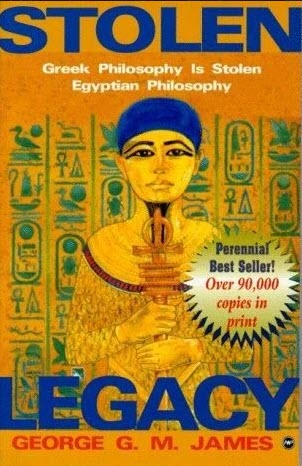
Stolen Legacy By George G. M. James
Stolen Legacy (full title often given as Stolen Legacy: The Greeks Were Not the Authors of Greek Philosophy, But the People of North Africa, Commonly Called the Egyptians) is a 1954 book by George Granville Monah James (1893–1956).
Author and Context
James was a Guyanese-born educator who studied in Britain (Durham University) and the United States (Columbia University). He taught subjects including Greek, logic, mathematics, and philosophy at historically Black colleges, including the University of Arkansas at Pine Bluff. He was associated with Prince Hall Freemasonry. The book was published by the Philosophical Library in New York two years before his death.
Core Thesis
James argues that what is called “Greek philosophy” was not original to the Greeks but was derived (or “stolen”) from the ancient Egyptian Mystery System—an advanced body of knowledge in philosophy, science, religion, and the arts developed by the people of North Africa (the Egyptians). He contends that this appropriation created the false impression that Africa contributed nothing to civilization.
Key claims include:
- Greek thinkers such as Pythagoras, Plato, Thales, and others studied or drew heavily from Egyptian sources (citing ancient writers like Herodotus who noted Egyptian influence).
- Alexander the Great’s conquest and associated figures (including claims involving Aristotle) led to the looting or appropriation of Egyptian knowledge from libraries in Egypt, which was then attributed to Greek authors.
- Greek philosophy lacks originality; doctrines on topics like the soul, cosmology, ethics, and science trace back to Egyptian teachings.
- The book ends with a call for a “New Philosophy of African Redemption” to correct historical narratives, foster better race relations, and promote pride in African contributions.
It is considered an early work in what later became known as Afrocentric historiography, influencing or paralleling later writers such as Cheikh Anta Diop and aspects of Martin Bernal’s Black Athena.
Reception
In Black Studies, Afrocentric circles, and among readers seeking alternative narratives of African contributions, it has been popular and influential as a corrective to Eurocentric accounts. It is often described as groundbreaking or essential reading in those contexts.
Mainstream classical historians and philosophers have largely rejected it as pseudohistory. Common criticisms include:
- Serious chronological errors (e.g., claims about Aristotle and the Library of Alexandria, which was founded after Aristotle’s death).
- Heavy reliance on later Masonic or secondary sources rather than primary Egyptian texts or rigorous philology.
- Selective or inaccurate use of evidence, philosophical misunderstandings, and a tendency to treat cultural contact or influence as wholesale theft.
- Scholars such as Mary Lefkowitz (Not Out of Africa), Wilson J. Moses, Stephen Howe, Ronald H. Fritze, and others have characterized the work as tendentious and methodologically flawed.
Even some sympathetic or nuanced readers acknowledge historical inaccuracies while valuing its rhetorical or cultural aims in the context of mid-20th-century racial dynamics.
In short, Stolen Legacy is a foundational Afrocentric text that forcefully asserts Egyptian/African priority in the origins of Western philosophy. It remains widely circulated in certain educational and activist spaces (including resources associated with accounts like the one in the prior X post), while being viewed by most professional historians of the ancient Mediterranean as unreliable.
Pop the document out from the upper right to read / expand / download

