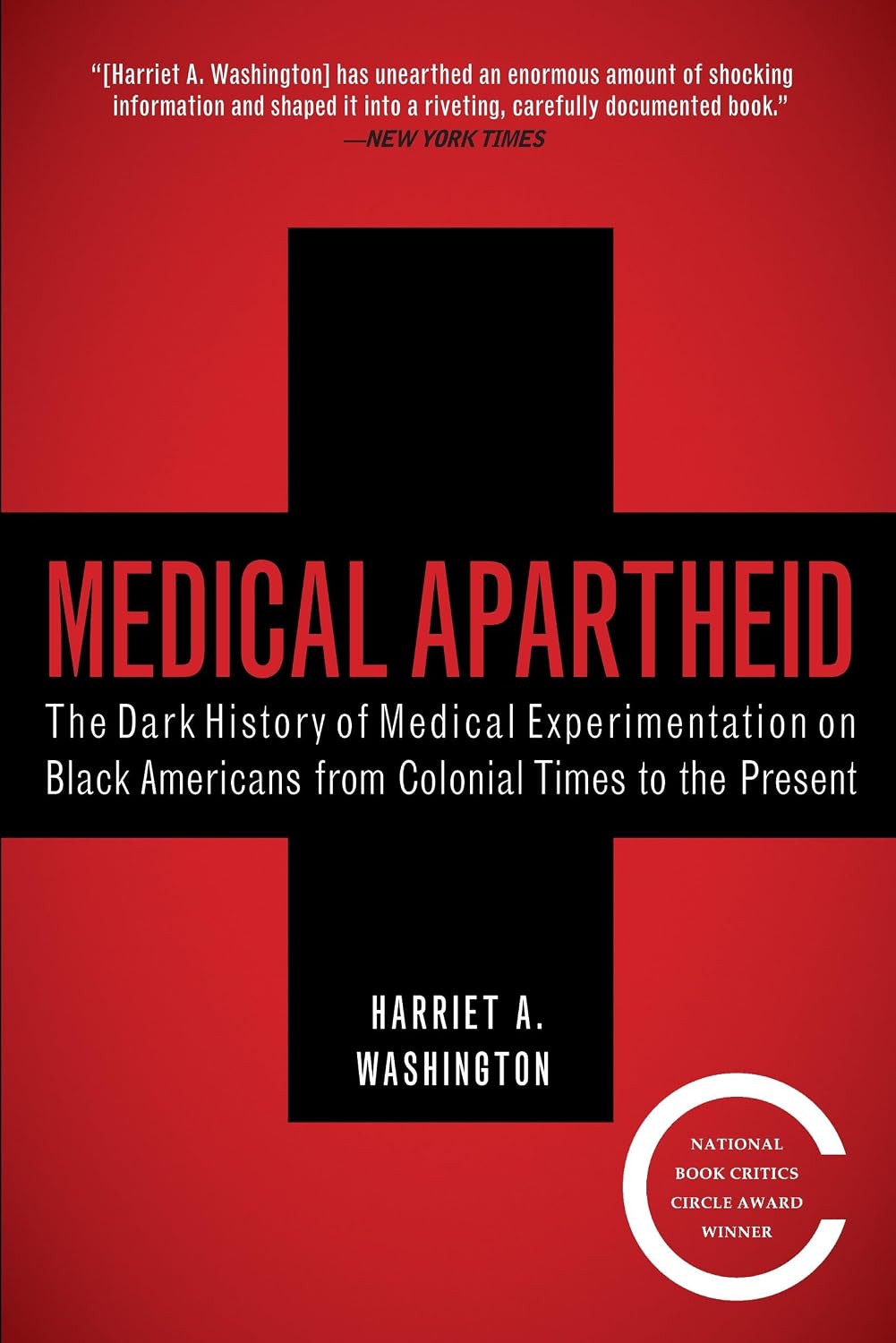
Medical Apartheid (2006) by Harriet A. Washington is a comprehensive historical account of unethical medical experimentation, exploitation, and mistreatment of Black Americans from the colonial era to the early 21st century. It argues that these practices formed a long-standing pattern rather than isolated events, helping explain persistent medical distrust and health disparities. The book won the 2007 National Book Critics Circle Award for Nonfiction and has been influential in discussions of medical ethics and race.
The book is organized into three main parts:
Part 1: A Troubling Tradition covers the 18th and 19th centuries through the early 20th century. It examines how enslaved people were used for medical experiments (often controlled by owners), the development of gynecological procedures by J. Marion Sims on enslaved women without anesthesia, the display of Black bodies as medical or public curiosities, and the widespread use of Black cadavers for dissection (via grave-robbing and disproportionate sourcing from poor or Black populations). It culminates in a detailed account of the Tuskegee Syphilis Study (1932–1972), in which the U.S. Public Health Service observed hundreds of poor Black men with syphilis without providing treatment (even after penicillin became available) to study the disease’s progression. Washington presents Tuskegee as emblematic of a broader continuum rather than a unique aberration.
Part 2: The Usual Subjects addresses 20th-century research involving vulnerable populations. Topics include eugenics-driven or coerced sterilizations (disproportionately affecting Black women), radiation and plutonium experiments, research conducted on prisoners, and studies involving children (including some examining genetics or behavior). The author emphasizes patterns in which Black subjects were frequently selected for higher-risk or non-therapeutic work, often without informed consent.
Part 3: Race, Technology, and Medicine discusses more contemporary issues, including the non-consensual harvesting and use of Henrietta Lacks’s cells (the HeLa line), disparities in clinical research participation and treatment, genetic research, and related technological or public-health applications. The book concludes with an epilogue that notes international parallels and offers recommendations for stronger informed-consent standards, ethics training, and research oversight.
Throughout, Washington draws on medical literature, archival records, and interviews to document specific cases and argue that acknowledging this history is necessary for repairing trust and improving ethical research participation. While the core episodes (such as Tuskegee and certain 19th-century surgical practices) are well-documented historical facts, some reviewers have debated the book’s framing, scale of claims, or specific details; it remains a widely cited and influential survey of the subject.
Pop the document out from the upper right to read / expand / download
Pop the document out from the upper right to read / expand / download
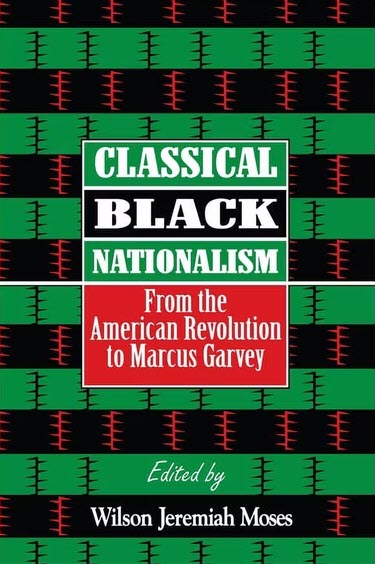
Wilson Jeremiah Moses outlines the book’s purpose as a teaching text focused on the self-help, Pan-Africanist, and Black Nationalist traditions in African American history.
The author acknowledges colleagues, family members, and editors who assisted in researching and editing the volume.
Introduction: Classical Black Nationalism
Definition of the Concept:
Classical Black Nationalism is defined as the movement between 1850 and 1925 aimed at creating a sovereign Black nation-state with defined geographical boundaries, typically in Africa.
Unlike 20th-century cultural nationalism, 19th-century Black Nationalism was grounded in religious historicism, Divine Providence, and high-culture aesthetic values.
History of the Movement:
Traces the evolution of Black Nationalist thought from late 18th-century petitions (e.g., Prince Hall) and the Haitian Revolution to 19th-century emigration debates.
Details key historical developments, including Paul Cuffe’s early repatriation plans, Black opposition to the proslavery American Colonization Society (ACS), the nationalist resurgence following the Fugitive Slave Act of 1850 and Dred Scott decision, and Marcus Garvey’s movement in the 1920s.
Bibliographic Notes:
Highlights of foundational texts and scholarly literature on Black Nationalism, Pan-Africanism, and Afrocentricity.
This foundational bibliography organizes key texts across Black Nationalism, Pan-Africanism, and Afrocentricity into their historical and conceptual frameworks.
Black nationalism focuses on self-determination, political autonomy, and the creation of separate economic, social, or geographic institutions for people of African descent.
Delany, Martin R. (1852).The Condition, Elevation, Emigration, and Destiny of the Colored People of the United States.
Significance: Written by the man widely considered the “father of Black nationalism,” this text argues for emigration and self-reliance.
Garvey, Marcus (1923).The Philosophy and Opinions of Marcus Garvey (Edited by Amy Jacques Garvey).
Malcolm X (1965).The Autobiography of Malcolm X (With Alex Haley).
Significance: Charts the evolution of 20th-century Black nationalist thought, tracing his journey through the Nation of Islam to orthodox Islam and internationalist Pan-Africanism.
Carmichael, Stokely (Kwame Ture) and Hamilton, Charles V. (1967).Black Power: The Politics of Liberation in America.
Significance: Popularized the term “Black Power” and provided a structural framework for Black political independence and solidarity.
Bracey, John H., Meier, August, and Rudwick, Elliott (Eds.). (1970).Black Nationalism in America.
Significance: A comprehensive anthology compiling primary source documents tracing the ideology from the 18th century to the late 20th century.
Pan-Africanism is a worldwide movement that aims to encourage and strengthen bonds of solidarity between all indigenous and diaspora ethnic groups of African descent.
Du Bois, W.E.B. (1903).The Souls of Black Folk.
Significance: Introduces the concepts of “double consciousness” and the “color line,” laying the intellectual groundwork for Du Bois’s subsequent organizing of the early Pan-African Congresses.
Césaire, Aimé (1950).Discourse on Colonialism.
Significance: A foundational text for the Négritude movement, analyzing the deeply destructive psychological and cultural impacts of European colonialism.
Fanon, Frantz (1961).The Wretched of the Earth.
Significance: A seminal psychological and political analysis of decolonization, national culture, and the role of violence in liberation movements.
Nkrumah, Kwame (1963).Africa Must Unite.
Significance: Written by Ghana’s first president, this text outlines the urgent economic and political case for a unified, socialist United States of Africa to combat neo-colonialism.
Rodney, Walter (1972).How Europe Underdeveloped Africa.
Significance: A groundbreaking historical analysis showing how European exploitation directly caused the structural underdevelopment of the African continent.
Afrocentricity is an epistemological framework that seeks to study African phenomena and people of African descent from the perspective of African subjects rather than through a Eurocentric lens.
Diop, Cheikh Anta (1974).The African Origin of Civilization: Myth or Reality.
Significance: Preceded the formal naming of Afrocentricity, providing the essential historical, linguistic, and anthropological arguments for the African roots of Egyptian civilization.
Asante, Molefi Kete (1980).Afrocentricity: The Theory of Social Change.
Significance: The text that formally introduced and defined Afrocentricity as a distinct academic discipline and methodological framework.
Asante, Molefi Kete (1987).The Afrocentric Idea.
Significance: Expands the theory into a full critique of Eurocentric hegemony in education, literature, and social sciences.
Karenga, Maulana (1980).Kawaida Theory: An Introductory Outline.
Significance: Details the cultural nationalist philosophy that underpins Kwanzaa, emphasizing the reclamation of African values as a tool for liberation.
Mazama, Ama (Ed.). (2003).The Afrocentric Paradigm.
Significance: A critical collection of essays that outlines the boundaries, defenses, and applications of Afrocentricity across various scholarly fields.
Part One: The Colonization and Emigration Controversy, Preclassical Period
Notes on the State of Virginia (1781–82) by Thomas Jefferson:
Jefferson outlines a proposal to gradually emancipate enslaved Black people and deport them to a separate colony, arguing that racial prejudice and natural distinctions prevent peaceful integration into American society.
Letters to Peter Williams Jr. (1816) and James Forten (1817) by Paul Cuffe:
Paul Cuffe details efforts to establish commercial trade and migration networks between free Black Americans and Sierra Leone.
Letter to Paul Cuffe (1817) by James Forten:
Forten highlights the intense opposition among free Black Philadelphians toward forced colonization by the American Colonization Society, while privately acknowledging his belief that Black people must separate to achieve true independence.
Mutability of Human Affairs (1827) (Freedom’s Journal):
Explores the historical rise and fall of ancient empires, pointing to ancient Egypt and Ethiopia as Black-led centers of civilization and predicting an eventual restoration of Black national dignity.
The Ethiopian Manifesto (1829) by Robert Alexander Young:
Uses prophetic and messianic language to condemn slaveholders, warn of divine judgment, and predict the arrival of a divine leader ordained to unite Black people into a sovereign nation.
An Appeal in Four Articles (1830) by David Walker:
Delivers a passionate critique of American slavery, compares Black Americans to the biblical Israelites, rejects forced colonization to Africa, and calls for Black unity, self-education, and resistance against oppression.
Address at the African Masonic Hall (1833) by Maria Stewart:
Condemns white oppression while calling on Black men and youth to abandon trivial distractions, pursue moral and intellectual advancement, and fearlessly fight for their rights.
Pop the document out from the upper right to read / expand / download
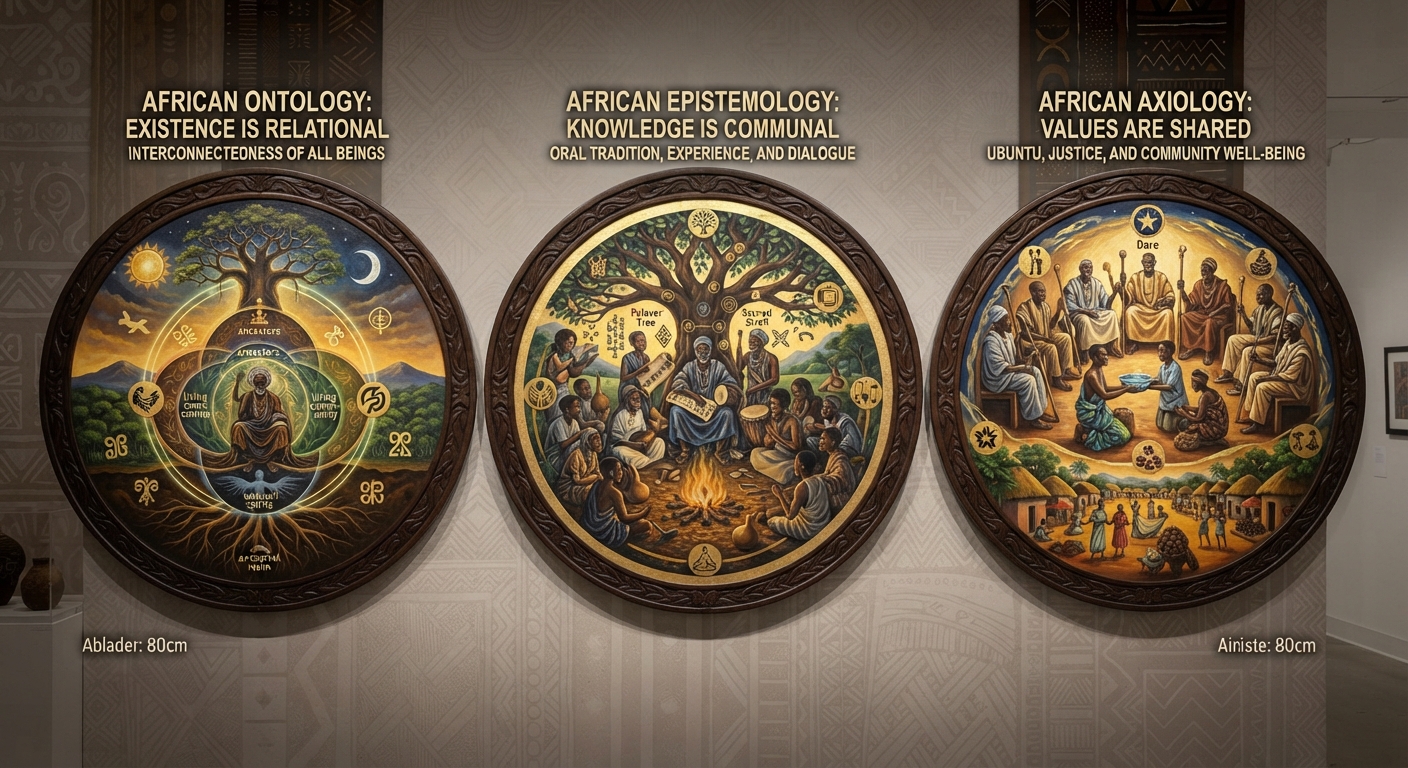
NB: Clickable Note-slide_Extended Definitions of African Ontology, Epistemology and Axiology
Click to enlarge and read.
Pop the document out from the upper right to read / expand / download
Ubuntu (or Afro-communitarianism)
RBG | “YOU MUST THINK OF YOURSELF AS A NATION”, Honorable Dr. Amos Wilson
Related: RBG SS| Art of Knowledge Collection (interactive articles and presentations over the years.) “A Current Student Work / Learning Project”
Book Summary
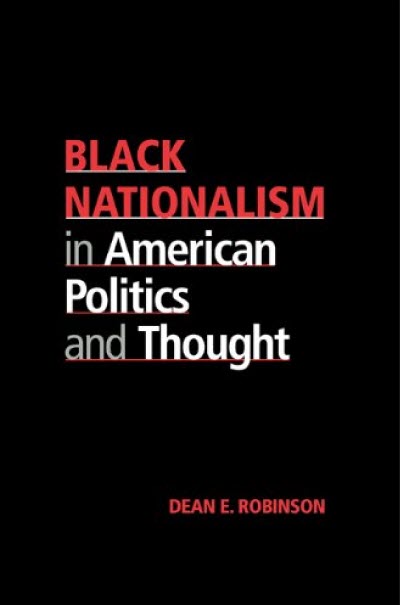
Dean E. Robinson’s Black Nationalism in American Politics and Thought (Cambridge University Press, 2001) examines arguments and activism for separate black statehood or institutional control from the mid-nineteenth century to the late twentieth century. Its central claim is that black nationalism is not a timeless, unchanging anti-assimilationist impulse. Instead, it draws on the political strategies and intellectual assumptions dominant in particular eras of U.S. history, often reproducing ideas linked to racial hierarchy.
Robinson distinguishes a “classical” period (roughly 1850–1925), defined strictly by pursuit of separate statehood, from a “modern” period (especially after World War II), which also includes demands for black administration of key institutions. He argues that classical nationalism was frequently conservative rather than radical, sharing civilizations and Christian frameworks with broader Anglo-American thought, while later forms often rested on an “ethnic paradigm” that treats culture as the main determinant of group status and mobility.
Outline of the book’s structure and main points:
Introduction sets out the thesis that Black Nationalism mirrors era-specific currents in American politics and thought, and that there is no single essential nationalist tradition.
Chapter 1, “Anglo-African Nationalism,” covers mid-nineteenth-century emigration proposals (Martin Delany, James T. Holly, and others) through Marcus Garvey’s Universal Negro Improvement Association, treating classical nationalism as a largely conservative response that often echoed prevailing ideas of civilization, Christianity, and racial destiny.
Chapter 2, “Malcolm X and the Nation of Islam,” reassesses Elijah Muhammad’s Nation of Islam as a postwar template and examines Malcolm X’s significance, including how later activists canonized him.
Chapter 3, “Black Nationalist Organizations in the Civil Rights Era,” surveys groups active in the 1960s and early 1970s that advanced territorial or institutional separatism alongside or against integrationist civil-rights strategies.
Chapter 4, “Black Nationalist Discourse,” analyzes the language and arguments used by nationalists in that period and how they related to broader political and intellectual developments.
Chapter 5, “Black Nationalism as Ethnic Pluralism,” argues that much Black Power-era activity, especially in the context of the War on Poverty and Model Cities programs, took the form of demands for black control of local institutions rather than independent statehood.
Chapter 6, “Black Nationalism and the Ethnic Paradigm,” traces how twentieth-century assumptions—that American culture is largely Anglo-Saxon and that cultural traits explain group socioeconomic position—shaped modern nationalist claims about identity, self-help, and mobility.
Chapter 7, “Black Nationalism in the Contemporary Era,” examines Louis Farrakhan’s Nation of Islam and Molefi Kete Asante’s Afrocentricity as leading late-twentieth-century expressions, both grounded in cultural-difference arguments and offering largely idealistic rather than coalition-based programs for empowerment.
Pop the document out from the upper right to read / expand / download
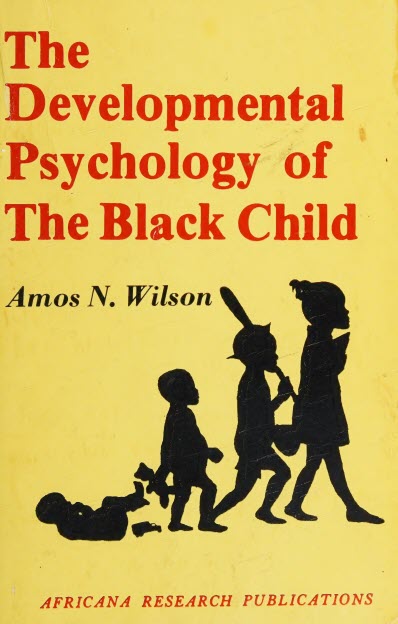
The Developmental Psychology of the Black Child (1978) is a foundational work in African-centered psychology by Amos N. Wilson (1941–1995), a psychologist, educator, and Pan-African scholar who taught at the City University of New York. Wilson, born in Hattiesburg, Mississippi, earned degrees from Morehouse College, The New School, and a Ph.D. from Fordham University.
He argued that standard developmental psychology, built largely on studies of white middle-class children, misrepresents and often pathologizes Black children.
The 216-page book, first issued by Africana Research Publications, examines physical, cognitive, linguistic, and psychosocial development from conception through the preschool years. Wilson’s central claim is that the Black child is not “a white child who happens to be painted Black.” He points to measurable differences in early psychomotor development, higher rates of certain prenatal and perinatal risks (such as lower average birth weight and prematurity), distinct language patterns, and the shaping effects of racism, restricted environments, and cultural mismatch in schools and testing. These differences, he contends, reflect African heritage, historical conditions, and current social realities rather than inherent inferiority.
Chapters cover the prenatal period (maternal nutrition, toxins, hereditary conditions such as sickle-cell anemia), the first two years (accelerated motor milestones in some African-descended infants compared with European norms, limitations of infant IQ tests), preschool race awareness and initiative, the possible role of “psychogenic” environmental stress on brain development, play and media influences, and group differences on standardized intelligence tests.
Wilson critiques IQ testing as culturally loaded, questions whether Black English signals deficit, and examines how parental socialization, teacher expectations, and segregated or mismatched schooling affect outcomes.
He calls for education and child-rearing practices grounded in African-centered frameworks rather than unmodified Eurocentric models.
The book remains influential in Black psychology and Afrocentric education circles, with later reprints (including a 2014 edition) and high reader ratings. It is frequently paired with Wilson’s follow-up Awakening the Natural Genius of Black Children (1992). Scanned copies circulate on archival sites; print editions are available through specialty African-American bookstores and online retailers.
Wilson later expanded these ideas in lectures and books such as Blueprint for Black Power. Readers should note that some data and references date to the late 1970s, while the core critique of applying one-size-fits-all developmental models continues to be discussed in contemporary work on culturally responsive education.
Pop the documents out from the upper right to read / expand / download.
Pop the documents out from the upper right to read / expand / download.
This document explains African-centered education (ACE), emphasizing its role in supporting Black children’s academic, social, and cultural development.
Foundation and Philosophy
>ACE focuses on African culture, history, and community to foster positive racial identity.
>Core beliefs include rejecting Eurocentric notions of intelligence, honoring ancestral legacies, and pursuing excellence.
>It centers on sovereignty, culture, and outdoor experiences.
Structural Features
>Flexible funding, multi-age classrooms, and culturally affirming environments.
>Curricula highlight African accomplishments and representations of Black achievements.
>Family and community engagement are integral.
Process Features
>Curricular approaches incorporate history, culture, and storytelling.
>Teachers prioritize culturally responsive recruitment and professional development.
Conclusion
African-centered education matters as it nurtures Black children’s full potential through culturally sustaining practices.
Kwame Nkrumah’s “Neo-Colonialism: The Last Stage of Imperialism” is a critical examination of the dynamics of post-colonial power and the ongoing exploitation of African countries through economic and political means. Nkrumah argues that while formal colonial rule may have ended, neo-colonialism continues to oppress nations, particularly in Africa, by perpetuating dependency on imperial powers. Here’s an overview and outline of the book:
Icebreaker Video
Overview:
Definition of Neo-Colonialism: Nkrumah defines neo-colonialism as a form of indirect control where former colonial powers maintain influence over newly independent nations through economic, political, and cultural means.
Exploitation and Dependency: The book discusses how neo-colonialism fosters economic dependency, hindering genuine development and self-determination for African countries.
Role of Global Institutions: Nkrumah highlights the complicity of international organizations, multinational corporations, and foreign governments in perpetuating neo-colonial practices.
Call for Unity and Resistance: The book advocates for African unity and collective action as essential strategies for combating neo-colonialism and achieving true independence.
Outline:
Introduction
Purpose of the book
Overview of neo-colonialism as a concept
Chapter 1: The Nature of Neo-Colonialism
Definition and characteristics of neo-colonialism
Distinction between colonialism and neo-colonialism
Chapter 2: Economic Dependence
Analysis of how economic policies of former colonial powers create dependency
The role of trade, debt, and foreign aid in sustaining neo-colonialism
Chapter 3: Political Manipulation
Examination of political tactics used by imperial powers to influence newly independent nations
The impact of foreign intervention and support for puppet regimes
Chapter 4: Cultural Imperialism
Discussion of cultural domination and the imposition of foreign values
The effects of Western education, media, and consumer culture on African societies
Chapter 5: The Role of Multinational Corporations
Analysis of how multinational corporations exploit resources and labor in Africa
The relationship between governments and corporations in sustaining neo-colonial practices
Chapter 6: The Complicity of International Organizations
Examination of the roles of institutions like the IMF, World Bank, and United Nations
How these organizations perpetuate neo-colonial policies under the guise of development aid
Chapter 7: The Struggle for True Independence
Strategies for resisting neo-colonialism
The importance of Pan-Africanism and solidarity among African nations
Chapter 8: The Future of Africa
Vision for a liberated and self-sufficient Africa
The necessity of political and economic unity to combat neo-colonialism
Conclusion
Summary of key arguments
Call to action for African leaders and peoples to reject neo-colonialism
Significance:
“Neo-Colonialism: The Last Stage of Imperialism” is a crucial text that challenges the notion that colonialism ended with political independence. Nkrumah’s analysis of neo-colonial dynamics serves as a powerful reminder of the ongoing struggles for true sovereignty and self-determination in Africa. By advocating for unity and resistance against neo-colonial forces, the book aims to inspire a collective movement towards genuine liberation and development. Nkrumah’s insights continue to resonate in contemporary discussions about globalization, economic exploitation, and the quest for justice and equality in the post-colonial world.
Kwame Nkrumah’s “Neo-Colonialism: The Last Stage of Imperialism” provides a comprehensive analysis of the ways in which former colonial powers maintain control over newly independent nations, particularly in Africa. Here are some deeper insights into the key themes, concepts, and implications of the book:
Key Themes and Insights:
Definition and Characteristics of Neo-Colonialism:
Nkrumah defines neo-colonialism as a system where colonial powers exert influence over former colonies without direct political control. He explores how economic, political, and cultural mechanisms create a scenario where nations appear independent but are still heavily influenced by external powers.
Economic Dependency:
The book emphasizes the economic structures that keep African nations dependent on former colonial powers. Nkrumah argues that the terms of trade, debt obligations, and reliance on foreign aid trap African countries in cycles of poverty and underdevelopment. He highlights how these factors inhibit genuine economic growth and self-reliance.
Political Manipulation:
Nkrumah discusses how neo-colonialism manifests in political interference, where foreign powers support certain regimes or leaders that align with their interests. This manipulation often leads to the establishment of puppet governments that lack legitimacy and fail to represent the will of the people.
Cultural Imperialism:
The book addresses the cultural dimensions of neo-colonialism, where Western values and ideologies are imposed on African societies. Nkrumah critiques the influence of Western education, media, and consumer culture, arguing that these elements erode local traditions and identities.
Role of Multinational Corporations:
Multinational corporations are portrayed as key players in the neo-colonial system. Nkrumah explains how these entities exploit Africa’s natural resources and labor while contributing little to local economies. He highlights the need for African nations to reclaim control over their resources.
Complicity of International Organizations:
Nkrumah critiques international organizations like the IMF and World Bank for perpetuating neo-colonial policies. He argues that these institutions often impose conditions on loans and aid that prioritize the interests of donor countries over the needs of African nations.
Resistance and Solidarity:
The book advocates for a united front among African nations to resist neo-colonialism. Nkrumah emphasizes the importance of Pan-Africanism, urging African leaders and peoples to come together in solidarity to combat external influences and work towards true independence.
Vision for the Future:
Nkrumah envisions a liberated Africa where nations are self-sufficient and politically united. He argues that only through collective action and a rejection of neo-colonial practices can Africa achieve genuine development and empowerment.
Implications of Nkrumah’s Analysis:
Historical Context: Written in the 1960s, the book reflects the realities of post-colonial Africa, where many nations were grappling with the challenges of independence while facing ongoing external pressures. Nkrumah’s insights remain relevant as many African countries continue to confront neo-colonial dynamics.
Influence on Political Discourse: Nkrumah’s work has significantly influenced political thought in Africa and beyond. His critiques of imperialism and calls for unity resonate with contemporary movements advocating for social justice, economic independence, and political sovereignty.
Ongoing Relevance: The themes of neo-colonialism are particularly pertinent today in discussions about globalization, economic exploitation, and the influence of multinational corporations. Nkrumah’s analysis encourages critical examination of how power dynamics operate in the modern world, especially in relation to developing nations.
Legacy of Pan-Africanism: Nkrumah’s advocacy for Pan-Africanism serves as a foundational element for many contemporary movements seeking African unity and cooperation. His vision of a collective struggle against neo-colonial forces continues to inspire activists and leaders advocating for a unified Africa.
Conclusion:
“Neo-Colonialism: The Last Stage of Imperialism” is a powerful critique of the ongoing exploitation of African nations in the post-colonial era. Nkrumah’s insights into economic dependency, political manipulation, and cultural imperialism provide a comprehensive framework for understanding the complexities of neo-colonial power dynamics. His call for unity and resistance remains a rallying cry for those seeking true independence and self-determination in Africa and beyond. The book not only serves as a historical analysis but also as a guide for future generations committed to the struggle for justice and equality.
Kwame Nkrumah’s “Neo-Colonialism: The Last Stage of Imperialism”eBook
Pop the document out from the upper right to read / expand / download.
Kwame Nkrumah’s “Neo-Colonialism: The Last Stage of Imperialism”Audiobook
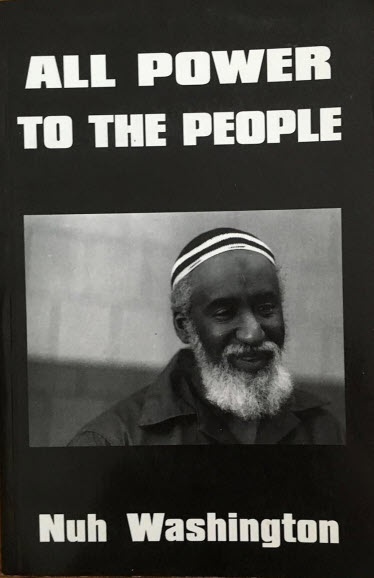
“All Power to the People” by Albert Nuh Washington is a significant work that explores the history and impact of the Black Panther Party (BPP) and the broader Black radical movement in the United States. Published in 2002, the book provides an in-depth analysis of the social, political, and economic conditions that gave rise to the BPP, as well as the party’s contributions to the struggle for civil rights and social justice. Washington draws on personal experiences, interviews, and historical narratives to highlight the achievements and challenges faced by the Black Panther Party, offering a critical perspective on its legacy and the continuing relevance of its ideals in contemporary society. The outline and overview that follows provides a structured look at the contents of “All Power to the People” by Albert Nuh Washington.
Outline
I. Introduction
A. Overview of the Black Panther Party’s significance
B. Purpose of the book and its relevance to contemporary social justice movements
C. Author’s background and perspective
II. Historical Context
A. The civil rights movement and its limitations
Key figures and events leading to the rise of the BPP
Challenges faced by African Americans in the 1960s
B. The influence of Black nationalism and radical thought
Connection to earlier movements (e.g., Marcus Garvey, the Nation of Islam)
Emergence of the Black Power movement
III. Formation of the Black Panther Party
A. Founding members and their motivations
Huey P. Newton and Bobby Seale
Key ideological influences
B. Development of the party’s platform and goals
The Ten-Point Program
Focus on community empowerment and social justice
IV. Key Activities and Programs
A. Community initiatives
Free breakfast programs for children
Health clinics and education programs
B. Armed self-defense and its implications
The philosophy of self-defense against police brutality
Impact on public perception and law enforcement responses
V. Internal Challenges and Conflicts
A. Struggles within the organization
Leadership disputes and factionalism
The influence of COINTELPRO and government repression
B. The impact of external pressures
Surveillance and infiltration by law enforcement
Media portrayal and public perception of the BPP
VI. Legacy of the Black Panther Party
A. Contributions to civil rights and social justice
Influence on later movements (e.g., Black Lives Matter)
Cultural impact through art, music, and literature
B. Ongoing relevance of BPP ideals
Discussion of systemic racism and inequality today
Calls for community empowerment and social change
VII. Conclusion
A. Summary of key themes and insights from the book
B. Reflection on the importance of understanding the BPP’s history
C. Call to action for continued activism and social justice
“All Power to the People” serves as a vital resource for understanding the history and legacy of the Black Panther Party and the broader struggle for racial and social justice in America. By examining the party’s origins, key initiatives, and challenges, Washington provides valuable insights into the ongoing fight against systemic oppression and the importance of community empowerment. The book encourages readers to reflect on the lessons of the past while inspiring continued activism in the pursuit of equality and justice.
“All Power to the People” is an essential examination of the Black Panther Party (BPP) and its pivotal role in the fight for civil rights and social justice in the United States. Here’s a more detailed exploration of the book’s themes, key figures, historical context, and its significance:
Detailed Exploration of Key Themes
1. Historical Context
Civil Rights Movement Limitations: Washington discusses the civil rights movement’s achievements, such as the Civil Rights Act and the Voting Rights Act, while highlighting its limitations in addressing systemic issues like poverty, police brutality, and economic inequality. The urgency for a more radical approach was felt by many African Americans, leading to the rise of the Black Panther Party.
Influence of Black Nationalism: The book places the BPP within the wider context of Black Nationalism and the Black Power movement, which emerged in the 1960s as a response to the perceived inadequacies of mainstream civil rights strategies. Washington emphasizes the influence of figures like Marcus Garvey and Malcolm X, who advocated for self-determination and empowerment for Black communities.
2. Formation and Ideology of the Black Panther Party
Founding Members: The BPP was founded in 1966 by Huey P. Newton and Bobby Seale in Oakland, California. Washington explores how their backgrounds and experiences shaped their vision for the party, particularly their commitment to armed self-defense against police violence.
The Ten-Point Program: A central feature of the BPP’s ideology was its Ten-Point Program, which outlined the party’s demands for justice, equality, and economic empowerment. Washington details each point, which included calls for decent housing, education, and employment, as well as an end to police brutality.
3. Community Programs and Activism
Social Initiatives: Washington highlights the BPP’s commitment to community service through programs like free breakfast for children, health clinics, and educational programs. These initiatives were designed to address the immediate needs of African American communities and demonstrate that the BPP was more than just a militant organization.
Armed Self-Defense: The book discusses the philosophy of armed self-defense that the BPP adopted in response to police brutality. Washington analyzes how the party’s public displays of armed self-defense were both a statement of empowerment and a catalyst for increased tensions with law enforcement.
4. Internal Struggles and External Pressures
Factionalism and Leadership Conflicts: Washington examines internal conflicts within the BPP, particularly the power struggles between different factions. These conflicts were exacerbated by the pressure from law enforcement and the FBI’s Counterintelligence Program (COINTELPRO), which sought to undermine the party through infiltration, disinformation, and surveillance.
Government Repression: The book details the various tactics used by law enforcement to suppress the BPP, including arrests, harassment, and violent confrontations. Washington underscores the impact of COINTELPRO in destabilizing the organization and contributing to its decline in the early 1970s.
5. Legacy and Ongoing Relevance
Cultural Impact: Washington discusses how the BPP’s ideals and aesthetics influenced music, art, and literature, leaving a lasting mark on African American culture. The party’s imagery and messages of empowerment continue to resonate in contemporary artistic expressions.
Influence on Modern Movements: The book draws connections between the BPP and contemporary movements such as Black Lives Matter, highlighting how the party’s focus on systemic injustice and community empowerment laid the groundwork for ongoing activism. Washington calls attention to the continuing struggle against racism, police violence, and inequality.
Significance of the Work
Educational Resource: “All Power to the People” serves as an important educational tool for understanding the complexities of the Black Panther Party and the broader Black radical movement. It provides a nuanced perspective that challenges mainstream narratives about the BPP as solely a militant organization.
Inspiration for Activism: Washington’s work encourages readers to reflect on the lessons of the past and recognize the importance of grassroots activism in effecting social change. The book emphasizes the need for community engagement and the importance of addressing systemic issues through collective action.
Reexamination of History: By providing a detailed account of the BPP’s history and its various programs, Washington invites readers to reconsider the legacy of the Black Panther Party and its contributions to the struggle for civil rights and social justice in America. It challenges readers to acknowledge the complexities of the BPP’s mission and its relevance in contemporary discussions about race and inequality.
Conclusion
“All Power to the People” by Nuh Washington is a vital contribution to the understanding of the Black Panther Party and the Black radical movement in the United States. Through its exploration of historical context, ideology, activism, and legacy, the book highlights the significance of the BPP in shaping the discourse around civil rights and social justice. Washington’s work serves as both a historical account and a call to action, inspiring readers to engage with the ongoing fight for equality and justice in today’s society.
All Power to the People by Albert Nuh Washington, eBook
Pop the document out from the upper right to read / expand / download.
All Power to the People by Albert Nuh Washington, Audiobook
Video Education_All Power To The People The Black Panther Party & Beyond





You must be logged in to post a comment.