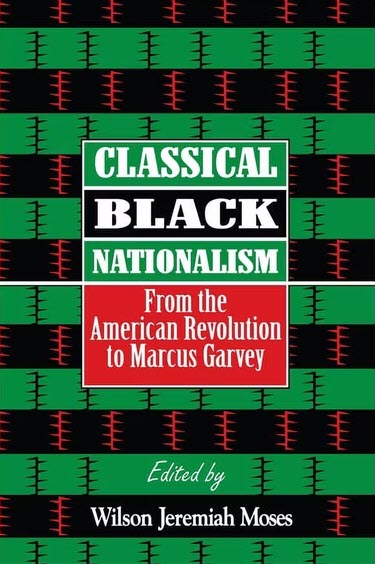
Classical Black Nationalism: From the American Revolution to Marcus Garvey, Edited by Wilson Jeremiah Moses and Black Nationalism in American Politics and Thought by Dean E. Robinson and Extended Definitions of African Ontology, Epistemology and Axiology

Book Summary

Acknowledgments

Wilson Jeremiah Moses outlines the book’s purpose as a teaching text focused on the self-help, Pan-Africanist, and Black Nationalist traditions in African American history.

The author acknowledges colleagues, family members, and editors who assisted in researching and editing the volume.

Introduction: Classical Black Nationalism

Definition of the Concept:

Classical Black Nationalism is defined as the movement between 1850 and 1925 aimed at creating a sovereign Black nation-state with defined geographical boundaries, typically in Africa.

Unlike 20th-century cultural nationalism, 19th-century Black Nationalism was grounded in religious historicism, Divine Providence, and high-culture aesthetic values.

History of the Movement:

Traces the evolution of Black Nationalist thought from late 18th-century petitions (e.g., Prince Hall) and the Haitian Revolution to 19th-century emigration debates.

Details key historical developments, including Paul Cuffe’s early repatriation plans, Black opposition to the proslavery American Colonization Society (ACS), the nationalist resurgence following the Fugitive Slave Act of 1850 and Dred Scott decision, and Marcus Garvey’s movement in the 1920s.

Bibliographic Notes:

Highlights of foundational texts and scholarly literature on Black Nationalism, Pan-Africanism, and Afrocentricity.

This foundational bibliography organizes key texts across Black Nationalism, Pan-Africanism, and Afrocentricity into their historical and conceptual frameworks.

Black Nationalism

Black nationalism focuses on self-determination, political autonomy, and the creation of separate economic, social, or geographic institutions for people of African descent.

  • Delany, Martin R. (1852).The Condition, Elevation, Emigration, and Destiny of the Colored People of the United States.
    • Significance: Written by the man widely considered the “father of Black nationalism,” this text argues for emigration and self-reliance.
  • Garvey, Marcus (1923).The Philosophy and Opinions of Marcus Garvey (Edited by Amy Jacques Garvey).
  • Malcolm X (1965).The Autobiography of Malcolm X (With Alex Haley).
    • Significance: Charts the evolution of 20th-century Black nationalist thought, tracing his journey through the Nation of Islam to orthodox Islam and internationalist Pan-Africanism.
  • Carmichael, Stokely (Kwame Ture) and Hamilton, Charles V. (1967).Black Power: The Politics of Liberation in America.
    • Significance: Popularized the term “Black Power” and provided a structural framework for Black political independence and solidarity.
  • Bracey, John H., Meier, August, and Rudwick, Elliott (Eds.). (1970).Black Nationalism in America.
    • Significance: A comprehensive anthology compiling primary source documents tracing the ideology from the 18th century to the late 20th century.

Pan-Africanism

Pan-Africanism is a worldwide movement that aims to encourage and strengthen bonds of solidarity between all indigenous and diaspora ethnic groups of African descent.

  • Du Bois, W.E.B. (1903).The Souls of Black Folk.
    • Significance: Introduces the concepts of “double consciousness” and the “color line,” laying the intellectual groundwork for Du Bois’s subsequent organizing of the early Pan-African Congresses.
  • Césaire, Aimé (1950).Discourse on Colonialism.
    • Significance: A foundational text for the Négritude movement, analyzing the deeply destructive psychological and cultural impacts of European colonialism.
  • Fanon, Frantz (1961).The Wretched of the Earth.
    • Significance: A seminal psychological and political analysis of decolonization, national culture, and the role of violence in liberation movements.
  • Nkrumah, Kwame (1963).Africa Must Unite.
    • Significance: Written by Ghana’s first president, this text outlines the urgent economic and political case for a unified, socialist United States of Africa to combat neo-colonialism.
  • Rodney, Walter (1972).How Europe Underdeveloped Africa.
    • Significance: A groundbreaking historical analysis showing how European exploitation directly caused the structural underdevelopment of the African continent.

Afrocentricity

Afrocentricity is an epistemological framework that seeks to study African phenomena and people of African descent from the perspective of African subjects rather than through a Eurocentric lens.

  • Diop, Cheikh Anta (1974).The African Origin of Civilization: Myth or Reality.
    • Significance: Preceded the formal naming of Afrocentricity, providing the essential historical, linguistic, and anthropological arguments for the African roots of Egyptian civilization.
  • Asante, Molefi Kete (1980).Afrocentricity: The Theory of Social Change.
    • Significance: The text that formally introduced and defined Afrocentricity as a distinct academic discipline and methodological framework.
  • Asante, Molefi Kete (1987).The Afrocentric Idea.
    • Significance: Expands the theory into a full critique of Eurocentric hegemony in education, literature, and social sciences.
  • Karenga, Maulana (1980).Kawaida Theory: An Introductory Outline.
    • Significance: Details the cultural nationalist philosophy that underpins Kwanzaa, emphasizing the reclamation of African values as a tool for liberation.
  • Mazama, Ama (Ed.). (2003).The Afrocentric Paradigm.
    • Significance: A critical collection of essays that outlines the boundaries, defenses, and applications of Afrocentricity across various scholarly fields.

Part One: The Colonization and Emigration Controversy, Preclassical Period

Notes on the State of Virginia (1781–82) by Thomas Jefferson:

Jefferson outlines a proposal to gradually emancipate enslaved Black people and deport them to a separate colony, arguing that racial prejudice and natural distinctions prevent peaceful integration into American society.

Letters to Peter Williams Jr. (1816) and James Forten (1817) by Paul Cuffe:

Paul Cuffe details efforts to establish commercial trade and migration networks between free Black Americans and Sierra Leone.

Letter to Paul Cuffe (1817) by James Forten:

Forten highlights the intense opposition among free Black Philadelphians toward forced colonization by the American Colonization Society, while privately acknowledging his belief that Black people must separate to achieve true independence.

Mutability of Human Affairs (1827) (Freedom’s Journal):

Explores the historical rise and fall of ancient empires, pointing to ancient Egypt and Ethiopia as Black-led centers of civilization and predicting an eventual restoration of Black national dignity.

The Ethiopian Manifesto (1829) by Robert Alexander Young:

Uses prophetic and messianic language to condemn slaveholders, warn of divine judgment, and predict the arrival of a divine leader ordained to unite Black people into a sovereign nation.

An Appeal in Four Articles (1830) by David Walker:

Delivers a passionate critique of American slavery, compares Black Americans to the biblical Israelites, rejects forced colonization to Africa, and calls for Black unity, self-education, and resistance against oppression.

Address at the African Masonic Hall (1833) by Maria Stewart:

Condemns white oppression while calling on Black men and youth to abandon trivial distractions, pursue moral and intellectual advancement, and fearlessly fight for their rights.

Pop the document out from the upper right to read / expand / download

NB: Clickable Note-slide_Extended Definitions of African Ontology, Epistemology and Axiology
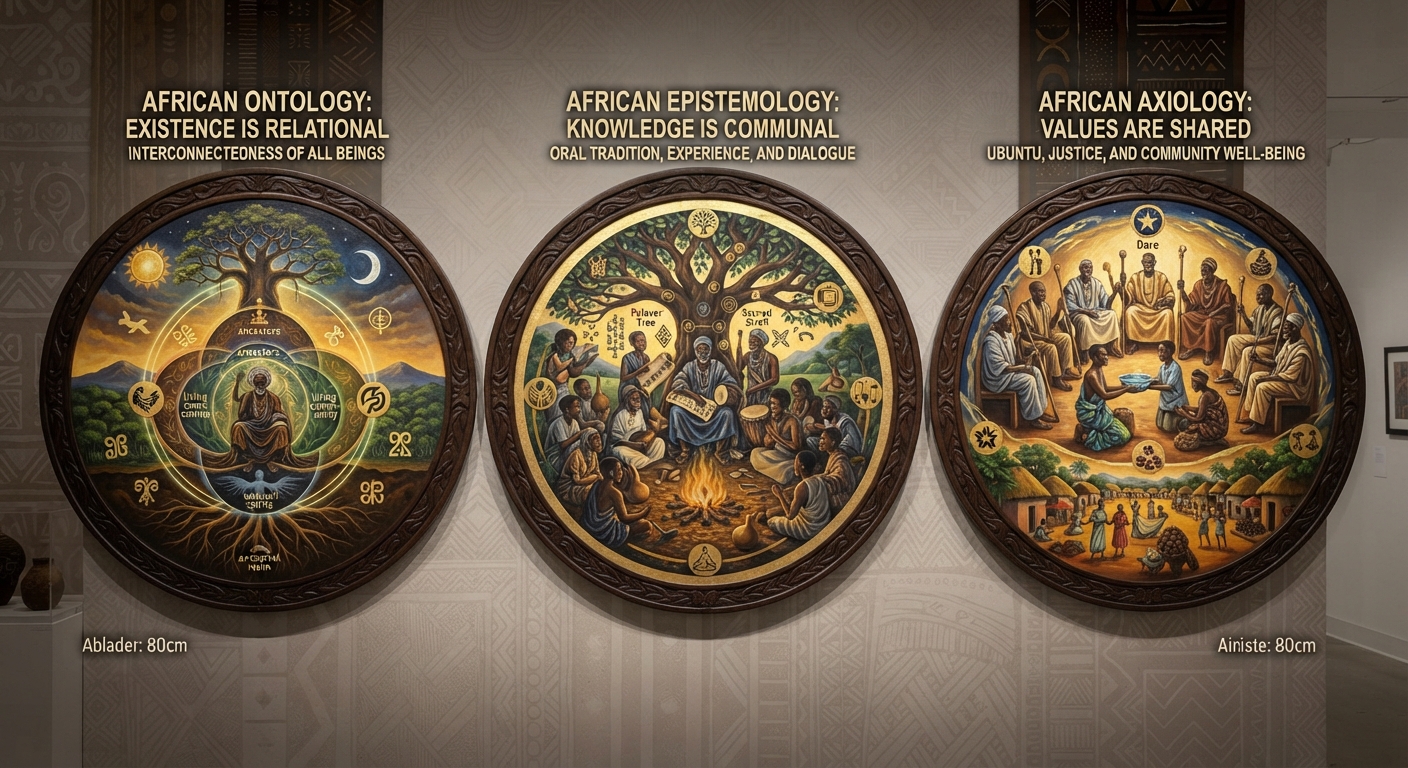
Click to enlarge and read.

Pop the document out from the upper right to read / expand / download

Ubuntu (or Afro-communitarianism)

RBG | “YOU MUST THINK OF YOURSELF AS A NATION”, Honorable Dr. Amos Wilson

Related: RBG SS| Art of Knowledge Collection (interactive articles and presentations over the years.) “A Current Student Work / Learning Project”
Book Summary

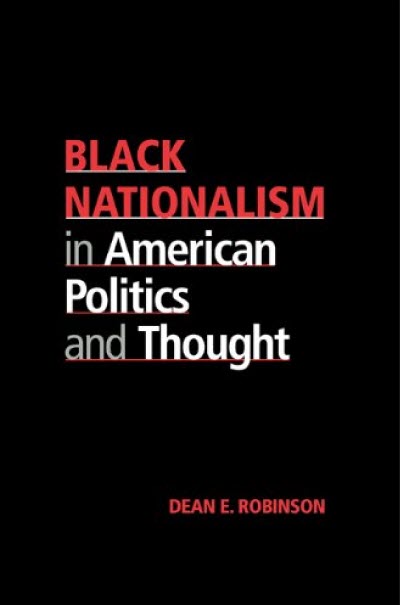
Dean E. Robinson’s Black Nationalism in American Politics and Thought (Cambridge University Press, 2001) examines arguments and activism for separate black statehood or institutional control from the mid-nineteenth century to the late twentieth century. Its central claim is that black nationalism is not a timeless, unchanging anti-assimilationist impulse. Instead, it draws on the political strategies and intellectual assumptions dominant in particular eras of U.S. history, often reproducing ideas linked to racial hierarchy.

Robinson distinguishes a “classical” period (roughly 1850–1925), defined strictly by pursuit of separate statehood, from a “modern” period (especially after World War II), which also includes demands for black administration of key institutions. He argues that classical nationalism was frequently conservative rather than radical, sharing civilizations and Christian frameworks with broader Anglo-American thought, while later forms often rested on an “ethnic paradigm” that treats culture as the main determinant of group status and mobility.

Outline of the book’s structure and main points:

Introduction sets out the thesis that Black Nationalism mirrors era-specific currents in American politics and thought, and that there is no single essential nationalist tradition.

Chapter 1, “Anglo-African Nationalism,” covers mid-nineteenth-century emigration proposals (Martin Delany, James T. Holly, and others) through Marcus Garvey’s Universal Negro Improvement Association, treating classical nationalism as a largely conservative response that often echoed prevailing ideas of civilization, Christianity, and racial destiny.

Chapter 2, “Malcolm X and the Nation of Islam,” reassesses Elijah Muhammad’s Nation of Islam as a postwar template and examines Malcolm X’s significance, including how later activists canonized him.

Chapter 3, “Black Nationalist Organizations in the Civil Rights Era,” surveys groups active in the 1960s and early 1970s that advanced territorial or institutional separatism alongside or against integrationist civil-rights strategies.

Chapter 4, “Black Nationalist Discourse,” analyzes the language and arguments used by nationalists in that period and how they related to broader political and intellectual developments.

Chapter 5, “Black Nationalism as Ethnic Pluralism,” argues that much Black Power-era activity, especially in the context of the War on Poverty and Model Cities programs, took the form of demands for black control of local institutions rather than independent statehood.

Chapter 6, “Black Nationalism and the Ethnic Paradigm,” traces how twentieth-century assumptions—that American culture is largely Anglo-Saxon and that cultural traits explain group socioeconomic position—shaped modern nationalist claims about identity, self-help, and mobility.

Chapter 7, “Black Nationalism in the Contemporary Era,” examines Louis Farrakhan’s Nation of Islam and Molefi Kete Asante’s Afrocentricity as leading late-twentieth-century expressions, both grounded in cultural-difference arguments and offering largely idealistic rather than coalition-based programs for empowerment.

Pop the document out from the upper right to read / expand / download
Minister Malcolm X | “A Comprehensive Achieve” Folder

BPM | BLM Audiobooks Folder

BPM | BLM eBooks Folder

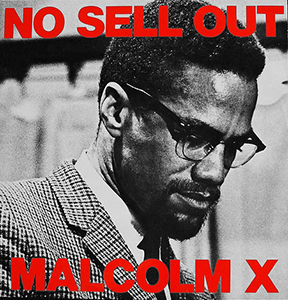
“No Sell Out” Keith LeBlanc and Malcolm X and Supplemental_On the Side of My People: A Religious Life of Malcolm X by Louis A. DeCaro Jr.

Photo-story montage of Malcolm X’s life, featuring archival images from his prison years, family moments, public speeches, travels, and activism, set to Keith LeBlanc’s 1984 track “No Sell Out” that samples his voice.

rbg4lif (bka RBGStreetScholar) operates RBG Communiversity, a blog and resource hub dedicated to Black Studies, Pan-African education, and Nationhood topics, regularly posting books, syllabi, videos, and materials on figures like Malcolm X, Amos N. Wilson, and historical resistance movements.

This Post ends by directing viewers to the account’s eLibrary for a comprehensive Malcolm X digital archive, aligning with the account’s focus on self-education in Black history and uncompromising principles towards self-determination and National Independence.

Pop the document out from the upper right to read / expand / download
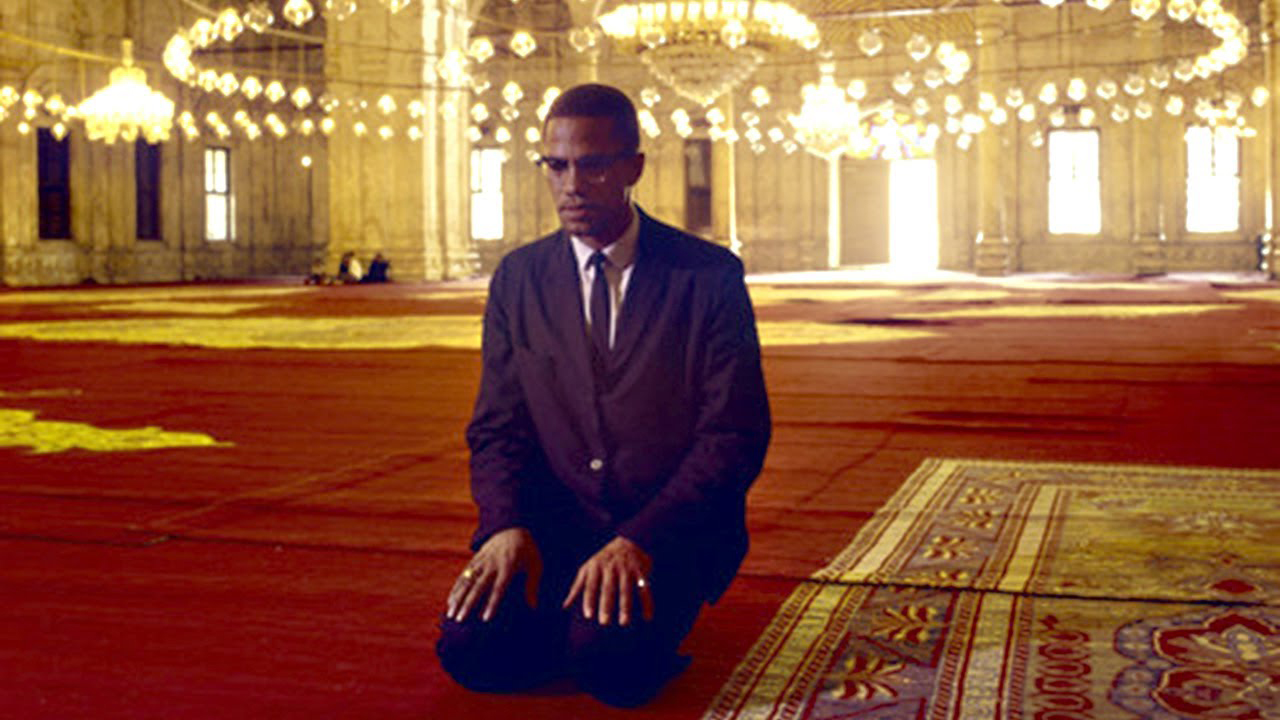
Supplemental: On the Side of My People: A Religious Life of Malcolm X (eBook Preview, 38 pp.)

On the Side of My People: A Religious Life of Malcolm X is a groundbreaking biography written by Louis A. DeCaro Jr. and published by NYU Press in 1996. It stands out as the very first book-length evaluation of Malcolm X’s life focused strictly through a religious lens, reframing a figure who is most commonly analyzed through a purely political or cultural viewpoint.

Here is a structured overview of the book’s core focus, sources, and breakdown:

Core Objectives & Themes

1. Redemption and Spirituality: DeCaro presents Malcolm X as a “man of Allah” driven primarily by personal salvation and religious commitment rather than solely political ambitions.

2. Religious Evolution: The book examines his dual conversions—joining the Nation of Islam (NOI) in prison and later embracing orthodox Sunni Islam after his 1964 pilgrimage to Mecca—alongside his childhood roots, his 1959 Africa trip, and his final year of traditional practice.

3. Critical Analysis: It also analyzes The Autobiography of Malcolm X to understand how his life narrative was curated alongside Alex Haley.

Research Foundations

DeCaro constructs this spiritual portrait using primary materials including interviews with Wilfred Little, declassified FBI files, Black press archives, and audio recordings of speeches and sermons.

Main Chapter Directory

The 10-chapter structure traces his path from his ancestral and Garveyite roots through his early ministry, his split from the Nation of Islam, and his final year as a traditional Muslim convert.

Pop the document out from the upper right to read / expand / download

Abayomi Azikiwe-_-black-history-month-special, including on MX

Learn more in RBG Communiversity’s eLibrary | Minister Malcolm X “A Comprehensive Achieve” Folder

The George Floyd Uprising: An Anthology, by Vortex Group: eBook, Podcast and Audiobook and Video Playlist

Last Updated September 20, 2026

In the summer of 2020, America experienced one of the biggest uprisings in half a century. Waves of enraged citizens took to the streets to streets in Minneapolis to decry the murder of George Floyd at the hands of the police. Battles broke out night after night, with a pandemic weary populace fighting the police and eventually burning down the Third Precinct. The revolt soon spread to cities large and small across the country where protesters set police cars on fire, looted luxury shopping districts and forced the president into hiding in a bunker beneath the White House. As the initial crest receded, localized rebellions continued to erupt throughout the summer and into the fall in Atlanta, Chicago, Kenosha, Louisville, Philadelphia, and elsewhere.
Written during the riots, The George Floyd Uprising is a compendium of the most radical writing to come out of that long, hot summer. These incendiary dispatches—from those on the frontlines of the struggle—examines the revolt and the obstacles it confronted. It paints a picture of abolition in practice, discusses how the presence of weapons in the uprising and the threat of armed struggle play out in an American context, and shows how the state responds to and pacifies rebellions. The George Floyd Uprising poses new social, tactical, and strategic plans for those actively seeking to expand and intensify revolts of the future. This practical, inspiring collection is essential reading for all those hard at work toppling the state and creating a new revolutionary tradition. (From: Amazon)
5 Video Playlist

Book Summary

Overview:

“The George Floyd Uprising: An Anthology” compiled by the Vortex Group is a collection of essays, reflections, and artistic contributions that respond to the events surrounding the murder of George Floyd on May 25, 2020, and the subsequent protests and social movements that erupted across the United States and around the world. The anthology captures the multifaceted nature of the uprising, providing insights into systemic racism, police brutality, and the power of collective action. It serves as a platform for diverse voices, highlighting personal narratives, scholarly analysis, and creative expressions that emerged during this pivotal moment in history.

Outline:

  • Introduction
    • Purpose of the anthology
    • Overview of George Floyd’s murder and its impact on society
    • The significance of collective voices in the narrative of the uprising
  • Chapter 1: Historical Context
    • Examination of systemic racism in America
    • The history of police violence against Black communities
    • Preceding movements leading to the uprising (e.g., Black Lives Matter)
  • Chapter 2: The Incident
    • Detailed account of George Floyd’s murder
    • Public reaction and initial responses to the video footage
    • The role of social media in mobilizing protests
  • Chapter 3: The Uprising
    • Description of the protests and demonstrations that followed
    • Analysis of the diverse participants and their motivations
    • The spread of the movement across the globe
  • Chapter 4: Artistic Responses
    • Exploration of artistic expressions that emerged during the uprising
    • Contributions from poets, musicians, and visual artists
    • The role of art in activism and community healing
  • Chapter 5: Voices of Activists
    • Personal narratives from activists involved in the protests
    • Reflections on the challenges faced and lessons learned
    • Perspectives on the future of the movement
  • Chapter 6: Institutional Responses
    • Reactions from political leaders and institutions
    • Discussion of policy changes and reforms proposed in response to the uprising
    • Critiques of insufficient or performative actions by authorities
  • Chapter 7: The Aftermath
    • Examination of the long-term impacts of the uprising on society
    • Ongoing struggles against systemic racism and police brutality
    • The importance of sustained activism and community engagement
  • Conclusion
    • Summary of key themes and takeaways from the anthology
    • Call to action for continued advocacy and solidarity
    • Reflection on the legacy of George Floyd and the uprising

Conclusion:

“The George Floyd Uprising: An Anthology” serves as a crucial resource for understanding the complexities of the events surrounding George Floyd’s murder and the broader implications for society. By bringing together diverse voices and perspectives, the anthology provides a comprehensive examination of systemic racism, activism, and the power of collective action, encouraging readers to reflect on their roles in the ongoing fight for justice and equality.

“The George Floyd Uprising: An Anthology,” compiled by the Vortex Group, is a significant contribution to the discourse surrounding the events that followed George Floyd’s murder and the global response to systemic racism and police brutality. Here’s a more detailed exploration of the anthology’s themes, contributions, and its broader significance:

Key Themes and Insights:

  1. Systemic Racism:
    • The anthology delves into the roots of systemic racism in the United States, examining how historical injustices have shaped contemporary society. Contributors discuss the long-standing patterns of discrimination and inequality that led to the eruption of protests following Floyd’s death.
  2. The Role of Social Media:
    • Social media played a crucial role in amplifying the message of the uprising. The anthology highlights how platforms like Twitter, Instagram, and Facebook were used to mobilize protests, share information, and create a sense of global solidarity. The viral nature of the video showing Floyd’s murder catalyzed widespread outrage and action.
  3. Diversity of Voices:
    • The anthology features a wide range of contributions, including essays, poems, personal narratives, and artistic expressions. This diversity reflects the multifaceted nature of the uprising, showcasing perspectives from activists, artists, scholars, and everyday individuals who experienced the events firsthand.
  4. Art as Activism:
    • Many contributors emphasize the power of art in addressing social issues. The anthology includes poetry, visual art, and music that emerged in response to the uprising. These artistic expressions serve not only as a form of protest but also as a means of healing and community building.
  5. Personal Narratives:
    • The anthology includes personal accounts from activists and ordinary citizens who participated in the protests. These narratives provide a human element to the broader political movement, illustrating the emotions, challenges, and victories encountered during the uprising.
  6. Institutional Responses:
    • Contributors analyze the responses from government officials, law enforcement, and institutions following the protests. The anthology critiques both the positive changes proposed (such as police reform and accountability measures) and the superficial or performative actions that ultimately fall short of addressing systemic issues.
  7. Long-Term Impact:
    • The anthology discusses the lasting effects of the uprising on American society and beyond. Contributors reflect on the ongoing struggles against racism, the need for sustained activism, and the importance of community engagement in effecting real change.
  8. Call to Action:
    • Throughout the anthology, there is a strong call to action for readers to remain engaged in the fight for justice and equality. Contributors urge individuals to educate themselves, support grassroots movements, and actively participate in ongoing efforts to dismantle systemic racism.

Broader Significance:

  • Historical Context:
    • The anthology situates the events of 2020 within a larger historical framework of civil rights movements and struggles for racial justice, emphasizing that the fight against racism is ongoing and requires collective effort.
  • Legacy of George Floyd:
    • George Floyd’s death serves as a symbol of the urgent need for change. The anthology honors his legacy by highlighting the movement that arose in response to his murder, encouraging readers to reflect on how they can contribute to the fight against injustice.
  • Educational Resource:
    • As a comprehensive collection of diverse perspectives, the anthology serves as an educational resource for those seeking to understand the complexities of the Black Lives Matter movement and the broader implications for social justice.
  • Global Perspective:
    • The anthology underscores that the issues raised during the uprising are not confined to the United States; they resonate globally. Contributors from various backgrounds and regions share their experiences, highlighting the interconnected nature of struggles against racism and oppression.

Conclusion:

“The George Floyd Uprising: An Anthology” is a vital collection that captures the essence of a transformative moment in history. By bringing together diverse voices and perspectives, the anthology not only documents the events surrounding George Floyd’s murder and the subsequent uprising but also serves as a powerful call for continued activism, solidarity, and reflection on the ongoing fight for justice and equality. It encourages readers to engage thoughtfully with these issues and to recognize their role in shaping a more equitable future.

Pop the document out from the upper right to read / expand / download.

“The George Floyd Uprising: An Anthology” eBook

“The George Floyd Uprising: An Anthology” Audiobook

Learn more in RBG Communiversity Knowledge Media eLibrary:

Prisons, Slavery, Policing and Imperialism (The Correctional-Industrial Complex [CIC]) Folder

Police Brutality Video Edu Folder

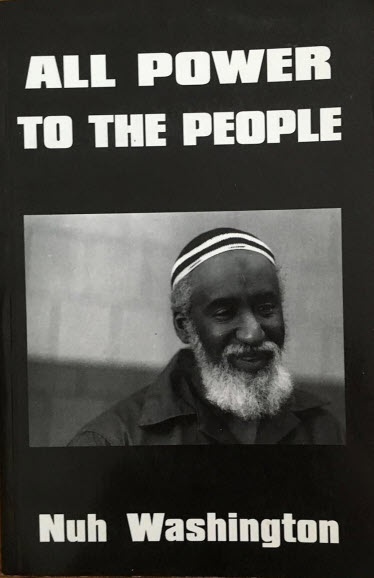
All Power to the People by Albert Nuh Washington, eBook and Audiobook, with Video Education Player

https://freedomarchives.org

ICEBREAKER VIDEOS

Pop the document out from the upper right to read / expand / download.

See NY3. The Case of the New York Three.pdf

Book Summary

Overview

“All Power to the People” by Albert Nuh Washington is a significant work that explores the history and impact of the Black Panther Party (BPP) and the broader Black radical movement in the United States. Published in 2002, the book provides an in-depth analysis of the social, political, and economic conditions that gave rise to the BPP, as well as the party’s contributions to the struggle for civil rights and social justice. Washington draws on personal experiences, interviews, and historical narratives to highlight the achievements and challenges faced by the Black Panther Party, offering a critical perspective on its legacy and the continuing relevance of its ideals in contemporary society. The outline and overview that follows provides a structured look at the contents of “All Power to the People” by Albert Nuh Washington.

Outline

I. Introduction

  • A. Overview of the Black Panther Party’s significance
  • B. Purpose of the book and its relevance to contemporary social justice movements
  • C. Author’s background and perspective

II. Historical Context

  • A. The civil rights movement and its limitations
    • Key figures and events leading to the rise of the BPP
    • Challenges faced by African Americans in the 1960s
  • B. The influence of Black nationalism and radical thought
    • Connection to earlier movements (e.g., Marcus Garvey, the Nation of Islam)
  • Emergence of the Black Power movement

III. Formation of the Black Panther Party

  • A. Founding members and their motivations
    • Huey P. Newton and Bobby Seale
    • Key ideological influences
  • B. Development of the party’s platform and goals
    • The Ten-Point Program
  • Focus on community empowerment and social justice

IV. Key Activities and Programs

  • A. Community initiatives
    • Free breakfast programs for children
    • Health clinics and education programs
  • B. Armed self-defense and its implications
    • The philosophy of self-defense against police brutality
  • Impact on public perception and law enforcement responses

V. Internal Challenges and Conflicts

  • A. Struggles within the organization
    • Leadership disputes and factionalism
    • The influence of COINTELPRO and government repression
  • B. The impact of external pressures
    • Surveillance and infiltration by law enforcement
  • Media portrayal and public perception of the BPP

VI. Legacy of the Black Panther Party

  • A. Contributions to civil rights and social justice
    • Influence on later movements (e.g., Black Lives Matter)
    • Cultural impact through art, music, and literature
  • B. Ongoing relevance of BPP ideals
    • Discussion of systemic racism and inequality today
  • Calls for community empowerment and social change

VII. Conclusion

  • A. Summary of key themes and insights from the book
  • B. Reflection on the importance of understanding the BPP’s history
  • C. Call to action for continued activism and social justice

“All Power to the People” serves as a vital resource for understanding the history and legacy of the Black Panther Party and the broader struggle for racial and social justice in America. By examining the party’s origins, key initiatives, and challenges, Washington provides valuable insights into the ongoing fight against systemic oppression and the importance of community empowerment. The book encourages readers to reflect on the lessons of the past while inspiring continued activism in the pursuit of equality and justice.

“All Power to the People” is an essential examination of the Black Panther Party (BPP) and its pivotal role in the fight for civil rights and social justice in the United States. Here’s a more detailed exploration of the book’s themes, key figures, historical context, and its significance:

Detailed Exploration of Key Themes

1. Historical Context

  • Civil Rights Movement Limitations: Washington discusses the civil rights movement’s achievements, such as the Civil Rights Act and the Voting Rights Act, while highlighting its limitations in addressing systemic issues like poverty, police brutality, and economic inequality. The urgency for a more radical approach was felt by many African Americans, leading to the rise of the Black Panther Party.
  • Influence of Black Nationalism: The book places the BPP within the wider context of Black Nationalism and the Black Power movement, which emerged in the 1960s as a response to the perceived inadequacies of mainstream civil rights strategies. Washington emphasizes the influence of figures like Marcus Garvey and Malcolm X, who advocated for self-determination and empowerment for Black communities.

2. Formation and Ideology of the Black Panther Party

  • Founding Members: The BPP was founded in 1966 by Huey P. Newton and Bobby Seale in Oakland, California. Washington explores how their backgrounds and experiences shaped their vision for the party, particularly their commitment to armed self-defense against police violence.
  • The Ten-Point Program: A central feature of the BPP’s ideology was its Ten-Point Program, which outlined the party’s demands for justice, equality, and economic empowerment. Washington details each point, which included calls for decent housing, education, and employment, as well as an end to police brutality.

3. Community Programs and Activism

  • Social Initiatives: Washington highlights the BPP’s commitment to community service through programs like free breakfast for children, health clinics, and educational programs. These initiatives were designed to address the immediate needs of African American communities and demonstrate that the BPP was more than just a militant organization.
  • Armed Self-Defense: The book discusses the philosophy of armed self-defense that the BPP adopted in response to police brutality. Washington analyzes how the party’s public displays of armed self-defense were both a statement of empowerment and a catalyst for increased tensions with law enforcement.

4. Internal Struggles and External Pressures

  • Factionalism and Leadership Conflicts: Washington examines internal conflicts within the BPP, particularly the power struggles between different factions. These conflicts were exacerbated by the pressure from law enforcement and the FBI’s Counterintelligence Program (COINTELPRO), which sought to undermine the party through infiltration, disinformation, and surveillance.
  • Government Repression: The book details the various tactics used by law enforcement to suppress the BPP, including arrests, harassment, and violent confrontations. Washington underscores the impact of COINTELPRO in destabilizing the organization and contributing to its decline in the early 1970s.

5. Legacy and Ongoing Relevance

  • Cultural Impact: Washington discusses how the BPP’s ideals and aesthetics influenced music, art, and literature, leaving a lasting mark on African American culture. The party’s imagery and messages of empowerment continue to resonate in contemporary artistic expressions.
  • Influence on Modern Movements: The book draws connections between the BPP and contemporary movements such as Black Lives Matter, highlighting how the party’s focus on systemic injustice and community empowerment laid the groundwork for ongoing activism. Washington calls attention to the continuing struggle against racism, police violence, and inequality.

Significance of the Work

  • Educational Resource: “All Power to the People” serves as an important educational tool for understanding the complexities of the Black Panther Party and the broader Black radical movement. It provides a nuanced perspective that challenges mainstream narratives about the BPP as solely a militant organization.
  • Inspiration for Activism: Washington’s work encourages readers to reflect on the lessons of the past and recognize the importance of grassroots activism in effecting social change. The book emphasizes the need for community engagement and the importance of addressing systemic issues through collective action.
  • Reexamination of History: By providing a detailed account of the BPP’s history and its various programs, Washington invites readers to reconsider the legacy of the Black Panther Party and its contributions to the struggle for civil rights and social justice in America. It challenges readers to acknowledge the complexities of the BPP’s mission and its relevance in contemporary discussions about race and inequality.

Conclusion

“All Power to the People” by Nuh Washington is a vital contribution to the understanding of the Black Panther Party and the Black radical movement in the United States. Through its exploration of historical context, ideology, activism, and legacy, the book highlights the significance of the BPP in shaping the discourse around civil rights and social justice. Washington’s work serves as both a historical account and a call to action, inspiring readers to engage with the ongoing fight for equality and justice in today’s society.

All Power to the People by Albert Nuh Washington, eBook

Pop the document out from the upper right to read / expand / download.

All Power to the People by Albert Nuh Washington, Audiobook

Video Education_All Power To The People The Black Panther Party & Beyond

Learn more in RBG Knowledge Media eLibrary

RBG4Lif Teaching /Learning Tools & Resources

BPM|BLM eBooks 

BPM|BLM Audiobooks

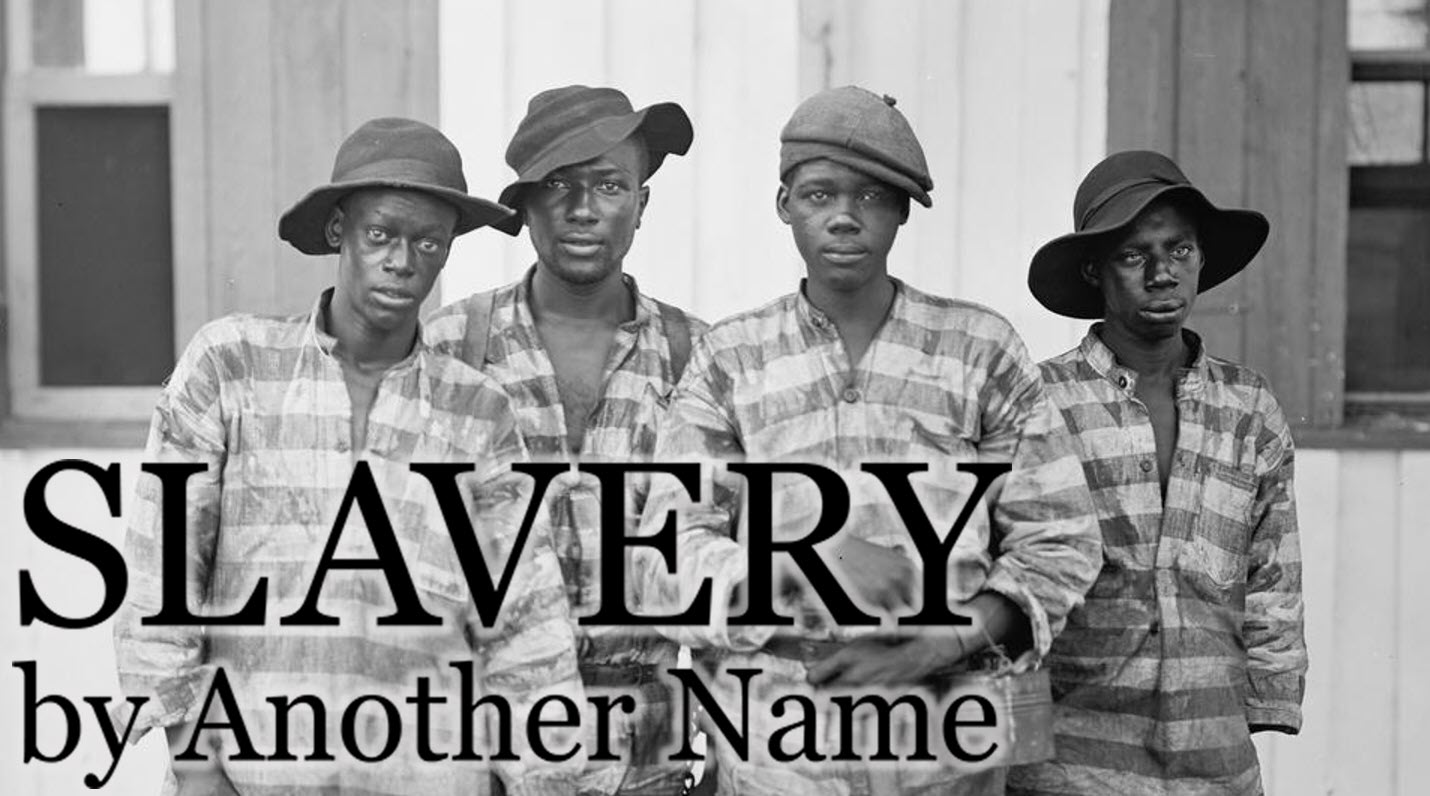
Slavery by Another Name: The Re-Enslavement of Black Americans from the Civil War to World War II by Douglas A. Blackmon_eBook and Audiobook, with Slavery by Another Name Documentary Film

The 13th Amendment to the United States Constitution provides that “Neither slavery nor involuntary servitude, except as a punishment for crime whereof the party shall have been duly convicted, shall exist within the United States, or any place subject to their jurisdiction.”

Book Summary

Douglas A. Blackmon’s “Slavery by Another Name: The Re-Enslavement of Black Americans from the Civil War to World War II” explores the continuation of forced labor and systemic oppression of Black Americans in the decades following the Civil War. The book argues that despite the abolition of slavery, many African Americans were subjected to new forms of servitude that mirrored the conditions of slavery.

The overview and outline that follows provides a structured look at the contents of Blackmon’s “Slavery by Another Name,” encapsulating the main themes and historical significance of the re-enslavement of Black Americans post-Civil War and its enduring legacy.

Overview:

  • Historical Context: The book examines the period from the end of the Civil War through World War II, highlighting how economic, social, and legal systems perpetuated the exploitation of Black Americans.
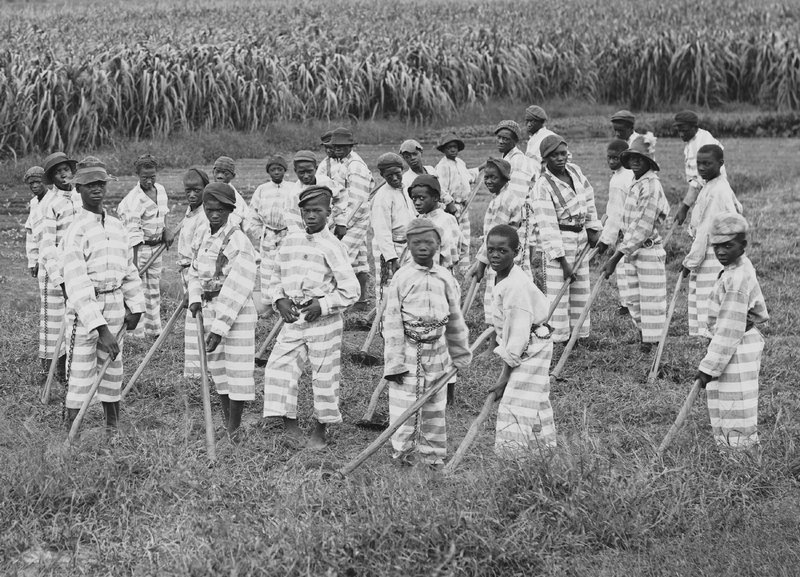
  • Convict Leasing System: Blackmon focuses on the convict leasing system, where African Americans were often arrested on dubious charges and forced into labor for private companies, effectively re-enslaving them.
  • Economic Exploitation: The narrative details how Southern states and businesses exploited Black labor to rebuild the economy after the Civil War, using tactics that included intimidation, violence, and legal manipulation.
  • Personal Stories: The book interweaves personal narratives and testimonies of individuals affected by these practices, providing a human face to the historical analysis.
  • Legacy and Impact: Blackmon discusses the long-term effects of these practices on African American communities and how they laid the groundwork for ongoing racial inequality and injustice.

Outline:

  • Introduction
    • Purpose of the book
    • Overview of the argument regarding the continuity of slavery-like conditions
  • Chapter 1: The End of the Civil War
    • The immediate aftermath of the Civil War and abolition of slavery
    • Initial hopes and challenges faced by newly freed Black Americans
  • Chapter 2: The Rise of Jim Crow
    • The establishment of Jim Crow laws and systemic racism
    • How these laws facilitated the re-enslavement of Black Americans
  • Chapter 3: The Convict Leasing System
    • Detailed description of convict leasing and how it operated
    • The role of law enforcement and the judicial system in perpetuating this system
  • Chapter 4: Economic Motivations
    • The economic interests of Southern states and businesses in maintaining forced labor
    • Analysis of how Black labor was exploited for profit
  • Chapter 5: Personal Narratives
    • Accounts of individuals who experienced re-enslavement
    • Impact of these experiences on families and communities
  • Chapter 6: Resistance and Resilience
    • Examples of resistance against re-enslavement practices
    • The role of Black communities in advocating for rights and reform
  • Chapter 7: National Attention and Reform Movements
    • The growing awareness of racial injustices and exploitation
    • Efforts by activists and organizations to combat systemic oppression
  • Chapter 8: The Legacy of Re-Enslavement
    • Examination of the long-term effects on Black Americans and society at large
    • Connections to contemporary issues of racial inequality and injustice
  • Conclusion
    • Summary of key themes and arguments
    • Reflection on the importance of understanding this history in the context of modern America

Douglas A. Blackmon’s “Slavery by Another Name: The Re-Enslavement of Black Americans from the Civil War to World War II” is a groundbreaking work that sheds light on the continuation of racial oppression and forced labor in the United States long after the formal abolition of slavery. Here are some deeper insights into the themes, events, and significance of the book:

Key Themes and Insights:

  1. Continuity of Oppression:
    • Blackmon argues that the end of slavery did not lead to true freedom for African Americans. Instead, a series of laws and practices emerged to maintain racial hierarchy and economic exploitation, creating a system that functioned similarly to slavery.
  2. Convict Leasing System:
    • One of the central focuses of the book is the convict leasing system, which allowed Southern states to lease convicts (often disproportionately Black men) to private companies for labor. This system became a profitable enterprise, with prisoners subjected to harsh conditions, violence, and little regard for their lives or well-being.
  3. Jim Crow Laws:
    • Following the Reconstruction era, Jim Crow laws institutionalized racial segregation and discrimination. Blackmon details how these laws facilitated the re-enslavement of Black Americans, enforcing a social order that kept them marginalized and economically disadvantaged.
  4. Economic Exploitation:
    • The book examines how economic interests in the South were heavily reliant on the exploitation of Black labor. Southern states and businesses sought to rebuild their economies after the Civil War by using forced labor, which was seen as a cost-effective means to achieve profitability, particularly in industries like agriculture and mining.
  5. Personal Narratives and Testimonies:
    • Blackmon incorporates personal stories of individuals who were subjected to these oppressive systems. These narratives bring a human element to the historical analysis, illustrating the trauma and resilience of those affected. Stories of families torn apart, individuals falsely accused and imprisoned, and the struggles for dignity and justice are poignantly detailed.
  6. Resistance Movements:
    • The author highlights the various forms of resistance against the re-enslavement practices, including protests, legal challenges, and the efforts of Black communities to advocate for their rights. This theme emphasizes the agency of Black Americans in fighting against systemic oppression.
  7. National Awareness and Reform:
    • As the 20th century progressed, growing awareness of racial injustices began to emerge. Blackmon discusses the role of activists and organizations that brought attention to the plight of Black Americans, pushing for reforms and challenging the status quo.
  8. Long-term Legacy:
    • The book concludes by examining the enduring legacy of these practices on contemporary American society. Blackmon argues that the historical exploitation of Black Americans laid the groundwork for ongoing issues of racial inequality, economic disparity, and social injustice that continue to affect African American communities today.

Conclusion:

“Slavery by Another Name” is a vital contribution to the understanding of American history, particularly regarding race relations and the systemic oppression of African Americans. Blackmon’s work challenges readers to recognize the complexities of freedom and the pervasive nature of racism that persisted after the Civil War. By illuminating the harsh realities of the convict leasing system and other forms of re-enslavement, the book serves as a powerful reminder of the struggles faced by Black Americans and the importance of acknowledging this history in the pursuit of justice and equality today.

The book received critical acclaim, including the Pulitzer Prize for History, and has significantly influenced scholarship on race, labor, and American history, encouraging a reevaluation of the narrative surrounding the post-Civil War era and its implications for modern society.

Slavery by Another Name_eBook

Pop the document out from the upper right to read / expand / download.

Slavery by Another Name_Audiobook

PART 1

PART 2

Slavery by Another Name Documentary Film

Learn more in RBG Communiversity Knowledge Media eLibrary:

Maafa_African Holocaust, Chattel Slavery, Jim Crow, Influencers and more_Books, Videos & Audio Folder

Prisons, Slavery, Policing and Imperialism (The Correctional-Industrial Complex [CIC]) Folder