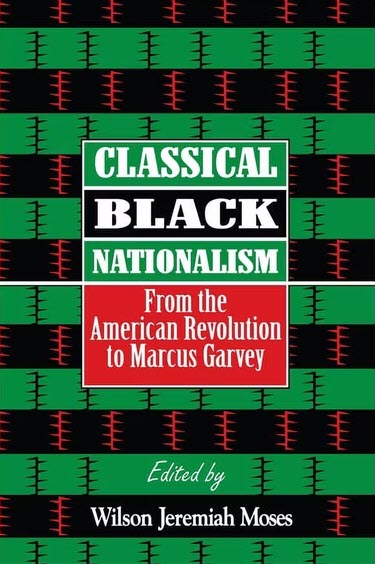
Classical Black Nationalism: From the American Revolution to Marcus Garvey, Edited by Wilson Jeremiah Moses and Black Nationalism in American Politics and Thought by Dean E. Robinson and Extended Definitions of African Ontology, Epistemology and Axiology

Book Summary

Acknowledgments

Wilson Jeremiah Moses outlines the book’s purpose as a teaching text focused on the self-help, Pan-Africanist, and Black Nationalist traditions in African American history.

The author acknowledges colleagues, family members, and editors who assisted in researching and editing the volume.

Introduction: Classical Black Nationalism

Definition of the Concept:

Classical Black Nationalism is defined as the movement between 1850 and 1925 aimed at creating a sovereign Black nation-state with defined geographical boundaries, typically in Africa.

Unlike 20th-century cultural nationalism, 19th-century Black Nationalism was grounded in religious historicism, Divine Providence, and high-culture aesthetic values.

History of the Movement:

Traces the evolution of Black Nationalist thought from late 18th-century petitions (e.g., Prince Hall) and the Haitian Revolution to 19th-century emigration debates.

Details key historical developments, including Paul Cuffe’s early repatriation plans, Black opposition to the proslavery American Colonization Society (ACS), the nationalist resurgence following the Fugitive Slave Act of 1850 and Dred Scott decision, and Marcus Garvey’s movement in the 1920s.

Bibliographic Notes:

Highlights of foundational texts and scholarly literature on Black Nationalism, Pan-Africanism, and Afrocentricity.

This foundational bibliography organizes key texts across Black Nationalism, Pan-Africanism, and Afrocentricity into their historical and conceptual frameworks.

Black Nationalism

Black nationalism focuses on self-determination, political autonomy, and the creation of separate economic, social, or geographic institutions for people of African descent.

  • Delany, Martin R. (1852).The Condition, Elevation, Emigration, and Destiny of the Colored People of the United States.
    • Significance: Written by the man widely considered the “father of Black nationalism,” this text argues for emigration and self-reliance.
  • Garvey, Marcus (1923).The Philosophy and Opinions of Marcus Garvey (Edited by Amy Jacques Garvey).
  • Malcolm X (1965).The Autobiography of Malcolm X (With Alex Haley).
    • Significance: Charts the evolution of 20th-century Black nationalist thought, tracing his journey through the Nation of Islam to orthodox Islam and internationalist Pan-Africanism.
  • Carmichael, Stokely (Kwame Ture) and Hamilton, Charles V. (1967).Black Power: The Politics of Liberation in America.
    • Significance: Popularized the term “Black Power” and provided a structural framework for Black political independence and solidarity.
  • Bracey, John H., Meier, August, and Rudwick, Elliott (Eds.). (1970).Black Nationalism in America.
    • Significance: A comprehensive anthology compiling primary source documents tracing the ideology from the 18th century to the late 20th century.

Pan-Africanism

Pan-Africanism is a worldwide movement that aims to encourage and strengthen bonds of solidarity between all indigenous and diaspora ethnic groups of African descent.

  • Du Bois, W.E.B. (1903).The Souls of Black Folk.
    • Significance: Introduces the concepts of “double consciousness” and the “color line,” laying the intellectual groundwork for Du Bois’s subsequent organizing of the early Pan-African Congresses.
  • Césaire, Aimé (1950).Discourse on Colonialism.
    • Significance: A foundational text for the Négritude movement, analyzing the deeply destructive psychological and cultural impacts of European colonialism.
  • Fanon, Frantz (1961).The Wretched of the Earth.
    • Significance: A seminal psychological and political analysis of decolonization, national culture, and the role of violence in liberation movements.
  • Nkrumah, Kwame (1963).Africa Must Unite.
    • Significance: Written by Ghana’s first president, this text outlines the urgent economic and political case for a unified, socialist United States of Africa to combat neo-colonialism.
  • Rodney, Walter (1972).How Europe Underdeveloped Africa.
    • Significance: A groundbreaking historical analysis showing how European exploitation directly caused the structural underdevelopment of the African continent.

Afrocentricity

Afrocentricity is an epistemological framework that seeks to study African phenomena and people of African descent from the perspective of African subjects rather than through a Eurocentric lens.

  • Diop, Cheikh Anta (1974).The African Origin of Civilization: Myth or Reality.
    • Significance: Preceded the formal naming of Afrocentricity, providing the essential historical, linguistic, and anthropological arguments for the African roots of Egyptian civilization.
  • Asante, Molefi Kete (1980).Afrocentricity: The Theory of Social Change.
    • Significance: The text that formally introduced and defined Afrocentricity as a distinct academic discipline and methodological framework.
  • Asante, Molefi Kete (1987).The Afrocentric Idea.
    • Significance: Expands the theory into a full critique of Eurocentric hegemony in education, literature, and social sciences.
  • Karenga, Maulana (1980).Kawaida Theory: An Introductory Outline.
    • Significance: Details the cultural nationalist philosophy that underpins Kwanzaa, emphasizing the reclamation of African values as a tool for liberation.
  • Mazama, Ama (Ed.). (2003).The Afrocentric Paradigm.
    • Significance: A critical collection of essays that outlines the boundaries, defenses, and applications of Afrocentricity across various scholarly fields.

Part One: The Colonization and Emigration Controversy, Preclassical Period

Notes on the State of Virginia (1781–82) by Thomas Jefferson:

Jefferson outlines a proposal to gradually emancipate enslaved Black people and deport them to a separate colony, arguing that racial prejudice and natural distinctions prevent peaceful integration into American society.

Letters to Peter Williams Jr. (1816) and James Forten (1817) by Paul Cuffe:

Paul Cuffe details efforts to establish commercial trade and migration networks between free Black Americans and Sierra Leone.

Letter to Paul Cuffe (1817) by James Forten:

Forten highlights the intense opposition among free Black Philadelphians toward forced colonization by the American Colonization Society, while privately acknowledging his belief that Black people must separate to achieve true independence.

Mutability of Human Affairs (1827) (Freedom’s Journal):

Explores the historical rise and fall of ancient empires, pointing to ancient Egypt and Ethiopia as Black-led centers of civilization and predicting an eventual restoration of Black national dignity.

The Ethiopian Manifesto (1829) by Robert Alexander Young:

Uses prophetic and messianic language to condemn slaveholders, warn of divine judgment, and predict the arrival of a divine leader ordained to unite Black people into a sovereign nation.

An Appeal in Four Articles (1830) by David Walker:

Delivers a passionate critique of American slavery, compares Black Americans to the biblical Israelites, rejects forced colonization to Africa, and calls for Black unity, self-education, and resistance against oppression.

Address at the African Masonic Hall (1833) by Maria Stewart:

Condemns white oppression while calling on Black men and youth to abandon trivial distractions, pursue moral and intellectual advancement, and fearlessly fight for their rights.

Pop the document out from the upper right to read / expand / download

NB: Clickable Note-slide_Extended Definitions of African Ontology, Epistemology and Axiology
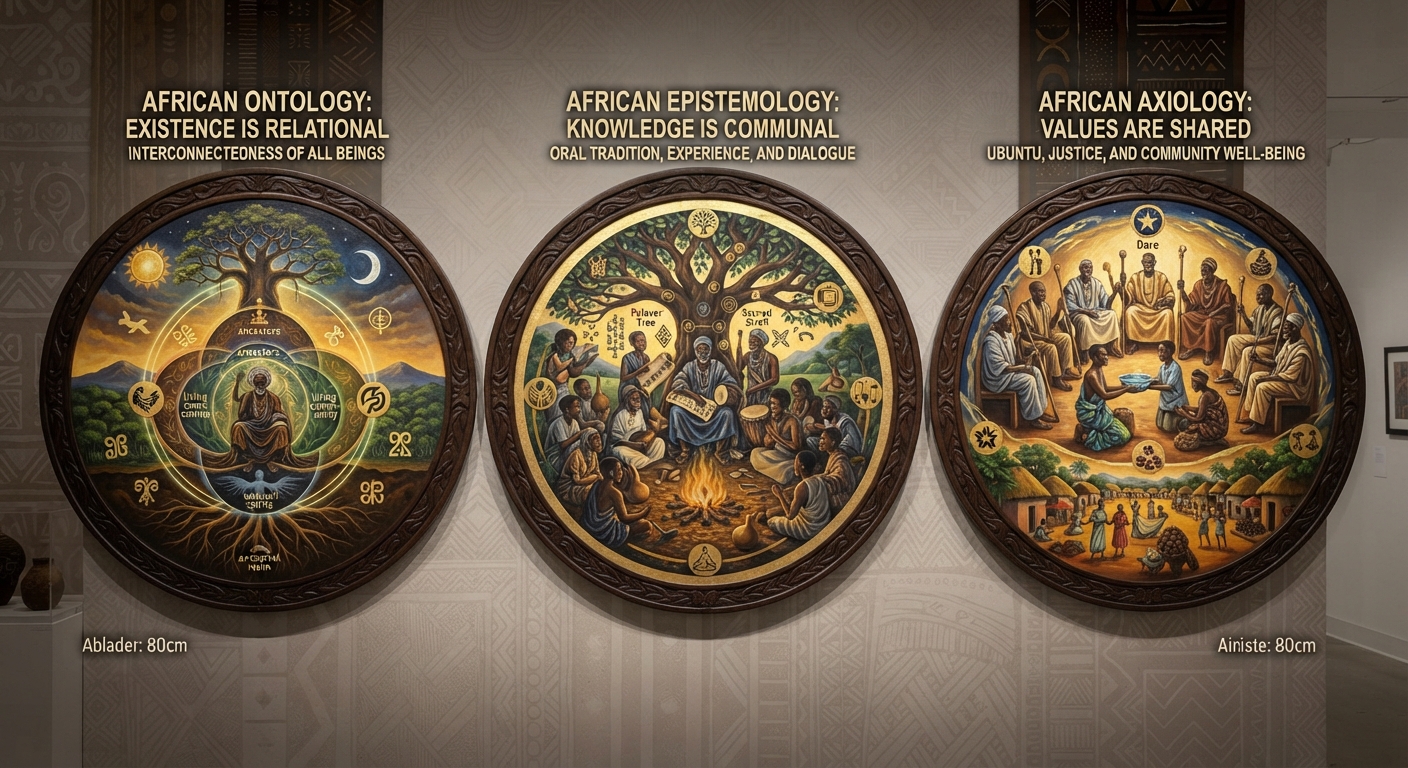
Click to enlarge and read.

Pop the document out from the upper right to read / expand / download

Ubuntu (or Afro-communitarianism)

RBG | “YOU MUST THINK OF YOURSELF AS A NATION”, Honorable Dr. Amos Wilson

Related: RBG SS| Art of Knowledge Collection (interactive articles and presentations over the years.) “A Current Student Work / Learning Project”
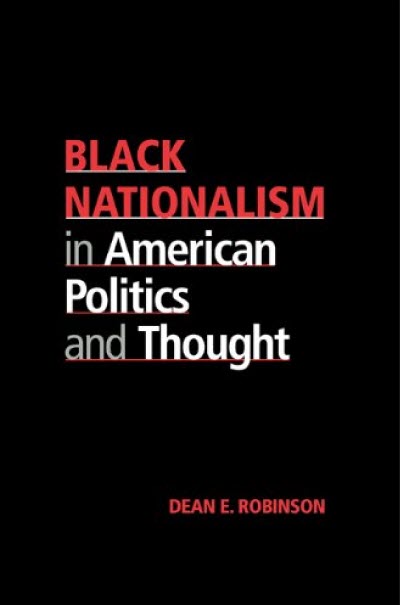
Book Summary

Dean E. Robinson’s Black Nationalism in American Politics and Thought (Cambridge University Press, 2001) examines arguments and activism for separate black statehood or institutional control from the mid-nineteenth century to the late twentieth century. Its central claim is that black nationalism is not a timeless, unchanging anti-assimilationist impulse. Instead, it draws on the political strategies and intellectual assumptions dominant in particular eras of U.S. history, often reproducing ideas linked to racial hierarchy.

Robinson distinguishes a “classical” period (roughly 1850–1925), defined strictly by pursuit of separate statehood, from a “modern” period (especially after World War II), which also includes demands for black administration of key institutions. He argues that classical nationalism was frequently conservative rather than radical, sharing civilizations and Christian frameworks with broader Anglo-American thought, while later forms often rested on an “ethnic paradigm” that treats culture as the main determinant of group status and mobility.

Outline of the book’s structure and main points:

Introduction sets out the thesis that Black Nationalism mirrors era-specific currents in American politics and thought, and that there is no single essential nationalist tradition.

Chapter 1, “Anglo-African Nationalism,” covers mid-nineteenth-century emigration proposals (Martin Delany, James T. Holly, and others) through Marcus Garvey’s Universal Negro Improvement Association, treating classical nationalism as a largely conservative response that often echoed prevailing ideas of civilization, Christianity, and racial destiny.

Chapter 2, “Malcolm X and the Nation of Islam,” reassesses Elijah Muhammad’s Nation of Islam as a postwar template and examines Malcolm X’s significance, including how later activists canonized him.

Chapter 3, “Black Nationalist Organizations in the Civil Rights Era,” surveys groups active in the 1960s and early 1970s that advanced territorial or institutional separatism alongside or against integrationist civil-rights strategies.

Chapter 4, “Black Nationalist Discourse,” analyzes the language and arguments used by nationalists in that period and how they related to broader political and intellectual developments.

Chapter 5, “Black Nationalism as Ethnic Pluralism,” argues that much Black Power-era activity, especially in the context of the War on Poverty and Model Cities programs, took the form of demands for black control of local institutions rather than independent statehood.

Chapter 6, “Black Nationalism and the Ethnic Paradigm,” traces how twentieth-century assumptions—that American culture is largely Anglo-Saxon and that cultural traits explain group socioeconomic position—shaped modern nationalist claims about identity, self-help, and mobility.

Chapter 7, “Black Nationalism in the Contemporary Era,” examines Louis Farrakhan’s Nation of Islam and Molefi Kete Asante’s Afrocentricity as leading late-twentieth-century expressions, both grounded in cultural-difference arguments and offering largely idealistic rather than coalition-based programs for empowerment.

Pop the document out from the upper right to read / expand / download

Minister Malcolm X | “A Comprehensive Achieve” Folder

BPM | BLM Audiobooks Folder

BPM | BLM eBooks Folder

We Will Shoot Back Armed Resistance in the Mississippi Freedom Movement (Akinyele Omowale Umoja)

Book Summary

Key Overview

The book fundamentally challenges the dominant narrative of the 1950s and 1960s Southern Civil Rights Movement, which often portrays the struggle as exclusively nonviolent. Umoja demonstrates that armed self-defense was not a contradiction to nonviolent organizing in Mississippi, but rather an essential component that protected activists, families, and communities from Black white-supremacist terror (such as the Ku Klux Klan and state-sanctioned violence).

Core Themes & Arguments

Protection of Nonviolent Organizers: Local Black Mississippians often provided armed security for nonviolent civil rights workers from organizations like SNCC (Student Nonviolent Coordinating Committee) and CORE (Congress of Racial Equality).

Grassroots Tradition: Armed resistance in Mississippi was deeply rooted in the culture and history of Black working-class communities and military veterans returning from WWII and the Korean War.

Key Organizations & Figures: The book details local self-defense efforts, including the formation of local militias and the role of groups like the Deacons for Defense and Justice, as well as prominent local leaders like Laura McGhee, E.W. Steptoe, and Hartman Turnbow.

Path to Black Power: Umoja traces how local experiences with self-defense directly informed the shift toward the broader Black Power movement in the mid-to-late 1960s.

About the Author

Akinyele Omowale Umoja is a professor of African American Studies at Georgia State University. He is an educator, author, and longtime activist in the New Afrikan Independence Movement.

Armed self-defense is the use of force—often including firearms—to protect oneself, family, or community from an imminent unlawful attack when the state cannot or will not provide protection. In U.S. history it has been both a legal right and a contested political strategy, especially in periods of official indifference to racial violence.In the Mississippi Freedom Movement that the shared book examines, historian Akinyele Omowale Umoja argues armed resistance was not a sideshow but essential. Local Black residents and veterans organized informal patrols and later groups modeled on the Deacons for Defense and Justice (founded 1964 in Jonesboro, Louisiana) to guard organizers, churches, and neighborhoods against Klan night riders and police-Klan collusion.

Umoja’s central claim is that this activity reduced fear, deterred attacks, and made nonviolent campaigns by SNCC, CORE, and the NAACP possible in places where federal protection was absent. Figures such as Medgar Evers privately favored organized self-defense; Freedom Summer field workers routinely encountered armed local people even while national leaders publicly preached nonviolence.

This pattern predates the 1960s. Robert F. Williams in Monroe, North Carolina, formed an NRA-chartered Black Armed Guard in the 1950s after Klan attacks and later wrote Negroes with Guns. Earlier still, Ida B. Wells and W.E.B. Du Bois endorsed armed protection against lynching. The common thread is that when local law enforcement sided with attackers, communities treated self-defense as a practical necessity rather than an ideological choice.

U.S. law treats self-defense as an affirmative defense with four core requirements: an imminent threat, a reasonable belief that force is necessary, proportionality, and (in most cases) that the defender did not initiate the confrontation. Every state recognizes some version of the castle doctrine—no duty to retreat inside one’s home. Roughly 30–38 states have added “stand your ground” statutes that remove the duty to retreat in any place a person is lawfully present. Duty-to-retreat states still exempt the home. These rules do not authorize preemptive or retaliatory violence; they only excuse force used against an immediate threat.

Empirical estimates of how often guns are used defensively vary sharply because of survey design. The National Crime Victimization Survey (NCVS) consistently finds 60,000–65,000 defensive firearm incidents per year, a small fraction of total violent crime. Private telephone surveys, most famously Kleck and Gertz (1995), have produced figures of 2 million or more. Methodological disputes—recall bias, what counts as a “use,” whether the incident was actually criminal—have never been fully resolved. Both sides agree that most reported defensive uses involve display rather than shots fired, and that the legal and physical risks after a shooting remain high.

The historical record and the statistical debate illustrate the same tension: armed self-defense can deter attackers and buy time when institutions fail, yet it also carries risks of escalation, misidentification, and unequal legal outcomes. In the specific setting of 1960s Mississippi, the evidence Umoja assembles suggests it functioned as a complement to, rather than a replacement for, political organizing and legal pressure. Contemporary arguments continue to turn on whether those conditions of state failure still exist and how the costs of private armed force should be weighed against its benefits.

We Will Shoot Back by Akinyele Umoja Playlist 16 Videos

Pop the document out from the upper right to read / expand / download

Pop the document out from the upper right to read / expand / download
Jailhouse Lawyers: Prisoners Defending Prisoners v. the USA by Mumia Abu-Jamal, Introduction Angela Y. Davis_eBook and Audiobook

Book Summary

“Jailhouse Lawyers: Prisoners Defending Prisoners v. the USA” is a powerful examination of the U.S. prison system through the lens of those incarcerated. Written by Mumia Abu-Jamal, a prominent journalist and activist on death row, this book sheds light on the struggles and experiences of prisoners who take on the challenge of defending themselves and their peers within a flawed legal system. The introduction by Angela Y. Davis adds depth, contextualizing the importance of prison activism and the fight against systemic injustice.

The outline that follows provides a structured view of the book’s content and themes, highlighting the critical issues surrounding the prison system and the efforts of those within it to seek justice.

  • Introduction by Angela Y. Davis
    • Overview of the prison industrial complex
    • Historical context of prison activism
    • Importance of prisoner representation in the legal system
  • Chapter 1: The Role of Jailhouse Lawyers
    • Definition and function of jailhouse lawyers
    • Historical examples of successful jailhouse lawyers
    • The impact of jailhouse lawyers on prison reform
  • Chapter 2: The Prison System and Legal Barriers
    • Description of the barriers faced by prisoners in accessing legal resources
    • Overview of the legal system’s shortcomings regarding prisoner rights
    • The role of censorship and isolation in hindering legal defense
  • Chapter 3: Case Studies of Prisoner Defenses
    • Detailed accounts of notable cases handled by jailhouse lawyers
    • Analysis of the outcomes and their implications for justice
    • Reflection on the strategies employed by these lawyers
  • Chapter 4: The Intersection of Race and Incarceration
    • Examination of racial disparities within the prison system
    • Impact of systemic racism on legal representation for prisoners
    • Stories of racial injustice and resistance
  • Chapter 5: The Future of Prisoner Advocacy
    • Discussion on the evolving role of jailhouse lawyers in modern justice
    • Potential reforms and changes needed in the legal system
    • The importance of solidarity among prisoners and advocates
  • Conclusion: A Call to Action
    • Reflection on the necessity of continued advocacy for prisoners’ rights

Here’s a deeper dive into the key themes and concepts presented in “Jailhouse Lawyers”

Key Themes

  1. Prisoner Advocacy:
    • The book emphasizes the empowerment of prisoners to advocate for themselves and their peers. Jailhouse lawyers often develop a deep understanding of legal principles, despite the limitations of their environments. They become vital resources for other inmates who may lack formal legal representation.
  2. Systemic Injustice:
    • Abu-Jamal critiques the U.S. legal system, highlighting how it disproportionately affects marginalized populations, particularly people of color. He argues that the system is designed to perpetuate inequality and that many prisoners face insurmountable barriers when trying to navigate it.
  3. Resistance and Solidarity:
    • The narrative illustrates the importance of solidarity among prisoners. It showcases how collective efforts can challenge injustices and how shared experiences often lead to organized actions for reform. The book serves as a testament to the resilience of those incarcerated who refuse to be silenced.
  4. Historical Context:
    • The introduction by Angela Y. Davis situates the discussion within a broader historical framework, linking contemporary issues in the prison system to past movements for civil rights and social justice. Davis provides insights into how historical struggles inform current advocacy efforts.
  5. Legal Education:
    • The book highlights the informal education that takes place within prison walls, where inmates learn about the law and legal strategies. This self-education is often a response to the inadequacies of the legal system and the lack of access to professional legal assistance.

Important Concepts

  • Jailhouse Lawyer:
    • A term used to describe inmates who have taken it upon themselves to learn about the law and assist others in their legal battles. These individuals often possess significant knowledge and can navigate the complexities of the legal system despite their confinement.
  • Access to Justice:
    • The book underscores the challenges faced by prisoners in accessing legal resources, such as libraries, legal texts, and supportive networks. It critiques the systemic barriers that prevent a fair trial and adequate representation.
  • Racial Disparities:
    • Abu-Jamal explores how race and ethnicity intersect with the prison system, revealing how systemic racism is embedded within legal practices. He discusses the disproportionate incarceration rates of Black and Latino individuals and the implications of this on their communities.
  • Activism and Reform:
    • The narrative calls for ongoing activism to reform the justice system, advocating for policies that prioritize rehabilitation over punishment. It encourages readers to engage in grassroots movements and support organizations working toward prison reform.

Jailhouse Lawyers: Prisoners Defending Prisoners v. the USA_eBook

Overall, “Jailhouse Lawyers” is not only a critique of the prison system but also a celebration of the resilience and ingenuity of those who fight for justice from behind bars. It serves as a reminder of the importance of advocacy, education, and solidarity in the face of systemic oppression.

Pop the documents out from the upper right to read / expand / download.

Jailhouse Lawyers: Prisoners Defending Prisoners v. the USA_Audiobook

Learn more in RBG Communiversity Knowledge Media eLibrary:

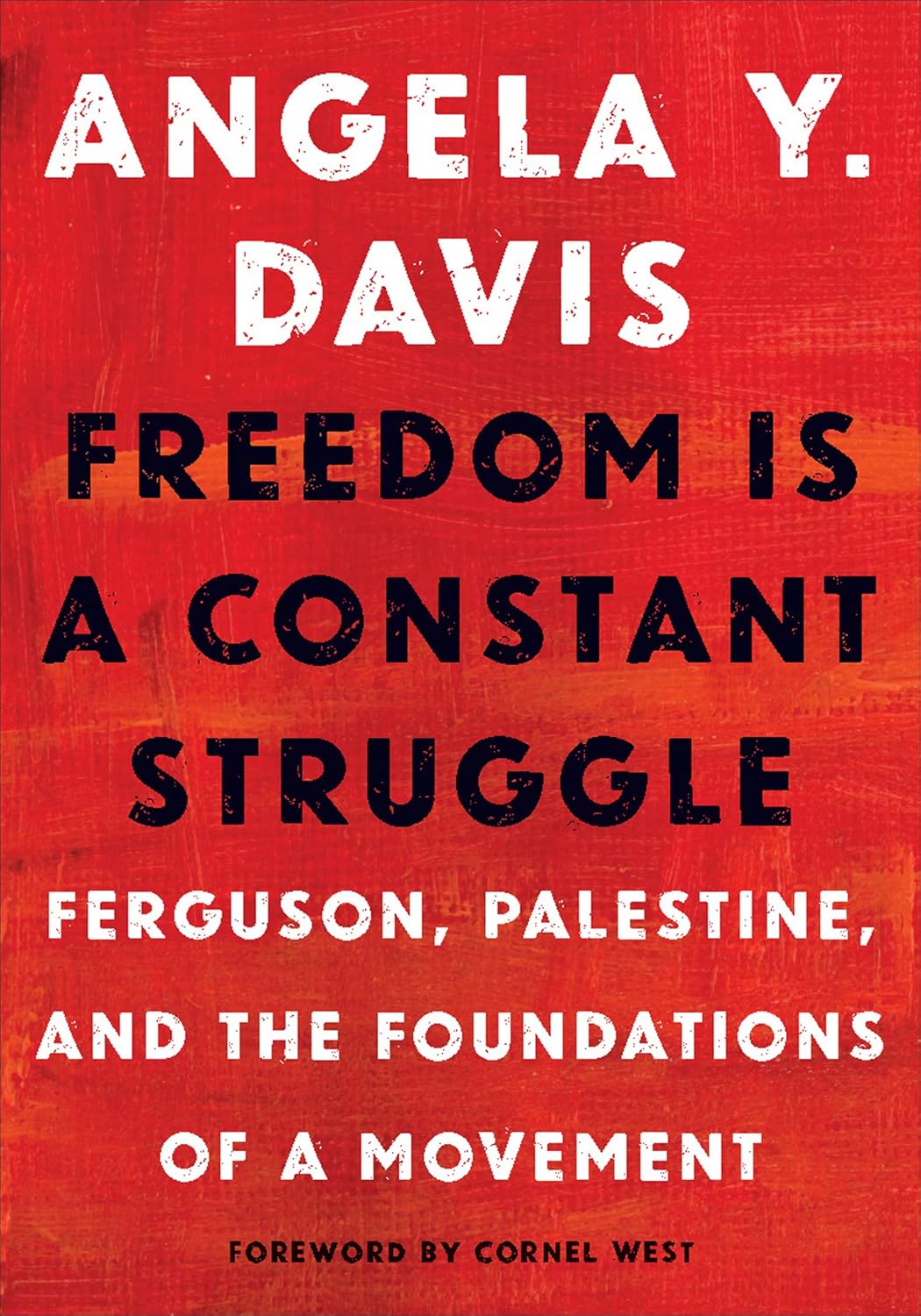
Freedom Is a Constant Struggle: Ferguson, Palestine, and the Foundations of a Movement by Angela Y. Davis_eBook and Audiobook, with ORIGINAL_Gil Scott-Heron – “The Revolution Will Not Be Televised” – w-Lyrics

“Freedom Is a Constant Struggle”_Book Summary

“Freedom Is a Constant Struggle: Ferguson, Palestine, and the Foundations of a Movement” by Angela Y. Davis is a powerful collection of essays and speeches that explores the intersections of social justice movements, particularly focusing on the struggles against racial oppression in the United States and the Palestinian struggle for liberation. Davis draws connections between the experiences of marginalized communities, emphasizing the global nature of resistance against systemic injustice. Through her analysis, she highlights the importance of solidarity, intersectionality, and the need for a comprehensive understanding of freedom that transcends borders. The book serves as a call to action for activists and allies to unite in the fight for justice and equality.

The outline that follows captures the main themes and structure of “Freedom Is a Constant Struggle,” highlighting Angela Y. Davis’s critical analysis of contemporary social justice movements and her call for solidarity in the fight against oppression. The book serves as an important resource for understanding the interconnectedness of struggles for liberation and the necessity of collective action in achieving social justice.

I. Introduction

  • Overview of the book’s purpose: to connect struggles for liberation across different contexts
  • Introduction to Angela Y. Davis and her role as a prominent activist and scholar
  • The significance of examining the intersections of race, class, and gender in social movements

II. Historical Context of Struggles

  • Examination of the historical roots of racial oppression in the United States
  • Overview of the Palestinian struggle for self-determination and liberation
  • Discussion of the global context of colonialism and its impact on marginalized communities

III. The Ferguson Uprising

  • Analysis of the events surrounding the Ferguson protests following the shooting of Michael Brown
  • Exploration of the role of grassroots organizing and community response to police violence
  • Connection between the Ferguson movement and broader Black Lives Matter activism

IV. Solidarity with Palestine

  • Examination of the parallels between the struggles of Black Americans and Palestinians
  • Discussion of the Boycott, Divestment, Sanctions (BDS) movement and its significance
  • The importance of international solidarity in the fight against oppression

V. Intersectionality in Activism

  • Analysis of the importance of intersectionality in understanding social justice movements
  • Exploration of how race, gender, class, and sexuality intersect in the struggle for liberation
  • The role of women and LGBTQ+ individuals in movements for social change

VI. The Role of Education and Consciousness

  • Discussion of the importance of political education and consciousness-raising in activism
  • The need for critical engagement with history and current events to inform movement-building
  • The role of art, culture, and literature in inspiring and mobilizing communities

VII. Reflections on the Future of Movement-Building

  • Insights into the potential for transformative change through collective action
  • The importance of maintaining momentum and solidarity among diverse movements
  • A vision for a more just and equitable future, grounded in the principles of freedom and liberation

VIII. Conclusion

  • Summary of key themes and insights from the book
  • Reflection on the ongoing struggles for justice and the interconnectedness of movements
  • A call to action for readers to engage in the fight for freedom and equality across borders

“Freedom Is a Constant Struggle: Ferguson, Palestine, and the Foundations of a Movement” by Angela Y. Davis is a profound exploration of the connections between various social justice movements, particularly the struggles against systemic racism in the United States and the fight for Palestinian liberation. Through a series of essays and speeches, Davis articulates her vision of a world where freedom and justice are accessible to all, emphasizing the importance of solidarity and collective action.

Key Themes and Insights

  1. Interconnected Struggles:
    • Davis draws parallels between the struggles of Black Americans and Palestinians, highlighting how both groups face systemic oppression and violence rooted in colonialism and racism. She argues that understanding these connections is crucial for building a robust movement for justice.
    • The book emphasizes that the fight for freedom is not confined by national borders; rather, it is a global struggle against various forms of oppression.
  2. Ferguson and the Black Lives Matter Movement:
    • In her analysis of the Ferguson uprising, which followed the police shooting of Michael Brown, Davis discusses the grassroots organizing that emerged in response to state violence. She highlights the significance of the Black Lives Matter movement as a contemporary expression of the ongoing fight against racial injustice.
    • Davis emphasizes the need for sustained activism and community engagement to combat police brutality and systemic racism.
  3. Solidarity with Palestine:
    • Davis advocates for solidarity with the Palestinian struggle, articulating the importance of the Boycott, Divestment, Sanctions (BDS) movement as a means of resisting Israeli occupation and advocating for Palestinian rights.
    • She argues that recognizing the parallels between the experiences of Black Americans and Palestinians can strengthen solidarity efforts and amplify voices fighting for liberation.
  4. Intersectionality:
    • A significant theme in Davis’s work is the concept of intersectionality, which examines how various social identities (race, gender, class, and sexuality) intersect and impact individuals’ experiences of oppression.
    • Davis highlights the vital contributions of women and LGBTQ+ individuals to social justice movements, advocating for an inclusive approach that recognizes the diverse experiences within marginalized communities.
  5. Political Education and Consciousness:
    • Davis underscores the importance of political education in fostering a critical consciousness among activists. She believes that understanding history, systemic oppression, and current events is essential for effective movement-building.
    • The role of art, culture, and literature in inspiring and mobilizing communities is also emphasized, as these mediums can be powerful tools for raising awareness and fostering solidarity.
  6. Vision for the Future:
    • In her reflections on the future of social justice movements, Davis expresses hope for transformative change through collective action and solidarity. She envisions a world where liberation is not just a dream but a reality for all oppressed people.
    • The book concludes with a call to action, urging readers to engage in the ongoing fight for justice and to recognize their roles as allies in various struggles for liberation.

Conclusion

“Freedom Is a Constant Struggle” is a vital contribution to contemporary discussions about social justice, activism, and solidarity. Angela Y. Davis’s eloquent and insightful analysis encourages readers to recognize the interconnectedness of struggles for liberation and to engage actively in the fight against oppression. By drawing on her extensive experience as an activist, scholar, and thinker, Davis provides a framework for understanding the complexities of social justice movements and the importance of collective action.

The book serves as both an educational resource and a rallying cry for those committed to social change, emphasizing that the pursuit of freedom is a continuous journey that requires dedication, solidarity, and a deep understanding of the struggles faced by marginalized communities worldwide.

Click to view full size.

Freedom Is a Constant Struggle_eBook

Angela Y. Davis’s “Freedom Is a Constant Struggle” serves as both a historical account and a manifesto for contemporary resistance, urging readers to recognize the interconnections between various social justice movements and to work collectively towards a more just world

Pop the documents out from the upper right to read / expand / download.

Freedom Is a Constant Struggle_Audiobook

Audio start with Forward and corresponds to page 8 of the above Reader.

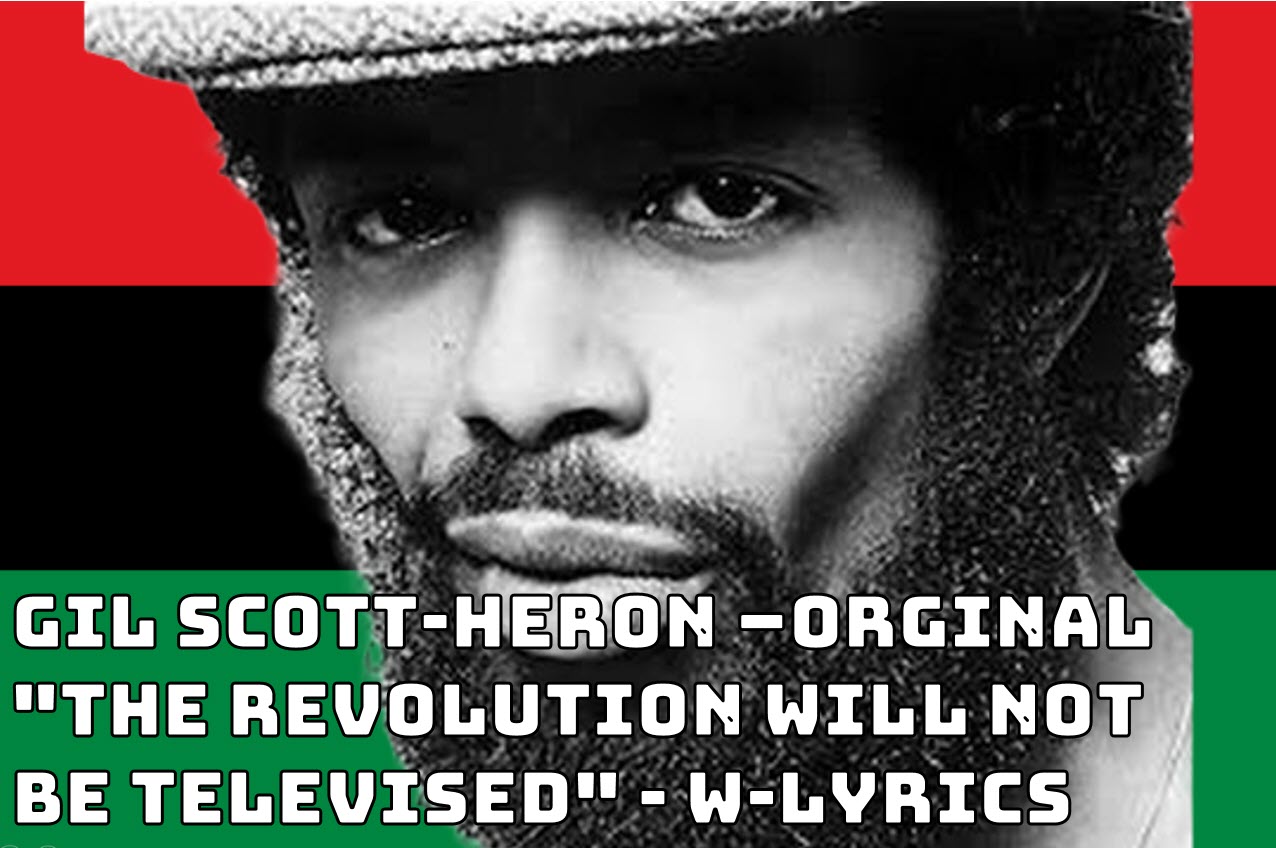
ORIGINAL_Gil Scott-Heron – “The Revolution Will Not Be Televised” – w-Lyrics

Gil Scott-Heron – The Revolution Will Not Be Televised – w-Lyrics

“The Revolution Will Not Be Televised” is a poem and song by Gilbert “Gil” Scott-Heron (April 1, 1949 – May 27, 2011). Song was originally a poem, inspired by the death of Gil’s College Classmate and friend Ron Colbert in November 1969. Colbert died after suffering from a brain Aneurysm, and going untreated while on Campus. The tragedy could have been avoided if the campus infirmary had been staffed and open around the clock. This led to boycotts, protests and demand for change.

Learn more in RBG Communiversity Knowledge Media eLibrary:

Gil Scott Heron Video Anthology

The Choice: The Issue of Black Survival in America by Samuel Yette (1971/82) Audiobook, presented by Real Talk With ZSJ

NB: The price of this book is prohibitive for most working class Black people, ie.“Colonization of Black Information”

The term “Colonization of Black Information” refers to the historical and ongoing processes through which knowledge, narratives, and cultural expressions of Black people and communities have been dominated, appropriated, blocked or marginalized by external forces, often rooted in colonialism and the systemic, business and culture of white supremacy (racism). Allow us to provide some details, as it goes to why this book is so expensive.

Four quick points:

  1. Historical Context: During colonial times, European powers often suppressed indigenous knowledge systems and cultural practices, replacing them with their own narratives. This led to a loss of agency among Black (New Afrikan) communities in telling their own stories and defining their own realities and identities.
  2. Cultural Appropriation: The appropriation of Black culture, music, art, and other expressions by non-Black (white) individuals and/or groups without proper acknowledgment or respect can be seen as a continuation of this colonization. Such actions often strip the original meanings and contexts from cultural elements.
  3. Media Representation: The portrayal of Black individuals and communities in media perpetuate stereotypes, often framing them through a lens that aligns with dominant societal (white) narratives and serving to distort public perceptions and limit the understanding of the Black experiences in Amerikkka under the bootheel of its oppression.
  4. Access to Information: Structural inequalities (eg. this book) often result in Black communities having less access to platforms and resources to share their information and narratives. This, more frequently than not, leads to a dearth of knowledge and a lack of representation in academic, historical, socio-political, economic and cultural discussions.

Book Summary

“The Choice: The Issue of Black Survival in America” by Samuel Yette is a profound exploration of the challenges faced by the African American community in the United States. Yette presents a critical analysis of the socio-political landscape affecting Black Americans, discussing themes of survival, identity, and agency. The book examines historical contexts, systemic racism, and the ongoing struggle for civil rights, ultimately advocating for a conscious choice in addressing these persistent issues.

The outline that follows captures the essence of Yette’s work, emphasizing both the historical context and the contemporary issues facing the Black community in America

  • Introduction
    • Purpose of the book
    • Overview of the Black experience in America
  • Historical Context
    • Legacy of slavery
    • Civil Rights Movement
    • Continued oppression and disenfranchisement
  • Systemic Racism
    • Definition and examples
    • Impact on African American communities
    • Institutional barriers in education, employment, and justice
  • Identity and Culture
    • The importance of cultural heritage
    • The role of community and family
    • Challenges in maintaining identity in a predominantly white society
  • Survival Strategies
    • Individual vs. collective approaches
    • Importance of education and empowerment
    • Role of activism and political engagement
  • The Power of Choice
    • Defining choices in the context of survival
    • Historical examples of impactful choices made by Black leaders
    • Encouraging personal responsibility and agency
  • Vision for the Future
    • Hope and resilience within the Black community
    • Potential pathways for change
    • Call to action for readers
  • Conclusion
    • Summary of key points
    • Reinforcement of the importance of choice in the struggle for survival
    • Final thoughts on unity and collective action

  Here is an outline comprising a deeper exploration of the themes and concepts presented in “The Choice”

  1. Introduction
    • Yette sets the stage by discussing the historical and ongoing struggles of African Americans in the U.S. He emphasizes the need for awareness and understanding of the systemic issues that have shaped the Black experience.
  2. Historical Context
    • The author delves into the history of slavery, detailing its brutal realities and the long-lasting effects on subsequent generations. He explores the Civil Rights Movement, highlighting key figures and events that sought to dismantle institutional racism. Yette also discusses how the remnants of these historical injustices continue to affect Black Americans today.
  3. Systemic Racism
    • Yette provides a thorough analysis of systemic racism, defining it as a deeply ingrained issue that permeates various institutions, including education, healthcare, and the justice system. He illustrates how these systems fail Black individuals, contributing to socio-economic disparities and perpetuating cycles of poverty and disenfranchisement.
  4. Identity and Culture
    • The book emphasizes the significance of cultural identity and heritage for African Americans. Yette discusses the importance of community bonds, family structures, and the role of cultural expressions in fostering resilience. He examines the struggles of maintaining cultural identity in a society that often marginalizes or misrepresents Black culture.
  5. Survival Strategies
    • Yette advocates for both individual and collective strategies for survival. He stresses the importance of education as a tool for empowerment and encourages active participation in political processes. The author highlights examples of grassroots movements and organizations that have successfully mobilized communities to fight for their rights.
  6. The Power of Choice
    • Central to Yette’s thesis is the concept of choice. He posits that individuals have the power to make choices that can lead to positive change, both personally and collectively. He uses historical examples of leaders who made significant choices that impacted the trajectory of the civil rights struggle, inspiring readers to take ownership of their decisions.
  7. Vision for the Future
    • Yette expresses a hopeful vision for the future, emphasizing the resilience and strength of the Black community. He discusses the potential for change through unity and collective action. The author calls on readers to engage in the ongoing struggle for justice and equality, fostering a sense of responsibility towards future generations.
  8. Conclusion
    • The book concludes with a powerful reminder of the importance of awareness and action. Yette urges readers to reflect on their roles in the fight against systemic racism and to recognize that meaningful change requires both individual and collective effort.

Key Themes:

  • Empowerment through Education: Yette highlights education as a vital means for empowerment and breaking the cycle of oppression.
  • Cultural Identity: The preservation of cultural heritage is crucial for community strength and individual identity.
  • Agency and Responsibility: Individuals must recognize their power to make choices that affect their lives and communities.
  • Collective Action: The importance of solidarity and collaboration among African Americans to effect social change.

Overall, “The Choice” serves as a thought-provoking work that challenges readers to think critically about the issues facing the Black community while inspiring them to take action towards a more equitable future.

Part I A Partial Reading of The Choice The Issue of Black Survival in America by Samuel Yette Audiobook (Real Talk With ZSJ)

Starts @1min. 09 sec.

The Choice: The Issue of Black Survival in America: View/Study/ Download ALL 7 Parts presented by Real Talk With ZSJ HERE

Learn more in RBG Communiversity Knowledge Media eLibrary: