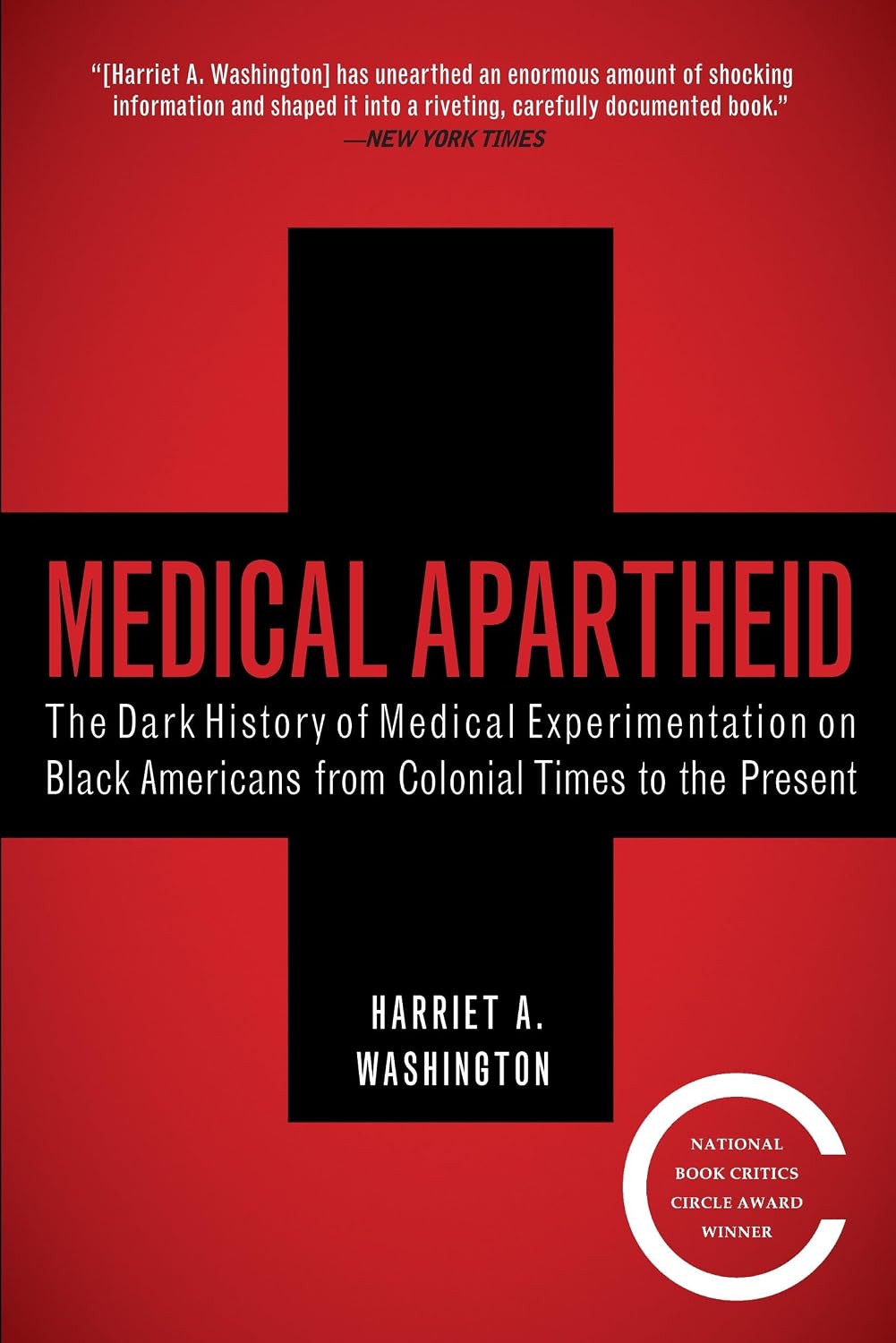
Medical Apartheid (2006) by Harriet A. Washington is a comprehensive historical account of unethical medical experimentation, exploitation, and mistreatment of Black Americans from the colonial era to the early 21st century. It argues that these practices formed a long-standing pattern rather than isolated events, helping explain persistent medical distrust and health disparities. The book won the 2007 National Book Critics Circle Award for Nonfiction and has been influential in discussions of medical ethics and race.
The book is organized into three main parts:
Part 1: A Troubling Tradition covers the 18th and 19th centuries through the early 20th century. It examines how enslaved people were used for medical experiments (often controlled by owners), the development of gynecological procedures by J. Marion Sims on enslaved women without anesthesia, the display of Black bodies as medical or public curiosities, and the widespread use of Black cadavers for dissection (via grave-robbing and disproportionate sourcing from poor or Black populations). It culminates in a detailed account of the Tuskegee Syphilis Study (1932–1972), in which the U.S. Public Health Service observed hundreds of poor Black men with syphilis without providing treatment (even after penicillin became available) to study the disease’s progression. Washington presents Tuskegee as emblematic of a broader continuum rather than a unique aberration.
Part 2: The Usual Subjects addresses 20th-century research involving vulnerable populations. Topics include eugenics-driven or coerced sterilizations (disproportionately affecting Black women), radiation and plutonium experiments, research conducted on prisoners, and studies involving children (including some examining genetics or behavior). The author emphasizes patterns in which Black subjects were frequently selected for higher-risk or non-therapeutic work, often without informed consent.
Part 3: Race, Technology, and Medicine discusses more contemporary issues, including the non-consensual harvesting and use of Henrietta Lacks’s cells (the HeLa line), disparities in clinical research participation and treatment, genetic research, and related technological or public-health applications. The book concludes with an epilogue that notes international parallels and offers recommendations for stronger informed-consent standards, ethics training, and research oversight.
Throughout, Washington draws on medical literature, archival records, and interviews to document specific cases and argue that acknowledging this history is necessary for repairing trust and improving ethical research participation. While the core episodes (such as Tuskegee and certain 19th-century surgical practices) are well-documented historical facts, some reviewers have debated the book’s framing, scale of claims, or specific details; it remains a widely cited and influential survey of the subject.
Pop the document out from the upper right to read / expand / download
Pop the document out from the upper right to read / expand / download
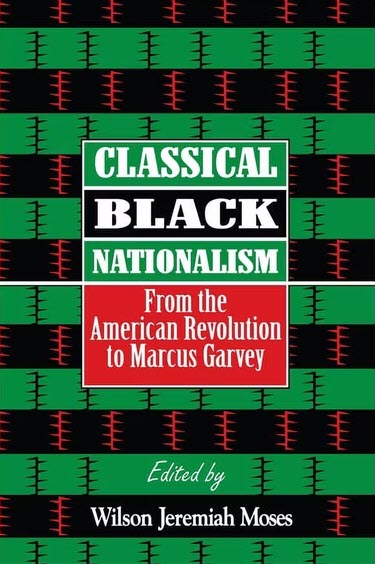
Wilson Jeremiah Moses outlines the book’s purpose as a teaching text focused on the self-help, Pan-Africanist, and Black Nationalist traditions in African American history.
The author acknowledges colleagues, family members, and editors who assisted in researching and editing the volume.
Introduction: Classical Black Nationalism
Definition of the Concept:
Classical Black Nationalism is defined as the movement between 1850 and 1925 aimed at creating a sovereign Black nation-state with defined geographical boundaries, typically in Africa.
Unlike 20th-century cultural nationalism, 19th-century Black Nationalism was grounded in religious historicism, Divine Providence, and high-culture aesthetic values.
History of the Movement:
Traces the evolution of Black Nationalist thought from late 18th-century petitions (e.g., Prince Hall) and the Haitian Revolution to 19th-century emigration debates.
Details key historical developments, including Paul Cuffe’s early repatriation plans, Black opposition to the proslavery American Colonization Society (ACS), the nationalist resurgence following the Fugitive Slave Act of 1850 and Dred Scott decision, and Marcus Garvey’s movement in the 1920s.
Bibliographic Notes:
Highlights of foundational texts and scholarly literature on Black Nationalism, Pan-Africanism, and Afrocentricity.
This foundational bibliography organizes key texts across Black Nationalism, Pan-Africanism, and Afrocentricity into their historical and conceptual frameworks.
Black nationalism focuses on self-determination, political autonomy, and the creation of separate economic, social, or geographic institutions for people of African descent.
Delany, Martin R. (1852).The Condition, Elevation, Emigration, and Destiny of the Colored People of the United States.
Significance: Written by the man widely considered the “father of Black nationalism,” this text argues for emigration and self-reliance.
Garvey, Marcus (1923).The Philosophy and Opinions of Marcus Garvey (Edited by Amy Jacques Garvey).
Malcolm X (1965).The Autobiography of Malcolm X (With Alex Haley).
Significance: Charts the evolution of 20th-century Black nationalist thought, tracing his journey through the Nation of Islam to orthodox Islam and internationalist Pan-Africanism.
Carmichael, Stokely (Kwame Ture) and Hamilton, Charles V. (1967).Black Power: The Politics of Liberation in America.
Significance: Popularized the term “Black Power” and provided a structural framework for Black political independence and solidarity.
Bracey, John H., Meier, August, and Rudwick, Elliott (Eds.). (1970).Black Nationalism in America.
Significance: A comprehensive anthology compiling primary source documents tracing the ideology from the 18th century to the late 20th century.
Pan-Africanism is a worldwide movement that aims to encourage and strengthen bonds of solidarity between all indigenous and diaspora ethnic groups of African descent.
Du Bois, W.E.B. (1903).The Souls of Black Folk.
Significance: Introduces the concepts of “double consciousness” and the “color line,” laying the intellectual groundwork for Du Bois’s subsequent organizing of the early Pan-African Congresses.
Césaire, Aimé (1950).Discourse on Colonialism.
Significance: A foundational text for the Négritude movement, analyzing the deeply destructive psychological and cultural impacts of European colonialism.
Fanon, Frantz (1961).The Wretched of the Earth.
Significance: A seminal psychological and political analysis of decolonization, national culture, and the role of violence in liberation movements.
Nkrumah, Kwame (1963).Africa Must Unite.
Significance: Written by Ghana’s first president, this text outlines the urgent economic and political case for a unified, socialist United States of Africa to combat neo-colonialism.
Rodney, Walter (1972).How Europe Underdeveloped Africa.
Significance: A groundbreaking historical analysis showing how European exploitation directly caused the structural underdevelopment of the African continent.
Afrocentricity is an epistemological framework that seeks to study African phenomena and people of African descent from the perspective of African subjects rather than through a Eurocentric lens.
Diop, Cheikh Anta (1974).The African Origin of Civilization: Myth or Reality.
Significance: Preceded the formal naming of Afrocentricity, providing the essential historical, linguistic, and anthropological arguments for the African roots of Egyptian civilization.
Asante, Molefi Kete (1980).Afrocentricity: The Theory of Social Change.
Significance: The text that formally introduced and defined Afrocentricity as a distinct academic discipline and methodological framework.
Asante, Molefi Kete (1987).The Afrocentric Idea.
Significance: Expands the theory into a full critique of Eurocentric hegemony in education, literature, and social sciences.
Karenga, Maulana (1980).Kawaida Theory: An Introductory Outline.
Significance: Details the cultural nationalist philosophy that underpins Kwanzaa, emphasizing the reclamation of African values as a tool for liberation.
Mazama, Ama (Ed.). (2003).The Afrocentric Paradigm.
Significance: A critical collection of essays that outlines the boundaries, defenses, and applications of Afrocentricity across various scholarly fields.
Part One: The Colonization and Emigration Controversy, Preclassical Period
Notes on the State of Virginia (1781–82) by Thomas Jefferson:
Jefferson outlines a proposal to gradually emancipate enslaved Black people and deport them to a separate colony, arguing that racial prejudice and natural distinctions prevent peaceful integration into American society.
Letters to Peter Williams Jr. (1816) and James Forten (1817) by Paul Cuffe:
Paul Cuffe details efforts to establish commercial trade and migration networks between free Black Americans and Sierra Leone.
Letter to Paul Cuffe (1817) by James Forten:
Forten highlights the intense opposition among free Black Philadelphians toward forced colonization by the American Colonization Society, while privately acknowledging his belief that Black people must separate to achieve true independence.
Mutability of Human Affairs (1827) (Freedom’s Journal):
Explores the historical rise and fall of ancient empires, pointing to ancient Egypt and Ethiopia as Black-led centers of civilization and predicting an eventual restoration of Black national dignity.
The Ethiopian Manifesto (1829) by Robert Alexander Young:
Uses prophetic and messianic language to condemn slaveholders, warn of divine judgment, and predict the arrival of a divine leader ordained to unite Black people into a sovereign nation.
An Appeal in Four Articles (1830) by David Walker:
Delivers a passionate critique of American slavery, compares Black Americans to the biblical Israelites, rejects forced colonization to Africa, and calls for Black unity, self-education, and resistance against oppression.
Address at the African Masonic Hall (1833) by Maria Stewart:
Condemns white oppression while calling on Black men and youth to abandon trivial distractions, pursue moral and intellectual advancement, and fearlessly fight for their rights.
Pop the document out from the upper right to read / expand / download
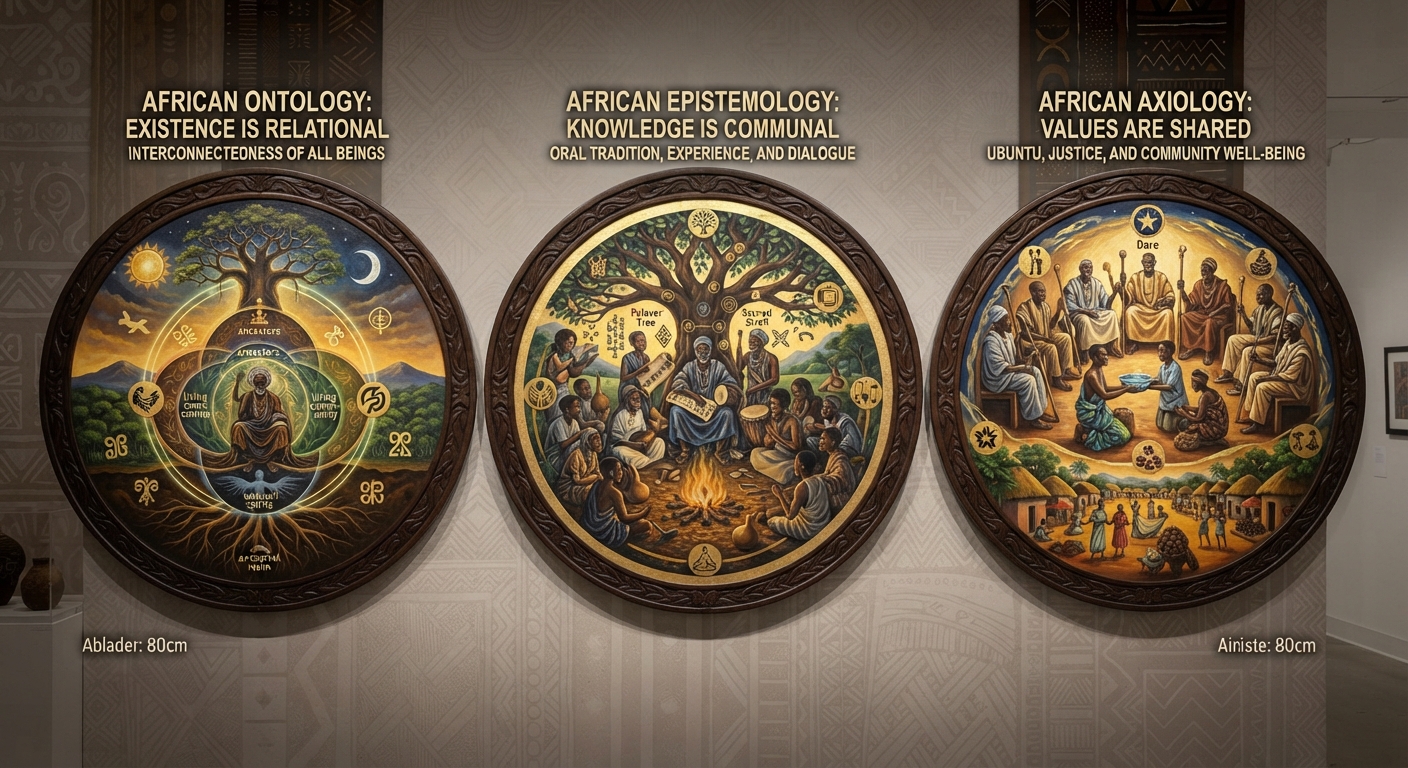
NB: Clickable Note-slide_Extended Definitions of African Ontology, Epistemology and Axiology
Click to enlarge and read.
Pop the document out from the upper right to read / expand / download
Ubuntu (or Afro-communitarianism)
RBG | “YOU MUST THINK OF YOURSELF AS A NATION”, Honorable Dr. Amos Wilson
Related: RBG SS| Art of Knowledge Collection (interactive articles and presentations over the years.) “A Current Student Work / Learning Project”
Book Summary
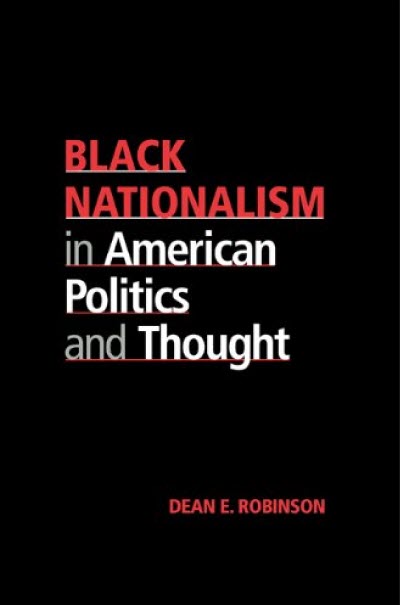
Dean E. Robinson’s Black Nationalism in American Politics and Thought (Cambridge University Press, 2001) examines arguments and activism for separate black statehood or institutional control from the mid-nineteenth century to the late twentieth century. Its central claim is that black nationalism is not a timeless, unchanging anti-assimilationist impulse. Instead, it draws on the political strategies and intellectual assumptions dominant in particular eras of U.S. history, often reproducing ideas linked to racial hierarchy.
Robinson distinguishes a “classical” period (roughly 1850–1925), defined strictly by pursuit of separate statehood, from a “modern” period (especially after World War II), which also includes demands for black administration of key institutions. He argues that classical nationalism was frequently conservative rather than radical, sharing civilizations and Christian frameworks with broader Anglo-American thought, while later forms often rested on an “ethnic paradigm” that treats culture as the main determinant of group status and mobility.
Outline of the book’s structure and main points:
Introduction sets out the thesis that Black Nationalism mirrors era-specific currents in American politics and thought, and that there is no single essential nationalist tradition.
Chapter 1, “Anglo-African Nationalism,” covers mid-nineteenth-century emigration proposals (Martin Delany, James T. Holly, and others) through Marcus Garvey’s Universal Negro Improvement Association, treating classical nationalism as a largely conservative response that often echoed prevailing ideas of civilization, Christianity, and racial destiny.
Chapter 2, “Malcolm X and the Nation of Islam,” reassesses Elijah Muhammad’s Nation of Islam as a postwar template and examines Malcolm X’s significance, including how later activists canonized him.
Chapter 3, “Black Nationalist Organizations in the Civil Rights Era,” surveys groups active in the 1960s and early 1970s that advanced territorial or institutional separatism alongside or against integrationist civil-rights strategies.
Chapter 4, “Black Nationalist Discourse,” analyzes the language and arguments used by nationalists in that period and how they related to broader political and intellectual developments.
Chapter 5, “Black Nationalism as Ethnic Pluralism,” argues that much Black Power-era activity, especially in the context of the War on Poverty and Model Cities programs, took the form of demands for black control of local institutions rather than independent statehood.
Chapter 6, “Black Nationalism and the Ethnic Paradigm,” traces how twentieth-century assumptions—that American culture is largely Anglo-Saxon and that cultural traits explain group socioeconomic position—shaped modern nationalist claims about identity, self-help, and mobility.
Chapter 7, “Black Nationalism in the Contemporary Era,” examines Louis Farrakhan’s Nation of Islam and Molefi Kete Asante’s Afrocentricity as leading late-twentieth-century expressions, both grounded in cultural-difference arguments and offering largely idealistic rather than coalition-based programs for empowerment.
Pop the document out from the upper right to read / expand / download
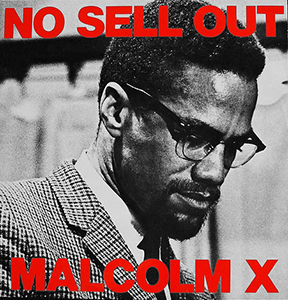
Photo-story montage of Malcolm X’s life, featuring archival images from his prison years, family moments, public speeches, travels, and activism, set to Keith LeBlanc’s 1984 track “No Sell Out” that samples his voice.
rbg4lif (bka RBGStreetScholar) operates RBG Communiversity, a blog and resource hub dedicated to Black Studies, Pan-African education, and Nationhood topics, regularly posting books, syllabi, videos, and materials on figures like Malcolm X, Amos N. Wilson, and historical resistance movements.
Pop the document out from the upper right to read / expand / download
Supplemental: On the Side of My People: A Religious Life of Malcolm X (eBook Preview, 38 pp.)
On the Side of My People: A Religious Life of Malcolm X is a groundbreaking biography written by Louis A. DeCaro Jr. and published by NYU Press in 1996. It stands out as the very first book-length evaluation of Malcolm X’s life focused strictly through a religious lens, reframing a figure who is most commonly analyzed through a purely political or cultural viewpoint.
Here is a structured overview of the book’s core focus, sources, and breakdown:
Core Objectives & Themes
1. Redemption and Spirituality: DeCaro presents Malcolm X as a “man of Allah” driven primarily by personal salvation and religious commitment rather than solely political ambitions.
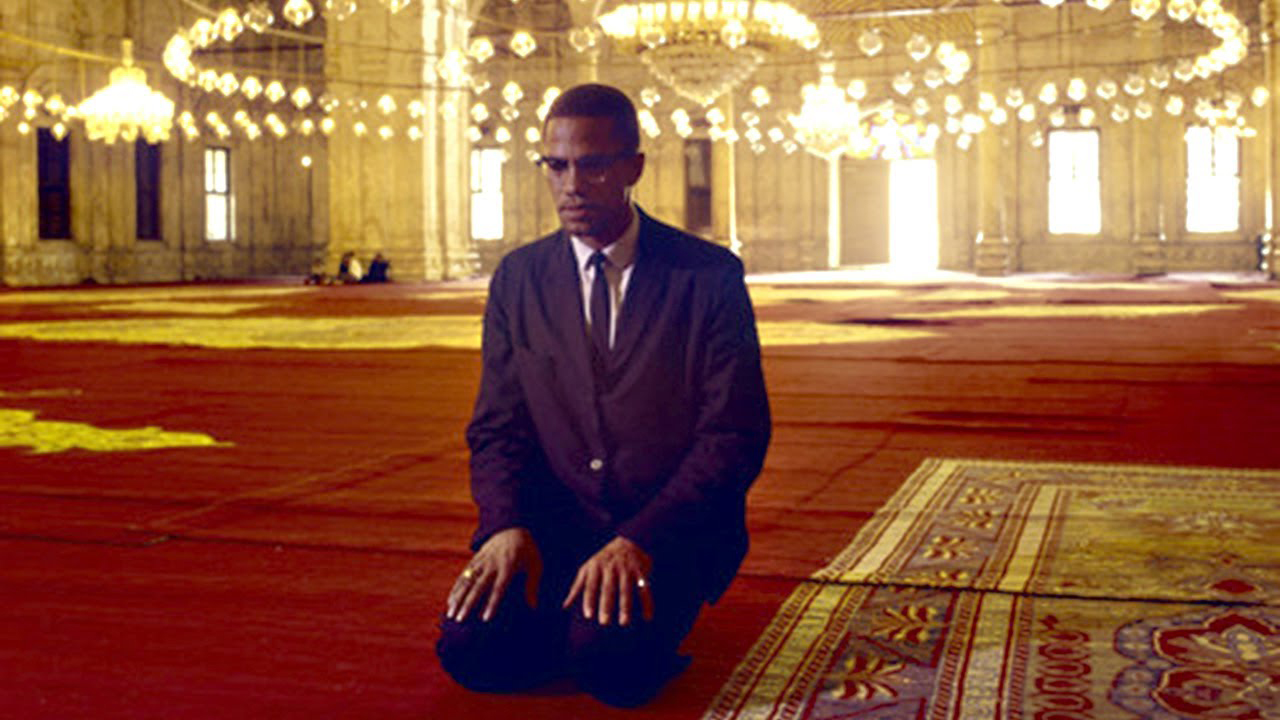
2. Religious Evolution: The book examines his dual conversions—joining the Nation of Islam (NOI) in prison and later embracing orthodox Sunni Islam after his 1964 pilgrimage to Mecca—alongside his childhood roots, his 1959 Africa trip, and his final year of traditional practice.
3. Critical Analysis: It also analyzes The Autobiography of Malcolm X to understand how his life narrative was curated alongside Alex Haley.
Research Foundations
DeCaro constructs this spiritual portrait using primary materials including interviews with Wilfred Little, declassified FBI files, Black press archives, and audio recordings of speeches and sermons.
Main Chapter Directory
The 10-chapter structure traces his path from his ancestral and Garveyite roots through his early ministry, his split from the Nation of Islam, and his final year as a traditional Muslim convert.
Pop the document out from the upper right to read / expand / download
Abayomi Azikiwe-_-black-history-month-special, including on MX
The book fundamentally challenges the dominant narrative of the 1950s and 1960s Southern Civil Rights Movement, which often portrays the struggle as exclusively nonviolent. Umoja demonstrates that armed self-defense was not a contradiction to nonviolent organizing in Mississippi, but rather an essential component that protected activists, families, and communities from Black white-supremacist terror (such as the Ku Klux Klan and state-sanctioned violence).
Core Themes & Arguments
Protection of Nonviolent Organizers: Local Black Mississippians often provided armed security for nonviolent civil rights workers from organizations like SNCC (Student Nonviolent Coordinating Committee) and CORE (Congress of Racial Equality).
Grassroots Tradition: Armed resistance in Mississippi was deeply rooted in the culture and history of Black working-class communities and military veterans returning from WWII and the Korean War.
Key Organizations & Figures: The book details local self-defense efforts, including the formation of local militias and the role of groups like the Deacons for Defense and Justice, as well as prominent local leaders like Laura McGhee, E.W. Steptoe, and Hartman Turnbow.
Path to Black Power: Umoja traces how local experiences with self-defense directly informed the shift toward the broader Black Power movement in the mid-to-late 1960s.
About the Author
Akinyele Omowale Umoja is a professor of African American Studies at Georgia State University. He is an educator, author, and longtime activist in the New Afrikan Independence Movement.
Armed self-defense is the use of force—often including firearms—to protect oneself, family, or community from an imminent unlawful attack when the state cannot or will not provide protection. In U.S. history it has been both a legal right and a contested political strategy, especially in periods of official indifference to racial violence.In the Mississippi Freedom Movement that the shared book examines, historian Akinyele Omowale Umoja argues armed resistance was not a sideshow but essential. Local Black residents and veterans organized informal patrols and later groups modeled on the Deacons for Defense and Justice (founded 1964 in Jonesboro, Louisiana) to guard organizers, churches, and neighborhoods against Klan night riders and police-Klan collusion.
Umoja’s central claim is that this activity reduced fear, deterred attacks, and made nonviolent campaigns by SNCC, CORE, and the NAACP possible in places where federal protection was absent. Figures such as Medgar Evers privately favored organized self-defense; Freedom Summer field workers routinely encountered armed local people even while national leaders publicly preached nonviolence.
This pattern predates the 1960s. Robert F. Williams in Monroe, North Carolina, formed an NRA-chartered Black Armed Guard in the 1950s after Klan attacks and later wrote Negroes with Guns. Earlier still, Ida B. Wells and W.E.B. Du Bois endorsed armed protection against lynching. The common thread is that when local law enforcement sided with attackers, communities treated self-defense as a practical necessity rather than an ideological choice.
U.S. law treats self-defense as an affirmative defense with four core requirements: an imminent threat, a reasonable belief that force is necessary, proportionality, and (in most cases) that the defender did not initiate the confrontation. Every state recognizes some version of the castle doctrine—no duty to retreat inside one’s home. Roughly 30–38 states have added “stand your ground” statutes that remove the duty to retreat in any place a person is lawfully present. Duty-to-retreat states still exempt the home. These rules do not authorize preemptive or retaliatory violence; they only excuse force used against an immediate threat.
Empirical estimates of how often guns are used defensively vary sharply because of survey design. The National Crime Victimization Survey (NCVS) consistently finds 60,000–65,000 defensive firearm incidents per year, a small fraction of total violent crime. Private telephone surveys, most famously Kleck and Gertz (1995), have produced figures of 2 million or more. Methodological disputes—recall bias, what counts as a “use,” whether the incident was actually criminal—have never been fully resolved. Both sides agree that most reported defensive uses involve display rather than shots fired, and that the legal and physical risks after a shooting remain high.
The historical record and the statistical debate illustrate the same tension: armed self-defense can deter attackers and buy time when institutions fail, yet it also carries risks of escalation, misidentification, and unequal legal outcomes. In the specific setting of 1960s Mississippi, the evidence Umoja assembles suggests it functioned as a complement to, rather than a replacement for, political organizing and legal pressure. Contemporary arguments continue to turn on whether those conditions of state failure still exist and how the costs of private armed force should be weighed against its benefits.
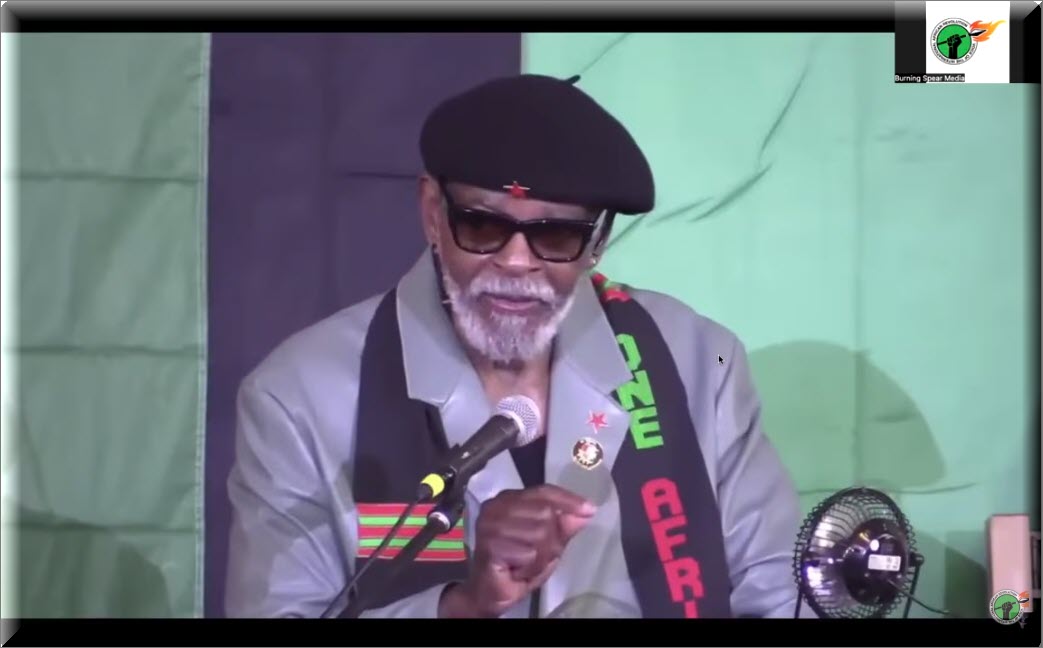
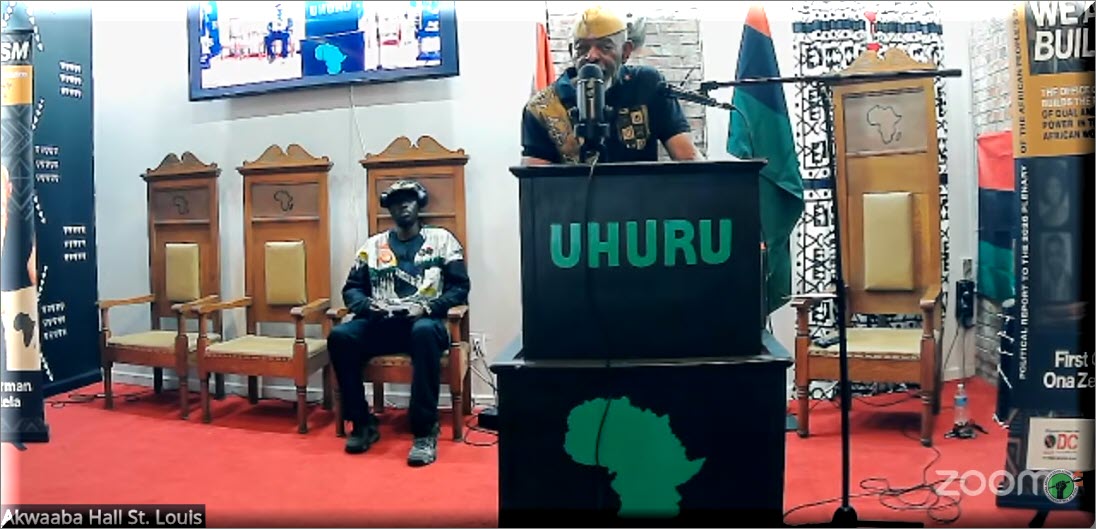
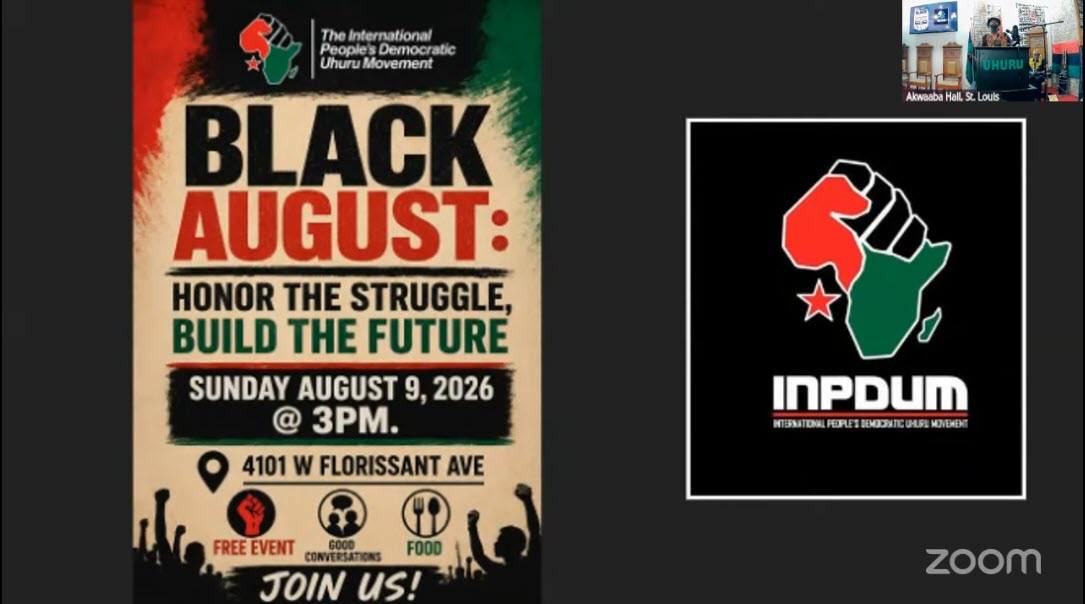
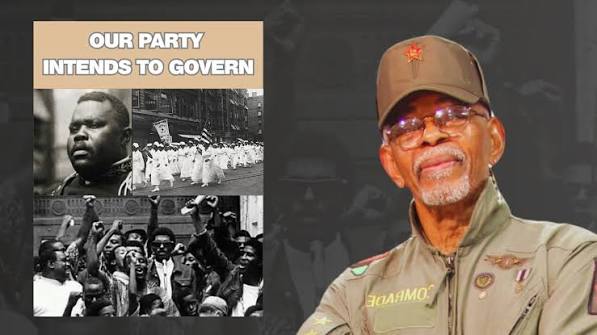
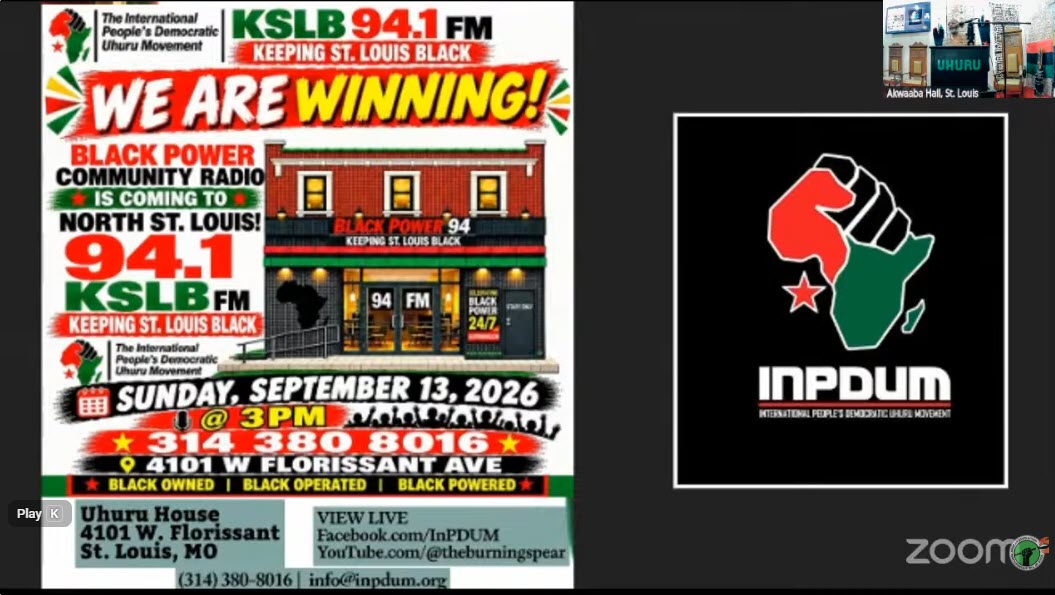
The Burning Spear TV_Chairman Omali Yeshitela delivers groundbreaking 2026 Political Report and Vote Self-Determination
Chairman Omali Yeshitela’s 2026 Political Report was officially broadcast on The Burning Spear TV, delivering a core anti-colonial analysis focused on African liberation, imperialist resistance, and the advancement of the Uhuru Movement.
Key Highlights of the Report
Anti-Colonial Directives: The report provides the primary ideological framework for the African People’s Socialist Party (APSP), emphasizing that modern imperialist actions remain deeply rooted in historical colonial structures.
Electoral Politics: Yeshitela outlines strategic methods to inject revolutionary anti-colonial politics into mainstream electoral arenas, referencing recent Uhuru movement campaigns.
Global Solidarity Networks: The presentation emphasizes building international unity against U.S.-led imperialism, demanding reparations, and connecting the struggles of African people with globally oppressed populations. [1, 2, 3]
Building Dual Power: The address emphasizes organizing community-led economic and health infrastructure, such as the One Africa! One Nation! Uhuru Flea Marketplaces, to establish independent African community control. [1]
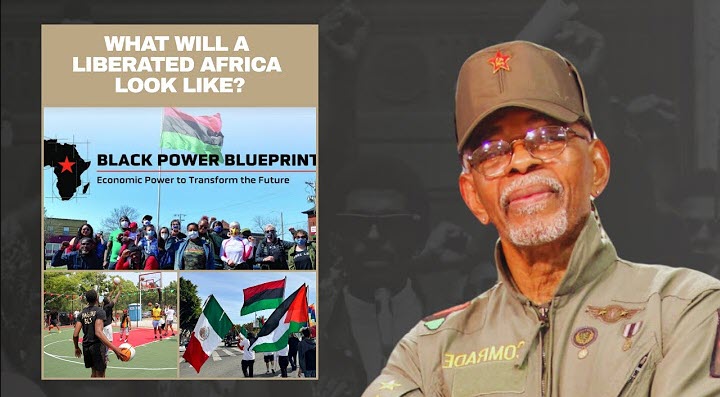
This week’s #OmaliTaughtMe Sunday Study, Chairman Omali Yeshitela reads from the Political Report to the African People’s Socialist Party’s 2017 Plenary, on “What Will a Liberated Africa Look Like?” The study material is available at this link: We’ll be reading pages 41-45. A positive vision for the future under the leadership of the African working class!









You must be logged in to post a comment.