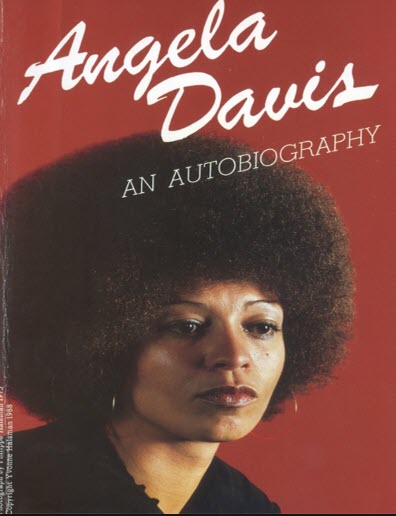
Angela Davis: An Autobiography (often simply titled An Autobiography) is a powerful political memoir by the renowned activist, scholar, and author Angela Y. Davis. First published in 1974 and edited by Toni Morrison (then an editor at Random House), it remains a classic account of the Black liberation movement, civil rights struggles, and resistance to systemic racism and political repression in the United States during the 1960s and early 1970s.
haymarketbooks.orgWhat the Book CoversWritten when Davis was in her late twenties, the autobiography is framed around her high-profile 1970–1972 ordeal: after guns registered to her were used in a deadly uprising at the Marin County Courthouse (linked to efforts to free the Soledad Brothers), she was charged with conspiracy, kidnapping, and murder, placed on the FBI’s Ten Most Wanted list, went underground, was arrested, imprisoned under harsh conditions, and ultimately acquitted by a jury in 1972.
supersummary.comIt flashes back to her childhood on “Dynamite Hill” in segregated Birmingham, Alabama (amid Jim Crow violence and Ku Klux Klan threats), her academic journey (including philosophy studies influenced by Marxism), her work as a UCLA professor targeted for her Communist Party membership, and her deep involvement in the Black Panther Party circles, the Che-Lumumba Club, and campaigns to free political prisoners like George Jackson.
haymarketbooks.orgTold with warmth, humor, brilliance, and conviction, the book emphasizes collective struggle over individual heroism. It highlights the intersections of racism, class oppression, sexism, and the prison system while advocating for political prisoners and broader liberation. Key themes include the carceral state, Marxist analysis in activism, community organizing, and the personal cost of resistance.
Later reprints: International Publishers and others (including a 1988 edition with Davis’s new introduction).
Current edition: Haymarket Books (ebook 2022; print May 2023). This beautiful reissue includes an expansive new introduction by Davis reflecting on its relevance today amid ongoing movements for racial justice, prison abolition, and radical change. It’s available in paperback (~$18–23), hardcover, and ebook formats. haymarketbooks.org
haymarketbooks.orgYou can find it at major bookstores, Haymarket Books directly (haymarketbooks.org), or libraries. It’s not just a personal story—it’s a call to understand and challenge the systems she fought (and still fights) against. If you’re looking for a specific summary of a chapter, quotes, analysis, or recommendations for related reading (like her later works such as Are Prisons Obsolete?), just let me know!
Angela Davis: An Autobiography eBook
Pop the documents out from the upper right to read / expand / download.
“Ghetto Rebellion to Black Liberation” by Claude M. Lightfoot is a critical examination of the social, political, and economic conditions that led to the rise of the Black liberation movement in the United States. Lightfoot explores the historical context of urban uprisings, often referred to as “ghetto rebellions,” during the 1960s and 1970s, and how these events catalyzed a broader movement for civil rights and social justice. The book delves into the experiences of African Americans (New Afrikan) in urban environments and the evolution of their struggles for liberation, highlighting the intersection of race, class, and activism.
The following outline encapsulates Claude M. Lightfoot’s exploration of the dynamics that shaped the Black liberation movement, connecting the historical experiences of urban uprisings to the broader fight for civil rights and social justice in America.
Introduction
Overview of the book’s purpose and themes
Contextualizing the ghetto rebellions within American history
Historical Context
The legacy of segregation and systemic racism
Economic conditions in urban areas affecting Black communities
Key events leading up to the 1960s uprisings
The Ghetto Rebellions
Analysis of major uprisings (e.g., Watts, Detroit, Newark)
Causes and triggers of the rebellions
Responses from law enforcement and government
The role of media in shaping public perception
Emergence of the Black Liberation Movement
Transition from local uprisings to a unified movement
Key organizations and figures involved in the movement
The Black Panther Party, SNCC, and others
Ideological foundations of Black liberation
Cultural Expressions of Resistance
Influence of art, music, and literature on the liberation movement
The role of cultural identity in fostering activism
Notable cultural figures and their contributions
Challenges and Internal Conflicts
Tensions within the Black liberation movement
The impact of government repression and surveillance
Divergent strategies and philosophies among activist groups
Legacies of the Movement
Assessment of the achievements and shortcomings of the liberation movement
Long-term effects on policy and societal change
Influence on subsequent generations of activists
Conclusion
Reflection on the transformation from rebellion to organized liberation
The importance of understanding history in the context of ongoing struggles
Call to action for continued advocacy and resistance against systemic oppression
“Ghetto Rebellion to Black Liberation” provides an in-depth analysis of the complex factors that contributed to the formation of the Black liberation movement, particularly in the context of urban uprisings during the 1960s and 1970s. Here are some expanded themes and details from the book:
Key Themes Explored
Systemic Racism and Economic Injustice
Lightfoot emphasizes how entrenched racism and economic disenfranchisement created conditions ripe for rebellion in Black communities.
He discusses the historical legacy of segregation, discriminatory housing policies, and employment discrimination that marginalized African Americans.
Urban Uprisings as Expressions of Frustration
The book analyzes specific uprisings, such as the Watts riots in 1965 and the Detroit riots in 1967, detailing the immediate causes, including police brutality and economic inequality.
Lightfoot portrays these rebellions not merely as riots but as legitimate expressions of anger and calls for systemic change.
Formation of the Black Liberation Movement
Lightfoot traces the evolution from spontaneous uprisings to organized movements, highlighting how the collective experiences of oppression led to a unified call for liberation.
He discusses the establishment of various organizations, including the Black Panther Party, and their roles in advocating for civil rights, community empowerment, and self-defense.
Cultural Identity and Expression
The book explores how cultural forms, such as music, art, and literature, served as powerful tools for resistance and community building.
Lightfoot examines influential artists and writers who articulated the struggles of Black Americans (New Afrikan) and inspired activism, such as the works of James Baldwin and the rise of soul music.
Internal Divisions and Challenges
Lightfoot addresses the ideological differences within the movement, including debates over non-violence versus armed resistance, and the roles of various leaders.
He also discusses the impact of external pressures, including government surveillance programs like COINTELPRO, which aimed to undermine the movement.
Impact and Legacy
Reflection on Achievements
The book assesses the successes of the Black liberation movement, noting improvements in civil rights legislation, increased political representation, and the establishment of community programs.
Lightfoot highlights how these movements laid the groundwork for future generations of activists and ongoing struggles for racial justice.
Contemporary Relevance
Lightfoot connects historical events to present-day issues, underscoring the continuity of the fight against systemic racism and economic inequality.
He argues for the importance of learning from past struggles to inform current activism and policy advocacy.
Conclusion
“Ghetto Rebellion to Black Liberation” serves as both a historical account and a critical analysis of the dynamics that shaped the Black liberation movement in America. Lightfoot’s work encourages readers to understand the significance of these events in the broader struggle for civil rights and social justice, emphasizing the ongoing relevance of these issues today. By examining the intersection of race, class, and activism, the book provides valuable insights into the complexities of the African American (New Afrikan) experience and the enduring quest for liberation.
Ghetto Rebellion to Black Liberation_eBook
Pop the documents out from the upper right to read / expand / download.






You must be logged in to post a comment.