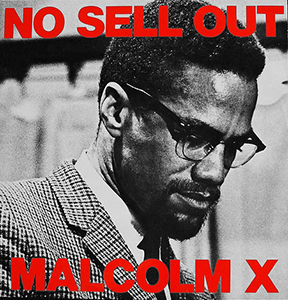
Photo-story montage of Malcolm X’s life, featuring archival images from his prison years, family moments, public speeches, travels, and activism, set to Keith LeBlanc’s 1984 track “No Sell Out” that samples his voice.
rbg4lif (bka RBGStreetScholar) operates RBG Communiversity, a blog and resource hub dedicated to Black Studies, Pan-African education, and Nationhood topics, regularly posting books, syllabi, videos, and materials on figures like Malcolm X, Amos N. Wilson, and historical resistance movements.
Pop the document out from the upper right to read / expand / download
Supplemental: On the Side of My People: A Religious Life of Malcolm X (eBook Preview, 38 pp.)
On the Side of My People: A Religious Life of Malcolm X is a groundbreaking biography written by Louis A. DeCaro Jr. and published by NYU Press in 1996. It stands out as the very first book-length evaluation of Malcolm X’s life focused strictly through a religious lens, reframing a figure who is most commonly analyzed through a purely political or cultural viewpoint.
Here is a structured overview of the book’s core focus, sources, and breakdown:
Core Objectives & Themes
1. Redemption and Spirituality: DeCaro presents Malcolm X as a “man of Allah” driven primarily by personal salvation and religious commitment rather than solely political ambitions.
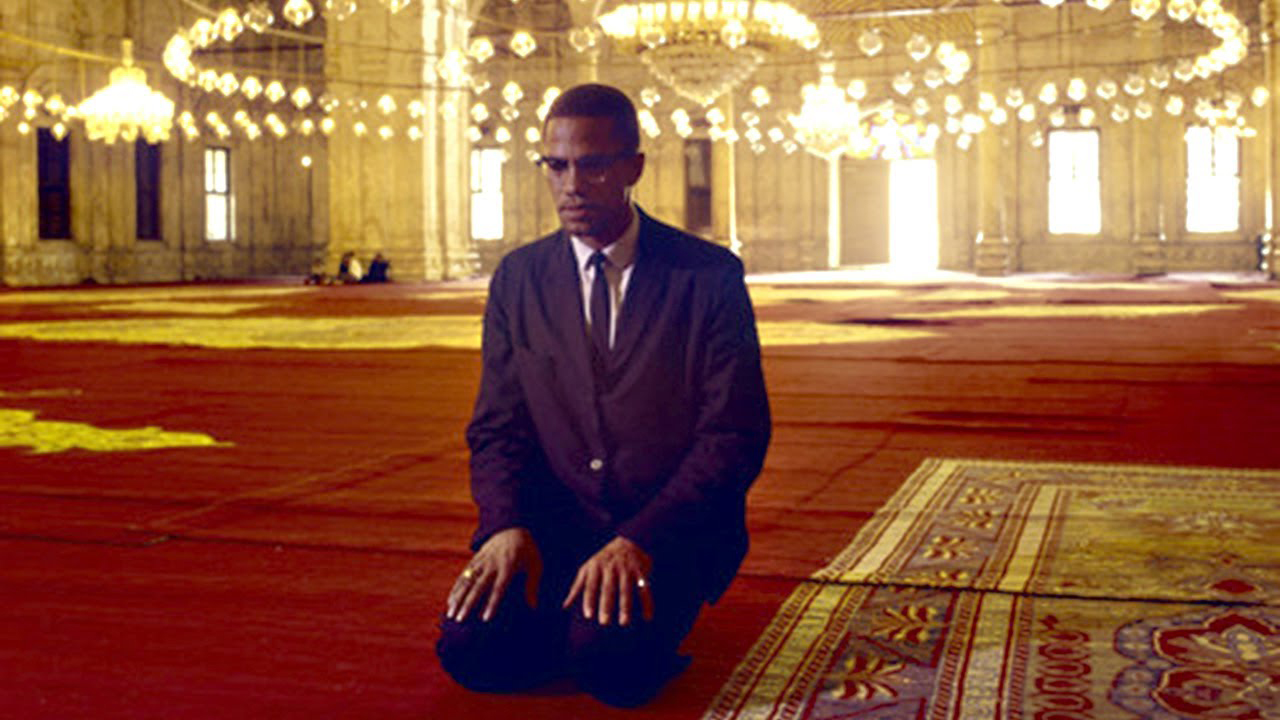
2. Religious Evolution: The book examines his dual conversions—joining the Nation of Islam (NOI) in prison and later embracing orthodox Sunni Islam after his 1964 pilgrimage to Mecca—alongside his childhood roots, his 1959 Africa trip, and his final year of traditional practice.
3. Critical Analysis: It also analyzes The Autobiography of Malcolm X to understand how his life narrative was curated alongside Alex Haley.
Research Foundations
DeCaro constructs this spiritual portrait using primary materials including interviews with Wilfred Little, declassified FBI files, Black press archives, and audio recordings of speeches and sermons.
Main Chapter Directory
The 10-chapter structure traces his path from his ancestral and Garveyite roots through his early ministry, his split from the Nation of Islam, and his final year as a traditional Muslim convert.
Pop the document out from the upper right to read / expand / download
Abayomi Azikiwe-_-black-history-month-special, including on MX
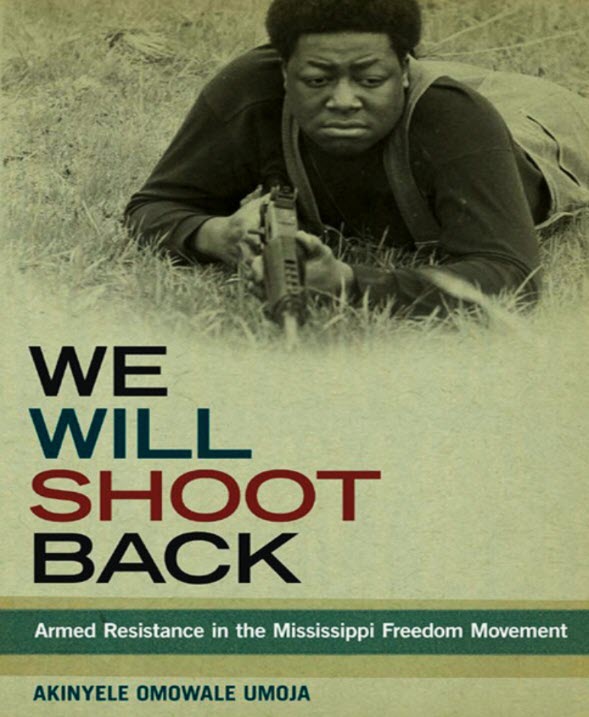
The book fundamentally challenges the dominant narrative of the 1950s and 1960s Southern Civil Rights Movement, which often portrays the struggle as exclusively nonviolent. Umoja demonstrates that armed self-defense was not a contradiction to nonviolent organizing in Mississippi, but rather an essential component that protected activists, families, and communities from Black white-supremacist terror (such as the Ku Klux Klan and state-sanctioned violence).
Core Themes & Arguments
Protection of Nonviolent Organizers: Local Black Mississippians often provided armed security for nonviolent civil rights workers from organizations like SNCC (Student Nonviolent Coordinating Committee) and CORE (Congress of Racial Equality).
Grassroots Tradition: Armed resistance in Mississippi was deeply rooted in the culture and history of Black working-class communities and military veterans returning from WWII and the Korean War.
Key Organizations & Figures: The book details local self-defense efforts, including the formation of local militias and the role of groups like the Deacons for Defense and Justice, as well as prominent local leaders like Laura McGhee, E.W. Steptoe, and Hartman Turnbow.
Path to Black Power: Umoja traces how local experiences with self-defense directly informed the shift toward the broader Black Power movement in the mid-to-late 1960s.
About the Author
Akinyele Omowale Umoja is a professor of African American Studies at Georgia State University. He is an educator, author, and longtime activist in the New Afrikan Independence Movement.
Armed self-defense is the use of force—often including firearms—to protect oneself, family, or community from an imminent unlawful attack when the state cannot or will not provide protection. In U.S. history it has been both a legal right and a contested political strategy, especially in periods of official indifference to racial violence.In the Mississippi Freedom Movement that the shared book examines, historian Akinyele Omowale Umoja argues armed resistance was not a sideshow but essential. Local Black residents and veterans organized informal patrols and later groups modeled on the Deacons for Defense and Justice (founded 1964 in Jonesboro, Louisiana) to guard organizers, churches, and neighborhoods against Klan night riders and police-Klan collusion.
Umoja’s central claim is that this activity reduced fear, deterred attacks, and made nonviolent campaigns by SNCC, CORE, and the NAACP possible in places where federal protection was absent. Figures such as Medgar Evers privately favored organized self-defense; Freedom Summer field workers routinely encountered armed local people even while national leaders publicly preached nonviolence.
This pattern predates the 1960s. Robert F. Williams in Monroe, North Carolina, formed an NRA-chartered Black Armed Guard in the 1950s after Klan attacks and later wrote Negroes with Guns. Earlier still, Ida B. Wells and W.E.B. Du Bois endorsed armed protection against lynching. The common thread is that when local law enforcement sided with attackers, communities treated self-defense as a practical necessity rather than an ideological choice.
U.S. law treats self-defense as an affirmative defense with four core requirements: an imminent threat, a reasonable belief that force is necessary, proportionality, and (in most cases) that the defender did not initiate the confrontation. Every state recognizes some version of the castle doctrine—no duty to retreat inside one’s home. Roughly 30–38 states have added “stand your ground” statutes that remove the duty to retreat in any place a person is lawfully present. Duty-to-retreat states still exempt the home. These rules do not authorize preemptive or retaliatory violence; they only excuse force used against an immediate threat.
Empirical estimates of how often guns are used defensively vary sharply because of survey design. The National Crime Victimization Survey (NCVS) consistently finds 60,000–65,000 defensive firearm incidents per year, a small fraction of total violent crime. Private telephone surveys, most famously Kleck and Gertz (1995), have produced figures of 2 million or more. Methodological disputes—recall bias, what counts as a “use,” whether the incident was actually criminal—have never been fully resolved. Both sides agree that most reported defensive uses involve display rather than shots fired, and that the legal and physical risks after a shooting remain high.
The historical record and the statistical debate illustrate the same tension: armed self-defense can deter attackers and buy time when institutions fail, yet it also carries risks of escalation, misidentification, and unequal legal outcomes. In the specific setting of 1960s Mississippi, the evidence Umoja assembles suggests it functioned as a complement to, rather than a replacement for, political organizing and legal pressure. Contemporary arguments continue to turn on whether those conditions of state failure still exist and how the costs of private armed force should be weighed against its benefits.
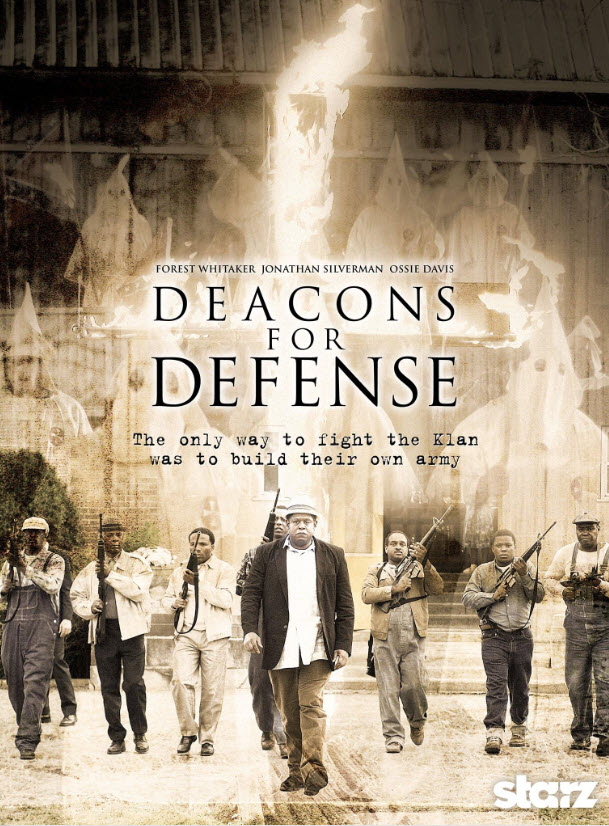
Deacons for Defense and Justice (often abbreviated DDJ) was a Black armed self-defense organization founded in Jonesboro, Louisiana in 1964 to protect civil rights workers and Black communities from Ku Klux Klan violence and complicit local police.
Most members were working-class men and veterans of World War II or Korea. They did not seek to start violence; they organized disciplined patrols, guarded homes and Freedom Houses, escorted activists, and shot back when fired upon. Their existence challenged the dominant nonviolence narrative of the civil rights movement and later influenced Black Power thinking.
Founding in Jonesboro DDJ
In summer 1964, CORE organizers arrived in Jonesboro to register voters and challenge Jim Crow. The Klan responded with church burnings, night rides, and intimidation, sometimes with police escort. Informal groups of armed Black men began guarding CORE’s Freedom House. After a large Klan motorcade rolled through the Black neighborhood in July 1964, the group formalized.
LSU Cold Case Project
Key early figures included Earnest “Chilly Willy” Thomas (mill worker and veteran), Frederick Douglass Kirkpatrick (teacher and minister), and Percy Lee Bradford (president). They incorporated as a Louisiana nonprofit in March 1965. The charter framed their purpose as defending civil, property, and personal rights “by any and all honorable and legal means.” The name “Deacons” evoked respected church authority and community service rather than revolutionary branding.
Americas 1st Freedom
Membership required being at least 21, employed, and respected in the community. Dues funded radios, legal aid, and pamphlets. Members supplied their own rifles and pistols.
Bogalusa and expansion
The most prominent chapter formed in Bogalusa, Louisiana, in February 1965—the same day Malcolm X was assassinated—under Charles Sims, A.Z. Young, and Robert Hicks. Bogalusa was a Klan stronghold with a large paper mill. The Deacons there guarded marches, protected CORE workers around the clock, and engaged in armed confrontations with Klansmen. Those clashes, plus national media attention, helped force federal intervention and pressure on local authorities to curb Klan activity.
Blackpast
Chapters or affiliates appeared in Homer, Ferriday, Natchez (Mississippi), and elsewhere across Louisiana, Mississippi, Alabama, and a few Northern cities. Estimates of size vary; contemporary accounts and later histories put formal membership in the hundreds with additional informal supporters, not the thousands sometimes claimed. They provided security for the 1966 March Against Fear from Memphis to Jackson after James Meredith was shot.
Mississippi Today
Relationship to nonviolence and later movements
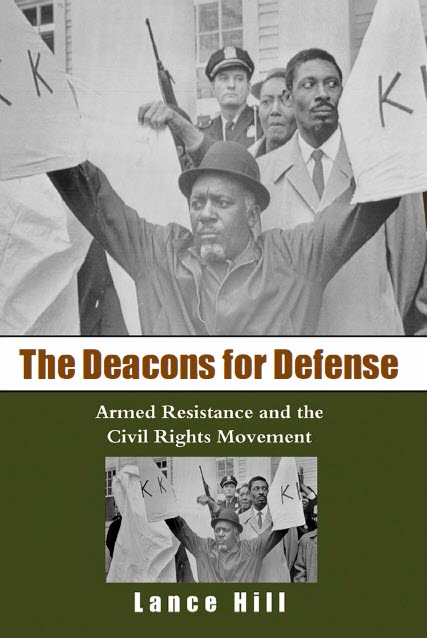
Mainstream organizations (SCLC, NAACP, national CORE) often stayed silent or distanced themselves because armed self-defense conflicted with the nonviolent image used to win Northern white support. Local CORE field staff, however, frequently welcomed the protection. Historian Lance Hill argues the Deacons were a working-class Southern alternative that made some local campaigns possible by deterring night riders when police would not.
UNC Press DDJ
Stokely Carmichael later cited them as an example of Black people realizing the law would not protect them. The group itself stayed focused on community defense rather than adopting explicit Black nationalist or Marxist programs. By 1967–1968 activity declined after the Voting Rights Act, increased Black electoral participation, FBI scrutiny of both the Klan and the Deacons, and the rise of the Black Panther Party, which absorbed much of the public attention around armed self-defense.
Wikipedia
Legacy
The Deacons demonstrated that organized, disciplined armed self-defense by Black Southerners could reduce Klan terror in specific locales and compel federal attention. They were not a mass guerrilla army and did not pursue the protracted “people’s war” strategy later associated with the Black Liberation Army. Their record sits in the lineage of earlier self-defense efforts (Robert F. Williams in Monroe, North Carolina) and later urban formations. Their story was long minimized in popular civil rights histories that emphasized nonviolence; recent work, including Hill’s book and documentaries, has recovered it.
YouTube
The spelling “Decons” in your query is the common shorthand or typo for this group. If you want a deeper dive on Bogalusa confrontations, their FBI files, comparison with the BLA, or specific chapters, say which angle.
Pop the document out from the upper right to read / expand / download.





You must be logged in to post a comment.