
ICEBREAKR Videos (Parts 1and 2)
Amos N. Wilson (1941–1995)
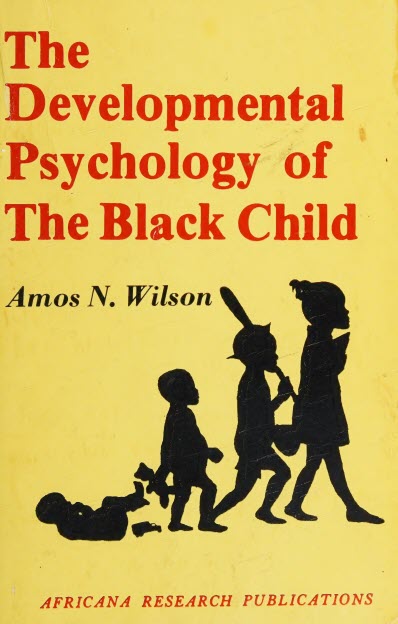
The Developmental Psychology of the Black Child (1978) is a foundational work in African-centered psychology by Amos N. Wilson (1941–1995), a psychologist, educator, and Pan-African scholar who taught at the City University of New York. Wilson, born in Hattiesburg, Mississippi, earned degrees from Morehouse College, The New School, and a Ph.D. from Fordham University.
He argued that standard developmental psychology, built largely on studies of white middle-class children, misrepresents and often pathologizes Black children.
The 216-page book, first issued by Africana Research Publications, examines physical, cognitive, linguistic, and psychosocial development from conception through the preschool years. Wilson’s central claim is that the Black child is not “a white child who happens to be painted Black.” He points to measurable differences in early psychomotor development, higher rates of certain prenatal and perinatal risks (such as lower average birth weight and prematurity), distinct language patterns, and the shaping effects of racism, restricted environments, and cultural mismatch in schools and testing. These differences, he contends, reflect African heritage, historical conditions, and current social realities rather than inherent inferiority.
Chapters cover the prenatal period (maternal nutrition, toxins, hereditary conditions such as sickle-cell anemia), the first two years (accelerated motor milestones in some African-descended infants compared with European norms, limitations of infant IQ tests), preschool race awareness and initiative, the possible role of “psychogenic” environmental stress on brain development, play and media influences, and group differences on standardized intelligence tests.
Wilson critiques IQ testing as culturally loaded, questions whether Black English signals deficit, and examines how parental socialization, teacher expectations, and segregated or mismatched schooling affect outcomes.
He calls for education and child-rearing practices grounded in African-centered frameworks rather than unmodified Eurocentric models.
The book remains influential in Black psychology and Afrocentric education circles, with later reprints (including a 2014 edition) and high reader ratings. It is frequently paired with Wilson’s follow-up Awakening the Natural Genius of Black Children (1992). Scanned copies circulate on archival sites; print editions are available through specialty African-American bookstores and online retailers.
Wilson later expanded these ideas in lectures and books such as Blueprint for Black Power. Readers should note that some data and references date to the late 1970s, while the core critique of applying one-size-fits-all developmental models continues to be discussed in contemporary work on culturally responsive education.
Pop the documents out from the upper right to read / expand / download.
Pop the documents out from the upper right to read / expand / download.

