11 Video Playlist (Audio reading corresponds to page 15 and foward for the Reader below.)
Long Walk to Freedom eBook
Nelson Mandela was one of the great moral and political leaders of his time: an international hero whose lifelong dedication to the fight against racial oppression in South Africa won him the Nobel Peace Prize and the presidency of his country. After his triumphant release in 1990 from more than a quarter-century of imprisonment, Mandela was at the center of the most compelling and inspiring political drama in the world. As president of the African National Congress and head of South Africa’s antiapartheid movement, he was instrumental in moving the nation toward multiracial government and majority rule. He is still revered everywhere as a vital force in the fight for human rights and racial equality. Long Walk to Freedom is his moving and exhilarating autobiography, destined to take its place among the finest memoirs of history’s greatest figures. Here for the first time, Nelson Rolihlahla Mandela told the extraordinary story of his life — an epic of struggle, setback, renewed hope, and ultimate triumph.
Pop the documents out from the upper right to read / expand / download.
Spirit of Mandela is a campaign to bring international attention to U.S. human rights violations of Black, Brown, Indigenous People, and U.S. held political prisoners.
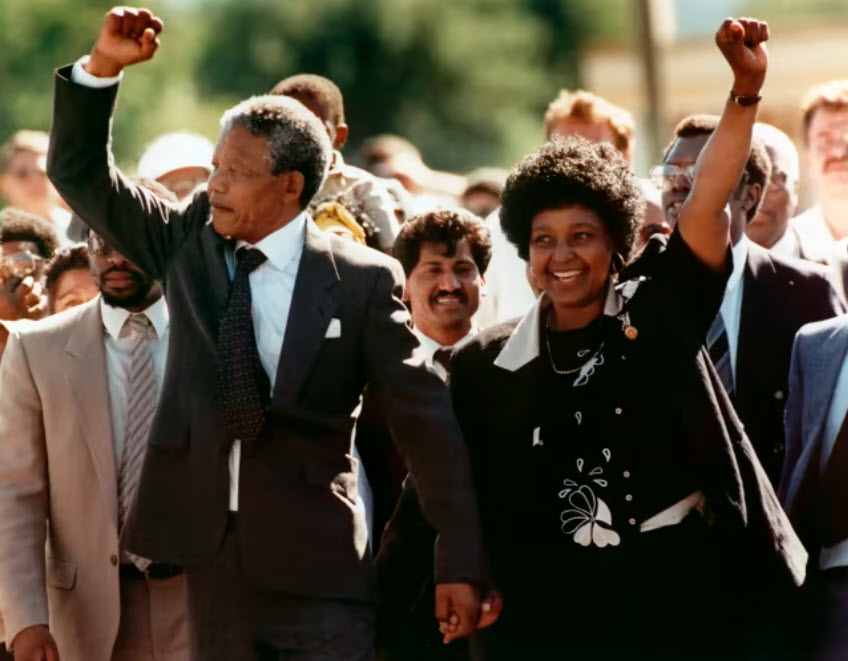
Clickable Photo Credits: AP 2020. FILE – In this Feb. 13, 1990 file photo, Nelson Mandela and his wife, Winnie Madikizela-Mandela, gesture as they arrive at Soccer City Stadium in Soweto, South Africa two days after after being released after serving 27 years in prison. Mandela’s release set off joyous celebrations and violent clashes as supporters welcomed Mandela back from years in jail. (AP Photo/Udo Weitz, File)The Peoples’ Senate is a national cohesive network of people reflective of poor and working-class communities across the United States; joined together to protect, champion, and uphold the human rights of Black, Brown, and Indigenous people, and by doing so, ensure the human rights of all people.https://spiritofmandela.org/intro-peoples-senate
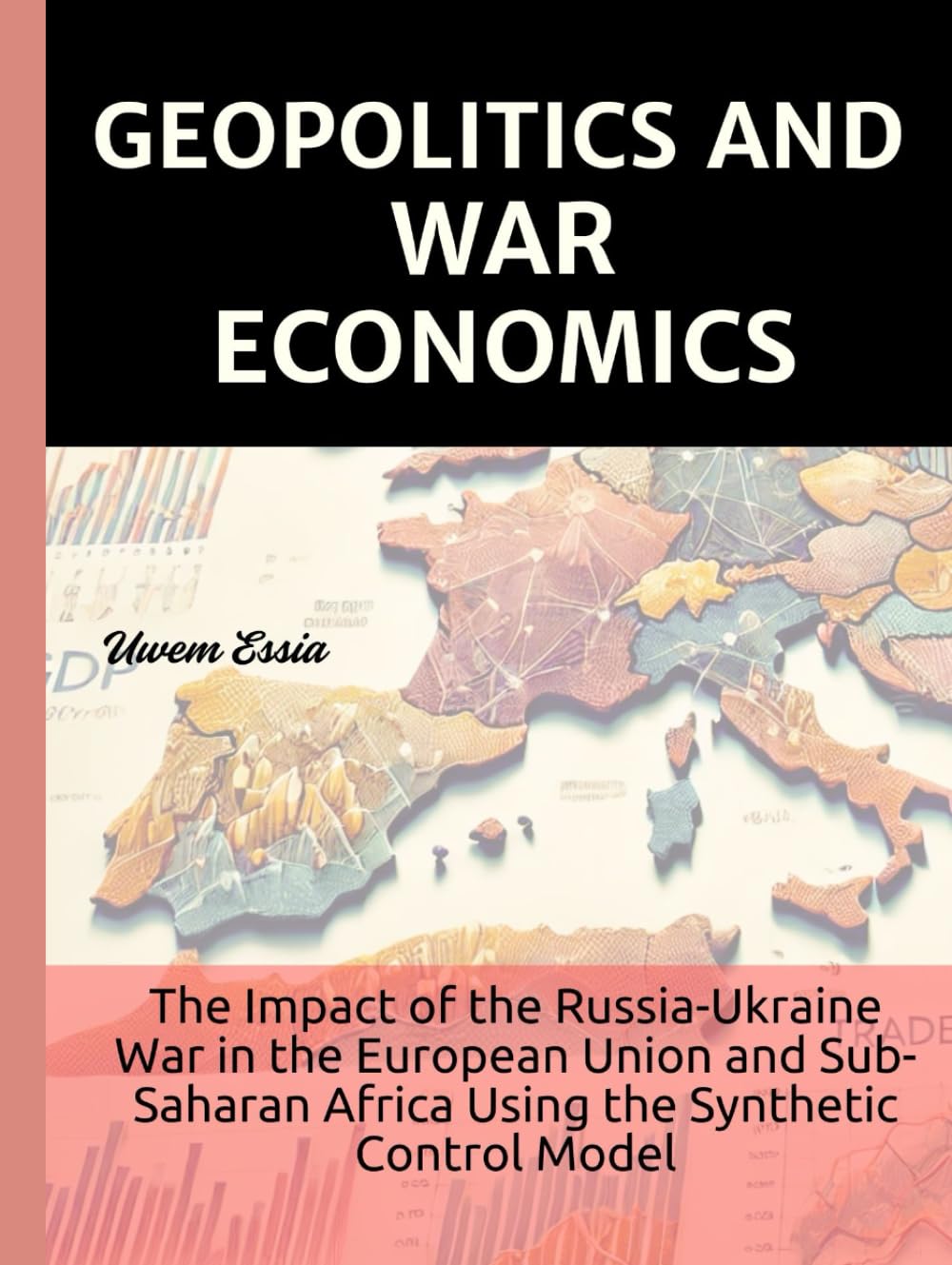
“GEOPOLITICS AND WAR ECONOMICS: The Impact of the Russia-Ukraine War in the European Union and Sub-Saharan Africa Using the “Synthetic Control Model” by Uwem Essia examines the far-reaching consequences of the Russia-Ukraine conflict on economic and geopolitical dynamics, particularly focusing on the European Union (EU) and Sub-Saharan Africa. Utilizing the Synthetic Control Model, the book provides a rigorous analysis of how the war has affected various economic indicators, trade relations, and geopolitical strategies in these regions. Essia delves into the interconnectedness of global economies and the implications of conflict on international relations, offering insights into how nations can navigate the complexities of a rapidly changing geopolitical landscape.
The outline that follows captures the essence of “GEOPOLITICS AND WAR ECONOMICS,” highlighting its focus on the economic and geopolitical impacts of the Russia-Ukraine conflict on the European Union and Sub-Saharan Africa. The book utilizes a rigorous methodological framework to provide valuable insights into the complexities of international relations and the challenges posed by geopolitical conflicts.
Introduction
Overview of the geopolitical context of the Russia-Ukraine war
Explanation of the significance of studying its impact on the EU and Sub-Saharan Africa
Introduction to the Synthetic Control Model as a methodological approach
Geopolitical Background
Historical context of Russia-Ukraine relations leading up to the conflict
Overview of key players in the EU and Sub-Saharan Africa
Analysis of the geopolitical implications of the war on global power dynamics
Methodology
Detailed explanation of the Synthetic Control Model
Justification for using this model to analyze economic impacts
Description of data sources and variables considered in the analysis
Impact on the European Union
Examination of economic repercussions within EU member states
Changes in trade patterns and energy dependency
Economic sanctions and their effects on EU economies
Analysis of political responses and shifts in foreign policy
Increased military expenditure and defense strategies
Solidarity measures among EU countries in response to the war
Impact on Sub-Saharan Africa
Assessment of the economic impact of the war on Sub-Saharan African nations
Disruptions in trade and supply chains, particularly in agriculture and energy
Inflationary pressures and food security concerns
Exploration of geopolitical ramifications for African nations
Shifts in alliances and foreign relations with Russia and Western nations
The role of African nations in global discussions about the conflict
Comparative Analysis
Comparison of the short-term and long-term effects of the war on the EU and Sub-Saharan Africa
Identification of common challenges faced by both regions due to the conflict
Insights into how different regions adapt to geopolitical shocks
Policy Implications
Recommendations for policymakers in the EU and Sub-Saharan Africa
Strategies for enhancing economic resilience and diversification
Approaches for strengthening regional cooperation and solidarity
Considerations for future geopolitical stability and security
Conclusion
Summary of key findings and insights from the analysis
Reflection on the broader implications of the Russia-Ukraine war for global geopolitics
Final thoughts on the importance of understanding the interconnectedness of global economies
“GEOPOLITICS AND WAR ECONOMICS” by Uwem Essia provides a comprehensive analysis of how the ongoing conflict between Russia and Ukraine has reshaped economic and geopolitical landscapes, particularly in the European Union (EU) and Sub-Saharan Africa. The book leverages the Synthetic Control Model, a quantitative method that allows for a robust evaluation of causal effects, to assess the war’s impact on various economic indicators and political dynamics in these regions.
Key Themes Explored
Geopolitical Context and Historical Background
The book begins by situating the Russia-Ukraine conflict within a broader historical context, examining prior relations between Russia and Ukraine and the factors leading to the escalation of tensions.
It explores how the war has redefined geopolitical alignments, with a focus on the shifting dynamics within the EU as member states respond to the crisis.
Methodological Framework
The Synthetic Control Model is central to Essia’s analysis, providing a framework for estimating what the economic outcomes would have been in the absence of the conflict. This method is particularly useful for assessing the impact of events that are not easily replicable or controlled for.
The author details the specific data sources used, including economic indicators and trade statistics, and explains how these variables were selected to construct the synthetic control groups for both the EU and Sub-Saharan Africa.
Economic Impact on the European Union
Essia investigates the immediate and long-term economic repercussions of the war on EU member states, such as:
Disruptions in trade flows, particularly concerning energy supplies, as many EU countries rely heavily on Russian gas and oil.
The imposition of sanctions on Russia, which had significant ripple effects on EU economies, including inflation and supply chain issues.
The analysis also covers shifts in the EU’s defense spending and military cooperation in response to perceived threats, as well as changes in foreign policy aimed at enhancing collective security.
Economic Impact on Sub-Saharan Africa
The book highlights the often-overlooked effects of the Russia-Ukraine conflict on Sub-Saharan African nations. Key points include:
The disruption of agricultural exports, particularly grains like wheat, which has exacerbated food insecurity in a region already vulnerable to climate change and economic instability.
Rising prices for essential goods, leading to inflationary pressures that affect the livelihoods of millions.
Essia discusses how Sub-Saharan African countries are navigating the geopolitical landscape, often balancing their relationships with both Western nations and Russia.
Comparative Analysis and Insights
The comparative analysis section synthesizes the findings from the two regions, identifying similarities and differences in how they are affected by the war.
Essia highlights common challenges, such as the need for economic diversification and resilience against external shocks, while also noting the distinct geopolitical strategies employed by the EU and Sub-Saharan Africa.
Policy Recommendations
The author provides actionable recommendations for policymakers in both regions, suggesting:
Economic diversification strategies to reduce dependency on single sources of energy or commodities.
Enhanced regional cooperation to build resilience against future geopolitical shocks.
The importance of engaging in diplomatic efforts to mitigate the conflict and its repercussions on global stability.
Conclusion and Broader Implications
Reflections on Global Interconnectedness
In the conclusion, Essia reflects on the interconnected nature of today’s global economy and how localized conflicts can have far-reaching implications.
He emphasizes that understanding the economic and geopolitical consequences of the Russia-Ukraine war is essential for anticipating future challenges and opportunities in international relations.
Future Geopolitical Stability
The book ends with a call for ongoing research and dialogue to address the complexities of global geopolitics, stressing the importance of adapting to changing dynamics in an increasingly multipolar world.
Overall, “GEOPOLITICS AND WAR ECONOMICS” offers a thorough and insightful examination of the ramifications of the Russia-Ukraine conflict, using a sophisticated methodological approach to shed light on the pressing economic and geopolitical issues facing the EU and Sub-Saharan Africa. By connecting the dots between conflict, economics, and international relations, Uwem Essia provides valuable perspectives that contribute to our understanding of contemporary global challenges.
“GEOPOLITICS AND WAR ECONOMICS: The Impact of the Russia-Ukraine War in the European Union and Sub-Saharan Africa Using the Synthetic Control Model” by Uwem Essia_eBook
Pop the document out from the upper right to read / expand / download
Geopolitics, Economics, War and Fall of U.S. Empire_Video Education 1
Neo-Colonialism and the Poverty of ‘Development’ in Africa by Mark Langan
Pop the document out from the upper right to read / expand / download.
Langan reclaims neo-colonialism as an analytical force for making sense of the failure of ‘development’ strategies in many African states in an era of free market globalization. Eschewing polemics and critically engaging the work of Ghana’s first President – Kwame Nkrumah – the book offers a rigorous assessment of the concept of neo-colonialism. It then demonstrates how neo-colonialism remains an impediment to genuine empirical sovereignty and poverty reduction in Africa today. It does this through examination of corporate interventions; Western aid-giving; the emergence of ‘new’ donors such as China; EU-Africa trade regimes; the securitisation of development; and the UN Sustainable Development Goals. Throughout the chapters, it becomes clear that the current challenges of African development cannot be solely pinned on so-called neo-patrimonial elites. Instead it becomes imperative to fully acknowledge, and interrogate, corporate and donor interventions which lock many poorer countries into neo-colonial patterns of trade and production. The book provides an original contribution to studies of African political economy, demonstrating the on-going relevance of the concept of neo-colonialism, and reclaiming it for scholarly analysis in a global era. (Source:
Supplemental: Neo-Colonialism, the Last Stage of Imperialism by Kwame Nkrumah
14 Video Playlist
Pop the document out from the upper right to read / expand / download.
In 1997, Brandon Jackson was convicted for a crime he said he did not commit. An Applebee’s restaurant outside of Shreveport, Louisiana was robbed for $6,500. Nobody was injured. There was no physical evidence connecting him to the crime.
At trial, two jurors voted to acquit him. In 48 states, it would have been a mistrial, and he may have walked free, but Louisiana’s Jim Crow-era laws, designed to lock up Black defendants, allowed for nonunanimous jury convictions. Jackson was sentenced to life.
Conviction opens in the days after Brandon Jackson has been released on parole after 25 years in jail. The film follows Jackson as he grapples with the agoraphobia, paranoia and alienation borne of a quarter-century of unjust imprisonment.
The menial work available to him triggers memories of the slavery-like conditions at Louisiana’s notorious plantation prisons. He struggles against a parole system that demands more than $11,000 in fees and sends officers to his home before dawn. He concludes he is “free but not free”.
Over time, he finds community in a support group for formerly imprisoned people, and a sense of purpose advocating to reverse Louisiana’s last Jim Crow law.
Pop the documents out from the upper right to read / expand / download.
Supplemental: Policing The Black Man eBook and Audiobook, Ed. by Angela J. Davis
Book Summary
“Policing the Black Man: Arrest, Prosecution, and Imprisonment,” edited by Angela J. Davis, is a critical anthology that explores the systemic issues surrounding the policing of Black men in America. The book compiles essays and analyses from various scholars, activists, and legal experts who discuss the historical and contemporary challenges faced by Black men within the criminal justice system. It addresses the intersections of race, law enforcement, and the legal system, providing a comprehensive examination of how racial bias manifests in policing, arrest practices, prosecution, and incarceration. Through its diverse perspectives, the anthology aims to shed light on the urgent need for reform and the importance of addressing racial disparities in the criminal justice system.
The outline that follows captures the main themes and structure of “Policing the Black Man,” highlighting the critical discussions within the anthology regarding the systemic challenges faced by Black men in the criminal justice system. The book serves as an important resource for understanding the complexities of race, policing, and the urgent need for reform in the pursuit of justice and equality.
I. Introduction
Overview of the book’s purpose: to highlight the systemic issues of policing Black men
Introduction to Angela J. Davis and her role as an editor and scholar
The significance of understanding the intersections of race and the criminal justice system
II. Historical Context of Policing Black Men
Examination of the historical roots of policing and its impact on Black communities
Discussion of slavery, Jim Crow laws, and their influences on contemporary policing practices
Overview of the evolution of law enforcement in relation to race
III. The Impact of Racial Profiling
Analysis of racial profiling and its effects on Black men and communities
Personal narratives and statistics illustrating the prevalence of profiling in policing
Discussion of the psychological and social implications of being targeted by law enforcement
IV. Arrest Practices and Legal Outcomes
Examination of arrest practices that disproportionately affect Black men
Analysis of the legal processes following arrests, including bail, charges, and plea deals
Insights into how systemic bias influences outcomes within the legal system
V. Prosecutorial Discretion and Racial Disparities
Exploration of the role of prosecutors in shaping criminal justice outcomes for Black men
Discussion of prosecutorial discretion and its impact on sentencing and plea bargaining
Examination of systemic inequalities in prosecution rates and outcomes
VI. Incarceration and Its Consequences
Analysis of the mass incarceration of Black men and its societal implications
Discussion of the conditions within prisons and their impact on individuals and families
Exploration of the long-term consequences of incarceration on communities and future generations
VII. Activism and the Push for Reform
Overview of grassroots movements and activism aimed at reforming policing practices
Discussion of policy proposals and initiatives to address racial disparities in the criminal justice system
Examination of the role of community engagement in advocating for change
VIII. Perspectives on Justice and Accountability
Exploration of alternative models of justice that address systemic racism
Discussion of the need for accountability within law enforcement and the legal system
Insights into successful initiatives and reforms that promote equity and justice
IX. Conclusion
Summary of key themes and insights from the anthology
Reflection on the importance of addressing systemic issues in policing and the criminal justice system
A call to action for continued advocacy and reform to achieve racial equity and justice
“Policing the Black Man: Arrest, Prosecution, and Imprisonment,” edited by Angela J. Davis, is an essential anthology that critically examines the systemic issues surrounding the policing of Black men in the United States. Through a collection of essays and contributions from various scholars, activists, and legal experts, the book highlights the pervasive racial biases that influence law enforcement practices, the criminal justice system, and the broader implications for Black communities.
“Policing the Black Man: Arrest, Prosecution, and Imprisonment” provides a comprehensive exploration of the issues surrounding the policing and criminalization of Black men in America. Here’s a deeper look into the key themes, arguments, and contributions found within the anthology:
Key Themes and Insights
Historical Context of Policing:
The anthology delves into the historical roots of policing in America, tracing its origins from slave patrols and the enforcement of Jim Crow laws. This historical perspective is crucial for understanding how contemporary policing practices are deeply intertwined with a legacy of racial oppression.
Contributors discuss how the criminalization of Black bodies has persisted over time, shaping the relationship between law enforcement and Black communities.
Racial Profiling:
Racial profiling is a central theme throughout the book, with various essays providing personal narratives and statistical analyses that demonstrate its prevalence. The contributors articulate the harmful effects of being disproportionately targeted by law enforcement, which leads to a cycle of mistrust and fear within Black communities.
The psychological impact of racial profiling on individuals and communities is also explored, highlighting the long-term consequences of such discriminatory practices.
Arrest Practices and Disparities:
The book examines arrest practices that disproportionately affect Black men, including the reasons behind these disparities. Contributors analyze how systemic biases influence decisions made by law enforcement officers during stops and arrests.
The discussion extends to the legal processes following arrests, shedding light on how racial biases continue to shape outcomes in the judicial system, from bail decisions to charges filed.
Prosecutorial Discretion:
The role of prosecutors in the criminal justice system is critically analyzed, particularly how prosecutorial discretion can perpetuate racial disparities. Essays highlight the factors that influence sentencing, plea bargaining, and the overall treatment of Black defendants in the legal system.
The contributors emphasize the need for greater accountability and transparency in prosecutorial practices to dismantle systemic inequalities.
Mass Incarceration:
The anthology addresses the phenomenon of mass incarceration, particularly its impact on Black men and their communities. Contributors discuss the factors contributing to high incarceration rates, including the War on Drugs and mandatory minimum sentencing laws.
The societal implications of mass incarceration, such
Impact of Incarceration on Communities:
The book discusses the ripple effects of incarceration on families, communities, and society at large. Contributors explore how mass incarceration disrupts family structures, affects economic stability, and perpetuates cycles of poverty and disenfranchisement.
The long-term consequences of incarceration extend beyond the individual, impacting children and future generations. The stigma associated with having a criminal record can hinder employment opportunities, housing stability, and access to education.
Activism and Grassroots Movements:
The anthology highlights the role of grassroots activism in challenging systemic injustices within policing and the criminal justice system. Contributors discuss movements such as Black Lives Matter, which have emerged in response to police violence and racial profiling.
The book emphasizes the importance of community organizing and advocacy in pushing for policy reforms and holding law enforcement accountable. Activists are portrayed as vital agents of change who work to raise awareness and mobilize communities around issues of justice and equality.
Policy Proposals and Reform Efforts:
Various contributors present policy proposals and reform efforts aimed at addressing the systemic issues highlighted throughout the book. These proposals include measures such as implementing body cameras, revising use-of-force policies, and increasing community oversight of police departments.
The need for comprehensive criminal justice reform is underscored, with calls for a re-evaluation of current practices and a commitment to addressing racial disparities in policing and sentencing.
Perspectives on Justice and Accountability:
The anthology explores alternative models of justice that focus on restorative practices rather than punitive measures. Contributors discuss the potential for community-based solutions that prioritize healing and reconciliation.
The need for accountability within law enforcement is emphasized, with discussions on mechanisms for ensuring that police departments are held responsible for misconduct and abuse of power.
Intersectionality of Race, Class, and Gender:
Several essays address how race intersects with other social identities, including class and gender, to compound the effects of policing and criminalization. The experiences of Black women and LGBTQ+ individuals within the criminal justice system are also examined, highlighting the need for an intersectional approach to justice.
The importance of understanding these complexities is stressed, as it allows for a more nuanced analysis of how systemic oppression operates and how it can be effectively challenged.
Conclusion
“Policing the Black Man” serves as a critical resource for understanding the systemic challenges faced by Black men within the criminal justice system. Angela J. Davis’s editorial vision brings together diverse voices and perspectives that collectively illuminate the urgent need for reform and the importance of confronting racial biases in policing.
The anthology not only highlights the historical and contemporary realities of racial injustice but also emphasizes the power of activism, community engagement, and policy reform in the pursuit of justice. By fostering a deeper understanding of these issues, the book calls upon readers to engage actively in the fight against systemic racism and to advocate for a more equitable legal system.
Overall, “Policing the Black Man” is a significant contribution to the discourse on race and justice in America, encouraging dialogue and action toward dismantling the structures that perpetuate racial disparities in policing and incarceration.
You must be logged in to post a comment.