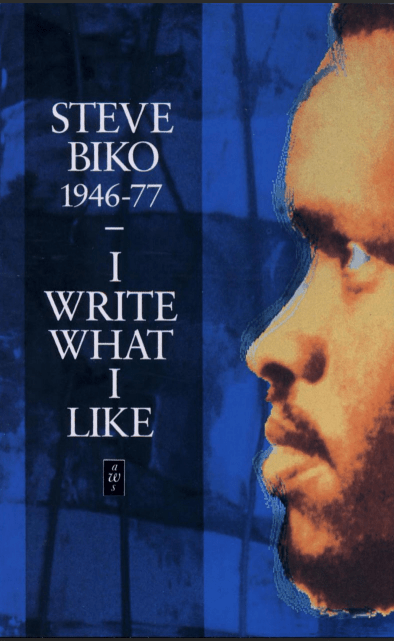
“I Write What I Like” by Steve Biko_eBook and Audiobook, with African Biographics_Steve Biko: The African Revolutionary, Why was he Killed?

Steve Biko was a South African anti-apartheid activist and leader of the Black Consciousness Movement. He was killed in 1977 for his activism. Known as the “Father of Black Consciousness”.

Book Summary

“I Write What I Like” by Steve Biko is a collection of writings that reflect Biko’s thoughts on race, identity, and the struggle against apartheid in South Africa. Here’s a bullet point narrative summarizing its key themes and ideas:

  • Background and Context: The book is set against the backdrop of apartheid in South Africa, highlighting the systemic oppression faced by black South Africans.
  • Black Consciousness: Biko emphasizes the importance of self-awareness and pride among black people, advocating for a movement that fosters dignity and identity.
  • Critique of Racism: Biko critiques both the institutionalized racism of the apartheid regime and the passive acceptance of oppression by the black community.
  • Empowerment through Education: He argues that education should be a tool for empowerment, encouraging black people to understand their history and culture.
  • Rejection of Passive Resistance: Biko promotes active resistance against oppression rather than passive acceptance, urging black individuals to fight for their rights.
  • Unity and Solidarity: The writings stress the need for unity among black South Africans to combat the divisive tactics of the apartheid government.
  • Personal Narrative: Biko shares his own experiences and reflections, providing insight into his motivations and the struggles he faced.
  • Legacy of Resistance: The book serves as a call to action, inspiring future generations to continue the fight for equality and justice.
  • Impact of Biko’s Philosophy: His ideas laid the groundwork for the Black Consciousness Movement, influencing both local and international perspectives on racial equality.

Here’s a deeper exploration of the themes and significance of “I Write What I Like”:

In-Depth Themes and Concepts

  • Black Consciousness Movement:
    • Biko was a key figure in the Black Consciousness Movement, which sought to instill a sense of pride and identity among black South Africans. He believed that psychological liberation was essential for political freedom. The movement encouraged black individuals to reject the inferiority imposed by the apartheid system and to embrace their heritage.
  • Critique of Apartheid:
    • The writings expose the inhumane conditions and injustices inflicted by apartheid. Biko critiques not only the policies of the apartheid government but also the complicity of white South Africans who benefited from the system. He argues that true change requires acknowledging and addressing these injustices.
  • Philosophy of Self-Identification:
    • Biko emphasizes the importance of self-definition and self-identity. He argues that black people must define themselves and their aspirations, rather than allowing others to dictate their identities. This concept is vital for personal and collective empowerment.
  • Role of Education:
    • Education is portrayed as a double-edged sword. While it can be a means of liberation, Biko also critiques the education system for perpetuating colonial values and failing to address the realities faced by black individuals. He advocates for an education that is relevant and empowering, rooted in African history and culture.
  • Active Resistance:
    • Biko calls for a more proactive approach to resistance, pushing against the notion of passive acceptance. He believes that change will only come through active engagement and confrontation of oppressive forces, inspiring a generation to stand up for their rights.

Historical Significance

  • Influence on Future Movements:
    • Biko’s ideas and writings have had a lasting impact, influencing not only the anti-apartheid struggle but also civil rights movements globally. His emphasis on self-identity and empowerment resonates with various movements advocating for racial justice and equality.
  • Martyrdom and Legacy:
    • Biko’s tragic death in police custody in 1977 turned him into a martyr for the anti-apartheid cause. His writings gained renewed attention posthumously, further solidifying his legacy as a symbol of resistance and the fight for justice.

Personal Reflections

  • Narrative Style:
    • The book combines essays, letters, and speeches, offering a personal glimpse into Biko’s thoughts and experiences. This narrative style makes the work both accessible and compelling, allowing readers to connect with his ideas on a deeper level.
  • Call to Action:
    • Ultimately, “I Write What I Like” serves as a powerful call to action for individuals to take ownership of their identities and work collectively towards a more just and equitable society.

Biko’s writings continue to inspire discussions around race, identity, and social justice, making “I Write What I Like” a vital work in understanding the complexities of the struggle against apartheid and the broader fight for human rights.

“I Write What I Like” by Steve Biko_eBook

Pop the documents out from the upper right to read / expand / download.

“I Write What I Like” by Steve Biko_Audiobook

Steve Biko: The African Revolutionary, Why was he Killed? From: African Biographics

Learm more in RBG Communiversity Knowledge Media eLibrary:

From Black Power to Black Studies: How a Radical Social Movement Became an Academic Discipline by Fabio Rojas (eBook), with Black Power, Black Studies, and Afro-centric Education, The Dr. Oba T’Shaka Show

Last Updated September, 20, 2026

Book Summary

“From Black Power to Black Studies: How a Radical Social Movement Became an Academic Discipline” by Fabio Rojas explores the transformation of the Black Power movement into the establishment of Black Studies as an academic field. Rojas examines the historical context, key figures, and ideological shifts that contributed to this evolution, highlighting the intersection of activism and academia. The book provides a nuanced analysis of how grassroots movements influenced educational institutions and the ways in which Black Studies has developed as a discipline in response to social, political, and cultural changes.

The outline that follows encapsulates the essence of “From Black Power to Black Studies,” highlighting the historical and ideological journey from grassroots activism to the academic establishment of Black Studies. Fabio Rojas provides a critical examination of how social movements can shape and influence educational institutions, offering valuable insights into the intersection of activism, scholarship, and the pursuit of social justice.

  • Introduction
    • Overview of the Black Power movement and its significance
    • Introduction to the emergence of Black Studies as an academic discipline
    • Thesis statement regarding the relationship between social movements and academic fields
  • Historical Context of the Black Power Movement
    • Definition and key characteristics of the Black Power movement
    • Major events and figures associated with the movement
    • The social and political climate of the 1960s and 1970s that fostered activism
  • From Activism to Academia
    • Examination of the transition from radical activism to the establishment of Black Studies programs
    • Key organizations and leaders who played a role in advocating for Black Studies
    • Case studies of early Black Studies programs at universities and their founding principles
  • Ideological Shifts and Debates
    • Analysis of the ideological debates within the Black Power movement
    • The varying perspectives on race, identity, and education that influenced Black Studies
    • Tensions between militant activism and academic rigor in the formation of the discipline
  • Institutionalization of Black Studies
    • The process of institutionalizing Black Studies within higher education
    • Challenges faced by advocates in securing legitimacy and funding for programs
    • The role of student activism and protests in promoting Black Studies curricula
  • Impact on Academic Discourse
    • Examination of how Black Studies has influenced broader academic discourse
    • The integration of Black perspectives into various disciplines (e.g., sociology, history, literature)
    • Contributions of Black Studies scholars to social theory and critical race studies
  • Contemporary Issues and Future Directions
    • Analysis of the current state of Black Studies and its relevance in today’s society
    • Ongoing challenges faced by the discipline, including funding and institutional support
    • Future directions for Black Studies, including potential areas of research and activism
  • Conclusion
    • Summary of key findings and insights regarding the relationship between the Black Power movement and Black Studies
    • Reflection on the importance of understanding this evolution for contemporary social movements and academic disciplines
    • Final thoughts on the ongoing relevance of Black Studies in addressing issues of race and inequality

“From Black Power to Black Studies” delves into the transformative journey of the Black Power movement and its significant influence on the establishment of Black Studies as a recognized academic field. The book offers a detailed exploration of the interplay between social activism and academia, analyzing how a radical movement evolved into a formal discipline that continues to address issues of race, identity, and social justice. Here’s a deeper exploration of the key themes, contributions, and implications presented in the book:

Key Themes Explored

  • Historical Context of the Black Power Movement
    • Rojas provides a comprehensive overview of the Black Power movement, situating it within the broader civil rights struggle of the 1960s. He highlights key figures such as Stokely Carmichael, Angela Davis, and Malcolm X, who championed the movement’s ideals.
    • The author discusses the socio-political climate that fueled the rise of Black Power, including systemic racism, economic inequality, and the desire for self-determination among Black communities.
  • Transition from Activism to Academia
    • One of the central themes of the book is the transition from grassroots activism to academic institutionalization. Rojas examines how activists sought to create educational programs that reflected their experiences and struggles.
    • The book highlights the formation of Black Studies programs in universities, particularly in the late 1960s and early 1970s, emphasizing the role of student protests and demands for curriculum changes.
  • Ideological Shifts and Debates
    • Rojas analyzes the ideological debates that characterized the Black Power movement and how these debates influenced the development of Black Studies. He explores diverse perspectives on race, identity, and education, illustrating the tensions between more militant approaches and those advocating for scholarly rigor.
    • The book discusses how these ideological divisions shaped the curriculum and focus of Black Studies programs, including debates over essentialism, intersectionality, and the role of Black intellectuals.
  • Institutionalization and Challenges
    • The process of institutionalizing Black Studies is examined in detail, including the challenges faced by advocates in securing legitimacy, funding, and faculty positions within academic institutions.
    • Rojas emphasizes the importance of student activism in pushing for the establishment of Black Studies programs and the ongoing struggles to maintain their relevance and support within universities.
  • Impact on Academic Discourse
    • The book highlights how Black Studies has contributed to broader academic discourse, influencing various fields such as sociology, history, literature, and cultural studies.
    • Rojas illustrates the contributions of Black Studies scholars to social theory, critical race theory, and discussions on intersectionality, demonstrating the discipline’s impact beyond its own confines.
  • Contemporary Issues and Future Directions
    • Rojas addresses the current state of Black Studies, reflecting on its relevance in contemporary society amidst ongoing issues of systemic racism, social justice, and inequality.
    • The author discusses contemporary challenges, including funding cuts, the politicization of curriculum, and the need for ongoing activism to support Black Studies programs.
    • He suggests future directions for research and activism within Black Studies, emphasizing the importance of continuing to engage with pressing societal issues.

Conclusion and Broader Implications

  • Reflections on the Journey from Activism to Academia
    • In the conclusion, Rojas synthesizes the key insights from his analysis, reiterating the significant relationship between the Black Power movement and the emergence of Black Studies as an academic discipline.
    • He emphasizes the importance of understanding this evolution for contemporary social movements, highlighting how activism can inform and shape academic discourse.
  • Ongoing Relevance of Black Studies
    • The book closes with a reflection on the enduring relevance of Black Studies in addressing contemporary issues of race, identity, and social justice. Rojas argues that the discipline is not only a product of historical struggles but also a vital tool for understanding and combating ongoing inequality.

Overall, “From Black Power to Black Studies” offers a thorough and insightful examination of how a radical social movement transformed into an established academic discipline. Fabio Rojas’s analysis sheds light on the complexities of this journey, highlighting the interplay between activism and scholarship while emphasizing the importance of Black Studies in the ongoing fight for social justice and equality. The book serves as both a historical account and a call to action for future generations to continue engaging with these critical issues.

From Black Power to Black Studies_eBook

Pop the documents out from the upper right to read / expand / download.

Black Power, Black Studies, and Afro-centric Education, The Dr. Oba T’Shaka Show

17 Video Playlist

Learn more in RBG Communiversity Knowledge Media (CGW) eLibrary:

Black Power, Black Studies, & Afrocentric Education,Dr. Oba T’Shaka Folder

Black Panther Party History_eBooks, Articles, Videos, Newspapers and Documents Folder

Prisons, Slavery, Policing and Imperialism (The Correctional-Industrial Complex [CIC]) Folder

The Diary of Malcolm X: El-Hajj Malik El-Shabazz, 1964, Eds. Herb Boyd , Ilyasah Al-Shabazz with, Minister Malcolm X Select Teachings Video Player

Book Summary

“The Diary of Malcolm X: El-Hajj Malik El-Shabazz, 1964” is an edited collection of the personal writings of Malcolm X during a pivotal year in his life. Compiled by editors  Herb Boyd, Ilyasah Al-Shabazz the diary offers an intimate glimpse into Malcolm X’s thoughts, experiences, and reflections following his departure from the Nation of Islam and his pilgrimage to Mecca. It captures his evolving views on race, religion, and global politics, showcasing his quest for identity and justice. The diary serves as a powerful testament to Malcolm X’s legacy as a human and civil rights leader and a thinker who transcended traditional boundaries in his pursuit of equality and understanding.

The outline that follows encapsulates the essence of “The Diary of Malcolm X,” highlighting its exploration of Malcolm X’s thoughts, experiences, and evolving perspectives during a transformative year in his life. The diary serves as both a personal narrative and a critical reflection on broader social issues, emphasizing Malcolm X’s lasting impact on the struggle for equality and justice.

  • Introduction
    • Overview of Malcolm X’s significance in American history
    • Contextualization of the diary and its importance
    • Brief explanation of the editors’ role in compiling the writings
  • Background of Malcolm X
    • Overview of Malcolm X’s early life and upbringing
    • His involvement with the Nation of Islam and subsequent departure
    • The significance of his pilgrimage to Mecca in 1964
  • Key Themes in the Diary
    • Identity and Transformation
      • Exploration of Malcolm X’s evolving self-concept
      • Reflections on his newfound understanding of Islam and brotherhood
    • Race and Racism
      • Insights into his views on race relations in America and globally
      • Discussion of systemic racism and its impact on African Americans (New Afrikans)
    • Global Perspectives on Human Rights
      • Malcolm X’s engagement with international leaders and movements
      • The intersection of civil rights and global struggles for liberation
  • Major Events Documented
    • The Pilgrimage to Mecca
      • Detailed reflections on his experiences and encounters during the Hajj
      • The impact of his pilgrimage on his worldview and beliefs
    • Public Speaking and Activism
      • Accounts of his speeches, travels, and engagements with various communities
      • The challenges and triumphs he faced in advocating for justice
  • Personal Reflections
    • Insights into Malcolm X’s personal struggles and triumphs
    • His thoughts on family, faith, and community
    • The emotional and psychological toll of his activism
  • Legacy and Impact
    • Discussion of Malcolm X’s enduring influence on civil rights and social justice movements
    • The relevance of his writings and thoughts in contemporary discourse
    • Reflections on how his legacy continues to inspire activism today
  • Conclusion
    • Summary of the key insights from Malcolm X’s diary
    • The importance of understanding his journey and transformation
    • Final thoughts on the significance of Malcolm X’s contributions to social justice

“The Diary of Malcolm X: El-Hajj Malik El-Shabazz, 1964” provides a profound and intimate look at one of the most influential figures in the American  human and civil rights movements. Compiled by editors Herb Boyd , Ilyasah Al-Shabazz, the diary not only chronicles Malcolm X’s activities during this pivotal year but also offers deep insights into his evolving thoughts and philosophies. Here’s a deeper exploration of the themes, experiences, and legacy conveyed in the diary:

Key Themes Explored

  • Identity and Transformation
    • Malcolm X’s journey of self-discovery is a central theme in the diary. After leaving the Nation of Islam, he redefines his identity beyond the constraints of his previous affiliations. His pilgrimage to Mecca marks a significant turning point, as he experiences a profound sense of brotherhood with Muslims of diverse backgrounds, challenging his previous views on race.
    • His reflections reveal a nuanced understanding of what it means to be a Black man in America and a global citizen, emphasizing the importance of unity among oppressed people worldwide.
  • Race and Racism
    • Throughout the diary, Malcolm X grapples with the realities of systemic racism in America. His writings articulate the deep frustrations and injustices faced by African Americans (New Afrikans), as well as the historical context of oppression.
    • He contrasts his experiences in the U.S. with the acceptance he finds in the Muslim world, which leads him to rethink his approach to race relations and the potential for solidarity across racial and national lines.
  • Global Perspectives on Human Rights
    • The diary reflects Malcolm X’s increasing awareness of global struggles for freedom and justice. He engages with international leaders and movements, advocating for the rights of oppressed peoples beyond the United States.
    • His writings highlight the interconnectedness of civil rights, anti-colonialism, and human rights, positioning the struggle for Black liberation within a larger global context.

Major Events Documented

  • The Pilgrimage to Mecca
    • Malcolm X provides detailed accounts of his experiences during the Hajj, emphasizing its transformative impact on his beliefs. He describes the profound sense of equality he felt among Muslims from different ethnic backgrounds, which challenges his previous notions of racial divisions.
    • This experience leads him to adopt a more inclusive perspective on race, emphasizing the importance of unity among all people fighting against oppression.
  • Public Speaking and Activism
    • The diary chronicles his extensive travels and speaking engagements, where he advocates for human and civil rights and social justice. He reflects on the challenges he faces, including opposition from both the establishment and factions within the civil rights movement.
    • His writings reveal his determination to continue speaking out against injustice despite the risks, showcasing his resilience and commitment to the cause.

Personal Reflections

  • Struggles and Triumphs
    • Malcolm X candidly shares his personal struggles, including the emotional toll of his activism, the challenges of being a public figure, and the impact on his family life. He reflects on the balance between his commitments to his community and his responsibilities as a husband and father.
    • His reflections on faith reveal a deepening spiritual journey, as he seeks to reconcile his religious beliefs with his activism.

Legacy and Impact

  • Enduring Influence
    • The diary underscores Malcolm X’s lasting impact on civil rights and social justice movements. His insights into race, identity, and global solidarity continue to resonate with activists today.
    • The themes he addresses—systemic racism, the quest for justice, and the importance of international solidarity—remain relevant in contemporary discussions about equity and human rights.
  • Cultural and Intellectual Contributions
    • Malcolm X’s writings and speeches have inspired generations of thinkers, activists, and artists. His ability to articulate the complexities of race and identity has made him a pivotal figure in American history and a symbol of resistance.
    • The diary serves as a critical resource for understanding his intellectual evolution and his role in shaping the narrative of the civil rights movement.

Conclusion

“The Diary of Malcolm X: El-Hajj Malik El-Shabazz, 1964” is more than just a personal account; it is a powerful reflection on the struggle for justice, identity, and human rights. Malcolm X’s writings encapsulate his growth as a leader and thinker during a transformative period in his life. The diary offers readers an opportunity to engage with his thoughts and experiences, providing insights into the complexities of race and the ongoing fight for equality.

Through this work, Malcolm X’s legacy endures, reminding us of the importance of activism, solidarity, and the relentless pursuit of justice in the face of oppression. His journey serves as an inspiration for current and future movements advocating for social change and human rights.

The Diary of Malcolm X: El-Hajj Malik El-Shabazz (1964)_eBook

Pop the documents out from the upper right to read / expand / download.

Minister Malcolm X Select Teachings Video Player

25 Video Playlist

RBG Communiversity eLibrary: Minister Malcolm X “A Comprehensive Achieve” Folder

The Victims of Democracy: Malcolm X and the Black Revolution by Eugene Victor Wolfenstein_eBook and Audiobook, with Malcolm X What is the Black Revolution

Book Summary

 “The Victims of Democracy” explores the life and legacy of Malcolm X within the context of American democracy and the struggle for Black liberation. Wolfenstein examines Malcolm’s evolution as a leader, the socio-political forces that shaped his ideology, and the broader implications of his work for the human and civil rights movements. The text emphasizes the challenges faced by Afrikans in amerikkka in a democratic society that often fails to uphold its ideals for all citizens.

The following outline captures the main themes and structure of Eugene Victor Wolfenstein’s exploration of Malcolm X and the Black revolution, emphasizing the intersection of race and democracy in America.

  • Introduction
    • Purpose of the book
    • Relevance of Malcolm X in the context of democracy
    • Overview of themes
  • Chapter 1: Historical Context
    • Overview of racism in America
    • The civil rights movement’s origins
    • The limitations of traditional democratic practices
  • Chapter 2: Malcolm X’s Early Life
    • Childhood and family background
    • Influences on Malcolm’s worldview
    • Transition from Malcolm Little to Malcolm X
  • Chapter 3: The Nation of Islam
    • Role of the Nation of Islam in Malcolm’s life
    • Key beliefs and practices
    • Malcolm’s rise as a prominent figure
  • Chapter 4: Break with the Nation of Islam
    • Reasons for the split
    • Transformation of Malcolm’s ideology
    • The impact of his pilgrimage to Mecca
  • Chapter 5: Malcolm X’s Political Philosophy
    • Concepts of race, identity, and empowerment
    • Critique of American democracy
    • Advocacy for self-determination
  • Chapter 6: The Legacy of Malcolm X
    • Influence on the Black Power movement
    • Reinterpretation of his messages in contemporary contexts
    • Ongoing relevance of his ideas
  • Conclusion
    • Summary of key insights
    • The implications of Malcolm X’s life for modern democracy
    • Call to action for continued struggle against injustice

Here is a deeper look into some of the key themes and concepts presented in “The Victims of Democracy. This exploration not only honors Malcolm X’s legacy but also invites readers to consider how the fight for equality and justice continues to evolve in contemporary society.

Key Themes and Concepts

  1. Racism and American Democracy:
    • The book critically investigates how systemic racism undermines the principles of democracy in the United States. Wolfenstein argues that while America professes ideals of freedom and equality, it often fails to deliver these promises to Afrikans in amerikkka.
  2. Malcolm X’s Transformation:
    • Malcolm X’s journey from his early life to becoming a prominent human rights leader is a focal point. Wolfenstein details how Malcolm’s experiences with racism, both personally and socially, shaped his radical beliefs. His time with the Nation of Islam represents a significant period of identity formation and ideological development.
  3. Critique of Established Civil Rights Movements:
    • The author contrasts Malcolm X’s approach with that of more mainstream civil rights leaders like Martin Luther King Jr. While King advocated for nonviolent protest and integration, Malcolm X emphasized self-defense, Black nationalism, and a more revolutionary approach to achieving rights.
  4. Global Perspective on Race and Revolution:
    • Wolfenstein places Malcolm X within a global context, discussing how his ideas resonated with anti-colonial movements around the world. Malcolm’s pilgrimage to Mecca and subsequent interactions with leaders from various nations broadened his perspective on race and politics, leading to a more internationalist view of the struggle for justice.
  5. Crisis of Democracy:
    • The title itself, “The Victims of Democracy,” reflects a central argument that many marginalized groups, particularly Afrikans in amerikkka have been victimized by the failures of a system that claims to uphold democratic values. Wolfenstein posits that true democracy must include the voices and rights of all people, particularly those historically oppressed.
  6. Enduring Legacy:
    • The book discusses how Malcolm X’s ideas continue to inspire contemporary movements for social justice and racial equality. His call for self-determination and empowerment resonates in today’s discussions around systemic racism, police brutality, and the fight for Black lives.

Conclusion

Wolfenstein’s work serves as both a biographical account and a critical analysis of the social, political, and historical contexts surrounding Malcolm X. It challenges readers to reflect on the complexities of race relations in amerikkka and the ongoing struggle for true democracy. Through Malcolm’s life and teachings, the book encourages a deeper understanding of the intersections between race, identity, and the quest for justice.

The Victims of Democracy: Malcolm X and the Black Revolution_eBook

Pop the documents out from the upper right to read / expand / download.

The Victims of Democracy: Malcolm X and the Black Revolution_Audiobook

Malcolm X What is the Black Revolution

Learn more in RBG Communiversity Knowledge Media eLibrary:

The Choice: The Issue of Black Survival in America by Samuel Yette (1971/82) Audiobook, presented by Real Talk With ZSJ

NB: The price of this book is prohibitive for most working class Black people, ie.“Colonization of Black Information”

The term “Colonization of Black Information” refers to the historical and ongoing processes through which knowledge, narratives, and cultural expressions of Black people and communities have been dominated, appropriated, blocked or marginalized by external forces, often rooted in colonialism and the systemic, business and culture of white supremacy (racism). Allow us to provide some details, as it goes to why this book is so expensive.

Four quick points:

  1. Historical Context: During colonial times, European powers often suppressed indigenous knowledge systems and cultural practices, replacing them with their own narratives. This led to a loss of agency among Black (New Afrikan) communities in telling their own stories and defining their own realities and identities.
  2. Cultural Appropriation: The appropriation of Black culture, music, art, and other expressions by non-Black (white) individuals and/or groups without proper acknowledgment or respect can be seen as a continuation of this colonization. Such actions often strip the original meanings and contexts from cultural elements.
  3. Media Representation: The portrayal of Black individuals and communities in media perpetuate stereotypes, often framing them through a lens that aligns with dominant societal (white) narratives and serving to distort public perceptions and limit the understanding of the Black experiences in Amerikkka under the bootheel of its oppression.
  4. Access to Information: Structural inequalities (eg. this book) often result in Black communities having less access to platforms and resources to share their information and narratives. This, more frequently than not, leads to a dearth of knowledge and a lack of representation in academic, historical, socio-political, economic and cultural discussions.

Book Summary

“The Choice: The Issue of Black Survival in America” by Samuel Yette is a profound exploration of the challenges faced by the African American community in the United States. Yette presents a critical analysis of the socio-political landscape affecting Black Americans, discussing themes of survival, identity, and agency. The book examines historical contexts, systemic racism, and the ongoing struggle for civil rights, ultimately advocating for a conscious choice in addressing these persistent issues.

The outline that follows captures the essence of Yette’s work, emphasizing both the historical context and the contemporary issues facing the Black community in America

  • Introduction
    • Purpose of the book
    • Overview of the Black experience in America
  • Historical Context
    • Legacy of slavery
    • Civil Rights Movement
    • Continued oppression and disenfranchisement
  • Systemic Racism
    • Definition and examples
    • Impact on African American communities
    • Institutional barriers in education, employment, and justice
  • Identity and Culture
    • The importance of cultural heritage
    • The role of community and family
    • Challenges in maintaining identity in a predominantly white society
  • Survival Strategies
    • Individual vs. collective approaches
    • Importance of education and empowerment
    • Role of activism and political engagement
  • The Power of Choice
    • Defining choices in the context of survival
    • Historical examples of impactful choices made by Black leaders
    • Encouraging personal responsibility and agency
  • Vision for the Future
    • Hope and resilience within the Black community
    • Potential pathways for change
    • Call to action for readers
  • Conclusion
    • Summary of key points
    • Reinforcement of the importance of choice in the struggle for survival
    • Final thoughts on unity and collective action

  Here is an outline comprising a deeper exploration of the themes and concepts presented in “The Choice”

  1. Introduction
    • Yette sets the stage by discussing the historical and ongoing struggles of African Americans in the U.S. He emphasizes the need for awareness and understanding of the systemic issues that have shaped the Black experience.
  2. Historical Context
    • The author delves into the history of slavery, detailing its brutal realities and the long-lasting effects on subsequent generations. He explores the Civil Rights Movement, highlighting key figures and events that sought to dismantle institutional racism. Yette also discusses how the remnants of these historical injustices continue to affect Black Americans today.
  3. Systemic Racism
    • Yette provides a thorough analysis of systemic racism, defining it as a deeply ingrained issue that permeates various institutions, including education, healthcare, and the justice system. He illustrates how these systems fail Black individuals, contributing to socio-economic disparities and perpetuating cycles of poverty and disenfranchisement.
  4. Identity and Culture
    • The book emphasizes the significance of cultural identity and heritage for African Americans. Yette discusses the importance of community bonds, family structures, and the role of cultural expressions in fostering resilience. He examines the struggles of maintaining cultural identity in a society that often marginalizes or misrepresents Black culture.
  5. Survival Strategies
    • Yette advocates for both individual and collective strategies for survival. He stresses the importance of education as a tool for empowerment and encourages active participation in political processes. The author highlights examples of grassroots movements and organizations that have successfully mobilized communities to fight for their rights.
  6. The Power of Choice
    • Central to Yette’s thesis is the concept of choice. He posits that individuals have the power to make choices that can lead to positive change, both personally and collectively. He uses historical examples of leaders who made significant choices that impacted the trajectory of the civil rights struggle, inspiring readers to take ownership of their decisions.
  7. Vision for the Future
    • Yette expresses a hopeful vision for the future, emphasizing the resilience and strength of the Black community. He discusses the potential for change through unity and collective action. The author calls on readers to engage in the ongoing struggle for justice and equality, fostering a sense of responsibility towards future generations.
  8. Conclusion
    • The book concludes with a powerful reminder of the importance of awareness and action. Yette urges readers to reflect on their roles in the fight against systemic racism and to recognize that meaningful change requires both individual and collective effort.

Key Themes:

  • Empowerment through Education: Yette highlights education as a vital means for empowerment and breaking the cycle of oppression.
  • Cultural Identity: The preservation of cultural heritage is crucial for community strength and individual identity.
  • Agency and Responsibility: Individuals must recognize their power to make choices that affect their lives and communities.
  • Collective Action: The importance of solidarity and collaboration among African Americans to effect social change.

Overall, “The Choice” serves as a thought-provoking work that challenges readers to think critically about the issues facing the Black community while inspiring them to take action towards a more equitable future.

Part I A Partial Reading of The Choice The Issue of Black Survival in America by Samuel Yette Audiobook (Real Talk With ZSJ)

Starts @1min. 09 sec.

The Choice: The Issue of Black Survival in America: View/Study/ Download ALL 7 Parts presented by Real Talk With ZSJ HERE

Learn more in RBG Communiversity Knowledge Media eLibrary: