The Autobiography of Malcolm X e-Book and Audiobook (as told to Alex Haley)

Last Updated 01-05-25

Book Summary

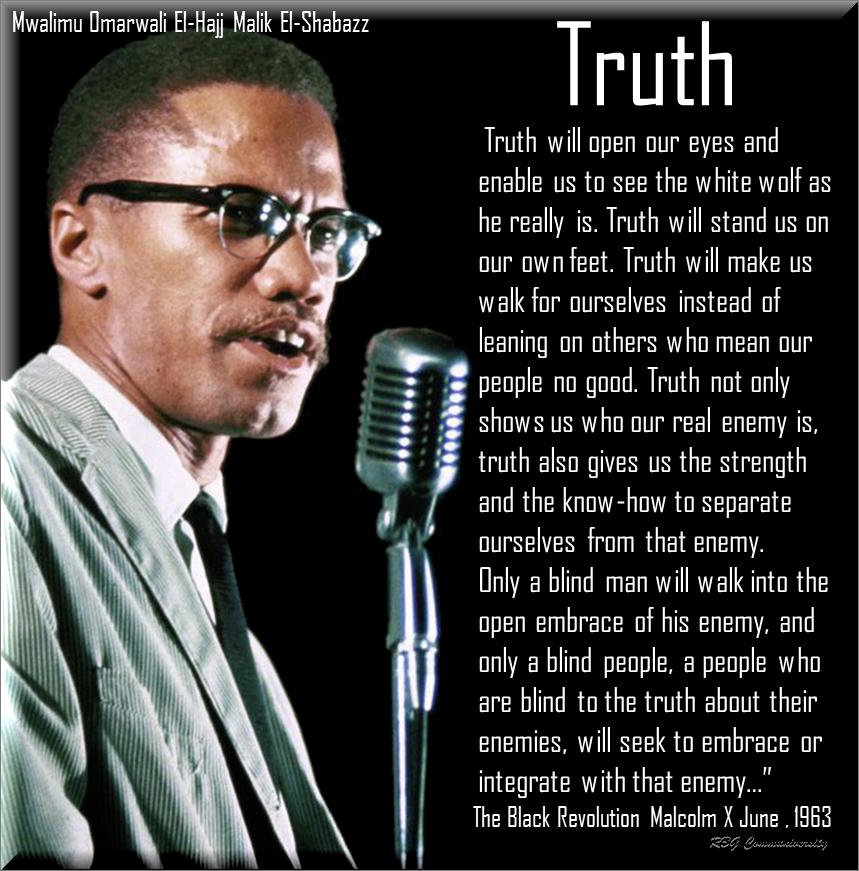
“The Autobiography of Malcolm X,” as told to Alex Haley, is a profound narrative that chronicles the life of Malcolm X, an influential Black Nationalist leader and activist. The book details his transformation from a troubled youth to a prominent figure in the civil rights movement, exploring themes of race, identity, and the struggle for justice. Through personal anecdotes and reflections, Malcolm X provides insights into his philosophy, beliefs, and the socio-political landscape of the time.

The outline that follows captures the significant events and themes presented in “The Autobiography of Malcolm X,” offering a structured understanding of his life and legacy.

I. Introduction

  • Context of the book
  • Collaboration with Alex Haley
  • Purpose and significance of the autobiography

II. Early Life

  • Birth and family background in Omaha, Nebraska
  • Childhood experiences and challenges
  • Influence of his parents and early education
  • Move to Boston; exposure to urban life and crime

III. Life of Crime and Imprisonment

  • Involvement in criminal activities
  • Arrest and imprisonment
  • Transformation during incarceration
  • Discovery of the Nation of Islam

IV. Emergence as a Leader

  • Release from prison and return to society
  • Rise within the Nation of Islam
  • Advocacy for Black empowerment and self-determination
  • Role as a spokesperson for Elijah Muhammad

V. Break from the Nation of Islam

  • Growing tensions with the Nation’s leadership
  • Shift in beliefs and ideology
  • Pilgrimage to Mecca and its impact
  • Embracing a more inclusive approach to civil rights

VI. Advocacy and Activism

  • Founding of the Organization of Afro-American Unity
  • Speaking engagements and influence on the civil rights movement
  • Focus on global human rights issues
  • Interactions with other civil rights leaders

VII. Reflections on Race and Identity

  • Exploration of race relations in America
  • Views on integration vs. separation
  • Personal evolution and changing perspectives

VIII. Assassination and Legacy

  • Threats to Malcolm X’s life
  • Events leading to his assassination in 1965
  • Legacy and impact on future generations
  • Continued relevance of his ideas in contemporary society

IX. Conclusion

  • Summary of Malcolm X’s journey and contributions
  • Reflection on the importance of his story
  • Final thoughts on race and equality in America

Here’s a deeper exploration of the key themes and significant events from “The Autobiography of Malcolm X.”

Key Themes

1. Identity and Self-Discovery

  • Malcolm X’s journey is characterized by a quest for identity. He grapples with his racial identity, especially in a society that marginalizes Black individuals.
  • His transformation from Malcolm Little to Malcolm X symbolizes his rejection of his “slave name” and his embrace of a new identity that reflects his African heritage.

2. Race and Racism

  • The book provides a candid examination of systemic racism in America. Malcolm describes the pervasive discrimination and violence faced by African Americans.
  • He discusses the psychological effects of racism, including internalized racism within the Black community.

3. Religion and Spiritual Growth

  • The Nation of Islam plays a pivotal role in Malcolm’s life, providing him with a sense of purpose and community during his imprisonment.
  • His pilgrimage to Mecca marks a significant turning point, where he encounters a diverse range of Muslims and re-evaluates his beliefs about race and brotherhood.

4. Empowerment and Activism

  • Malcolm X advocates for Black empowerment, emphasizing self-defense and the right to fight against oppression.
  • His rhetoric challenges the mainstream civil rights movement, which he believed was too passive.

5. Change and Evolution

  • The autobiography chronicles Malcolm’s evolution in thought—from a separatist perspective to a more inclusive worldview post-Mecca.
  • His willingness to adapt and grow intellectually is a central theme, showcasing his commitment to truth and justice.

Significant Events

Childhood and Early Influences

  • Malcolm’s childhood is marked by trauma, including the murder of his father and the institutionalization of his mother. These experiences shape his understanding of race and violence.

Incarceration and Transformation

  • While in prison, Malcolm educates himself through reading and engages in discussions with fellow inmates, leading to a profound transformation in his worldview.

Rise in the Nation of Islam

  • Upon his release, Malcolm becomes a national spokesperson for the Nation of Islam, advocating for Black Nationalism and attracting a significant following.
  • His charismatic speeches and confrontational style resonate with many African Americans seeking change.

Pilgrimage to Mecca

  • In 1964, Malcolm embarks on a pilgrimage to Mecca, which profoundly alters his view on race. He witnesses Muslims of all races and colors worshiping together, leading him to reconsider his previous beliefs about racial separation.

Post-Nation of Islam Activism

  • After breaking with the Nation of Islam, Malcolm founds the Organization of Afro-American Unity, focusing on broader civil rights issues and international solidarity with oppressed peoples.

Assassination

  • On February 21, 1965, Malcolm X is assassinated in New York City. His death highlights the dangers faced by those who challenge the status quo and the ongoing struggle for human and civil rights.

Legacy

The autobiography serves not only as a personal narrative but also as a critical historical document that sheds light on the complexities of race relations in amerikkka and the ongoing quest for equality and justice.

Malcolm X’s legacy is one of empowerment, resilience, and a call for justice. His teachings continue to inspire activists and movements around the world, emphasizing the importance of self-determination, community solidarity, and the fight against systemic oppression.

The Autobiography of Malcolm X_eBook

Pop the document out from the upper right to read / expand / download.

The Autobiography of Malcolm X_Audiobook

Part 1

Part 2

Learn more in RBG Communiversity Knowledge Media eLibrary:

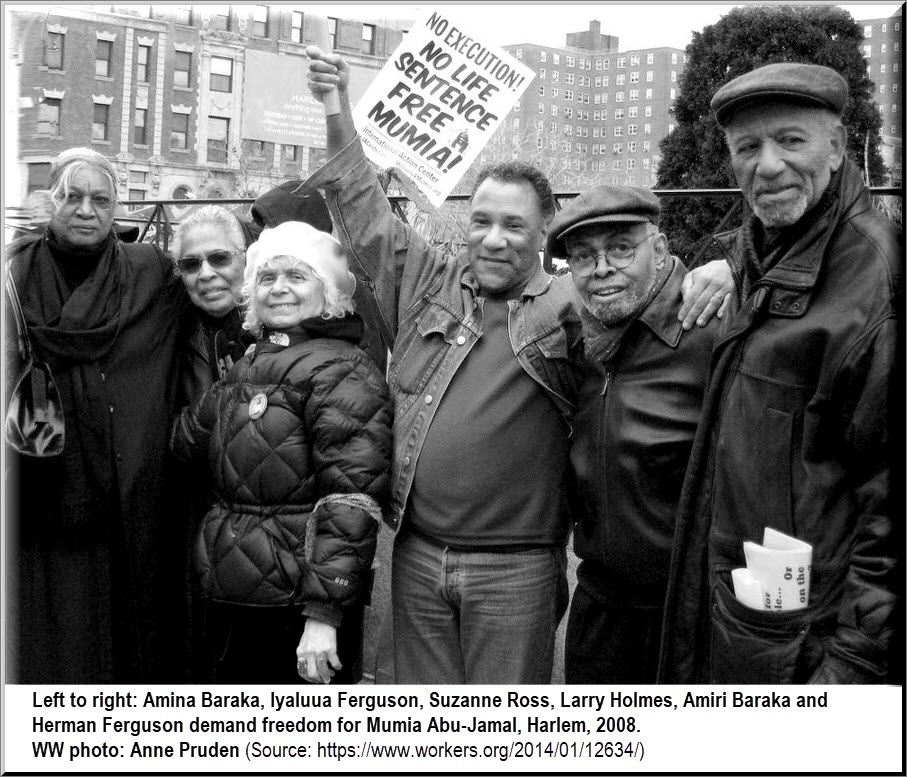
An Unlikely Warrior_RBG Baba Herman Ferguson RIU Tribute Page with Commentary with Herman & Iyaluua Ferguson

Click for the full size poster.

Herman & Iyaluua Ferguson RIU to the Warriors_LONG LIVE

Pop the document out from the upper right to read / expand / download.

Remembering Herman Ferguson

By Nayaba Arinde October 2, 2014, https://amsterdamnews.com/news/2014/10/02/remembering-herman-ferguson/

Learn more in RBG Communiversity Knowledge Media eLibrary:

RBG Glossary of Terms| Goals of Mis-Education vs. Liberatory Practices (NAIM Multimedia)

Click for full size poster view

“We Are Afrikan People Wherever We Were Born No matter where we were born in the world. Afrikan (Black) People are historically and culturally linked. Our history, identity, and culture are rooted in the many thousands of years of development of Afrikan civilization on the Afrikan continent. This is a consequence of the ever forward movement and motion of the New Afrikan masses. It is from this historical march of our people (Afrikan [Black] People) that we derive our African culture, the sum total of material and spiritual values created by our people. It is this invincible weapon, Afrikan culture, that has always served to fight against all forms of oppression and exploitation, to move forward New Afrikan People and Afrikan civilization.

” I used these teachings of the Minister to make: RBG BLACKADEMIXTAPE VOL.1-Video sample Talib Kweli Feat. RBG Street Scholar- Ballad Of The Black Gold

For new comers, pop the document out from the upper right to read / expand / download.

NAIM Portal

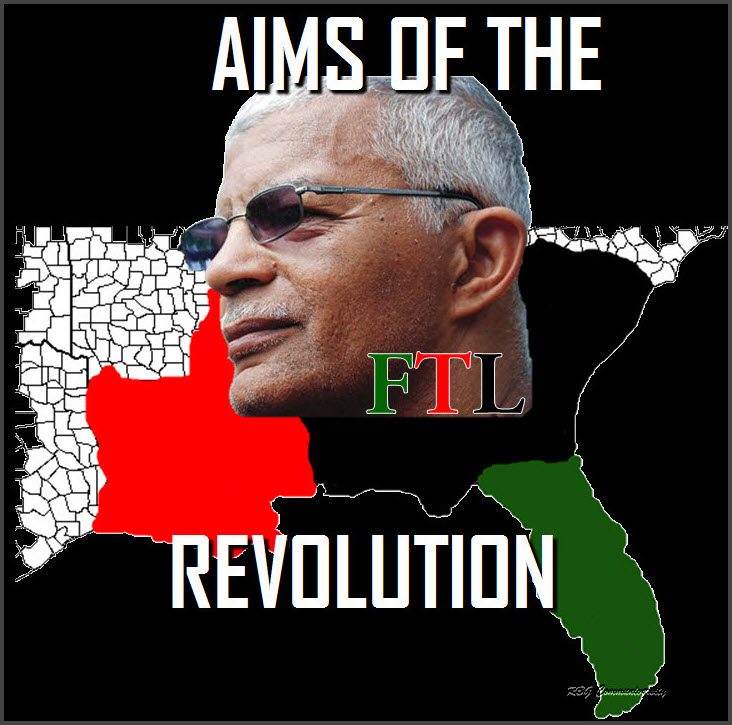
History of the PG-RNA Multimedia | A Chokwe Lumumba Tribute Page

Last Updated September 20, 2026

RNA 2

————————————————


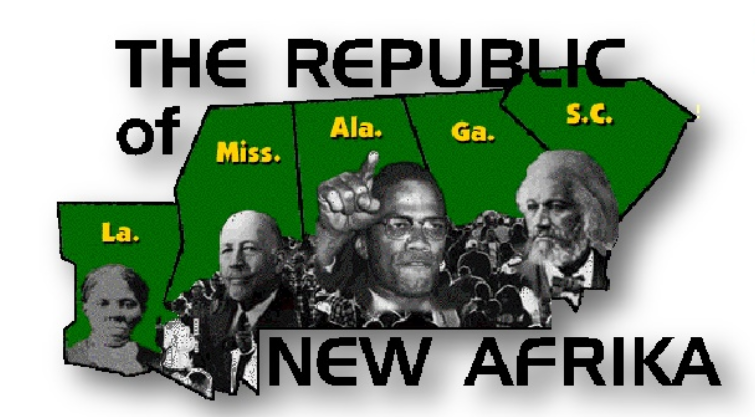
Black Chronicles_The Forgotten Black Nation: The Republic of New Afrika| Black History

So Long Chokwe: A Tribute to Chokwe Lumumba

Some transitions come in the midst of crucial times and we wonder why. I am lost for words, but not for emotions and reflections. The chairman as we called him in the organization (NAPO) that we built together. He lived a life where every major decision was politically motivated in establishing his political ideology and actions. As I said before, he was of the best of us.

As he and I moved from adolescence into manhood in the early stages of the revolution, we met in the streets of Motor City, Detroit. We came there to decide which way we would go to join the struggle. In those days, there were many options. Many beautiful sacrifices and the articulation of those leaders could fire up the emotions in anyone. We amongst others fell in line with an ideology and the leaders who were very pragmatic, and fundamental in  establishing goals in our hearts and minds. That, in the future, would guide our work and sacrifices for over 45 years.

We became citizens of the (Republic of New Africa). Him from Detroit, and me from New York. Northerners with our eyes on the five southern states that we named New Africa. The thing that impressed us was the rigorous black legionnaire’s defense of our people on the streets of Detroit while under attack by Michigan vigilantes and the heroic battle waged by the black legions against an army of law enforcement agencies against New African civilians, the church of Aretha Franklin’s father that saved all of their lives led by the great General Mwesi Chui (who also just made his transition at the age of 91 and must be honored for his heroic leadership and sacrificial acts during the famously now called new Bethel incident).

The other was the passionate demand for justice, human rights and freedom by some of the most articulate, non assuming, scientific analysis of brothers Gaidi and Imari Henry. I’m sure that their style impacted the dynamic speaking and leadership of Chokwe Lumumba. So we did have amongst these great elders, great men and women mentors that we honored. There came a time when those leaders disagreed tactically, as to where we must concentrate our forces. To stay in the north and build a rear guard, or to move our forces south to make a base. Both tactically had merit; sitting across the table staring into Chokwe’s eyes we knew what we were going to do.

We followed the tradition of the Gullar’s, Geeche’s and Seminoles. With some regret, we left the leaders pushing for the north strategy and went into the south. The United States armed forces attacked the Republic of New Africa headquarters in Jackson, Mississippi. Again, our New African security forces heroically defended the lives and property of the people. The struggle waged in the south and the repression in the north intensified the need for legal representation. As it became a priority, Chokwe tightened up on his academics and passed the bar exam, and continued to wage battle for our freedom fighters behind enemy lines.

I was convicted of freeing fellow freedom fighters, POWs, and comrades and developing an underground railroad to that same end. I and Chokwe’s interdependency and commitment manifested after my capture; I selected him as my attorney. My comrade a New African, he and I waging heroic efforts in court for my freedom. In our life of struggle nothing is easy; we disagree, we make up and learn from the lessons and move ahead. Our intent was never in question (he had no tolerance for court room bullshit, he was disbarred in two states and won back both decisions on principle). As an attorney, the courtroom was too constrictive for our brother Chokwe; the false forms of pomp and circumstances graded him, the contradictions too repressive for his fighting spirit. The judges hated him, the juries questioned him, but his clients loved and adored him. But if truth be told every time he came in the court in the 8o’s with that circa 1965 dashiki on, I use to put my head in my hands and use to say “oh Allah, don’t hold the dashiki against me”(*_~). It must be a Shakur thing, because my son Tupac felt the same exact way when Chokwe came in to court defending him many years later in one of those same dashikis.

It was a smile in my heart that i was so proud of; I am so proud of my brother who stuck to the plan. Everything he did was to enhance the predictability of the New African ideology, to provide our people an opportunity to decide if self determination was of the best course for us. We were all engaged in his effort to become the mayor of Jackson, Mississippi, and proud of his victory. His strategy was something that was not new to us; it was the directions that we had received back in the 70′s to go south, organize with people and use city government to elect sheriff’s and mayors so that we could provide an example of New African government ship that could set a paradigm, to provide a choice for our people and open arms for all people to chose. To that end, mayor Chokwe Lumumba is our hero, not for one great act but the years of consistent grinds against all obstacles, to see the plan through to the end, through a shining example. He will be missed dearly, but his footsteps will be seen along the sand to free the land. See you in the whirlwind; give all the New African’s our regards. We salute you and honor you. Like I mentioned in the very beginning, you are one of the best of us.

chokwe-lumumba

Stiff resistance,
Dr. Mutulu Shakur

http://mutulushakur.com/site/author/family-and-friends/