Honorable Dr. N. Amos Wilson, Blueprint for Black Power_ A Moral, Political, and Economic Imperative for the Twenty-First Century | Video Education and Textbook

Buy the Book on AWI.

Blueprint for Black Power details a master plan for the power revolution necessary for Black survival in the 21st century. Blueprint posit that an African American/Caribbean/ Pan-African bloc would be most potent for the generation and delivery of Black power in the United States and the World to counter White and Asian power networks. Wilson frames this imperative by deconstructing the U.S. elite power structure of government, political parties, think tanks, corporations, foundations, media, interest groups, banking and foreign investment particulars. Potentially strong Black institutions such as the church, media and think tanks; industry; collectives such as investment clubs and credit unions; rotating credit associations such as Afrikan- originated esusu, tontine and partner are analyzed. Pan-Afrikanism, Black Nationalism, ethnocentrism and reparation are assessed, often misused and underused financial institutions such as securities, mutual funds, stocks, bonds, underwriting, and incubators are advocated, thus elucidating oft-negated opportunities for economic empowerment.

3 Video Playlist

Pop the document out from the upper right to read / expand / download.

Learn more in RBG Communiversity Knowledge Media eLibrary | Honorable Dr. Amos Wilson Studies Collection

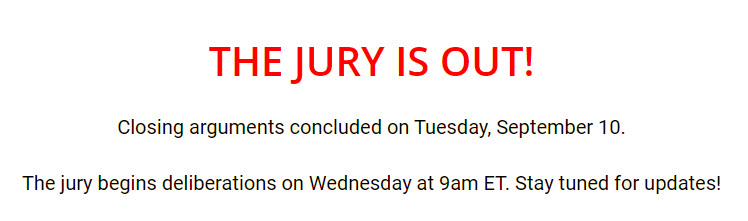
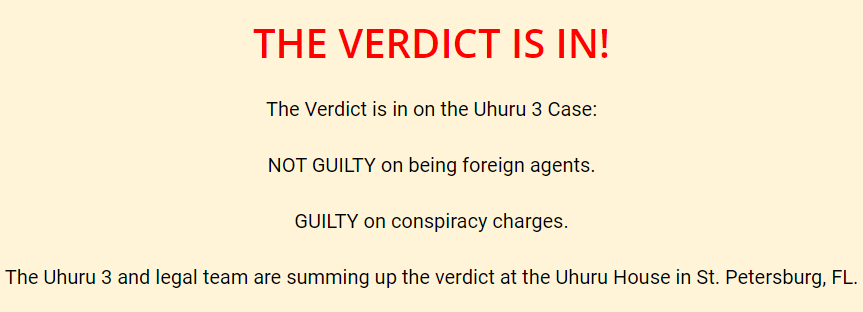
Uhuru 3 Trial – ALL Daily Updates, as they occur, will be threaded here.

Last Updated 09-28-24_5:00 pm est.

https://handsoffuhuru.org/
“Cameras are not allowed in court. However, we have initiated this daily broadcast that includes live trial updates in English, French and Spanish, historical footage and classic presentations from Chairman Omali Yeshitela and other Uhuru Movement leaders. We will also hear from Uhuru Movement leaders and supporters, highlight the work of the Uhuru Movement internationally, including our important work happening on the ground in Africa and Europe and will acquaint you with the dual power economic development programs of our Movement that have also come under attack by the U.S. government. We intend to give you all the information you need to understand who Chairman Omali Yeshitela and the Uhuru 3 are, to show you the history, work and trajectory of the Uhuru Movement, so that you, the people, can have the confidence to know that it is the State who is guilty of attacking the people’s constitutional right to free speech, and that the Uhuru 3 are absolutely not guilty of the charges being leveled against them!”

Day One Press Conference

Live from Tampa, Florida—Uhuru 3 supporters, including several free speech and social justice leaders, speak to the press before entering the courthouse to begin a month-long trial where the U.S. department of justice seeks to end First Amendment protections for freedom of speech, freedom of the press and freedom of association, whenever the exercise of such rights makes the U.S. government look bad or happens to agree with the outlook of a foreign government.

Pop the documents out from the upper right to read / expand / download.

Uhuru 3 free speech trial begins; jury selection, opening arguments

Day Two

Day 2 of Uhuru 3 trial hears FBI testimony

Day Three

Day Three: FBI lies, hearsay and speculation

Day Four

Poet Fofeet Alkebulan delivers her poem on Day 4 of the Uhuru 3’s trial

Uhuru 3 Free Speech Trial of the Century; Week One reveals the government has nothing!

Uhuru 3 Trial – Day Five

Uhuru 3 Trial—Day Five_ FBI lead investigator exposed

Day Six

Uhuru 3 Trial – Day Six: Defense presents evidence, both sides close

Day Seven

Day Eight

Uhuru 3 Trial – Post Verdict Summation

Victory to the Uhuru 3: It’s Not Over!

Welcome to this web event hosted by the Hands Off Uhuru Fightback Coalition where we share the latest legal updates on the case and what you can do to support this ongoing fightback.

Download everything from RBG Communiversity e-Library_Uhuru 3 Trial, September 2024 Folder

Learn more in RBG Commun. e-Library: Read/Study/Download: Chm. Omali and Uhuru Movement Folder

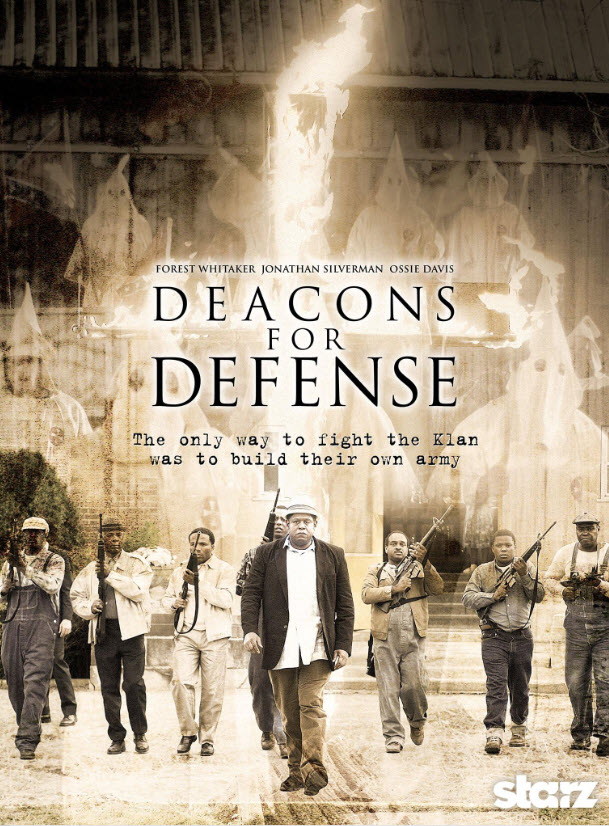
Deacons for Defense Film (Full) and The Deacons for Defense and Justice: Armed Self-Defense and the Civil Rights Movement. A PhD. Dissertation by Lance E. Hill, with eBook (A follow-up to his Doctorial Thesis)

Last Updated September 18, 2026

Deacons for Defense is a 2003 American television drama film directed by Bill Duke. The television film stars Forest Whitaker, Christopher Britton, Ossie Davis, Jonathan Silverman, Adam Weiner, and Marcus Johnson. Based on a story by Michael D’Antonio, the teleplay was written by Richard Wesley and Frank Military. “The film is loosely based on the activities of the Deacons for Defense and Justice in 1965 in Bogalusa, Louisiana. The African-American self-defense organization was founded in February 1965 as an affiliate of the founding chapter in Jonesboro, Louisiana, to protect activists working with the Congress for Racial Equality (CORE), others advancing the Civil Rights Movement, and their families. Bogalusa was a company town, developed in 1906–1907 around a sawmill and paper mill operations. In the 1960s, the area was dominated by the Ku Klux Klan. During the summer of 1965, there were frequent conflicts between the Deacons and the Klan. wiki/Deacons_for_Defense_(film)

The Deacons for Defense and Justice: Armed Self-Defense and the Civil Rights Movement. A PhD. Dissertation by Lance, E. Hill

Pop the documents out from the upper right to read / expand / download.

The Deacons for Defense: Armed Resistance and the Civil Rights Movement, by Lance Hill (2006)

In 1964 a small group of African American men in Jonesboro, Louisiana, defied the nonviolence policy of the mainstream civil rights movement and formed an armed self-defense organization–the Deacons for Defense and Justice–to protect movement workers from vigilante and police violence. With their largest and most famous chapter at the center of a bloody campaign in the Ku Klux Klan stronghold of Bogalusa, Louisiana, the Deacons became a popular symbol of the growing frustration with Martin Luther King Jr.’s nonviolent strategy and a rallying point for a militant working-class movement in the South.

Lance Hill offers the first detailed history of the Deacons for Defense and Justice, who grew to several hundred members and twenty-one chapters in the Deep South and led some of the most successful local campaigns in the civil rights movement. In his analysis of this important yet long-overlooked organization, Hill challenges what he calls “the myth of nonviolence–the idea that a united civil rights movement achieved its goals through nonviolent direct action led by middle-class and religious leaders. In contrast, Hill constructs a compelling historical narrative of a working-class armed self-defense movement that defied the entrenched nonviolent leadership and played a crucial role in compelling the federal government to neutralize the Klan and uphold civil rights and liberties.

SUPPLEMENTAL: Ku Klux Klan – An American Story Documentary Part 1 and Part 2

Dr. Gerald Horne_Armed Struggle: Panthers and Communists, Black Nationalists and Liberals in southern California, Through the Sixties and Seventies

Dr. Gerald Horne is an author and historian who currently holds the John J. and Rebecca Moores Chair of History and African American Studies at the University of Houston. He joins us from Houston to discuss his latest book, “Armed Struggle: Panthers and Communists, Black Nationalists and Liberals in southern California, Through the Sixties and Seventies” which is published by International Publishers.

International Publishers Book Description:

Southern California has been a leader nationally in fomenting radicalism. The Communist Party had one of its strongest units there, buoyed by influence in Hollywood. Yet, this region also has been a stalwart of the Black Liberation Movement, as suggested by the importance of the Watts Uprising of 1965 in Los Angeles and the concomitant ascendancy of the Black Panther Party, whose leaders—e.g., Eldridge Cleaver and George Jackson—had roots in Pasadena. Angela Davis, accused in the early 1970s of murder, kidnapping, and conspiracy, was not only a bridge between the CP and BPP, but studied in San Diego before teaching at UCLA.

Black Nationalism flourished in the Southland: “Kwanzaa,,” a popular holiday, was born there. Given the prominence of Black celebrities in the region, the NAACP chapter in the area was a cash cow for the entire organization and shaped policy accordingly, including their disastrous capitulation to the Red Scare.

In this exhaustively researched book, Gerald Horne sketches the apparent paradox of some African Americans turning to armed struggle at a time when it appeared that Jim Crow was retreating. He draws critical distinctions between armed propaganda, armed self-defense—and armed struggle— all of which he places in a global context of anti-war activism, the Cold War, and African liberation.

Activist News Network

Black Liberation Media