In the Spirit of Crazy Horse: The Story of Leonard Peltier and the FBI’s War on the American Indian Movement, by Peter Matthiessen| eBook and Audiobook, with FREE Leonard Peltier Video Player

In the Spirit of Crazy Horse is a chronicle of a fatal gun-battle between FBI agents and American Indian Movement activists by renowned writer Peter Matthiessen (1927-2014).

Book Summary

“In the Spirit of Crazy Horse: The Story of Leonard Peltier and the FBI’s War on the American Indian Movement” by Peter Matthiessen is a profound examination of the life of Leonard Peltier, a Native American activist and a key figure in the American Indian Movement (AIM). The book details the events surrounding the 1975 shootout at Wounded Knee, the subsequent FBI investigation, and the controversial trial of Peltier, who was convicted of murder in the deaths of two FBI agents. Matthiessen’s narrative provides insights into the systemic oppression faced by Native Americans, the FBI’s aggressive tactics against AIM, and the broader struggles for Indigenous rights in the United States.

Essential Themes and Historical Context:

  1. Introduction to Leonard Peltier
    • Overview of Peltier’s significance within the American Indian Movement
    • Introduction to the themes of oppression and resistance in Native American history
  2. Historical Context of the American Indian Movement
    • The formation of AIM and its goals
    • Key events leading to the rise of Native activism in the 1960s and 1970s
    • The impact of historical injustices on Indigenous communities
  3. The Wounded Knee Incident
    • Description of the 1973 occupation of Wounded Knee
    • Tensions between AIM activists and federal authorities
    • Major events and confrontations during the occupation
  4. The Shootout and Its Aftermath
    • Detailed account of the 1975 shootout that led to the deaths of FBI agents
    • The immediate aftermath and the FBI’s response to the incident
    • The portrayal of Peltier in the media and by the authorities
  5. The FBI’s Campaign Against AIM
    • Examination of the FBI’s surveillance and counterintelligence operations targeting AIM
    • Analysis of tactics used by the FBI to infiltrate and undermine the movement
    • The broader implications of the FBI’s actions on Native American activism
  6. Trial and Conviction of Leonard Peltier
    • Overview of Peltier’s arrest and the legal proceedings that followed
    • Discussion of the evidence presented during the trial and its controversies
    • Examination of claims regarding the fairness of the trial and the judicial system
  7. Public Support and Advocacy
    • Overview of the grassroots movements and public campaigns advocating for Peltier
    • The role of various organizations in raising awareness of his case
    • The significance of international attention and support for Indigenous rights
  8. Legacy and Ongoing Struggles
    • Reflection on Peltier’s impact on the fight for Indigenous rights and justice
    • Discussion of the continuing issues faced by Native Americans today
    • The importance of remembering and honoring the struggles of Indigenous peoples
  9. Conclusion
    • Summary of key themes and insights from Matthiessen’s narrative
    • Final reflections on the significance of Leonard Peltier’s story in the context of American history

In the Spirit of Crazy_eBook

“On a hot June morning in 1975, a desperate shoot-out between FBI agents and Native Americans near Wounded Knee, South Dakota, left an Indian and two federal agents dead. Four members of the American Indian Movement were indicted on murder charges, and one, Leonard Peltier, was convicted and is now serving consecutive life sentences in a federal penitentiary. Behind this violent chain of events lie issues of great complexity and profound historical resonance, brilliantly explicated by Peter Matthiessen in this controversial book. Kept off the shelves for eight years because of one of the most protracted and bitterly fought legal cases in publishing history, In the Spirit of Crazy Horse reveals the Lakota tribe’s long struggle with the U.S. government, and makes clear why the traditional Indian concept of the earth is so important at a time when increasing populations are destroying the precious resources of our world.”

Pop the document out from the upper right to read / expand / download.

In the Spirit of Crazy_Audiobook

Audio start corresponds to page 8 of the above Reader.

Part 1

Part 2

Part 3

FREE Leonard Peltier Video Player

12 Video Playlist

Learn more in RBG Communiversity Knowledge Media eLibrary:

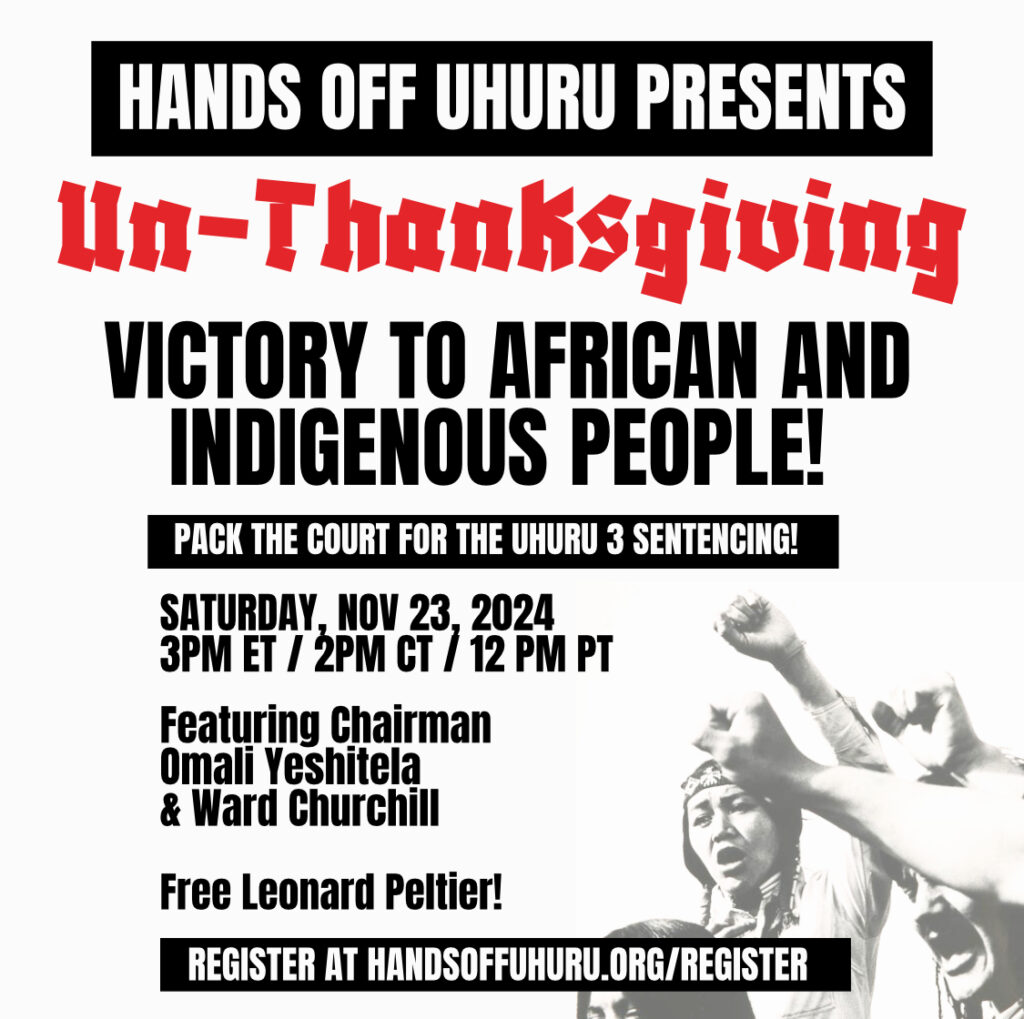
Hands Off Uhuru presents: “Unthanksgiving” Victory to African and Indigenous people!­_The Burning Spear TV, with Uhuru 3 Trial Re-enactment

Last Updated 12-06-24

https://handsoffuhuru.org/

Uhuru 3 Trial Re-enactment

3 Video Playlist (Episodes One thru Three.)

Companion Post/Lessons

Manifest Destiny and American Holocaust_Dr. Ward Churchill Lecture, History of COINTELPRO and COINTELPRO and Terrorism, The COINTELPRO Papers – Ward Churchill & Jim Vander Wall (eBook and Audiobook)

Learn more in RBG Communivesity Knowledge Media eLibrary:

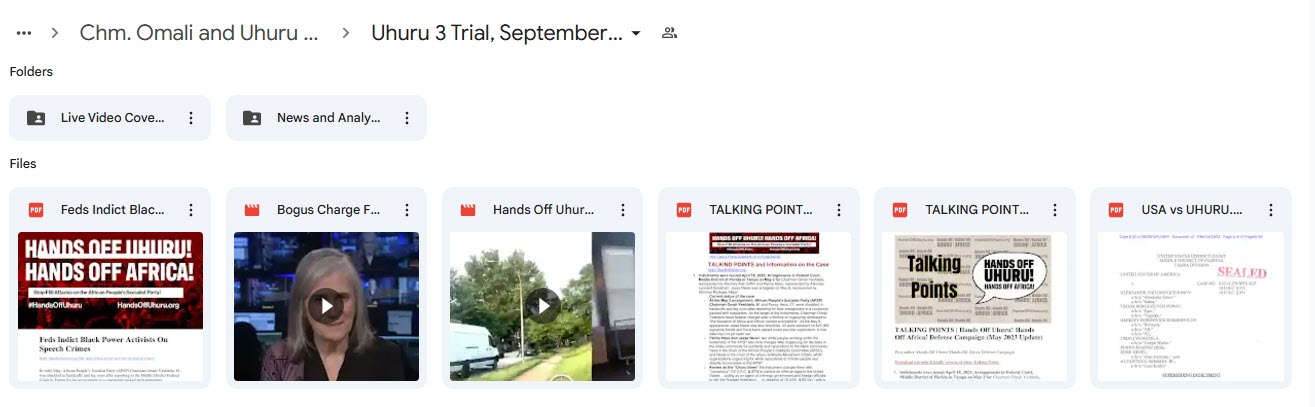
Uhuru 3 Trial, September 2024

Uhuru 3 Trial, September 2024 | INSIDE: Chm. Omali and Uhuru Movement Folder

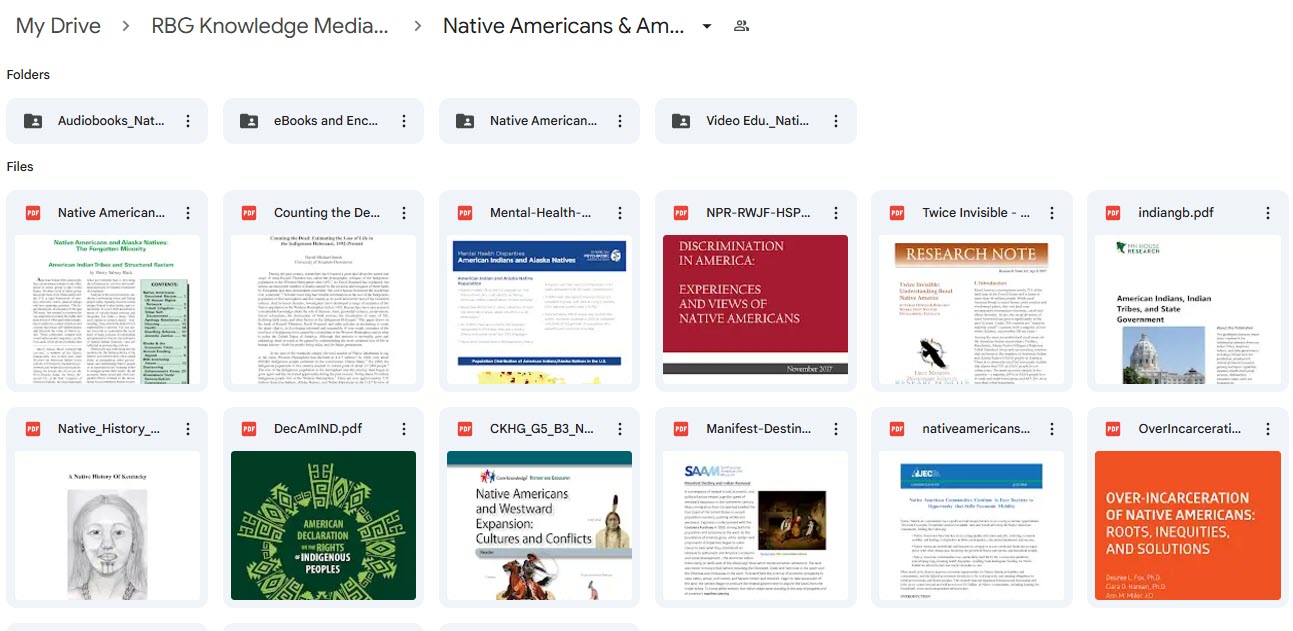
Native Americans & The American Indian Movement (AIM)

Native Americans & The American Indian Movement (AIM)  Folder

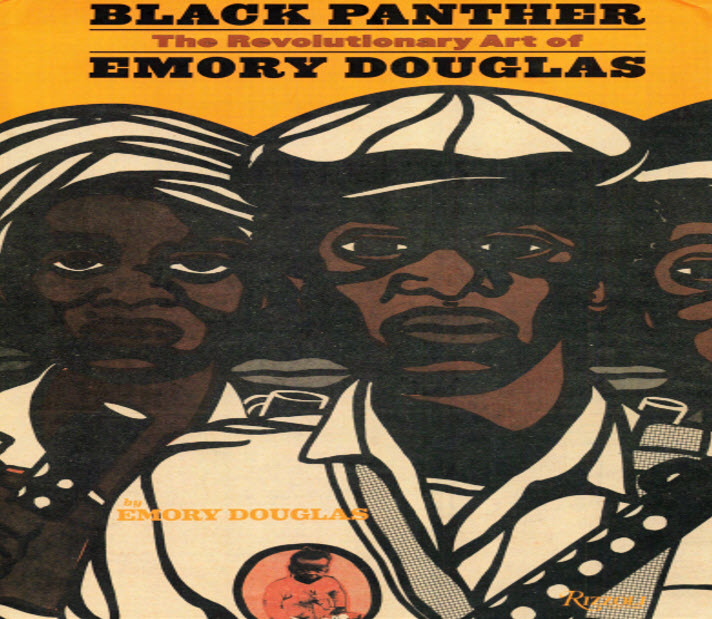
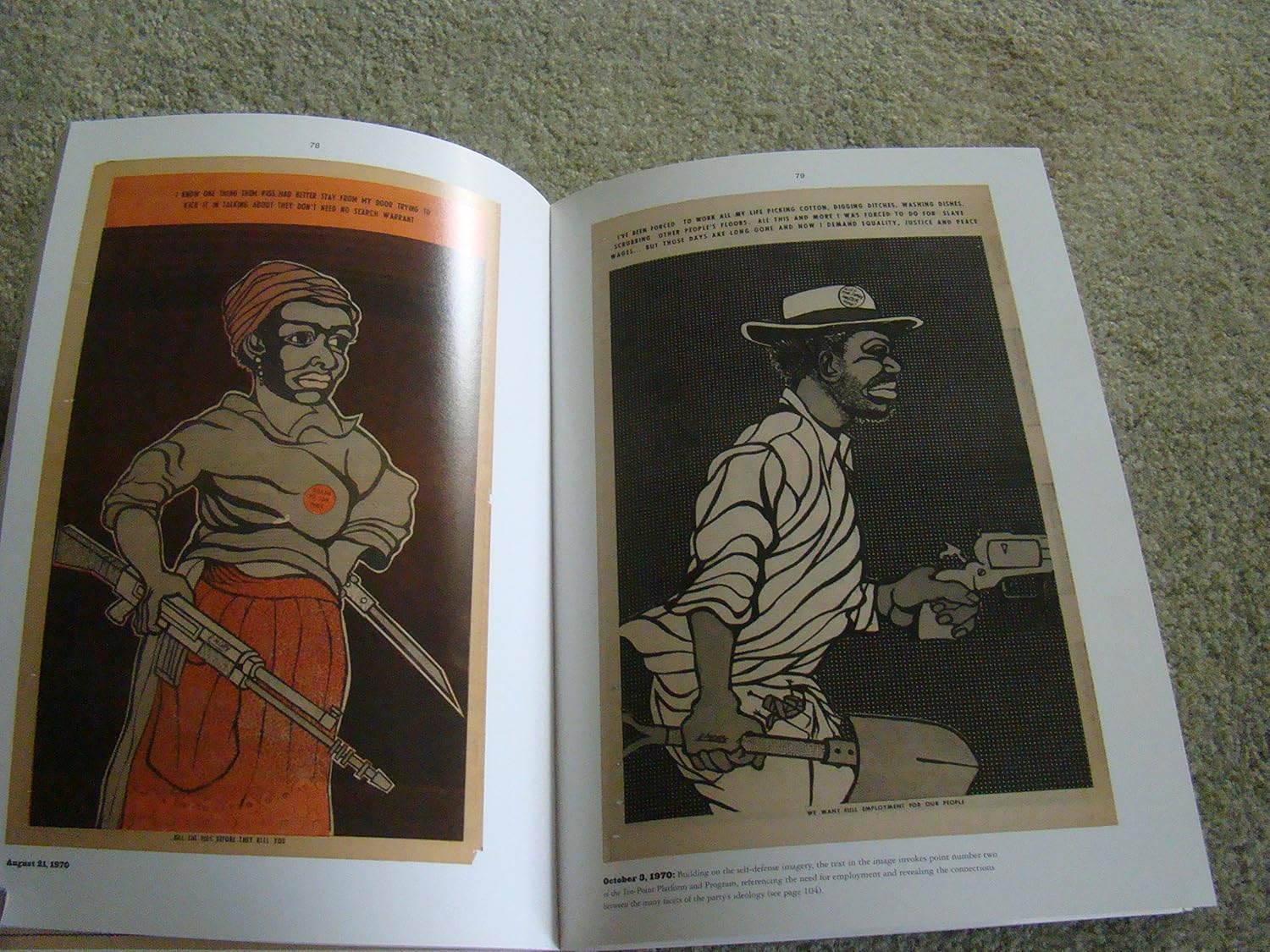
Black Panther_ The Revolutionary Art of Emory Douglas (Book Preview) and Emory Douglas_The Art of The Black Panthers (BPP |BAM Video Player), with BPP Newspapers_1969

Last Updatedd September 20, 2026

Buy the Book here. https://www.rizzoliusa.com/book/9780847841899/ (228 Pages.)

4 Video Playlist

Black Panther_ The Revolutionary Art of Emory Douglas, Publish 2014. (Book Preview)

Description

A reformatted and reduced price edition—including a revised and updated introduction by Sam Durant and new text on the artist today by Colette Gaiter—of the first book to show the provocative posters and groundbreaking graphics of the Black Panther Party. The Black Panther Party for Self Defense, formed in the aftermath of the assassination of Malcolm X in 1965, sounded a defiant cry for an end to the institutionalized subjugation of African Americans. The Black Panther newspaper was founded to articulate the party’s message, and artist Emory Douglas became the paper’s art director and later the party’s minister of culture. Douglas’s artistic talents and experience proved a powerful combination: his striking collages of photographs and his own drawings combined to create some of the era’s most iconic images. This landmark book brings together a remarkable lineup of party insiders who detail the crafting of the party’s visual identity.

About The Author

Emory Douglas was the Minister of Culture for the Black Panther Party from 1967 until its discontinuation in the early 1980s. Colette Gaiter is associate professor of visual communications in the art department at the University of Delaware.  Bobby Seale co-founded the Black Panther Party with Huey Newton. Sam Durant is a Los Angeles–based artist. Danny Glover is an actor, producer, and director. Kathleen Cleaver, attorney, author, and senior lecturer at Yale University and Emory Law School, joined the Black Panther Party in 1967. Amiri Baraka is a writer and political activist.

Pop the document out from the upper right to read / expand / download.

BPP Newspapers_1969

Click to Open

Learn more in RBG Communiversity Knowledge Media eLibrary:

Black Panther Party History_eBooks, Articles, Videos, Newspapers and Documents Folder

Prisons, Slavery, Policing and Imperialism (The Correctional-Industrial Complex [CIC]) Folder

BPM | BLM Audiobooks Folder

BPM | BLM eBooks Folder

Black Arts Movement Folder

Malcolm X As Cultural Hero and Other Afrocentric Essays by Molefi Kete Asante and Dr. Molefi Kete Asante Lecture On Malcolm X (RBG MKA Video Player)

Last Updated September 20, 2026

RBG Molefi Kete Asante Institute Lectures

21 Video Playlist

Book Summary

“Malcolm X As Cultural Hero and Other Afrocentric Essays” by Molefi Kete Asante is a collection of essays that examine the significance of Malcolm X as a cultural icon and his impact on African American identity and consciousness. Asante, a prominent scholar in Afrocentric studies, explores themes of cultural pride, resistance, and the importance of historical context in understanding the contributions of Malcolm X and other African figures. The essays advocate for a re-framing of African American history through an Afrocentric lens, emphasizing the need for empowerment and self-determination within the Black community.

Essential Themes and Discussions Presented:

  1. Introduction
    • Overview of the book’s purpose and themes
    • Contextualization of Malcolm X’s life and legacy
    • Introduction to Afrocentricity and its relevance to contemporary discussions
  2. Malcolm X as a Cultural Hero
    • Exploration of Malcolm X’s role as a symbol of resistance and empowerment
    • Analysis of his philosophy and rhetoric regarding race and identity
    • Discussion of the significance of Malcolm X in the context of the Civil Rights Movement
  3. The Concept of Afrocentricity
    • Definition and principles of Afrocentricity
    • Importance of cultural identity and historical perspective in Afrocentric thought
    • Critique of Eurocentrism and its effects on African and African American identity
  4. Malcolm X’s Influence on Afrocentric Thought
    • Examination of how Malcolm X’s ideas resonate with Afrocentric philosophy
    • Discussion of his critiques of systemic oppression and colonialism
    • Analysis of his vision for African unity and self-determination
  5. Cultural Identity and Empowerment
    • Exploration of the relationship between culture and identity in the African diaspora
    • The role of cultural heroes in shaping collective consciousness
    • Discussion of strategies for cultural empowerment and community building
  6. Historical Context of African American Struggles
    • Overview of historical events and figures that shaped the African American experience
    • Examination of the legacy of slavery, segregation, and systemic racism
    • The impact of these historical factors on contemporary issues facing the Black community
  7. Contemporary Relevance of Malcolm X’s Ideas
    • Analysis of how Malcolm X’s teachings apply to current social justice movements
    • Reflection on the ongoing struggles for racial equality and justice
    • Discussion of the importance of maintaining cultural heritage in today’s society
  8. Conclusion
    • Summary of key themes and insights from the essays
    • Final reflections on the enduring legacy of Malcolm X as a cultural hero
    • Emphasis on the importance of Afrocentric perspectives in understanding history and identity

Malcolm X As Cultural Hero and Other Afrocentric Essays by Molefi Kete Asante (1993)

Pop the document out from the upper right to read / expand / download.

Learn more in RBG Communiversity Knowledge Media eLibrary:

Dr. Molefi Kete Asante Folder

Minister Malcolm X | “A Comprehensive Achieve” Folder

Black Power Afterlives| The Enduring Significance of the Black Panther Party_Audiobook and eBook, Edited by Diane Fujino and Matef Harmachis, with Haymarket Books Webinar: Black Power Afterlives: From The Black Panther Party to Black Lives Matter

Book Summary

Overview of “Black Power Afterlives: The Enduring Significance of the Black Panther Party”

“Black Power Afterlives” explores the legacy and continued relevance of the Black Panther Party (BPP) in contemporary society. Edited by Diane Fujino, the book gathers various essays and perspectives that examine the impact of the BPP on social movements, political thought, and cultural expressions. It addresses how the ideals of the Black Power movement resonate in current struggles for racial justice, equality, and community empowerment.

The outline that follows provides a cogent look at the themes and discussions presented in the book, highlighting the ongoing relevance of the Black Panther Party in today’s sociopolitical landscape.

Outline

  1. Introduction
    • Overview of the Black Panther Party’s foundational principles
    • Importance of examining the BPP’s legacy today
    • Purpose of the book and contributions of various authors
  2. Historical Context
    • Formation of the Black Panther Party in the 1960s
    • Key figures and events in the BPP’s history
    • The socio-political landscape of the era
  3. Core Ideologies of the Black Panthers
    • Ten-Point Program
    • Focus on self-defense and community empowerment
    • Intersectionality and the inclusion of diverse voices
  4. Cultural Impact
    • Representation in media and arts
    • Influence on music, literature, and visual arts
    • The role of propaganda and imagery in promoting BPP ideals
  5. Legacy and Influence on Modern Movements
    • Connections to contemporary civil rights movements (e.g., Black Lives Matter)
    • Examination of grassroots organizing and community programs inspired by the BPP
    • The relevance of BPP strategies in current social justice contexts
  6. Scholarly Perspectives
    • Contributions from various scholars and activists
    • Critical analyses of the BPP’s successes and challenges
    • The significance of oral histories and personal narratives
  7. Global Impact
    • Transnational solidarity and influence on international movements
    • The BPP’s role in global anti-colonial struggles
    • Comparisons with other revolutionary movements worldwide
  8. Conclusion
    • Reflections on the enduring significance of the BPP
    • Calls to action for future generations
    • The continuous evolution of Black Power ideologies

The first book to comprehensively examine how the Black Panther Party has directly shaped the practices and ideas that have animated grassroots activism in the decades since its decline, Black Power Afterlives represents a major scholarly achievement as well as an important resource for today’s activists. Through its focus on the enduring impact of the Black Panther Party, this volume expands the historiography of Black Power studies beyond the 1960s-70s and serves as a bridge between studies of the BPP during its organizational existence and studies of present-day Black activism, allowing today’s readers and organizers to situate themselves in a long lineage of liberation movements.

Black Power Afterlives_eBook

Pop the document out from the upper right to read / expand / download.

Black Power Afterlives_Audiobook

Part 1

Part 2

Haymarket Books Webinar: Black Power Afterlives: From The Black Panther Party to Black Lives Matter

https://www.youtube.com/@HaymarketBooks

Learn more in RBG Communiversity Knowledge Media eLibrary: