The Black Jacobins: Toussaint L’Ouverture and the San Domingo Revolution_eBook and Audiobook with Confronting Black Jacobins, Dr. Gerald Horne (eBook and Auiobook) and The Black Jacobins Reader

Last Updated 12-15-2024
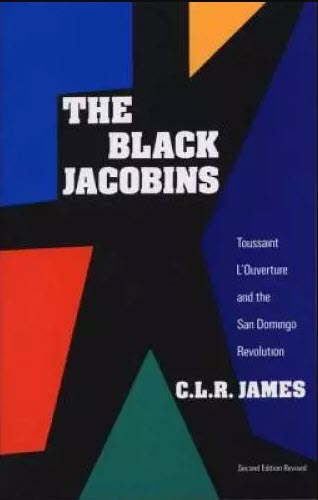
Book Summary

“The Black Jacobins” is a historical account by C.L.R. James that explores the Haitian Revolution (1791-1804) and the role of its leader, Toussaint L’Ouverture. The book examines the interplay of class, race, and power in the struggle for Haitian independence from French colonial rule. James presents a detailed narrative of the events leading to the revolution, the complexity of the social dynamics involved, and the impact of the revolution on the wider world. Through the lens of L’Ouverture’s life and leadership, the book highlights the struggle for freedom and equality, making it a significant work in the study of history, race, and revolution.

The following outline encapsulates the major themes and structure of C.L.R. James’s seminal work, emphasizing the significance of the Haitian Revolution and its leader in the context of world history.

Outline of “The Black Jacobins”

  • Introduction
    • Context of the Haitian Revolution
    • Importance of Toussaint L’Ouverture
    • Themes of race, class, and revolution
  • Part I: The Setting
    • Colonialism in Saint-Domingue
      • Overview of the plantation economy
      • Social hierarchy: whites, free people of color, and enslaved people
    • Influence of the French Revolution
      • Impact of Enlightenment ideas
      • The rise of revolutionary sentiments
  • Part II: The Revolution Begins
    • Initial uprisings of enslaved people
    • Toussaint L’Ouverture’s early involvement
    • Key figures in the revolution
    • The role of external forces (France, Britain, Spain)
  • Part III: Toussaint L’Ouverture’s Leadership
    • Rise to power and political strategies
    • Military campaigns and tactics
    • Balancing alliances with France and other powers
    • Vision for Haiti and abolition of slavery
  • Part IV: Internal Conflicts
    • Tensions among revolutionary leaders
    • Class divisions within the revolutionary movement
    • The challenge of governance and social order
  • Part V: The Fall of Toussaint
    • Betrayal and capture by the French
    • Impact of his leadership on the revolution’s course
    • The rise of Jean-Jacques Dessalines and others
  • Conclusion: The Legacy of the Revolution
    • Outcomes of the Haitian Revolution
    • Influence on global movements for freedom and equality
    • Reflections on race and colonialism

The Black Jacobins_eBook

A classic and impassioned account of the first revolution in the Third World.This powerful, intensely dramatic book is the definitive account of the Haitian Revolution of 1794-1803, a revolution that began in the wake of the Bastille but became the model for the Third World liberation movements from Africa to Cuba. It is the story of the French colony of San Domingo, a place where the brutality of master toward slave was commonplace and ingeniously refined. And it is the story of a barely literate slave named Toussaint L’Ouverture, who led the black people of San Domingo in a successful struggle against successive invasions by overwhelming French, Spanish, and English forces and in the process helped form the first independent nation in the Caribbean.

Pop the documents out from the upper right to read / expand / download.

The Black Jacobins_Audiobook

Confronting Black Jacobins, Dr. Gerald Horne_eBook

Book Summary

“Confronting Black Jacobins” by Dr. Gerald Horne is an exploration of the historical context and implications of the Haitian Revolution, focusing on the revolutionary figures, particularly Toussaint L’Ouverture, and the broader impact on the Atlantic world.

The following overview and outline provides a structured capsule of the major themes and topics discussed in “Confronting Black Jacobins,” highlighting Dr. Horne’s analysis of the Haitian Revolution and its lasting significance.

Overview

  • Historical Context: The book situates the Haitian Revolution within the larger scope of the Atlantic slave trade and the French Revolution.
  • Key Figures: It examines the lives and contributions of important figures, especially Toussaint L’Ouverture, and their roles in challenging colonial power.
  • Impact of the Revolution: Horne discusses the implications of Haiti’s independence for slavery, colonialism, and race relations in the Americas and Europe.
  • Racial Dynamics: The narrative addresses the intersection of race, class, and revolution, highlighting how these elements influenced the struggle for freedom.
  • Legacy and Memory: The book reflects on how the Haitian Revolution has been remembered and misremembered in historical narratives.

Outline

  1. Introduction
    • Overview of the Haitian Revolution
    • Significance in world history
  2. Historical Background
    • The Atlantic slave trade and its impact
    • The role of colonial powers, especially France
  3. Key Figures
    • Toussaint L’Ouverture
      • Early life and rise to power
      • Military strategies and leadership
    • Other notable leaders
      • Jean-Jacques Dessalines
      • Henri Christophe
  4. The Revolution Begins
    • Factors leading to the uprising
    • Initial revolts and their suppression
  5. French Revolution Influence
    • Connection to the French Revolution
    • Ideological underpinnings and inspirations
  6. International Reactions
    • Responses from colonial powers
    • The impact on slave societies in the Americas
  7. Struggles for Control
    • Internal conflicts among revolutionary leaders
    • The role of external forces, including the U.S. and Britain
  8. Haiti’s Independence
    • Declaration of independence and its significance
    • Immediate consequences for Haiti and the region
  9. Legacy of the Haitian Revolution
    • Influence on abolitionist movements
    • Ongoing struggles for racial equality and social justice
  10. Conclusion
    • Reflection on the memory of the Haitian Revolution
    • Its relevance to contemporary issues of race and freedom

Confronting Black Jacobins, Dr. Gerald Horne_Audiobook

Audio start in earnest (Introduction) and corresponds to page 8 of the above Reader.

Part 1

Part 2

The Black Jacobins Reader

Containing a wealth of new scholarship and rare primary documents, The Black Jacobins Reader provides a comprehensive analysis of C. L. R. James’s classic history of the Haitian Revolution. In addition to considering the book’s literary qualities and its role in James’s emergence as a writer and thinker, the contributors discuss its production, context, and enduring importance in relation to debates about decolonization, globalization, postcolonialism, and the emergence of neocolonial modernity. The Reader also includes the reflections of activists and novelists on the book’s influence and a transcript of James’s 1970 interview with Studs Terkel.

Learn more in RBG Communiversity Knowledge Media eLibrary:

SUPPLEMENTAL: CLR JAMES VS MARCUS GARVEY

Remember: Pop the documents out from the upper right to read / expand / download.
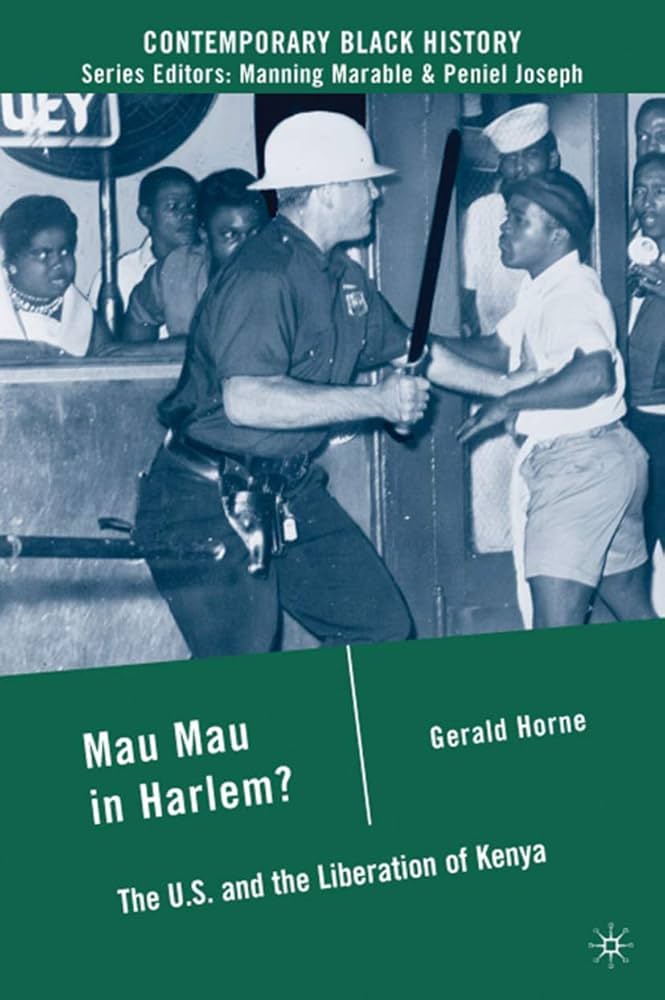
Mau Mau in Harlem?_The U.S. and the Liberation of Kenya, Gerald Horne|eBook and Audiobook| (Contemporary Black History), with Mau Mau Warrior Illustrated eBook, by Abiodun Alao (Author), Christa Hook (Illustrator).

Book Summary:

“Mau Mau in Harlem?: The U.S. and the Liberation of Kenya” is a book by historian Gerald Horne which explores the connections between the African-American Civil Rights movement in the United States and the Mau Mau uprising in Kenya, specifically how the struggle for Kenyan independence resonated with African Americans, leading to a sense of solidarity and even the idea of a “Mau Mau” movement within Harlem and other Black communities in the U.S. 

Key points about the book:

  • Focus on the Mau Mau: The book delves into the Mau Mau Uprising, a violent guerrilla campaign by Kenyan Kikuyu people against British colonial rule in the 1950s, primarily focused on land rights and self-determination. 
  • Harlem connection: It analyzes how the struggles of the Mau Mau movement were closely followed and supported by African Americans in Harlem, New York, who saw parallels with their own fight for civil rights in the United States. 
  • Scholarly research: Horne draws on extensive archival research conducted in the US, UK, and Kenya to provide a nuanced understanding of the interconnectedness between the two movements. 
  • Impact on Black consciousness: The book argues that the Mau Mau rebellion contributed to a growing sense of Black consciousness and solidarity among African Americans, further fueling the civil rights movement. 
  • The Mau Mau Uprising: This was a violent resistance movement against British colonial rule in Kenya, primarily led by the Kikuyu tribe, during the 1950s. 
  • African (American) Solidarity: The book argues that African Americans saw parallels between the Kenyan struggle against British colonialism and their own fight for civil rights in the U.S., leading to significant support for the Mau Mau movement within the Black community. 
  • Malcolm X’s “Mau Mau in Harlem” reference: A prominent example of this connection is Malcolm X’s statement about the potential need for a “Mau Mau” style uprising in Harlem, signifying a willingness to use more militant tactics to achieve racial equality. 
  • Historical Context: The book examines the broader historical context of the Cold War, where the U.S. was keen to demonstrate its anti-colonial stance, leading to some level of support for Kenyan independence. 

Mau Mau in Harlem, Gerald Horne?_eBook

Pop the documents out from the upper right to read / expand / download.

Mau Mau in Harlem, Gerald Horne?_Audiobook

Audio start in earnest (Introduction @ 4 mins. 45 sec.) and corresponds to page 12 of the above Reader.

Part 1

Part 2

Mau Mau Warrior Illustrated eBook, by Abiodun Alao (Author), Christa Hook (Illustrator).

Amazon Books: “Osprey’s study of the Mau Mau Rebellion (1952-1960) in Kenya and its fighters. The Mau Mau Freedom Fighters waged a guerrilla war for eight years against their British colonial rulers, which became known as the Mau Mau Uprising. The Mau Mau sought to win back their land and independence. This underground militia was an extremely powerful force employing tactics, which included the assassination of British settlers and the Africans who collaborated with the British, as well as raiding colonial prisons for weapons and staging daring ambushes in the Kenyan forests and mountains. The conflict saw these untrained warriors, deemed by many to be terrorists employ an innovative mix of traditional African warfare tactics, counterinsurgency methods and European firepower. The uprising ended in failure but set the stage for Kenyan independence in 1963. This title will explore their unique motivations, training and tactics, as well as their battle experience.”

Learn more in RBG Communiversity Knowledge Media eLibrary:

Malcolm X As Cultural Hero and Other Afrocentric Essays by Molefi Kete Asante and Dr. Molefi Kete Asante Lecture On Malcolm X (RBG MKA Video Player)

Last Updated September 20, 2026

RBG Molefi Kete Asante Institute Lectures

21 Video Playlist

Book Summary

“Malcolm X As Cultural Hero and Other Afrocentric Essays” by Molefi Kete Asante is a collection of essays that examine the significance of Malcolm X as a cultural icon and his impact on African American identity and consciousness. Asante, a prominent scholar in Afrocentric studies, explores themes of cultural pride, resistance, and the importance of historical context in understanding the contributions of Malcolm X and other African figures. The essays advocate for a re-framing of African American history through an Afrocentric lens, emphasizing the need for empowerment and self-determination within the Black community.

Essential Themes and Discussions Presented:

  1. Introduction
    • Overview of the book’s purpose and themes
    • Contextualization of Malcolm X’s life and legacy
    • Introduction to Afrocentricity and its relevance to contemporary discussions
  2. Malcolm X as a Cultural Hero
    • Exploration of Malcolm X’s role as a symbol of resistance and empowerment
    • Analysis of his philosophy and rhetoric regarding race and identity
    • Discussion of the significance of Malcolm X in the context of the Civil Rights Movement
  3. The Concept of Afrocentricity
    • Definition and principles of Afrocentricity
    • Importance of cultural identity and historical perspective in Afrocentric thought
    • Critique of Eurocentrism and its effects on African and African American identity
  4. Malcolm X’s Influence on Afrocentric Thought
    • Examination of how Malcolm X’s ideas resonate with Afrocentric philosophy
    • Discussion of his critiques of systemic oppression and colonialism
    • Analysis of his vision for African unity and self-determination
  5. Cultural Identity and Empowerment
    • Exploration of the relationship between culture and identity in the African diaspora
    • The role of cultural heroes in shaping collective consciousness
    • Discussion of strategies for cultural empowerment and community building
  6. Historical Context of African American Struggles
    • Overview of historical events and figures that shaped the African American experience
    • Examination of the legacy of slavery, segregation, and systemic racism
    • The impact of these historical factors on contemporary issues facing the Black community
  7. Contemporary Relevance of Malcolm X’s Ideas
    • Analysis of how Malcolm X’s teachings apply to current social justice movements
    • Reflection on the ongoing struggles for racial equality and justice
    • Discussion of the importance of maintaining cultural heritage in today’s society
  8. Conclusion
    • Summary of key themes and insights from the essays
    • Final reflections on the enduring legacy of Malcolm X as a cultural hero
    • Emphasis on the importance of Afrocentric perspectives in understanding history and identity

Malcolm X As Cultural Hero and Other Afrocentric Essays by Molefi Kete Asante (1993)

Pop the document out from the upper right to read / expand / download.
Learn more in RBG Communiversity Knowledge Media eLibrary:

Dr. Molefi Kete Asante Folder

Minister Malcolm X | “A Comprehensive Achieve” Folder

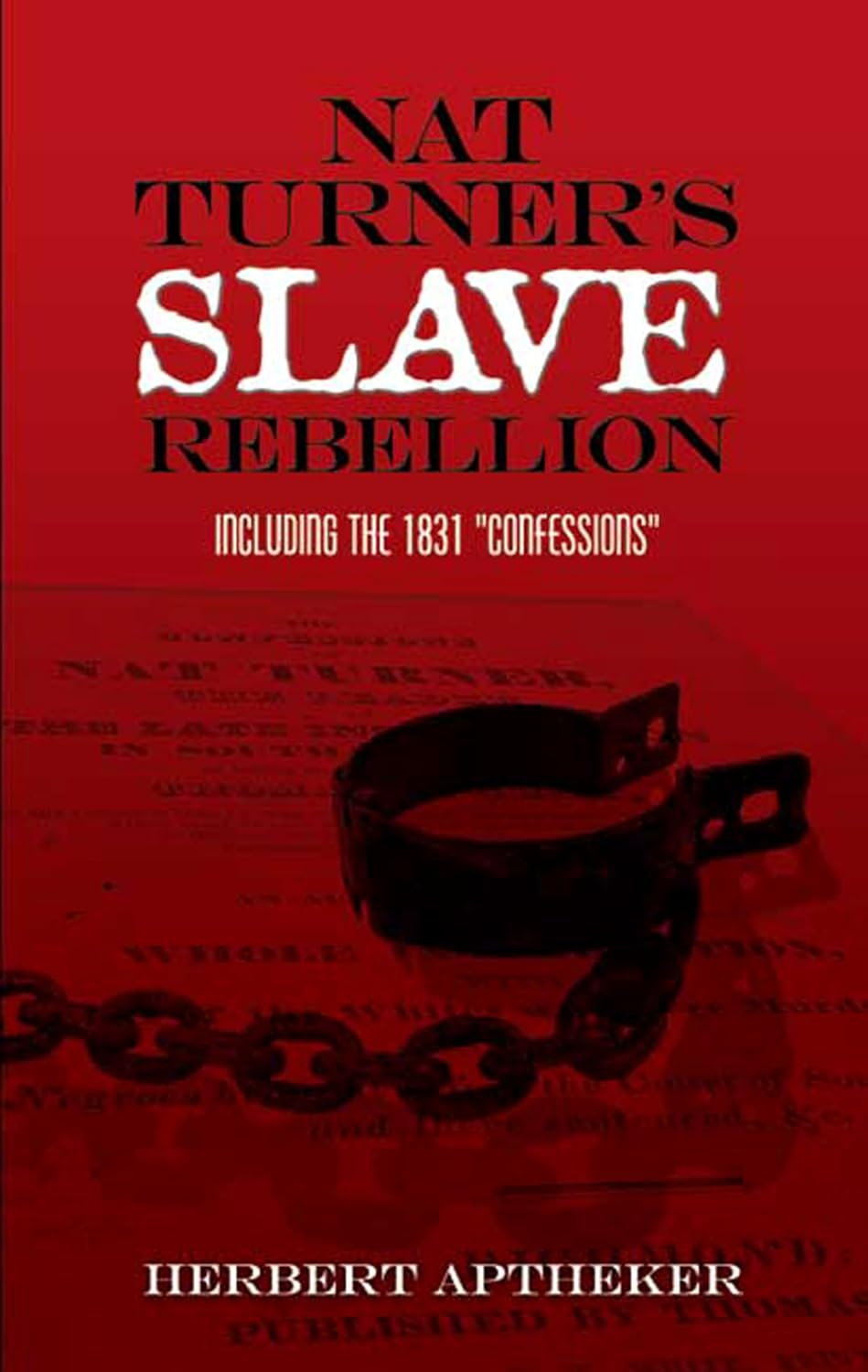
NAT TURNER’S SLAVE REBELLION_eBook and Audiobook, Including the 1831 “Confessions” by Herbert Aptheker (1966, 2006), Feat. RBG|Reef- Nat Turner

From the Preface: “Herbert Aptheker wrote Nat Turner’s Rebellion as his Master’s Thesis at Columbia University, and submitted it in February 1937. The only work on Turner prior to Aptheker’s study, titled The Southampton Insurrection, was written by William S. Drewry and published in 1900. It treated the insurrection with fear and contempt and sexualized Turner’s motives”…

Book Summary

“Nat Turner’s Slave Rebellion” by Herbert Aptheker provides a detailed analysis of the insurrection led by Nat Turner in 1831 in Virginia, which is one of the most significant slave revolts in American history. Aptheker explores the social, political, and economic conditions that led to the rebellion, as well as the aftermath and its implications for slavery and race relations in the United States. The book combines historical documentation with an examination of the broader context of slavery, resistance, and the struggles for freedom.

The following   outline encapsulates the essential themes and structure of “Nat Turner’s Slave Rebellion” by Herbert Aptheker. The book serves as an important historical document that not only recounts the events of the rebellion but also situates it within the broader narrative of American slavery, resistance, and the quest for freedom. Aptheker’s work emphasizes the significance of Nat Turner’s leadership and the enduring impact of the rebellion on American society and history.

I. Introduction

  • A. Background of Nat Turner and the rebellion
  • B. Importance of the rebellion in American history
  • C. Purpose of the book

II. The Context of Slavery in America

  • A. Overview of the institution of slavery
  • B. Conditions faced by enslaved individuals in the South
  • C. The role of religion and community among enslaved people

III. Nat Turner: Life and Leadership

  • A. Early life and experiences of Nat Turner
    • Background and upbringing
    • Religious influence and visions
  • B. Turner’s role as a leader and preacher
    • Charismatic leadership
  • Development of revolutionary ideas

IV. The Rebellion of 1831

  • A. Planning and preparation for the uprising
    • Recruitment of followers
    • Strategic considerations
  • B. Key events of the rebellion
    • Timeline of the uprising
  • Major actions and confrontations
  • C. The response of the local authorities and the white community
    • Immediate military response
  • Panic and retaliation against enslaved people

V. Aftermath of the Rebellion

  • A. Consequences for the Turner and his followers
    • Capture and execution of Nat Turner
    • Repression of enslaved communities
  • B. Impact on slavery and plantation life
    • Increased restrictions on enslaved individuals
  • Heightened fear among slaveholders
  • C. Changes in public perception and discourse regarding slavery

VI. Historical Significance of the Rebellion

  • A. Legacy of Nat Turner’s rebellion in American history
    • Influence on abolitionist movements
    • Role in shaping public policy and attitudes toward slavery
  • B. Examination of rebellion as a form of resistance
    • Broader context of slave resistance in the U.S.
  • Nat Turner’s place in the history of civil rights

VII. Conclusion

  • A. Summary of key themes and findings
  • B. Reflection on the ongoing relevance of Nat Turner’s story
  • C. Call for continued study of slavery and resistance

“Nat Turner’s Slave Rebellion” by Herbert Aptheker is a pivotal work that delves deeply into one of the most significant slave uprisings in American history. Here’s a more detailed examination of the book’s key themes, context, and implications:

Detailed Exploration of Key Themes

1. Historical Context of Slavery

  • Institution of Slavery: Aptheker provides an in-depth analysis of the institution of slavery in the United States, especially in the Southern states where enslaved people were subjected to brutal conditions. He discusses the economic motivations behind slavery and how it shaped societal structures.
  • Living Conditions: The book highlights the dehumanizing conditions faced by enslaved individuals, including physical and psychological abuse, lack of freedom, and the denial of basic human rights. These factors contributed to a pervasive sense of oppression that fueled resistance.

2. Nat Turner: The Man and the Leader

  • Biography: Aptheker examines Nat Turner’s early life, including his upbringing in a religious environment that greatly influenced his worldview. Turner was known for his intelligence and strong religious convictions, which played a crucial role in his leadership.
  • Visionary Experiences: The author discusses Turner’s reported visions, which he interpreted as divine messages urging him to lead a rebellion against the institution of slavery. These experiences framed his motivation and justification for the uprising.

3. The Rebellion of 1831

  • Planning the Uprising: Aptheker outlines how Turner organized the rebellion, gathering a group of enslaved individuals who shared his desire for freedom. The planning phase included strategic considerations on timing and execution.
  • Execution of the Rebellion: The rebellion began on August 21, 1831, and lasted for several days. Turner and his followers attacked plantation owners and their families, resulting in the deaths of approximately 60 white individuals. The uprising was marked by its brutality, reflecting the deep-seated anger and desperation of the enslaved population.
  • Response from Authorities: The violent response from local militias and white citizens was swift and severe. The rebellion instigated widespread fear among slaveholders, leading to increased militarization and repression.

4. Aftermath and Repercussions

  • Turner’s Fate: Following the suppression of the rebellion, Turner was captured, tried, and executed. His death became a symbol of both martyrdom and fear for many in the enslaved community and beyond.
  • Impact on Slavery: The rebellion led to harsher laws and restrictions on enslaved people. Southern states enacted more stringent slave codes, limiting movement, education, and assembly among enslaved populations.
  • Psychological Impact: The rebellion instilled fear in the white population, leading to a more oppressive environment for enslaved individuals. The fear of further uprisings prompted increased surveillance and control.

5. Legacy of Nat Turner

  • Abolitionist Movement: Aptheker discusses how Turner’s rebellion influenced the abolitionist movement, galvanizing activists and intellectuals who highlighted the need for immediate action against slavery.
  • Cultural Memory: Nat Turner became a significant figure in African American history and folklore. His story is often invoked in discussions of resistance, agency, and the fight for freedom.
  • Ongoing Relevance: The themes of resistance and the quest for justice resonate throughout American history, and Turner’s story is frequently referenced in contemporary discussions of civil rights and social justice.

Conclusion

Herbert Aptheker’s “Nat Turner’s Slave Rebellion” is an essential contribution to the understanding of slavery, resistance, and the historical significance of Nat Turner. By combining thorough historical research with a compelling narrative, Aptheker provides readers with insights into the motivations behind the rebellion and its lasting impact on American society. The book encourages reflection on the broader themes of oppression, resistance, and the struggle for human rights, making it relevant not only to historical scholarship but also to contemporary discussions about race and justice.

Through this examination, Aptheker reinforces the importance of recognizing the agency of enslaved individuals and their capacity for resistance, contributing to a more nuanced understanding of American history.

Nat Turner’s Slave Rebellion_eBook

Pop the document out from the upper right to read / expand / download.

Nat Turner’s Slave Rebellion_Audiobook

RBG| Reef , Nat Turner

Learn more in RBG Communiversity Knowledge Media eLibrary:

Claim No Easy Victories: The Legacy of Amilcar Cabral, Edited by Firoze Manji and Bill Fletcher Jr._eBook and Audiobook, with Amílcar Cabral Video Player

Book summary

“Claim No Easy Victories: The Legacy of Amilcar Cabral,” edited by Firoze Manji and Bill Fletcher Jr., is a comprehensive exploration of the life, ideas, and enduring impact of Amilcar Cabral, a prominent leader in the struggle for independence in Guinea-Bissau and Cape Verde. The book brings together essays and reflections from various scholars, activists, and thinkers who examine Cabral’s contributions to anti-colonial struggles, revolutionary theory, and the broader fight for social justice. Through this anthology, the editors aim to highlight Cabral’s legacy as a source of inspiration for contemporary movements and to explore the relevance of his ideas in addressing current global issues of oppression and inequality.

The outline that follows captures the main themes and structure of “Claim No Easy Victories,” highlighting the critical discussions within the anthology regarding Amilcar Cabral’s legacy and its significance for contemporary social justice movements. The book serves as an important resource for understanding the complexities of anti-colonial struggles and the ongoing fight for liberation and equality.

I. Introduction

  • Overview of the book’s purpose: to explore Amilcar Cabral’s legacy and contributions
  • Introduction to Firoze Manji and Bill Fletcher Jr. as editors and their significance in the discourse of social justice
  • The importance of Cabral’s philosophy in contemporary movements

II. Historical Context of Cabral’s Work

  • Examination of the colonial context in Guinea-Bissau and Cape Verde
  • Overview of Cabral’s role in the anti-colonial struggle and the founding of the African Party for the Independence of Guinea and Cape Verde (PAIGC)
  • Discussion of the political landscape of Africa during Cabral’s time

III. Cabral’s Revolutionary Theory

  • Analysis of Cabral’s ideas on revolutionary struggle, national liberation, and socialism
  • Exploration of his concept of “cultural identity” and its importance in the liberation process
  • Discussion of the relationship between theory and practice in Cabral’s philosophy

IV. The Role of Culture in Liberation

  • Examination of Cabral’s views on culture as a tool for resistance and empowerment
  • Analysis of the role of education and consciousness-raising in the liberation movement
  • Discussion of how Cabral integrated cultural elements into the political struggle

V. Lessons from Cabral’s Leadership

  • Insights into Cabral’s leadership style and his approach to organizing and mobilizing people
  • Exploration of his emphasis on unity, collective action, and grassroots involvement
  • Analysis of the challenges faced by Cabral and the PAIGC and the lessons learned from their experiences

VI. Cabral’s Legacy in Contemporary Movements

  • Examination of how Cabral’s ideas resonate with current social justice movements globally
  • Discussion of his influence on contemporary thinkers and activists in Africa and beyond
  • Exploration of the relevance of Cabral’s philosophy in addressing modern issues such as globalization, imperialism, and inequality

VII. Reflections on Anti-Colonial Struggles

  • Critical analysis of the successes and failures of anti-colonial movements in Africa post-Cabral
  • Discussion of the ongoing struggles against neocolonialism and exploitation
  • Insights into the importance of maintaining a revolutionary spirit in contemporary activism

VIII. Conclusion

  • Summary of key themes and insights from the anthology
  • Reflection on the enduring relevance of Amilcar Cabral’s legacy in today’s world
  • A call to action for current and future generations to draw inspiration from Cabral’s teachings in their struggles for justice and liberation

“Claim No Easy Victories: The Legacy of Amilcar Cabral,” edited by Firoze Manji and Bill Fletcher Jr., is a significant anthology that pays homage to Amilcar Cabral’s contributions to anti-colonial movements and revolutionary thought. Cabral, a key figure in the struggle for independence in Guinea-Bissau and Cape Verde, is celebrated for his profound insights into the nature of colonialism, culture, and liberation. The book brings together a diverse range of essays that explore various aspects of Cabral’s legacy, shedding light on the relevance of his ideas in contemporary struggles for justice and equality.

Key Themes and Insights

  1. Historical Context of Colonial Struggles:
    • The anthology begins by situating Cabral within the historical context of colonialism in Africa. It discusses the oppressive systems that existed in Guinea-Bissau and Cape Verde, where Cabral emerged as a revolutionary leader advocating for independence.
    • The contributions outline the conditions that led to the formation of the African Party for the Independence of Guinea and Cape Verde (PAIGC) and the significance of Cabral’s leadership in galvanizing support for the liberation movement.
  2. Cabral’s Revolutionary Theory:
    • One of the central themes of the book is Cabral’s theoretical contributions to revolutionary practice. His ideas on national liberation, socialism, and the importance of integrating culture into the struggle for independence are thoroughly analyzed.
    • Cabral emphasized that liberation is not merely a political or military endeavor but also a cultural and psychological process. This holistic approach is a key aspect of his legacy.
  3. The Role of Culture in Liberation:
    • A significant focus of Cabral’s work was the interplay between culture and liberation. He believed that understanding and embracing cultural identity were essential for building a cohesive movement against colonial oppression.
    • The essays explore how Cabral advocated for education, art, and cultural expression as means of fostering unity and resistance, illustrating how culture can empower communities to articulate their struggles and aspirations.
  4. Leadership and Mobilization:
    • The anthology reflects on Cabral’s leadership style, characterized by his emphasis on collective action, grassroots involvement, and the necessity of engaging the masses in the liberation struggle.
    • Contributors discuss the challenges Cabral faced in mobilizing diverse communities and the strategies he employed to overcome divisions, highlighting the importance of solidarity in revolutionary movements.
  5. Legacy in Contemporary Movements:
    • The relevance of Cabral’s ideas to contemporary social justice movements is a recurring theme throughout the book. Contributors draw connections between Cabral’s philosophies and current struggles against globalization, imperialism, and systemic inequality.
    • The anthology illustrates how Cabral’s emphasis on cultural identity and grassroots organizing continues to inspire activists and movements around the world, reinforcing the idea that liberation struggles are interconnected.
  6. Reflections on Anti-Colonial Successes and Failures:
    • The essays critically assess the successes and challenges faced by anti-colonial movements in the aftermath of independence. They analyze how the ideals of liberation have sometimes been undermined by neocolonial practices and internal conflicts.
    • Contributors call for a renewed commitment to the principles of solidarity, unity, and revolutionary spirit that Cabral championed, emphasizing the importance of learning from both successes and setbacks in the quest for justice.
  7. A Call to Action:
    • The anthology concludes with a powerful call to action, urging current and future generations to draw inspiration from Cabral’s teachings as they navigate the complexities of contemporary struggles for social justice.
    • It emphasizes the need for continued engagement, activism, and the pursuit of a more equitable world, reminding readers that the fight for liberation is ongoing and requires collective effort.

Conclusion

“Claim No Easy Victories” serves as an important tribute to Amilcar Cabral, encapsulating his profound influence on revolutionary thought and practice. The anthology highlights the enduring relevance of his ideas for contemporary movements seeking to address issues of oppression, inequality, and social justice.

Through its diverse contributions, the book not only honors Cabral’s legacy but also encourages critical reflection on the nature of liberation and the ongoing struggles faced by marginalized communities worldwide. It stands as a vital resource for scholars, activists, and anyone interested in understanding the complexities of anti-colonial movements and the potential for transformative change inspired by Cabral’s vision.

Claim No Easy Victories: The Legacy of Amilcar Cabral, Edited by Firoze Manji and Bill Fletcher Jr._eBook

Pop the documents out from the upper right to read / expand / download.

Claim No Easy Victories_Audiobook

Audio start with Preface and corresponds with page 20 of the above eBook Reader

Part 1

Part 2

Amílcar Cabral Video Player

6 Video Playlist

Learn more in RBG Communiversity Knowledge Media eLibrary: