
Last Updated September 20, 2026
The lecture that follows also includes a 2 Part Mini-lecture series by the Chairman with reading on “The End of Imperialism”.
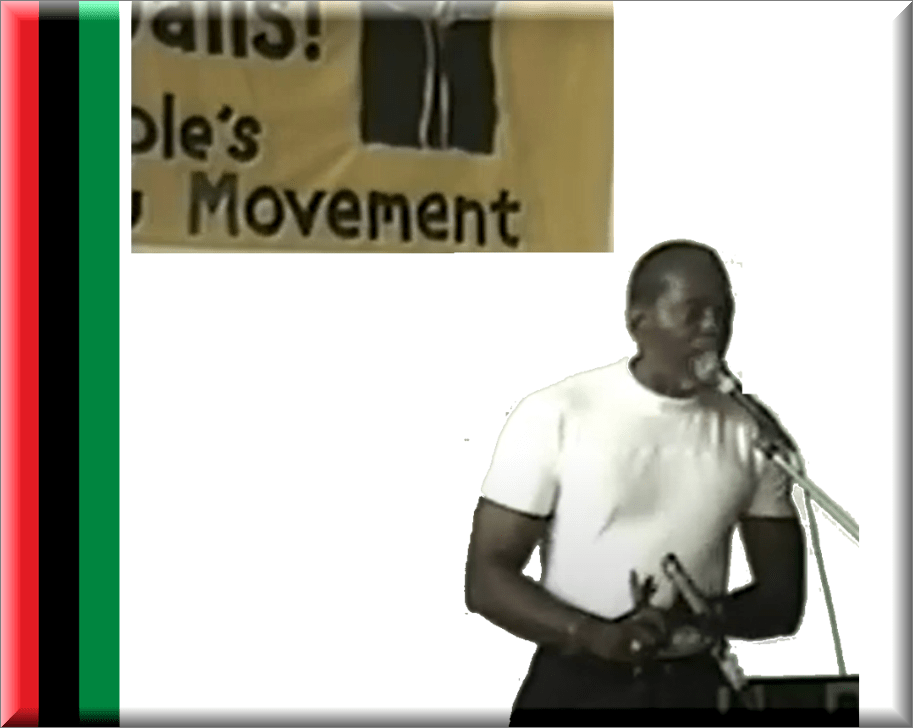

Dialectics of Black Power, by Robert L. Allen
( This pamphlet was digitized by The Freedom Archives .)
Pop the documents out from the upper right to read / expand / download.


Supplemental Studies:
I: Robert L Allen, “The Social Context of Black Power” (Text and Audio)
Please feel free to start the audio and pop the document out/expand and read along with the audio for a nice learning experience.
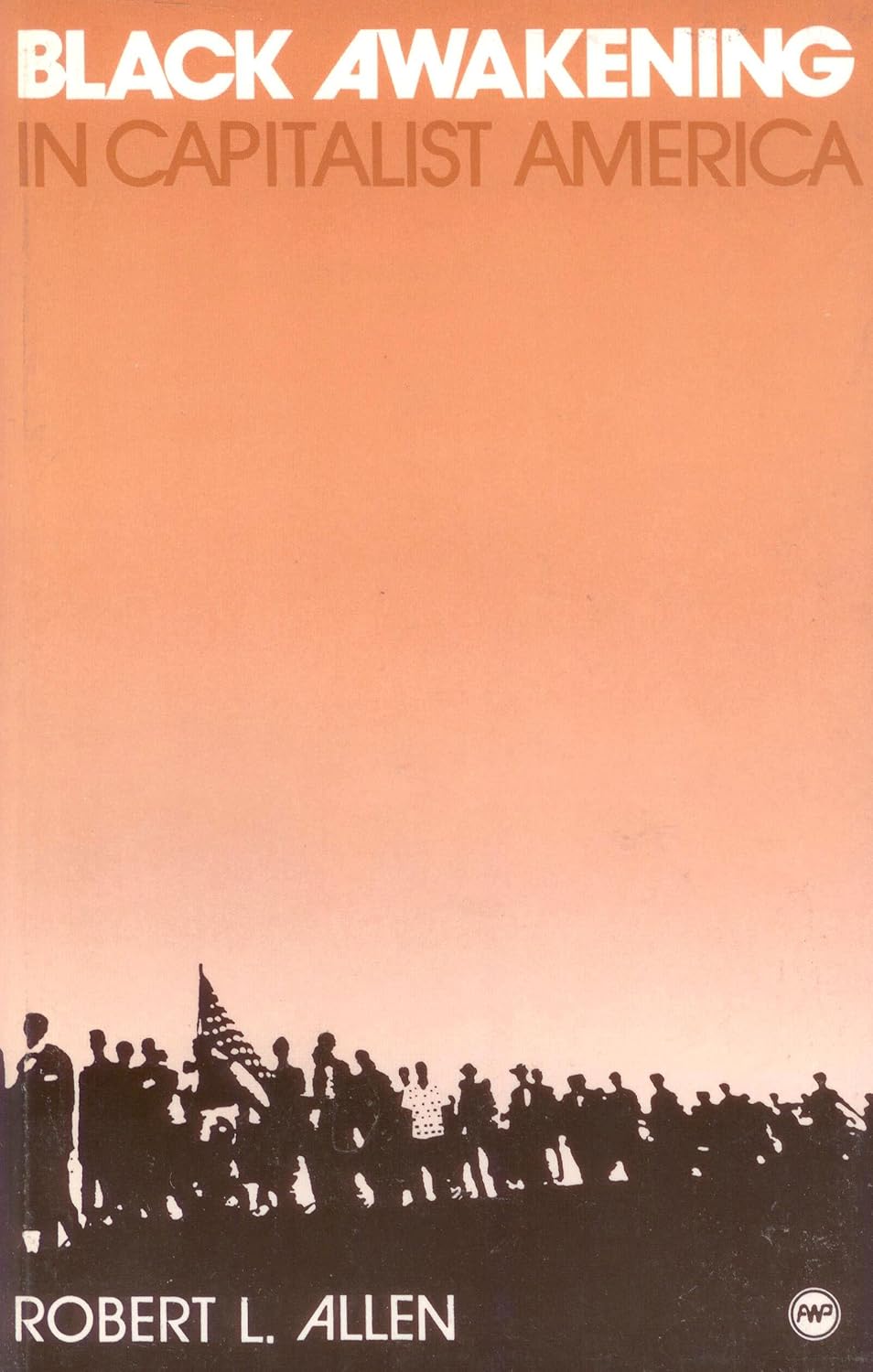
II: Black Awakening in Capitalist America: An Analytic History First Edition by Robert L. Allen
Book Summary
The book explores the intersections of race, class, and capitalism in America, particularly how these elements have shaped the experiences and struggles of Black people. Allen argues that the systemic inequalities rooted in capitalism have led to a profound awakening among Black communities, manifesting in various forms of resistance and activism. Through historical analysis, the author delves into the impacts of capitalism on Black life and the collective awakening that has occurred as a response to oppression.
The outline that follows captures the main themes and structure of Allen’s work, emphasizing the critical relationship between capitalism and the Black experience in America.
Black Awakening in Capitalist America: An Analytic History (1969) is a book by Robert L. Allen that analyzes the Black experience and 1960s Black activism in the United States through the lens of internal (or domestic) colonialism and neocolonialism. Wikipedia
Author Background
Robert Lee Allen (May 29, 1942 – July 10, 2024) was an American activist, writer, and academic. Born in Atlanta, Georgia, he graduated from Morehouse College (B.S., 1963), pursued graduate studies at Columbia and the New School for Social Research (M.A., 1967), and earned a Ph.D. in sociology from the University of California, San Francisco. He taught African American Studies and Ethnic Studies at institutions including San José State University, Mills College, and UC Berkeley, and served as senior editor of The Black Scholar. He co-founded Wild Trees Press with Alice Walker and wrote other works, including The Port Chicago Mutiny (1989), which examined a 1944 naval explosion and the subsequent mutiny trial of Black sailors.Wikipedia
Publication and Scope
Originally published by Doubleday in 1969 (later reprints include a 1990 Africa World Press edition), the book is roughly 250–305 pages depending on the edition. It focuses on Black organizing after the Civil Rights Movement, particularly Black Power and Black nationalism, drawing on figures such as Malcolm X, Stokely Carmichael, the Black Panthers, SNCC, CORE, and others, as well as ideas from Frantz Fanon. Chapter structure typically includes an introduction, “The Social Context of Black Power,” “Black Nationalism,” “Black Power and Bourgeois Black Nationalism,” “Corporate Imperialism vs. Black Liberation,” “Black Radicals: Rhetoric and Reality,” and a conclusion on a transitional program.
Core Thesis
Allen’s central argument is that Black America constitutes an oppressed nation or “semicolony” (domestic colony) within the United States. He contends that Black communities have been subjected to political, legal, economic, and military subordination analogous to classical colonialism, with white capital extracting labor and resources while maintaining control. By the late 1960s, he argued, Black America was shifting from a colonial to a neocolonial status—still dominated by white America but managed through co-opted Black intermediaries.Wikipedia
Key elements of the analysis include:
- Co-optation of Black Power: Corporate interests and white-led institutions (e.g., Ford Foundation funding of CORE) sought to de-radicalize the movement, channeling it toward reformist or pro-capitalist ends rather than systemic change. Responses to the 1967 Newark riots and similar uprisings are examined as examples of this dynamic.
- Critique of Black capitalism: Allen strongly rejects Black capitalism (and related approaches emphasizing Black ownership or managerial classes within existing structures) as a viable path to liberation. He views it as serving the interests of white capital and a Black bourgeoisie that brokers influence while leaving structural inequalities (underemployment, segregation, police brutality, etc.) intact.
- Nationalism and class: He distinguishes revolutionary nationalism from bourgeois or cultural nationalism, arguing that some forms of Black Power and nationalism risked being co-opted or focused on race in ways that obscured capitalism as a primary driver of oppression.
- Path forward: Allen advocates developing non-capitalist, communal socioeconomic relations within Black communities as a transitional strategy to reduce dependency on white-controlled structures, while recognizing the broader challenges of transforming the larger system.
Contemporary reviews (e.g., in The Black Scholar and The Guardian) praised it as definitive and indispensable for understanding Black communities and the movement; others (such as Kirkus) found it provocative but occasionally discursive or reliant on selective evidence.Kirkusreviews
Legacy
The book is widely regarded as a seminal and groundbreaking work in the application of internal colonialism theory to African American experience—one of the most incisive of its kind. It has been called important for its examination of Black capitalism and the interplay of race and class. A 2009/2010 academic conference and special issue of The Black Scholar revisited it on the fortieth anniversary, noting its continued relevance to later debates about co-optation, neoliberalism, and Black leadership. An excerpt appears in the 2017 collection The Revolution Will Not Be Funded. While internal colonialism theory later lost some prominence, the book remains influential in radical Black studies and analyses of 1960s movements.Wikipedia
Pop the documents out from the upper right to read / expand / download.



You must be logged in to post a comment.