
Last Updated 12-15-2024
Book Summary
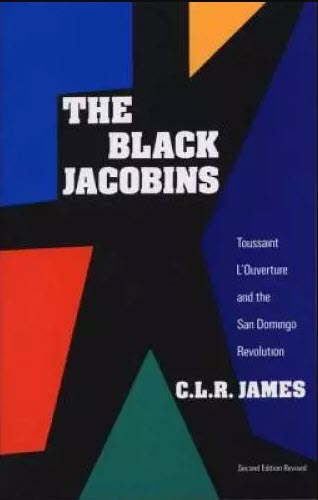
“The Black Jacobins” is a historical account by C.L.R. James that explores the Haitian Revolution (1791-1804) and the role of its leader, Toussaint L’Ouverture. The book examines the interplay of class, race, and power in the struggle for Haitian independence from French colonial rule. James presents a detailed narrative of the events leading to the revolution, the complexity of the social dynamics involved, and the impact of the revolution on the wider world. Through the lens of L’Ouverture’s life and leadership, the book highlights the struggle for freedom and equality, making it a significant work in the study of history, race, and revolution.
The following outline encapsulates the major themes and structure of C.L.R. James’s seminal work, emphasizing the significance of the Haitian Revolution and its leader in the context of world history.
Outline of “The Black Jacobins”
- Introduction
- Context of the Haitian Revolution
- Importance of Toussaint L’Ouverture
- Themes of race, class, and revolution
- Part I: The Setting
- Colonialism in Saint-Domingue
- Overview of the plantation economy
- Social hierarchy: whites, free people of color, and enslaved people
- Influence of the French Revolution
- Impact of Enlightenment ideas
- The rise of revolutionary sentiments
- Colonialism in Saint-Domingue
- Part II: The Revolution Begins
- Initial uprisings of enslaved people
- Toussaint L’Ouverture’s early involvement
- Key figures in the revolution
- The role of external forces (France, Britain, Spain)
- Part III: Toussaint L’Ouverture’s Leadership
- Rise to power and political strategies
- Military campaigns and tactics
- Balancing alliances with France and other powers
- Vision for Haiti and abolition of slavery
- Part IV: Internal Conflicts
- Tensions among revolutionary leaders
- Class divisions within the revolutionary movement
- The challenge of governance and social order
- Part V: The Fall of Toussaint
- Betrayal and capture by the French
- Impact of his leadership on the revolution’s course
- The rise of Jean-Jacques Dessalines and others
- Conclusion: The Legacy of the Revolution
- Outcomes of the Haitian Revolution
- Influence on global movements for freedom and equality
- Reflections on race and colonialism
The Black Jacobins_eBook
A classic and impassioned account of the first revolution in the Third World.This powerful, intensely dramatic book is the definitive account of the Haitian Revolution of 1794-1803, a revolution that began in the wake of the Bastille but became the model for the Third World liberation movements from Africa to Cuba. It is the story of the French colony of San Domingo, a place where the brutality of master toward slave was commonplace and ingeniously refined. And it is the story of a barely literate slave named Toussaint L’Ouverture, who led the black people of San Domingo in a successful struggle against successive invasions by overwhelming French, Spanish, and English forces and in the process helped form the first independent nation in the Caribbean.
Pop the documents out from the upper right to read / expand / download.
The Black Jacobins_Audiobook

Confronting Black Jacobins, Dr. Gerald Horne_eBook
Book Summary

The following overview and outline provides a structured capsule of the major themes and topics discussed in “Confronting Black Jacobins,” highlighting Dr. Horne’s analysis of the Haitian Revolution and its lasting significance.
Overview
- Historical Context: The book situates the Haitian Revolution within the larger scope of the Atlantic slave trade and the French Revolution.
- Key Figures: It examines the lives and contributions of important figures, especially Toussaint L’Ouverture, and their roles in challenging colonial power.
- Impact of the Revolution: Horne discusses the implications of Haiti’s independence for slavery, colonialism, and race relations in the Americas and Europe.
- Racial Dynamics: The narrative addresses the intersection of race, class, and revolution, highlighting how these elements influenced the struggle for freedom.
- Legacy and Memory: The book reflects on how the Haitian Revolution has been remembered and misremembered in historical narratives.
Outline
- Introduction
- Overview of the Haitian Revolution
- Significance in world history
- Historical Background
- The Atlantic slave trade and its impact
- The role of colonial powers, especially France
- Key Figures
- Toussaint L’Ouverture
- Early life and rise to power
- Military strategies and leadership
- Other notable leaders
- Jean-Jacques Dessalines
- Henri Christophe
- Toussaint L’Ouverture
- The Revolution Begins
- Factors leading to the uprising
- Initial revolts and their suppression
- French Revolution Influence
- Connection to the French Revolution
- Ideological underpinnings and inspirations
- International Reactions
- Responses from colonial powers
- The impact on slave societies in the Americas
- Struggles for Control
- Internal conflicts among revolutionary leaders
- The role of external forces, including the U.S. and Britain
- Haiti’s Independence
- Declaration of independence and its significance
- Immediate consequences for Haiti and the region
- Legacy of the Haitian Revolution
- Influence on abolitionist movements
- Ongoing struggles for racial equality and social justice
- Conclusion
- Reflection on the memory of the Haitian Revolution
- Its relevance to contemporary issues of race and freedom
Confronting Black Jacobins, Dr. Gerald Horne_Audiobook
Audio start in earnest (Introduction) and corresponds to page 8 of the above Reader.
Part 1
Part 2
The Black Jacobins Reader
Containing a wealth of new scholarship and rare primary documents, The Black Jacobins Reader provides a comprehensive analysis of C. L. R. James’s classic history of the Haitian Revolution. In addition to considering the book’s literary qualities and its role in James’s emergence as a writer and thinker, the contributors discuss its production, context, and enduring importance in relation to debates about decolonization, globalization, postcolonialism, and the emergence of neocolonial modernity. The Reader also includes the reflections of activists and novelists on the book’s influence and a transcript of James’s 1970 interview with Studs Terkel.
Learn more in RBG Communiversity Knowledge Media eLibrary:
- C. L. R. James Studies Folder
- Dr. Gerald Horne History Education Collection Folder
- BPM | BLM Audiobooks Folder
- BPM | BLM eBooks Folder
SUPPLEMENTAL: CLR JAMES VS MARCUS GARVEY
Remember: Pop the documents out from the upper right to read / expand / download.
 RBG Communiversity: Message 2 Da Grassroots