We Will Shoot Back Armed Resistance in the Mississippi Freedom Movement (Akinyele Omowale Umoja)

Book Summary

Key Overview

The book fundamentally challenges the dominant narrative of the 1950s and 1960s Southern Civil Rights Movement, which often portrays the struggle as exclusively nonviolent. Umoja demonstrates that armed self-defense was not a contradiction to nonviolent organizing in Mississippi, but rather an essential component that protected activists, families, and communities from Black white-supremacist terror (such as the Ku Klux Klan and state-sanctioned violence).

Core Themes & Arguments

Protection of Nonviolent Organizers: Local Black Mississippians often provided armed security for nonviolent civil rights workers from organizations like SNCC (Student Nonviolent Coordinating Committee) and CORE (Congress of Racial Equality).

Grassroots Tradition: Armed resistance in Mississippi was deeply rooted in the culture and history of Black working-class communities and military veterans returning from WWII and the Korean War.

Key Organizations & Figures: The book details local self-defense efforts, including the formation of local militias and the role of groups like the Deacons for Defense and Justice, as well as prominent local leaders like Laura McGhee, E.W. Steptoe, and Hartman Turnbow.

Path to Black Power: Umoja traces how local experiences with self-defense directly informed the shift toward the broader Black Power movement in the mid-to-late 1960s.

About the Author

Akinyele Omowale Umoja is a professor of African American Studies at Georgia State University. He is an educator, author, and longtime activist in the New Afrikan Independence Movement.

Armed self-defense is the use of force—often including firearms—to protect oneself, family, or community from an imminent unlawful attack when the state cannot or will not provide protection. In U.S. history it has been both a legal right and a contested political strategy, especially in periods of official indifference to racial violence.In the Mississippi Freedom Movement that the shared book examines, historian Akinyele Omowale Umoja argues armed resistance was not a sideshow but essential. Local Black residents and veterans organized informal patrols and later groups modeled on the Deacons for Defense and Justice (founded 1964 in Jonesboro, Louisiana) to guard organizers, churches, and neighborhoods against Klan night riders and police-Klan collusion.

Umoja’s central claim is that this activity reduced fear, deterred attacks, and made nonviolent campaigns by SNCC, CORE, and the NAACP possible in places where federal protection was absent. Figures such as Medgar Evers privately favored organized self-defense; Freedom Summer field workers routinely encountered armed local people even while national leaders publicly preached nonviolence.

This pattern predates the 1960s. Robert F. Williams in Monroe, North Carolina, formed an NRA-chartered Black Armed Guard in the 1950s after Klan attacks and later wrote Negroes with Guns. Earlier still, Ida B. Wells and W.E.B. Du Bois endorsed armed protection against lynching. The common thread is that when local law enforcement sided with attackers, communities treated self-defense as a practical necessity rather than an ideological choice.

U.S. law treats self-defense as an affirmative defense with four core requirements: an imminent threat, a reasonable belief that force is necessary, proportionality, and (in most cases) that the defender did not initiate the confrontation. Every state recognizes some version of the castle doctrine—no duty to retreat inside one’s home. Roughly 30–38 states have added “stand your ground” statutes that remove the duty to retreat in any place a person is lawfully present. Duty-to-retreat states still exempt the home. These rules do not authorize preemptive or retaliatory violence; they only excuse force used against an immediate threat.

Empirical estimates of how often guns are used defensively vary sharply because of survey design. The National Crime Victimization Survey (NCVS) consistently finds 60,000–65,000 defensive firearm incidents per year, a small fraction of total violent crime. Private telephone surveys, most famously Kleck and Gertz (1995), have produced figures of 2 million or more. Methodological disputes—recall bias, what counts as a “use,” whether the incident was actually criminal—have never been fully resolved. Both sides agree that most reported defensive uses involve display rather than shots fired, and that the legal and physical risks after a shooting remain high.

The historical record and the statistical debate illustrate the same tension: armed self-defense can deter attackers and buy time when institutions fail, yet it also carries risks of escalation, misidentification, and unequal legal outcomes. In the specific setting of 1960s Mississippi, the evidence Umoja assembles suggests it functioned as a complement to, rather than a replacement for, political organizing and legal pressure. Contemporary arguments continue to turn on whether those conditions of state failure still exist and how the costs of private armed force should be weighed against its benefits.

We Will Shoot Back by Akinyele Umoja Playlist 16 Videos

Pop the document out from the upper right to read / expand / download

Pop the document out from the upper right to read / expand / download

A Different Hunger: Writings on Black Resistance by A. Sivanandan_eBook and Audiobook,with IRR50: The influence of A. Sivanandan’s ideas

A collection of Sivanandan’s work charting the history of post war black struggles against British racism

Book Summary

“A Different Hunger: Writings on Black Resistance” by A. Sivanandan is a collection of essays and writings that explore the complexities of Black resistance movements and the broader struggles against racism, colonialism, and oppression. Sivanandan, a prominent Sri Lankan-born activist, writer, and thinker, draws on his experiences and observations to examine the intersections of race, identity, and resistance. The book reflects on the historical context of Black struggles in the diaspora, the impact of systemic racism, and the ongoing fight for justice and equality. Through his thought-provoking analysis, Sivanandan calls for solidarity among marginalized communities and emphasizes the importance of understanding the roots of resistance in the fight against oppression.

The outline that follows captures the key themes and structure of A. Sivanandan’s “A Different Hunger: Writings on Black Resistance.” The book serves as a significant contribution to the discourse on race, resistance, and social justice, highlighting the importance of understanding the historical and contemporary struggles faced by Black communities around the world. Through his writings, Sivanandan emphasizes the need for solidarity and collective action in the fight against oppression and inequality.

I. Introduction

  • A. Purpose of the book
  • B. Overview of A. Sivanandan’s background and activism
  • C. Importance of understanding Black resistance in contemporary society

II. Historical Context of Black Resistance

  • A. The legacy of colonialism and its impact on Black communities
  • B. Historical examples of Black resistance movements
    • The civil rights movement in the United States
    • Anti-colonial struggles in Africa and the Caribbean
  • C. The evolution of Black identity and consciousness

III. Theoretical Framework

  • A. Concepts of race and racism
    • Definitions and distinctions between systemic and individual racism
    • The role of intersectionality in understanding oppression
  • B. The significance of diasporic identities
    • Connections between global Black struggles
  • The impact of migration on identity formation

IV. Contemporary Issues in Black Resistance

  • A. The role of grassroots movements
    • Case studies of contemporary Black activism
    • The influence of social media on mobilization
  • B. The intersection of race and class
    • Economic inequalities faced by Black communities
  • The importance of addressing class struggles alongside racial justice
  • C. Global dimensions of Black resistance
    • Solidarity with other marginalized groups
  • International perspectives on race and resistance

V. Reflections on Solidarity and Collective Action

  • A. The importance of building coalitions
    • Historical examples of effective solidarity among marginalized communities
    • Strategies for fostering collaboration across movements
  • B. The role of education and political consciousness
    • The necessity of historical awareness in activism
  • Approaches to fostering political engagement among youth

VI. Conclusion

  • A. Summary of key themes and insights
  • B. Call to action for continued resistance and solidarity
  • C. Vision for a more equitable and just society

A. Sivanandan’s “A Different Hunger: Writings on Black Resistance” is a compelling collection that delves deeply into the complexities of Black resistance movements throughout history and in contemporary society. Here’s a more detailed exploration of the key themes, insights, and implications presented in the book:

Detailed Exploration of Key Themes

1. Historical Context of Black Resistance

  • Colonial Legacy: Sivanandan examines the enduring impact of colonialism on Black communities, both in Africa and within the diaspora. He discusses how colonial histories have shaped racial identities and fueled resistance movements. By tracing the roots of systemic racism, he provides a foundational understanding of the challenges faced by Black individuals and communities.
  • Resistance Movements: The book highlights significant historical resistance movements, such as the civil rights movement in the United States and anti-colonial struggles across Africa and the Caribbean. Sivanandan emphasizes that these movements were not isolated events but part of a broader struggle against oppression and injustice, showcasing the interconnectedness of Black resistance globally.

2. Theoretical Framework

  • Understanding Race and Racism: Sivanandan offers a nuanced analysis of race and racism, distinguishing between systemic and individual forms of racism. He explores how systemic racism is embedded in societal structures, institutions, and policies, perpetuating inequalities and injustices.
  • Intersectionality: The book discusses the importance of intersectionality in understanding the experiences of Black individuals, emphasizing that race intersects with other identities, such as class, gender, and sexuality. This framework allows for a more comprehensive understanding of the complexities of oppression and resistance.
  • Diasporic Identities: Sivanandan explores the significance of diasporic identities in shaping Black resistance. He highlights how migration and the experiences of living in different contexts contribute to the formation of unique identities and solidarity among Black communities worldwide.

3. Contemporary Issues in Black Resistance

  • Grassroots Movements: The book showcases contemporary grassroots movements that have emerged in response to systemic racism and social injustice. Sivanandan highlights the role of organizations and activists in mobilizing communities and raising awareness on issues such as police brutality, economic inequality, and environmental justice.
  • Social Media and Mobilization: Sivanandan addresses the transformative impact of social media on activism, particularly how it has facilitated the organization, communication, and mobilization of protests. He discusses how platforms like Twitter and Instagram have become vital tools for raising awareness and fostering solidarity.
  • Intersection of Race and Class: The author stresses the need to address the intersection of race and class in the fight for justice. He argues that economic disparities faced by Black communities must be recognized and tackled alongside racial issues to create a more equitable society.

4. Reflections on Solidarity and Collective Action

  • Building Coalitions: Sivanandan emphasizes the importance of solidarity among marginalized groups. He provides historical examples of successful coalitions that have effectively challenged oppression, illustrating how collective action can amplify voices and drive change.
  • Political Consciousness: The book underscores the role of education in fostering political consciousness among individuals, particularly youth. Sivanandan advocates for a historical understanding of struggles for justice, arguing that awareness of past movements can inspire and inform current activism.

5. Vision for the Future

  • Call to Action: Sivanandan concludes with a powerful call to action, urging readers to remain engaged in the fight against oppression and to support movements for social justice. He emphasizes that the struggle for Black resistance is ongoing and requires continued commitment and solidarity.
  • Hope for Change: Despite the challenges outlined throughout the book, Sivanandan maintains an optimistic vision for the future, advocating for a more inclusive and just society. He envisions a world where marginalized voices are heard, and systemic inequalities are dismantled.

Implications and Legacy

  • Contribution to Race Discourse: “A Different Hunger” adds significant depth to the discourse on race and resistance, providing valuable insights into the historical and contemporary struggles faced by Black communities. Sivanandan’s work encourages critical reflection on the ongoing impacts of colonialism and systemic racism.
  • Influence on Activism: The book serves as a resource for activists and scholars alike, offering frameworks and strategies for understanding and addressing racial injustices. It highlights the importance of intersectionality and solidarity in contemporary resistance movements.
  • Encouragement for Future Generations: Sivanandan’s writings inspire future generations to engage in activism and advocacy for social justice. His emphasis on education and political consciousness serves as a reminder of the power of informed and organized action in challenging oppression.

Conclusion

In summary, A. Sivanandan’s “A Different Hunger: Writings on Black Resistance” is a vital contribution to the understanding of Black resistance movements, their historical context, and contemporary implications. Through his insightful analysis, Sivanandan highlights the complexities of race, identity, and systemic oppression while calling for solidarity and collective action in the ongoing fight for justice. The book not only illuminates the struggles faced by Black communities but also serves as a rallying cry for continued resistance and hope for a more equitable future.

A Different Hunger: Writings on Black Resistance_eBook

Pop the documents out from the upper right to read / expand / download.

A Different Hunger: Writings on Black Resistance_Audiobook

IRR50: The influence of A. Sivanandan’s ideas (Institute of Race Relations)

5 Video Playlist

Learn more in RBG Communiversity Knowledge Media eLibrary:

No Surrender: Writings From An Anti-Imperialist Political Prisoner by David Gilbert_eBook and Audiobook, with Supplemental_David Gilbert’s Message to the 2021 Columbia University Reunion

Last Updated 04-27-2024

Book Summary

“No Surrender: Writings From An Anti-Imperialist Political Prisoner” by David Gilbert is a collection of essays, letters, and reflections from the author, who is a former member of the Weather Underground Organization. The book captures Gilbert’s thoughts and experiences during his imprisonment, highlighting his commitment to anti-imperialism, social justice, and revolutionary politics. Through his writings, Gilbert examines the nature of state power, the struggles for liberation, and the importance of solidarity among oppressed peoples. His reflections provide insight into the broader context of political activism, the prison industrial complex, and the fight against imperialism, making it a significant contribution to contemporary political discourse.

The outline that follows captures the key themes and structure of David Gilbert’s “No Surrender: Writings From An Anti-Imperialist Political Prisoner.” The book serves as a powerful testament to the resilience of political prisoners and the ongoing struggles for justice and liberation. Gilbert’s writings reflect a deep commitment to anti-imperialism, solidarity, and revolutionary change, making it an important contribution to contemporary political thought and activism.

I. Introduction

  • A. Purpose of the book
  • B. Overview of David Gilbert’s background and activism
  • C. Importance of anti-imperialist struggle in contemporary politics

II. Personal Reflections

  • A. Experiences as a political prisoner
    • Life in prison and its challenges
    • The impact of incarceration on personal beliefs and activism
  • B. The role of writing in maintaining political consciousness
    • Reflection as a tool for resistance
  • The importance of intellectual engagement while incarcerated

III. Anti-Imperialism and Revolutionary Politics

  • A. Definition and principles of anti-imperialism
    • Historical context of imperialism
    • Links between imperialism and capitalism
  • B. The significance of revolutionary movements
    • Case studies of global liberation struggles
  • Lessons learned from past revolutionary efforts

IV. The Prison Industrial Complex

  • A. Examination of the U.S. prison system
    • Historical development of mass incarceration
    • Racial and economic disparities in imprisonment
  • B. The role of prisons in maintaining state power
    • Analysis of how prisons serve the interests of capitalism
  • The impact of incarceration on communities and social movements

V. Solidarity and Collective Action

  • A. The importance of solidarity among oppressed groups
    • Building coalitions across movements
    • Historical examples of successful solidarity efforts
  • B. Strategies for effective collective action
    • Organizing tactics and community engagement
  • The role of education and awareness in fostering solidarity

VI. Political Analysis and Critique

  • A. Critique of U.S. foreign policy and imperialism
    • Analysis of specific policies and their impacts
    • The consequences of imperialist actions on global populations
  • B. Reflection on the revolutionary potential of marginalized communities
    • The role of grassroots movements in driving change
  • Vision for a more equitable and just society

VII. Conclusion

  • A. Summary of key themes and insights
  • B. Call to action for readers and activists
  • C. Vision for continuing the struggle against imperialism and for social justice

“No Surrender: Writings From An Anti-Imperialist Political Prisoner” is a profound exploration of political activism, anti-imperialism, and the experiences of being incarcerated as a political prisoner. Here’s a deeper look at the key themes, insights, and implications presented in the book:

Detailed Exploration of Key Themes

1. Personal Reflections

  • Experiences of Incarceration: Gilbert shares his firsthand experiences as a political prisoner, providing readers with an intimate look at life behind bars. He discusses the psychological and emotional challenges of imprisonment, including isolation and the struggle to maintain a sense of purpose and identity while incarcerated.
  • Writing as Resistance: Throughout the book, Gilbert emphasizes the importance of writing as a means of maintaining political consciousness and resilience. His reflections illustrate how writing serves not only as a personal outlet but also as a tool for engaging with broader political struggles and sharing knowledge with others.

2. Anti-Imperialism and Revolutionary Politics

  • Understanding Anti-Imperialism: Gilbert defines anti-imperialism as a critical response to the oppressive practices of powerful nations that exploit and dominate less powerful countries. He contextualizes this within the historical framework of colonialism and contemporary global politics, arguing that imperialism is deeply intertwined with capitalism.
  • Lessons from Revolutionary Movements: The book includes analyses of various revolutionary movements around the world, examining their strategies, successes, and failures. Gilbert draws lessons from these movements, emphasizing the need for solidarity and cooperation among oppressed peoples to achieve liberation.

3. The Prison Industrial Complex

  • Mass Incarceration: Gilbert critiques the U.S. prison system, detailing how mass incarceration disproportionately affects marginalized communities, particularly people of color. He explores the historical roots of this phenomenon and its ongoing consequences for society.
  • Prisons as Tools of Control: The book discusses how the prison industrial complex serves to uphold state power and reinforce societal inequalities. Gilbert argues that prisons are not just sites of punishment but also mechanisms for maintaining social order and capitalist interests.

4. Solidarity and Collective Action

  • Building Solidarity Among Movements: Gilbert stresses the importance of solidarity among various social justice movements, advocating for coalitions across racial, economic, and ideological lines. He highlights historical examples where solidarity has led to significant progress and change.
  • Strategies for Activism: The book provides insights into effective organizing strategies, emphasizing the need for grassroots engagement, education, and community-building. Gilbert encourages readers to become active participants in the struggle for justice and to seek out opportunities for collective action.

5. Political Analysis and Critique

  • Critique of U.S. Imperialism: Gilbert offers a critical analysis of U.S. foreign policy and its imperialist undertones. He discusses specific instances of military intervention and exploitation, highlighting the human costs of these actions on affected populations.
  • Revolutionary Potential of Marginalized Communities: The book underscores the importance of recognizing the agency of marginalized communities in driving change. Gilbert argues that these communities possess the potential to lead revolutionary movements and challenge oppressive systems.

Implications and Legacy

  • Continuity of Struggles: Gilbert’s writings illustrate the ongoing nature of struggles against imperialism and oppression. He connects historical movements with contemporary issues, urging readers to recognize the continuity of these struggles.
  • Call for Awareness and Action: The book serves as a rallying cry for activists and individuals to engage critically with their surroundings and take action against injustice. Gilbert emphasizes the need for awareness of systemic inequalities and the importance of collective mobilization.
  • Educational Resource: “No Surrender” functions as an important resource for those seeking to understand the intersections of incarceration, imperialism, and activism. It provides valuable insights and historical context for contemporary social justice movements.

Conclusion

In conclusion, David Gilbert’s “No Surrender: Writings From An Anti-Imperialist Political Prisoner” is a powerful and thought-provoking work that challenges readers to confront issues of imperialism, incarceration, and social justice. Through his reflections and analyses, Gilbert highlights the importance of resilience, solidarity, and collective action in the fight against oppression. His experiences as a political prisoner enrich the narrative, offering a unique perspective on the struggles for liberation and justice. The book is a compelling call to action, urging individuals and communities to engage in the ongoing fight for a more equitable and just world.

No Surrender: Writings From An Anti-Imperialist Political Prisoner by David Gilbert_eBook

Pop the documents out from the upper right to read / expand / download.

No Surrender: Writings From An Anti-Imperialist Political Prisoner by David Gilbert_Audiobook

Reading starts in eearnest @ 7 min, 30 sec (Foward) and corresponds with page 10 of the above reader.

Part 1

Part 2

David Gilbert’s Message to the 2021 Columbia University Reunion

A co-founder of the Columbia University chapter of Students for a Democratic Society in 1966, and a leading antiwar and anti-imperialist activist since before that, David Gilbert is one of the few remaining US political prisoners from that period still incarcerated after almost 40 years. This, despite no direct ties to the harming of any person, a completely clean and nonviolent prison record, and support for his immediate, unconditional release from prominent Nobel Peace laureates including Archbishop Desmond Tutu, from M.K. Gandhi’s grand-daughter and Rev. Dr. Martin Luther King Jr.’s daughter, and from the heads of the Episcopal Church, USA, the Presbyterian Church, Pax Christi International Catholic peace movement, and many others. This presentation by David to the 2021 Columbia University reunion was facilitated by IPRA Secretary General Matt Meyer, a long-standing friend of Gilbert’s who also works with friendsofdavidgilbert.org

Learn more in RBG Communiversity Knowledge Media eLibrary:

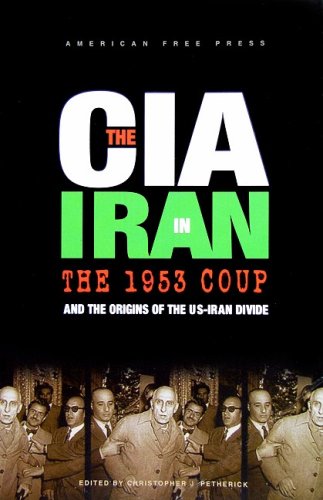
The CIA in Iran-The 1953 Coup, the Origins of the US-Iran Divide by Christopher J. Petherick_eBook and Audiobook, with Video Education Player

Last Updated September 20, 2026

Published by American Free Press The CIA in Iran reveals in shocking detail a once-top-secret report by a CIA field agent working in Iran. The report, which reads like a detective novel, shows how U.S. and British operatives employed every dirty trick at their disposal, including bribery, murder and terrorism, to eliminate a government they could not control and replace it with one they thought they could.

ICEBREAKER VIDEO

Book Summary

“The CIA in Iran: The 1953 Coup, the Origins of the US-Iran Divide” by Christopher J. Petherick explores the historical events surrounding the 1953 coup d’état in Iran, orchestrated by the CIA and British intelligence, which resulted in the overthrow of Prime Minister Mohammad Mossadegh. The book examines the political, social, and economic factors that led to the coup, its immediate aftermath, and its long-term implications for U.S.-Iran relations. By providing a detailed analysis of the coup’s origins and consequences, Petherick sheds light on how this pivotal moment has shaped the ongoing tensions between the United States and Iran.

The outline that follows captures the main themes and structure of “The CIA in Iran: The 1953 Coup, the Origins of the US-Iran Divide”, highlighting the historical significance of the coup and its lasting effects on the relationship between the United States and Iran. The book serves as an important resource for understanding the complexities of U.S.-Iran relations in the context of historical events.

I. Introduction

  • Overview of the significance of the 1953 coup in Iran
  • Introduction to the main themes of the book: U.S. intervention, Iranian nationalism, and the impact on bilateral relations

II. Historical Context

A. Pre-Coup Iran

  • Political landscape in Iran before 1953
  • Role of foreign powers, particularly Britain and the U.S.

B. Rise of Mohammad Mossadegh

  • Mossadegh’s vision for Iran and nationalization of oil
  • Popular support and political challenges he faced

III. The Coup Planning and Execution

A. U.S. and British Involvement

  • Origins of the CIA’s interest in Iran
  • Cooperation with British intelligence and the oil crisis

B. The Execution of the Coup

  • Key events leading to the coup on August 19, 1953
  • Role of propaganda and public manipulation
  • Aftermath: Initial chaos and reestablishment of the monarchy

IV. Immediate Consequences

A. Impact on Iranian Society

  • Changes in political power structures
  • Rise of the Shah’s regime and its authoritarianism

B. U.S.-Iran Relations Post-Coup

  • Shift in U.S. foreign policy towards Iran
  • Initial benefits and long-term repercussions of U.S. support for the Shah

V. Long-Term Implications

A. Seeds of Distrust

  • Growing anti-American sentiment in Iran
  • The role of the coup in shaping Iranian nationalism

B. The 1979 Revolution

  • Connection between the coup and the Islamic Revolution
  • How the coup’s legacy influenced revolutionary sentiments

VI. Conclusion

  • Summary of key points and themes
  • Reflection on the lasting impact of the 1953 coup on U.S.-Iran relations
  • Call for understanding historical context in current geopolitical discussions

“The CIA in Iran: The 1953 Coup, the Origins of the US-Iran Divide” provides a comprehensive examination of a pivotal moment in Iranian history that has had lasting repercussions on U.S.-Iran relations. Here’s a more detailed exploration of the book’s themes, context, and significance:

Detailed Exploration of Key Aspects

I. Historical Context

  1. Pre-Coup Iran:
    • The book begins by setting the stage for the political landscape in Iran prior to the 1953 coup. This includes a discussion of the influence of foreign powers, particularly Britain, which had significant interests in Iranian oil.
    • The Anglo-Iranian Oil Company (AIOC) dominated the Iranian oil industry, causing resentment among Iranians who felt their national resources were being exploited.
  2. Rise of Mohammad Mossadegh:
    • The author details Mossadegh’s ascent to power, highlighting his nationalistic vision for Iran and his commitment to the nationalization of the oil industry. This move was highly popular among the Iranian populace but antagonized both British and American interests.
    • Petherick explores Mossadegh’s political challenges, including opposition from both the Shah and conservative factions within Iran, as well as the growing tension with Western powers.

II. The Coup Planning and Execution

  1. U.S. and British Involvement:
    • Petherick delves into the collaboration between the CIA and British intelligence, focusing on how the coup was conceived and executed under the code name Operation Ajax.
    • The author discusses the political motivations behind U.S. involvement, including the Cold War context and the fear of Iranian communism, which led to concerns about a leftist government in Iran.
  2. Execution of the Coup:
    • The book provides a detailed narrative of the coup itself, describing the events leading up to August 19, 1953. The author emphasizes the role of propaganda, misinformation, and street violence orchestrated by both the U.S. and British agents.
    • Petherick also highlights the immediate aftermath of the coup, which saw the reinstatement of the Shah, leading to initial chaos and instability within Iran.

III. Immediate Consequences

  1. Impact on Iranian Society:
    • Following the coup, the author examines how the political power dynamics shifted, leading to the establishment of a repressive regime under the Shah. This period was marked by political purges, censorship, and the suppression of dissent.
    • The book discusses the impact on various segments of Iranian society, including the growing disillusionment among the populace and the erosion of democratic institutions.
  2. U.S.-Iran Relations Post-Coup:
    • Petherick explores the implications of U.S. support for the Shah, including how it shaped U.S. foreign policy in the region and established Iran as a key ally during the Cold War.
    • The author reflects on the initial benefits perceived by the U.S. government, such as access to Iranian oil and a strategic partner in the Middle East, but warns that these came at the cost of long-term stability.

IV. Long-Term Implications

  1. Seeds of Distrust:
    • The book emphasizes how the 1953 coup sowed the seeds of distrust and resentment towards the United States among Iranians. Petherick analyzes how this distrust has persisted over the decades and influenced Iranian politics and society.
    • The author discusses the rise of anti-American sentiment, particularly as the Shah’s regime became increasingly authoritarian and disconnected from the concerns of ordinary Iranians.
  2. The 1979 Revolution:
    • Petherick connects the events of the coup to the Islamic Revolution of 1979, arguing that the legacy of U.S. intervention played a significant role in shaping revolutionary sentiments.
    • The author illustrates how the coup became a rallying point for various factions within Iran, contributing to the eventual overthrow of the Shah and the establishment of the Islamic Republic.

V. Conclusion

  • In the conclusion, Petherick summarizes the key themes of the book, reiterating the importance of understanding the historical context of the 1953 coup to fully grasp the complexities of U.S.-Iran relations today.
  • The book serves as a reminder of the dangers of foreign intervention and the unintended consequences that can arise from such actions, urging readers to consider the lessons learned from this pivotal moment in history.

Significance of the Book

  • Historical Insight: The book provides a thorough analysis of a critical event that not only shaped Iranian history but also had profound implications for U.S. foreign policy in the Middle East. It highlights the interplay between domestic politics and international relations.
  • Educational Resource: “The CIA in Iran” serves as an important resource for understanding the roots of contemporary tensions between the U.S. and Iran. It is particularly relevant for students and scholars of history, political science, and international relations.
  • Reflection on Intervention: Petherick’s work prompts reflection on the ethics of foreign intervention and the long-term consequences of such actions, encouraging readers to critically evaluate current geopolitical strategies and their impacts on global stability.

Overall, “The CIA in Iran: The 1953 Coup, the Origins of the US-Iran Divide” is a significant contribution to the scholarship on U.S.-Iran relations and a valuable narrative that illuminates the complexities of historical events and their lasting effects on international politics.

The CIA in Iran-The 1953 Coup, the Origins of the US-Iran Divide_eBook

Pop the documents out from the upper right to read / expand / download.

The CIA in Iran-The 1953 Coup, the Origins of the US-Iran Divide_Audiobook

Video Education Player

15 Video Playlist

Learn more in RBG Communiversity Knowledge Media eLibrary

Tip of the Spear: Black Radicalism, Prison Repression, and the Long Attica Revolt by Orisanmi Burton, with Orisanmi Burton Disscussion and Attica Massacre Video Education

Book Summary

“Tip of the Spear: Black Radicalism, Prison Repression, and the Long Attica Revolt” by Orisanmi Burton offers a critical examination of the Attica Prison uprising in 1971 and its significance within the broader context of Black radicalism and resistance to state repression. Burton explores the historical factors leading to the revolt, the demands of the prisoners, and the subsequent violent response from authorities. The book highlights the connections between the struggles of incarcerated individuals and larger social movements advocating for racial and economic justice. By analyzing the Attica uprising and its aftermath, Burton sheds light on the enduring legacy of prison resistance and the ongoing fight against systemic oppression.

The outline that follows captures the main themes and structure of “Tip of the Spear,” highlighting Orisanmi Burton’s critical examination of the Attica Prison uprising and its broader implications for understanding Black radicalism and resistance to state repression. The book serves as a significant contribution to the discourse on prison reform and social justice, emphasizing the enduring relevance of the Attica revolt in contemporary struggles against systemic oppression.

I. Introduction

  • Overview of the book’s purpose: to explore the Attica Prison uprising within the context of Black radicalism and prison repression
  • Introduction to the significance of the Attica revolt in the history of prison resistance
  • The importance of understanding the uprising as part of a broader struggle for justice

II. Historical Context of Black Radicalism

  • Examination of the origins and development of Black radicalism in the 20th century
  • Overview of key movements and figures that influenced the radicalization of Black activism
  • Discussion of the socio-political conditions leading to heightened tensions within prisons

III. The Attica Prison Uprising

  • Detailed account of the events leading up to the Attica revolt in September 1971
  • Exploration of the prisoners’ demands and grievances, including issues of racial discrimination, overcrowding, and lack of basic rights
  • Analysis of the dynamics within the prison during the uprising, including the role of leadership among the inmates

IV. State Repression and the Response to the Uprising

  • Examination of the state’s response to the Attica revolt, including the violent retaking of the prison
  • Analysis of the consequences of the uprising for the prisoners, families, and the broader community
  • Discussion of the media portrayal of the revolt and its impact on public perception of prison resistance

V. The Legacy of the Attica Revolt

  • Exploration of the long-term effects of the Attica uprising on prison reform and Black radicalism
  • Discussion of subsequent prison uprisings and their connections to the Attica legacy
  • Examination of how the revolt continues to influence contemporary movements for racial and social justice

VI. Theoretical Framework and Analysis

  • Introduction to the theoretical frameworks used in the book, including concepts of resistance, state violence, and systemic oppression
  • Discussion of how the Attica revolt exemplifies the intersection of race, class, and incarceration
  • Analysis of the implications of the uprising for understanding modern prison systems and resistance movements

VII. Conclusion

  • Summary of key themes and insights from the book
  • Reflection on the importance of the Attica revolt in the ongoing struggle against prison repression and racial injustice
  • Call to action for continued engagement with the legacy of prison resistance and the fight for equity and justice

“Tip of the Spear” is a profound exploration of the Attica Prison uprising, contextualized within the broader landscape of Black radicalism and systemic oppression. The book critically examines how the revolt at Attica not only represented a pivotal moment in the fight against prison repression but also served as a reflection of the larger struggles for racial and economic justice in the United States. Here’s a deeper exploration of the key themes, insights, and arguments presented in the book:

Key Themes and Insights

  1. Historical Context of Black Radicalism:
    • Burton traces the roots of Black radicalism, highlighting how the socio-political climate of the 1960s and 1970s influenced the rise of militant resistance among Black communities. The book discusses key figures and movements, such as the Black Panther Party, that galvanized activism and shaped the consciousness of prisoners.
    • This historical backdrop is essential for understanding the motivations behind the Attica revolt and the demands made by inmates.
  2. The Attica Prison Uprising:
    • The book provides a detailed narrative of the events leading up to the Attica uprising, which erupted in September 1971. Burton examines the grievances of the prisoners, including issues like overcrowding, poor living conditions, racial discrimination, and denial of basic rights.
    • The author emphasizes that the uprising was not merely a spontaneous event but rather the culmination of years of frustration and activism within the prison system.
  3. Prisoners’ Demands and Leadership:
    • Burton highlights the articulate and well-organized demands of the Attica prisoners, which included calls for better living conditions, educational opportunities, and an end to racial discrimination. The leadership among the inmates played a crucial role in articulating these demands and maintaining order during the revolt.
    • The book emphasizes the importance of recognizing the agency of prisoners and their capacity for organized resistance.
  4. State Repression and Violence:
    • A significant focus of the book is on the state’s violent response to the Attica uprising, particularly the brutal retaking of the prison by law enforcement. Burton analyzes how this response reflected the broader patterns of state repression faced by marginalized communities.
    • The aftermath of the revolt involved not only the immediate consequences for the prisoners but also the long-lasting impact on their families and communities, highlighting the pervasive nature of state violence.
  5. Media Representation and Public Perception:
    • Burton discusses how the media portrayed the Attica uprising, often framing it in sensationalized terms that contributed to public fear and misunderstanding of the prisoners’ motives. This media framing affected the narrative around prison resistance and shaped societal attitudes toward incarcerated individuals.
    • The book critiques the ways in which narratives of violence are often used to justify further repression and neglect of the underlying issues that lead to uprisings.
  6. Legacy and Ongoing Struggles:
    • The legacy of the Attica revolt extends beyond the immediate aftermath, influencing subsequent prison uprisings and the broader movement for prison reform. Burton explores how the lessons learned from Attica continue to resonate in contemporary struggles against mass incarceration and racial injustice.
    • The book draws connections between the Attica uprising and modern movements, such as Black Lives Matter, emphasizing the continuity of resistance against systemic oppression.
  7. Theoretical Framework:
    • Burton employs various theoretical frameworks to analyze the events at Attica, including concepts of resistance, state violence, and the intersections of race, class, and incarceration. This theoretical lens helps to contextualize the uprising within broader socio-political dynamics.
    • The analysis encourages readers to critically engage with the implications of the Attica revolt for understanding modern prison systems and the ongoing fight for justice.
  8. Call to Action:
    • In the conclusion, Burton reflects on the importance of engaging with the legacy of the Attica revolt and the continued relevance of prison resistance in the current socio-political landscape. The author calls for solidarity and activism in addressing the systemic injustices that persist today.
    • The book serves as a rallying cry for individuals and movements to remain vigilant against state repression and to advocate for a more just and equitable society.

Conclusion

“Tip of the Spear” is a significant contribution to the discourse on Black radicalism, prison resistance, and social justice. Orisanmi Burton’s analysis of the Attica Prison uprising provides valuable insights into the complexities of state repression and the resilience of those who resist it. By situating the revolt within the historical context of Black radicalism and examining its lasting legacy, the book encourages readers to reflect on the ongoing struggle for justice and the importance of solidarity with those who continue to fight against systemic oppression. It serves as a crucial reminder of the power of collective action and the necessity of addressing the root causes of inequality and injustice in society.

“Tip of the Spear: Black Radicalism, Prison Repression, and the Long Attica Revolt” by Orisanmi Burton_eBook

Pop the documents out from the upper right to read / expand / download.

Orisanmi Burton Disscussion of the Book

Attica Massacre Video Education

10 Video Player

Learn more in RBG Communiversity Knowledge Media eLibrary: