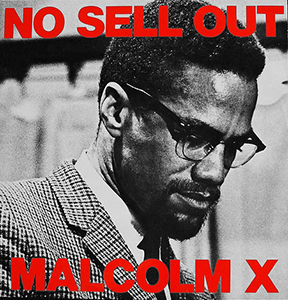
Photo-story montage of Malcolm X’s life, featuring archival images from his prison years, family moments, public speeches, travels, and activism, set to Keith LeBlanc’s 1984 track “No Sell Out” that samples his voice.
rbg4lif (bka RBGStreetScholar) operates RBG Communiversity, a blog and resource hub dedicated to Black Studies, Pan-African education, and Nationhood topics, regularly posting books, syllabi, videos, and materials on figures like Malcolm X, Amos N. Wilson, and historical resistance movements.
Pop the document out from the upper right to read / expand / download
Supplemental: On the Side of My People: A Religious Life of Malcolm X (eBook Preview, 38 pp.)
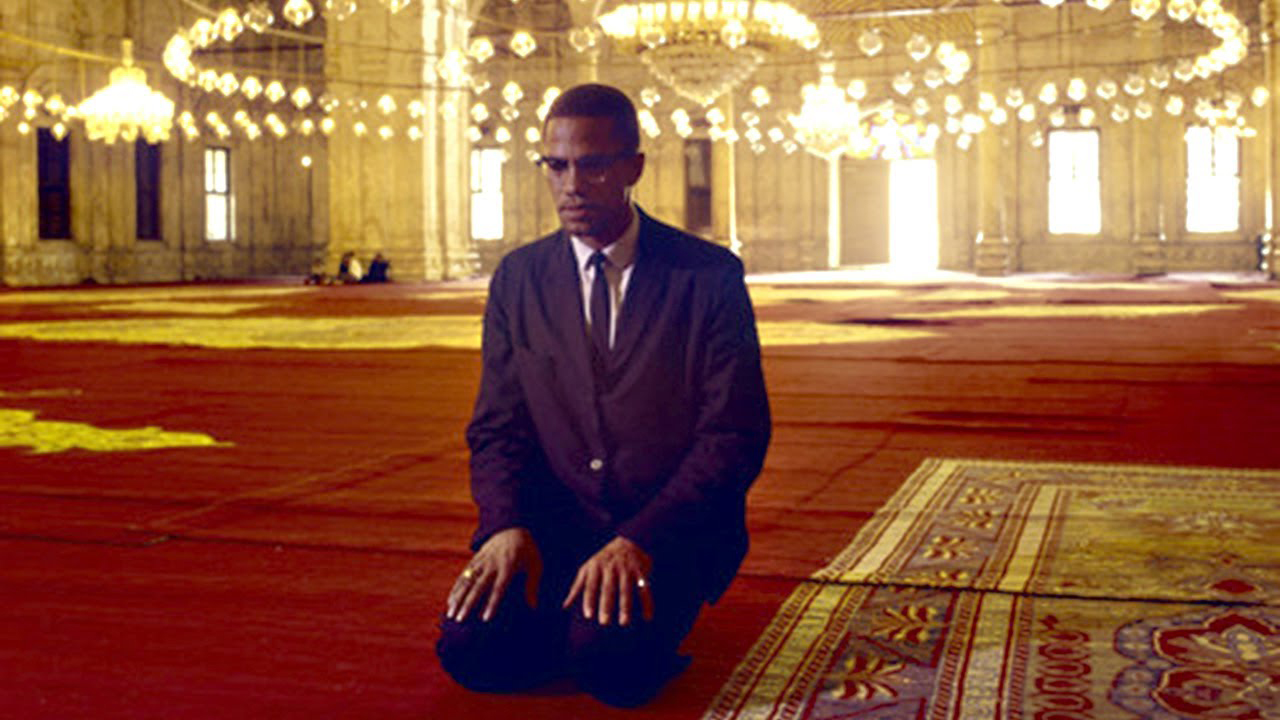
On the Side of My People: A Religious Life of Malcolm X is a groundbreaking biography written by Louis A. DeCaro Jr. and published by NYU Press in 1996. It stands out as the very first book-length evaluation of Malcolm X’s life focused strictly through a religious lens, reframing a figure who is most commonly analyzed through a purely political or cultural viewpoint.
Here is a structured overview of the book’s core focus, sources, and breakdown:
Core Objectives & Themes
1. Redemption and Spirituality: DeCaro presents Malcolm X as a “man of Allah” driven primarily by personal salvation and religious commitment rather than solely political ambitions.
2. Religious Evolution: The book examines his dual conversions—joining the Nation of Islam (NOI) in prison and later embracing orthodox Sunni Islam after his 1964 pilgrimage to Mecca—alongside his childhood roots, his 1959 Africa trip, and his final year of traditional practice.
3. Critical Analysis: It also analyzes The Autobiography of Malcolm X to understand how his life narrative was curated alongside Alex Haley.
Research Foundations
DeCaro constructs this spiritual portrait using primary materials including interviews with Wilfred Little, declassified FBI files, Black press archives, and audio recordings of speeches and sermons.
Main Chapter Directory
The 10-chapter structure traces his path from his ancestral and Garveyite roots through his early ministry, his split from the Nation of Islam, and his final year as a traditional Muslim convert.
Pop the document out from the upper right to read / expand / download
Abayomi Azikiwe-_-black-history-month-special, including on MX
The book fundamentally challenges the dominant narrative of the 1950s and 1960s Southern Civil Rights Movement, which often portrays the struggle as exclusively nonviolent. Umoja demonstrates that armed self-defense was not a contradiction to nonviolent organizing in Mississippi, but rather an essential component that protected activists, families, and communities from Black white-supremacist terror (such as the Ku Klux Klan and state-sanctioned violence).
Core Themes & Arguments
Protection of Nonviolent Organizers: Local Black Mississippians often provided armed security for nonviolent civil rights workers from organizations like SNCC (Student Nonviolent Coordinating Committee) and CORE (Congress of Racial Equality).
Grassroots Tradition: Armed resistance in Mississippi was deeply rooted in the culture and history of Black working-class communities and military veterans returning from WWII and the Korean War.
Key Organizations & Figures: The book details local self-defense efforts, including the formation of local militias and the role of groups like the Deacons for Defense and Justice, as well as prominent local leaders like Laura McGhee, E.W. Steptoe, and Hartman Turnbow.
Path to Black Power: Umoja traces how local experiences with self-defense directly informed the shift toward the broader Black Power movement in the mid-to-late 1960s.
About the Author
Akinyele Omowale Umoja is a professor of African American Studies at Georgia State University. He is an educator, author, and longtime activist in the New Afrikan Independence Movement.
Armed self-defense is the use of force—often including firearms—to protect oneself, family, or community from an imminent unlawful attack when the state cannot or will not provide protection. In U.S. history it has been both a legal right and a contested political strategy, especially in periods of official indifference to racial violence.In the Mississippi Freedom Movement that the shared book examines, historian Akinyele Omowale Umoja argues armed resistance was not a sideshow but essential. Local Black residents and veterans organized informal patrols and later groups modeled on the Deacons for Defense and Justice (founded 1964 in Jonesboro, Louisiana) to guard organizers, churches, and neighborhoods against Klan night riders and police-Klan collusion.
Umoja’s central claim is that this activity reduced fear, deterred attacks, and made nonviolent campaigns by SNCC, CORE, and the NAACP possible in places where federal protection was absent. Figures such as Medgar Evers privately favored organized self-defense; Freedom Summer field workers routinely encountered armed local people even while national leaders publicly preached nonviolence.
This pattern predates the 1960s. Robert F. Williams in Monroe, North Carolina, formed an NRA-chartered Black Armed Guard in the 1950s after Klan attacks and later wrote Negroes with Guns. Earlier still, Ida B. Wells and W.E.B. Du Bois endorsed armed protection against lynching. The common thread is that when local law enforcement sided with attackers, communities treated self-defense as a practical necessity rather than an ideological choice.
U.S. law treats self-defense as an affirmative defense with four core requirements: an imminent threat, a reasonable belief that force is necessary, proportionality, and (in most cases) that the defender did not initiate the confrontation. Every state recognizes some version of the castle doctrine—no duty to retreat inside one’s home. Roughly 30–38 states have added “stand your ground” statutes that remove the duty to retreat in any place a person is lawfully present. Duty-to-retreat states still exempt the home. These rules do not authorize preemptive or retaliatory violence; they only excuse force used against an immediate threat.
Empirical estimates of how often guns are used defensively vary sharply because of survey design. The National Crime Victimization Survey (NCVS) consistently finds 60,000–65,000 defensive firearm incidents per year, a small fraction of total violent crime. Private telephone surveys, most famously Kleck and Gertz (1995), have produced figures of 2 million or more. Methodological disputes—recall bias, what counts as a “use,” whether the incident was actually criminal—have never been fully resolved. Both sides agree that most reported defensive uses involve display rather than shots fired, and that the legal and physical risks after a shooting remain high.
The historical record and the statistical debate illustrate the same tension: armed self-defense can deter attackers and buy time when institutions fail, yet it also carries risks of escalation, misidentification, and unequal legal outcomes. In the specific setting of 1960s Mississippi, the evidence Umoja assembles suggests it functioned as a complement to, rather than a replacement for, political organizing and legal pressure. Contemporary arguments continue to turn on whether those conditions of state failure still exist and how the costs of private armed force should be weighed against its benefits.
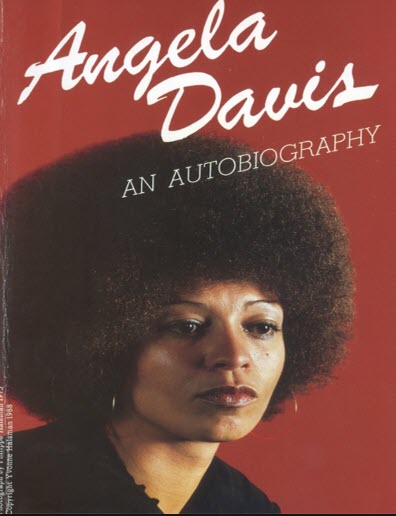
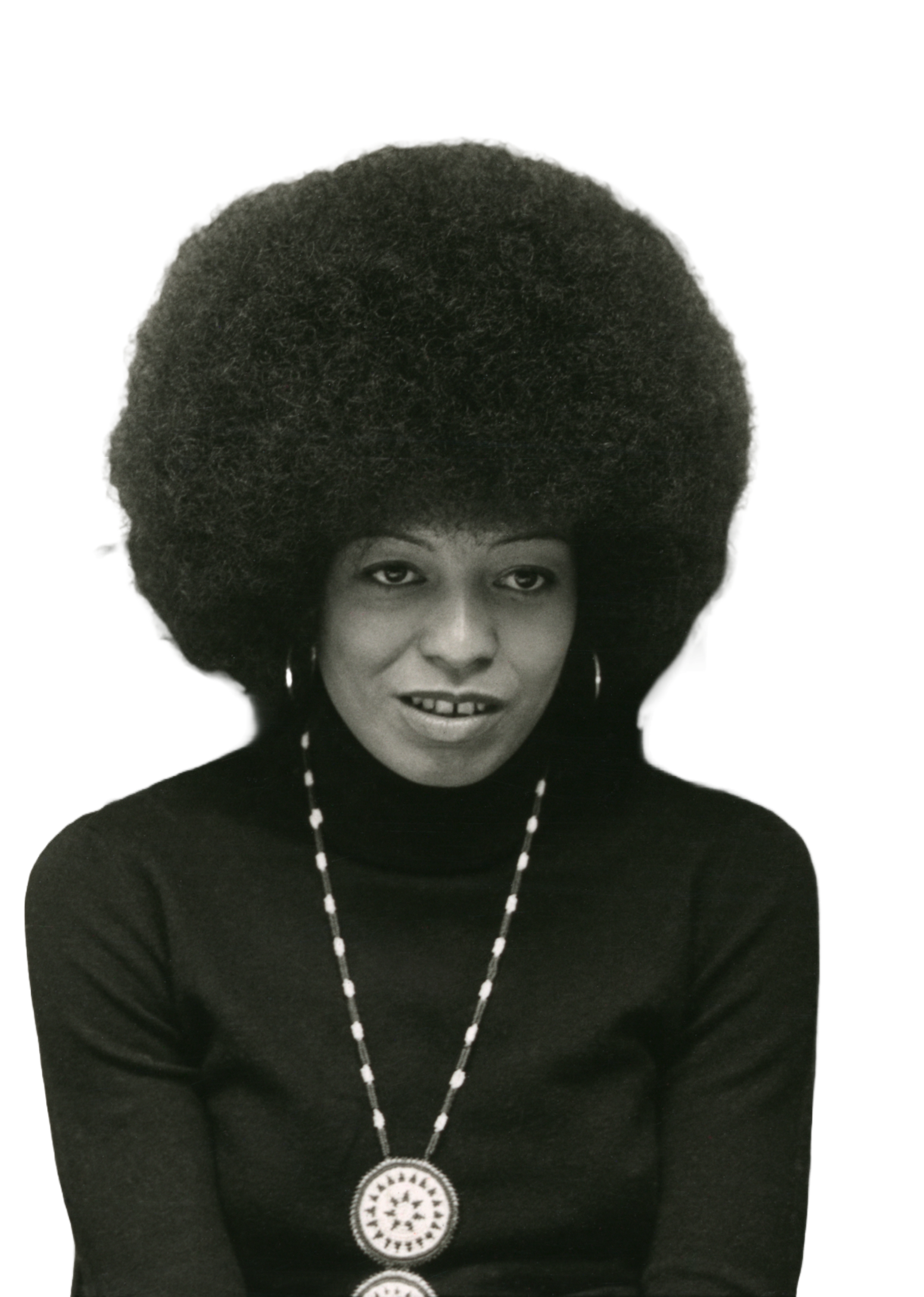
Angela Davis: An Autobiography (often simply titled An Autobiography) is a powerful political memoir by the renowned activist, scholar, and author Angela Y. Davis. First published in 1974 and edited by Toni Morrison (then an editor at Random House), it remains a classic account of the Black liberation movement, civil rights struggles, and resistance to systemic racism and political repression in the United States during the 1960s and early 1970s.
haymarketbooks.orgWhat the Book CoversWritten when Davis was in her late twenties, the autobiography is framed around her high-profile 1970–1972 ordeal: after guns registered to her were used in a deadly uprising at the Marin County Courthouse (linked to efforts to free the Soledad Brothers), she was charged with conspiracy, kidnapping, and murder, placed on the FBI’s Ten Most Wanted list, went underground, was arrested, imprisoned under harsh conditions, and ultimately acquitted by a jury in 1972.
supersummary.comIt flashes back to her childhood on “Dynamite Hill” in segregated Birmingham, Alabama (amid Jim Crow violence and Ku Klux Klan threats), her academic journey (including philosophy studies influenced by Marxism), her work as a UCLA professor targeted for her Communist Party membership, and her deep involvement in the Black Panther Party circles, the Che-Lumumba Club, and campaigns to free political prisoners like George Jackson.
haymarketbooks.orgTold with warmth, humor, brilliance, and conviction, the book emphasizes collective struggle over individual heroism. It highlights the intersections of racism, class oppression, sexism, and the prison system while advocating for political prisoners and broader liberation. Key themes include the carceral state, Marxist analysis in activism, community organizing, and the personal cost of resistance.
Later reprints: International Publishers and others (including a 1988 edition with Davis’s new introduction).
Current edition: Haymarket Books (ebook 2022; print May 2023). This beautiful reissue includes an expansive new introduction by Davis reflecting on its relevance today amid ongoing movements for racial justice, prison abolition, and radical change. It’s available in paperback (~$18–23), hardcover, and ebook formats. haymarketbooks.org
haymarketbooks.orgYou can find it at major bookstores, Haymarket Books directly (haymarketbooks.org), or libraries. It’s not just a personal story—it’s a call to understand and challenge the systems she fought (and still fights) against. If you’re looking for a specific summary of a chapter, quotes, analysis, or recommendations for related reading (like her later works such as Are Prisons Obsolete?), just let me know!
Angela Davis: An Autobiography eBook
Pop the documents out from the upper right to read / expand / download.
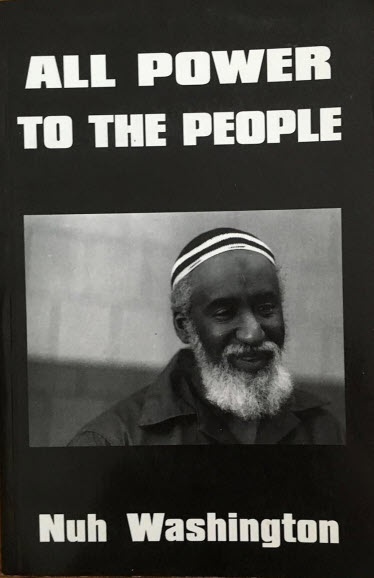
“All Power to the People” by Albert Nuh Washington is a significant work that explores the history and impact of the Black Panther Party (BPP) and the broader Black radical movement in the United States. Published in 2002, the book provides an in-depth analysis of the social, political, and economic conditions that gave rise to the BPP, as well as the party’s contributions to the struggle for civil rights and social justice. Washington draws on personal experiences, interviews, and historical narratives to highlight the achievements and challenges faced by the Black Panther Party, offering a critical perspective on its legacy and the continuing relevance of its ideals in contemporary society. The outline and overview that follows provides a structured look at the contents of “All Power to the People” by Albert Nuh Washington.
Outline
I. Introduction
A. Overview of the Black Panther Party’s significance
B. Purpose of the book and its relevance to contemporary social justice movements
C. Author’s background and perspective
II. Historical Context
A. The civil rights movement and its limitations
Key figures and events leading to the rise of the BPP
Challenges faced by African Americans in the 1960s
B. The influence of Black nationalism and radical thought
Connection to earlier movements (e.g., Marcus Garvey, the Nation of Islam)
Emergence of the Black Power movement
III. Formation of the Black Panther Party
A. Founding members and their motivations
Huey P. Newton and Bobby Seale
Key ideological influences
B. Development of the party’s platform and goals
The Ten-Point Program
Focus on community empowerment and social justice
IV. Key Activities and Programs
A. Community initiatives
Free breakfast programs for children
Health clinics and education programs
B. Armed self-defense and its implications
The philosophy of self-defense against police brutality
Impact on public perception and law enforcement responses
V. Internal Challenges and Conflicts
A. Struggles within the organization
Leadership disputes and factionalism
The influence of COINTELPRO and government repression
B. The impact of external pressures
Surveillance and infiltration by law enforcement
Media portrayal and public perception of the BPP
VI. Legacy of the Black Panther Party
A. Contributions to civil rights and social justice
Influence on later movements (e.g., Black Lives Matter)
Cultural impact through art, music, and literature
B. Ongoing relevance of BPP ideals
Discussion of systemic racism and inequality today
Calls for community empowerment and social change
VII. Conclusion
A. Summary of key themes and insights from the book
B. Reflection on the importance of understanding the BPP’s history
C. Call to action for continued activism and social justice
“All Power to the People” serves as a vital resource for understanding the history and legacy of the Black Panther Party and the broader struggle for racial and social justice in America. By examining the party’s origins, key initiatives, and challenges, Washington provides valuable insights into the ongoing fight against systemic oppression and the importance of community empowerment. The book encourages readers to reflect on the lessons of the past while inspiring continued activism in the pursuit of equality and justice.
“All Power to the People” is an essential examination of the Black Panther Party (BPP) and its pivotal role in the fight for civil rights and social justice in the United States. Here’s a more detailed exploration of the book’s themes, key figures, historical context, and its significance:
Detailed Exploration of Key Themes
1. Historical Context
Civil Rights Movement Limitations: Washington discusses the civil rights movement’s achievements, such as the Civil Rights Act and the Voting Rights Act, while highlighting its limitations in addressing systemic issues like poverty, police brutality, and economic inequality. The urgency for a more radical approach was felt by many African Americans, leading to the rise of the Black Panther Party.
Influence of Black Nationalism: The book places the BPP within the wider context of Black Nationalism and the Black Power movement, which emerged in the 1960s as a response to the perceived inadequacies of mainstream civil rights strategies. Washington emphasizes the influence of figures like Marcus Garvey and Malcolm X, who advocated for self-determination and empowerment for Black communities.
2. Formation and Ideology of the Black Panther Party
Founding Members: The BPP was founded in 1966 by Huey P. Newton and Bobby Seale in Oakland, California. Washington explores how their backgrounds and experiences shaped their vision for the party, particularly their commitment to armed self-defense against police violence.
The Ten-Point Program: A central feature of the BPP’s ideology was its Ten-Point Program, which outlined the party’s demands for justice, equality, and economic empowerment. Washington details each point, which included calls for decent housing, education, and employment, as well as an end to police brutality.
3. Community Programs and Activism
Social Initiatives: Washington highlights the BPP’s commitment to community service through programs like free breakfast for children, health clinics, and educational programs. These initiatives were designed to address the immediate needs of African American communities and demonstrate that the BPP was more than just a militant organization.
Armed Self-Defense: The book discusses the philosophy of armed self-defense that the BPP adopted in response to police brutality. Washington analyzes how the party’s public displays of armed self-defense were both a statement of empowerment and a catalyst for increased tensions with law enforcement.
4. Internal Struggles and External Pressures
Factionalism and Leadership Conflicts: Washington examines internal conflicts within the BPP, particularly the power struggles between different factions. These conflicts were exacerbated by the pressure from law enforcement and the FBI’s Counterintelligence Program (COINTELPRO), which sought to undermine the party through infiltration, disinformation, and surveillance.
Government Repression: The book details the various tactics used by law enforcement to suppress the BPP, including arrests, harassment, and violent confrontations. Washington underscores the impact of COINTELPRO in destabilizing the organization and contributing to its decline in the early 1970s.
5. Legacy and Ongoing Relevance
Cultural Impact: Washington discusses how the BPP’s ideals and aesthetics influenced music, art, and literature, leaving a lasting mark on African American culture. The party’s imagery and messages of empowerment continue to resonate in contemporary artistic expressions.
Influence on Modern Movements: The book draws connections between the BPP and contemporary movements such as Black Lives Matter, highlighting how the party’s focus on systemic injustice and community empowerment laid the groundwork for ongoing activism. Washington calls attention to the continuing struggle against racism, police violence, and inequality.
Significance of the Work
Educational Resource: “All Power to the People” serves as an important educational tool for understanding the complexities of the Black Panther Party and the broader Black radical movement. It provides a nuanced perspective that challenges mainstream narratives about the BPP as solely a militant organization.
Inspiration for Activism: Washington’s work encourages readers to reflect on the lessons of the past and recognize the importance of grassroots activism in effecting social change. The book emphasizes the need for community engagement and the importance of addressing systemic issues through collective action.
Reexamination of History: By providing a detailed account of the BPP’s history and its various programs, Washington invites readers to reconsider the legacy of the Black Panther Party and its contributions to the struggle for civil rights and social justice in America. It challenges readers to acknowledge the complexities of the BPP’s mission and its relevance in contemporary discussions about race and inequality.
Conclusion
“All Power to the People” by Nuh Washington is a vital contribution to the understanding of the Black Panther Party and the Black radical movement in the United States. Through its exploration of historical context, ideology, activism, and legacy, the book highlights the significance of the BPP in shaping the discourse around civil rights and social justice. Washington’s work serves as both a historical account and a call to action, inspiring readers to engage with the ongoing fight for equality and justice in today’s society.
All Power to the People by Albert Nuh Washington, eBook
Pop the document out from the upper right to read / expand / download.
All Power to the People by Albert Nuh Washington, Audiobook
Video Education_All Power To The People The Black Panther Party & Beyond
“The Huey P. Newton Reader” is a compilation of writings and speeches by Huey P. Newton, co-founder of the Black Panther Party. This collection offers a comprehensive look at Newton’s thoughts on race, social justice, and the revolutionary movements of the 1960s and 1970s. It includes a range of materials, from essays and manifestos to interviews and personal reflections, providing insight into Newton’s ideology and the principles that guided the Black Panther Party. The reader serves not only as an important historical document but also as a source of inspiration for contemporary movements advocating for social justice and equality.
Introduction
Overview of Huey P. Newton’s life and significance
Contextualization of the Black Panther Party and its impact on civil rights movements
Explanation of the purpose of the reader and its relevance today
Part 1: Early Writings
Chapter 1: Political Ideology
Exploration of Newton’s early political influences and formation of ideas
Discussion of the impact of Marxism and Black nationalism on his thought
Chapter 2: The Birth of the Black Panther Party
Account of the founding of the Black Panther Party in 1966
Analysis of the party’s original goals and community programs
Part 2: Key Speeches and Essays
Chapter 3: On Revolutionary Violence
Examination of Newton’s views on the necessity of armed self-defense
Discussion of the philosophical underpinnings of revolutionary violence
Chapter 4: The Role of the Black Panther Party
Insight into the functions and programs of the Black Panther Party
Analysis of the party’s approach to community service and empowerment
Part 3: Political Activism
Chapter 5: Engaging with the System
Discussion of Newton’s strategies for engaging with political systems and institutions
Examination of the party’s efforts to influence legislation and public policy
Chapter 6: Challenges and Confrontations
Overview of the challenges faced by the Black Panther Party, including government opposition
Reflection on Newton’s personal experiences with law enforcement and incarceration
Part 4: Personal Reflections
Chapter 7: The Personal and the Political
Exploration of the relationship between Newton’s personal life and his activism
Discussion of themes such as identity, community, and resilience
Chapter 8: Legacy and Continuing Struggles
Reflection on Newton’s enduring influence on contemporary social justice movements
Consideration of the ongoing relevance of his ideas in today’s context
Conclusion
Summary of Newton’s contributions to revolutionary thought and activism
Reflection on the importance of the Black Panther Party in shaping discussions around race and justice
Call to action for future generations to engage in the ongoing struggle for equality and justice
Significance of the Book
“The Huey P. Newton Reader” is an essential resource for understanding the ideology and activism of one of the most influential figures in the civil rights movement. Through his writings and speeches, Newton articulates a vision for social justice that continues to resonate today. The reader serves as both a historical account of the Black Panther Party’s efforts and a source of inspiration for those advocating for systemic change and equality. By engaging with Newton’s work, readers can gain a deeper appreciation for the complexities of the struggle for civil rights and the ongoing fight against oppression.
“The Huey P. Newton Reader” is a significant compilation that sheds light on the life, thoughts, and activism of Huey P. Newton, co-founder of the Black Panther Party. This book not only serves as a historical record but also as a vital resource for understanding the ideological foundations of one of the most influential revolutionary movements in American history. Here’s a deeper exploration of the book’s key themes, contributions, and the impact of Newton’s work:
Key Themes Explored
Revolutionary Ideology
Newton’s writings reflect a blend of Marxist thought and Black nationalism, emphasizing the need for a revolutionary approach to address systemic oppression faced by Black communities. He discusses the importance of understanding the socio-economic conditions that perpetuate inequality.
The book articulates the idea that true liberation requires not only political change but also a transformation of the underlying economic structures that disadvantage marginalized groups.
Self-Defense and Armed Resistance
A prominent theme in Newton’s work is the necessity of armed self-defense against police brutality and systemic violence. He argues that Black communities have the right to protect themselves from oppression and that revolutionary violence may be justified in the pursuit of justice.
This perspective was pivotal in shaping the Black Panther Party’s identity, as they organized armed patrols to monitor police activity and protect community members.
Community Empowerment and Services
Newton highlights the importance of community programs as a means of empowerment. The Black Panther Party initiated various social programs, including free breakfast programs for children, health clinics, and educational initiatives aimed at uplifting the community.
Newton’s writings emphasize the belief that self-determination and community control are essential for achieving lasting change, advocating for grassroots organizing and direct action.
Critique of Capitalism and Imperialism
The reader includes critiques of capitalist systems, which Newton argues are inherently exploitative and contribute to the oppression of marginalized groups. He draws connections between domestic issues and global struggles against imperialism, advocating for solidarity among oppressed peoples worldwide.
This global perspective is significant, as it situates the struggles of Black Americans within a broader context of anti-colonial and anti-imperialist movements.
Personal Reflection and Identity
Newton’s writings often reflect on his personal experiences, struggles, and growth as a leader. He candidly discusses the challenges of leadership, the toll of activism on his personal life, and the importance of maintaining a sense of identity amidst the pressures of revolutionary work.
By sharing his personal journey, Newton humanizes the struggle for civil rights and invites readers to understand the emotional and psychological dimensions of activism.
Contributions to Civil Rights Discourse
Empowerment of Black Women
Although the book primarily focuses on Newton’s perspective, it also acknowledges the critical roles played by women within the Black Panther Party. Women like Angela Davis and Ericka Huggins were instrumental in shaping the party’s initiatives and ideology, and Newton’s writings reflect an awareness of the need for gender equity within the movement.
Legacy of the Black Panther Party
“The Huey P. Newton Reader” serves as a vital resource for understanding the legacy of the Black Panther Party, particularly its influence on subsequent social justice movements. Newton’s ideas continue to resonate in contemporary discussions surrounding police brutality, systemic racism, and community activism.
The book encourages readers to critically engage with the history of the Black Panther Party and consider how its principles can inform current struggles for equity and justice.
Impact of Newton’s Work
Inspiration for Activism
Newton’s writings inspire a new generation of activists by demonstrating the importance of political education, community organizing, and the need for a revolutionary approach to social justice. His emphasis on self-determination resonates with contemporary movements advocating for racial and economic justice.
The book serves as a call to action, encouraging readers to understand their role in the ongoing fight against oppression and to engage in meaningful activism.
Educational Resource
As a compilation of Newton’s key writings, the reader is a valuable educational resource for students, scholars, and anyone interested in the history of civil rights and social justice. It provides insight into the ideological foundations of the Black Panther Party and the broader context of the civil rights movement.
Conclusion
“The Huey P. Newton Reader” is more than just a collection of writings; it is a testament to the enduring struggle for justice and equality. Huey P. Newton’s insights into revolution, community empowerment, and the complexities of race and identity continue to inspire and challenge readers today. By engaging with Newton’s work, individuals can gain a deeper understanding of the historical and contemporary struggles for social justice, encouraging a commitment to activism and advocacy in the pursuit of a more equitable society.
“The Huey P. Newton Reader”_eBook
Pop the documents out from the upper right to read / expand / download.
“The Huey P. Newton Reader”_Audiobook
Learn more in RBG Communiversity Knowledge Media eLibrary:








You must be logged in to post a comment.