Patrice Lumumba: Africa’s Lost Leader , by Leo Zeilig_eBook and Audiobook, with RBG| Patrice Lumumba Video Edu. Player

Patrice Lumumba (1925–61) was one of the most famous leaders of the African Independence Movement. After his murder, he became an icon of anti-imperialist struggle, and his picture, along with those of Che Guevara and Ho Chi Minh, was brandished around the world at demonstrations in the 1960s.

Book Summary

“Patrice Lumumba: Africa’s Lost Leader” by Leo Zeilig is a comprehensive examination of the life, political career, and legacy of Patrice Lumumba, the first Prime Minister of the Democratic Republic of the Congo. Zeilig’s work delves into the complexities of Lumumba’s leadership, the geopolitical context of his time, and the enduring significance of his vision for African independence and unity.

Key Themes and Insights:

  1. Historical Context:
    • Zeilig places Lumumba’s life within the broader historical framework of colonialism and the struggle for independence in Africa. He highlights the impact of European colonialism on the Congo and the socio-political conditions that led to Lumumba’s rise as a nationalist leader.
  2. Political Ideology:
    • The book explores Lumumba’s political ideology, which was rooted in anti-colonialism and Pan-Africanism. Zeilig reflects on Lumumba’s belief in self-determination, national sovereignty, and the need for a united Africa free from external influence.
  3. Leadership and Challenges:
    • Zeilig details Lumumba’s tenure as Prime Minister, focusing on the immediate challenges he faced, including regional secessionist movements, internal political strife, and foreign intervention. The author emphasizes Lumumba’s commitment to maintaining national unity despite these obstacles.
  4. Cold War Dynamics:
    • The book examines Lumumba’s position within the Cold War context, highlighting how his alignment with the Soviet Union alarmed Western powers, particularly the United States and Belgium. Zeilig discusses the geopolitical interests that influenced the response to Lumumba’s government.
  5. Assassination and Aftermath:
    • Zeilig provides a detailed account of the events leading to Lumumba’s assassination in January 1961. He discusses the role of Western powers in orchestrating Lumumba’s downfall and the implications of his death for the Congo and the broader African liberation movement.
  6. Legacy and Symbolism:
    • The author reflects on Lumumba’s enduring legacy as a symbol of African resistance and nationalism. Zeilig argues that Lumumba’s vision continues to inspire contemporary movements for social justice and independence across the continent.
  7. Critique of Neo-Colonialism:
    • Zeilig critiques the ongoing effects of neo-colonialism in Africa, drawing connections between Lumumba’s experiences and the current political landscape. He emphasizes the need for continued vigilance against foreign intervention in African affairs.

Conclusion

“Patrice Lumumba: Africa’s Lost Leader” by Leo Zeilig is a vital contribution to the understanding of one of Africa’s most significant figures. Through thorough research and analysis, Zeilig sheds light on Lumumba’s aspirations, struggles, and the broader implications of his life for the continent’s quest for independence. The book serves as both a historical account and a critical reflection on the challenges faced by post-colonial African nations, making it an essential read for those interested in African history, politics, and the legacy of decolonization. Leo Zeilig provides a thorough exploration of Lumumba’s life, the political environment of the Congo during his time, and the profound implications of his leadership and untimely death.

Here are some more detailed insights and themes from the book:

Detailed Insights and Themes

  1. Lumumba’s Early Life:
    • Zeilig delves into Lumumba’s formative years, discussing how his upbringing in a colonized society shaped his views on justice, equality, and national identity. His experiences with colonial oppression fueled his passion for political activism and his commitment to fighting for Congolese rights.
  2. Formation of Political Identity:
    • The book examines how Lumumba’s political identity developed within the context of the Congolese independence movement. His involvement with the Mouvement National Congolais (MNC) was pivotal, as it provided a platform for articulating his vision for a free and united Congo.
  3. Independence and National Unity:
    • Lumumba’s ascent to power coincided with the Congo’s independence from Belgium on June 30, 1960. Zeilig emphasizes Lumumba’s efforts to promote national unity among the diverse ethnic groups within the Congo, advocating for a strong central government to combat regionalism and fragmentation.
  4. Cold War Politics:
    • The book highlights the role of Cold War dynamics in shaping Lumumba’s political landscape. Zeilig discusses how Lumumba’s alignment with the Soviet Union was perceived as a threat by Western powers, leading to intensified efforts to undermine his government. This geopolitical context is crucial for understanding the complexities of Lumumba’s tenure.
  5. Regional Secession and Internal Strife:
    • Zeilig details the challenges Lumumba faced from regional leaders, notably in Katanga, where secessionist movements were supported by Belgian interests. The author illustrates how Lumumba’s attempts to quell these movements were met with resistance, complicating his efforts to govern effectively.
  6. Assassination:
    • The book provides a harrowing account of the events leading to Lumumba’s assassination. Zeilig explores the roles played by various actors, including Belgian officials, the CIA, and local political figures, in orchestrating his downfall. He portrays Lumumba’s assassination not just as a personal tragedy, but as a significant event in the history of African independence.
  7. Posthumous Recognition:
    • Zeilig discusses how Lumumba’s legacy has evolved since his death. Initially vilified by some, he has since been recognized as a martyr for African independence. The author examines how Lumumba’s ideals have been embraced by contemporary leaders and movements seeking social justice and decolonization.
  8. Critique of Neo-Colonialism:
    • The book emphasizes the persistence of neo-colonialism in Africa, drawing parallels between Lumumba’s struggles and the ongoing challenges faced by African nations today. Zeilig argues that Lumumba’s vision of true independence and self-determination remains relevant in the contemporary political landscape.
  9. Cultural Impact:
    • Zeilig also highlights Lumumba’s impact on African culture and identity. Lumumba has become a symbol of resistance, inspiring artists, writers, and activists who seek to reclaim African narratives and challenge colonial legacies.

Conclusion

In “Patrice Lumumba: Africa’s Lost Leader,” Leo Zeilig provides a nuanced and in-depth examination of one of Africa’s most iconic figures. The book serves not only as a biography of Lumumba but also as a critical analysis of the broader political and social dynamics of post-colonial Africa. Through Lumumba’s story, Zeilig addresses themes of nationalism, the impact of foreign intervention, and the ongoing struggle for justice and equality in African societies. This work is essential for understanding the historical context of African independence movements and the legacy of leaders like Lumumba, whose vision continues to resonate today.

Patrice Lumumba: Africa’s Lost Leader_eBook

Pop the document out from the upper right to read / expand / download.

Patrice Lumumba: Africa’s Lost Leader_Audiobook

RBG| Patrice Lumumba Video Edu. Player

9 Video Playlist

Learn more in RBG Communiversity Knowledge Media eLibrary:

A Certain Amount of Madness: The Life Politics and Legacies of Thomas Sankara, Edited by Amber Murrey (Black Critique)_eBook and Audiobook, with From Thomas Sankara to Captain Ibrahim Traore Video Player

Book Summary

“A Certain Amount of Madness: The Life Politics and Legacies of Thomas Sankara,” edited by Amber Murrey, is a comprehensive examination of the life and enduring impact of Thomas Sankara, the revolutionary leader of Burkina Faso. Sankara, who served as president from 1983 until his assassination in 1987, is celebrated for his radical policies aimed at achieving social justice, economic self-sufficiency, and anti-imperialism. This anthology brings together a diverse range of essays and reflections from scholars, activists, and thinkers who explore Sankara’s political philosophy, his vision for Africa, and the continuing relevance of his ideas in contemporary struggles for justice and equality. Through this collection, the editors aim to honor Sankara’s legacy while also encouraging critical dialogue about the challenges and possibilities for revolutionary change in the present day.

The outline that follows captures the main themes and structure of “A Certain Amount of Madness,” highlighting the critical discussions within the anthology regarding Thomas Sankara’s legacy and its significance for contemporary social justice movements. The book serves as an important resource for understanding the complexities of revolutionary thought and the ongoing fight for justice and equality in Africa and beyond.

I. Introduction

  • Overview of the book’s purpose: to explore the life, politics, and legacy of Thomas Sankara
  • Introduction to Amber Murrey as the editor and her significance in the discourse on African political thought
  • The importance of examining Sankara’s contributions to contemporary movements for social justice

II. Historical Context of Sankara’s Leadership

  • Examination of Burkina Faso’s political landscape prior to Sankara’s rise to power
  • Overview of Sankara’s military background and his ascent within the political sphere
  • Discussion of the socio-economic conditions that prompted Sankara’s revolutionary vision

III. Sankara’s Political Philosophy

  • Analysis of Sankara’s revolutionary ideology, including his views on socialism, nationalism, and anti-imperialism
  • Exploration of his emphasis on self-reliance and economic independence for African nations
  • Discussion of Sankara’s approach to leadership and governance, including his commitment to transparency and accountability

IV. Policies and Reforms Under Sankara

  • Examination of key policies implemented during Sankara’s presidency, including land reform, education, healthcare, and women’s rights
  • Insights into Sankara’s efforts to combat corruption and promote environmental sustainability
  • Discussion of the challenges and successes of these policies in transforming Burkina Faso

V. The Role of Women in Sankara’s Vision

  • Exploration of Sankara’s commitment to gender equality and the empowerment of women
  • Analysis of policies aimed at improving women’s rights and participation in governance
  • Discussion of the impact of these policies on societal attitudes toward gender roles in Burkina Faso

VI. Sankara’s International Relations and Anti-Imperialism

  • Examination of Sankara’s foreign policy, including his relationships with other African nations and global powers
  • Analysis of his stance against neo-colonialism and imperialism, and his advocacy for pan-African solidarity
  • Insights into Sankara’s participation in international forums and his influence on global anti-imperialist movements

VII. Legacy and Memory of Sankara

  • Discussion of the circumstances surrounding Sankara’s assassination and its aftermath
  • Exploration of how Sankara’s legacy is remembered in Burkina Faso and beyond, including cultural representations and commemorations
  • Analysis of the ongoing relevance of Sankara’s ideas in contemporary social and political movements

VIII. Reflections on Revolutionary Change

  • Critical reflections on the lessons learned from Sankara’s life and leadership
  • Discussion of the challenges facing contemporary movements for social justice and how Sankara’s legacy can inform current struggles
  • Exploration of the notion of revolutionary change in the context of modern political realities

IX. Conclusion

  • Summary of key themes and insights from the anthology
  • Reflection on the enduring significance of Thomas Sankara’s ideas and actions for current and future generations
  • A call to action for continued advocacy and engagement in the pursuit of justice, equality, and revolutionary change

“A Certain Amount of Madness: The Life Politics and Legacies of Thomas Sankara,” edited by Amber Murrey, offers an in-depth exploration of one of Africa’s most iconic revolutionary leaders, Thomas Sankara. Known as the “African Che Guevara,” Sankara’s presidency in Burkina Faso from 1983 until his assassination in 1987 was marked by transformative policies aimed at addressing social inequalities, fostering economic independence, and promoting pan-African solidarity. This anthology not only honors Sankara’s legacy but also critically engages with his ideas and their relevance in contemporary political contexts.

Key Themes and Insights

  1. Historical Context of Burkina Faso:
    • The anthology begins by situating Sankara within the historical and political landscape of Burkina Faso prior to his leadership. It discusses the colonial legacy and the socio-economic challenges the country faced, including poverty, illiteracy, and dependency on foreign aid.
    • Contributors provide insights into the conditions that allowed for Sankara’s rise to power, including his military background and the revolutionary atmosphere of the early 1980s.
  2. Political Philosophy and Ideology:
    • Sankara’s political philosophy is a central theme throughout the book. His commitment to socialism, nationalism, and anti-imperialism is thoroughly analyzed, showcasing his vision for a self-reliant African continent.
    • The anthology highlights Sankara’s rejection of neo-colonialism and his advocacy for African unity, reflecting his belief that true independence could only be achieved through collective action and solidarity among African nations.
  3. Innovative Policies and Reforms:
    • The book delves into the key policies implemented during Sankara’s presidency, such as land reform, which aimed to redistribute land to peasants and promote agricultural self-sufficiency.
    • Contributors discuss his ambitious health and education initiatives, which significantly improved literacy rates and access to healthcare, particularly for marginalized communities.
    • Sankara’s efforts to combat environmental degradation and promote sustainable development are also highlighted as integral components of his governance.
  4. Empowerment of Women:
    • One of the most notable aspects of Sankara’s leadership was his commitment to gender equality. The anthology explores how he championed women’s rights, promoting policies that aimed to improve women’s social and economic status.
    • Contributors analyze the impact of these policies on societal attitudes toward women and their roles in governance, illustrating how Sankara’s vision sought to dismantle patriarchal structures.
  5. International Relations and Anti-Imperialism:
    • Sankara’s foreign policy, characterized by a commitment to pan-Africanism and anti-imperialism, is examined in detail. The book discusses his relationships with other African leaders and his advocacy for solidarity among African nations against external exploitation.
    • The anthology provides insights into how Sankara’s international stance resonated with global anti-colonial movements, reinforcing his status as a prominent figure in the struggle against imperialism.
  6. Assassination and Legacy:
    • The circumstances surrounding Sankara’s assassination in 1987 and its implications for Burkina Faso are critically analyzed. Contributors discuss the political climate that led to his death and the subsequent impact on the country and the broader region.
    • The anthology reflects on how Sankara’s legacy is remembered today, including cultural representations, commemorations, and the ongoing influence of his ideas on contemporary social movements.
  7. Contemporary Relevance:
    • A significant portion of the anthology is dedicated to exploring the relevance of Sankara’s ideas in current struggles for justice and equality. Contributors draw connections between Sankara’s vision and contemporary issues such as globalization, social inequality, and environmental challenges.
    • The discussions emphasize the need for renewed revolutionary spirit and collective action to address the injustices that persist in today’s world.
  8. Lessons for Future Generations:
    • The anthology concludes with reflections on the lessons learned from Sankara’s life and leadership. Contributors encourage readers to engage with his teachings and apply them to contemporary struggles for justice, advocating for a commitment to revolutionary change in the face of adversity.
    • The call to action emphasizes the importance of grassroots organizing, community engagement, and solidarity in the pursuit of a more equitable world.

Conclusion

“A Certain Amount of Madness” is a crucial contribution to the understanding of Thomas Sankara’s legacy and its significance for contemporary social justice movements. The anthology showcases a diverse range of perspectives that not only celebrate Sankara’s achievements but also engage critically with the complexities of his policies and ideas.

By illuminating the historical context, political philosophy, and lasting impact of Sankara’s leadership, the book serves as an important resource for scholars, activists, and anyone interested in the ongoing fight for justice, equality, and revolutionary change. It encourages readers to draw inspiration from Sankara’s vision as they navigate the challenges of the present and work towards a more just and liberated future.

A Certain Amount of Madness_eBook

Pop the documents out from the upper right to read / expand / download.

A Certain Amount of Madness_Audiobook

Audio start corresponds to page 12 of the above Reader.

From Thomas Sankara to Captain Ibrahim Traore Video Player

13 Video Playlist

Learn more in RBG Communiversity Knowledge Media eLibrary:

Revolutionary Suicide, by Huey P. Newton, Introduction by Fredrika Newton _ eBook and Audiobook, with Huey P Newton: Rare Footage Clips and Interviews

Ho Che Anderson (Illustrator)

Book Summary

“Revolutionary Suicide” is an autobiographical work by Huey P. Newton, co-founder of the Black Panther Party, which details his life experiences, political philosophy, and the struggles of the Black community in America. The book combines personal narrative with a broader analysis of systemic racism, oppression, and the fight for social justice. Through his reflections, Newton articulates the concept of “revolutionary suicide” as a means of resisting oppression and asserting identity, emphasizing the need for revolutionary change to achieve true liberation. The introduction by Fredrika Newton provides context for Newton’s life and highlights his legacy as a revolutionary leader.

Essential Themes and Historical Context:

  1. Introduction by Fredrika Newton
    • Overview of Huey P. Newton’s life and significance
    • Contextualization of the Black Panther Party’s mission and impact
    • Introduction to the themes of the book
  2. Early Life and Influences
    • Newton’s childhood and upbringing in Oakland, California
    • Family background and early experiences with racism
    • Influences that shaped his political consciousness
  3. Formation of the Black Panther Party
    • The founding of the Black Panther Party in 1966
    • Key principles and goals of the organization
    • The role of community programs and initiatives
  4. Philosophy of Revolutionary Suicide
    • Explanation of the concept of “revolutionary suicide”
    • The significance of self-determination and resistance
    • Discussion of the philosophical underpinnings of Newton’s beliefs
  5. Struggle Against Oppression
    • Analysis of systemic racism and police brutality in America
    • Accounts of confrontations with law enforcement
    • The impact of the FBI’s COINTELPRO on the Black Panther Party
  6. Personal Experiences and Challenges
    • Newton’s arrest and legal battles
    • Reflections on leadership and the responsibilities of revolutionaries
    • The challenges faced by the Black Panther Party in the 1970s
  7. Legacy and Impact
    • Examination of Newton’s influence on future generations of activists
    • The continuing relevance of his ideas in contemporary struggles for justice
    • Reflection on the Black Panther Party’s legacy in the fight for civil rights
  8. Conclusion
    • Summary of key themes and messages from Newton’s narrative
    • Call for continued activism and dedication to social change

Revolutionary Suicide_eBook

The searing, visionary memoir of founding Black Panther Huey P. Newton, in a dazzling graphic package. Tracing the birth of a revolutionary, Huey P. Newton’s famous and oft-quoted autobiography is as much a manifesto as a portrait of the inner circle of America’s Black Panther Party. From Newton’s impoverished childhood on the streets of Oakland to his adolescence and struggles with the system, from his role in the Black Panthers to his solitary confinement in the Alameda County Jail, Revolutionary Suicide is unrepentant and thought-provoking in its portrayal of inspired radicalism.

Pop the documents out from the upper right to read / expand / download.

Revolutionary Suicide_Audiobook Part 1

Revolutionary Suicide_Audiobook Part 2

Huey P Newton: Rare Footage Clips and Interviews

Learn more in RBG Communiversity Knowledge Media eLibrary:

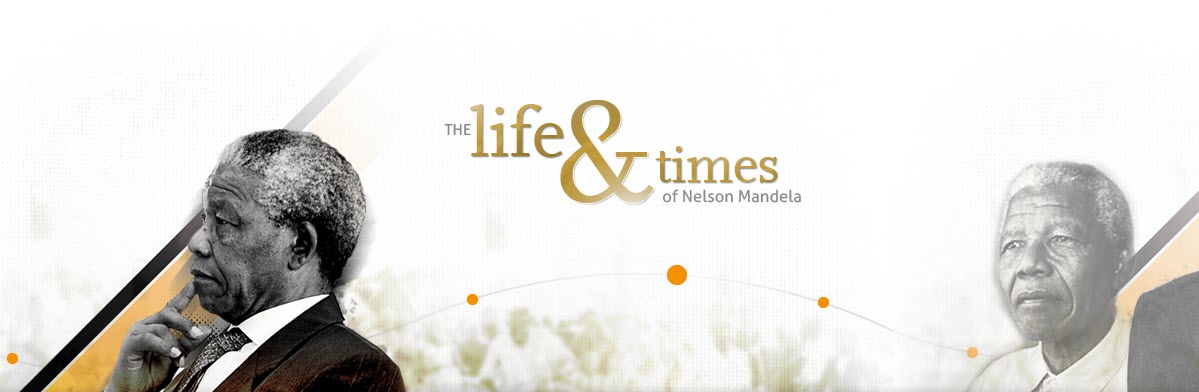
Nelson Mandela | Video Education Player, Long Walk to Freedom Audiobook and eBook, and Introduction to Spirit of Mandela

Credits: Long Walk to Freedom Cover (©1994, by Nelson Rolihlahla Mandela)

Nelson Mandela | Video Education Player

10 Video Playlist

Long Walk to Freedom Audiobook

11 Video Playlist (Audio reading corresponds to page 15 and foward for the Reader below.)

Long Walk to Freedom eBook

Nelson Mandela was one of the great moral and political leaders of his time: an international hero whose lifelong dedication to the fight against racial oppression in South Africa won him the Nobel Peace Prize and the presidency of his country. After his triumphant release in 1990 from more than a quarter-century of imprisonment, Mandela was at the center of the most compelling and inspiring political drama in the world. As president of the African National Congress and head of South Africa’s antiapartheid movement, he was instrumental in moving the nation toward multiracial government and majority rule. He is still revered everywhere as a vital force in the fight for human rights and racial equality.
Long Walk to Freedom is his moving and exhilarating autobiography, destined to take its place among the finest memoirs of history’s greatest figures. Here for the first time, Nelson Rolihlahla Mandela told the extraordinary story of his life — an epic of struggle, setback, renewed hope, and ultimate triumph.

Pop the documents out from the upper right to read / expand / download.

Nelson Mandela Foundation

Introduction to “Spirit of Mandela”

Spirit of Mandela is a campaign to bring international attention to U.S. human rights violations of Black, Brown, Indigenous People, and U.S. held political prisoners.

Clickable Photo
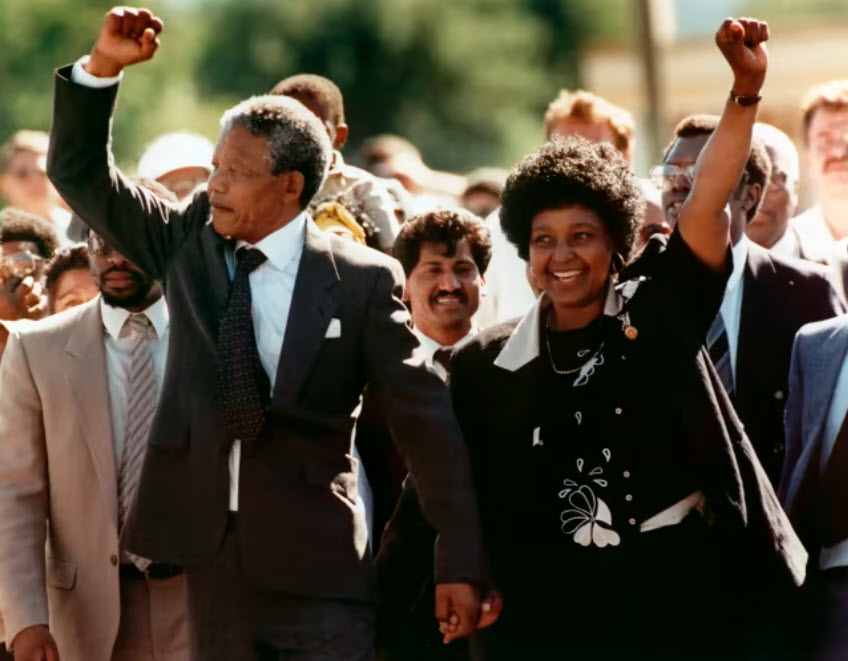
Credits: AP 2020. FILE – In this Feb. 13, 1990 file photo, Nelson Mandela and his wife, Winnie Madikizela-Mandela, gesture as they arrive at Soccer City Stadium in Soweto, South Africa two days after after being released after serving 27 years in prison. Mandela’s release set off joyous celebrations and violent clashes as supporters welcomed Mandela back from years in jail. (AP Photo/Udo Weitz, File)
The Peoples’ Senate is a national cohesive network of people reflective of poor and working-class communities across the United States; joined together to protect, champion, and uphold the human rights of Black, Brown, and Indigenous people, and by doing so, ensure the human rights of all people.https://spiritofmandela.org/intro-peoples-senate

Companion Post/Lessons

WE STILL CHARGE GENOCIDE: Spirit of Mandela International Tribunal (October 22-25, 2021)

Learn more in RBG Communiversity Knowledge Media eLibrary| Nelson Mandela Folder

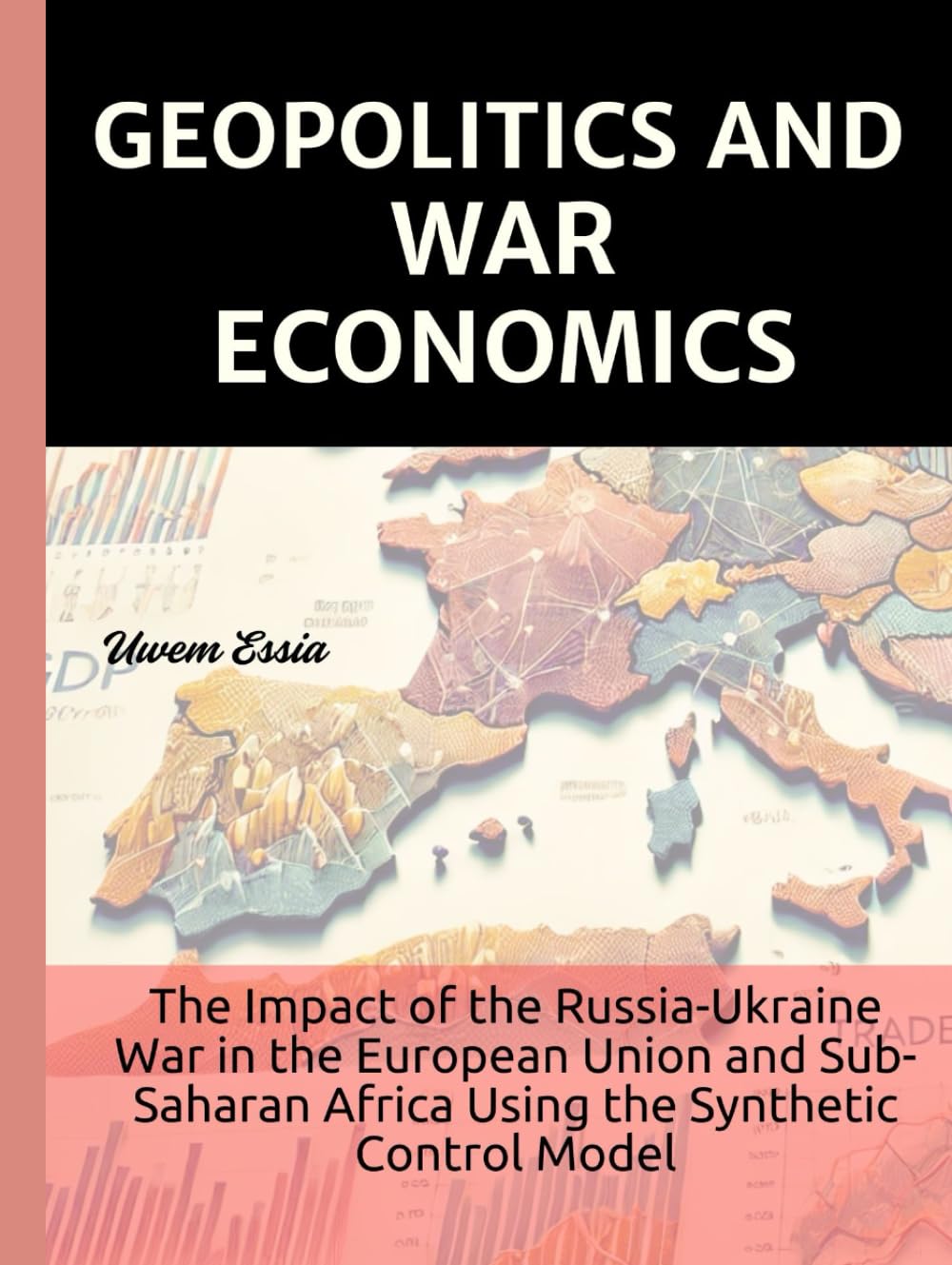
GEOPOLITICS AND WAR ECONOMICS: The Impact of the Russia-Ukraine War in the European Union and Sub-Saharan Africa Using the Synthetic Control Model, by Uwem Essia (Part of Peacebuilding and Development Series), with Solid Video Education

Part of: Peacebuilding and Development (21 books)

Book Summary

“GEOPOLITICS AND WAR ECONOMICS: The Impact of the Russia-Ukraine War in the European Union and Sub-Saharan Africa Using the “Synthetic Control Model” by Uwem Essia examines the far-reaching consequences of the Russia-Ukraine conflict on economic and geopolitical dynamics, particularly focusing on the European Union (EU) and Sub-Saharan Africa. Utilizing the Synthetic Control Model, the book provides a rigorous analysis of how the war has affected various economic indicators, trade relations, and geopolitical strategies in these regions. Essia delves into the interconnectedness of global economies and the implications of conflict on international relations, offering insights into how nations can navigate the complexities of a rapidly changing geopolitical landscape.

The outline that follows captures the essence of “GEOPOLITICS AND WAR ECONOMICS,” highlighting its focus on the economic and geopolitical impacts of the Russia-Ukraine conflict on the European Union and Sub-Saharan Africa. The book utilizes a rigorous methodological framework to provide valuable insights into the complexities of international relations and the challenges posed by geopolitical conflicts.

  • Introduction
  • Overview of the geopolitical context of the Russia-Ukraine war
  • Explanation of the significance of studying its impact on the EU and Sub-Saharan Africa
  • Introduction to the Synthetic Control Model as a methodological approach
  • Geopolitical Background
  • Historical context of Russia-Ukraine relations leading up to the conflict
  • Overview of key players in the EU and Sub-Saharan Africa
  • Analysis of the geopolitical implications of the war on global power dynamics
  • Methodology
  • Detailed explanation of the Synthetic Control Model
  • Justification for using this model to analyze economic impacts
  • Description of data sources and variables considered in the analysis
  • Impact on the European Union
  • Examination of economic repercussions within EU member states
    • Changes in trade patterns and energy dependency
    • Economic sanctions and their effects on EU economies
  • Analysis of political responses and shifts in foreign policy
    • Increased military expenditure and defense strategies
    • Solidarity measures among EU countries in response to the war
  • Impact on Sub-Saharan Africa
  • Assessment of the economic impact of the war on Sub-Saharan African nations
    • Disruptions in trade and supply chains, particularly in agriculture and energy
    • Inflationary pressures and food security concerns
  • Exploration of geopolitical ramifications for African nations
    • Shifts in alliances and foreign relations with Russia and Western nations
    • The role of African nations in global discussions about the conflict
  • Comparative Analysis
  • Comparison of the short-term and long-term effects of the war on the EU and Sub-Saharan Africa
  • Identification of common challenges faced by both regions due to the conflict
  • Insights into how different regions adapt to geopolitical shocks
  • Policy Implications
  • Recommendations for policymakers in the EU and Sub-Saharan Africa
    • Strategies for enhancing economic resilience and diversification
    • Approaches for strengthening regional cooperation and solidarity
  • Considerations for future geopolitical stability and security
  • Conclusion
  • Summary of key findings and insights from the analysis
  • Reflection on the broader implications of the Russia-Ukraine war for global geopolitics
  • Final thoughts on the importance of understanding the interconnectedness of global economies

“GEOPOLITICS AND WAR ECONOMICS” by Uwem Essia provides a comprehensive analysis of how the ongoing conflict between Russia and Ukraine has reshaped economic and geopolitical landscapes, particularly in the European Union (EU) and Sub-Saharan Africa. The book leverages the Synthetic Control Model, a quantitative method that allows for a robust evaluation of causal effects, to assess the war’s impact on various economic indicators and political dynamics in these regions.

Key Themes Explored

  • Geopolitical Context and Historical Background
  • The book begins by situating the Russia-Ukraine conflict within a broader historical context, examining prior relations between Russia and Ukraine and the factors leading to the escalation of tensions.
  • It explores how the war has redefined geopolitical alignments, with a focus on the shifting dynamics within the EU as member states respond to the crisis.
  • Methodological Framework
  • The Synthetic Control Model is central to Essia’s analysis, providing a framework for estimating what the economic outcomes would have been in the absence of the conflict. This method is particularly useful for assessing the impact of events that are not easily replicable or controlled for.
  • The author details the specific data sources used, including economic indicators and trade statistics, and explains how these variables were selected to construct the synthetic control groups for both the EU and Sub-Saharan Africa.
  • Economic Impact on the European Union
  • Essia investigates the immediate and long-term economic repercussions of the war on EU member states, such as:
    • Disruptions in trade flows, particularly concerning energy supplies, as many EU countries rely heavily on Russian gas and oil.
    • The imposition of sanctions on Russia, which had significant ripple effects on EU economies, including inflation and supply chain issues.
  • The analysis also covers shifts in the EU’s defense spending and military cooperation in response to perceived threats, as well as changes in foreign policy aimed at enhancing collective security.
  • Economic Impact on Sub-Saharan Africa
  • The book highlights the often-overlooked effects of the Russia-Ukraine conflict on Sub-Saharan African nations. Key points include:
    • The disruption of agricultural exports, particularly grains like wheat, which has exacerbated food insecurity in a region already vulnerable to climate change and economic instability.
    • Rising prices for essential goods, leading to inflationary pressures that affect the livelihoods of millions.
  • Essia discusses how Sub-Saharan African countries are navigating the geopolitical landscape, often balancing their relationships with both Western nations and Russia.
  • Comparative Analysis and Insights
  • The comparative analysis section synthesizes the findings from the two regions, identifying similarities and differences in how they are affected by the war.
  • Essia highlights common challenges, such as the need for economic diversification and resilience against external shocks, while also noting the distinct geopolitical strategies employed by the EU and Sub-Saharan Africa.
  • Policy Recommendations
  • The author provides actionable recommendations for policymakers in both regions, suggesting:
    • Economic diversification strategies to reduce dependency on single sources of energy or commodities.
    • Enhanced regional cooperation to build resilience against future geopolitical shocks.
    • The importance of engaging in diplomatic efforts to mitigate the conflict and its repercussions on global stability.

Conclusion and Broader Implications

  • Reflections on Global Interconnectedness
  • In the conclusion, Essia reflects on the interconnected nature of today’s global economy and how localized conflicts can have far-reaching implications.
  • He emphasizes that understanding the economic and geopolitical consequences of the Russia-Ukraine war is essential for anticipating future challenges and opportunities in international relations.
  • Future Geopolitical Stability
  • The book ends with a call for ongoing research and dialogue to address the complexities of global geopolitics, stressing the importance of adapting to changing dynamics in an increasingly multipolar world.

Overall, “GEOPOLITICS AND WAR ECONOMICS” offers a thorough and insightful examination of the ramifications of the Russia-Ukraine conflict, using a sophisticated methodological approach to shed light on the pressing economic and geopolitical issues facing the EU and Sub-Saharan Africa. By connecting the dots between conflict, economics, and international relations, Uwem Essia provides valuable perspectives that contribute to our understanding of contemporary global challenges.

“GEOPOLITICS AND WAR ECONOMICS: The Impact of the Russia-Ukraine War in the European Union and Sub-Saharan Africa Using the Synthetic Control Model” by Uwem Essia_eBook

Pop the document out from the upper right to read / expand / download

Geopolitics, Economics, War and Fall of U.S. Empire_Video Education 1

35 Video Playlist

U.S. Geopolitics and Economy _Dr. Paul Craig Roberts_Video Education 2

21 Video Playlist

Learn more in RBG Communiversity Knowledge Media eLibrary:

Geopolitics, Economics, War and Fall of U.S. Empire