
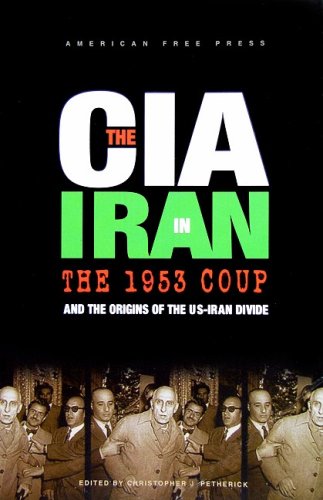
Book Summary
“The CIA in Iran: The 1953 Coup, the Origins of the US-Iran Divide” by Christopher J. Petherick explores the historical events surrounding the 1953 coup d’état in Iran, orchestrated by the CIA and British intelligence, which resulted in the overthrow of Prime Minister Mohammad Mossadegh. The book examines the political, social, and economic factors that led to the coup, its immediate aftermath, and its long-term implications for U.S.-Iran relations. By providing a detailed analysis of the coup’s origins and consequences, Petherick sheds light on how this pivotal moment has shaped the ongoing tensions between the United States and Iran.
The outline that follows captures the main themes and structure of “The CIA in Iran: The 1953 Coup, the Origins of the US-Iran Divide”, highlighting the historical significance of the coup and its lasting effects on the relationship between the United States and Iran. The book serves as an important resource for understanding the complexities of U.S.-Iran relations in the context of historical events.
I. Introduction
- Overview of the significance of the 1953 coup in Iran
- Introduction to the main themes of the book: U.S. intervention, Iranian nationalism, and the impact on bilateral relations
II. Historical Context
A. Pre-Coup Iran
- Political landscape in Iran before 1953
- Role of foreign powers, particularly Britain and the U.S.
B. Rise of Mohammad Mossadegh
- Mossadegh’s vision for Iran and nationalization of oil
- Popular support and political challenges he faced
III. The Coup Planning and Execution
A. U.S. and British Involvement
- Origins of the CIA’s interest in Iran
- Cooperation with British intelligence and the oil crisis
B. The Execution of the Coup
- Key events leading to the coup on August 19, 1953
- Role of propaganda and public manipulation
- Aftermath: Initial chaos and reestablishment of the monarchy
IV. Immediate Consequences
A. Impact on Iranian Society
- Changes in political power structures
- Rise of the Shah’s regime and its authoritarianism
B. U.S.-Iran Relations Post-Coup
- Shift in U.S. foreign policy towards Iran
- Initial benefits and long-term repercussions of U.S. support for the Shah
V. Long-Term Implications
A. Seeds of Distrust
- Growing anti-American sentiment in Iran
- The role of the coup in shaping Iranian nationalism
B. The 1979 Revolution
- Connection between the coup and the Islamic Revolution
- How the coup’s legacy influenced revolutionary sentiments
VI. Conclusion
- Summary of key points and themes
- Reflection on the lasting impact of the 1953 coup on U.S.-Iran relations
- Call for understanding historical context in current geopolitical discussions
“The CIA in Iran: The 1953 Coup, the Origins of the US-Iran Divide” provides a comprehensive examination of a pivotal moment in Iranian history that has had lasting repercussions on U.S.-Iran relations. Here’s a more detailed exploration of the book’s themes, context, and significance:
Detailed Exploration of Key Aspects
I. Historical Context
- Pre-Coup Iran:
- The book begins by setting the stage for the political landscape in Iran prior to the 1953 coup. This includes a discussion of the influence of foreign powers, particularly Britain, which had significant interests in Iranian oil.
- The Anglo-Iranian Oil Company (AIOC) dominated the Iranian oil industry, causing resentment among Iranians who felt their national resources were being exploited.
- Rise of Mohammad Mossadegh:
- The author details Mossadegh’s ascent to power, highlighting his nationalistic vision for Iran and his commitment to the nationalization of the oil industry. This move was highly popular among the Iranian populace but antagonized both British and American interests.
- Petherick explores Mossadegh’s political challenges, including opposition from both the Shah and conservative factions within Iran, as well as the growing tension with Western powers.
II. The Coup Planning and Execution
- U.S. and British Involvement:
- Petherick delves into the collaboration between the CIA and British intelligence, focusing on how the coup was conceived and executed under the code name Operation Ajax.
- The author discusses the political motivations behind U.S. involvement, including the Cold War context and the fear of Iranian communism, which led to concerns about a leftist government in Iran.
- Execution of the Coup:
- The book provides a detailed narrative of the coup itself, describing the events leading up to August 19, 1953. The author emphasizes the role of propaganda, misinformation, and street violence orchestrated by both the U.S. and British agents.
- Petherick also highlights the immediate aftermath of the coup, which saw the reinstatement of the Shah, leading to initial chaos and instability within Iran.
III. Immediate Consequences
- Impact on Iranian Society:
- Following the coup, the author examines how the political power dynamics shifted, leading to the establishment of a repressive regime under the Shah. This period was marked by political purges, censorship, and the suppression of dissent.
- The book discusses the impact on various segments of Iranian society, including the growing disillusionment among the populace and the erosion of democratic institutions.
- U.S.-Iran Relations Post-Coup:
- Petherick explores the implications of U.S. support for the Shah, including how it shaped U.S. foreign policy in the region and established Iran as a key ally during the Cold War.
- The author reflects on the initial benefits perceived by the U.S. government, such as access to Iranian oil and a strategic partner in the Middle East, but warns that these came at the cost of long-term stability.
IV. Long-Term Implications
- Seeds of Distrust:
- The book emphasizes how the 1953 coup sowed the seeds of distrust and resentment towards the United States among Iranians. Petherick analyzes how this distrust has persisted over the decades and influenced Iranian politics and society.
- The author discusses the rise of anti-American sentiment, particularly as the Shah’s regime became increasingly authoritarian and disconnected from the concerns of ordinary Iranians.
- The 1979 Revolution:
- Petherick connects the events of the coup to the Islamic Revolution of 1979, arguing that the legacy of U.S. intervention played a significant role in shaping revolutionary sentiments.
- The author illustrates how the coup became a rallying point for various factions within Iran, contributing to the eventual overthrow of the Shah and the establishment of the Islamic Republic.
V. Conclusion
- In the conclusion, Petherick summarizes the key themes of the book, reiterating the importance of understanding the historical context of the 1953 coup to fully grasp the complexities of U.S.-Iran relations today.
- The book serves as a reminder of the dangers of foreign intervention and the unintended consequences that can arise from such actions, urging readers to consider the lessons learned from this pivotal moment in history.
Significance of the Book
- Historical Insight: The book provides a thorough analysis of a critical event that not only shaped Iranian history but also had profound implications for U.S. foreign policy in the Middle East. It highlights the interplay between domestic politics and international relations.
- Educational Resource: “The CIA in Iran” serves as an important resource for understanding the roots of contemporary tensions between the U.S. and Iran. It is particularly relevant for students and scholars of history, political science, and international relations.
- Reflection on Intervention: Petherick’s work prompts reflection on the ethics of foreign intervention and the long-term consequences of such actions, encouraging readers to critically evaluate current geopolitical strategies and their impacts on global stability.
Overall, “The CIA in Iran: The 1953 Coup, the Origins of the US-Iran Divide” is a significant contribution to the scholarship on U.S.-Iran relations and a valuable narrative that illuminates the complexities of historical events and their lasting effects on international politics.

The CIA in Iran-The 1953 Coup, the Origins of the US-Iran Divide_eBook
Pop the documents out from the upper right to read / expand / download.
 RBG Communiversity: Message 2 Da Grassroots
[…] The CIA in Iran-The 1953 Coup, the Origins of the US-Iran Divide” by Christopher J. Petherick_eBook and Audiobook, with Video Education Player […]
LikeLike
[…] The CIA in Iran-The 1953 Coup, the Origins of the US-Iran Divide by Christopher J. Petherick_eBook a… […]
LikeLike