
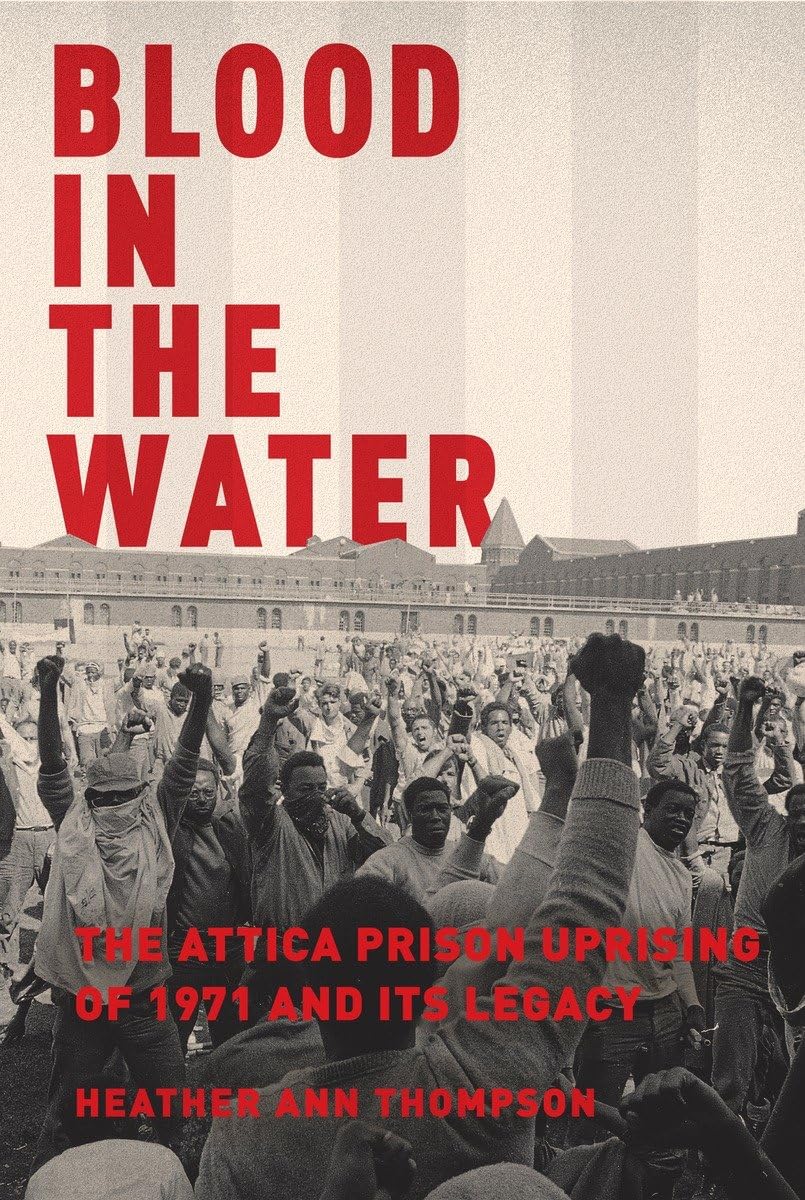
Book Summary
“Blood in the Water” offers a detailed account of the Attica prison uprising, which occurred in September 1971, and its aftermath. The book explores the conditions that led to the rebellion, the events during the uprising, the violent retaking of the prison, and the long-lasting implications for the American prison system and civil rights. Thompson combines extensive research, including firsthand accounts, legal documents, and archival materials, to present a comprehensive narrative that highlights the struggles for justice and the fight against systemic racism within the prison system.
This outline provides a structured view of the book’s contents, highlighting the key themes and events that Thompson addresses in her exploration of the Attica prison uprising and its lasting effects on amerikkkan society.
- Introduction
- Historical context of Attica prison
- Overview of the prison conditions in the 1970s
- Significance of the uprising in American history
- Chapter 1: Background of the Prison System
- Description of Attica’s conditions
- Overview of inmates’ grievances
- Racial dynamics within the prison
- Chapter 2: The Uprising Begins
- Timeline of events leading to the rebellion
- Key figures involved in the uprising
- Initial demands of the inmates
- Chapter 3: The Hostage Crisis
- Hostage situations and negotiations
- Media coverage and public perception
- The role of prison officials and state authorities
- Chapter 4: The Retaking of Attica
- Government response and planning
- The violent retaking of the prison
- Casualties and injuries during the retaking
- Chapter 5: Aftermath of the Uprising
- Legal repercussions for inmates and officials
- Impact on the families of hostages and inmates
- Public and political response to the violence
- Chapter 6: The Legacy of Attica
- Changes in prison policies and practices
- Ongoing issues of prison reform and justice
- Influence on future movements for inmates’ rights
- Chapter 7: Reflections on Justice and Accountability
- Analysis of systemic racism in the prison system
- The importance of remembering Attica’s legacy
- Calls for continued activism and reform
- Conclusion
- Summary of key themes and insights
- Relevance of the Attica uprising in contemporary society
- Final thoughts on justice and human rights
Blood in the Water: The Attica Prison Uprising of 1971 and Its Legacy_eBook
On September 9, 1971, nearly 1,300 prisoners took over the Attica Correctional Facility in upstate New York to protest years of mistreatment. Holding guards and civilian employees hostage, the prisoners negotiated with officials for improved conditions during the four long days and nights that followed.
On September 13, the state abruptly sent hundreds of heavily armed troopers and correction officers to retake the prison by force. Their gunfire killed thirty-nine men—hostages as well as prisoners—and severely wounded more than one hundred others. In the ensuing hours, weeks, and months, troopers and officers brutally retaliated against the prisoners. And, ultimately, New York State authorities prosecuted only the prisoners, never once bringing charges against the officials involved in the retaking and its aftermath and neglecting to provide support to the survivors and the families of the men who had been killed.
Drawing from more than a decade of extensive research, historian Heather Ann Thompson sheds new light on every aspect of the uprising and its legacy, giving voice to all those who took part in this forty-five-year fight for justice: prisoners, former hostages, families of the victims, lawyers and judges, and state officials and members of law enforcement. Blood in the Water is the searing and indelible account of one of the most important civil rights stories of the last century.
Pop the documents out from the upper right to read / expand / download.
Blood in the Water: The Attica Prison Uprising of 1971 and Its Legacy_Audiobook
Part 1
Audio start in earnest (Introduction @ 5 mins. 20 sec.) and corresponds to page 11 of the above Reader.
 RBG Communiversity: Message 2 Da Grassroots