The Sixteenth Round: From Number 1 Contender to Number 45472, By Rubin Hurricane Carter _Documentary and eBook and Supplemental_A Study of the Black Fighter, By Nathan Hare-From_The Best from The Black Scholar

Last Updated 06-02-2026

Rubin “Hurricane” Carter was riding a wave of success. The survivor of a difficult youth, he rose to become a top contender for the middleweight boxing crown. But his career crashed to a halt on May 26, 1967, when he and another man were found guilty of the murder of three white people and sentenced to three consecutive life terms.


Photo Credit: https://nmaahc.si.edu/object/nmaahc_2018.45.2
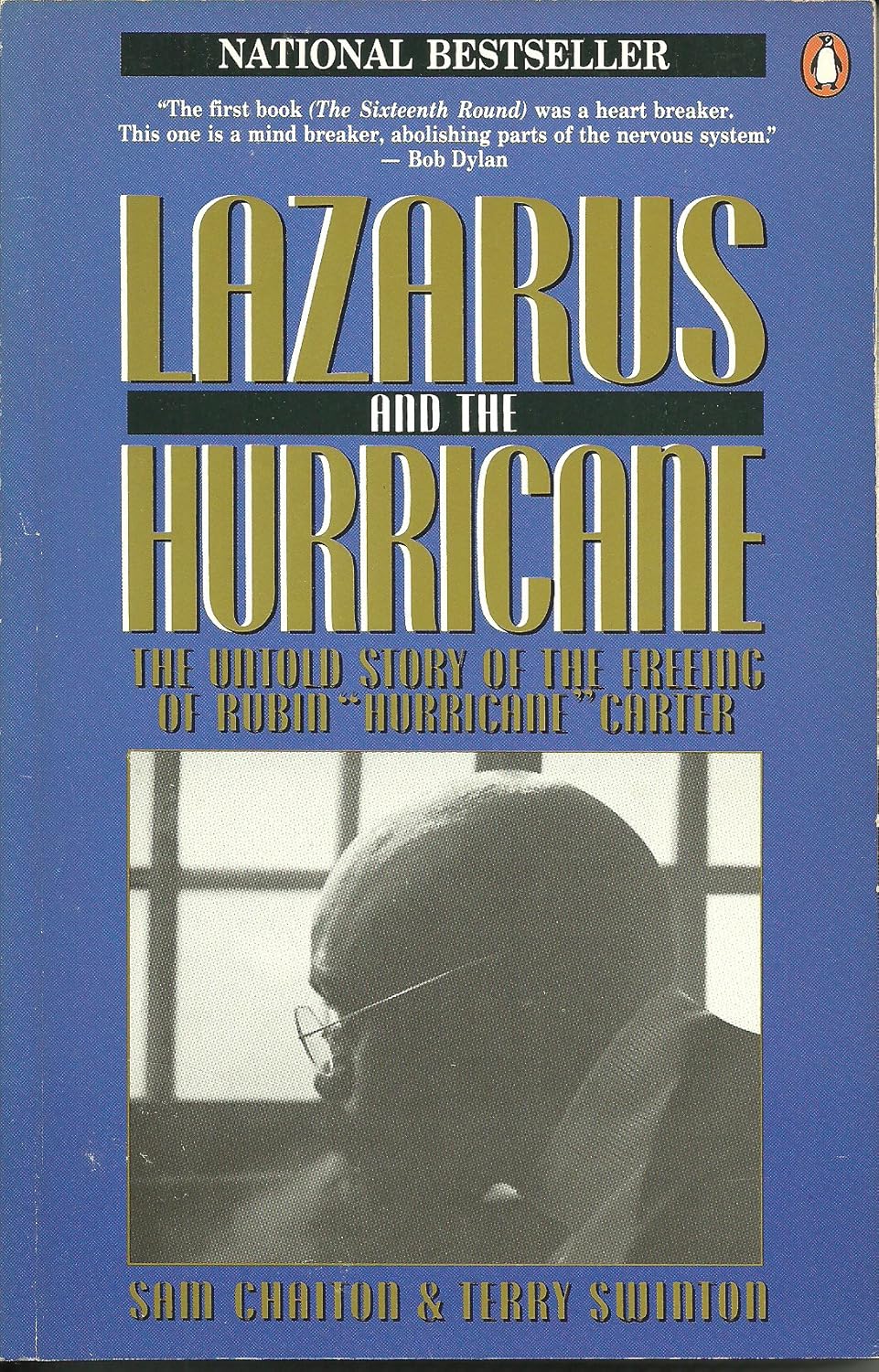
This remarkable true story begins in a Brooklyn ghetto when a group of Canadians meets Lesra (Lazarus), an illiterate black teenager who wins their hearts. They end up bringing him to Toronto to help with his education, and while learning to read, Lesra finds a copy of Rubin “Hurricane” Carter’s The Sixteenth Round. It was a book destined to change Lesra’s life forever, and the lives of his adopted family.Rubin Carter, the subject of Bob Dylan’s song “Hurricane,” was a number one middleweight boxing contender who had been wrongfully imprisoned after a white jury found him guilty of the murder of three whites in 1966. A huge public outcry followed the publication of The Sixteenth Round in 1974, culminating in a retrial, which was a virtual reenactment of the original travesty, with Carter receiving the same triple life sentence.
Moved by Lesra’s passion, his adopted Canadian family contacted Carter and reinvigorated the legal battle. The inspiring relationship that ensued forms the heart of Lazarus and the Hurricane–a riveting legal drama, fast-paced murder investigation, and above all, a moving account of hope, humanity, and the indomitability of the human spirit. Amazon

Pop the document out from the upper right to read / expand / download.

Written from prison and first published in 1974, The Sixteenth Round chronicles Hurricane’s journey from the ring to solitary confinement. The book was his cry for help to the public, an attempt to set the record straight and force a new trial. Bob Dylan wrote his classic anthem “Hurricane” about his struggle, and Muhammad Ali and thousands of others took up his cause. The power of Carter’s voice, as well as his ironic humor, makes this an eloquent, soul-stirring account of a remarkable life.

Pop the document out from the upper right to read / expand / download.

Eye of the Hurricane: My Path from Darkness to Freedom by Rubin “Hurricane” Carter , Ken Klonsky , Nelson Mandela (Foreword)

Supplemental_A Study of the Black Fighter, By Nathan Hare

Pop the document out from the upper right to read / expand / download.

Dr. Gerald Horne_Armed Struggle: Panthers and Communists, Black Nationalists and Liberals in southern California, Through the Sixties and Seventies

Dr. Gerald Horne is an author and historian who currently holds the John J. and Rebecca Moores Chair of History and African American Studies at the University of Houston. He joins us from Houston to discuss his latest book, “Armed Struggle: Panthers and Communists, Black Nationalists and Liberals in southern California, Through the Sixties and Seventies” which is published by International Publishers.

International Publishers Book Description:

Southern California has been a leader nationally in fomenting radicalism. The Communist Party had one of its strongest units there, buoyed by influence in Hollywood. Yet, this region also has been a stalwart of the Black Liberation Movement, as suggested by the importance of the Watts Uprising of 1965 in Los Angeles and the concomitant ascendancy of the Black Panther Party, whose leaders—e.g., Eldridge Cleaver and George Jackson—had roots in Pasadena. Angela Davis, accused in the early 1970s of murder, kidnapping, and conspiracy, was not only a bridge between the CP and BPP, but studied in San Diego before teaching at UCLA.

Black Nationalism flourished in the Southland: “Kwanzaa,,” a popular holiday, was born there. Given the prominence of Black celebrities in the region, the NAACP chapter in the area was a cash cow for the entire organization and shaped policy accordingly, including their disastrous capitulation to the Red Scare.

In this exhaustively researched book, Gerald Horne sketches the apparent paradox of some African Americans turning to armed struggle at a time when it appeared that Jim Crow was retreating. He draws critical distinctions between armed propaganda, armed self-defense—and armed struggle— all of which he places in a global context of anti-war activism, the Cold War, and African liberation.

Activist News Network

Black Liberation Media