Black Nationalism in America_A Comprehensive History, John H. Bracy, Jr. etal. w a MX Video Introduction and Dr. John Bracey, Jr.’s work & its impact on Black studies: #TheBlackTable w/ Dr. Greg Carr | S1 E17

Last Updated September, 20, 2026

“Academically this book (1970s) is known as one of the most comprehensive and authoritative of its kind.”

Black Nationalism in America

Black Nationalism in America (1970) is a documentary anthology edited by John H. Bracey, Jr., August Meier, and Elliott Rudwick, published by Bobbs-Merrill in The American Heritage Series.⁠

The user’s phrasing (“A Comprehensive History” and “Bracy”) is a common variant of the actual title and spelling. It is not a single-author narrative history; it is a sourcebook of primary documents with a substantial editors’ introduction that traces Black nationalist ideas across American history.

Publication details

Editors: John H. Bracey, Jr. (historian and activist), August Meier (historian), Elliott Rudwick (sociologist)

Year: 1970

Publisher: Bobbs-Merrill (Indianapolis)

John H. Bracey, Jr. (1941–2023) later became a longtime professor in the W.E.B. Du Bois Department of Afro-American Studies at UMass Amherst and helped build one of the early doctoral programs in the field.⁠Wikipedia

What the book is

It collects 77 documents—speeches, manifestos, letters, newspaper pieces, convention proceedings, poems, and organizational statements—from the late 1700s through the late 1960s. Reviewers at the time noted it as the first collection devoted exclusively to Black nationalism and as an attempt to show that 1960s slogans such as “Black Power” and “Black is Beautiful” had a long prior lineage.⁠Freedomarchives

The editors treat Black nationalism as a recurring set of ideas that take different forms: racial solidarity, cultural nationalism, religious nationalism, economic nationalism (both bourgeois and socialist), political nationalism (reformist and revolutionary), territorial separatism, and Pan-Africanism. Those forms are not treated as mutually exclusive.

Organization

The documents are grouped into historical phases:

Origins — Black churches, mutual-benefit societies, the press, early pleas for racial unity, colonization schemes

Maturation — Antebellum Colored conventions, revolutionary nationalism, colonization, cultural nationalism

Flowering — Race pride and solidarity, territorial separatism and emigration, W. E. B. Du Bois, cultural nationalism, a “Negro national anthem”

Eclipse

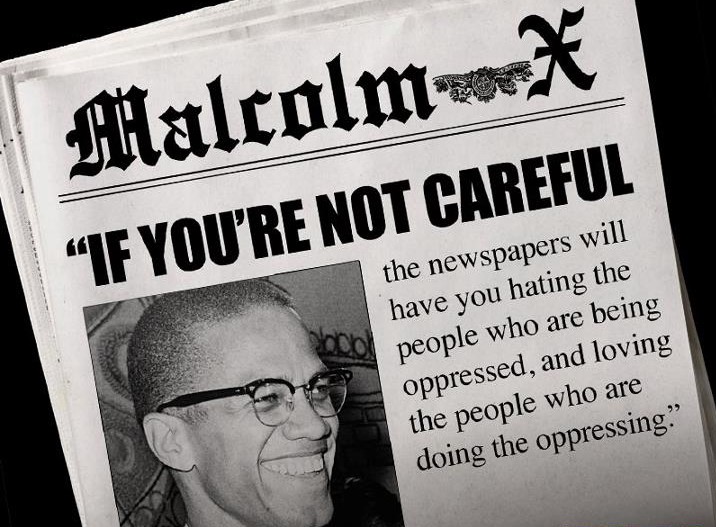
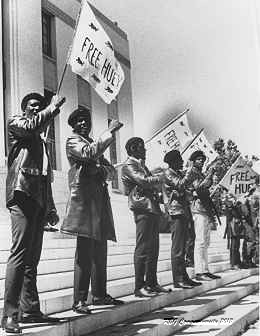
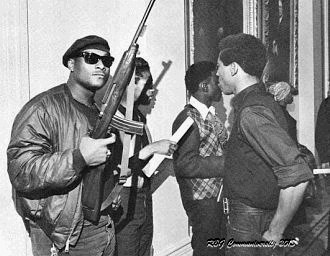
Revival — Nation of Islam, Malcolm X, cultural revolution, Black Power, Black capitalism, revolutionary nationalism (including material associated with groups such as RAM and the Black Panthers)⁠

Figures range from well-known names (Henry Highland Garnet, Marcus Garvey, Malcolm X, Eldridge Cleaver) to less-cited writers, plus nationalist strains the editors find in Frederick Douglass, Booker T. Washington, and Du Bois.

Availability

A digitized copy is on the Internet Archive (search the title plus the editors’ names). Physical copies appear in many academic libraries; used copies circulate through used-book sellers. It remains a standard reference for primary sources on the subject even though later monographs have refined definitions and chronology.

If you need a table of contents, a particular document from the volume, comparison with later surveys (e.g., Mark Newman’s 2018 overview or Dean E. Robinson’s work), or help locating a specific edition, say which you want.

RBG Commun. Search Results for: Black Nationalism

Pop-out and open the book in the pdf reader of your choice once you land in the preview by hoovering top center for access to hypertext TOC
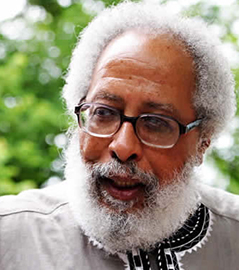
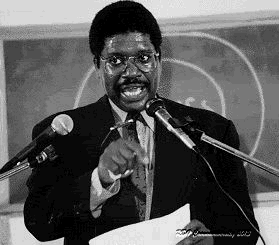
John Bracey Jr.
Legacy of John Bracey Jr, Black Studies Pioneer

Summarize Bracey’s life and work

John H. Bracey Jr. was a civil-rights activist and pioneering scholar whose teaching and writing helped establish African American Studies as a major academic field.

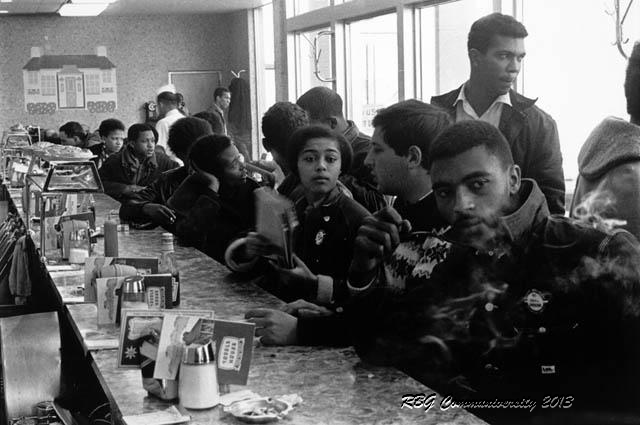
Born in Chicago in 1941 and raised in Washington, D.C., during the Jim Crow era, Bracey studied at Howard University before earning a bachelor’s degree from Roosevelt University in 1964 and pursuing graduate work at Roosevelt and Northwestern.2 As a student activist in 1960s Chicago, he participated in sit-ins, marches, and the Black Liberation and peace movements.3 He was among the approximately 10,000 demonstrators at the 1963 Grant Park protest challenging Mayor Richard Daley’s handling of racial inequality.

In 1972, Bracey joined the University of Massachusetts Amherst, where he taught for more than 50 years in the W.E.B.5 Du Bois Department of Afro-American Studies. He helped create one of the country’s earliest doctoral programs in African American Studies and directed and chaired the African Diaspora Studies graduate certificate.6 His work combined scholarship, mentorship, and advocacy for Black Studies.

Bracey wrote and edited influential works on Black history, politics, culture, and voting rights, including Black Nationalism in America, African American Women and the Vote: 1837–1965, African American Mosaic, and SOS—Calling All Black People: A Black Arts Movement Reader.8 He also wrote on jazz, including an award-winning essay on John Coltrane, and supported cultural tributes to artists such as Yusef Lateef and Max Roach.

He died in 2023 at age 81, remembered as a scholar-activist whose research, institution-building, and mentorship shaped generations of students and strengthened African American Studies worldwide.

Dr. John Bracey, Jr.’s work & its impact on Black studies: #TheBlackTable w/ Dr. Greg Carr | S1 E17

Pop the document out from the upper right to read / expand / download

For more reading/studies like this see RBG Knowledge Media e-Library |

PG-RNA, NAIM ,BLA, FROLINAN, GJU, ReBuild Collective Folder

RBG4Lif Teaching /Learning Tools & Resources |

BPM|BLM eBooks |

BPM|BLM Audiobooks

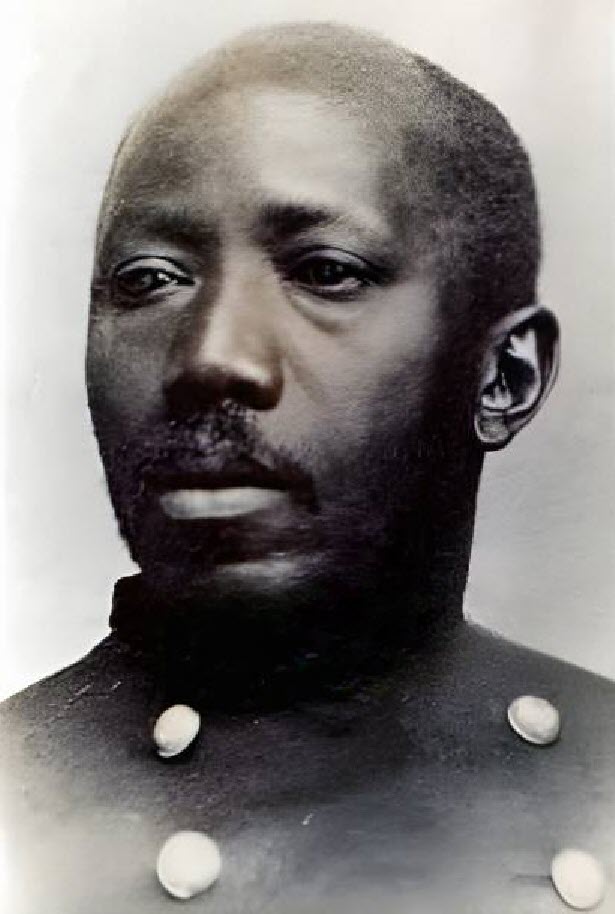
Martin Robison Delany_Father of Black Nationalism

“Douglass was known as an assimilationist — a champion of blacks being freed from slavery and then being given full rights and opportunities in America.
Delany, for much of his life, championed emigration of blacks as a way of achieving equality, first to Central or South America, and later to Africa…” (From below)

14 Video Playlist

For new comers, pop the document out from the upper right to read / expand / download.

Learn more: RBG eLibrary| Martin Delany Folder

RBG Communiversity’s Think RBG_Knowledge is Power Video Player w companion reading_Decolonizing the African Mind: Further Analysis and Strategy, Dr. Uhuru Hotep and Chinweizu

Last Updated September 20, 2026

A RBG BLM (Black Liberation Movement) Studies Series: For those New Africans interested in the pursuit of revolutionary black consciousness towards Nationhood and Black Power, this is an edutaining overview of the life, times, issues and struggles we as African people must fight against and ultimately defeat.

17 Video Playlist

“Decolonizing the African Mind: Further Analysis and Strategy” by Dr. Uhuru Hotep is an influential framework and paper by an educator that outlines a psychological roadmap for African liberation and community empowerment.

Building directly upon the foundational teachings of Nigerian scholar Chinweizu—who famously argued that mental decolonization requires overthrowing the authority of alien traditions rather than pretending they do not exist—Dr. Hotep frames the modern African American and Pan-African struggle through the lens of psychological liberation.

Core Conceptual Framework

Dr. Hotep outlines a systematic cycle used by European ruling elites over the past 500 years to subjugate African populations:

  1. Colonization: The physical and political seizure of land, resources, and institutional structures.
  2. Deculturalization: The deliberate stripping away of indigenous languages, spiritual practices, customs, and ancestral history.
  3. Mis-education: The implementation of Eurocentric educational and religious curricula designed to brainwash individuals, instill an inferiority complex, and secure voluntary allegiance to the oppressor’s culture.

The Blueprint for “Re-Africanization”

To reverse this damage, Hotep presents decolonization not as a passive realization, but as a proactive, multi-generational project of Re-Africanization. His strategy centers on two core pillars:

  • Reclaiming Intellectual Space: Individuals must consciously uproot internalized European or Arab values that harm Black family stability and community growth. These vacant mental spaces must then be filled with ancestral, life-sustaining African social values and philosophies.
  • The Six Jewels of Sovereignty (Johari Sitta): Through initiatives like The F.A.C.T. Project (Fundamental African Centered Thought), Hotep moves away from traditional “protest politics”. He argues that true sovereignty requires independent control and ownership over six essential areas of life:
    1. Food
    2. Clothing
    3. Shelter
    4. Education
    5. Medical care
    6. Self-defense

“Break the Chains of Mental Slavery”

“Emancipate yourselves from mental slavery; none but ourselves can free our minds”—words famously spoken by Marcus Garvey in 1937 and echoed in Bob Marley’s “Redemption Song”—describe the process of overcoming deep-seated psychological conditioning rooted in historical oppression.

Pop the document out from the upper right to read / expand / download.

Ultimately, Dr. Hotep’s work asserts that physical, political, or financial freedom is impossible without first achieving complete intellectual sovereignty.

“The central objective in decolonising the African mind is to overthrow the authority which alien traditions exercise over the African. This demands the dismantling of white supremacist beliefs, and the structures which uphold them, in every area of African life. It must be stressed, however, that decolonisation does not mean ignorance of foreign traditions; it simply means denial of their authority and withdrawal of allegiance from them.” Chinweizu Ibekwe

Pop the document out from the upper right to read / expand / download.

Learn more… RBG Communiversity’s Knowledge Media e-Library

RBG4Lif Teaching /Learning Tools & Resources |

BPM|BLM eBooks |

BPM|BLM Audiobooks

RBG Communiversity Knowledge Media eLibrary Promo_Black Influencers in White Amerikkka| Music Empire State of Mind Jay-Z Smooth Jazz Tribute

Last Updated September 20, 2026

Learn more in RBG Communiversity Knowledge Media eLibrary

 NB: “except for its mainly second-tier alien employment status, its cultural entertainment contributions to the American market economy, its role as a mass consumer market for White American manufactured products and services, its full-spectrum participation in and integration into American society is negligible.”
(Dr. Amos Wilson, Blueprint for Black Power 1998, pg. 504)

RBG Communiversity’s Knowledge Media e-Library

ALL 270 PHOTOS for download here: Blacks People that “Influenced” Black America and the World