“Pedagogy of the Oppressed” by Paulo Freire is a foundational text in critical pedagogy that critiques traditional education models and advocates for a more liberating approach to teaching and learning. Freire argues that conventional education often reinforces oppression by treating students as passive recipients of knowledge rather than active participants in their own learning. He emphasizes the importance of dialogue, critical thinking, and consciousness-raising to empower learners and challenge oppressive systems. Freire presents a vision of education as a practice of freedom, where educators and students collaboratively engage in the process of learning, fostering critical awareness and social change.
Outline:
Introduction
Context of education as a tool for liberation or oppression
Importance of critical pedagogy
Oppression and Education
Definition of oppression in society
Traditional education as a “banking model” that deposits information into passive students
Dialogical Method
Emphasis on dialogue as a means of communication and understanding
The role of critical reflection in education
Consciousness-Raising
Importance of developing critical consciousness (conscientização)
Awareness of social, political, and economic contradictions
The Role of the Educator
Shift from authority figure to co-learner and facilitator
Encouraging collaboration and mutual respect in the classroom
Liberation through Education
Education as a practice of freedom rather than domination
Fostering a sense of agency and empowerment among learners
Cultural Context
Recognition of the unique cultural backgrounds of students
Importance of culturally relevant pedagogy
Conclusion
Call for a transformative approach to education
Vision of a just society achieved through critical education and social action
“Pedagogy of the Oppressed” is a profound work that not only critiques existing educational practices but also offers a transformative vision for how education can be a means of liberation. Here’s a deeper exploration of its main themes and concepts:
Key Themes and Concepts:
Banking Model of Education:
Freire critiques the traditional “banking” model of education, where teachers deposit information into students, who are expected to memorize and regurgitate it. This model promotes passive learning and maintains the status quo, rather than fostering critical thinking or creativity. Freire advocates for a more dynamic and interactive approach to education.
Dialogue and Communication:
Central to Freire’s philosophy is the idea of dialogue. He argues that education should be a collaborative process where both teachers and students engage in meaningful conversations. Dialogue enables learners to express their thoughts, question assumptions, and develop critical perspectives.
Conscientização (Critical Consciousness):
Freire introduces the concept of conscientização, which refers to the process of developing a critical awareness of one’s social reality. This consciousness allows individuals to recognize oppressive structures in society and empowers them to take action against these injustices. Education, in this sense, becomes a means of awakening this critical consciousness.
Praxis:
Freire emphasizes the importance of praxis, which is the combination of reflection and action. He argues that true education must lead to transformative action, allowing learners to apply their critical thinking to real-world problems. This cycle of reflection and action helps individuals challenge and change their oppressive conditions.
Cultural Context and Relevance:
Freire stresses the significance of acknowledging the cultural backgrounds of learners. Education should be relevant to students’ lived experiences and cultural contexts, promoting a sense of identity and belonging. This relevance enhances engagement and learning outcomes.
Role of the Educator:
Freire redefines the role of educators, suggesting they should act as facilitators and co-learners rather than authoritative figures. Educators are encouraged to create an environment of mutual respect and collaboration, where students feel empowered to share their ideas and challenge existing norms.
Oppression and Liberation:
The book explores the dynamics of oppression, emphasizing that true liberation requires a collective struggle against oppressive systems. Freire argues that the oppressed must play an active role in their emancipation, fostering solidarity and collective action.
Social Justice and Transformation:
Freire’s pedagogy is rooted in a commitment to social justice. He envisions education as a means to transform society by equipping individuals with the tools to challenge inequality and advocate for change. This transformative potential is a key aspect of his educational philosophy.
Conclusion:
“Pedagogy of the Oppressed” remains a seminal text that has influenced educators, activists, and scholars worldwide. Freire’s insights into the relationship between education and social justice have sparked movements for reform in educational practices. His call for a participatory and liberating approach to education continues to resonate, encouraging individuals to seek not only knowledge but also the power to enact meaningful change in their lives and communities. The book serves as both a critique of traditional educational systems and a powerful manifesto for a more equitable and just approach to teaching and learning.
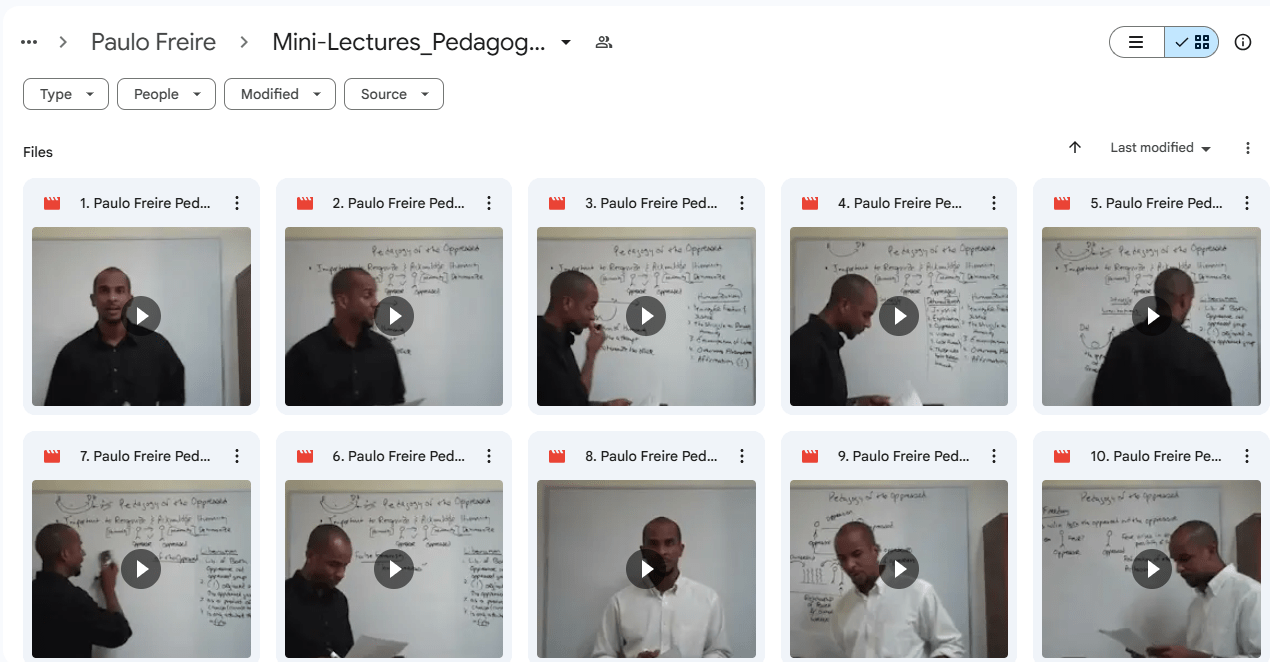
Pedagogy of the Oppressed, Paulo Freire_eBook
Pop the documents out from the upper right to read / expand / download.
Understanding Paulo Freire’s “Pedagogy of the Oppressed” Dr. Masood
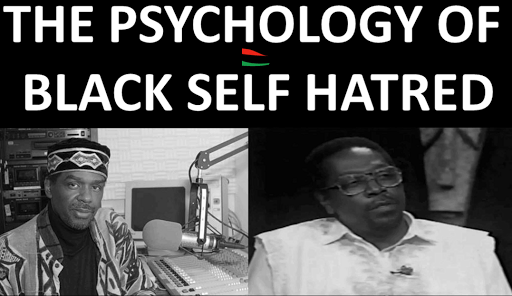
From Jim Crow to Civil Rights to “Black Liberation ?”| The Struggle Continues
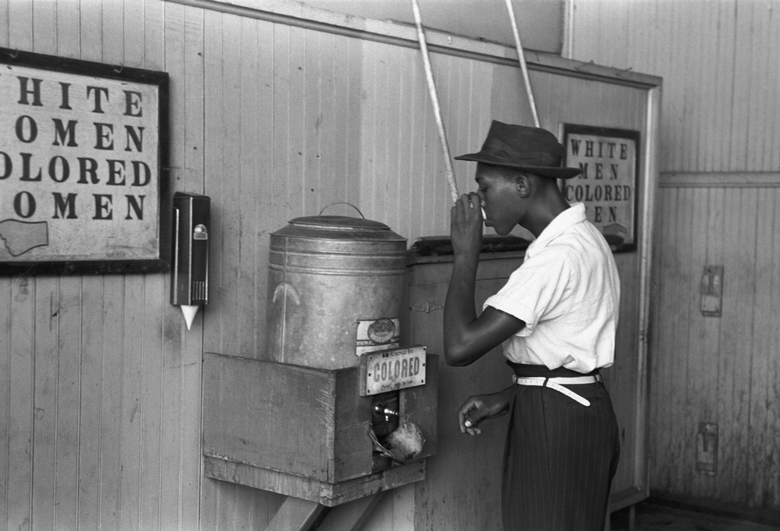
From Jim Crow to Civil Rights
The 1950s was a very politically unstable time for Afrikans in America. Our human and civil rights were constantly under attack. All the efforts made during the forties to integrate the Armed Forces were abolished during the Korean War. A new era of racist assassinations began to occur and we as a people started to take a stand against the system and business of white supremacy and its blatant racism. The NAACP argued cases in Southern states against the discriminatory practices in public schools.
In May of 1954, the Brown vs. Board of Education occurred. This case ruled racial segregation in public schools to be unconstitutional. The African American non-violent movement began taking the form of boycotts, sit-ins, and peaceful protests. The African American authors during this decade were writing about love, discrimination, the prison system, protest, black sexuality, and black life in Harlem. (also see The Black Arts Movement ) In addition, the decade of the 1950s in the United States is known for the dramatic rise of repressive U.S. government politics, especially the virulent anti-communism of the McCarthy era. Amidst and against this backdrop emerged the civil rights struggle, initially spearheaded in the southern United States where Black repression was greatest.
Witnessing the Brown v. Board of Education decision, the lynching of Emmett Till and the resistance of Rosa Parks, the Black community was enlivened, enraged and galvanized into collective action. The boycott that followed Rosa Parks ‘ courageous stand in the south began as a protest against police brutality sprung in the north. Soon events transformed into an all-out denunciation of segregation and other forms of oppression. The Two Tendencies of Black Struggle
The Montgomery bus boycott inspired Black students in Greensboro, North Carolina to organize sit-ins in segregated spaces. After centuries of enslavement and decades of Jim Crow inequality, the Black community seized upon the first opportunity to fight the system, throw off the yoke of legal segregation and finally achieve formal democratic rights. Consequently, great numbers of Black people entered into the civil rights movement.
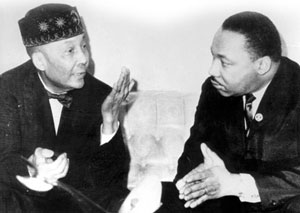
Alongside the civil rights movement, the 1950s also witnessed the rise of the Nation of Islam , which advocated a separatist agenda. The NOI kept its distance from the non-violent, direct action of integrationist groups. Malcolm X came to embody this second current of the Black liberation movement, which emphasized our common heritage, identity and destiny as a people. The Nation of Islam encouraged the Black community to take control of its own institutions, to support Black businesses and to disengage from the cultural and socio-political happenings of the white man. Over time, Malcolm X’s frustration with this overall policy of disengagement of the NOI and his silencing over the “chicken coming home to roost” comment; Minister Malcolm made his official break with the Nation of Islam in 1964. Critical of the non-violent principles of mainstream civil rights groups, Malcolm organized the secular Organization of Afro-American Unity to take the political, social and economic demands of the growing Black and liberation movement into an international arena.
For those forces increasingly frustrated with mainstream civil rights leadership and the overall project of integration into a white supremacist / racist society, Malcolm philosophy offered an uncompromising, internationalist vision and a no-nonsense paradigm that linked the struggle of Black people in Amerikkka with anti-colonial struggles in Afrika. As such, Malcolm—along with revolutionary leaders like the Hornorable Robert F. Williams —served as a bridge to a new stage in the movement from civil rights to Black liberation. As the civil rights struggle moved into a movement for Black national liberation and self determination, many activists began looking for political strategies that went beyond the humanist-integrationist inbetweenity of mainstream civil rights groups. Influenced by the liberation movements sweeping the oppressed countries in Africa, Asia and Latin America, more and more Black militants began to study socialist ideas.
(please see Lets Grow Up and Move On By Junious Ricardo Stanton in ChickenBones Journal).
The two tendencies of civil rights verses human rights, therefore, cannot be fully understood in the tactical framework of self-defense versus non-violence—what is often referred to as the “Malcolm-versus-Martin” debate. The revolutionary wing of the Black liberation movement set its sights beyond the democratic / integrationist goals of freedom, justice and equality that the mainstream civil rights groups aimed for. More higher, it aimed for social equality, based first and foremost on the Black community’s control of its own social, political, economic and educational organizations and institutions. Dozens of national groups and hundreds of local organizations took part in what became a full-scale Black liberation movement within the United States. The Black Panther Party was perhaps the most developed and highest expression of this movement, but there were a variety of groups with varying political programs that comprised the revolutionary wing of the Black liberation movement. The Revolutionary Action Movement
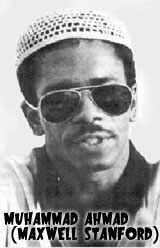
In 1963, young activists led by Max Stanford ( Muhammad Ahmad)—a close associate of Malcolm X and Queen Mother Audley Moore —created the Revolutionary Action Movement . A semi-clandestine organization and paramilitary wing of the OAAU, the RAM articulated a revolutionary program for African Americans that fused Black nationalism with Marxism-Leninism. Its goal was to develop revolutionary cadre in the northern cities and connect with more militant students in the south involved with the Student Non-violent Coordinating Committee and the Congress of Racial Equality .
RAM supported the movement by SNCC and others for armed self-defense for southern Blacks terrorized by the Ku Klux Klan—the extra-legal army enforcing the racist Jim Crow segregation system. RAM also provided security for Malcolm X after his break from the Nation of Islam and members of RAM actively participated in the Organization of Afro-American Unity.
RAM had an extremely active branch in Detroit, which had become a center of revolutionary activism. During the 1967 Detroit Rebellion , RAM formed the Black Guards, a youth group that hoped to channel the spontaneous rebellion into coordinated revolutionary action. Despite their limited success in this regard, RAM was one of the first groups that not only recognized the legitimacy of urban rebellions, but also aimed to formulate a concrete plan of action around those rebellions.
Consequently, RAM became one of the first casualties of the FBI’s Counter-Intelligence Program (COINTELPRO) . Max Stanford and other RAM leaders were charged with plotting to assassinate mainstream political leaders Roy Wilkins and Whitney Young. At this point, Stanford dissolved the formal structure of the organization. As individuals, many RAM members gained influence in groups like the League of Revolutionary Black Workers. Student Nonviolent Coordinating Committee
SNCC had pioneered the “sit-in” movement that desegregated lunch counters all over the country. Just a few years earlier, it was considered a cornerstone of the mainstream civil rights movement. SNCC led the student section of the civil rights struggle, helping to register African Americans in the most racist and dangerous areas of the south, including the Mississippi delta and Lowndes County, Alabama.
SNCC was influential in creating the Mississippi Freedom Democratic Party , perhaps the most famous working-class organizing effort to have ever taken place in the south. Mirrored in other places throughout the South, the MFDP was a state-wide political party that challenged Dixiecrat control of the Democratic Party and the white supremacy embedded in the electoral system as a whole. Concerned about preserving the “Solid South,” liberals in the Democratic Party permitted an all-white slate from Mississippi and denied the MFDP its place at the 1964 Democratic National Convention.
The white power structure’s rejection of the MFDP led to a radicalization of many within the civil rights movement. Activists in SNCC and elsewhere began to see the problems of African Americans in the United States as greater than just the denial of democratic rights. They developed an analysis heavily influenced by the African liberation movements and sent delegations to meet with revolutionary leaders all over the world.
SNCC turned dramatically away from the pacifist mainstream civil rights movement, cutting ties with many white liberal organizations. Influenced by Malcolm X and the Watts rebellion of 1965 , SNCC leaders like Stokely Carmichael (later Kwame Toure),
H. Rap Brown , Jim Forman and others began to articulate views based on Marxism and revolutionary Black nationalism.
( please seeLets Grow Up and Move On By Junious Ricardo Stanton in ChickenBones Journal).
SNCC became a breeding ground for young revolutionaries. One of the first civil rights and student organizations to denounce the Vietnam War , SNCC elaborated an anti-imperialist analysis that distinguished itself from the issue-oriented and often near-sighted outlook of other organizations of that era.
Despite the problems of sexism that plagued all movements of the period,someof the most dynamic women of color leaders, including Kathleen Cleaver of the Black Panthers, came to prominence as SNCC leaders. Kathleen Cleaver became the BPP’s National Communications Secretary and helped to organize the campaign to get Huey Newton released from prison.
The image “http://www.nathanielturner.com/williericks.jpg” cannot be displayed, because it contains errors.
In 1966, SNCC activist Willie Mukasa Ricks proclaimed the slogan of Black liberation movements to come: “Black Power.” SNCC leaders like Stokely Carmichael and H. Rap Brown became widely known premier revolutionary leaders, with Carmichael’s book, “Black Power,” emerging as one of the first manifestos of the rapidly expanding revolutionary movement.
The League of Revolutionary Black Workers
By 1968, growing numbers of young Black workers and students, including Vietnam war veterans, came to the conclusion that only revolution and self-determination could do away with the systemic oppression and destitution of the Black community. Two strong, disciplined organizations emerged, the League of Revolutionary Black Workers and the Black Panther Party , embodying this spirit. The League of Revolutionary Black Workers had its roots in the struggle of Detroit’s Black autoworkers, who in 1968 launched a series of wildcat strikes to protest the unfair treatment and racism of the Chrysler Corporation and the United Auto Workers union. These actions led to the formation of an organization known as DRUM (originally, Dodge Revolutionary Union Movement, later the Detroit Revolutionary Union Movement).
The efforts of DRUM radicalized workers and led to the formation of an explicitly Marxist organization, with the goal of galvanizing the Black working class with a revolutionary consciousness and ultimately leading a socialist-type revolution.
The LRBW put out a regular paper, created a publishing house and was also able to tap into a large portion of the Black community, as well as the student movement in colleges and high schools in and around Detroit. The League was one of the only Black groups to argue explicitly for the organization of the working class and to mobilize thousands of Black union members into militant action. The actions of the LRBW led to an improvement in working conditions, and a greater leadership role for Blacks in the United Auto Workers union.
The Black Panther Party
Perhaps the best-known Black liberation group in the United States is the Black Panther Party for Self Defense. Organized in 1966 by Huey Newton and Bobby Seale, the Black Panthers began as an organization dedicated to the protection of Oakland’s Black community from racist police violence. In 1967, however, when Black Panther Party members staged a dramatic demonstration by walking into the California State House with shotguns—it was legal in California to carry such weapons—to bring attention to their Ten-Point Program, they were catapulted into the national spotlight. In the next two years, the Black Panthers developed into a major national organization with thousands of members.
By 1970, they had 35 chapters. The Black Panthers were best known for their “Survival Programs,” which provided much needed aid to the Black community. At its peak, their breakfast program fed 200,000 school children a day. They initiated and operated free health screening clinics, food drives, sickle cell disease awareness programs and, in Oklahoma City, a free ambulance service.
But, the Black Panther Party was not simply a Black community service organization. They considered the Survival Programs a step towards self-determination and a way to raise the political consciousness of Black people. They spoke about the necessity for revolutionary change inside the United States. The Party’s political education stressed the principals of Marxism and the Party elaborated anti-imperialist politics, which included cultivating relationships with revolutionaries from Africa to China.
The destruction of the Black Panther Party is in many ways a case study for state repression. Threatened by the revolutionary potential of socio-politically conscious Black people, the U.S. government carried out a series of subversive activities, including the outright assassination of Panther leaders like Fred Hampton
and many others. Although the organization was destroyed, it has left a powerful legacy that still influences us today. Aluta Continua / The Struggle Continues
The RAM the SNCC, the DRUM and the BPP are only four of a host of socio-political organizations which in the late 1960s and 1970s composed of an entire movement oriented towards Black National Liberation and Self Determination. It is important for the Hip Hop generation and their childern to draw lessons from and reaffirm these movements’ place in the history of the Black civil and human rights struggle and to continue our struggle for National Liberation and Self Determination as Nu Afrikan People.
In the wake and aftermath of Hurricane Katrina, revealing for the whole world to see the systematic racism / white supremacy that the Black nation in the United States still suffer, it is clear that “the more things have changed, the more things have stayed the same”. The objective basis for the Black liberation movement remains as pressing today as ever. Political oppression, social degradation and economic exploitation of people Afrikan descent is as alive and well today as it was fifty years ago.
The historical passion for freedom and the socio-political vision of the revolutionary organizations that grew up in the Black communities of the 60s continues to inspire thousands of Black civil rights activists and revolutionaries to date looking for a way move forward in the struggle against white supremacy/racism. This muti-media essay (a course in and of itself for those who study the extensions/link in conjunction) has been intended to charge the Hip Hop generation to take the torch of our ongoing struggle for National Liberation ans Self Determination as “New Afrikan Peoples”; based on drawing lessons from those that have preceded us.






 RBG Communiversity: Message 2 Da Grassroots
You must be logged in to post a comment.