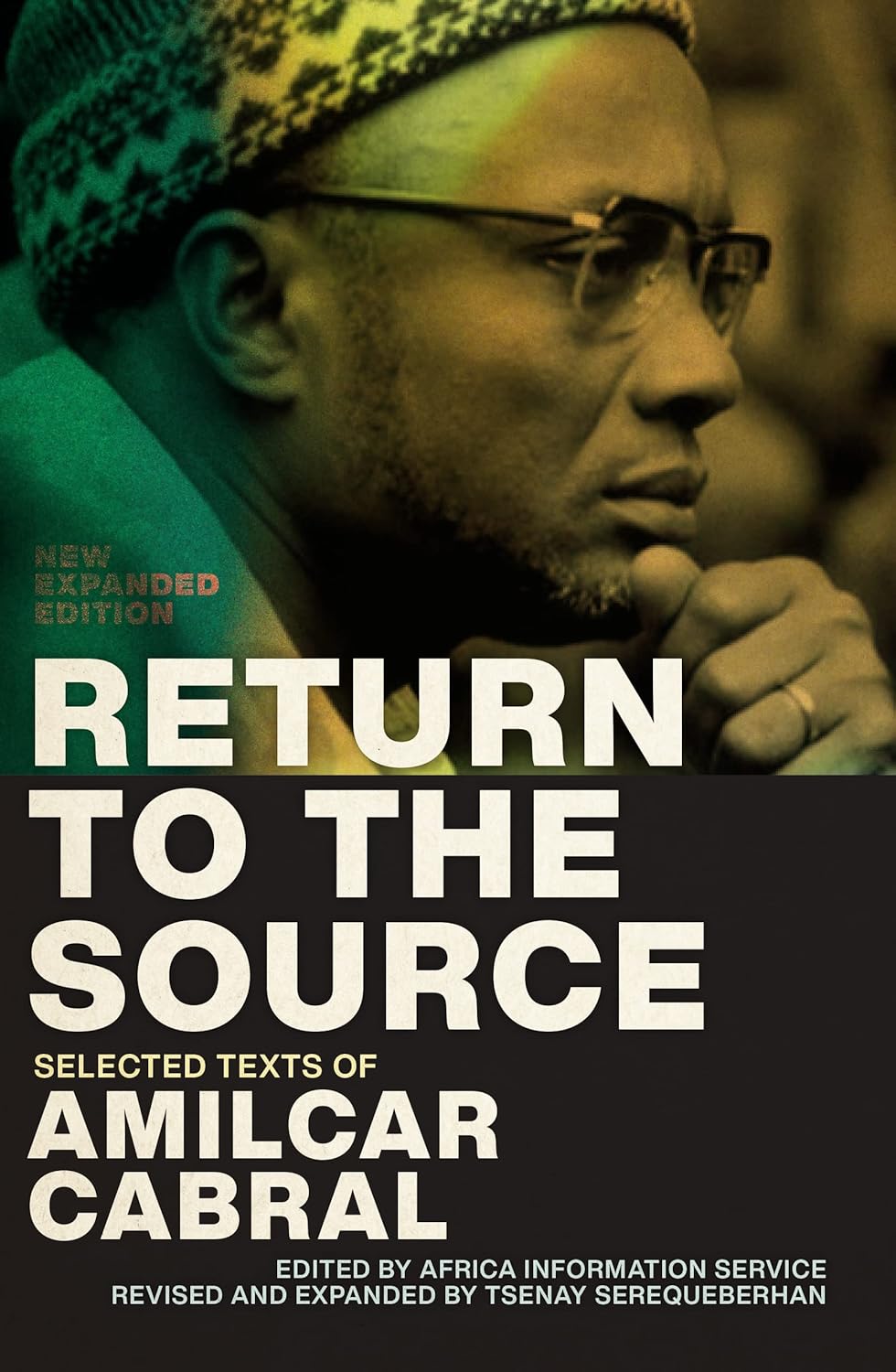
Return to the Source: Selected Texts of Amilcar Cabral_eBook and Audiobook, with Amílcar Cabral The African Revolutionary, Killed by Portugal (Mini-Doc.)

Book Summary

“Return to the Source: Selected Texts of Amilcar Cabral” is a compilation of writings by the influential African revolutionary leader, Amilcar Cabral, who played a pivotal role in the struggle for independence in Guinea-Bissau and Cape Verde. Edited by Tsenay Serequeberhan, the expanded edition released on April 1, 2023, presents a curated selection of Cabral’s texts that reflect his thoughts on colonialism, nationalism, culture, and the importance of revolutionary consciousness. This collection not only highlights Cabral’s contributions to anti-colonial thought but also emphasizes the relevance of his ideas in contemporary struggles for social justice and liberation. The book serves as a vital resource for understanding Cabral’s vision of a liberated Africa and the theoretical foundations of his political activism.

  • Introduction
    • Overview of the book’s significance and objectives
    • Introduction to Amilcar Cabral’s life and legacy
    • Discussion of the editor’s contributions and the purpose of this expanded edition
  • 1: Theoretical Foundations of Cabral’s Thought
    • Exploration of Cabral’s philosophical perspectives on colonialism and imperialism
    • Analysis of his concepts of culture, identity, and nationalism
    • Discussion of the role of historical materialism in Cabral’s framework
  • 2: Colonialism and Its Effects
    • Examination of the impact of colonial rule on African societies
    • Analysis of the psychological and cultural dimensions of colonialism
    • Discussion of Cabral’s critique of colonial power and its economic exploitation
  • 3: The Role of Culture in the Liberation Struggle
    • Exploration of Cabral’s views on the importance of culture in revolutionary movements
    • Analysis of how cultural identity contributes to national consciousness and unity
    • Discussion of the relationship between culture and the struggle for liberation
  • 4: National Liberation and Revolutionary Strategy
    • Examination of Cabral’s strategies for achieving national independence
    • Analysis of the importance of grassroots organizing and popular participation
    • Discussion of the role of the military and armed struggle in the liberation movement
  • 5: Internationalism and Solidarity
    • Exploration of Cabral’s vision of international solidarity among oppressed peoples
    • Analysis of the connections between African liberation and global anti-colonial movements
    • Discussion of Cabral’s engagement with global revolutionary thought
  • 6: Reflections on Post-Colonial Challenges
    • Examination of the challenges faced by newly independent nations
    • Analysis of Cabral’s insights into the pitfalls of post-colonial governance
    • Discussion of the need for ongoing vigilance and revolutionary commitment
  • Conclusion
    • Summary of key themes and insights from Cabral’s writings
    • Reflection on the enduring relevance of Cabral’s thought in contemporary struggles
    • Call to action for readers to engage with Cabral’s ideas in their own contexts

Significance of the Book

“Return to the Source” is an essential text for anyone interested in anti-colonial thought, African history, and revolutionary politics. Amilcar Cabral’s writings provide a nuanced understanding of the complexities of colonialism and the necessity of cultural and political liberation. This expanded edition not only preserves Cabral’s legacy but also makes his ideas accessible to new generations of activists and scholars. By highlighting the importance of culture, identity, and grassroots participation, the book serves as a powerful reminder of the ongoing struggles for justice and equality in the post-colonial world. Cabral’s vision of a liberated Africa continues to inspire movements for social change, making this collection a vital resource for understanding the foundations of contemporary anti-colonial thought.

“Return to the Source: Selected Texts of Amilcar Cabral” is a significant compilation that encapsulates the revolutionary spirit and profound insights of Amilcar Cabral, one of Africa’s foremost anti-colonial leaders and thinkers. The book serves not only as a tribute to Cabral’s intellectual legacy but also as a crucial resource for understanding the dynamics of colonialism, nationalism, and cultural identity in the context of the African liberation struggle. Here’s a deeper exploration of Cabral’s contributions, themes, and the implications of his work:

Key Themes and Contributions

  1. Anti-Colonial Struggle
    • Cabral is best known for his leadership in the fight for independence in Guinea-Bissau and Cape Verde from Portuguese colonial rule. His writings provide an analytical framework for understanding the mechanisms of colonial domination and the necessity of armed struggle as a means of liberation.
    • He emphasizes that colonialism is not merely a political or economic system but also a cultural and psychological one that requires a comprehensive response from the colonized.
  2. Cultural Identity and National Consciousness
    • One of Cabral’s central arguments is that a strong sense of cultural identity is essential for the success of liberation movements. He asserts that culture is not static; rather, it evolves in response to the struggles and aspirations of a people.
    • Cabral stresses the importance of reclaiming African cultural heritage and integrating it into the national consciousness to foster unity and resilience among the oppressed.
  3. The Role of the Masses
    • Cabral advocates for the involvement of the masses in the liberation process. He believes that genuine revolutionary movements must be rooted in the people’s struggles and aspirations.
    • He highlights the importance of education and political consciousness among the populace, arguing that empowering ordinary people is crucial for sustaining the struggle for independence and justice.
  4. Internationalism and Solidarity
    • Cabral was a strong proponent of internationalism, recognizing that the struggles of oppressed peoples worldwide are interconnected. He emphasizes the need for solidarity among liberation movements across Africa and beyond.
    • He engaged with global revolutionary thought, drawing connections between the anti-colonial struggle in Africa and broader movements for social justice, socialism, and equality.
  5. Critique of Post-Colonial Governance
    • In his reflections on the challenges faced by newly independent nations, Cabral warns against the pitfalls of neo-colonialism and the betrayal of revolutionary ideals by emerging elites.
    • He stresses the necessity of maintaining a revolutionary spirit and commitment to the people’s welfare, cautioning against the complacency that can arise after achieving formal independence.

Implications of Cabral’s Thought

  • Relevance to Contemporary Struggles
    • Cabral’s ideas remain highly relevant today, as many countries continue to grapple with the legacies of colonialism, economic exploitation, and social injustice. His insights into the importance of cultural identity and grassroots participation resonate with contemporary movements advocating for equity and justice.
    • Movements for social change, environmental justice, and economic rights can draw inspiration from Cabral’s emphasis on the need for a collective struggle rooted in the lived experiences of the oppressed.
  • Cultural and Psychological Liberation
    • Cabral’s work highlights the significance of cultural reclamation in the process of decolonization. This aspect of his thought is particularly important for communities seeking to restore their cultural heritage and affirm their identities in the face of globalization and cultural homogenization.
    • His focus on psychological liberation underscores the importance of addressing the internalized effects of colonialism, encouraging individuals to reclaim their self-worth and agency.
  • Educational Initiatives
    • Cabral’s advocacy for education as a tool for empowerment can inform contemporary educational initiatives aimed at fostering critical consciousness among young people. His ideas encourage the integration of local histories, cultures, and struggles into educational curricula, promoting a more inclusive and relevant understanding of history.

Conclusion

“Return to the Source” is a vital resource for anyone interested in understanding the complexities of anti-colonial thought and the ongoing struggles for liberation and justice in Africa and beyond. Amilcar Cabral’s writings provide a profound analysis of the interplay between culture, identity, and politics, offering insights that continue to inspire activists and scholars alike. By emphasizing the importance of cultural identity, the role of the masses, and international solidarity, Cabral’s legacy endures as a powerful call to action in the pursuit of social and political change. The expanded edition of this collection ensures that his ideas remain accessible and relevant for future generations committed to the fight against oppression.

Return to the Source_eBook (NEW EXPANDED EDITION)

Pop the document out from the upper right to read / expand / download.

Return to the Source_Audiobook

Amílcar Cabral The African Revolutionary, Killed by Portugal (Mini-Doc.)

Learn more in RBG Communiversity Knowledge Media eLibrary:

The Huey P. Newton Reader_eBook and Audiobook

Book Summary

“The Huey P. Newton Reader” is a compilation of writings and speeches by Huey P. Newton, co-founder of the Black Panther Party. This collection offers a comprehensive look at Newton’s thoughts on race, social justice, and the revolutionary movements of the 1960s and 1970s. It includes a range of materials, from essays and manifestos to interviews and personal reflections, providing insight into Newton’s ideology and the principles that guided the Black Panther Party. The reader serves not only as an important historical document but also as a source of inspiration for contemporary movements advocating for social justice and equality.

  • Introduction
    • Overview of Huey P. Newton’s life and significance
    • Contextualization of the Black Panther Party and its impact on civil rights movements
    • Explanation of the purpose of the reader and its relevance today
  • Part 1: Early Writings
    • Chapter 1: Political Ideology
      • Exploration of Newton’s early political influences and formation of ideas
      • Discussion of the impact of Marxism and Black nationalism on his thought
    • Chapter 2: The Birth of the Black Panther Party
      • Account of the founding of the Black Panther Party in 1966
      • Analysis of the party’s original goals and community programs
  • Part 2: Key Speeches and Essays
    • Chapter 3: On Revolutionary Violence
      • Examination of Newton’s views on the necessity of armed self-defense
      • Discussion of the philosophical underpinnings of revolutionary violence
    • Chapter 4: The Role of the Black Panther Party
      • Insight into the functions and programs of the Black Panther Party
      • Analysis of the party’s approach to community service and empowerment
  • Part 3: Political Activism
    • Chapter 5: Engaging with the System
      • Discussion of Newton’s strategies for engaging with political systems and institutions
      • Examination of the party’s efforts to influence legislation and public policy
    • Chapter 6: Challenges and Confrontations
      • Overview of the challenges faced by the Black Panther Party, including government opposition
      • Reflection on Newton’s personal experiences with law enforcement and incarceration
  • Part 4: Personal Reflections
    • Chapter 7: The Personal and the Political
      • Exploration of the relationship between Newton’s personal life and his activism
      • Discussion of themes such as identity, community, and resilience
    • Chapter 8: Legacy and Continuing Struggles
      • Reflection on Newton’s enduring influence on contemporary social justice movements
      • Consideration of the ongoing relevance of his ideas in today’s context
  • Conclusion
    • Summary of Newton’s contributions to revolutionary thought and activism
    • Reflection on the importance of the Black Panther Party in shaping discussions around race and justice
    • Call to action for future generations to engage in the ongoing struggle for equality and justice

Significance of the Book

“The Huey P. Newton Reader” is an essential resource for understanding the ideology and activism of one of the most influential figures in the civil rights movement. Through his writings and speeches, Newton articulates a vision for social justice that continues to resonate today. The reader serves as both a historical account of the Black Panther Party’s efforts and a source of inspiration for those advocating for systemic change and equality. By engaging with Newton’s work, readers can gain a deeper appreciation for the complexities of the struggle for civil rights and the ongoing fight against oppression.

“The Huey P. Newton Reader” is a significant compilation that sheds light on the life, thoughts, and activism of Huey P. Newton, co-founder of the Black Panther Party. This book not only serves as a historical record but also as a vital resource for understanding the ideological foundations of one of the most influential revolutionary movements in American history. Here’s a deeper exploration of the book’s key themes, contributions, and the impact of Newton’s work:

Key Themes Explored

  1. Revolutionary Ideology
    • Newton’s writings reflect a blend of Marxist thought and Black nationalism, emphasizing the need for a revolutionary approach to address systemic oppression faced by Black communities. He discusses the importance of understanding the socio-economic conditions that perpetuate inequality.
    • The book articulates the idea that true liberation requires not only political change but also a transformation of the underlying economic structures that disadvantage marginalized groups.
  2. Self-Defense and Armed Resistance
    • A prominent theme in Newton’s work is the necessity of armed self-defense against police brutality and systemic violence. He argues that Black communities have the right to protect themselves from oppression and that revolutionary violence may be justified in the pursuit of justice.
    • This perspective was pivotal in shaping the Black Panther Party’s identity, as they organized armed patrols to monitor police activity and protect community members.
  3. Community Empowerment and Services
    • Newton highlights the importance of community programs as a means of empowerment. The Black Panther Party initiated various social programs, including free breakfast programs for children, health clinics, and educational initiatives aimed at uplifting the community.
    • Newton’s writings emphasize the belief that self-determination and community control are essential for achieving lasting change, advocating for grassroots organizing and direct action.
  4. Critique of Capitalism and Imperialism
    • The reader includes critiques of capitalist systems, which Newton argues are inherently exploitative and contribute to the oppression of marginalized groups. He draws connections between domestic issues and global struggles against imperialism, advocating for solidarity among oppressed peoples worldwide.
    • This global perspective is significant, as it situates the struggles of Black Americans within a broader context of anti-colonial and anti-imperialist movements.
  5. Personal Reflection and Identity
    • Newton’s writings often reflect on his personal experiences, struggles, and growth as a leader. He candidly discusses the challenges of leadership, the toll of activism on his personal life, and the importance of maintaining a sense of identity amidst the pressures of revolutionary work.
    • By sharing his personal journey, Newton humanizes the struggle for civil rights and invites readers to understand the emotional and psychological dimensions of activism.

Contributions to Civil Rights Discourse

  • Empowerment of Black Women
    • Although the book primarily focuses on Newton’s perspective, it also acknowledges the critical roles played by women within the Black Panther Party. Women like Angela Davis and Ericka Huggins were instrumental in shaping the party’s initiatives and ideology, and Newton’s writings reflect an awareness of the need for gender equity within the movement.
  • Legacy of the Black Panther Party
    • “The Huey P. Newton Reader” serves as a vital resource for understanding the legacy of the Black Panther Party, particularly its influence on subsequent social justice movements. Newton’s ideas continue to resonate in contemporary discussions surrounding police brutality, systemic racism, and community activism.
    • The book encourages readers to critically engage with the history of the Black Panther Party and consider how its principles can inform current struggles for equity and justice.

Impact of Newton’s Work

  • Inspiration for Activism
    • Newton’s writings inspire a new generation of activists by demonstrating the importance of political education, community organizing, and the need for a revolutionary approach to social justice. His emphasis on self-determination resonates with contemporary movements advocating for racial and economic justice.
    • The book serves as a call to action, encouraging readers to understand their role in the ongoing fight against oppression and to engage in meaningful activism.
  • Educational Resource
    • As a compilation of Newton’s key writings, the reader is a valuable educational resource for students, scholars, and anyone interested in the history of civil rights and social justice. It provides insight into the ideological foundations of the Black Panther Party and the broader context of the civil rights movement.

Conclusion

“The Huey P. Newton Reader” is more than just a collection of writings; it is a testament to the enduring struggle for justice and equality. Huey P. Newton’s insights into revolution, community empowerment, and the complexities of race and identity continue to inspire and challenge readers today. By engaging with Newton’s work, individuals can gain a deeper understanding of the historical and contemporary struggles for social justice, encouraging a commitment to activism and advocacy in the pursuit of a more equitable society.

“The Huey P. Newton Reader”_eBook

Pop the documents out from the upper right to read / expand / download.

“The Huey P. Newton Reader”_Audiobook

Learn more in RBG Communiversity Knowledge Media eLibrary:

A Taste of Power: A Black Woman’s Story Elaine Brown_eBook and Audiobook, with Elaine Brown – Seize the Time – Black Panther -Full Album

“Profound, funny …  wild and moving  heartbreaking accounts of a lonely black childhood…. Brown sees racial oppression in national and global context; every political word she writes pounds home a lesson about commerce, money, racism, communism, you name it … A glowing achievement.” —Los Angeles Times

Book Summary

“A Taste of Power: A Black Woman’s Story” by Elaine Brown is a powerful memoir that chronicles her life and experiences as a prominent leader in the Black Panther Party during the late 1960s and early 1970s. As the first woman to lead the party, Brown offers an insider’s perspective on the struggle for civil rights, social justice, and the complexities of gender and race within the movement. The memoir not only details her personal journey but also reflects on the broader socio-political landscape of the time, including the challenges faced by the Black community and the internal dynamics of the Black Panther Party. Brown’s narrative serves as both a historical account and a deeply personal exploration of the sacrifices, achievements, and ongoing struggles for liberation.

  • Introduction
    • Overview of the book’s themes and objectives
    • Introduction to Elaine Brown’s background and her role in the Black Panther Party
    • Contextualization of the civil rights movement and the emergence of the Black Panther Party
  • Chapter 1: Early Life and Influences
    • Description of Brown’s upbringing in a segregated America
    • Discussion of her family background and early experiences with racism
    • Exploration of the formative events that shaped her political consciousness
  • Chapter 2: Joining the Black Panther Party
    • Account of Brown’s introduction to the Black Panther Party and her motivations for joining
    • Description of the party’s goals, activities, and community programs
    • Reflection on her early experiences and the impact of party ideology on her life
  • Chapter 3: Rise to Leadership
    • Overview of Brown’s ascent within the Black Panther Party, culminating in her role as chairwoman
    • Discussion of the challenges she faced as a woman in a male-dominated organization
    • Exploration of her leadership style and vision for the party’s future
  • Chapter 4: Struggles and Conflicts
    • Examination of internal conflicts within the Black Panther Party, including issues of sexism and power dynamics
    • Discussion of the party’s confrontations with law enforcement and government surveillance
    • Reflection on the personal toll of leadership and the sacrifices made
  • Chapter 5: The Legacy of the Black Panther Party
    • Analysis of the impact of the Black Panther Party on the civil rights movement and American society
    • Discussion of the party’s community programs and their significance
    • Reflection on the challenges of maintaining unity and purpose in the face of external pressures
  • Chapter 6: Life After the Panthers
    • Overview of Brown’s life following her departure from the Black Panther Party
    • Discussion of her continued activism and involvement in social justice issues
    • Exploration of her reflections on the lessons learned from her experiences in the party
  • Chapter 7: Reflections on Race and Gender
    • Examination of the intersections of race and gender in the context of the Black liberation movement
    • Discussion of the role of women within the Black Panther Party and the broader struggle for equality
    • Reflection on the ongoing challenges faced by Black women in activism and leadership
  • Conclusion
    • Summary of key insights and themes from the memoir
    • Reflection on the importance of remembering the history of the Black Panther Party and its leaders
    • Call to action for continued engagement in the fight for social justice and equality

Significance of the Book

“A Taste of Power: A Black Woman’s Story” is an essential memoir that provides a unique and personal perspective on the Black liberation movement, particularly from the standpoint of a Black woman in a leadership role. Elaine Brown’s narrative not only highlights her contributions to the Black Panther Party but also addresses the complexities of race, gender, and activism. The memoir serves as a crucial historical document, offering insights into the struggles and triumphs of the movement, while also inspiring future generations to continue the fight for justice and equality. Brown’s story is a testament to resilience, leadership, and the ongoing quest for liberation.

“A Taste of Power: A Black Woman’s Story” by Elaine Brown is a compelling memoir that serves as both a personal narrative and a historical document of the Black Panther Party’s evolution during a transformative period in American history. Here’s a more in-depth exploration of the book’s key themes, significant events, and its broader implications:

Key Themes Explored

  1. Empowerment and Leadership
    • Elaine Brown’s journey within the Black Panther Party highlights the theme of empowerment, particularly for Black women. As the first woman to chair the party, she navigated a complex landscape, challenging gender norms and asserting her leadership in a predominantly male organization.
    • Brown’s leadership is depicted as a critical force within the party, emphasizing the importance of women’s voices in revolutionary movements. She showcases how her position allowed her to influence policies and advocate for issues affecting Black women and families.
  2. Intersectionality of Race and Gender
    • The memoir delves into the intersections of race and gender, exploring how these identities shape experiences within social movements. Brown candidly discusses the sexism she faced both within the Black Panther Party and in society at large, revealing the struggles of women activists during the civil rights movement.
    • She addresses the unique challenges faced by Black women, who often found themselves fighting for recognition not only as members of the Black community but also as women deserving of equality and respect.
  3. The Black Panther Party’s Ideology and Impact
    • Brown provides an insider’s view of the Black Panther Party, detailing its founding principles, community programs, and revolutionary goals. She discusses initiatives such as free breakfast programs for children, health clinics, and educational outreach, which exemplified the party’s commitment to social justice and community empowerment.
    • The memoir also reflects on the broader impact of the Black Panther Party on the civil rights movement and American society, emphasizing its role in challenging systemic racism and advocating for Black liberation.
  4. Struggles and Internal Conflicts
    • Brown candidly shares her experiences with the internal conflicts of the Black Panther Party, including ideological differences, power struggles, and issues of sexism. She discusses how these conflicts sometimes undermined the party’s unity and effectiveness.
    • The memoir does not shy away from addressing the challenges of leadership, including the toll it took on her personal life and mental health. Brown’s reflections highlight the sacrifices made by many activists in their quest for justice.
  5. Legacy and Reflection
    • In her conclusion, Brown reflects on the legacy of the Black Panther Party and the lessons learned from her experiences. She emphasizes the importance of remembering the struggles of the past to inform current and future activism.
    • The memoir serves as a reminder of the ongoing fight for social justice and the need for solidarity among marginalized communities in the pursuit of equality.

Significant Events Highlighted

  • Joining the Black Panther Party
    • Brown recounts her journey from a young woman grappling with issues of identity and race to becoming a key figure in the Black Panther Party. Her initial encounters with the party and her motivations for joining provide insight into the ideological fervor of the time.
  • Leadership and Challenges
    • The narrative details her rise to leadership, including the challenges she faced as a Black woman in a revolutionary organization. Brown describes how she navigated these challenges while striving to uphold the party’s mission and values.
  • Confrontations with Law Enforcement
    • The memoir includes accounts of the party’s confrontations with law enforcement, including police brutality and government surveillance. Brown discusses the impact of these confrontations on the party’s members and the broader community.
  • Personal Sacrifices
    • Brown shares her personal sacrifices, including the impact of her activism on her family and relationships. Her candid reflections provide a humanizing look at the personal costs of political engagement.

Broader Implications of the Memoir

  • Historical Perspective
    • “A Taste of Power” serves as an important historical account of the Black Panther Party and the civil rights movement, providing readers with a nuanced understanding of the struggles faced by Black activists.
    • Brown’s memoir contributes to the documentation of Black women’s contributions to social movements, which have often been marginalized in mainstream narratives.
  • Inspiration for Future Generations
    • Brown’s story serves as an inspiration for future generations of activists, particularly young women of color. Her journey illustrates the importance of resilience, leadership, and the pursuit of justice in the face of adversity.
    • The memoir encourages readers to engage with their own identities and to recognize the power of collective action in effecting change.

Conclusion

“A Taste of Power: A Black Woman’s Story” is a powerful and essential memoir that offers a unique perspective on the Black Panther Party and the broader struggle for civil rights. Through her personal narrative, Brown addresses critical themes of empowerment, gender, race, and social justice, while providing valuable insights into the complexities of activism. Her story serves as both a historical account and a call to action, urging readers to continue the fight for equality and to honor the legacy of those who fought for liberation. Brown’s voice is a vital addition to the discourse on race, gender, and activism, making this memoir a significant contribution to both literature and history.

“A Taste of Power: A Black Woman’s Story”_eBook

Pop the documents out from the upper right to read / expand / download.

“A Taste of Power: A Black Woman’s Story”_Audiobook

Part 1

Part 2

Elaine Brown – Seize the Time – Black Panther -Full Album

9 Tracks

Learn more in RBG Communiversity Knowledge Media eLibrary:

The Portable Malcolm X Reader: A Man Who Stands for Nothing Will Fall for Anything, Edited by Manning Marable and Garrett Felber_eBook and Audiobook

Book Summary

“The Portable Malcolm X Reader” is a comprehensive anthology that brings together a selection of writings, speeches, and interviews of Malcolm X, one of the most influential figures in the American civil and human rights movement. Edited by Manning Marable and Garrett Felber, this collection captures the evolution of Malcolm X’s thought and activism, showcasing his powerful oratory and incisive critiques of racism, inequality, and injustice in America. The anthology includes various types of content that reflect Malcolm X’s journey, from his early life and experiences with racism to his later transformation and embrace of a more global perspective on human rights. The title, “A Man Who Stands for Nothing Will Fall for Anything,” encapsulates his philosophy of self-determination and empowerment for Black people.

The outline that follows captures the essence of “The Portable Malcolm X Reader,” emphasizing the key aspects of Malcolm X’s life, thought, and activism. The anthology serves as a vital resource for understanding his contributions to the civil rights movement and the ongoing struggle for racial justice and equality. Through the selected writings and speeches, readers gain insight into Malcolm X’s philosophy and the relevance of his ideas in contemporary discussions about race, identity, and social justice.

  • Introduction by Manning Marable
    • Overview of Malcolm X’s significance in American history
    • Discussion of the themes that will be explored in the anthology
    • Contextualization of Malcolm X’s life and legacy within the civil rights movement
  • Part I: Early Life and Influences
    • Childhood and Adolescence
      • Exploration of Malcolm’s early life in Omaha, Nebraska, and Lansing, Michigan
      • Discussion of the impact of his family, especially his father’s activism and mother’s struggles
    • Encountering Racism
      • Analysis of Malcolm’s experiences with systemic racism and violence
      • The influence of these experiences on his worldview and identity
  • Part II: Transformation and Activism
    • Involvement with the Nation of Islam
      • Overview of Malcolm’s introduction to the Nation of Islam and its teachings
      • Examination of his rise as a prominent spokesperson for the organization
    • Key Speeches and Writings
      • Selection of significant speeches, including “The Ballot or the Bullet” and “Message to the Grassroots”
      • Discussion of Malcolm’s evolving views on race, politics, and social justice
  • Part III: Break from the Nation of Islam
    • Critique of Elijah Muhammad
      • Analysis of the tensions between Malcolm and the leadership of the Nation of Islam
      • The impact of personal and ideological conflicts on Malcolm’s activism
    • Pilgrimage to Mecca
      • Reflection on Malcolm’s pilgrimage to Mecca and its transformative effects
      • Discussion of his newfound perspective on race, unity, and human rights
  • Part IV: Global Perspective and Human Rights
    • Advocating for Global Solidarity
      • Examination of Malcolm’s shift toward a broader understanding of human rights and global justice
      • Analysis of his speeches at the Organization of Afro-American Unity and other international platforms
    • Legacy and Influence
      • Discussion of Malcolm X’s enduring influence on contemporary social movements
      • Reflection on his impact on Black empowerment, Pan-Africanism, and the struggle for justice
  • Conclusion by Garrett Felber
    • Summary of key themes and insights from the anthology
    • Reflection on Malcolm’s legacy as a symbol of resistance and empowerment
    • Call to action for continued engagement with his ideas and principles

“The Portable Malcolm X Reader,” offers a rich and multifaceted exploration of Malcolm X’s life, thoughts, and contributions to the civil rights movement. By compiling a wide range of his writings, speeches, and interviews, the anthology not only documents his evolution as an activist and thinker but also highlights the enduring relevance of his ideas in contemporary discussions about race, justice, and empowerment. Here’s a deeper exploration of the key themes, contributions, and significance of the anthology:

Key Themes Explored

  • Self-Determination and Empowerment
    • One of Malcolm X’s central messages is the importance of self-determination for Black individuals and communities. He emphasizes that true freedom cannot be granted by others but must be claimed through personal and collective action.
    • The anthology showcases his advocacy for Black pride, economic independence, and the necessity of standing up against oppression.
  • Critique of Systemic Racism
    • Malcolm X’s writings provide a powerful critique of systemic racism and social injustice in America. He eloquently articulates the daily realities of racism faced by African Americans and challenges the notion of a post-racial society.
    • Through his speeches, he addresses issues such as police brutality, economic exploitation, and political disenfranchisement, making a compelling case for the need for radical change.
  • Transformation and Growth
    • The anthology illustrates Malcolm’s transformative journey, from his early experiences with racism to his involvement with the Nation of Islam, and ultimately to his break from the organization and embrace of a more inclusive perspective on human rights.
    • His pilgrimage to Mecca serves as a pivotal moment, broadening his worldview and fostering a sense of international solidarity with oppressed people globally.
  • Global Human Rights Perspective
    • Malcolm X’s later speeches reflect his commitment to a global human rights agenda, recognizing the interconnectedness of struggles against oppression. He speaks about the importance of solidarity among oppressed peoples worldwide and highlights the necessity of addressing colonialism and imperialism.
    • The anthology captures his efforts to bring attention to the plight of Africans and people of African descent globally, positioning the struggle for civil rights within a broader context of human rights.

Contributions from Editors and Authors

  • Manning Marable
    • As a leading scholar on Malcolm X, Marable provides critical context and analysis throughout the anthology. His introduction sets the stage for understanding Malcolm’s significance within the civil rights movement and the broader historical context.
    • Marable’s scholarly insights help frame Malcolm’s ideas and actions, illustrating their relevance in both historical and contemporary contexts.
  • Garrett Felber
    • Felber’s contributions emphasize the need for continued engagement with Malcolm X’s legacy. His conclusion reflects on the impact of Malcolm’s ideas on modern social movements, including Black Lives Matter and other movements advocating for racial justice.
    • Felber encourages readers to critically engage with Malcolm’s teachings and apply them to ongoing struggles for equality and empowerment.

Significance of the Anthology

  • Educational Resource
    • “The Portable Malcolm X Reader” serves as an invaluable educational resource for students, activists, and anyone interested in understanding the complexities of race and social justice in America. The anthology provides a comprehensive introduction to Malcolm’s thought, making it accessible to a wide audience.
  • Inspiration for Activism
    • The anthology inspires readers to reflect on their own roles in the struggle for justice and to consider how Malcolm’s principles of self-determination, empowerment, and resistance can inform their activism. His life and work serve as a reminder of the importance of standing up against injustice.
  • Cultural Legacy
    • Malcolm X’s legacy continues to resonate in contemporary discussions about race, identity, and social justice. The anthology highlights how his ideas can be applied to current issues, making it a timely and relevant contribution to the ongoing discourse on equality and human rights.

Conclusion

“The Portable Malcolm X Reader” is a powerful compilation that encapsulates the essence of Malcolm X’s life, philosophy, and activism. Through selected writings and speeches, the anthology reveals the depth of his thought and the breadth of his influence on the civil rights movement and beyond. Edited by Manning Marable and Garrett Felber, the collection not only honors Malcolm’s legacy but also calls for continued engagement with his ideas in the pursuit of justice and equality. By emphasizing themes of self-determination, empowerment, and global solidarity, the anthology serves as a vital resource for understanding the ongoing struggles against systemic racism and oppression, encouraging readers to consider how they can actively contribute to the fight for a more just society.

“The Portable Malcolm X Reader”_eBook

Pop the documents out from the upper right to read / expand / download.

“The Portable Malcolm X Reader”_Audiobook

Part 1

Part 2

Learn more in RBG Communiversity Knowledge Media eLibrary:

From Black Power to Black Studies: How a Radical Social Movement Became an Academic Discipline by Fabio Rojas (eBook), with Black Power, Black Studies, and Afro-centric Education, The Dr. Oba T’Shaka Show

Book Summary

“From Black Power to Black Studies: How a Radical Social Movement Became an Academic Discipline” by Fabio Rojas explores the transformation of the Black Power movement into the establishment of Black Studies as an academic field. Rojas examines the historical context, key figures, and ideological shifts that contributed to this evolution, highlighting the intersection of activism and academia. The book provides a nuanced analysis of how grassroots movements influenced educational institutions and the ways in which Black Studies has developed as a discipline in response to social, political, and cultural changes.

The outline that follows encapsulates the essence of “From Black Power to Black Studies,” highlighting the historical and ideological journey from grassroots activism to the academic establishment of Black Studies. Fabio Rojas provides a critical examination of how social movements can shape and influence educational institutions, offering valuable insights into the intersection of activism, scholarship, and the pursuit of social justice.

  • Introduction
    • Overview of the Black Power movement and its significance
    • Introduction to the emergence of Black Studies as an academic discipline
    • Thesis statement regarding the relationship between social movements and academic fields
  • Historical Context of the Black Power Movement
    • Definition and key characteristics of the Black Power movement
    • Major events and figures associated with the movement
    • The social and political climate of the 1960s and 1970s that fostered activism
  • From Activism to Academia
    • Examination of the transition from radical activism to the establishment of Black Studies programs
    • Key organizations and leaders who played a role in advocating for Black Studies
    • Case studies of early Black Studies programs at universities and their founding principles
  • Ideological Shifts and Debates
    • Analysis of the ideological debates within the Black Power movement
    • The varying perspectives on race, identity, and education that influenced Black Studies
    • Tensions between militant activism and academic rigor in the formation of the discipline
  • Institutionalization of Black Studies
    • The process of institutionalizing Black Studies within higher education
    • Challenges faced by advocates in securing legitimacy and funding for programs
    • The role of student activism and protests in promoting Black Studies curricula
  • Impact on Academic Discourse
    • Examination of how Black Studies has influenced broader academic discourse
    • The integration of Black perspectives into various disciplines (e.g., sociology, history, literature)
    • Contributions of Black Studies scholars to social theory and critical race studies
  • Contemporary Issues and Future Directions
    • Analysis of the current state of Black Studies and its relevance in today’s society
    • Ongoing challenges faced by the discipline, including funding and institutional support
    • Future directions for Black Studies, including potential areas of research and activism
  • Conclusion
    • Summary of key findings and insights regarding the relationship between the Black Power movement and Black Studies
    • Reflection on the importance of understanding this evolution for contemporary social movements and academic disciplines
    • Final thoughts on the ongoing relevance of Black Studies in addressing issues of race and inequality

“From Black Power to Black Studies” delves into the transformative journey of the Black Power movement and its significant influence on the establishment of Black Studies as a recognized academic field. The book offers a detailed exploration of the interplay between social activism and academia, analyzing how a radical movement evolved into a formal discipline that continues to address issues of race, identity, and social justice. Here’s a deeper exploration of the key themes, contributions, and implications presented in the book:

Key Themes Explored

  • Historical Context of the Black Power Movement
    • Rojas provides a comprehensive overview of the Black Power movement, situating it within the broader civil rights struggle of the 1960s. He highlights key figures such as Stokely Carmichael, Angela Davis, and Malcolm X, who championed the movement’s ideals.
    • The author discusses the socio-political climate that fueled the rise of Black Power, including systemic racism, economic inequality, and the desire for self-determination among Black communities.
  • Transition from Activism to Academia
    • One of the central themes of the book is the transition from grassroots activism to academic institutionalization. Rojas examines how activists sought to create educational programs that reflected their experiences and struggles.
    • The book highlights the formation of Black Studies programs in universities, particularly in the late 1960s and early 1970s, emphasizing the role of student protests and demands for curriculum changes.
  • Ideological Shifts and Debates
    • Rojas analyzes the ideological debates that characterized the Black Power movement and how these debates influenced the development of Black Studies. He explores diverse perspectives on race, identity, and education, illustrating the tensions between more militant approaches and those advocating for scholarly rigor.
    • The book discusses how these ideological divisions shaped the curriculum and focus of Black Studies programs, including debates over essentialism, intersectionality, and the role of Black intellectuals.
  • Institutionalization and Challenges
    • The process of institutionalizing Black Studies is examined in detail, including the challenges faced by advocates in securing legitimacy, funding, and faculty positions within academic institutions.
    • Rojas emphasizes the importance of student activism in pushing for the establishment of Black Studies programs and the ongoing struggles to maintain their relevance and support within universities.
  • Impact on Academic Discourse
    • The book highlights how Black Studies has contributed to broader academic discourse, influencing various fields such as sociology, history, literature, and cultural studies.
    • Rojas illustrates the contributions of Black Studies scholars to social theory, critical race theory, and discussions on intersectionality, demonstrating the discipline’s impact beyond its own confines.
  • Contemporary Issues and Future Directions
    • Rojas addresses the current state of Black Studies, reflecting on its relevance in contemporary society amidst ongoing issues of systemic racism, social justice, and inequality.
    • The author discusses contemporary challenges, including funding cuts, the politicization of curriculum, and the need for ongoing activism to support Black Studies programs.
    • He suggests future directions for research and activism within Black Studies, emphasizing the importance of continuing to engage with pressing societal issues.

Conclusion and Broader Implications

  • Reflections on the Journey from Activism to Academia
    • In the conclusion, Rojas synthesizes the key insights from his analysis, reiterating the significant relationship between the Black Power movement and the emergence of Black Studies as an academic discipline.
    • He emphasizes the importance of understanding this evolution for contemporary social movements, highlighting how activism can inform and shape academic discourse.
  • Ongoing Relevance of Black Studies
    • The book closes with a reflection on the enduring relevance of Black Studies in addressing contemporary issues of race, identity, and social justice. Rojas argues that the discipline is not only a product of historical struggles but also a vital tool for understanding and combating ongoing inequality.

Overall, “From Black Power to Black Studies” offers a thorough and insightful examination of how a radical social movement transformed into an established academic discipline. Fabio Rojas’s analysis sheds light on the complexities of this journey, highlighting the interplay between activism and scholarship while emphasizing the importance of Black Studies in the ongoing fight for social justice and equality. The book serves as both a historical account and a call to action for future generations to continue engaging with these critical issues.

From Black Power to Black Studies_eBook

Pop the documents out from the upper right to read / expand / download.

Black Power, Black Studies, and Afro-centric Education, The Dr. Oba T’Shaka Show

17 Video Playlist

Learn more in RBG Communiversity Knowledge Media eLibrary:
