Overview of “Black Power Afterlives: The Enduring Significance of the Black Panther Party”
“Black Power Afterlives” explores the legacy and continued relevance of the Black Panther Party (BPP) in contemporary society. Edited by Diane Fujino, the book gathers various essays and perspectives that examine the impact of the BPP on social movements, political thought, and cultural expressions. It addresses how the ideals of the Black Power movement resonate in current struggles for racial justice, equality, and community empowerment.
The outline that follows provides a cogent look at the themes and discussions presented in the book, highlighting the ongoing relevance of the Black Panther Party in today’s sociopolitical landscape.
Outline
Introduction
Overview of the Black Panther Party’s foundational principles
Importance of examining the BPP’s legacy today
Purpose of the book and contributions of various authors
Historical Context
Formation of the Black Panther Party in the 1960s
Key figures and events in the BPP’s history
The socio-political landscape of the era
Core Ideologies of the Black Panthers
Ten-Point Program
Focus on self-defense and community empowerment
Intersectionality and the inclusion of diverse voices
Cultural Impact
Representation in media and arts
Influence on music, literature, and visual arts
The role of propaganda and imagery in promoting BPP ideals
Legacy and Influence on Modern Movements
Connections to contemporary civil rights movements (e.g., Black Lives Matter)
Examination of grassroots organizing and community programs inspired by the BPP
The relevance of BPP strategies in current social justice contexts
Scholarly Perspectives
Contributions from various scholars and activists
Critical analyses of the BPP’s successes and challenges
The significance of oral histories and personal narratives
Global Impact
Transnational solidarity and influence on international movements
The BPP’s role in global anti-colonial struggles
Comparisons with other revolutionary movements worldwide
Conclusion
Reflections on the enduring significance of the BPP
Calls to action for future generations
The continuous evolution of Black Power ideologies
The first book to comprehensively examine how the Black Panther Party has directly shaped the practices and ideas that have animated grassroots activism in the decades since its decline, Black Power Afterlives represents a major scholarly achievement as well as an important resource for today’s activists. Through its focus on the enduring impact of the Black Panther Party, this volume expands the historiography of Black Power studies beyond the 1960s-70s and serves as a bridge between studies of the BPP during its organizational existence and studies of present-day Black activism, allowing today’s readers and organizers to situate themselves in a long lineage of liberation movements.
Black Power Afterlives_eBook
Pop the document out from the upper right to read / expand / download.
Black Power Afterlives_Audiobook
Part 1
Part 2
Haymarket Books Webinar: Black Power Afterlives: From The Black Panther Party to Black Lives Matter
“Selected Writings and Speeches of Marcus Garvey” is a collection that showcases the influential thoughts, philosophies, and advocacy of Marcus Garvey, a prominent leader in the early 20th-century Black Nationalist and pan-African movements. His works focus on themes of racial pride, self-reliance, and the importance of African redemption. Garvey’s ideas laid the groundwork for future human rights and civil rights movements and continues to resonate with discussions surrounding race, identity, and empowerment
Book Summary
“Selected Writings and Speeches of Marcus Garvey” is a compilation of key writings and speeches by Marcus Garvey, a prominent Jamaican political leader, publisher, and activist in the early 20th century. Garvey is best known for his advocacy of Black Nationalism and the Pan-African movement, emphasizing the importance of self-determination and empowerment for people of African descent. The book captures his vision for the upliftment of Black people globally, his criticism of colonialism and racism, and his call for unity among people of African descent. Through his eloquent and passionate writings, Garvey articulates a philosophy that encourages pride in African heritage and a commitment to creating a better future for Black communities.
The following outline captures the essential themes and structure of “Selected Writings and Speeches of Marcus Garvey.” The book serves as an important resource for understanding Garvey’s contributions to Black Nationalism, the Pan-African movement, and the ongoing struggles for racial equality and empowerment. Through his powerful words, Garvey inspires future generations to embrace their heritage and pursue justice and self-determination.
I. Introduction
Overview of Marcus Garvey’s significance in the Black nationalist movement
Introduction to the themes of the book: self-determination, empowerment, and Pan-Africanism
II. Early Life and Influences
A. Background and Childhood
Garvey’s upbringing in Jamaica
Influences from family and local culture
B. Education and Political Awakening
Early experiences with racism and colonialism
Impact of travels to the United States and Europe
III. Founding the Universal Negro Improvement Association (UNIA)
A. Establishment of the UNIA
Goals and objectives of the organization
Importance of the UNIA in promoting Black nationalism
B. The “Back to Africa” Movement
Garvey’s vision for repatriation and self-governance
The significance of the Black Star Line and economic empowerment
IV. Key Writings and Speeches
A. “Declaration of the Rights of the Negro Peoples of the World”
Overview of the document’s significance
Key principles articulated in the declaration
B. “The Future as I See It”
Garvey’s vision for the future of Black people
Emphasis on self-reliance and community building
C. “The Negro’s Greatest Enemy”
Analysis of internal and external challenges facing Black people
Call for unity and collective action
V. Philosophy of Black Nationalism
A. Importance of Racial Pride and Identity
Garvey’s emphasis on embracing African heritage
The role of education in fostering pride and awareness
B. Economic Self-Sufficiency
Advocacy for Black-owned businesses and economic independence
Critique of dependency on white-dominated systems
VI. Challenges and Controversies
A. Criticism of Garvey’s Ideas
Opposition from other Black leaders and organizations
Debates over the feasibility of the “Back to Africa” movement
B. Legal Troubles and Imprisonment
Overview of Garvey’s legal challenges and their impact on his activism
The legacy of his struggles for the movement
VII. Legacy and Impact
A. Influence on Future Movements
Garvey’s impact on the Civil Rights Movement and Pan-Africanism
Continued relevance of Garvey’s ideas in contemporary discussions of race and identity
B. Commemoration and Recognition
Garvey’s enduring legacy in African and African diaspora communities
Recognition of his contributions through monuments and celebrations
VIII. Conclusion
Summary of key themes and messages from Garvey’s writings and speeches
Reflection on the significance of Garvey’s vision for contemporary struggles against racism and oppression
Call to action for continued commitment to self-determination and empowerment
“Selected Writings and Speeches of Marcus Garvey” offers an insightful glimpse into the life and philosophy of one of the most influential figures in the early 20th-century Black Nationalist movement. Here’s a deeper exploration of the key themes, historical context, and significance of Garvey’s work:
Detailed Exploration of Key Aspects
I. Early Life and Influences
Background and Childhood:
Marcus Garvey was born on August 17, 1887, in St. Ann’s Bay, Jamaica. His upbringing in a relatively well-off family provided him with access to education and exposure to the complexities of colonial society.
His early experiences with racial discrimination shaped his worldview and ignited his passion for advocating for the rights of Black people.
Education and Political Awakening:
Garvey’s travels to the United States in 1916 exposed him to the struggles of African Americans and the broader issues of racism and colonialism. He was influenced by various movements and leaders advocating for social justice.
His exposure to socialist ideas and the Pan-African movement further solidified his commitment to fighting for the rights and dignity of people of African descent.
II. Founding the Universal Negro Improvement Association (UNIA)
Establishment of the UNIA:
In 1914, Garvey founded the UNIA in Jamaica, aiming to organize and uplift people of African descent globally. The organization quickly gained popularity and expanded to the United States and other regions.
The UNIA’s mission encompassed promoting racial pride, economic self-sufficiency, and political empowerment for Black people.
The “Back to Africa” Movement:
Garvey promoted the idea of repatriation to Africa as a means for people of African descent to escape oppression and establish their own nation. He believed that returning to Africa was essential for reclaiming identity and sovereignty.
The establishment of the Black Star Line, a shipping line intended to facilitate this repatriation, represented Garvey’s vision for economic empowerment and self-determination.
III. Key Writings and Speeches
“Declaration of the Rights of the Negro Peoples of the World”:
This groundbreaking document was presented at the first UNIA convention in 1920. It outlined the rights of Black people, calling for equality, justice, and respect.
The declaration emphasized the need for unity among people of African descent and articulated a vision for a world free from colonial oppression and racism.
“The Future as I See It”:
In this essay, Garvey articulated his vision for a future where Black people could thrive independently, free from the constraints of colonialism and racism.
He stressed the importance of self-reliance and the development of a strong economic and political base to support the aspirations of the Black community.
“The Negro’s Greatest Enemy”:
In this speech, Garvey analyzed the internal and external challenges that Black people faced, including self-hatred, divisive attitudes, and colonial oppression.
He called for unity and collective action to overcome these challenges and emphasized the need to uplift one another in the struggle for liberation.
IV. Philosophy of Black Nationalism
Importance of Racial Pride and Identity:
Garvey championed the idea that embracing one’s African heritage was crucial for overcoming the psychological effects of colonialism. He encouraged pride in African identity as a source of strength.
His writings often highlighted the rich history and cultural achievements of African civilizations, countering narratives that depicted Africa negatively.
Economic Self-Sufficiency:
Garvey placed a strong emphasis on economic independence as a foundation for true freedom. He advocated for the establishment of Black-owned businesses and cooperatives to empower the community economically.
His vision included creating a self-sustaining economy that could support the needs of the Black community and reduce dependency on white-dominated systems.
V. Challenges and Controversies
Criticism of Garvey’s Ideas:
While Garvey garnered significant support, he also faced criticism from other Black leaders and organizations, including W.E.B. Du Bois and the NAACP. Some viewed his “Back to Africa” movement as impractical.
The debates around his ideas highlighted the diversity of thought within the Black community regarding strategies for achieving racial equality.
Legal Troubles and Imprisonment:
Garvey faced legal challenges, including charges of mail fraud related to the Black Star Line. His imprisonment in 1925 had a profound impact on the UNIA and the movement at large.
After his release, he continued to advocate for Black Nationalism but faced increasing marginalization from mainstream civil rights movements.
VI. Legacy and Impact
Influence on Future Movements:
Garvey’s ideas laid the groundwork for later movements, including the Civil Rights Movement and the Black Power Movement. His emphasis on racial pride and self-determination resonated with activists throughout the 20th century.
Leaders like Malcolm X and the Black Panther Party drew inspiration from Garvey’s philosophy, emphasizing the importance of empowerment and community organizing.
Commemoration and Recognition:
Garvey’s contributions have been recognized through various monuments, celebrations, and educational initiatives. His legacy continues to be celebrated in Black communities around the world.
The establishment of Garvey Day and other commemorative events highlights the enduring relevance of his message.
VII. Continued Relevance
Garvey’s emphasis on self-determination, racial pride, and economic empowerment remains relevant today, particularly in discussions surrounding systemic racism, social justice, and the ongoing struggle for equality.
His writings continue to inspire activists and scholars, serving as a reminder of the importance of unity and collective action in the face of oppression.
Conclusion
“Selected Writings and Speeches of Marcus Garvey” is a powerful testament to the vision and influence of Marcus Garvey in the fight for racial equality and self-determination. Through his passionate advocacy for Black Nationalism and empowerment, Garvey articulated a message that resonates with contemporary struggles against racism and injustice. His legacy serves as a source of inspiration for future generations committed to the pursuit of equality, dignity, and pride in their heritage. The book provides valuable insights into the historical context of the early 20th-century Black liberation movement and the enduring relevance of Garvey’s ideas in today’s socio-political landscape.
Selected Writings and Speeches of Marcus Garvey_eBook
Pop the document out from the upper right to read / expand / download.
Selected Writings and Speeches of Marcus Garvey_Audiobook
RBG| The Story of Marcus Garvey (A Documentary Film)
Learn more in RBG Communiversity Knowledge Media eLibrary:
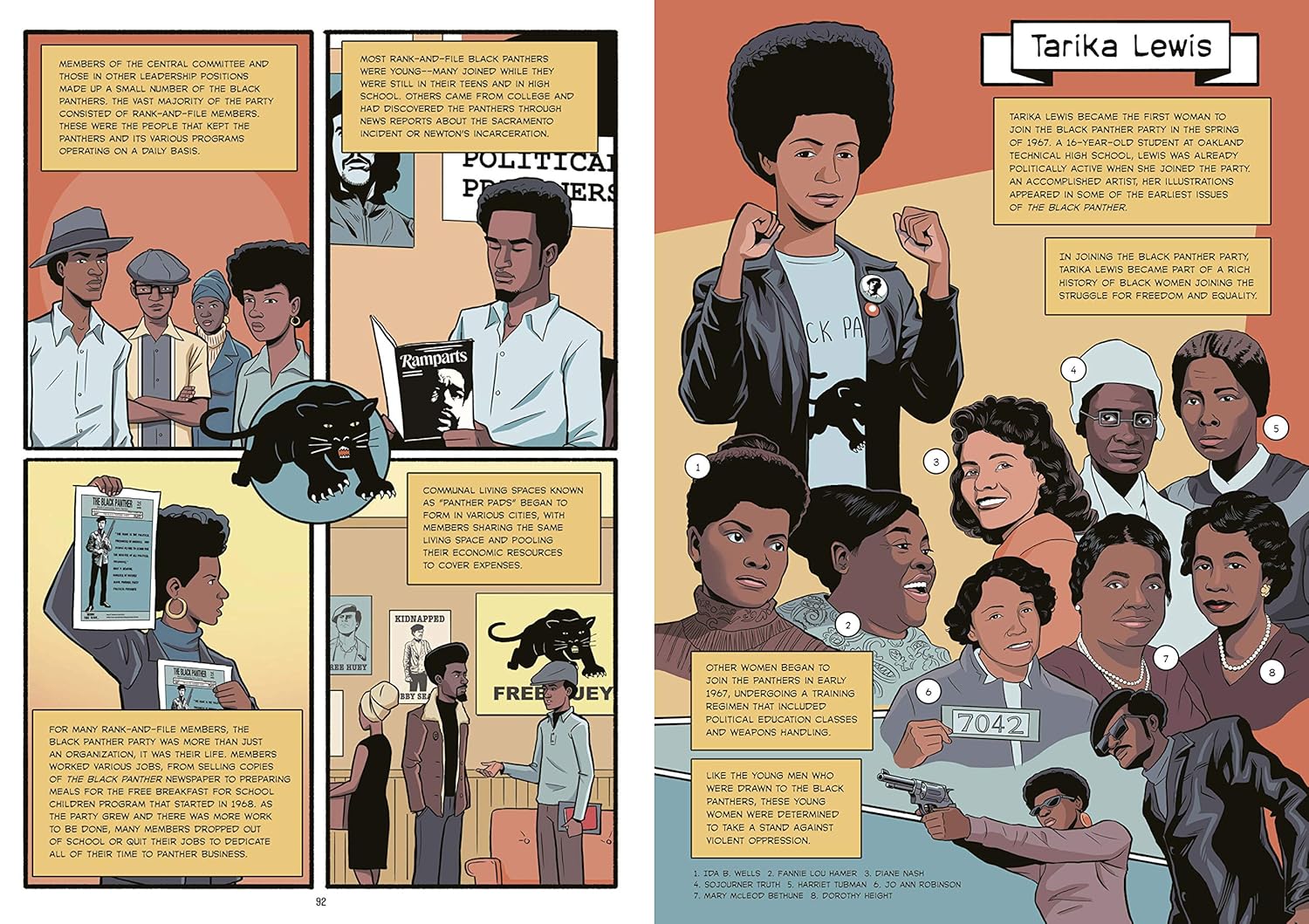
WINNER OF THE EISNER AWARD • “A bold and fascinating graphic novel history of the revolutionary Black Panther Party.”
Founded in Oakland, California, in 1966, the Black Panther Party for Self-Defense was a radical political organization that stood in defiant contrast to the mainstream civil rights movement. This gripping illustrated history explores the impact and significance of the Panthers, from their social, educational, and healthcare programs that were designed to uplift the Black community to their battle against police brutality through citizen patrols and frequent clashes with the FBI, which targeted the Party from its outset.
Using dramatic comic book-style retellings and illustrated profiles of key figures, The Black Panther Party captures the major events, people, and actions of the party, as well as their cultural and political influence and enduring legacy.
The Black Panther Party: A Graphic Novel History, by David F. Walker (Author), Marcus Kwame Anderson (Illustrator)
Pop the document out from the upper right to read / expand / download.
RBG| FBI_COINTELPRO Video Education Player
8 Video Playlist
Learn more in RBG Communiversity Knowledge Media eLibrary:
“Revolutionary Path” by Kwame Nkrumah is a significant work detailing the author’s political philosophy, his vision for Africa, and the strategies he believed necessary for achieving liberation and development. Below is an outline and summary of the key themes and concepts of the book.
Introduction
Nkrumah’s motivations for writing the book
The context of African liberation movements
Historical Context
The colonial legacy in Africa
The role of imperialism in shaping African politics
Nkrumah’s experiences and observations
Philosophy of Revolution
Definition of revolution in the African context
The importance of self-determination
Nkrumah’s concept of “Consciencism”
Melding of African traditions with socialist principles
The Path to Independence
Strategies for achieving political liberation
The role of mass movements and grassroots organization
Importance of Pan-Africanism
Building a New Society
Economic strategies for post-colonial Africa
Emphasis on education and industrialization
The need for unity among African nations
Challenges and Obstacles
Internal and external threats to revolutionary movements
The role of neocolonialism
Conclusion
Nkrumah’s vision for the future of Africa
Call to action for African leaders and citizens
Summary in Bullet Points
Motivation: Nkrumah expresses the necessity of a revolutionary path for African nations emerging from colonialism.
Colonial Legacy: Discusses how colonial history has shaped current political landscapes and the need for a radical change.
Revolution Defined: Emphasizes that a true revolution must involve complete self-determination and liberation from imperialist control.
Consciencism: Introduces his philosophy that combines African cultural heritage with socialist ideals to forge a unique path for development.
Strategies for Independence: Advocates for mass mobilization, political organization, and coalition-building among various factions.
Pan-Africanism: Stresses the importance of unity among African nations to combat neocolonialism and promote collective progress.
Economic Development: Proposes that post-independence Africa must focus on education, industry, and self-sufficiency to thrive.
Neocolonialism: Warns against the subtler forms of colonialism, which threaten the sovereignty of African states even after formal independence.
Vision for the Future: Calls for a collective effort to build a prosperous and united Africa, free from external domination.
“Revolutionary Path” serves as both a historical account and a blueprint for future generations seeking to navigate the complexities of post-colonial Africa. Nkrumah’s insights continue to resonate in discussions of nationalism, unity, and development on the continent.
“Revolutionary Path” is a profound exploration of the political, social, and economic challenges facing Africa in the wake of colonial rule. Here are some deeper insights into the key themes and ideas presented in the book:
Key Themes and Ideas
Colonial Legacy:
Nkrumah discusses how the colonial experience has left deep scars on African societies, creating divisions and dependencies that hinder progress. He emphasizes that true independence cannot be achieved merely through political freedom but requires a complete restructuring of societal norms and economic systems.
Philosophy of Consciencism:
This concept is central to Nkrumah’s ideology. Consciencism combines African cultural values with socialist principles, advocating for a new identity rooted in both tradition and modernity. Nkrumah argues that this philosophy is essential for creating a cohesive national consciousness that can drive the revolutionary movement.
Mass Mobilization:
Nkrumah stresses the importance of involving the masses in the revolutionary struggle. He believes that true change comes from the grassroots level, and political movements must be inclusive and representative of the people’s aspirations. He highlights successful examples of mass movements in Africa and their role in achieving independence.
Pan-African Unity:
The author passionately argues for the unity of African nations as a strategy for combating imperialism and neocolonialism. He envisions a united Africa where countries collaborate economically and politically, sharing resources and knowledge to enhance collective development.
Economic Independence:
Nkrumah outlines a vision for economic self-sufficiency, emphasizing the need for African nations to develop their own industries and agricultural systems. He argues that reliance on foreign powers for economic support perpetuates dependency and undermines sovereignty.
Challenges of Neocolonialism:
He warns that the struggle for independence is not over with the end of colonial rule. Neocolonialism, characterized by foreign economic and political influence, continues to threaten African nations. Nkrumah calls for vigilance and proactive measures to resist these new forms of domination.
Education and Enlightenment:
Education is portrayed as a crucial tool for empowerment and development. Nkrumah believes that educating the populace will foster critical thinking, political awareness, and a sense of responsibility among citizens, enabling them to participate actively in nation-building.
Call to Action:
Throughout the book, Nkrumah urges African leaders and citizens to embrace the revolutionary path. He calls for action, solidarity, and commitment to the ideals of freedom, justice, and equality, stressing that the future of Africa depends on collective efforts.
Impact and Legacy
“Revolutionary Path” is more than just a political manifesto; it serves as a historical document reflecting Nkrumah’s vision for a liberated Africa. His ideas have influenced numerous movements and leaders across the continent, inspiring a generation to fight for self-determination and social justice.
Overall, Nkrumah’s work is a vital reminder of the complexities involved in achieving true independence and the ongoing struggles that many African nations face. His call for unity, self-reliance, and a commitment to revolutionary ideals continues to resonate today as Africa navigates its path in a globalized world.
Revolutionary Path_eBook
Pop the document out from the upper right to read / expand / download.
Revolutionary Path_Audiobook
Part 1
Part 2
Africa Must Unite Video Player
14 Video Playlist
Learn more in RBG Communiversity Knowledge Media eLibrary:
“A Certain Amount of Madness: The Life Politics and Legacies of Thomas Sankara,” edited by Amber Murrey, is a comprehensive examination of the life and enduring impact of Thomas Sankara, the revolutionary leader of Burkina Faso. Sankara, who served as president from 1983 until his assassination in 1987, is celebrated for his radical policies aimed at achieving social justice, economic self-sufficiency, and anti-imperialism. This anthology brings together a diverse range of essays and reflections from scholars, activists, and thinkers who explore Sankara’s political philosophy, his vision for Africa, and the continuing relevance of his ideas in contemporary struggles for justice and equality. Through this collection, the editors aim to honor Sankara’s legacy while also encouraging critical dialogue about the challenges and possibilities for revolutionary change in the present day.
The outline that follows captures the main themes and structure of “A Certain Amount of Madness,” highlighting the critical discussions within the anthology regarding Thomas Sankara’s legacy and its significance for contemporary social justice movements. The book serves as an important resource for understanding the complexities of revolutionary thought and the ongoing fight for justice and equality in Africa and beyond.
I. Introduction
Overview of the book’s purpose: to explore the life, politics, and legacy of Thomas Sankara
Introduction to Amber Murrey as the editor and her significance in the discourse on African political thought
The importance of examining Sankara’s contributions to contemporary movements for social justice
II. Historical Context of Sankara’s Leadership
Examination of Burkina Faso’s political landscape prior to Sankara’s rise to power
Overview of Sankara’s military background and his ascent within the political sphere
Discussion of the socio-economic conditions that prompted Sankara’s revolutionary vision
III. Sankara’s Political Philosophy
Analysis of Sankara’s revolutionary ideology, including his views on socialism, nationalism, and anti-imperialism
Exploration of his emphasis on self-reliance and economic independence for African nations
Discussion of Sankara’s approach to leadership and governance, including his commitment to transparency and accountability
IV. Policies and Reforms Under Sankara
Examination of key policies implemented during Sankara’s presidency, including land reform, education, healthcare, and women’s rights
Insights into Sankara’s efforts to combat corruption and promote environmental sustainability
Discussion of the challenges and successes of these policies in transforming Burkina Faso
V. The Role of Women in Sankara’s Vision
Exploration of Sankara’s commitment to gender equality and the empowerment of women
Analysis of policies aimed at improving women’s rights and participation in governance
Discussion of the impact of these policies on societal attitudes toward gender roles in Burkina Faso
VI. Sankara’s International Relations and Anti-Imperialism
Examination of Sankara’s foreign policy, including his relationships with other African nations and global powers
Analysis of his stance against neo-colonialism and imperialism, and his advocacy for pan-African solidarity
Insights into Sankara’s participation in international forums and his influence on global anti-imperialist movements
VII. Legacy and Memory of Sankara
Discussion of the circumstances surrounding Sankara’s assassination and its aftermath
Exploration of how Sankara’s legacy is remembered in Burkina Faso and beyond, including cultural representations and commemorations
Analysis of the ongoing relevance of Sankara’s ideas in contemporary social and political movements
VIII. Reflections on Revolutionary Change
Critical reflections on the lessons learned from Sankara’s life and leadership
Discussion of the challenges facing contemporary movements for social justice and how Sankara’s legacy can inform current struggles
Exploration of the notion of revolutionary change in the context of modern political realities
IX. Conclusion
Summary of key themes and insights from the anthology
Reflection on the enduring significance of Thomas Sankara’s ideas and actions for current and future generations
A call to action for continued advocacy and engagement in the pursuit of justice, equality, and revolutionary change
“A Certain Amount of Madness: The Life Politics and Legacies of Thomas Sankara,” edited by Amber Murrey, offers an in-depth exploration of one of Africa’s most iconic revolutionary leaders, Thomas Sankara. Known as the “African Che Guevara,” Sankara’s presidency in Burkina Faso from 1983 until his assassination in 1987 was marked by transformative policies aimed at addressing social inequalities, fostering economic independence, and promoting pan-African solidarity. This anthology not only honors Sankara’s legacy but also critically engages with his ideas and their relevance in contemporary political contexts.
Key Themes and Insights
Historical Context of Burkina Faso:
The anthology begins by situating Sankara within the historical and political landscape of Burkina Faso prior to his leadership. It discusses the colonial legacy and the socio-economic challenges the country faced, including poverty, illiteracy, and dependency on foreign aid.
Contributors provide insights into the conditions that allowed for Sankara’s rise to power, including his military background and the revolutionary atmosphere of the early 1980s.
Political Philosophy and Ideology:
Sankara’s political philosophy is a central theme throughout the book. His commitment to socialism, nationalism, and anti-imperialism is thoroughly analyzed, showcasing his vision for a self-reliant African continent.
The anthology highlights Sankara’s rejection of neo-colonialism and his advocacy for African unity, reflecting his belief that true independence could only be achieved through collective action and solidarity among African nations.
Innovative Policies and Reforms:
The book delves into the key policies implemented during Sankara’s presidency, such as land reform, which aimed to redistribute land to peasants and promote agricultural self-sufficiency.
Contributors discuss his ambitious health and education initiatives, which significantly improved literacy rates and access to healthcare, particularly for marginalized communities.
Sankara’s efforts to combat environmental degradation and promote sustainable development are also highlighted as integral components of his governance.
Empowerment of Women:
One of the most notable aspects of Sankara’s leadership was his commitment to gender equality. The anthology explores how he championed women’s rights, promoting policies that aimed to improve women’s social and economic status.
Contributors analyze the impact of these policies on societal attitudes toward women and their roles in governance, illustrating how Sankara’s vision sought to dismantle patriarchal structures.
International Relations and Anti-Imperialism:
Sankara’s foreign policy, characterized by a commitment to pan-Africanism and anti-imperialism, is examined in detail. The book discusses his relationships with other African leaders and his advocacy for solidarity among African nations against external exploitation.
The anthology provides insights into how Sankara’s international stance resonated with global anti-colonial movements, reinforcing his status as a prominent figure in the struggle against imperialism.
Assassination and Legacy:
The circumstances surrounding Sankara’s assassination in 1987 and its implications for Burkina Faso are critically analyzed. Contributors discuss the political climate that led to his death and the subsequent impact on the country and the broader region.
The anthology reflects on how Sankara’s legacy is remembered today, including cultural representations, commemorations, and the ongoing influence of his ideas on contemporary social movements.
Contemporary Relevance:
A significant portion of the anthology is dedicated to exploring the relevance of Sankara’s ideas in current struggles for justice and equality. Contributors draw connections between Sankara’s vision and contemporary issues such as globalization, social inequality, and environmental challenges.
The discussions emphasize the need for renewed revolutionary spirit and collective action to address the injustices that persist in today’s world.
Lessons for Future Generations:
The anthology concludes with reflections on the lessons learned from Sankara’s life and leadership. Contributors encourage readers to engage with his teachings and apply them to contemporary struggles for justice, advocating for a commitment to revolutionary change in the face of adversity.
The call to action emphasizes the importance of grassroots organizing, community engagement, and solidarity in the pursuit of a more equitable world.
Conclusion
“A Certain Amount of Madness” is a crucial contribution to the understanding of Thomas Sankara’s legacy and its significance for contemporary social justice movements. The anthology showcases a diverse range of perspectives that not only celebrate Sankara’s achievements but also engage critically with the complexities of his policies and ideas.
By illuminating the historical context, political philosophy, and lasting impact of Sankara’s leadership, the book serves as an important resource for scholars, activists, and anyone interested in the ongoing fight for justice, equality, and revolutionary change. It encourages readers to draw inspiration from Sankara’s vision as they navigate the challenges of the present and work towards a more just and liberated future.
A Certain Amount of Madness_eBook
Pop the documents out from the upper right to read / expand / download.
A Certain Amount of Madness_Audiobook
Audio start corresponds to page 12 of the above Reader.
From Thomas Sankara to Captain Ibrahim Traore Video Player
13 Video Playlist
Learn more in RBG Communiversity Knowledge Media eLibrary:









 RBG Communiversity: Message 2 Da Grassroots
You must be logged in to post a comment.