A Revolutionary for Our Time: The Walter Rodney Story by Leo Zeilig_eBook and Audiobook, with HAP 123-History Teaches Us- Walter Rodney

Book Summary

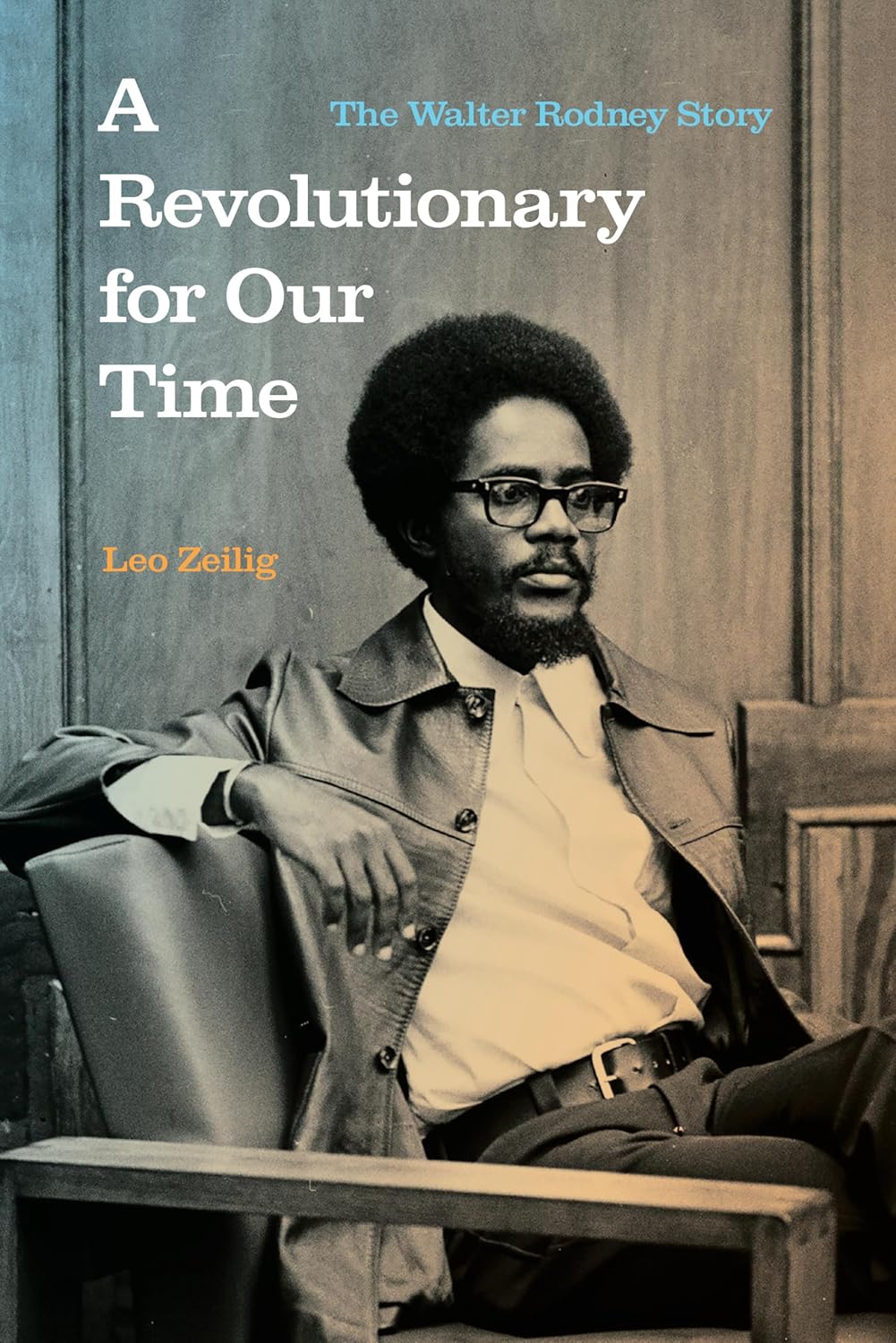
A Revolutionary for Our Time: The Walter Rodney Story by Leo Zeilig is a biography that delves into the life and legacy of Walter Rodney, a prominent Guyanese historian, political activist, and revolutionary. The book highlights Rodney’s contributions to Caribbean intellectual thought, his critiques of colonialism and imperialism, and his dedication to social justice and the empowerment of the oppressed. Through Rodney’s story, Zeilig explores broader themes of race, class, and resistance in the Caribbean, as well as the impact of Rodney’s work on contemporary movements for social change.

Key Themes and Historical Context:

  1. Introduction to Walter Rodney
    • Overview of Rodney’s significance in Caribbean history
    • Brief introduction to his early life and background
  2. Early Life and Education
    • Rodney’s upbringing in British Guiana
    • Educational experiences and early influences
    • Development of his political consciousness
  3. Academic Career and Historical Contributions
    • Rodney’s work as a historian and scholar
    • Key publications and their impact (e.g., “How Europe Underdeveloped Africa”)
    • Methodological approaches and critiques of traditional historiography
  4. Political Activism and Leader of the People’s Movement
    • Involvement in political movements in Guyana
    • Formation of the Working People’s Alliance (WPA)
    • Advocacy for the rights of marginalized communities
  5. Colonialism and Imperialism
    • Rodney’s critique of colonial structures
    • Analysis of the effects of colonialism on Caribbean societies
    • Advocacy for decolonization and self-determination
  6. Exile and International Influence
    • Rodney’s experiences of exile and its impact on his work
    • Connections with other revolutionary movements in the Caribbean and globally
    • Participation in international forums and discussions
  7. Legacy and Impact
    • Rodney’s influence on subsequent generations of activists and scholars
    • The continuing relevance of his ideas in contemporary struggles
    • Commemoration of Rodney’s life and work in cultural memory
  8. Conclusion
    • Reflection on Walter Rodney’s contributions as a revolutionary thinker
    • The importance of his legacy in the fight for social justice and equality

A Revolutionary for Our Time: The Walter Rodney Story_eBook

Walter Rodney was a scholar, working class militant, and revolutionary from Guyana. Strongly influenced by Marxist ideas, he remains central to radical Pan-Africanist thought for large numbers of activists’ today. Rodney lived through the failed –though immensely hopeful -socialist experiments in the 1960s and 1970s, in Tanzania and elsewhere. The book critically considers Rodney’s contribution to Marxist theory and history, his relationship to dependency theory and the contemporary significance of his work in the context of movements and politics today. The first full-length study of Rodney’s life, this book is an essential introduction to Rodney’s work.

Pop the document out from the upper right to read / expand / download.

A Revolutionary for Our Time: The Walter Rodney Story_Audiobook

Part 1

Part 2

HAP 123-History Teaches Us- Walter Rodney

Learn more in RBG Communiversity Knowledge Media eLibrary:

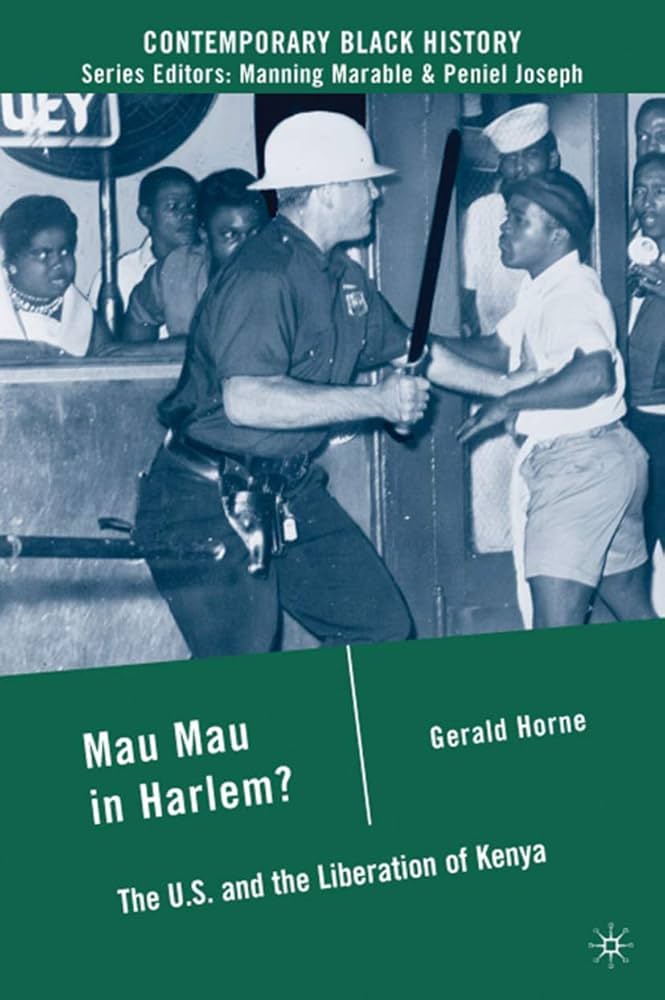
Mau Mau in Harlem?_The U.S. and the Liberation of Kenya, Gerald Horne|eBook and Audiobook| (Contemporary Black History), with Mau Mau Warrior Illustrated eBook, by Abiodun Alao (Author), Christa Hook (Illustrator).

Book Summary:

“Mau Mau in Harlem?: The U.S. and the Liberation of Kenya” is a book by historian Gerald Horne which explores the connections between the African-American Civil Rights movement in the United States and the Mau Mau uprising in Kenya, specifically how the struggle for Kenyan independence resonated with African Americans, leading to a sense of solidarity and even the idea of a “Mau Mau” movement within Harlem and other Black communities in the U.S. 

Key points about the book:

  • Focus on the Mau Mau: The book delves into the Mau Mau Uprising, a violent guerrilla campaign by Kenyan Kikuyu people against British colonial rule in the 1950s, primarily focused on land rights and self-determination. 
  • Harlem connection: It analyzes how the struggles of the Mau Mau movement were closely followed and supported by African Americans in Harlem, New York, who saw parallels with their own fight for civil rights in the United States. 
  • Scholarly research: Horne draws on extensive archival research conducted in the US, UK, and Kenya to provide a nuanced understanding of the interconnectedness between the two movements. 
  • Impact on Black consciousness: The book argues that the Mau Mau rebellion contributed to a growing sense of Black consciousness and solidarity among African Americans, further fueling the civil rights movement. 
  • The Mau Mau Uprising: This was a violent resistance movement against British colonial rule in Kenya, primarily led by the Kikuyu tribe, during the 1950s. 
  • African (American) Solidarity: The book argues that African Americans saw parallels between the Kenyan struggle against British colonialism and their own fight for civil rights in the U.S., leading to significant support for the Mau Mau movement within the Black community. 
  • Malcolm X’s “Mau Mau in Harlem” reference: A prominent example of this connection is Malcolm X’s statement about the potential need for a “Mau Mau” style uprising in Harlem, signifying a willingness to use more militant tactics to achieve racial equality. 
  • Historical Context: The book examines the broader historical context of the Cold War, where the U.S. was keen to demonstrate its anti-colonial stance, leading to some level of support for Kenyan independence. 

Mau Mau in Harlem, Gerald Horne?_eBook

Pop the documents out from the upper right to read / expand / download.

Mau Mau in Harlem, Gerald Horne?_Audiobook

Audio start in earnest (Introduction @ 4 mins. 45 sec.) and corresponds to page 12 of the above Reader.

Part 1

Part 2

Mau Mau Warrior Illustrated eBook, by Abiodun Alao (Author), Christa Hook (Illustrator).

Amazon Books: “Osprey’s study of the Mau Mau Rebellion (1952-1960) in Kenya and its fighters. The Mau Mau Freedom Fighters waged a guerrilla war for eight years against their British colonial rulers, which became known as the Mau Mau Uprising. The Mau Mau sought to win back their land and independence. This underground militia was an extremely powerful force employing tactics, which included the assassination of British settlers and the Africans who collaborated with the British, as well as raiding colonial prisons for weapons and staging daring ambushes in the Kenyan forests and mountains. The conflict saw these untrained warriors, deemed by many to be terrorists employ an innovative mix of traditional African warfare tactics, counterinsurgency methods and European firepower. The uprising ended in failure but set the stage for Kenyan independence in 1963. This title will explore their unique motivations, training and tactics, as well as their battle experience.”

Learn more in RBG Communiversity Knowledge Media eLibrary:

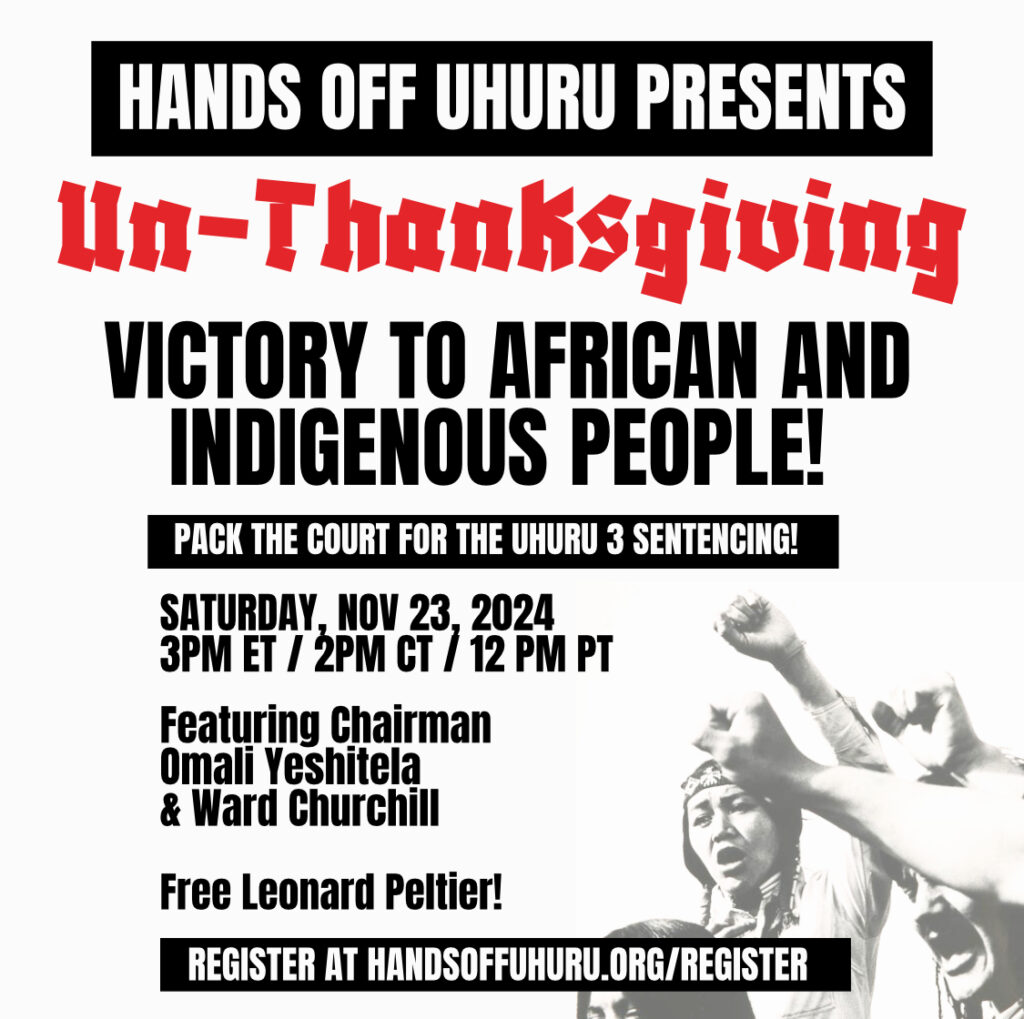
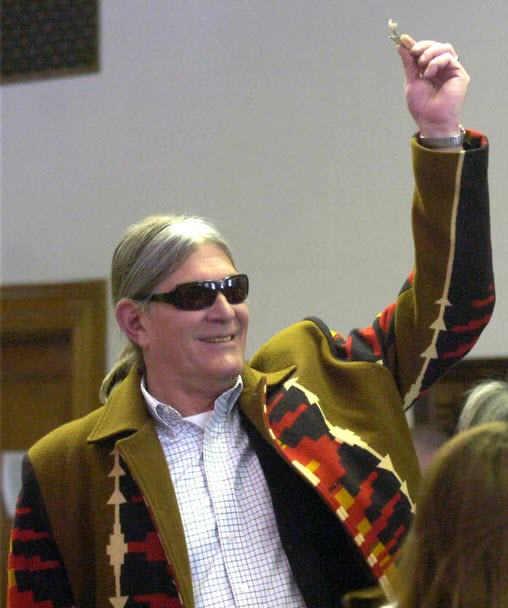
Hands Off Uhuru presents: “Unthanksgiving” Victory to African and Indigenous people!­_The Burning Spear TV, with Uhuru 3 Trial Re-enactment

Last Updated 12-06-24

https://handsoffuhuru.org/

Uhuru 3 Trial Re-enactment

3 Video Playlist (Episodes One thru Three.)

Companion Post/Lessons

Manifest Destiny and American Holocaust_Dr. Ward Churchill Lecture, History of COINTELPRO and COINTELPRO and Terrorism, The COINTELPRO Papers – Ward Churchill & Jim Vander Wall (eBook and Audiobook)

Learn more in RBG Communivesity Knowledge Media eLibrary:

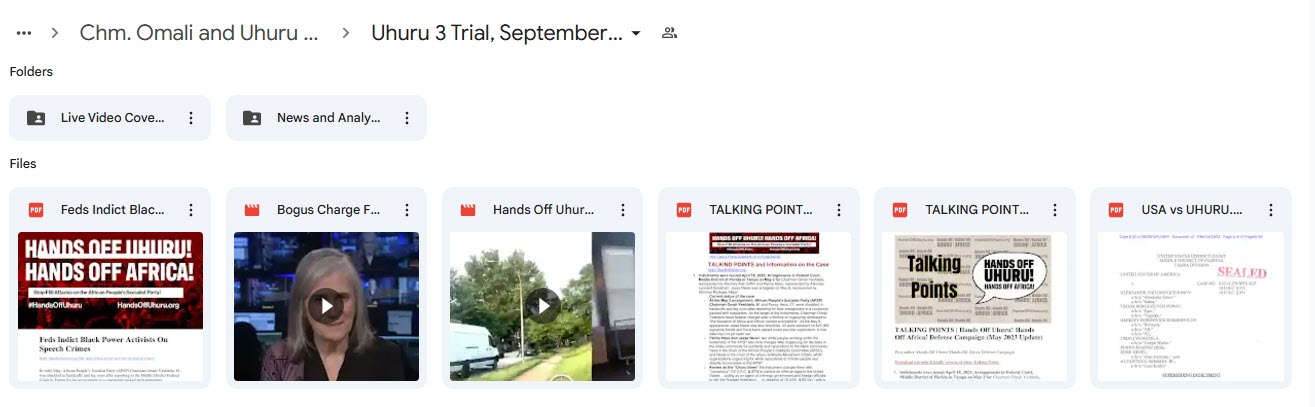
Uhuru 3 Trial, September 2024

Uhuru 3 Trial, September 2024 | INSIDE: Chm. Omali and Uhuru Movement Folder

Native Americans & The American Indian Movement (AIM)

Native Americans & The American Indian Movement (AIM)  Folder

Late Victorian Holocausts_El Niño Famines and the Making of the Third World_eBook and Audiobook, (Essential Mike Davis)

NB: “The Victorian era spans the 63 years of Queen Victoria’s reign over Great Britain and Ireland from 1837 until her death in 1901.”

Book Summary

“Late Victorian Holocausts: El Niño Famines and the Making of the Third World” by Mike Davis is a critical examination of the catastrophic famines that struck various regions during the late 19th century, particularly in India, China, and parts of Africa. The book explores the interplay between global climatic events, specifically the El Niño phenomenon, and the economic and political structures of colonialism that exacerbated these disasters. Davis argues that the famines were not merely natural occurrences but were significantly shaped by imperial policies and practices that prioritized profit over human life. The work critiques the historical narratives surrounding these events and highlights their role in the emergence of the modern “Third World.”

Essential Themes and Historical Context:

  1. Introduction
    • Overview of the book’s thesis and objectives
    • Introduction to the concepts of climate, famine, and imperialism
    • The significance of the El Niño phenomenon in global history
  2. The El Niño Phenomenon
    • Explanation of the El Niño climate pattern and its effects
    • Historical instances of El Niño-related weather anomalies
    • The relationship between climate variability and agricultural production
  3. Famines of the Late Victorian Era
    • Detailed accounts of major famines in India, China, and Africa during the late 19th century
    • Examination of the scale and impact of these famines on local populations
    • Case studies of specific famines and their socio-economic contexts
  4. Colonial Policies and Economic Exploitation
    • Analysis of colonial practices that contributed to famine conditions
    • The role of cash crop economies and land dispossession
    • Critique of British colonial governance and its neglect of local needs
  5. Racial and Class Dimensions of Famine
    • Exploration of how race and class influenced the severity of famine impacts
    • Discussion of the social hierarchies that shaped access to resources
    • The role of discrimination in the distribution of aid and relief efforts
  6. Resistance and Responses to Famine
    • Examination of local responses to famine crises
    • Accounts of resistance movements and community solidarity
    • The role of international humanitarian efforts and their limitations
  7. The Legacy of Late Victorian Famines
    • Reflection on the long-term consequences of these famines for affected regions
    • Discussion of how these events contributed to the formation of the “Third World”
    • Analysis of the historical memory and narratives surrounding colonial famines
  8. Conclusion
    • Summary of key arguments and insights from Davis’s analysis
    • Call for recognition of the interconnectedness of climate, economy, and imperialism
    • Implications for contemporary discussions on food security and climate justice

This global environmental and political history “will redefine the way we think about the European colonial project” (Observer). “

Late Victorian Holocausts_eBook

Late Victorian Holocausts. … sets the triumph of the late 19th-century Western imperialism in the context of catastrophic El Niño weather patterns at that time . . . groundbreaking, mind-stretching.” —The Independent

Examining a series of El Niño-induced droughts and the famines that they spawned around the globe in the last third of the 19th century, Mike Davis discloses the intimate, baleful relationship between imperial arrogance and natural incident that combined to produce some of the worst tragedies in human history. Late Victorian Holocausts focuses on three zones of drought and subsequent famine: India, Northern China; and Northeastern Brazil. All were affected by the same global climatic factors that caused massive crop failures, and all experienced brutal famines that decimated local populations. But the effects of drought were magnified in each case because of singularly destructive policies promulgated by different ruling elites. Davis argues that the seeds of underdevelopment in what later became known as the Third World were sown in this era of High Imperialism, as the price for capitalist modernization was paid in the currency of millions of peasants’ lives.

Pop the document out from the upper right to read / expand / download.

Late Victorian Holocausts_Audiobook

Part 1

Part 2

Learn more in RBG Communiversity Knowledge Media eLibrary:

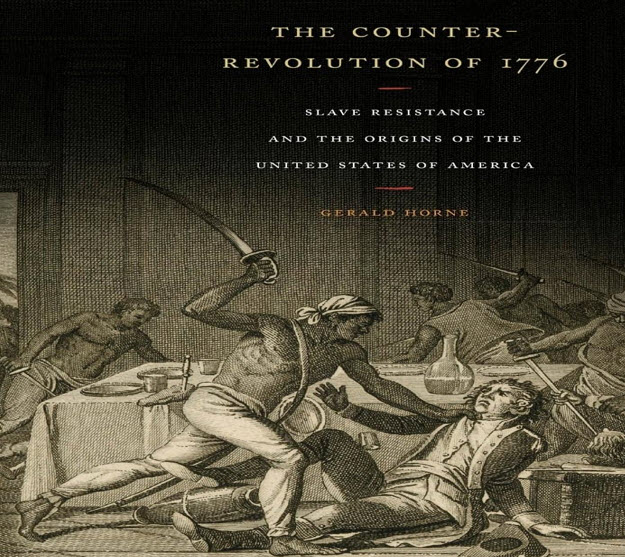
Dr. Gerald Horne: The Counter-Revolution of 1776: Slave Resistance and the Origins of the United States of America_eBook and Audiobook, with Trump 2.0: Gerald Horne on the Future of White Supremacy, Imperialism & the Rise of Third-Worldism (Jedaal English)

Dr. Gerald Horne is an American historian who currently holds the John J. and Rebecca Moores Chair of History and African American Studies at the University of Houston. 

Book Summary

Dr. Gerald Horne’s “The Counter-Revolution of 1776” presents a provocative reinterpretation of the American Revolution, arguing that it was not merely a struggle for independence from British rule but also a response to the increasing resistance of enslaved people. Horne posits that the revolution was fundamentally counter-revolutionary, aimed at preserving the institution of slavery and maintaining white supremacy. The book examines the social, political, and economic tensions that fueled both the revolution and the resistance of enslaved individuals, ultimately framing the American founding in a broader context of global struggles against colonialism and oppression.

The following outline captures the key themes and structure of Horne’s argument, highlighting the interconnections between slave resistance and the events leading to the formation of the United States.

Introduction

  • Explanation of the book’s thesis
  • Contextualization of the American Revolution within the framework of slavery

The Background of Slavery in Colonial America

  • Overview of the institution of slavery in the colonies
  • Economic importance of slavery to colonial economies
  • Social hierarchies and racial ideologies

Rising Tensions

  • Factors leading to increased resistance among enslaved people
  • The role of the British in promoting freedom for enslaved individuals
  • Key instances of slave resistance prior to the revolution

The Revolutionary Context

  • The impact of the American Revolution on colonial society
  • The ideological conflict between liberty and slavery
  • Examination of revolutionary leaders’ views on slavery

The Counter-Revolutionary Nature of the American Revolution

  • Analysis of how the revolution sought to protect slavery
  • The role of Southern colonies in shaping revolutionary goals
  • The influence of slave uprisings on revolutionary rhetoric

Global Implications

  • Connections between the American Revolution and global slave resistance
  • The impact of the revolution on other colonies and enslaved populations
  • The emergence of new ideologies and movements in response to slavery

The Legacy of the Counter-Revolution

  • Long-term effects of the American Revolution on slavery and race relations
  • The establishment of a national identity rooted in white supremacy
  • Reflections on the implications for understanding American history today

Conclusion

  • Summation of key arguments
  • The importance of recognizing the role of slavery in shaping American history
  • Call for re-examination of the narratives surrounding the founding of the United States

The Counter-Revolution of 1776_eBook

Illuminates how the preservation of slavery was a motivating factor for the Revolutionary War
The successful 1776 revolt against British rule in North America has been hailed almost universally as a great step forward for humanity. But the Africans then living in the colonies overwhelmingly sided with the British. In this trailblazing book, Gerald Horne shows that in the prelude to 1776, the abolition of slavery seemed all but inevitable in London, delighting Africans as much as it outraged slaveholders, and sparking the colonial revolt.
Prior to 1776, anti-slavery sentiments were deepening throughout Britain and in the Caribbean, rebellious Africans were in revolt. For European colonists in America, the major threat to their security was a foreign invasion combined with an insurrection of the enslaved. It was a real and threatening possibility that London would impose abolition throughout the colonies―a possibility the founding fathers feared would bring slave rebellions to their shores. To forestall it, they went to war.
The so-called Revolutionary War, Horne writes, was in part a counter-revolution, a conservative movement that the founding fathers fought in order to preserve their right to enslave others. The Counter-Revolution of 1776 brings us to a radical new understanding of the traditional heroic creation myth of the United States.

Pop the document out from the upper right to read / expand / download.

The Counter-Revolution of 1776_Audiobook

Trump 2.0: Gerald Horne on the Future of White Supremacy, Imperialism & the Rise of Third-Worldism (Jedaal English)

RBG Communiversity Dr. Gerald Horne Video Edu. Player (31)

Learn more in RBG Communiversity Knowledge Media eLibrary: