
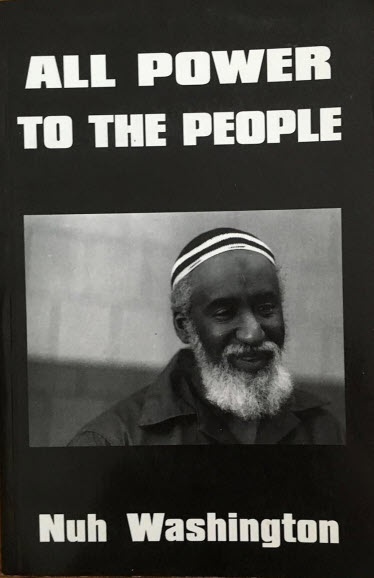
All Power to the People by Albert Nuh Washington, eBook and Audiobook, with Video Education Player

ICEBREAKER VIDEO

Pop the document out from the upper right to read / expand / download.
See NY3. The Case of the New York Three.pdf

Book Summary

Overview

“All Power to the People” by Albert Nuh Washington is a significant work that explores the history and impact of the Black Panther Party (BPP) and the broader Black radical movement in the United States. Published in 2002, the book provides an in-depth analysis of the social, political, and economic conditions that gave rise to the BPP, as well as the party’s contributions to the struggle for civil rights and social justice. Washington draws on personal experiences, interviews, and historical narratives to highlight the achievements and challenges faced by the Black Panther Party, offering a critical perspective on its legacy and the continuing relevance of its ideals in contemporary society. The outline and overview that follows provides a structured look at the contents of “All Power to the People” by Albert Nuh Washington.

Outline

I. Introduction

  • A. Overview of the Black Panther Party’s significance
  • B. Purpose of the book and its relevance to contemporary social justice movements
  • C. Author’s background and perspective

II. Historical Context

  • A. The civil rights movement and its limitations
    • Key figures and events leading to the rise of the BPP
    • Challenges faced by African Americans in the 1960s
  • B. The influence of Black nationalism and radical thought
    • Connection to earlier movements (e.g., Marcus Garvey, the Nation of Islam)
  • Emergence of the Black Power movement

III. Formation of the Black Panther Party

  • A. Founding members and their motivations
    • Huey P. Newton and Bobby Seale
    • Key ideological influences
  • B. Development of the party’s platform and goals
    • The Ten-Point Program
  • Focus on community empowerment and social justice

IV. Key Activities and Programs

  • A. Community initiatives
    • Free breakfast programs for children
    • Health clinics and education programs
  • B. Armed self-defense and its implications
    • The philosophy of self-defense against police brutality
  • Impact on public perception and law enforcement responses

V. Internal Challenges and Conflicts

  • A. Struggles within the organization
    • Leadership disputes and factionalism
    • The influence of COINTELPRO and government repression
  • B. The impact of external pressures
    • Surveillance and infiltration by law enforcement
  • Media portrayal and public perception of the BPP

VI. Legacy of the Black Panther Party

  • A. Contributions to civil rights and social justice
    • Influence on later movements (e.g., Black Lives Matter)
    • Cultural impact through art, music, and literature
  • B. Ongoing relevance of BPP ideals
    • Discussion of systemic racism and inequality today
  • Calls for community empowerment and social change

VII. Conclusion

  • A. Summary of key themes and insights from the book
  • B. Reflection on the importance of understanding the BPP’s history
  • C. Call to action for continued activism and social justice

“All Power to the People” serves as a vital resource for understanding the history and legacy of the Black Panther Party and the broader struggle for racial and social justice in America. By examining the party’s origins, key initiatives, and challenges, Washington provides valuable insights into the ongoing fight against systemic oppression and the importance of community empowerment. The book encourages readers to reflect on the lessons of the past while inspiring continued activism in the pursuit of equality and justice.

“All Power to the People” is an essential examination of the Black Panther Party (BPP) and its pivotal role in the fight for civil rights and social justice in the United States. Here’s a more detailed exploration of the book’s themes, key figures, historical context, and its significance:

Detailed Exploration of Key Themes

1. Historical Context

  • Civil Rights Movement Limitations: Washington discusses the civil rights movement’s achievements, such as the Civil Rights Act and the Voting Rights Act, while highlighting its limitations in addressing systemic issues like poverty, police brutality, and economic inequality. The urgency for a more radical approach was felt by many African Americans, leading to the rise of the Black Panther Party.
  • Influence of Black Nationalism: The book places the BPP within the wider context of Black Nationalism and the Black Power movement, which emerged in the 1960s as a response to the perceived inadequacies of mainstream civil rights strategies. Washington emphasizes the influence of figures like Marcus Garvey and Malcolm X, who advocated for self-determination and empowerment for Black communities.

2. Formation and Ideology of the Black Panther Party

  • Founding Members: The BPP was founded in 1966 by Huey P. Newton and Bobby Seale in Oakland, California. Washington explores how their backgrounds and experiences shaped their vision for the party, particularly their commitment to armed self-defense against police violence.
  • The Ten-Point Program: A central feature of the BPP’s ideology was its Ten-Point Program, which outlined the party’s demands for justice, equality, and economic empowerment. Washington details each point, which included calls for decent housing, education, and employment, as well as an end to police brutality.

3. Community Programs and Activism

  • Social Initiatives: Washington highlights the BPP’s commitment to community service through programs like free breakfast for children, health clinics, and educational programs. These initiatives were designed to address the immediate needs of African American communities and demonstrate that the BPP was more than just a militant organization.
  • Armed Self-Defense: The book discusses the philosophy of armed self-defense that the BPP adopted in response to police brutality. Washington analyzes how the party’s public displays of armed self-defense were both a statement of empowerment and a catalyst for increased tensions with law enforcement.

4. Internal Struggles and External Pressures

  • Factionalism and Leadership Conflicts: Washington examines internal conflicts within the BPP, particularly the power struggles between different factions. These conflicts were exacerbated by the pressure from law enforcement and the FBI’s Counterintelligence Program (COINTELPRO), which sought to undermine the party through infiltration, disinformation, and surveillance.
  • Government Repression: The book details the various tactics used by law enforcement to suppress the BPP, including arrests, harassment, and violent confrontations. Washington underscores the impact of COINTELPRO in destabilizing the organization and contributing to its decline in the early 1970s.

5. Legacy and Ongoing Relevance

  • Cultural Impact: Washington discusses how the BPP’s ideals and aesthetics influenced music, art, and literature, leaving a lasting mark on African American culture. The party’s imagery and messages of empowerment continue to resonate in contemporary artistic expressions.
  • Influence on Modern Movements: The book draws connections between the BPP and contemporary movements such as Black Lives Matter, highlighting how the party’s focus on systemic injustice and community empowerment laid the groundwork for ongoing activism. Washington calls attention to the continuing struggle against racism, police violence, and inequality.

Significance of the Work

  • Educational Resource: “All Power to the People” serves as an important educational tool for understanding the complexities of the Black Panther Party and the broader Black radical movement. It provides a nuanced perspective that challenges mainstream narratives about the BPP as solely a militant organization.
  • Inspiration for Activism: Washington’s work encourages readers to reflect on the lessons of the past and recognize the importance of grassroots activism in effecting social change. The book emphasizes the need for community engagement and the importance of addressing systemic issues through collective action.
  • Reexamination of History: By providing a detailed account of the BPP’s history and its various programs, Washington invites readers to reconsider the legacy of the Black Panther Party and its contributions to the struggle for civil rights and social justice in America. It challenges readers to acknowledge the complexities of the BPP’s mission and its relevance in contemporary discussions about race and inequality.

Conclusion

“All Power to the People” by Nuh Washington is a vital contribution to the understanding of the Black Panther Party and the Black radical movement in the United States. Through its exploration of historical context, ideology, activism, and legacy, the book highlights the significance of the BPP in shaping the discourse around civil rights and social justice. Washington’s work serves as both a historical account and a call to action, inspiring readers to engage with the ongoing fight for equality and justice in today’s society.

All Power to the People by Albert Nuh Washington, eBook

Pop the document out from the upper right to read / expand / download.
All Power to the People by Albert Nuh Washington, Audiobook

Video Education_All Power To The People The Black Panther Party & Beyond

Learn more in RBG Knowledge Media eLibrary

RBG4Lif Teaching /Learning Tools & Resources

BPM|BLM eBooks 

BPM|BLM Audiobooks

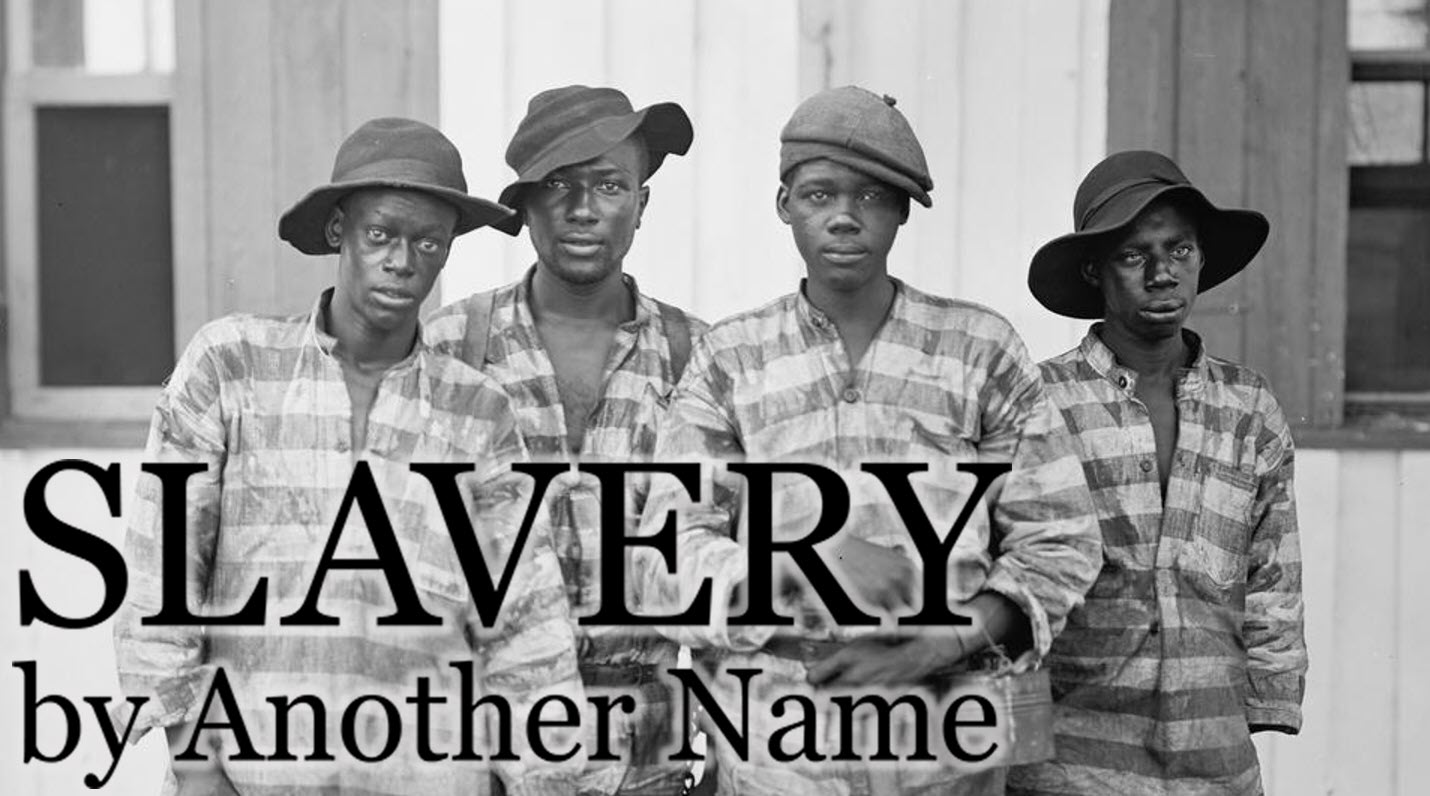
Slavery by Another Name: The Re-Enslavement of Black Americans from the Civil War to World War II by Douglas A. Blackmon_eBook and Audiobook, with Slavery by Another Name Documentary Film

The 13th Amendment to the United States Constitution provides that “Neither slavery nor involuntary servitude, except as a punishment for crime whereof the party shall have been duly convicted, shall exist within the United States, or any place subject to their jurisdiction.”

Book Summary

Douglas A. Blackmon’s “Slavery by Another Name: The Re-Enslavement of Black Americans from the Civil War to World War II” explores the continuation of forced labor and systemic oppression of Black Americans in the decades following the Civil War. The book argues that despite the abolition of slavery, many African Americans were subjected to new forms of servitude that mirrored the conditions of slavery.

The overview and outline that follows provides a structured look at the contents of Blackmon’s “Slavery by Another Name,” encapsulating the main themes and historical significance of the re-enslavement of Black Americans post-Civil War and its enduring legacy.

Overview:

  • Historical Context: The book examines the period from the end of the Civil War through World War II, highlighting how economic, social, and legal systems perpetuated the exploitation of Black Americans.
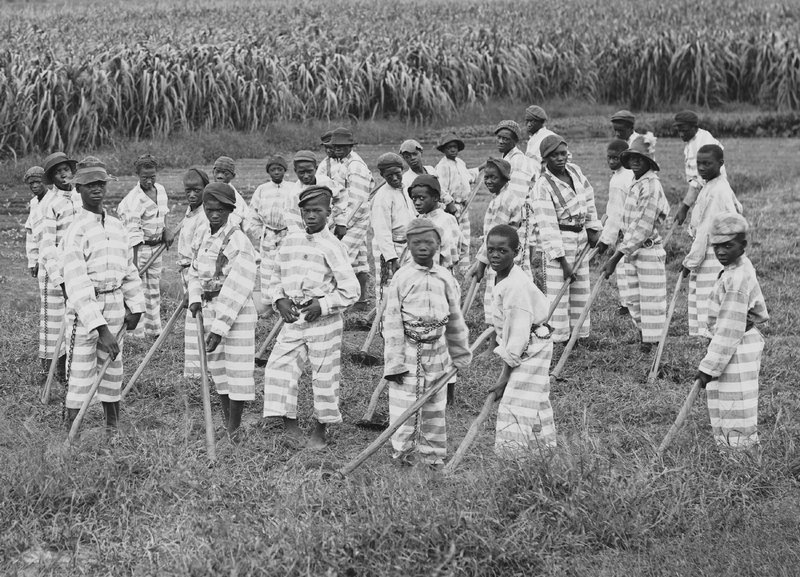
  • Convict Leasing System: Blackmon focuses on the convict leasing system, where African Americans were often arrested on dubious charges and forced into labor for private companies, effectively re-enslaving them.
  • Economic Exploitation: The narrative details how Southern states and businesses exploited Black labor to rebuild the economy after the Civil War, using tactics that included intimidation, violence, and legal manipulation.
  • Personal Stories: The book interweaves personal narratives and testimonies of individuals affected by these practices, providing a human face to the historical analysis.
  • Legacy and Impact: Blackmon discusses the long-term effects of these practices on African American communities and how they laid the groundwork for ongoing racial inequality and injustice.

Outline:

  • Introduction
    • Purpose of the book
    • Overview of the argument regarding the continuity of slavery-like conditions
  • Chapter 1: The End of the Civil War
    • The immediate aftermath of the Civil War and abolition of slavery
    • Initial hopes and challenges faced by newly freed Black Americans
  • Chapter 2: The Rise of Jim Crow
    • The establishment of Jim Crow laws and systemic racism
    • How these laws facilitated the re-enslavement of Black Americans
  • Chapter 3: The Convict Leasing System
    • Detailed description of convict leasing and how it operated
    • The role of law enforcement and the judicial system in perpetuating this system
  • Chapter 4: Economic Motivations
    • The economic interests of Southern states and businesses in maintaining forced labor
    • Analysis of how Black labor was exploited for profit
  • Chapter 5: Personal Narratives
    • Accounts of individuals who experienced re-enslavement
    • Impact of these experiences on families and communities
  • Chapter 6: Resistance and Resilience
    • Examples of resistance against re-enslavement practices
    • The role of Black communities in advocating for rights and reform
  • Chapter 7: National Attention and Reform Movements
    • The growing awareness of racial injustices and exploitation
    • Efforts by activists and organizations to combat systemic oppression
  • Chapter 8: The Legacy of Re-Enslavement
    • Examination of the long-term effects on Black Americans and society at large
    • Connections to contemporary issues of racial inequality and injustice
  • Conclusion
    • Summary of key themes and arguments
    • Reflection on the importance of understanding this history in the context of modern America

Douglas A. Blackmon’s “Slavery by Another Name: The Re-Enslavement of Black Americans from the Civil War to World War II” is a groundbreaking work that sheds light on the continuation of racial oppression and forced labor in the United States long after the formal abolition of slavery. Here are some deeper insights into the themes, events, and significance of the book:

Key Themes and Insights:

  1. Continuity of Oppression:
    • Blackmon argues that the end of slavery did not lead to true freedom for African Americans. Instead, a series of laws and practices emerged to maintain racial hierarchy and economic exploitation, creating a system that functioned similarly to slavery.
  2. Convict Leasing System:
    • One of the central focuses of the book is the convict leasing system, which allowed Southern states to lease convicts (often disproportionately Black men) to private companies for labor. This system became a profitable enterprise, with prisoners subjected to harsh conditions, violence, and little regard for their lives or well-being.
  3. Jim Crow Laws:
    • Following the Reconstruction era, Jim Crow laws institutionalized racial segregation and discrimination. Blackmon details how these laws facilitated the re-enslavement of Black Americans, enforcing a social order that kept them marginalized and economically disadvantaged.
  4. Economic Exploitation:
    • The book examines how economic interests in the South were heavily reliant on the exploitation of Black labor. Southern states and businesses sought to rebuild their economies after the Civil War by using forced labor, which was seen as a cost-effective means to achieve profitability, particularly in industries like agriculture and mining.
  5. Personal Narratives and Testimonies:
    • Blackmon incorporates personal stories of individuals who were subjected to these oppressive systems. These narratives bring a human element to the historical analysis, illustrating the trauma and resilience of those affected. Stories of families torn apart, individuals falsely accused and imprisoned, and the struggles for dignity and justice are poignantly detailed.
  6. Resistance Movements:
    • The author highlights the various forms of resistance against the re-enslavement practices, including protests, legal challenges, and the efforts of Black communities to advocate for their rights. This theme emphasizes the agency of Black Americans in fighting against systemic oppression.
  7. National Awareness and Reform:
    • As the 20th century progressed, growing awareness of racial injustices began to emerge. Blackmon discusses the role of activists and organizations that brought attention to the plight of Black Americans, pushing for reforms and challenging the status quo.
  8. Long-term Legacy:
    • The book concludes by examining the enduring legacy of these practices on contemporary American society. Blackmon argues that the historical exploitation of Black Americans laid the groundwork for ongoing issues of racial inequality, economic disparity, and social injustice that continue to affect African American communities today.

Conclusion:

“Slavery by Another Name” is a vital contribution to the understanding of American history, particularly regarding race relations and the systemic oppression of African Americans. Blackmon’s work challenges readers to recognize the complexities of freedom and the pervasive nature of racism that persisted after the Civil War. By illuminating the harsh realities of the convict leasing system and other forms of re-enslavement, the book serves as a powerful reminder of the struggles faced by Black Americans and the importance of acknowledging this history in the pursuit of justice and equality today.

The book received critical acclaim, including the Pulitzer Prize for History, and has significantly influenced scholarship on race, labor, and American history, encouraging a reevaluation of the narrative surrounding the post-Civil War era and its implications for modern society.

Slavery by Another Name_eBook

Pop the document out from the upper right to read / expand / download.
Slavery by Another Name_Audiobook

PART 1

PART 2

Slavery by Another Name Documentary Film

Learn more in RBG Communiversity Knowledge Media eLibrary:

Maafa_African Holocaust, Chattel Slavery, Jim Crow, Influencers and more_Books, Videos & Audio Folder

Prisons, Slavery, Policing and Imperialism (The Correctional-Industrial Complex [CIC]) Folder

“Ghosts in Our Blood: With Malcolm X in Africa, England, and the Caribbean” by Jan R. Carew eBook and Audiobok, with Minister Malcolm X Select Teachings Video Player

ICEBREAKER Video: Malcolm X Oxford Union Debate, Dec 3 1964

Book Summary

“Ghosts in Our Blood: With Malcolm X in Africa, England, and the Caribbean” by Jan R. Carew is a compelling memoir that chronicles the life and experiences of Malcolm X during his travels in Africa, England, and the Caribbean. The book provides a unique perspective on Malcolm’s journey of self-discovery and his evolving political and social beliefs. Carew, who was a close associate of Malcolm X, offers insights into the influential figures he encountered, the cultural exchanges he experienced, and the broader implications of his activism.

The following outline captures Malcolm’s vision for global Black empowerment, his commitment to social justice, and the legacy he left behind as written in the book.

Outline

I. Introduction

  • A. Overview of Malcolm X’s significance in the civil  and human rights movements
  • B. Purpose of the memoir and its connection to Malcolm’s journey
  • C. Brief introduction to Jan R. Carew and his relationship with Malcolm X

II. Early Life and Background

  • A. Malcolm X’s upbringing and formative experiences
  • B. The impact of race and identity on Malcolm’s worldview
  • C. Introduction to Carew’s background and perspective

III. Malcolm’s Travels in Africa

  • A. Arrival in Africa and initial impressions
    • Reactions to African culture and society
  • Encounters with African leaders and activists
  • B. Exploration of Pan-Africanism
  • Malcolm’s engagement with the ideals of unity and self-determination
  • Impact of African independence movements on Malcolm’s thinking

IV. Experiences in England

  • A. Malcolm’s visit to England and interactions with British audiences
    • Speaking engagements and public reception
  • Reflections on race relations in the UK
  • B. Discussion of global solidarity among Black communities
  • Connections with British activists and intellectual
  • The influence of international perspectives on Malcolm’s views

V. The Caribbean Journey

  • A. Malcolm’s travels throughout the Caribbean
    • Cultural exchanges and connections with Caribbean leaders
  • Exploration of colonial legacies and struggles for independence
  • B. Insights into the Caribbean diaspora and identity
  • Malcolm’s reflections on shared experiences of oppression
  • The importance of collective action for liberation

VI. Malcolm’s Evolving Political Philosophy

  • A. Transformation of Malcolm’s beliefs during his travels
    • Embracing broader notions of human rights
  • Shifts in perspective on race and identity
  • B. Influence of global events on Malcolm’s activism
  • Responses to anti-colonial movements and global injustices
  • The emergence of a more inclusive vision for social justice

VII. Legacy of Malcolm X

  • A. The impact of Malcolm’s travels on his legacy
    • Lasting influence on the civil rights movement and beyond
  • Continued relevance of Malcolm’s ideas in contemporary discussions
  • B. Carew’s reflections on Malcolm’s enduring spirit
  • Personal anecdotes and memories of Malcolm
  • The significance of preserving Malcolm’s legacy for future generations

VIII. Conclusion

  • A. Summary of key themes and insights from the memoir
  • B. Reflection on the importance of Malcolm X’s journey
  • C. Call to action for continued activism and social change

“Ghosts in Our Blood: With Malcolm X in Africa, England, and the Caribbean” is a powerful memoir that offers a unique perspective on the life and legacy of Malcolm X during a pivotal time in his journey. Through Carew’s firsthand experiences and reflections, the book highlights the global dimensions of Malcolm’s activism and the importance of solidarity among Black communities. By exploring Malcolm’s travels and evolving beliefs, the memoir serves as both a tribute to his impact and a call for continued commitment to social justice and empowerment.

“Ghosts in Our Blood: With Malcolm X in Africa, England, and the Caribbean” is a significant work that not only chronicles the experiences of Malcolm X but also provides profound insights into his evolving worldview during a transformative period in his life. Here’s a more detailed exploration of the book’s themes, context, and significance:

Detailed Exploration of Key Themes

1. Malcolm X’s Global Perspective

  • Internationalism: One of the central themes of the book is Malcolm X’s growing understanding of internationalism and Pan-Africanism. His travels to Africa, England, and the Caribbean exposed him to anti-colonial movements and the struggles of people of African descent around the world. This broadened his perspective on race, identity, and the fight against oppression.
  • Solidarity Among Black Communities: Carew emphasizes the connections Malcolm made with various leaders and activists during his travels. These relationships highlighted the importance of solidarity among Black communities globally, reinforcing Malcolm’s belief that struggles for liberation were interconnected.

2. Cultural Exchanges and Identity

  • Cultural Appreciation: Throughout his travels, Malcolm X engaged with various cultures, which enriched his understanding of African heritage and identity. He was deeply moved by the rich histories and traditions he encountered, leading him to appreciate the cultural roots of the African diaspora.
  • Reflections on Identity: Malcolm’s experiences prompted him to reflect on his own identity and the complexities of being a Black man in America. His encounters with diverse communities allowed him to see the shared experiences of oppression and resilience among people of African descent, fostering a sense of unity.

3. Transformation of Political Philosophy

  • Evolution of Beliefs: Carew captures Malcolm’s transformation from a more nationalistic perspective to one that embraced broader human rights issues. His travels influenced his views on race relations, moving towards a more inclusive ideology that recognized the struggles of all oppressed people, not just those in the U.S.
  • Influence of Global Events: The book details how significant global events, such as the independence movements in Africa and the civil rights struggles in the Caribbean, shaped Malcolm’s thinking. He began to frame his activism within a larger context of global justice and human rights.

4. Legacy and Impact

  • Enduring Influence: Carew discusses the lasting impact of Malcolm X’s travels and his philosophy on contemporary social justice movements. Malcolm’s ideas about empowerment, self-determination, and the importance of grassroots activism continue to resonate today.
  • Personal Reflections: Through anecdotes and personal memories, Carew provides a humanizing portrait of Malcolm X. He reflects on their conversations, Malcolm’s charisma, and his commitment to justice, contributing to a deeper understanding of Malcolm as a person and a leader.

Contextual Significance

  • Historical Context: The book situates Malcolm X within the broader historical context of the civil rights movement and global struggles against colonialism. Understanding the geopolitical landscape of the 1960s enhances the reader’s appreciation of the challenges and opportunities Malcolm faced during his travels.
  • Cultural and Political Climate: Carew’s narrative also reflects the cultural and political climate of the time, including the rise of nationalism in Africa and the Caribbean. This context is crucial for understanding how Malcolm’s experiences shaped his ideology and activism.

Conclusion

“Ghosts in Our Blood: With Malcolm X in Africa, England, and the Caribbean” by Jan R. Carew is a poignant and illuminating memoir that captures a vital period in Malcolm X’s life. It highlights his transformation, the depth of his political philosophy, and his commitment to global solidarity among oppressed peoples. Carew’s insights and personal reflections provide a unique perspective on Malcolm’s legacy, making the book an essential read for those interested in civil rights, history, and the ongoing struggle for social justice. It serves not only as a tribute to Malcolm X but also as a call for continued activism in the pursuit of equity and liberation.

“Ghosts in Our Blood: With Malcolm X in Africa, England, and the Caribbean” eBook

Pop the documents out from the upper right to read / expand / download.

“Ghosts in Our Blood: With Malcolm X in Africa, England, and the Caribbean” Audiobook

Minister Malcolm X Select Teachings Video Player

25 Video Playlist

RBG Communiversity eLibrary: Minister Malcolm X “A Comprehensive Achieve” Folder

A Different Hunger: Writings on Black Resistance by A. Sivanandan_eBook and Audiobook,with IRR50: The influence of A. Sivanandan’s ideas

A collection of Sivanandan’s work charting the history of post war black struggles against British racism

Book Summary

“A Different Hunger: Writings on Black Resistance” by A. Sivanandan is a collection of essays and writings that explore the complexities of Black resistance movements and the broader struggles against racism, colonialism, and oppression. Sivanandan, a prominent Sri Lankan-born activist, writer, and thinker, draws on his experiences and observations to examine the intersections of race, identity, and resistance. The book reflects on the historical context of Black struggles in the diaspora, the impact of systemic racism, and the ongoing fight for justice and equality. Through his thought-provoking analysis, Sivanandan calls for solidarity among marginalized communities and emphasizes the importance of understanding the roots of resistance in the fight against oppression.

The outline that follows captures the key themes and structure of A. Sivanandan’s “A Different Hunger: Writings on Black Resistance.” The book serves as a significant contribution to the discourse on race, resistance, and social justice, highlighting the importance of understanding the historical and contemporary struggles faced by Black communities around the world. Through his writings, Sivanandan emphasizes the need for solidarity and collective action in the fight against oppression and inequality.

I. Introduction

  • A. Purpose of the book
  • B. Overview of A. Sivanandan’s background and activism
  • C. Importance of understanding Black resistance in contemporary society

II. Historical Context of Black Resistance

  • A. The legacy of colonialism and its impact on Black communities
  • B. Historical examples of Black resistance movements
    • The civil rights movement in the United States
    • Anti-colonial struggles in Africa and the Caribbean
  • C. The evolution of Black identity and consciousness

III. Theoretical Framework

  • A. Concepts of race and racism
    • Definitions and distinctions between systemic and individual racism
    • The role of intersectionality in understanding oppression
  • B. The significance of diasporic identities
    • Connections between global Black struggles
  • The impact of migration on identity formation

IV. Contemporary Issues in Black Resistance

  • A. The role of grassroots movements
    • Case studies of contemporary Black activism
    • The influence of social media on mobilization
  • B. The intersection of race and class
    • Economic inequalities faced by Black communities
  • The importance of addressing class struggles alongside racial justice
  • C. Global dimensions of Black resistance
    • Solidarity with other marginalized groups
  • International perspectives on race and resistance

V. Reflections on Solidarity and Collective Action

  • A. The importance of building coalitions
    • Historical examples of effective solidarity among marginalized communities
    • Strategies for fostering collaboration across movements
  • B. The role of education and political consciousness
    • The necessity of historical awareness in activism
  • Approaches to fostering political engagement among youth

VI. Conclusion

  • A. Summary of key themes and insights
  • B. Call to action for continued resistance and solidarity
  • C. Vision for a more equitable and just society

A. Sivanandan’s “A Different Hunger: Writings on Black Resistance” is a compelling collection that delves deeply into the complexities of Black resistance movements throughout history and in contemporary society. Here’s a more detailed exploration of the key themes, insights, and implications presented in the book:

Detailed Exploration of Key Themes

1. Historical Context of Black Resistance

  • Colonial Legacy: Sivanandan examines the enduring impact of colonialism on Black communities, both in Africa and within the diaspora. He discusses how colonial histories have shaped racial identities and fueled resistance movements. By tracing the roots of systemic racism, he provides a foundational understanding of the challenges faced by Black individuals and communities.
  • Resistance Movements: The book highlights significant historical resistance movements, such as the civil rights movement in the United States and anti-colonial struggles across Africa and the Caribbean. Sivanandan emphasizes that these movements were not isolated events but part of a broader struggle against oppression and injustice, showcasing the interconnectedness of Black resistance globally.

2. Theoretical Framework

  • Understanding Race and Racism: Sivanandan offers a nuanced analysis of race and racism, distinguishing between systemic and individual forms of racism. He explores how systemic racism is embedded in societal structures, institutions, and policies, perpetuating inequalities and injustices.
  • Intersectionality: The book discusses the importance of intersectionality in understanding the experiences of Black individuals, emphasizing that race intersects with other identities, such as class, gender, and sexuality. This framework allows for a more comprehensive understanding of the complexities of oppression and resistance.
  • Diasporic Identities: Sivanandan explores the significance of diasporic identities in shaping Black resistance. He highlights how migration and the experiences of living in different contexts contribute to the formation of unique identities and solidarity among Black communities worldwide.

3. Contemporary Issues in Black Resistance

  • Grassroots Movements: The book showcases contemporary grassroots movements that have emerged in response to systemic racism and social injustice. Sivanandan highlights the role of organizations and activists in mobilizing communities and raising awareness on issues such as police brutality, economic inequality, and environmental justice.
  • Social Media and Mobilization: Sivanandan addresses the transformative impact of social media on activism, particularly how it has facilitated the organization, communication, and mobilization of protests. He discusses how platforms like Twitter and Instagram have become vital tools for raising awareness and fostering solidarity.
  • Intersection of Race and Class: The author stresses the need to address the intersection of race and class in the fight for justice. He argues that economic disparities faced by Black communities must be recognized and tackled alongside racial issues to create a more equitable society.

4. Reflections on Solidarity and Collective Action

  • Building Coalitions: Sivanandan emphasizes the importance of solidarity among marginalized groups. He provides historical examples of successful coalitions that have effectively challenged oppression, illustrating how collective action can amplify voices and drive change.
  • Political Consciousness: The book underscores the role of education in fostering political consciousness among individuals, particularly youth. Sivanandan advocates for a historical understanding of struggles for justice, arguing that awareness of past movements can inspire and inform current activism.

5. Vision for the Future

  • Call to Action: Sivanandan concludes with a powerful call to action, urging readers to remain engaged in the fight against oppression and to support movements for social justice. He emphasizes that the struggle for Black resistance is ongoing and requires continued commitment and solidarity.
  • Hope for Change: Despite the challenges outlined throughout the book, Sivanandan maintains an optimistic vision for the future, advocating for a more inclusive and just society. He envisions a world where marginalized voices are heard, and systemic inequalities are dismantled.

Implications and Legacy

  • Contribution to Race Discourse: “A Different Hunger” adds significant depth to the discourse on race and resistance, providing valuable insights into the historical and contemporary struggles faced by Black communities. Sivanandan’s work encourages critical reflection on the ongoing impacts of colonialism and systemic racism.
  • Influence on Activism: The book serves as a resource for activists and scholars alike, offering frameworks and strategies for understanding and addressing racial injustices. It highlights the importance of intersectionality and solidarity in contemporary resistance movements.
  • Encouragement for Future Generations: Sivanandan’s writings inspire future generations to engage in activism and advocacy for social justice. His emphasis on education and political consciousness serves as a reminder of the power of informed and organized action in challenging oppression.

Conclusion

In summary, A. Sivanandan’s “A Different Hunger: Writings on Black Resistance” is a vital contribution to the understanding of Black resistance movements, their historical context, and contemporary implications. Through his insightful analysis, Sivanandan highlights the complexities of race, identity, and systemic oppression while calling for solidarity and collective action in the ongoing fight for justice. The book not only illuminates the struggles faced by Black communities but also serves as a rallying cry for continued resistance and hope for a more equitable future.

A Different Hunger: Writings on Black Resistance_eBook

Pop the documents out from the upper right to read / expand / download.

A Different Hunger: Writings on Black Resistance_Audiobook

IRR50: The influence of A. Sivanandan’s ideas (Institute of Race Relations)

5 Video Playlist

Learn more in RBG Communiversity Knowledge Media eLibrary:

The CIA in Iran-The 1953 Coup, the Origins of the US-Iran Divide by Christopher J. Petherick_eBook and Audiobook, with Video Education Player

Published by American Free Press The CIA in Iran reveals in shocking detail a once-top-secret report by a CIA field agent working in Iran. The report, which reads like a detective novel, shows how U.S. and British operatives employed every dirty trick at their disposal, including bribery, murder and terrorism, to eliminate a government they could not control and replace it with one they thought they could.

Book Summary

“The CIA in Iran: The 1953 Coup, the Origins of the US-Iran Divide” by Christopher J. Petherick explores the historical events surrounding the 1953 coup d’état in Iran, orchestrated by the CIA and British intelligence, which resulted in the overthrow of Prime Minister Mohammad Mossadegh. The book examines the political, social, and economic factors that led to the coup, its immediate aftermath, and its long-term implications for U.S.-Iran relations. By providing a detailed analysis of the coup’s origins and consequences, Petherick sheds light on how this pivotal moment has shaped the ongoing tensions between the United States and Iran.

The outline that follows captures the main themes and structure of “The CIA in Iran: The 1953 Coup, the Origins of the US-Iran Divide”, highlighting the historical significance of the coup and its lasting effects on the relationship between the United States and Iran. The book serves as an important resource for understanding the complexities of U.S.-Iran relations in the context of historical events.

I. Introduction

  • Overview of the significance of the 1953 coup in Iran
  • Introduction to the main themes of the book: U.S. intervention, Iranian nationalism, and the impact on bilateral relations

II. Historical Context

A. Pre-Coup Iran

  • Political landscape in Iran before 1953
  • Role of foreign powers, particularly Britain and the U.S.

B. Rise of Mohammad Mossadegh

  • Mossadegh’s vision for Iran and nationalization of oil
  • Popular support and political challenges he faced

III. The Coup Planning and Execution

A. U.S. and British Involvement

  • Origins of the CIA’s interest in Iran
  • Cooperation with British intelligence and the oil crisis

B. The Execution of the Coup

  • Key events leading to the coup on August 19, 1953
  • Role of propaganda and public manipulation
  • Aftermath: Initial chaos and reestablishment of the monarchy

IV. Immediate Consequences

A. Impact on Iranian Society

  • Changes in political power structures
  • Rise of the Shah’s regime and its authoritarianism

B. U.S.-Iran Relations Post-Coup

  • Shift in U.S. foreign policy towards Iran
  • Initial benefits and long-term repercussions of U.S. support for the Shah

V. Long-Term Implications

A. Seeds of Distrust

  • Growing anti-American sentiment in Iran
  • The role of the coup in shaping Iranian nationalism

B. The 1979 Revolution

  • Connection between the coup and the Islamic Revolution
  • How the coup’s legacy influenced revolutionary sentiments

VI. Conclusion

  • Summary of key points and themes
  • Reflection on the lasting impact of the 1953 coup on U.S.-Iran relations
  • Call for understanding historical context in current geopolitical discussions

“The CIA in Iran: The 1953 Coup, the Origins of the US-Iran Divide” provides a comprehensive examination of a pivotal moment in Iranian history that has had lasting repercussions on U.S.-Iran relations. Here’s a more detailed exploration of the book’s themes, context, and significance:

Detailed Exploration of Key Aspects

I. Historical Context

  1. Pre-Coup Iran:
    • The book begins by setting the stage for the political landscape in Iran prior to the 1953 coup. This includes a discussion of the influence of foreign powers, particularly Britain, which had significant interests in Iranian oil.
    • The Anglo-Iranian Oil Company (AIOC) dominated the Iranian oil industry, causing resentment among Iranians who felt their national resources were being exploited.
  2. Rise of Mohammad Mossadegh:
    • The author details Mossadegh’s ascent to power, highlighting his nationalistic vision for Iran and his commitment to the nationalization of the oil industry. This move was highly popular among the Iranian populace but antagonized both British and American interests.
    • Petherick explores Mossadegh’s political challenges, including opposition from both the Shah and conservative factions within Iran, as well as the growing tension with Western powers.

II. The Coup Planning and Execution

  1. U.S. and British Involvement:
    • Petherick delves into the collaboration between the CIA and British intelligence, focusing on how the coup was conceived and executed under the code name Operation Ajax.
    • The author discusses the political motivations behind U.S. involvement, including the Cold War context and the fear of Iranian communism, which led to concerns about a leftist government in Iran.
  2. Execution of the Coup:
    • The book provides a detailed narrative of the coup itself, describing the events leading up to August 19, 1953. The author emphasizes the role of propaganda, misinformation, and street violence orchestrated by both the U.S. and British agents.
    • Petherick also highlights the immediate aftermath of the coup, which saw the reinstatement of the Shah, leading to initial chaos and instability within Iran.

III. Immediate Consequences

  1. Impact on Iranian Society:
    • Following the coup, the author examines how the political power dynamics shifted, leading to the establishment of a repressive regime under the Shah. This period was marked by political purges, censorship, and the suppression of dissent.
    • The book discusses the impact on various segments of Iranian society, including the growing disillusionment among the populace and the erosion of democratic institutions.
  2. U.S.-Iran Relations Post-Coup:
    • Petherick explores the implications of U.S. support for the Shah, including how it shaped U.S. foreign policy in the region and established Iran as a key ally during the Cold War.
    • The author reflects on the initial benefits perceived by the U.S. government, such as access to Iranian oil and a strategic partner in the Middle East, but warns that these came at the cost of long-term stability.

IV. Long-Term Implications

  1. Seeds of Distrust:
    • The book emphasizes how the 1953 coup sowed the seeds of distrust and resentment towards the United States among Iranians. Petherick analyzes how this distrust has persisted over the decades and influenced Iranian politics and society.
    • The author discusses the rise of anti-American sentiment, particularly as the Shah’s regime became increasingly authoritarian and disconnected from the concerns of ordinary Iranians.
  2. The 1979 Revolution:
    • Petherick connects the events of the coup to the Islamic Revolution of 1979, arguing that the legacy of U.S. intervention played a significant role in shaping revolutionary sentiments.
    • The author illustrates how the coup became a rallying point for various factions within Iran, contributing to the eventual overthrow of the Shah and the establishment of the Islamic Republic.

V. Conclusion

  • In the conclusion, Petherick summarizes the key themes of the book, reiterating the importance of understanding the historical context of the 1953 coup to fully grasp the complexities of U.S.-Iran relations today.
  • The book serves as a reminder of the dangers of foreign intervention and the unintended consequences that can arise from such actions, urging readers to consider the lessons learned from this pivotal moment in history.

Significance of the Book

  • Historical Insight: The book provides a thorough analysis of a critical event that not only shaped Iranian history but also had profound implications for U.S. foreign policy in the Middle East. It highlights the interplay between domestic politics and international relations.
  • Educational Resource: “The CIA in Iran” serves as an important resource for understanding the roots of contemporary tensions between the U.S. and Iran. It is particularly relevant for students and scholars of history, political science, and international relations.
  • Reflection on Intervention: Petherick’s work prompts reflection on the ethics of foreign intervention and the long-term consequences of such actions, encouraging readers to critically evaluate current geopolitical strategies and their impacts on global stability.

Overall, “The CIA in Iran: The 1953 Coup, the Origins of the US-Iran Divide” is a significant contribution to the scholarship on U.S.-Iran relations and a valuable narrative that illuminates the complexities of historical events and their lasting effects on international politics.

The CIA in Iran-The 1953 Coup, the Origins of the US-Iran Divide_eBook

Pop the documents out from the upper right to read / expand / download.

The CIA in Iran-The 1953 Coup, the Origins of the US-Iran Divide_Audiobook

Video Education Player

15 Video Playlist

Learn more in RBG Communiversity Knowledge Media eLibrary

