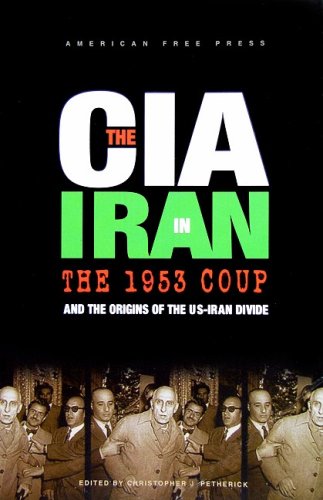
The CIA in Iran-The 1953 Coup, the Origins of the US-Iran Divide by Christopher J. Petherick_eBook and Audiobook, with Video Education Player

Published by American Free Press The CIA in Iran reveals in shocking detail a once-top-secret report by a CIA field agent working in Iran. The report, which reads like a detective novel, shows how U.S. and British operatives employed every dirty trick at their disposal, including bribery, murder and terrorism, to eliminate a government they could not control and replace it with one they thought they could.

Book Summary

“The CIA in Iran: The 1953 Coup, the Origins of the US-Iran Divide” by Christopher J. Petherick explores the historical events surrounding the 1953 coup d’état in Iran, orchestrated by the CIA and British intelligence, which resulted in the overthrow of Prime Minister Mohammad Mossadegh. The book examines the political, social, and economic factors that led to the coup, its immediate aftermath, and its long-term implications for U.S.-Iran relations. By providing a detailed analysis of the coup’s origins and consequences, Petherick sheds light on how this pivotal moment has shaped the ongoing tensions between the United States and Iran.

The outline that follows captures the main themes and structure of “The CIA in Iran: The 1953 Coup, the Origins of the US-Iran Divide”, highlighting the historical significance of the coup and its lasting effects on the relationship between the United States and Iran. The book serves as an important resource for understanding the complexities of U.S.-Iran relations in the context of historical events.

I. Introduction

  • Overview of the significance of the 1953 coup in Iran
  • Introduction to the main themes of the book: U.S. intervention, Iranian nationalism, and the impact on bilateral relations

II. Historical Context

A. Pre-Coup Iran

  • Political landscape in Iran before 1953
  • Role of foreign powers, particularly Britain and the U.S.

B. Rise of Mohammad Mossadegh

  • Mossadegh’s vision for Iran and nationalization of oil
  • Popular support and political challenges he faced

III. The Coup Planning and Execution

A. U.S. and British Involvement

  • Origins of the CIA’s interest in Iran
  • Cooperation with British intelligence and the oil crisis

B. The Execution of the Coup

  • Key events leading to the coup on August 19, 1953
  • Role of propaganda and public manipulation
  • Aftermath: Initial chaos and reestablishment of the monarchy

IV. Immediate Consequences

A. Impact on Iranian Society

  • Changes in political power structures
  • Rise of the Shah’s regime and its authoritarianism

B. U.S.-Iran Relations Post-Coup

  • Shift in U.S. foreign policy towards Iran
  • Initial benefits and long-term repercussions of U.S. support for the Shah

V. Long-Term Implications

A. Seeds of Distrust

  • Growing anti-American sentiment in Iran
  • The role of the coup in shaping Iranian nationalism

B. The 1979 Revolution

  • Connection between the coup and the Islamic Revolution
  • How the coup’s legacy influenced revolutionary sentiments

VI. Conclusion

  • Summary of key points and themes
  • Reflection on the lasting impact of the 1953 coup on U.S.-Iran relations
  • Call for understanding historical context in current geopolitical discussions

“The CIA in Iran: The 1953 Coup, the Origins of the US-Iran Divide” provides a comprehensive examination of a pivotal moment in Iranian history that has had lasting repercussions on U.S.-Iran relations. Here’s a more detailed exploration of the book’s themes, context, and significance:

Detailed Exploration of Key Aspects

I. Historical Context

  1. Pre-Coup Iran:
    • The book begins by setting the stage for the political landscape in Iran prior to the 1953 coup. This includes a discussion of the influence of foreign powers, particularly Britain, which had significant interests in Iranian oil.
    • The Anglo-Iranian Oil Company (AIOC) dominated the Iranian oil industry, causing resentment among Iranians who felt their national resources were being exploited.
  2. Rise of Mohammad Mossadegh:
    • The author details Mossadegh’s ascent to power, highlighting his nationalistic vision for Iran and his commitment to the nationalization of the oil industry. This move was highly popular among the Iranian populace but antagonized both British and American interests.
    • Petherick explores Mossadegh’s political challenges, including opposition from both the Shah and conservative factions within Iran, as well as the growing tension with Western powers.

II. The Coup Planning and Execution

  1. U.S. and British Involvement:
    • Petherick delves into the collaboration between the CIA and British intelligence, focusing on how the coup was conceived and executed under the code name Operation Ajax.
    • The author discusses the political motivations behind U.S. involvement, including the Cold War context and the fear of Iranian communism, which led to concerns about a leftist government in Iran.
  2. Execution of the Coup:
    • The book provides a detailed narrative of the coup itself, describing the events leading up to August 19, 1953. The author emphasizes the role of propaganda, misinformation, and street violence orchestrated by both the U.S. and British agents.
    • Petherick also highlights the immediate aftermath of the coup, which saw the reinstatement of the Shah, leading to initial chaos and instability within Iran.

III. Immediate Consequences

  1. Impact on Iranian Society:
    • Following the coup, the author examines how the political power dynamics shifted, leading to the establishment of a repressive regime under the Shah. This period was marked by political purges, censorship, and the suppression of dissent.
    • The book discusses the impact on various segments of Iranian society, including the growing disillusionment among the populace and the erosion of democratic institutions.
  2. U.S.-Iran Relations Post-Coup:
    • Petherick explores the implications of U.S. support for the Shah, including how it shaped U.S. foreign policy in the region and established Iran as a key ally during the Cold War.
    • The author reflects on the initial benefits perceived by the U.S. government, such as access to Iranian oil and a strategic partner in the Middle East, but warns that these came at the cost of long-term stability.

IV. Long-Term Implications

  1. Seeds of Distrust:
    • The book emphasizes how the 1953 coup sowed the seeds of distrust and resentment towards the United States among Iranians. Petherick analyzes how this distrust has persisted over the decades and influenced Iranian politics and society.
    • The author discusses the rise of anti-American sentiment, particularly as the Shah’s regime became increasingly authoritarian and disconnected from the concerns of ordinary Iranians.
  2. The 1979 Revolution:
    • Petherick connects the events of the coup to the Islamic Revolution of 1979, arguing that the legacy of U.S. intervention played a significant role in shaping revolutionary sentiments.
    • The author illustrates how the coup became a rallying point for various factions within Iran, contributing to the eventual overthrow of the Shah and the establishment of the Islamic Republic.

V. Conclusion

  • In the conclusion, Petherick summarizes the key themes of the book, reiterating the importance of understanding the historical context of the 1953 coup to fully grasp the complexities of U.S.-Iran relations today.
  • The book serves as a reminder of the dangers of foreign intervention and the unintended consequences that can arise from such actions, urging readers to consider the lessons learned from this pivotal moment in history.

Significance of the Book

  • Historical Insight: The book provides a thorough analysis of a critical event that not only shaped Iranian history but also had profound implications for U.S. foreign policy in the Middle East. It highlights the interplay between domestic politics and international relations.
  • Educational Resource: “The CIA in Iran” serves as an important resource for understanding the roots of contemporary tensions between the U.S. and Iran. It is particularly relevant for students and scholars of history, political science, and international relations.
  • Reflection on Intervention: Petherick’s work prompts reflection on the ethics of foreign intervention and the long-term consequences of such actions, encouraging readers to critically evaluate current geopolitical strategies and their impacts on global stability.

Overall, “The CIA in Iran: The 1953 Coup, the Origins of the US-Iran Divide” is a significant contribution to the scholarship on U.S.-Iran relations and a valuable narrative that illuminates the complexities of historical events and their lasting effects on international politics.

The CIA in Iran-The 1953 Coup, the Origins of the US-Iran Divide_eBook

Pop the documents out from the upper right to read / expand / download.

The CIA in Iran-The 1953 Coup, the Origins of the US-Iran Divide_Audiobook

Video Education Player

15 Video Playlist

Learn more in RBG Communiversity Knowledge Media eLibrary

Tip of the Spear: Black Radicalism, Prison Repression, and the Long Attica Revolt by Orisanmi Burton, with Orisanmi Burton Disscussion and Attica Massacre Video Education

Book Summary

“Tip of the Spear: Black Radicalism, Prison Repression, and the Long Attica Revolt” by Orisanmi Burton offers a critical examination of the Attica Prison uprising in 1971 and its significance within the broader context of Black radicalism and resistance to state repression. Burton explores the historical factors leading to the revolt, the demands of the prisoners, and the subsequent violent response from authorities. The book highlights the connections between the struggles of incarcerated individuals and larger social movements advocating for racial and economic justice. By analyzing the Attica uprising and its aftermath, Burton sheds light on the enduring legacy of prison resistance and the ongoing fight against systemic oppression.

The outline that follows captures the main themes and structure of “Tip of the Spear,” highlighting Orisanmi Burton’s critical examination of the Attica Prison uprising and its broader implications for understanding Black radicalism and resistance to state repression. The book serves as a significant contribution to the discourse on prison reform and social justice, emphasizing the enduring relevance of the Attica revolt in contemporary struggles against systemic oppression.

I. Introduction

  • Overview of the book’s purpose: to explore the Attica Prison uprising within the context of Black radicalism and prison repression
  • Introduction to the significance of the Attica revolt in the history of prison resistance
  • The importance of understanding the uprising as part of a broader struggle for justice

II. Historical Context of Black Radicalism

  • Examination of the origins and development of Black radicalism in the 20th century
  • Overview of key movements and figures that influenced the radicalization of Black activism
  • Discussion of the socio-political conditions leading to heightened tensions within prisons

III. The Attica Prison Uprising

  • Detailed account of the events leading up to the Attica revolt in September 1971
  • Exploration of the prisoners’ demands and grievances, including issues of racial discrimination, overcrowding, and lack of basic rights
  • Analysis of the dynamics within the prison during the uprising, including the role of leadership among the inmates

IV. State Repression and the Response to the Uprising

  • Examination of the state’s response to the Attica revolt, including the violent retaking of the prison
  • Analysis of the consequences of the uprising for the prisoners, families, and the broader community
  • Discussion of the media portrayal of the revolt and its impact on public perception of prison resistance

V. The Legacy of the Attica Revolt

  • Exploration of the long-term effects of the Attica uprising on prison reform and Black radicalism
  • Discussion of subsequent prison uprisings and their connections to the Attica legacy
  • Examination of how the revolt continues to influence contemporary movements for racial and social justice

VI. Theoretical Framework and Analysis

  • Introduction to the theoretical frameworks used in the book, including concepts of resistance, state violence, and systemic oppression
  • Discussion of how the Attica revolt exemplifies the intersection of race, class, and incarceration
  • Analysis of the implications of the uprising for understanding modern prison systems and resistance movements

VII. Conclusion

  • Summary of key themes and insights from the book
  • Reflection on the importance of the Attica revolt in the ongoing struggle against prison repression and racial injustice
  • Call to action for continued engagement with the legacy of prison resistance and the fight for equity and justice

“Tip of the Spear” is a profound exploration of the Attica Prison uprising, contextualized within the broader landscape of Black radicalism and systemic oppression. The book critically examines how the revolt at Attica not only represented a pivotal moment in the fight against prison repression but also served as a reflection of the larger struggles for racial and economic justice in the United States. Here’s a deeper exploration of the key themes, insights, and arguments presented in the book:

Key Themes and Insights

  1. Historical Context of Black Radicalism:
    • Burton traces the roots of Black radicalism, highlighting how the socio-political climate of the 1960s and 1970s influenced the rise of militant resistance among Black communities. The book discusses key figures and movements, such as the Black Panther Party, that galvanized activism and shaped the consciousness of prisoners.
    • This historical backdrop is essential for understanding the motivations behind the Attica revolt and the demands made by inmates.
  2. The Attica Prison Uprising:
    • The book provides a detailed narrative of the events leading up to the Attica uprising, which erupted in September 1971. Burton examines the grievances of the prisoners, including issues like overcrowding, poor living conditions, racial discrimination, and denial of basic rights.
    • The author emphasizes that the uprising was not merely a spontaneous event but rather the culmination of years of frustration and activism within the prison system.
  3. Prisoners’ Demands and Leadership:
    • Burton highlights the articulate and well-organized demands of the Attica prisoners, which included calls for better living conditions, educational opportunities, and an end to racial discrimination. The leadership among the inmates played a crucial role in articulating these demands and maintaining order during the revolt.
    • The book emphasizes the importance of recognizing the agency of prisoners and their capacity for organized resistance.
  4. State Repression and Violence:
    • A significant focus of the book is on the state’s violent response to the Attica uprising, particularly the brutal retaking of the prison by law enforcement. Burton analyzes how this response reflected the broader patterns of state repression faced by marginalized communities.
    • The aftermath of the revolt involved not only the immediate consequences for the prisoners but also the long-lasting impact on their families and communities, highlighting the pervasive nature of state violence.
  5. Media Representation and Public Perception:
    • Burton discusses how the media portrayed the Attica uprising, often framing it in sensationalized terms that contributed to public fear and misunderstanding of the prisoners’ motives. This media framing affected the narrative around prison resistance and shaped societal attitudes toward incarcerated individuals.
    • The book critiques the ways in which narratives of violence are often used to justify further repression and neglect of the underlying issues that lead to uprisings.
  6. Legacy and Ongoing Struggles:
    • The legacy of the Attica revolt extends beyond the immediate aftermath, influencing subsequent prison uprisings and the broader movement for prison reform. Burton explores how the lessons learned from Attica continue to resonate in contemporary struggles against mass incarceration and racial injustice.
    • The book draws connections between the Attica uprising and modern movements, such as Black Lives Matter, emphasizing the continuity of resistance against systemic oppression.
  7. Theoretical Framework:
    • Burton employs various theoretical frameworks to analyze the events at Attica, including concepts of resistance, state violence, and the intersections of race, class, and incarceration. This theoretical lens helps to contextualize the uprising within broader socio-political dynamics.
    • The analysis encourages readers to critically engage with the implications of the Attica revolt for understanding modern prison systems and the ongoing fight for justice.
  8. Call to Action:
    • In the conclusion, Burton reflects on the importance of engaging with the legacy of the Attica revolt and the continued relevance of prison resistance in the current socio-political landscape. The author calls for solidarity and activism in addressing the systemic injustices that persist today.
    • The book serves as a rallying cry for individuals and movements to remain vigilant against state repression and to advocate for a more just and equitable society.

Conclusion

“Tip of the Spear” is a significant contribution to the discourse on Black radicalism, prison resistance, and social justice. Orisanmi Burton’s analysis of the Attica Prison uprising provides valuable insights into the complexities of state repression and the resilience of those who resist it. By situating the revolt within the historical context of Black radicalism and examining its lasting legacy, the book encourages readers to reflect on the ongoing struggle for justice and the importance of solidarity with those who continue to fight against systemic oppression. It serves as a crucial reminder of the power of collective action and the necessity of addressing the root causes of inequality and injustice in society.

“Tip of the Spear: Black Radicalism, Prison Repression, and the Long Attica Revolt” by Orisanmi Burton_eBook

Pop the documents out from the upper right to read / expand / download.
Orisanmi Burton Disscussion of the Book

Attica Massacre Video Education

10 Video Player

Learn more in RBG Communiversity Knowledge Media eLibrary:

“Gil Scott-Heron: Pieces of a Man” by Marcus Baram_eBook and Gil Scott-Heron-Pieces of a Man (Full Album) with Supplemental_Gil Scott-Heron’s Powerful Legacy | BLACK WAX | Political Music Documentary | Amplified

Last Updated 03-28-2025

Book Summary

“Gil Scott-Heron: Pieces of a Man” by Marcus Baram is a comprehensive biography that delves into the life and legacy of Gil Scott-Heron, a pioneering musician, poet, and social activist. Known for his influential work in the genres of jazz, soul, and spoken word, Scott-Heron is often celebrated as a key figure in the development of hip-hop and for his incisive commentary on social and political issues. Baram explores Scott-Heron’s tumultuous life, including his struggles with addiction, his artistic evolution, and his impact on music and culture. The biography not only chronicles his achievements but also examines the complexities of his identity and the societal challenges he confronted throughout his life.

The following outline captures the main themes and structure of “Gil Scott-Heron: Pieces of a Man,” highlighting Marcus Baram’s exploration of the life, struggles, and legacy of this influential artist. The biography serves as an important resource for understanding Scott-Heron’s impact on music and culture, as well as the social issues he passionately addressed throughout his career.

I. Introduction

  • Overview of the book’s purpose: to explore the life and legacy of Gil Scott-Heron
  • Introduction to Scott-Heron’s significance in music and social activism
  • Brief explanation of the structure of the biography

II. Early Life and Influences

  • Examination of Scott-Heron’s childhood and upbringing in Chicago and New York
  • Discussion of his family background, including his relationship with his mother and father
  • Exploration of early influences on his music and poetry, including jazz and blues artists

III. Artistic Development

  • Analysis of Scott-Heron’s early work, including his first albums and literary contributions
  • The emergence of his unique style that blended music and spoken word
  • Discussion of key themes in his work, such as race, social justice, and identity

IV. Breakthrough and Impact

  • Exploration of Scott-Heron’s rise to fame in the 1970s with the release of “Pieces of a Man” and other significant works
  • Analysis of his role in shaping the sound of the era and influencing future generations of artists
  • Discussion of notable performances and collaborations with other musicians

V. Struggles and Challenges

  • Examination of Scott-Heron’s personal struggles, including battles with addiction and mental health
  • The impact of these struggles on his career and relationships
  • Reflection on the societal issues he addressed in his work, such as inequality and injustice

VI. Later Career and Legacy

  • Overview of Scott-Heron’s later works and how his style evolved over time
  • Discussion of his return to music after a hiatus and the relevance of his themes in contemporary society
  • Analysis of his lasting influence on music, hip-hop, and social activism

VII. Personal Life and Relationships

  • Exploration of Scott-Heron’s relationships, including family, friends, and romantic partners
  • The role of these relationships in shaping his personal and artistic identity
  • Insight into his life beyond music, including activism and advocacy

VIII. Conclusion

  • Summary of key themes and insights from Scott-Heron’s life and work
  • Reflection on the importance of understanding his contributions to music and social change
  • Call to action for readers to engage with his legacy and the issues he championed

“Gil Scott-Heron: Pieces of a Man” by Marcus Baram is an in-depth exploration of the life of Gil Scott-Heron, who is often referred to as the “Godfather of Rap.” Scott-Heron’s work transcended music, encompassing poetry, activism, and social commentary, which made him a pivotal figure in the cultural landscape of the 20th century. Here’s a deeper examination of the key themes, insights, and narratives woven throughout the biography:

Key Themes and Insights

  1. Cultural and Historical Context:
    • The book situates Scott-Heron’s life within the broader context of the civil rights movement, the Black Arts Movement, and the socio-political upheaval of the 1960s and 1970s. Baram highlights how these movements influenced Scott-Heron’s work and the themes he explored in his music and poetry.
    • The biography emphasizes the significance of Scott-Heron’s voice during a time of social change, reflecting the struggles and aspirations of the Black community.
  2. Musical Innovation:
    • Scott-Heron is recognized for blending various musical genres, including jazz, soul, and blues, with spoken word, creating a unique sound that laid the groundwork for hip-hop. Baram discusses key works like “Pieces of a Man” and “The Revolution Will Not Be Televised,” which showcase his innovative approach to music and his ability to address pressing social issues.
    • The book explores how Scott-Heron’s poetic lyrics and rhythmic cadences resonate with the struggles of marginalized communities, making his music both impactful and enduring.
  3. Personal Struggles:
    • A significant focus of the biography is on Scott-Heron’s personal battles with addiction and mental health. Baram provides a candid portrayal of how these struggles affected both his personal life and career, leading to periods of decline and resurgence.
    • The author reflects on the stigma surrounding addiction and mental illness, contextualizing Scott-Heron’s experiences within a larger societal framework that often fails to support those in need.
  4. Activism and Social Commentary:
    • Scott-Heron used his platform to address issues such as racism, poverty, and inequality. Baram highlights how his work served as a form of activism, using art as a means to provoke thought and inspire change.
    • The biography discusses specific songs and performances that exemplify Scott-Heron’s commitment to social justice, illustrating how he challenged audiences to confront uncomfortable truths about society.
  5. Legacy and Influence:
    • The impact of Scott-Heron’s work extends beyond his lifetime, influencing a generation of artists in hip-hop and beyond. Baram examines how contemporary musicians cite Scott-Heron as an inspiration, underscoring his role in shaping the narrative of socially conscious music.
    • The book also explores Scott-Heron’s posthumous recognition and the resurgence of interest in his work, particularly in light of today’s social justice movements.
  6. Complex Personal Relationships:
    • Baram delves into Scott-Heron’s relationships with family, friends, and collaborators, providing insight into how these connections shaped his identity and artistry. The personal dynamics of his life often intersected with his creative output, reflecting the complexities of his character.
    • The biography highlights the challenges he faced in maintaining relationships, particularly as his struggles with addiction intensified.
  7. The Evolution of Identity:
    • Throughout the biography, there is a focus on Scott-Heron’s evolving identity as an artist and activist. Baram traces the changes in his work over the decades, illustrating how his experiences and societal changes influenced his voice and message.
    • The exploration of identity also touches on themes of masculinity, vulnerability, and the artist’s role in society, providing a nuanced understanding of Scott-Heron as both a public figure and a private individual.

Conclusion

“Gil Scott-Heron: Pieces of a Man” is a compelling and multifaceted biography that honors the life and legacy of Gil Scott-Heron. Marcus Baram’s thorough research and engaging narrative illuminate Scott-Heron’s contributions to music and culture, as well as the personal challenges he faced throughout his life. By weaving together themes of activism, musical innovation, and personal struggle, the book offers a rich portrait of an artist whose work continues to resonate in contemporary discussions of race, justice, and the power of art.

Baram’s biography serves as both an homage to Scott-Heron’s enduring influence and a reminder of the complexities inherent in the lives of artists who seek to effect change through their work. It invites readers to engage with Scott-Heron’s legacy and consider the ongoing relevance of his messages in today’s world, emphasizing the importance of art as a vehicle for social commentary and transformation.

“Gil Scott-Heron: Pieces of a Man” by Marcus Baram_eBook

Pop the documents out from the upper right to read / expand / download.

Gil Scott-Heron – Pieces of a Man (Full Album)

Supplemental_Gil Scott-Heron’s Powerful Legacy | BLACK WAX | Political Music Documentary | Amplified

Learn more in RBG Communiversity Knowledge Media eLibrary:

We Want Freedom: A Life in the Black Panther Party, by Mumia Abu-Jamal, Kathleen Cleaver (Introduction)_eBook and Audiobooks

Mumia Abu-Jamal, America’s most famous political prisoner, is internationally known for his “live from death row” radio broadcasts and writings. In his youth, he helped found the Philadelphia branch of the Black Panther Party, wrote for the national newspaper, and began his lifelong work of exposing the violence of the state as it manifests in entrenched poverty, endemic racism, and unending police brutality.

Book Summary

“We Want Freedom: A Life in the Black Panther Party” is a memoir by Mumia Abu-Jamal that chronicles his experiences as a member of the Black Panther Party (BPP). The book provides an intimate look at Abu-Jamal’s journey within the party, detailing the struggles, victories, and challenges faced by its members during a tumultuous period in American history. With an introduction by Kathleen Cleaver, a prominent BPP leader, the memoir explores themes of resistance, social justice, and the fight against systemic racism. Through personal anecdotes and reflections, Abu-Jamal emphasizes the importance of community, solidarity, and the enduring legacy of the Black Panther Party in the struggle for civil rights.

The outline that follows captures the main themes and structure of “We Want Freedom,” highlighting Mumia Abu-Jamal’s personal journey in the Black Panther Party and the broader implications of the party’s legacy in the ongoing struggle for civil rights. The memoir serves as both a historical account and a source of inspiration for contemporary movements advocating for social justice and equality.

Outline

I. Introduction

  • Overview of Mumia Abu-Jamal’s background and significance
  • Role of Kathleen Cleaver in the Black Panther Party and her contributions to the introduction
  • The purpose of the memoir: to share personal experiences within the BPP

II. Early Life and Influences

  • Abu-Jamal’s upbringing in a racially charged environment
  • The impact of family, community, and early experiences on his political consciousness
  • Introduction to radical ideas and movements that shaped his worldview

III. Joining the Black Panther Party

  • The circumstances leading to Abu-Jamal’s involvement with the BPP
  • Overview of the party’s founding principles and goals
  • Initial experiences and impressions as a new member

IV. Activism and Community Engagement

  • Description of BPP community programs (e.g., free breakfast programs, health clinics)
  • The role of activism in addressing social issues and injustices
  • Personal anecdotes illustrating the impact of community work

V. The Struggle Against Oppression

  • Examination of the challenges faced by the BPP, including police brutality and state repression
  • Key events and confrontations involving BPP members and law enforcement
  • The significance of armed self-defense and the philosophy behind it

VI. Internal Dynamics and Challenges

  • Insights into the internal workings of the BPP, including leadership and organizational structure
  • Discussion of factionalism, ideological differences, and personal conflicts within the party
  • The impact of these dynamics on the effectiveness of the BPP

VII. Legacy and Reflections

  • Abu-Jamal’s reflections on the enduring legacy of the Black Panther Party
  • The relevance of the BPP’s principles and actions in contemporary social justice movements
  • Personal insights on the importance of resistance and community solidarity

VIII. Conclusion

  • Summary of key themes and insights from Abu-Jamal’s experiences
  • Call to action for continued activism and engagement in the fight for freedom and justice
  • The significance of remembering the history and contributions of the Black Panther Party

“We Want Freedom: A Life in the Black Panther Party” by Mumia Abu-Jamal, with an introduction by Kathleen Cleaver, is a powerful memoir that provides a firsthand account of Abu-Jamal’s life as a member of the Black Panther Party (BPP). The book offers a deeply personal perspective on the complexities of the party’s activities, the socio-political context of the era, and the enduring impact of the BPP on contemporary struggles for justice and equality. Here’s a deeper exploration of the key themes and insights from the memoir:

Key Themes and Insights

  1. Personal Journey and Political Awakening:
    • Abu-Jamal’s early life is marked by his experiences growing up in a racially charged environment, which shaped his understanding of systemic racism and social injustice. He reflects on how these formative experiences influenced his political consciousness and sparked his desire to engage in activism.
    • The memoir highlights the transformative effect of community and family, illustrating how support systems can inspire individuals to challenge oppressive structures.
  2. The Black Panther Party’s Ideology and Goals:
    • The book delves into the foundational principles of the BPP, focusing on its commitment to self-determination, social justice, and armed self-defense against police brutality. Abu-Jamal emphasizes the party’s dedication to empowering marginalized communities and addressing systemic inequalities.
    • The introduction by Kathleen Cleaver provides additional context about the BPP’s mission and the broader civil rights movement, framing the party as a crucial player in the struggle for racial equality.
  3. Community Programs and Activism:
    • Abu-Jamal vividly describes the various community service programs initiated by the BPP, such as free breakfast programs for children, health clinics, and educational initiatives. These programs were designed to address immediate needs within the Black community and foster a sense of solidarity and empowerment.
    • Through personal anecdotes, he illustrates the direct impact of these initiatives on individuals and families, showcasing the BPP’s commitment to serving the community beyond confrontations with law enforcement.
  4. Confrontations with Law Enforcement:
    • The memoir examines the violent confrontations that the BPP faced, including police brutality and state repression. Abu-Jamal recounts specific incidents that highlight the dangers faced by party members, emphasizing the need for armed self-defense in the face of systemic violence.
    • He reflects on the psychological toll of living under constant threat from law enforcement and the state, providing insight into the realities of activism during this tumultuous period.
  5. Internal Dynamics and Challenges:
    • Abu-Jamal provides a candid look at the internal dynamics within the BPP, discussing leadership struggles, ideological differences, and factionalism that arose over time. He explores how these internal conflicts sometimes undermined the party’s effectiveness and unity.
    • The memoir also touches on the role of women in the BPP, highlighting their contributions and the complexities of gender dynamics within the organization.
  6. Reflections on Legacy:
    • Throughout the memoir, Abu-Jamal reflects on the enduring legacy of the Black Panther Party and its relevance in contemporary social justice movements. He argues that the principles and actions of the BPP continue to resonate in today’s struggles against racial injustice and inequality.
    • The narrative serves as a reminder of the importance of remembering history and honoring the sacrifices made by those who fought for civil rights.
  7. Call to Action:
    • In the conclusion, Abu-Jamal emphasizes the need for continued activism and resistance in the quest for justice. He encourages readers to engage in the struggle for freedom and equality, drawing inspiration from the BPP’s legacy.
    • The memoir serves not only as a personal account but also as a rallying cry for future generations to uphold the values of community, solidarity, and social justice.

Conclusion

“We Want Freedom” is a significant contribution to the literature on the Black Panther Party and the broader civil rights movement. Mumia Abu-Jamal’s memoir offers an intimate and powerful perspective on the challenges and triumphs faced by BPP members, as well as the complexities of activism during a pivotal period in American history. The book highlights the importance of community engagement, the fight against systemic oppression, and the enduring relevance of the BPP’s ideals in contemporary struggles for justice. Through his personal narrative, Abu-Jamal not only honors the legacy of the Black Panther Party but also inspires readers to remain vigilant and active in the ongoing fight for freedom and equality.

We Want Freedom: A Life in the Black Panther Party, by Mumia Abu-Jamal, Kathleen Cleaver (Introduction)_eBook

Pop the documents out from the upper right to read / expand / download.

We Want Freedom: A Life in the Black Panther Party, by Mumia Abu-Jamal, Kathleen Cleaver (Introduction)_Audiobook

Learn more in RBG Communiversity Knowledge Media eLibrary:

Up Against the Wall: Violence in the Making and Unmaking of the Black Panther Party by Curtis J. Austin (Author), Elbert “Big Man” Howard (Foreword)_eBook and Audiobook

Book Summary

“Up Against the Wall: Violence in the Making and Unmaking of the Black Panther Party” by Curtis J. Austin, with contributions from Elbert “Big Man” Howard, offers a comprehensive analysis of the Black Panther Party (BPP) and the role of violence in its formation, evolution, and eventual decline. The book examines how the BPP’s revolutionary ideals were shaped by the context of systemic racism, social injustice, and police brutality in America during the 1960s and 1970s. Austin delves into the internal and external factors that influenced the party’s strategies, including its use of armed self-defense, community programs, and the violent responses from law enforcement and the state. The work provides a nuanced perspective on the complexities of the BPP’s legacy, emphasizing both its contributions to the civil rights movement and the challenges it faced due to violence and repression.

The following outline captures the main themes and structure of “Up Against the Wall,” highlighting Austin’s exploration of the complexities surrounding the Black Panther Party, its use of violence, and its significant role in the struggle for racial justice in America. The book provides a critical understanding of the BPP’s legacy and the factors that shaped its trajectory.

Outline

I. Introduction

  • Purpose of the book: to explore the role of violence in the Black Panther Party’s history
  • Overview of the BPP’s significance in the civil rights movement
  • Introduction to key themes: resistance, violence, and community activism

II. Historical Context

  • The socio-political landscape of the 1960s and 1970s
  • Systemic racism and police brutality faced by African Americans
  • The emergence of radical movements in response to oppression

III. Formation of the Black Panther Party

  • Founding principles and ideology of the BPP
  • Influences from earlier civil rights movements and revolutionary thought
  • The role of key figures, including Huey P. Newton and Bobby Seale

IV. Armed Self-Defense and Community Programs

  • Examination of the BPP’s stance on armed self-defense
  • Overview of community programs initiated by the BPP (e.g., free breakfast programs, health clinics)
  • The impact of these programs on local communities and the party’s popularity

V. Violence and State Repression

  • Analysis of violent confrontations between the BPP and law enforcement
  • The role of the FBI’s COINTELPRO in undermining the BPP
  • Consequences of state-sponsored violence on the party’s operations and membership

VI. Internal Conflicts and Challenges

  • Examination of factionalism and leadership struggles within the BPP
  • The impact of gender dynamics and the role of women in the party
  • Issues of ideology and strategy that contributed to internal tensions

VII. The Decline of the Black Panther Party

  • Factors leading to the decline and dissolution of the BPP
  • The effects of external repression and internal conflicts
  • Reflection on the legacy of the BPP in contemporary movements

VIII. Conclusion

  • Summary of key arguments and insights regarding violence and community activism
  • Reflection on the lasting impact of the Black Panther Party
  • Call for recognition of the BPP’s contributions to social justice and civil rights

“Up Against the Wall: Violence in the Making and Unmaking of the Black Panther Party provides a nuanced and in-depth exploration of the Black Panther Party (BPP), focusing particularly on the interplay between violence, resistance, and community activism. The authors examine how the BPP’s approach to violence shaped its identity and legacy while also reflecting on the broader social and political context in which the party operated. Here’s a more detailed look at the key themes and insights from the book:

Key Themes and Insights

  1. Historical Context of the Black Panther Party:
    • The authors place the BPP within the tumultuous backdrop of the 1960s and 1970s, a period marked by widespread civil rights activism and systemic oppression faced by African Americans. They highlight the profound effects of police brutality, economic inequality, and social injustice that drove many to seek radical solutions.
    • The book emphasizes how the BPP emerged as a response to these conditions, representing a shift towards more militant forms of activism in the fight against racial oppression.
  2. Founding Ideology and Principles:
    • The BPP was founded on a framework of revolutionary socialism, influenced by figures like Malcolm X, Frantz Fanon, and Karl Marx. Austin discusses how the party’s leaders, particularly Huey P. Newton and Bobby Seale, articulated a vision of self-determination and empowerment for Black communities.
    • The authors explore the dual focus of the BPP on armed self-defense against police violence and community service programs aimed at improving the quality of life for African Americans.
  3. Armed Self-Defense and Community Programs:
    • A significant portion of the book is dedicated to the BPP’s philosophy of armed self-defense and its implications. Austin details how the party’s members carried firearms to protect themselves and their communities from police brutality, a stance that garnered both support and backlash.
    • The BPP also initiated various community programs, such as free breakfast for children, health clinics, and educational initiatives. These programs were instrumental in building community support and enhancing the party’s image as a force for positive change.
  4. Violence and State Repression:
    • The authors analyze the violent confrontations that occurred between the BPP and law enforcement, highlighting key events that underscored the tensions between the party and the state. The book details how these confrontations often escalated into lethal encounters, such as the infamous shootout in 1969 that resulted in the deaths of BPP members.
    • A critical aspect of the narrative is the examination of the FBI’s Counterintelligence Program (COINTELPRO), which aimed to infiltrate, undermine, and discredit the BPP. Austin discusses how state-sponsored violence and surveillance contributed to the party’s fragmentation and decline.
  5. Internal Conflicts and Dynamics:
    • Austin delves into the internal struggles within the BPP, including factionalism and leadership disputes that arose as the party evolved. He addresses how ideological differences and personal rivalries created rifts that weakened the party’s cohesion.
    • The book also highlights the contributions of women in the BPP, discussing the complexities of gender dynamics within the organization and how women played pivotal roles in both leadership and grassroots activism.
  6. Legacy and Impact:
    • The decline of the BPP is examined in the context of both external repression and internal challenges. Austin reflects on how these factors ultimately led to the party’s disbandment by the mid-1970s. However, he emphasizes that the BPP’s legacy continues to resonate in contemporary movements for social justice and racial equality.
    • The authors argue that understanding the BPP’s history is crucial for recognizing the ongoing struggles against systemic oppression and the importance of grassroots activism.
  7. Call for Recognition:
    • In the conclusion, Austin urges readers to acknowledge the complexity of the BPP’s legacy, recognizing both its contributions to the civil rights movement and the challenges it faced due to violence and repression. He advocates for a more nuanced understanding of the BPP that appreciates its grassroots efforts and revolutionary ideals.

Conclusion

“Up Against the Wall” serves as a vital contribution to the scholarship on the Black Panther Party, offering a comprehensive analysis of the factors that influenced its rise and fall. Curtis J. Austin and Elbert “Big Man” Howard provide a detailed examination of how violence and community activism intersected within the BPP, shaping its identity and impact. The book not only highlights the historical significance of the BPP but also encourages contemporary readers to engage with the ongoing struggles for justice and equality in society. It serves as a reminder of the resilience of marginalized communities in the face of systemic oppression and the importance of collective action in the pursuit of social change.

Up Against the Wall: Violence in the Making and Unmaking of the Black Panther Party by Curtis J. Austin (Author), Elbert “Big Man” Howard (Foreword)_eBook

Pop the documents out from the upper right to read / expand / download.

Up Against the Wall: Violence in the Making and Unmaking of the Black Panther Party by Curtis J. Austin (Author), Elbert “Big Man” Howard (Foreword)_Audiobook

Part 1

Part 2

Learn more in RBG Communiversity Knowledge Media eLibrary:
