Tip of the Spear: Black Radicalism, Prison Repression, and the Long Attica Revolt by Orisanmi Burton, with Orisanmi Burton Disscussion and Attica Massacre Video Education

Book Summary

“Tip of the Spear: Black Radicalism, Prison Repression, and the Long Attica Revolt” by Orisanmi Burton offers a critical examination of the Attica Prison uprising in 1971 and its significance within the broader context of Black radicalism and resistance to state repression. Burton explores the historical factors leading to the revolt, the demands of the prisoners, and the subsequent violent response from authorities. The book highlights the connections between the struggles of incarcerated individuals and larger social movements advocating for racial and economic justice. By analyzing the Attica uprising and its aftermath, Burton sheds light on the enduring legacy of prison resistance and the ongoing fight against systemic oppression.

The outline that follows captures the main themes and structure of “Tip of the Spear,” highlighting Orisanmi Burton’s critical examination of the Attica Prison uprising and its broader implications for understanding Black radicalism and resistance to state repression. The book serves as a significant contribution to the discourse on prison reform and social justice, emphasizing the enduring relevance of the Attica revolt in contemporary struggles against systemic oppression.

I. Introduction

  • Overview of the book’s purpose: to explore the Attica Prison uprising within the context of Black radicalism and prison repression
  • Introduction to the significance of the Attica revolt in the history of prison resistance
  • The importance of understanding the uprising as part of a broader struggle for justice

II. Historical Context of Black Radicalism

  • Examination of the origins and development of Black radicalism in the 20th century
  • Overview of key movements and figures that influenced the radicalization of Black activism
  • Discussion of the socio-political conditions leading to heightened tensions within prisons

III. The Attica Prison Uprising

  • Detailed account of the events leading up to the Attica revolt in September 1971
  • Exploration of the prisoners’ demands and grievances, including issues of racial discrimination, overcrowding, and lack of basic rights
  • Analysis of the dynamics within the prison during the uprising, including the role of leadership among the inmates

IV. State Repression and the Response to the Uprising

  • Examination of the state’s response to the Attica revolt, including the violent retaking of the prison
  • Analysis of the consequences of the uprising for the prisoners, families, and the broader community
  • Discussion of the media portrayal of the revolt and its impact on public perception of prison resistance

V. The Legacy of the Attica Revolt

  • Exploration of the long-term effects of the Attica uprising on prison reform and Black radicalism
  • Discussion of subsequent prison uprisings and their connections to the Attica legacy
  • Examination of how the revolt continues to influence contemporary movements for racial and social justice

VI. Theoretical Framework and Analysis

  • Introduction to the theoretical frameworks used in the book, including concepts of resistance, state violence, and systemic oppression
  • Discussion of how the Attica revolt exemplifies the intersection of race, class, and incarceration
  • Analysis of the implications of the uprising for understanding modern prison systems and resistance movements

VII. Conclusion

  • Summary of key themes and insights from the book
  • Reflection on the importance of the Attica revolt in the ongoing struggle against prison repression and racial injustice
  • Call to action for continued engagement with the legacy of prison resistance and the fight for equity and justice

“Tip of the Spear” is a profound exploration of the Attica Prison uprising, contextualized within the broader landscape of Black radicalism and systemic oppression. The book critically examines how the revolt at Attica not only represented a pivotal moment in the fight against prison repression but also served as a reflection of the larger struggles for racial and economic justice in the United States. Here’s a deeper exploration of the key themes, insights, and arguments presented in the book:

Key Themes and Insights

  1. Historical Context of Black Radicalism:
    • Burton traces the roots of Black radicalism, highlighting how the socio-political climate of the 1960s and 1970s influenced the rise of militant resistance among Black communities. The book discusses key figures and movements, such as the Black Panther Party, that galvanized activism and shaped the consciousness of prisoners.
    • This historical backdrop is essential for understanding the motivations behind the Attica revolt and the demands made by inmates.
  2. The Attica Prison Uprising:
    • The book provides a detailed narrative of the events leading up to the Attica uprising, which erupted in September 1971. Burton examines the grievances of the prisoners, including issues like overcrowding, poor living conditions, racial discrimination, and denial of basic rights.
    • The author emphasizes that the uprising was not merely a spontaneous event but rather the culmination of years of frustration and activism within the prison system.
  3. Prisoners’ Demands and Leadership:
    • Burton highlights the articulate and well-organized demands of the Attica prisoners, which included calls for better living conditions, educational opportunities, and an end to racial discrimination. The leadership among the inmates played a crucial role in articulating these demands and maintaining order during the revolt.
    • The book emphasizes the importance of recognizing the agency of prisoners and their capacity for organized resistance.
  4. State Repression and Violence:
    • A significant focus of the book is on the state’s violent response to the Attica uprising, particularly the brutal retaking of the prison by law enforcement. Burton analyzes how this response reflected the broader patterns of state repression faced by marginalized communities.
    • The aftermath of the revolt involved not only the immediate consequences for the prisoners but also the long-lasting impact on their families and communities, highlighting the pervasive nature of state violence.
  5. Media Representation and Public Perception:
    • Burton discusses how the media portrayed the Attica uprising, often framing it in sensationalized terms that contributed to public fear and misunderstanding of the prisoners’ motives. This media framing affected the narrative around prison resistance and shaped societal attitudes toward incarcerated individuals.
    • The book critiques the ways in which narratives of violence are often used to justify further repression and neglect of the underlying issues that lead to uprisings.
  6. Legacy and Ongoing Struggles:
    • The legacy of the Attica revolt extends beyond the immediate aftermath, influencing subsequent prison uprisings and the broader movement for prison reform. Burton explores how the lessons learned from Attica continue to resonate in contemporary struggles against mass incarceration and racial injustice.
    • The book draws connections between the Attica uprising and modern movements, such as Black Lives Matter, emphasizing the continuity of resistance against systemic oppression.
  7. Theoretical Framework:
    • Burton employs various theoretical frameworks to analyze the events at Attica, including concepts of resistance, state violence, and the intersections of race, class, and incarceration. This theoretical lens helps to contextualize the uprising within broader socio-political dynamics.
    • The analysis encourages readers to critically engage with the implications of the Attica revolt for understanding modern prison systems and the ongoing fight for justice.
  8. Call to Action:
    • In the conclusion, Burton reflects on the importance of engaging with the legacy of the Attica revolt and the continued relevance of prison resistance in the current socio-political landscape. The author calls for solidarity and activism in addressing the systemic injustices that persist today.
    • The book serves as a rallying cry for individuals and movements to remain vigilant against state repression and to advocate for a more just and equitable society.

Conclusion

“Tip of the Spear” is a significant contribution to the discourse on Black radicalism, prison resistance, and social justice. Orisanmi Burton’s analysis of the Attica Prison uprising provides valuable insights into the complexities of state repression and the resilience of those who resist it. By situating the revolt within the historical context of Black radicalism and examining its lasting legacy, the book encourages readers to reflect on the ongoing struggle for justice and the importance of solidarity with those who continue to fight against systemic oppression. It serves as a crucial reminder of the power of collective action and the necessity of addressing the root causes of inequality and injustice in society.

“Tip of the Spear: Black Radicalism, Prison Repression, and the Long Attica Revolt” by Orisanmi Burton_eBook

Pop the documents out from the upper right to read / expand / download.

Orisanmi Burton Disscussion of the Book

Attica Massacre Video Education

10 Video Player

Learn more in RBG Communiversity Knowledge Media eLibrary:

Warfare in the American Homeland: Policing and Prison in a Penal Democracy, edited by Joy James_eBook and Audiobook

Editor: Joy James; Contributors: Joy James, Frank B. Wilderson, Dylan Rodriguez, Dhoruba Bin Waha, Marshall Eddie Conway, George Jackson, Michel Foucault, Oscar Lopez Rivera, Jared Sexton, Hisham Aidi, Marilyn Buck, Carol Gilbert, Laura Whitehorn, William F. Pinar, Catherine Von Bulow, Daniel Defert, Sirene Harb, Susie Day

Book Summary

“Warfare in the American Homeland: Policing and Prison in a Penal Democracy,” edited by Joy James, is a critical examination of the intersections between policing, incarceration, and democracy in the United States. The book brings together a diverse range of scholars and activists who explore how the U.S. criminal justice system functions as a mechanism of social control, particularly in marginalized communities. It analyzes the militarization of police forces, the impact of mass incarceration, and the broader implications of a society that prioritizes punishment over rehabilitation. Through various essays, the anthology critiques the normalization of violence and surveillance within American society, highlighting the need for transformative justice and systemic change.

The outline that follows captures the essence of “Warfare in the American Homeland,” highlighting the critical perspectives offered by its contributors on the militarization of policing, the impacts of mass incarceration, and the need for alternative justice models. The anthology emphasizes the urgent need to address the systemic issues within the U.S. criminal justice system and advocates for a more just and equitable society.

  • Introduction by Joy James
    • Overview of the anthology’s purpose and themes
    • Explanation of the concept of “penal democracy” and its implications for civil rights and social justice
    • Brief introduction to the contributors and their areas of expertise
  • Part I: The Militarization of Policing
    • Historical Context
      • Examination of the evolution of policing tactics in the U.S. and the influence of military practices
      • Discussion of key events that led to the current state of police militarization
    • Case Studies
      • Analysis of specific instances of police violence and militarized responses to protests and civil unrest
      • Exploration of community reactions and resistance to militarized policing
  • Part II: Mass Incarceration and Its Consequences
    • The Rise of Mass Incarceration
      • Overview of the policies and practices that have contributed to the growth of the prison population in the U.S.
      • Examination of the racial and socioeconomic disparities within the prison system
    • Impact on Communities
      • Discussion of the social, economic, and psychological consequences of mass incarceration on individuals and communities
      • Exploration of the intersection between incarceration and poverty, education, and health
  • Part III: Surveillance and Social Control
    • Technologies of Surveillance
      • Analysis of the role of surveillance technologies in policing and social control
      • Discussion of the implications of surveillance on civil liberties and privacy rights
    • Community Policing and Trust
      • Examination of community policing initiatives and their effectiveness in building trust between law enforcement and marginalized communities
      • Case studies of successful community-led initiatives that challenge oppressive policing practices
  • Part IV: Alternatives to Punitive Systems
    • Transformative Justice
      • Exploration of alternative models of justice that prioritize healing, accountability, and community involvement
      • Discussion of restorative justice practices and their potential to replace punitive systems
    • Activism and Resistance
      • Examination of grassroots movements and organizations working to dismantle the prison industrial complex
      • Insights into strategies for advocacy, policy reform, and community empowerment
  • Conclusion
    • Summary of key themes and insights from the anthology
    • Reflection on the future of policing and incarceration in the U.S. and the potential for systemic change
    • Call to action for continued engagement in the struggle for social justice and transformative solutions

“Warfare in the American Homeland”, is a vital contribution to the discourse surrounding the intersections of policing, incarceration, and democracy in the United States. The anthology brings together a range of scholars, activists, and thought leaders who critically analyze how the criminal justice system functions as a mechanism of social control, particularly affecting marginalized communities. Here’s a deeper exploration of the key themes, contributions, and implications of the book:

Key Themes Explored

  • Militarization of Policing
    • The book examines how American policing has increasingly adopted military tactics and technologies, leading to a culture of aggression and violence in law enforcement. This militarization has been fueled by policies that promote the transfer of military equipment to local police departments and the adoption of paramilitary training methods.
    • Contributors discuss specific instances, such as the police response to protests in Ferguson, Missouri, and Black Lives Matter demonstrations, illustrating how militarized policing can escalate tensions and exacerbate community relations.
  • Mass Incarceration and Its Impacts
    • The anthology provides a comprehensive overview of the rise of mass incarceration in the U.S., exploring the historical and political contexts that have led to the current landscape of imprisonment.
    • Contributors highlight the disproportionate impact of incarceration on Black and Brown communities, examining how systemic racism, poverty, and economic disenfranchisement contribute to the cycle of incarceration.
    • The social consequences of mass incarceration are also discussed, including the disruption of families, loss of economic opportunities, and the long-term psychological effects on individuals and communities.
  • Surveillance and Social Control
    • The book delves into the role of surveillance technologies, such as facial recognition systems, body cameras, and data collection, in facilitating the policing of marginalized communities. This surveillance is often justified as a means of enhancing public safety but raises significant ethical and civil liberties concerns.
    • Contributors analyze how surveillance can lead to the criminalization of everyday behaviors and the erosion of trust between law enforcement and the communities they serve.
  • Transformative Justice Alternatives
    • A significant portion of the anthology is dedicated to exploring alternatives to punitive justice systems. Contributors advocate for transformative justice practices that focus on healing, accountability, and community involvement rather than retribution.
    • Restorative justice models are discussed, showcasing how they can address harm without resorting to incarceration and promote community resilience.
  • Grassroots Activism and Resistance
    • The anthology emphasizes the importance of grassroots movements in challenging oppressive policing practices and advocating for reform. Contributors profile organizations and initiatives working to dismantle the prison industrial complex and promote social justice.
    • Insights into successful community-led efforts highlight the potential for collective action to effect change and empower marginalized voices.

Contributions from Authors

  • Joy James
    • As the editor, Joy James provides a critical framework for understanding the themes presented in the anthology. Her own essays often focus on the intersections of race, gender, and state violence, emphasizing the need for a comprehensive analysis of power dynamics in the U.S.
  • Diverse Voices
    • The anthology features contributions from a range of scholars and activists, each bringing unique perspectives and expertise. Their essays address various aspects of policing and incarceration, ensuring a multifaceted examination of the issues at hand.
    • Authors may include those from sociology, law, criminology, and activist backgrounds, enriching the discourse with both theoretical insights and practical experiences.

Implications for Contemporary Society

  • Reevaluation of Policing Practices
    • The book calls for a critical reevaluation of current policing practices, advocating for reforms that prioritize community safety, accountability, and transparency. It challenges readers to consider the ramifications of a system that relies heavily on punishment and surveillance.
  • Need for Systemic Change
    • The anthology underscores the necessity of addressing systemic issues within the criminal justice system. It advocates for comprehensive policy reforms that confront the roots of inequality and injustice, rather than merely addressing the symptoms.
  • Encouragement for Activism
    • “Warfare in the American Homeland” serves as a rallying cry for activists, encouraging engagement in movements that seek to dismantle oppressive structures. It emphasizes the importance of solidarity and coalition-building across various social justice movements.

Conclusion

“Warfare in the American Homeland: Policing and Prison in a Penal Democracy” is a crucial examination of the complexities of policing, incarceration, and democracy in the U.S. Edited by Joy James, the anthology amplifies the voices of scholars and activists who critically analyze the ramifications of a penal system that prioritizes punishment over rehabilitation. By exploring themes of militarization, mass incarceration, surveillance, and alternatives to punitive justice, the book challenges readers to rethink their understanding of safety, justice, and community. It serves as a vital resource for those interested in social justice, criminal justice reform, and the ongoing struggles for equality and human rights in contemporary society. Through its insights and calls for action, the anthology inspires a vision for a more just and equitable future.

Warfare in the American Homeland: Policing and Prison in a Penal Democracy_eBook

Pop the documents out from the upper right to read / expand / download.

Warfare in the American Homeland: Policing and Prison in a Penal Democracy_Audiobook

Learn more in RBG Communiversity Knowledge Media eLibrary:

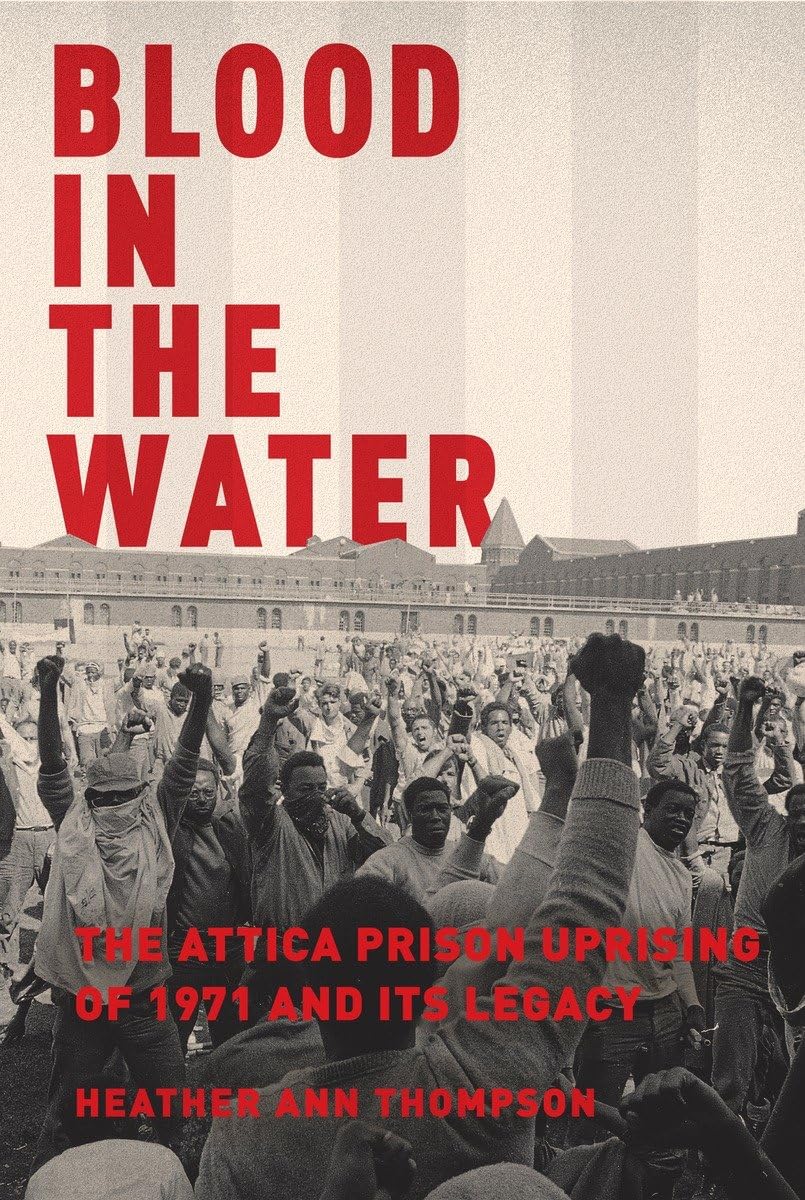
Blood in the Water: The Attica Prison Uprising of 1971 and Its Legacy, by  Heather Ann Thompson_eBook and Audiobook, with RBG Attica is All of Us Viedo Player

Book Summary

“Blood in the Water” offers a detailed account of the Attica prison uprising, which occurred in September 1971, and its aftermath. The book explores the conditions that led to the rebellion, the events during the uprising, the violent retaking of the prison, and the long-lasting implications for the American prison system and civil rights. Thompson combines extensive research, including firsthand accounts, legal documents, and archival materials, to present a comprehensive narrative that highlights the struggles for justice and the fight against systemic racism within the prison system.

This outline provides a structured view of the book’s contents, highlighting the key themes and events that Thompson addresses in her exploration of the Attica prison uprising and its lasting effects on amerikkkan society.

  1. Introduction
    • Historical context of Attica prison
    • Overview of the prison conditions in the 1970s
    • Significance of the uprising in American history
  2. Chapter 1: Background of the Prison System
    • Description of Attica’s conditions
    • Overview of inmates’ grievances
    • Racial dynamics within the prison
  3. Chapter 2: The Uprising Begins
    • Timeline of events leading to the rebellion
    • Key figures involved in the uprising
    • Initial demands of the inmates
  4. Chapter 3: The Hostage Crisis
    • Hostage situations and negotiations
    • Media coverage and public perception
    • The role of prison officials and state authorities
  5. Chapter 4: The Retaking of Attica
    • Government response and planning
    • The violent retaking of the prison
    • Casualties and injuries during the retaking
  6. Chapter 5: Aftermath of the Uprising
    • Legal repercussions for inmates and officials
    • Impact on the families of hostages and inmates
    • Public and political response to the violence
  7. Chapter 6: The Legacy of Attica
    • Changes in prison policies and practices
    • Ongoing issues of prison reform and justice
    • Influence on future movements for inmates’ rights
  8. Chapter 7: Reflections on Justice and Accountability
    • Analysis of systemic racism in the prison system
    • The importance of remembering Attica’s legacy
    • Calls for continued activism and reform
  9. Conclusion
    • Summary of key themes and insights
    • Relevance of the Attica uprising in contemporary society
    • Final thoughts on justice and human rights

Blood in the Water: The Attica Prison Uprising of 1971 and Its Legacy_eBook

On September 9, 1971, nearly 1,300 prisoners took over the Attica Correctional Facility in upstate New York to protest years of mistreatment. Holding guards and civilian employees hostage, the prisoners negotiated with officials for improved conditions during the four long days and nights that followed.
On September 13, the state abruptly sent hundreds of heavily armed troopers and correction officers to retake the prison by force. Their gunfire killed thirty-nine men—hostages as well as prisoners—and severely wounded more than one hundred others. In the ensuing hours, weeks, and months, troopers and officers brutally retaliated against the prisoners. And, ultimately, New York State authorities prosecuted only the prisoners, never once bringing charges against the officials involved in the retaking and its aftermath and neglecting to provide support to the survivors and the families of the men who had been killed.
Drawing from more than a decade of extensive research, historian Heather Ann Thompson sheds new light on every aspect of the uprising and its legacy, giving voice to all those who took part in this forty-five-year fight for justice: prisoners, former hostages, families of the victims, lawyers and judges, and state officials and members of law enforcement. Blood in the Water is the searing and indelible account of one of the most important civil rights stories of the last century.

Pop the documents out from the upper right to read / expand / download.
Blood in the Water: The Attica Prison Uprising of 1971 and Its Legacy_Audiobook

Part 1

Audio start in earnest (Introduction @ 5 mins. 20 sec.) and corresponds to page 11 of the above Reader.

Part 2

RBG Attica is All of Us Viedo Player

Learn more in RBG Communiversity Knowledge Media eLibrary:

The Mass Criminalization of New Afrikans_A Historical Overview and SCARED 4 LIFE Documentary, with The New Jim Crow: Mass Incarceration in the Age of Colorblindness, by Michelle Alexander

“A FILM ABOUT HOW THE PIC (Prison-Industrial Complex) TURNS OUR PEOPLE INTO ANIMALS AGAINST THEMSELVES.”

Film is offered as 5 sequenced video clips.

Pop the document out from the upper right to read / expand / download.

For additional learning Read/Study “The New Jim Crow: Mass Incarceration in the Age of Colorblindness, Michelle Alexander (2011)”

Book Summary

“The New Jim Crow: Mass Incarceration in the Age of Colorblindness” by Michelle Alexander explores the systemic racial discrimination embedded in the U.S. criminal justice system. Alexander argues that mass incarceration functions as a contemporary system of racial control, reminiscent of the Jim Crow laws that enforced racial segregation. She highlights how policies and practices disproportionately target African Americans and other minorities, resulting in significant social, economic, and political consequences. Through a thorough analysis of the legal framework, societal attitudes, and the impact on communities, Alexander calls for a reevaluation of the criminal justice system and advocates for social justice and policy reform.

The outline that followers captures the key themes and concepts of “The New Jim Crow”.

  • Introduction
    • Context of racial discrimination in America
    • Overview of mass incarceration as a modern issue
  • Historical Background
    • Jim Crow laws and their impact on African Americans
    • Transition from overt racial segregation to more covert forms of discrimination
  • Mass Incarceration
    • Definition and statistics on incarceration rates
    • Racial disparities in arrest and sentencing
  • Colorblindness and Racial Control
    • Concept of colorblindness in contemporary society
    • How it perpetuates systemic racism
  • Impact on Communities
    • Social and economic consequences of mass incarceration
    • Effects on families and community structures
  • Legal and Political Framework
    • Role of legislation in perpetuating mass incarceration
    • Examination of the War on Drugs
  • Call to Action
    • Advocacy for policy reform and social justice
    • Importance of awareness and activism in addressing these issues
  • Conclusion
    • Reflection on the ongoing challenges of racial inequality
    • Vision for a more equitable future

“The New Jim Crow” delves deeper into the mechanisms and implications of mass incarceration in the United States. Here are some additional insights into key themes and concepts from the book:

Key Themes and Concepts:

  1. Racial Caste System:
    • Alexander posits that mass incarceration has created a racial caste system that marginalizes African Americans and other minorities. This system functions similarly to the Jim Crow laws by relegating these groups to a second-class status, stripping them of rights and opportunities.
  2. The War on Drugs:
    • A significant focus of the book is on the War on Drugs, which Alexander argues has disproportionately targeted black communities. Policies such as mandatory minimum sentences and “three strikes” laws have led to the over-policing of these communities, resulting in higher incarceration rates for drug-related offenses.
  3. Legal Discrimination:
    • Alexander highlights how the legal system perpetuates discrimination through practices such as racial profiling, biased sentencing, and the criminalization of minor offenses. She examines how the legal framework often fails to protect the rights of those who are disproportionately affected.
  4. Social Stigma and Barriers:
    • Once individuals are incarcerated, they face numerous barriers upon reentry into society, including difficulty finding employment, housing, and accessing education. This stigma further entrenches the cycle of poverty and disadvantage.
  5. Role of Media and Public Perception:
    • The book discusses how media portrayal of crime and criminals influences public perception, often reinforcing stereotypes about race and criminality. This contributes to a culture of fear and justification for harsh sentencing laws.
  6. Colorblindness as a Hindrance:
    • Alexander critiques the notion of colorblindness, arguing that it obscures the realities of racial injustice and allows systemic racism to persist unchecked. By denying the significance of race, society overlooks the need for targeted interventions and reforms.
  7. Calls for Reform:
    • Alexander emphasizes the importance of grassroots activism and collective action in addressing the issues of mass incarceration. She encourages readers to challenge the status quo, advocate for policy changes, and engage in conversations about race and justice.

Conclusion:

“The New Jim Crow” is a powerful examination of how mass incarceration serves as a modern mechanism of racial control, perpetuating inequality and injustice. Alexander’s work encourages a critical rethinking of the criminal justice system and highlights the urgent need for comprehensive reforms to dismantle the structures that uphold systemic racism. The book has sparked significant discussion and activism around issues of race, justice, and civil rights, making it a crucial read for anyone interested in understanding the intersections of race and criminal justice in America.

“The New Jim Crow: Mass Incarceration in the Age of Colorblindness”eBook

Pop the documents out from the upper right to read / expand / download.

Learn more in RBG Communiversity Knowledge Media eLibrary: