NAT TURNER’S SLAVE REBELLION_eBook and Audiobook, Including the 1831 “Confessions” by Herbert Aptheker (1966, 2006), Feat. RBG|Reef- Nat Turner

From the Preface: “Herbert Aptheker wrote Nat Turner’s Rebellion as his Master’s Thesis at Columbia University, and submitted it in February 1937. The only work on Turner prior to Aptheker’s study, titled The Southampton Insurrection, was written by William S. Drewry and published in 1900. It treated the insurrection with fear and contempt and sexualized Turner’s motives”…

Book Summary

“Nat Turner’s Slave Rebellion” by Herbert Aptheker provides a detailed analysis of the insurrection led by Nat Turner in 1831 in Virginia, which is one of the most significant slave revolts in American history. Aptheker explores the social, political, and economic conditions that led to the rebellion, as well as the aftermath and its implications for slavery and race relations in the United States. The book combines historical documentation with an examination of the broader context of slavery, resistance, and the struggles for freedom.

The following   outline encapsulates the essential themes and structure of “Nat Turner’s Slave Rebellion” by Herbert Aptheker. The book serves as an important historical document that not only recounts the events of the rebellion but also situates it within the broader narrative of American slavery, resistance, and the quest for freedom. Aptheker’s work emphasizes the significance of Nat Turner’s leadership and the enduring impact of the rebellion on American society and history.

I. Introduction

  • A. Background of Nat Turner and the rebellion
  • B. Importance of the rebellion in American history
  • C. Purpose of the book

II. The Context of Slavery in America

  • A. Overview of the institution of slavery
  • B. Conditions faced by enslaved individuals in the South
  • C. The role of religion and community among enslaved people

III. Nat Turner: Life and Leadership

  • A. Early life and experiences of Nat Turner
    • Background and upbringing
    • Religious influence and visions
  • B. Turner’s role as a leader and preacher
    • Charismatic leadership
  • Development of revolutionary ideas

IV. The Rebellion of 1831

  • A. Planning and preparation for the uprising
    • Recruitment of followers
    • Strategic considerations
  • B. Key events of the rebellion
    • Timeline of the uprising
  • Major actions and confrontations
  • C. The response of the local authorities and the white community
    • Immediate military response
  • Panic and retaliation against enslaved people

V. Aftermath of the Rebellion

  • A. Consequences for the Turner and his followers
    • Capture and execution of Nat Turner
    • Repression of enslaved communities
  • B. Impact on slavery and plantation life
    • Increased restrictions on enslaved individuals
  • Heightened fear among slaveholders
  • C. Changes in public perception and discourse regarding slavery

VI. Historical Significance of the Rebellion

  • A. Legacy of Nat Turner’s rebellion in American history
    • Influence on abolitionist movements
    • Role in shaping public policy and attitudes toward slavery
  • B. Examination of rebellion as a form of resistance
    • Broader context of slave resistance in the U.S.
  • Nat Turner’s place in the history of civil rights

VII. Conclusion

  • A. Summary of key themes and findings
  • B. Reflection on the ongoing relevance of Nat Turner’s story
  • C. Call for continued study of slavery and resistance

“Nat Turner’s Slave Rebellion” by Herbert Aptheker is a pivotal work that delves deeply into one of the most significant slave uprisings in American history. Here’s a more detailed examination of the book’s key themes, context, and implications:

Detailed Exploration of Key Themes

1. Historical Context of Slavery

  • Institution of Slavery: Aptheker provides an in-depth analysis of the institution of slavery in the United States, especially in the Southern states where enslaved people were subjected to brutal conditions. He discusses the economic motivations behind slavery and how it shaped societal structures.
  • Living Conditions: The book highlights the dehumanizing conditions faced by enslaved individuals, including physical and psychological abuse, lack of freedom, and the denial of basic human rights. These factors contributed to a pervasive sense of oppression that fueled resistance.

2. Nat Turner: The Man and the Leader

  • Biography: Aptheker examines Nat Turner’s early life, including his upbringing in a religious environment that greatly influenced his worldview. Turner was known for his intelligence and strong religious convictions, which played a crucial role in his leadership.
  • Visionary Experiences: The author discusses Turner’s reported visions, which he interpreted as divine messages urging him to lead a rebellion against the institution of slavery. These experiences framed his motivation and justification for the uprising.

3. The Rebellion of 1831

  • Planning the Uprising: Aptheker outlines how Turner organized the rebellion, gathering a group of enslaved individuals who shared his desire for freedom. The planning phase included strategic considerations on timing and execution.
  • Execution of the Rebellion: The rebellion began on August 21, 1831, and lasted for several days. Turner and his followers attacked plantation owners and their families, resulting in the deaths of approximately 60 white individuals. The uprising was marked by its brutality, reflecting the deep-seated anger and desperation of the enslaved population.
  • Response from Authorities: The violent response from local militias and white citizens was swift and severe. The rebellion instigated widespread fear among slaveholders, leading to increased militarization and repression.

4. Aftermath and Repercussions

  • Turner’s Fate: Following the suppression of the rebellion, Turner was captured, tried, and executed. His death became a symbol of both martyrdom and fear for many in the enslaved community and beyond.
  • Impact on Slavery: The rebellion led to harsher laws and restrictions on enslaved people. Southern states enacted more stringent slave codes, limiting movement, education, and assembly among enslaved populations.
  • Psychological Impact: The rebellion instilled fear in the white population, leading to a more oppressive environment for enslaved individuals. The fear of further uprisings prompted increased surveillance and control.

5. Legacy of Nat Turner

  • Abolitionist Movement: Aptheker discusses how Turner’s rebellion influenced the abolitionist movement, galvanizing activists and intellectuals who highlighted the need for immediate action against slavery.
  • Cultural Memory: Nat Turner became a significant figure in African American history and folklore. His story is often invoked in discussions of resistance, agency, and the fight for freedom.
  • Ongoing Relevance: The themes of resistance and the quest for justice resonate throughout American history, and Turner’s story is frequently referenced in contemporary discussions of civil rights and social justice.

Conclusion

Herbert Aptheker’s “Nat Turner’s Slave Rebellion” is an essential contribution to the understanding of slavery, resistance, and the historical significance of Nat Turner. By combining thorough historical research with a compelling narrative, Aptheker provides readers with insights into the motivations behind the rebellion and its lasting impact on American society. The book encourages reflection on the broader themes of oppression, resistance, and the struggle for human rights, making it relevant not only to historical scholarship but also to contemporary discussions about race and justice.

Through this examination, Aptheker reinforces the importance of recognizing the agency of enslaved individuals and their capacity for resistance, contributing to a more nuanced understanding of American history.

Nat Turner’s Slave Rebellion_eBook

Pop the document out from the upper right to read / expand / download.

Nat Turner’s Slave Rebellion_Audiobook

RBG| Reef , Nat Turner

Learn more in RBG Communiversity Knowledge Media eLibrary:

War Against the Panthers: A Study of Repression in America_eBook and Audiobook, Huey P. Newton Doctoral Dissertation / UC Santa Cruz 1 Jun 1980, with Huey P. Newton Rare Footage_Clips and Interviews

“Ph.D. dissertation by Huey P Newton, analysing certain features of the Black Panther Party and incidents that are significant in its development. Some central events in the growth of the Party, from adoption of an ideology and platform to implementation of community programs, are first described. This is followed by a presentation of the federal government’s response to the Party.” Source: Libcom.org-huey-p-newton

Book Summary

Huey P. Newton’s “War Against the Panthers: A Study of Repression in America” offers an insightful examination of the Black Panther Party (BPP) and the systemic repression it faced from the U.S. government and law enforcement. Here’s an overview and outline of the book:

  • Historical Context: The book situates the Black Panther Party within the civil rights movement and the broader struggle for racial equality in the United States.
  • Repression and Resistance: Newton explores various forms of repression faced by the Panthers, including surveillance, arrests, and violent confrontations with law enforcement.
  • Philosophy and Ideology: Newton articulates the BPP’s ideology, emphasizing self-defense, community empowerment, and the fight against systemic racism.
  • Personal Account: The narrative includes Newton’s personal experiences and reflections as a leader within the party, providing insight into the challenges and triumphs of the movement.
  • Impact and Legacy: The book addresses the long-term effects of repression on the Black Panther Party and its enduring legacy in contemporary social justice movements.

This outline provides a structured look at the contents of Newton’s work, encapsulating the primary themes and historical significance of the Black Panther Party’s struggle against repression.

  • Introduction
    • Purpose of the study
    • Overview of the Black Panther Party’s formation and goals
  • Chapter 1: Historical Background
    • Context of racial oppression in America
    • The civil rights movement and its influence on the BPP
  • Chapter 2: Ideological Foundations
    • Key principles of the Black Panther Party
    • The philosophy of self-defense and community empowerment
  • Chapter 3: Government Surveillance and Repression
    • Overview of COINTELPRO and its impact on the BPP
    • Tactics used by law enforcement to undermine the party
  • Chapter 4: Confrontations with Law Enforcement
    • Notable incidents of violence and arrests
    • The media portrayal of the Panthers and its effects
  • Chapter 5: Internal Struggles and Challenges
    • Conflicts within the party
    • The impact of repression on leadership and membership
  • Chapter 6: Community Programs and Initiatives
    • Overview of the BPP’s social programs (e.g., free breakfast programs, health clinics)
    • The role of these initiatives in community building
  • Chapter 7: The Legacy of the Black Panther Party
    • Examination of the BPP’s contributions to social justice
    • The enduring influence on contemporary movements
  • Conclusion
    • Summary of key themes and findings
    • Reflection on the importance of understanding the history of repression in America

As co-founder of the Black Panther Party, Huey P. Newton knew repression first hand. Surviving a shooting in which one police officer was killed and another wounded, Newton became the symbol of Black urban resistance in the United States. Obscure until now, Newton’s valuable Ph.D. dissertation War Against the Panthers offers an insightful reconstruction that could have only been written by a key participant in the events.

Huey P. Newton Doctoral Dissertation

Newton earned his Ph.D. in History of Consciousness from the University of California, Santa Cruz on June 15, 1980. Credits: viewpointmag.com

War Against the Panthers: A Study of Repression in America_eBook

Pop the document out from the upper right to read / expand / download.

War Against the Panthers: A Study of Repression in America_Audiobook

Huey P. Newton Rare Footage_ Clips and Interviews

Learn more in RBG Communiversity Knowledge Media eLibrary:

Revolutionary Suicide, by Huey P. Newton, Introduction by Fredrika Newton _ eBook and Audiobook, with Huey P Newton: Rare Footage Clips and Interviews

Ho Che Anderson (Illustrator)

Book Summary

“Revolutionary Suicide” is an autobiographical work by Huey P. Newton, co-founder of the Black Panther Party, which details his life experiences, political philosophy, and the struggles of the Black community in America. The book combines personal narrative with a broader analysis of systemic racism, oppression, and the fight for social justice. Through his reflections, Newton articulates the concept of “revolutionary suicide” as a means of resisting oppression and asserting identity, emphasizing the need for revolutionary change to achieve true liberation. The introduction by Fredrika Newton provides context for Newton’s life and highlights his legacy as a revolutionary leader.

Essential Themes and Historical Context:

  1. Introduction by Fredrika Newton
    • Overview of Huey P. Newton’s life and significance
    • Contextualization of the Black Panther Party’s mission and impact
    • Introduction to the themes of the book
  2. Early Life and Influences
    • Newton’s childhood and upbringing in Oakland, California
    • Family background and early experiences with racism
    • Influences that shaped his political consciousness
  3. Formation of the Black Panther Party
    • The founding of the Black Panther Party in 1966
    • Key principles and goals of the organization
    • The role of community programs and initiatives
  4. Philosophy of Revolutionary Suicide
    • Explanation of the concept of “revolutionary suicide”
    • The significance of self-determination and resistance
    • Discussion of the philosophical underpinnings of Newton’s beliefs
  5. Struggle Against Oppression
    • Analysis of systemic racism and police brutality in America
    • Accounts of confrontations with law enforcement
    • The impact of the FBI’s COINTELPRO on the Black Panther Party
  6. Personal Experiences and Challenges
    • Newton’s arrest and legal battles
    • Reflections on leadership and the responsibilities of revolutionaries
    • The challenges faced by the Black Panther Party in the 1970s
  7. Legacy and Impact
    • Examination of Newton’s influence on future generations of activists
    • The continuing relevance of his ideas in contemporary struggles for justice
    • Reflection on the Black Panther Party’s legacy in the fight for civil rights
  8. Conclusion
    • Summary of key themes and messages from Newton’s narrative
    • Call for continued activism and dedication to social change

Revolutionary Suicide_eBook

The searing, visionary memoir of founding Black Panther Huey P. Newton, in a dazzling graphic package. Tracing the birth of a revolutionary, Huey P. Newton’s famous and oft-quoted autobiography is as much a manifesto as a portrait of the inner circle of America’s Black Panther Party. From Newton’s impoverished childhood on the streets of Oakland to his adolescence and struggles with the system, from his role in the Black Panthers to his solitary confinement in the Alameda County Jail, Revolutionary Suicide is unrepentant and thought-provoking in its portrayal of inspired radicalism.

Pop the documents out from the upper right to read / expand / download.

Revolutionary Suicide_Audiobook Part 1

Revolutionary Suicide_Audiobook Part 2

Huey P Newton: Rare Footage Clips and Interviews

Learn more in RBG Communiversity Knowledge Media eLibrary:

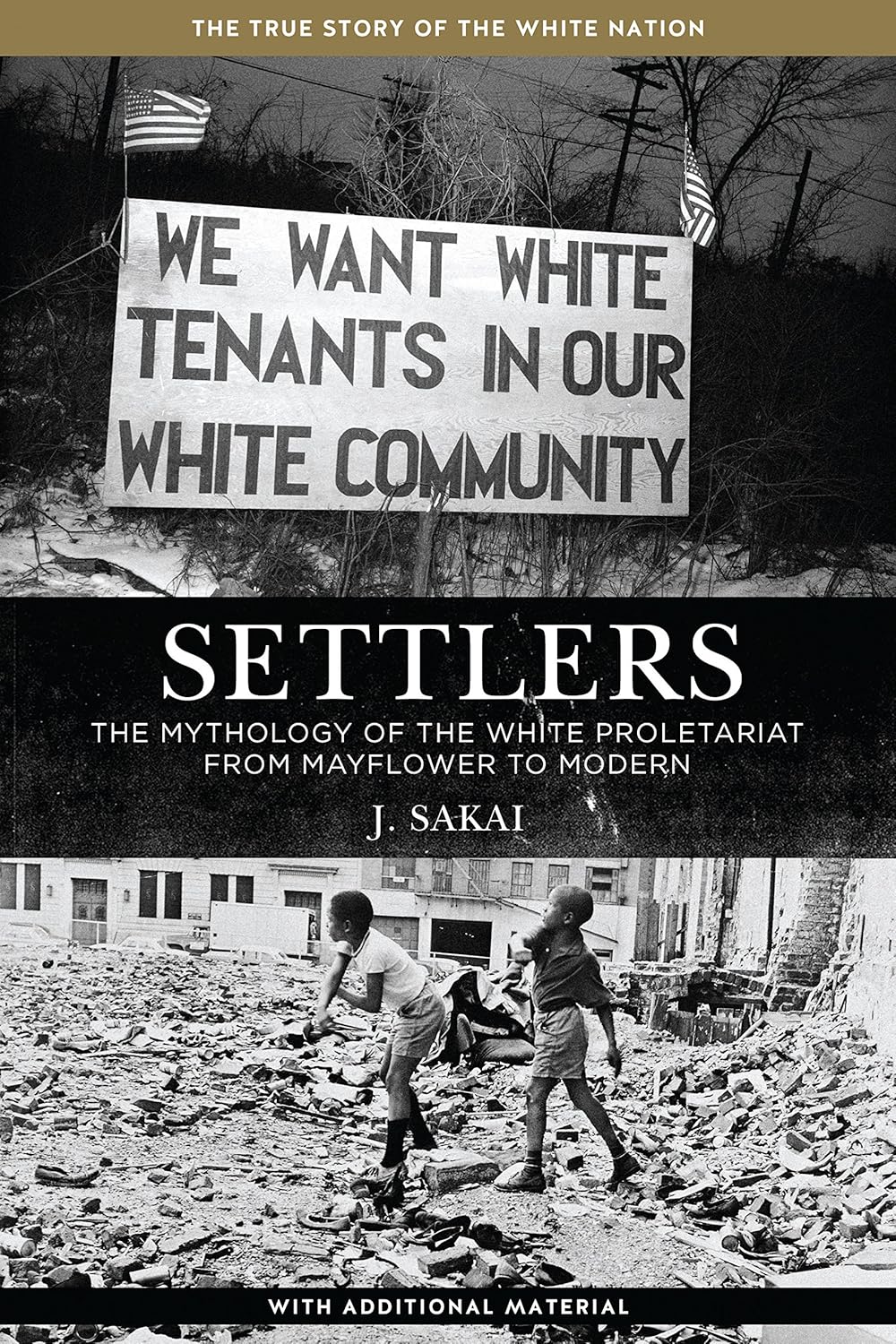
Settlers: The Mythology of the White Proletariat from Mayflower to Modern by J. Sakai_eBook and Audiobook 

Book Summary

  1. Introduction to Settler Colonialism
    • Definition and explanation of settler colonialism
    • Overview of the book’s objectives and key arguments
  2. Historical Context
    • The arrival of European settlers and the establishment of colonies
    • Early interactions with Indigenous populations
    • The impact of colonization on native peoples and cultures
  3. The Myth of the White Proletariat
    • Examination of the concept of the white working class
    • Critique of the portrayal of white settlers as victims of capitalism
    • Discussion of the privileges afforded to white settlers
  4. Class and Race Dynamics
    • Analysis of the relationships between race and class throughout American history
    • The role of white supremacy in shaping labor relations and social hierarchies
    • Impact of immigration and labor movements on racial dynamics
  5. The Role of Settlers in Capitalism
    • The contributions of settlers to the development of capitalism in America
    • Exploration of how settler colonialism facilitated economic exploitation
    • The relationship between land ownership and class status
  6. Resistance and Solidarity
    • The role of marginalized groups in resisting settler colonialism
    • Examples of solidarity between Indigenous peoples and other oppressed groups
    • The importance of intersectional analysis in understanding social movements
  7. Contemporary Implications
    • The lasting effects of settler colonialism on modern society
    • Discussion of ongoing struggles against systemic racism and oppression
    • The need for a re-evaluation of historical narratives and identities
  8. Conclusion
    • Summary of key themes and arguments presented in the book
    • Call to action for readers to critically engage with the history of settler colonialism

Settlers: The Mythology of the White Proletariat from Mayflower to Modern by J. Sakai_eBook

A uniquely important book in the canon of the North American revolutionary left and anticolonial movements, Settlers was first published in the 1980s. Written by activists with decades of experience organizing in grassroots anticapitalist struggles against white supremacy, the book established itself as an essential reference point for revolutionary nationalists and dissident currents within the Marxist-Leninist and anarchist movements. Always controversial within the establishment left, Settlers uncovers centuries of collaboration between capitalism and white workers and their organizations, as well as their neocolonial allies, showing how the United States was designed from the ground up as a parasitic and genocidal entity. As recounted in painful detail by J. Sakai, the United States has been built on the theft of Indigenous lands and of Afrikan labor, on the robbery of the northern third of Mexico, the colonization of Puerto Rico, and the expropriation of the Asian working class, with each of these crimes being accompanied by violence. This new edition includes a new essay and an interview with author J. Sakai by Ernesto Aguilar.

Pop the document out from the upper right to read / expand / download.

Settlers: The Mythology of the White Proletariat from Mayflower to Modern by J. Sakai_Audiobook

Part 1

Part 2

Learn more in RBG Communiversity Knowledge Media eLibrary:

GEOPOLITICS AND WAR ECONOMICS: The Impact of the Russia-Ukraine War in the European Union and Sub-Saharan Africa Using the Synthetic Control Model, by Uwem Essia (Part of Peacebuilding and Development Series), with Solid Video Education

Part of: Peacebuilding and Development (21 books)

Book Summary

“GEOPOLITICS AND WAR ECONOMICS: The Impact of the Russia-Ukraine War in the European Union and Sub-Saharan Africa Using the “Synthetic Control Model” by Uwem Essia examines the far-reaching consequences of the Russia-Ukraine conflict on economic and geopolitical dynamics, particularly focusing on the European Union (EU) and Sub-Saharan Africa. Utilizing the Synthetic Control Model, the book provides a rigorous analysis of how the war has affected various economic indicators, trade relations, and geopolitical strategies in these regions. Essia delves into the interconnectedness of global economies and the implications of conflict on international relations, offering insights into how nations can navigate the complexities of a rapidly changing geopolitical landscape.

The outline that follows captures the essence of “GEOPOLITICS AND WAR ECONOMICS,” highlighting its focus on the economic and geopolitical impacts of the Russia-Ukraine conflict on the European Union and Sub-Saharan Africa. The book utilizes a rigorous methodological framework to provide valuable insights into the complexities of international relations and the challenges posed by geopolitical conflicts.

  • Introduction
  • Overview of the geopolitical context of the Russia-Ukraine war
  • Explanation of the significance of studying its impact on the EU and Sub-Saharan Africa
  • Introduction to the Synthetic Control Model as a methodological approach
  • Geopolitical Background
  • Historical context of Russia-Ukraine relations leading up to the conflict
  • Overview of key players in the EU and Sub-Saharan Africa
  • Analysis of the geopolitical implications of the war on global power dynamics
  • Methodology
  • Detailed explanation of the Synthetic Control Model
  • Justification for using this model to analyze economic impacts
  • Description of data sources and variables considered in the analysis
  • Impact on the European Union
  • Examination of economic repercussions within EU member states
    • Changes in trade patterns and energy dependency
    • Economic sanctions and their effects on EU economies
  • Analysis of political responses and shifts in foreign policy
    • Increased military expenditure and defense strategies
    • Solidarity measures among EU countries in response to the war
  • Impact on Sub-Saharan Africa
  • Assessment of the economic impact of the war on Sub-Saharan African nations
    • Disruptions in trade and supply chains, particularly in agriculture and energy
    • Inflationary pressures and food security concerns
  • Exploration of geopolitical ramifications for African nations
    • Shifts in alliances and foreign relations with Russia and Western nations
    • The role of African nations in global discussions about the conflict
  • Comparative Analysis
  • Comparison of the short-term and long-term effects of the war on the EU and Sub-Saharan Africa
  • Identification of common challenges faced by both regions due to the conflict
  • Insights into how different regions adapt to geopolitical shocks
  • Policy Implications
  • Recommendations for policymakers in the EU and Sub-Saharan Africa
    • Strategies for enhancing economic resilience and diversification
    • Approaches for strengthening regional cooperation and solidarity
  • Considerations for future geopolitical stability and security
  • Conclusion
  • Summary of key findings and insights from the analysis
  • Reflection on the broader implications of the Russia-Ukraine war for global geopolitics
  • Final thoughts on the importance of understanding the interconnectedness of global economies

“GEOPOLITICS AND WAR ECONOMICS” by Uwem Essia provides a comprehensive analysis of how the ongoing conflict between Russia and Ukraine has reshaped economic and geopolitical landscapes, particularly in the European Union (EU) and Sub-Saharan Africa. The book leverages the Synthetic Control Model, a quantitative method that allows for a robust evaluation of causal effects, to assess the war’s impact on various economic indicators and political dynamics in these regions.

Key Themes Explored

  • Geopolitical Context and Historical Background
  • The book begins by situating the Russia-Ukraine conflict within a broader historical context, examining prior relations between Russia and Ukraine and the factors leading to the escalation of tensions.
  • It explores how the war has redefined geopolitical alignments, with a focus on the shifting dynamics within the EU as member states respond to the crisis.
  • Methodological Framework
  • The Synthetic Control Model is central to Essia’s analysis, providing a framework for estimating what the economic outcomes would have been in the absence of the conflict. This method is particularly useful for assessing the impact of events that are not easily replicable or controlled for.
  • The author details the specific data sources used, including economic indicators and trade statistics, and explains how these variables were selected to construct the synthetic control groups for both the EU and Sub-Saharan Africa.
  • Economic Impact on the European Union
  • Essia investigates the immediate and long-term economic repercussions of the war on EU member states, such as:
    • Disruptions in trade flows, particularly concerning energy supplies, as many EU countries rely heavily on Russian gas and oil.
    • The imposition of sanctions on Russia, which had significant ripple effects on EU economies, including inflation and supply chain issues.
  • The analysis also covers shifts in the EU’s defense spending and military cooperation in response to perceived threats, as well as changes in foreign policy aimed at enhancing collective security.
  • Economic Impact on Sub-Saharan Africa
  • The book highlights the often-overlooked effects of the Russia-Ukraine conflict on Sub-Saharan African nations. Key points include:
    • The disruption of agricultural exports, particularly grains like wheat, which has exacerbated food insecurity in a region already vulnerable to climate change and economic instability.
    • Rising prices for essential goods, leading to inflationary pressures that affect the livelihoods of millions.
  • Essia discusses how Sub-Saharan African countries are navigating the geopolitical landscape, often balancing their relationships with both Western nations and Russia.
  • Comparative Analysis and Insights
  • The comparative analysis section synthesizes the findings from the two regions, identifying similarities and differences in how they are affected by the war.
  • Essia highlights common challenges, such as the need for economic diversification and resilience against external shocks, while also noting the distinct geopolitical strategies employed by the EU and Sub-Saharan Africa.
  • Policy Recommendations
  • The author provides actionable recommendations for policymakers in both regions, suggesting:
    • Economic diversification strategies to reduce dependency on single sources of energy or commodities.
    • Enhanced regional cooperation to build resilience against future geopolitical shocks.
    • The importance of engaging in diplomatic efforts to mitigate the conflict and its repercussions on global stability.

Conclusion and Broader Implications

  • Reflections on Global Interconnectedness
  • In the conclusion, Essia reflects on the interconnected nature of today’s global economy and how localized conflicts can have far-reaching implications.
  • He emphasizes that understanding the economic and geopolitical consequences of the Russia-Ukraine war is essential for anticipating future challenges and opportunities in international relations.
  • Future Geopolitical Stability
  • The book ends with a call for ongoing research and dialogue to address the complexities of global geopolitics, stressing the importance of adapting to changing dynamics in an increasingly multipolar world.

Overall, “GEOPOLITICS AND WAR ECONOMICS” offers a thorough and insightful examination of the ramifications of the Russia-Ukraine conflict, using a sophisticated methodological approach to shed light on the pressing economic and geopolitical issues facing the EU and Sub-Saharan Africa. By connecting the dots between conflict, economics, and international relations, Uwem Essia provides valuable perspectives that contribute to our understanding of contemporary global challenges.

“GEOPOLITICS AND WAR ECONOMICS: The Impact of the Russia-Ukraine War in the European Union and Sub-Saharan Africa Using the Synthetic Control Model” by Uwem Essia_eBook

Pop the document out from the upper right to read / expand / download

Geopolitics, Economics, War and Fall of U.S. Empire_Video Education 1

35 Video Playlist

U.S. Geopolitics and Economy _Dr. Paul Craig Roberts_Video Education 2

21 Video Playlist

Learn more in RBG Communiversity Knowledge Media eLibrary:

Geopolitics, Economics, War and Fall of U.S. Empire