Pedagogy of the Oppressed, Paulo Freire_eBook and Video Education_ Understanding Paulo Freire’s “Pedagogy of the Oppressed” Dr. Masood

Last Updated 03-20-2025

PEDAGOGY OF THE OPPRESSED

Book Summary

“Pedagogy of the Oppressed” by Paulo Freire is a foundational text in critical pedagogy that critiques traditional education models and advocates for a more liberating approach to teaching and learning. Freire argues that conventional education often reinforces oppression by treating students as passive recipients of knowledge rather than active participants in their own learning. He emphasizes the importance of dialogue, critical thinking, and consciousness-raising to empower learners and challenge oppressive systems. Freire presents a vision of education as a practice of freedom, where educators and students collaboratively engage in the process of learning, fostering critical awareness and social change.

Outline:

  • Introduction
    • Context of education as a tool for liberation or oppression
    • Importance of critical pedagogy
  • Oppression and Education
    • Definition of oppression in society
    • Traditional education as a “banking model” that deposits information into passive students
  • Dialogical Method
    • Emphasis on dialogue as a means of communication and understanding
    • The role of critical reflection in education
  • Consciousness-Raising
    • Importance of developing critical consciousness (conscientização)
    • Awareness of social, political, and economic contradictions
  • The Role of the Educator
    • Shift from authority figure to co-learner and facilitator
    • Encouraging collaboration and mutual respect in the classroom
  • Liberation through Education
    • Education as a practice of freedom rather than domination
    • Fostering a sense of agency and empowerment among learners
  • Cultural Context
    • Recognition of the unique cultural backgrounds of students
    • Importance of culturally relevant pedagogy
  • Conclusion
    • Call for a transformative approach to education
    • Vision of a just society achieved through critical education and social action

“Pedagogy of the Oppressed” is a profound work that not only critiques existing educational practices but also offers a transformative vision for how education can be a means of liberation. Here’s a deeper exploration of its main themes and concepts:

Key Themes and Concepts:

  1. Banking Model of Education:
    • Freire critiques the traditional “banking” model of education, where teachers deposit information into students, who are expected to memorize and regurgitate it. This model promotes passive learning and maintains the status quo, rather than fostering critical thinking or creativity. Freire advocates for a more dynamic and interactive approach to education.
  2. Dialogue and Communication:
    • Central to Freire’s philosophy is the idea of dialogue. He argues that education should be a collaborative process where both teachers and students engage in meaningful conversations. Dialogue enables learners to express their thoughts, question assumptions, and develop critical perspectives.
  3. Conscientização (Critical Consciousness):
    • Freire introduces the concept of conscientização, which refers to the process of developing a critical awareness of one’s social reality. This consciousness allows individuals to recognize oppressive structures in society and empowers them to take action against these injustices. Education, in this sense, becomes a means of awakening this critical consciousness.
  4. Praxis:
    • Freire emphasizes the importance of praxis, which is the combination of reflection and action. He argues that true education must lead to transformative action, allowing learners to apply their critical thinking to real-world problems. This cycle of reflection and action helps individuals challenge and change their oppressive conditions.
  5. Cultural Context and Relevance:
    • Freire stresses the significance of acknowledging the cultural backgrounds of learners. Education should be relevant to students’ lived experiences and cultural contexts, promoting a sense of identity and belonging. This relevance enhances engagement and learning outcomes.
  6. Role of the Educator:
    • Freire redefines the role of educators, suggesting they should act as facilitators and co-learners rather than authoritative figures. Educators are encouraged to create an environment of mutual respect and collaboration, where students feel empowered to share their ideas and challenge existing norms.
  7. Oppression and Liberation:
    • The book explores the dynamics of oppression, emphasizing that true liberation requires a collective struggle against oppressive systems. Freire argues that the oppressed must play an active role in their emancipation, fostering solidarity and collective action.
  8. Social Justice and Transformation:
    • Freire’s pedagogy is rooted in a commitment to social justice. He envisions education as a means to transform society by equipping individuals with the tools to challenge inequality and advocate for change. This transformative potential is a key aspect of his educational philosophy.

Conclusion:

“Pedagogy of the Oppressed” remains a seminal text that has influenced educators, activists, and scholars worldwide. Freire’s insights into the relationship between education and social justice have sparked movements for reform in educational practices. His call for a participatory and liberating approach to education continues to resonate, encouraging individuals to seek not only knowledge but also the power to enact meaningful change in their lives and communities. The book serves as both a critique of traditional educational systems and a powerful manifesto for a more equitable and just approach to teaching and learning.

Pedagogy of the Oppressed, Paulo Freire_eBook

Pop the documents out from the upper right to read / expand / download.

Understanding Paulo Freire’s “Pedagogy of the Oppressed” Dr. Masood

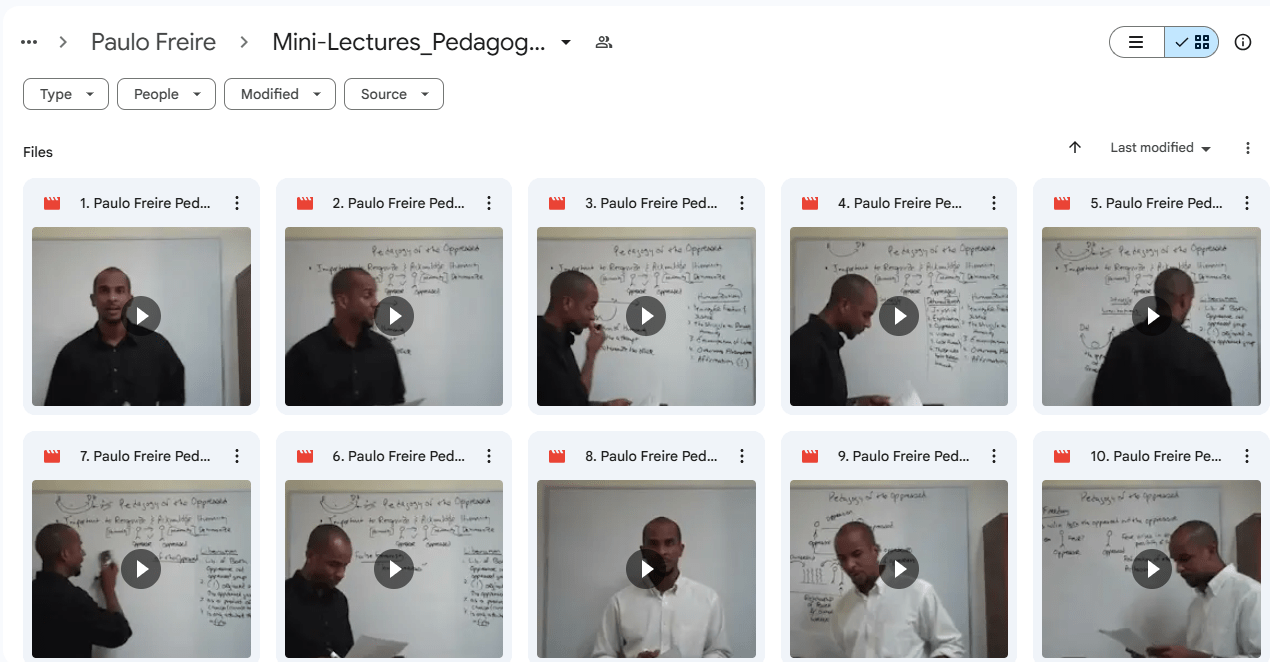
Mini-Lectures_Pedagogy of the Oppressed_ Dr Jason Campbell
PEDAGOGY OF THE OPPRESSED2

Post-Traumatic Slave Syndrome: Prof. James Smalls and Dr. Joy DeGruy Leary_Video Education and eBook

Click for full size poster.

Post Slavery Traumatic Syndrome Discussion

Pop the document out from the upper right to read / expand / download.

Post-Traumatic Slave Syndrome: America’s Legacy of Enduring Injury and Healing by Joy DeGruy Leary, Ph.D., Foreword by Randall Robinson

Definition: Post traumatic slave syndrome is defined by DeGruy (2005) as “a condition that exists when a population has experienced multigenerational trauma resulting from centuries of slavery and continues to experience oppression and institutionalized racism today.

Buy the book here: Post Traumatic Slave Syndrome, Revised Edition: America’s Legacy of Enduring Injury and Healing Hardcover

Book Summary

“Post-Traumatic Slave Syndrome” explores the enduring psychological and social effects of slavery on African Americans and their descendants. Dr. Joy DeGruy Leary presents a framework for understanding how the traumas of slavery have been passed down through generations, affecting identity, behavior, and community dynamics. The book combines historical analysis, psychological insights, and personal narratives to illustrate the long-term impacts of systemic racism and the necessity for healing.

The outline that follows encapsulates the core themes and structure of Dr. Joy DeGruy Leary’s influential work, highlighting the profound effects of slavery on contemporary African American life and the path toward healing and understanding.

  1. Introduction
    • Definition of Post-Traumatic Slave Syndrome (PTSS)
    • Overview of historical context and relevance
  2. Historical Background
    • The legacy of slavery in America
    • The transition from slavery to Jim Crow laws
    • Impact of systemic racism on African American communities
  3. Understanding Trauma
    • Definition of trauma and its psychological impacts
    • The concept of generational trauma
    • How trauma manifests in behavior and community dynamics
  4. Symptoms of PTSS
    • Identifying behavioral patterns linked to PTSS
    • Emotional and psychological symptoms
    • Social implications and community effects
  5. Coping Mechanisms and Responses
    • Historical and cultural coping strategies
    • The role of faith, community, and resilience
  6. Healing and Recovery
    • Importance of acknowledging and addressing trauma
    • Strategies for healing within individuals and communities
    • Role of education and awareness in healing
  7. Conclusion
    • The significance of understanding PTSS for future generations
    • Call to action for societal change and healing
  8. Appendices
    • Resources for further reading and support
    • Discussion questions for reflection and dialogue

Here’s a more detailed exploration of the themes and significant aspects covered in “Post-Traumatic Slave Syndrome”

PTSS delves deeper into the psychological impacts of slavery, emphasizing how the trauma experienced by enslaved individuals has shaped the behaviors and experiences of their descendants.

Key Themes and Concepts

  1. Post-Traumatic Slave Syndrome (PTSS):
    • Dr. DeGruy defines PTSS as a condition that results from the multi-generational trauma experienced by African Americans due to slavery and systemic racism. She likens it to PTSD but emphasizes its unique historical context.
  2. Historical Context:
    • The book outlines the brutal realities of slavery, including dehumanization, violence, and family separation. It traces how these experiences have a lasting impact that extends beyond the individual to their descendants.
  3. Generational Trauma:
    • DeGruy discusses how the psychological scars of slavery and racism can be transmitted through generations. This includes the internalization of negative stereotypes and the perpetuation of trauma-related behaviors within families and communities.
  4. Behavioral Patterns:
    • The author identifies specific behaviors and attitudes that may arise from PTSS, such as distrust, anger, and feelings of hopelessness. She explains how these behaviors can hinder personal and community development.
  5. Coping Mechanisms:
    • Throughout the book, Dr. DeGruy highlights various coping mechanisms that African Americans have developed in response to their trauma. These include cultural resilience, community support, and spiritual practices that play a crucial role in healing.
  6. The Role of Education:
    • Education is emphasized as a vital tool for understanding the historical and psychological impacts of slavery. DeGruy advocates for incorporating this knowledge into educational curricula to foster awareness and healing.
  7. Healing and Empowerment:
    • The book concludes with a focus on healing strategies, emphasizing the importance of acknowledging trauma, seeking therapy, and engaging in community healing processes. DeGruy encourages readers to confront the legacy of slavery and work towards empowerment and resilience.

Importance of the Work

Dr. Joy DeGruy Leary’s work is significant for several reasons:

  • Awareness: It raises awareness about the lasting impacts of slavery and racism, encouraging dialogue about these issues in contemporary society.
  • Cultural Understanding: The book fosters a deeper understanding of African American experiences and the psychological ramifications of historical trauma.
  • Call to Action: It serves as a call to action for individuals, communities, and institutions to recognize the effects of PTSS and to support healing initiatives.

Overall, “Post-Traumatic Slave Syndrome” is a critical examination of the intersection of history, psychology, and social justice, making it a valuable resource for anyone interested in understanding the complexities of race and trauma in America.

Pop the document out from the upper right to read / expand / download.

Dr. Joy DeGruy Post Traumatic Slave Syndrome Video Edu.

WE ARE AT WAR_ REVOLUTION IS THE ONLY SOLUTION _ Empire and the Prison Industrial Complex Expose’ (Video Edu.) Empire Files with Journalist Abby Martin,with The Prison-industrial Complex, the Global Economy. (Eve Goldberg, Linda Evans)

we are at war

Icebreaker Video_Dead Prez – Thats War

The Rise of History’s Biggest Empire

TELESUR ABBY MARTIN ON U'S; EMPIRE

Abby Martin debuts teleSUR’s The Empire Files exploring the U.S. Empire, its rise to world hegemony and its impact on people and the planet.

America Has The biggest prison system in the world

TELESUR ABBY MARTIN ON U'S; PRISONS

Empire Files With Abby Martin: Enter the Biggest Prison System in History

Pop the documents out from the upper right to read / expand / download.

The Prison-industrial Complex, the Global Economy. (Eve Goldberg, Linda Evans)

Book Summary

“The Prison-Industrial Complex: The Global Economy” by Eve Goldberg and Linda Evans examines the intersection of the prison system with economic and social structures on a global scale. The authors argue that the expansion of the prison system is closely linked to neoliberal economic policies, systemic racism, and social inequality. The book critiques the growing influence of the prison-industrial complex, which they define as the relationship between government, private industry, and the prison system, highlighting how this relationship perpetuates cycles of poverty, marginalization, and oppression. Through analysis of case studies, policy discussions, and historical context, Goldberg and Evans call for awareness and action against the injustices perpetuated by this complex.

The outline that follows encapsulates the essence of “The Prison-Industrial Complex: The Global Economy,” highlighting Eve Goldberg and Linda Evans’ critical examination of the prison system’s relationship with global economic structures. The book serves as an important resource for understanding the complexities of mass incarceration and its implications for social justice, urging readers to consider the broader societal impacts of the prison-industrial complex and to engage in efforts for meaningful reform.

  • Introduction
    • Overview of the prison-industrial complex and its significance in contemporary society
    • Explanation of the book’s objectives and key themes
  • Part I: Historical Context of the Prison System
    • Evolution of Prisons
      • Overview of the history of prisons in the United States and globally
      • Discussion of how societal attitudes toward punishment and rehabilitation have changed over time
    • Impact of Neoliberalism
      • Examination of the rise of neoliberal economic policies and their influence on the prison system
      • Analysis of the relationship between economic downturns and increased incarceration rates
  • Part II: The Prison-Industrial Complex
    • Definition and Components
      • Explanation of what constitutes the prison-industrial complex
      • Overview of the roles of government, private corporations, and non-profit organizations in the prison system
    • Economic Incentives
      • Discussion of the financial motivations behind the expansion of the prison system
      • Examination of how private prisons and prison labor create profit opportunities for companies
  • Part III: Social and Racial Implications
    • Systemic Racism and Incarceration
      • Analysis of the disproportionate impact of incarceration on communities of color
      • Examination of how systemic racism is embedded in the criminal justice system
    • Impact on Families and Communities
      • Discussion of the social consequences of mass incarceration on families and communities
      • Exploration of the long-term effects of incarceration on individuals and their reintegration into society
  • Part IV: Global Perspectives on Incarceration
    • Comparative Analysis
      • Examination of incarceration rates and prison systems in different countries
      • Discussion of how globalization affects the prison-industrial complex and human rights
    • Case Studies
      • Presentation of specific case studies that illustrate the global implications of the prison system
      • Analysis of international movements against mass incarceration and prison exploitation
  • Part V: Alternatives and Solutions
    • Reforming the Prison System
      • Discussion of potential reforms to address the injustices of the prison-industrial complex
      • Exploration of restorative justice and alternative sentencing as viable solutions
    • Activism and Advocacy
      • Overview of grassroots movements and organizations working to combat the prison-industrial complex
      • Call to action for readers to engage in advocacy and support efforts for reform
  • Conclusion
    • Summary of key arguments and insights presented in the book
    • Reflection on the necessity of dismantling the prison-industrial complex for social justice
    • Final thoughts on the role of individuals and communities in advocating for change

“The Prison-Industrial Complex: The Global Economy” offers a critical exploration of how the prison system intersects with broader economic, social, and political structures. The authors argue that the expansion of the prison system is not merely a response to crime but is deeply rooted in systemic inequalities, neoliberal economic policies, and the profit motives of both government and private entities. Below is a more in-depth examination of the key themes, arguments, and significance of the book:

Key Themes Explored

  • Prison-Industrial Complex
    • The authors define the prison-industrial complex as the interlocking relationships between government agencies, private corporations, and non-profit organizations that benefit from the expansion of the prison system. This complex creates a cycle of incarceration that prioritizes profit over rehabilitation and social justice.
    • They highlight how the privatization of prisons has led to a profit-driven model that incentivizes incarceration rather than addressing the root causes of crime.
  • Historical Context and Neoliberalism
    • Goldberg and Evans provide a historical overview of the prison system, detailing its evolution from a focus on rehabilitation to a punitive model that reflects neoliberal economic policies. They argue that the shift toward neoliberalism in the late 20th century has exacerbated social inequalities and led to increased incarceration rates, particularly among marginalized communities.
    • The authors connect economic downturns and social unrest to the rise in incarceration, suggesting that prisons are often used as a tool to control dissent and manage social problems.
  • Systemic Racism and Social Inequality
    • A significant focus of the book is the impact of systemic racism on incarceration rates. The authors argue that the criminal justice system disproportionately affects people of color due to discriminatory policies, biased policing practices, and socio-economic disparities.
    • They emphasize that mass incarceration serves as a mechanism of social control, perpetuating cycles of poverty and marginalization in communities of color.
  • Global Perspectives on Incarceration
    • The book provides a comparative analysis of prison systems worldwide, exploring how globalization affects incarceration rates and human rights. Goldberg and Evans examine the similarities and differences in how countries address crime and punishment, shedding light on the global implications of the prison-industrial complex.
    • They discuss international movements advocating for prison reform and the abolition of mass incarceration, highlighting the importance of solidarity in the fight for justice.

Contributions and Insights

  • Critical Analysis of Economic Incentives
    • The authors delve into the economic motivations behind the prison-industrial complex, illustrating how private corporations profit from prison labor and the construction of new facilities. They argue that these financial incentives create a system that prioritizes incarceration over rehabilitation and community support.
    • Through detailed analysis, Goldberg and Evans reveal the ways in which economic policies and prison expansion are intertwined, calling for a reevaluation of how society views crime and punishment.
  • Social Consequences of Incarceration
    • The book discusses the far-reaching social consequences of mass incarceration, including its impact on families, communities, and social cohesion. The authors highlight how incarceration disrupts familial bonds, exacerbates poverty, and contributes to community destabilization.
    • They argue that the repercussions of incarceration extend beyond the prison walls, affecting future generations and perpetuating cycles of disadvantage.

Significance of the Book

  • Awareness of the Prison-Industrial Complex
    • “The Prison-Industrial Complex: The Global Economy” serves as an important resource for understanding the complexities of mass incarceration and its implications for social justice. The authors encourage readers to critically engage with the narratives surrounding crime and punishment.
    • By raising awareness of the economic and social factors contributing to the expansion of the prison system, the book challenges readers to reconsider their perspectives on justice and rehabilitation.
  • Call to Action for Reform
    • The authors advocate for systemic reforms to address the injustices perpetuated by the prison-industrial complex. They propose alternatives to incarceration, such as restorative justice practices, community-based interventions, and policies aimed at addressing the root causes of crime.
    • The book empowers readers to take action, highlighting grassroots movements and organizations working toward meaningful change in the criminal justice system.
  • Relevance to Contemporary Issues
    • The themes explored in the book are especially relevant in the context of ongoing debates about criminal justice reform, police violence, and systemic racism. The authors’ insights resonate with contemporary movements advocating for the abolition of mass incarceration and the promotion of social justice.
    • By situating the prison-industrial complex within a global context, the book encourages a deeper understanding of the interconnectedness of social struggles and the need for solidarity in the fight for justice.

Conclusion

“The Prison-Industrial Complex: The Global Economy” is a powerful critique of the systemic issues surrounding mass incarceration and the economic motivations driving the prison system. By analyzing the historical context, social implications, and global perspectives of incarceration, the authors provide a comprehensive understanding of the prison-industrial complex and its consequences for society. The book serves as both a wake-up call and a call to action, urging readers to engage in advocacy for reform and to challenge the injustices perpetuated by a profit-driven prison system. Through their work, Goldberg and Evans contribute significantly to the discourse on criminal justice, social inequality, and the necessity of systemic change.

“The Prison-Industrial Complex: The Global Economy”_eBook

Pop the documents out from the upper right to read / expand / download.

Learn more in RBG Communiversity Knowledge Media eLibrary:

Dark Alliance_ Gary Webb eText_The CIA and Crack Cocaine Trafficking-Feat., Wise Intelligent , “The Globe Holders” w Comprehensive Drug Abuse Prevention Education Doc.

Click for standalone poster.

Click for Full Size Standalone Poster.

Webb was found dead in his Carmichael home on December 10, 2004, with two gunshot wounds to the head. His death was ruled a suicide by the Sacramento County coroner’s office ???

For new comers, pop the document out from the upper right to read / expand / download.

RBG Comprehensive Drug Abuse Prevention Education & Discussion Forum: 4 Lessons: An Interactive PDF

Pop the document out from the upper right to read / expand / download.

Learn more in RBG Communiversity eLibrary|

Illegal Drugs_How They Got That Way_Reading and Video Edu.

The Untold History of the United States, by Oliver Stone and Peter Kuznick_eBook and Video Education

Last Updated 05-02-2025

The companion to the Showtime documentary series, director Oliver Stone and historian Peter Kuznick challenge the prevailing orthodoxies of traditional history books in this thoroughly researched and rigorously analyzed look at the dark side of American history.

Book Summary

“The Untold History of the United States” by Oliver Stone and Peter Kuznick is a sweeping historical narrative that reexamines key events and themes in American history from a critical perspective. The book challenges conventional narratives surrounding U.S. history, particularly regarding war, imperialism, and the role of government. Stone and Kuznick argue that the United States has often acted contrary to its professed ideals of democracy and freedom, engaging in acts that undermine these principles both domestically and abroad. Through a combination of historical analysis, personal anecdotes, and a critical lens, the authors seek to illuminate the hidden aspects of American history that have shaped the country’s trajectory and its impact on the world.

The outline that follows captures the key themes and structure of “The Untold History of the United States” by Oliver Stone and Peter Kuznick. The book serves as a thought-provoking exploration of American history, urging readers to question established narratives and consider the broader implications of the United States’ actions both domestically and internationally. Through their critical approach, Stone and Kuznick aim to foster a deeper understanding of the complexities of U.S. history and its impact on the world.

I. Introduction

  • A. Purpose of the book
  • B. Overview of Oliver Stone and Peter Kuznick’s backgrounds
  • C. Importance of reevaluating U.S. history

II. Historical Context

  • A. The founding ideals of the United States
    • Declaration of Independence and Constitution
    • Contradictions in the founding principles
  • B. The role of imperialism in shaping U.S. policy
    • Early expansionism and Manifest Destiny
  • Impact on indigenous populations and neighboring countries

III. The American Century and World Wars

  • A. World War I and its aftermath
    • U.S. involvement and consequences
    • The Treaty of Versailles and its implications
  • B. World War II: A critical examination
    • The bombing of Hiroshima and Nagasaki
  • The rise of the military-industrial complex

IV. The Cold War Era

  • A. Origins of the Cold War
    • U.S.-Soviet relations post-World War II
    • The ideological battle between capitalism and communism
  • B. Key events and policies
    • The Korean War and Vietnam War
  • CIA interventions and covert operations
  • C. Dissent and resistance in the U.S.
    • The civil rights movement
  • Anti-war protests and counterculture

V. Contemporary Issues and U.S. Foreign Policy

  • A. Post-Cold War America
    • The implications of U.S. intervention in the Balkans
    • The War on Terror and its consequences
  • B. Critique of neoliberalism and globalization
    • Economic policies and their impact on inequality
  • The influence of corporations on government policy
  • C. Environmental challenges and imperialism
    • Climate change and its geopolitical implications
  • Resource wars and environmental degradation

VI. Reevaluating American Exceptionalism

  • A. The concept of American exceptionalism
    • Historical roots and implications
    • The reality of U.S. actions versus its ideals
  • B. Calls for a more honest historical narrative
    • Importance of recognizing past mistakes
  • Vision for a more equitable and just future

VII. Conclusion

  • A. Summary of key arguments and insights
  • B. The importance of learning from history
  • C. A call to action for informed citizenship and engagement

“The Untold History of the United States” by Oliver Stone and Peter Kuznick offers a provocative reexamination of key events and trends in American history, challenging conventional narratives and encouraging readers to consider the broader implications of the United States’ actions both domestically and internationally. Here’s a more detailed exploration of the book’s key themes, arguments, and insights:

Detailed Exploration of Key Themes

1. Historical Context and Founding Ideals

  • Contradictions of Founding Principles: Stone and Kuznick begin by discussing the founding ideals of the United States, such as liberty, equality, and democracy. However, they also highlight the contradictions inherent in these principles, particularly in relation to slavery, the treatment of indigenous peoples, and the exclusion of women and minorities from political rights.
  • Manifest Destiny and Imperialism: The authors examine early American expansionism, emphasizing how the ideology of Manifest Destiny justified the conquest of territories and the displacement of Native Americans. This sets the stage for a broader discussion of U.S. imperialism and its consequences.

2. The American Century and World Wars

  • World War I: The book analyzes the United States’ involvement in World War I, presenting it as a pivotal moment that shifted the country’s role on the global stage. The authors discuss the consequences of the war and how the Treaty of Versailles laid the groundwork for future conflicts.
  • World War II: Stone and Kuznick critically examine the U.S. actions during World War II, particularly the decision to drop atomic bombs on Hiroshima and Nagasaki. They argue that this act not only caused immense human suffering but also marked the beginning of a dangerous arms race and the establishment of the military-industrial complex.

3. The Cold War Era

  • Origins and Dynamics: The authors explore the origins of the Cold War, detailing the ideological battle between capitalism and communism that defined the post-World War II era. They analyze key events, such as the Berlin Blockade and the Cuban Missile Crisis, highlighting how U.S. foreign policy was often driven by a desire to contain communism at all costs.
  • Military Interventions: Stone and Kuznick provide an in-depth look at U.S. military interventions during the Cold War, including the Korean War and the Vietnam War. They argue that these conflicts were not only disastrous for the countries involved but also for American society, leading to widespread dissent and divisions at home.
  • Civil Rights and Anti-War Movements: The book emphasizes the role of dissenting voices during the Cold War, particularly the civil rights movement and anti-war protests. The authors highlight how these movements challenged the status quo and sought to hold the government accountable for its actions.

4. Contemporary Issues and Foreign Policy

  • Post-Cold War America: The authors discuss the implications of U.S. foreign policy in the post-Cold War era, including interventions in the Balkans and the Middle East. They argue that these actions often reflect a continuation of imperialist tendencies rather than a commitment to democracy and human rights.
  • War on Terror: The book critically examines the War on Terror following the September 11 attacks, arguing that it has led to significant civil liberties violations and has fueled further instability in the Middle East. Stone and Kuznick point to the long-term consequences of these policies, including the rise of extremist groups.
  • Neoliberalism and Globalization: The authors critique neoliberal economic policies and their impact on inequality in the United States and around the world. They explore how corporate interests have influenced government policy, often at the expense of ordinary citizens.
  • Environmental Concerns: The book addresses contemporary environmental challenges, emphasizing the interconnections between imperialism, resource exploitation, and climate change. Stone and Kuznick argue that U.S. foreign policy must be reevaluated in light of these urgent issues.

5. Reevaluating American Exceptionalism

  • Critique of Exceptionalism: Stone and Kuznick challenge the notion of American exceptionalism, arguing that the U.S. has often acted contrary to its stated ideals. They contend that recognizing these contradictions is essential for understanding the true nature of American history.
  • Importance of Historical Awareness: The authors stress the need for a more honest and nuanced understanding of U.S. history. They advocate for a critical reevaluation of the past to inform present and future actions, emphasizing the importance of learning from mistakes.

6. Conclusion and Call to Action

  • Summary of Insights: The book concludes by summarizing the key arguments presented throughout. Stone and Kuznick call for readers to engage with history critically, recognizing the complexities and contradictions that have shaped the United States.
  • Encouragement for Active Citizenship: The authors emphasize the importance of informed citizenship and active engagement in democratic processes. They argue that understanding history is crucial for advocating for social justice and holding those in power accountable.

Implications and Legacy

  • Revisiting Historical Narratives: “The Untold History of the United States” contributes to ongoing discussions about historical narratives and the importance of critically examining the past. It encourages readers to question established beliefs and consider alternative perspectives.
  • Influence on Public Discourse: The book has sparked conversations about American foreign policy, imperialism, and the need for social change, making it a significant resource for activists, educators, and students of history.
  • Vision for a Just Future: Through their critical analysis, Stone and Kuznick inspire readers to envision a more equitable and just society, one that learns from history to create a better future.

Conclusion

In summary, “The Untold History of the United States” by Oliver Stone and Peter Kuznick offers a thought-provoking and critical examination of American history. By challenging conventional narratives and highlighting the complexities of U.S. actions at home and abroad, the authors encourage readers to engage with history in a meaningful way. The book serves as a call to action for informed citizenship and the pursuit of social justice, emphasizing the importance of understanding the past to shape a better future.

The Untold History of the United States_eBook

Pop the documents out from the upper right to read / expand / download.

The Untold History of the United States_Video Education

27 Video Playlist

Learn more in RBG Communiversity Knowledge Media eLibrary