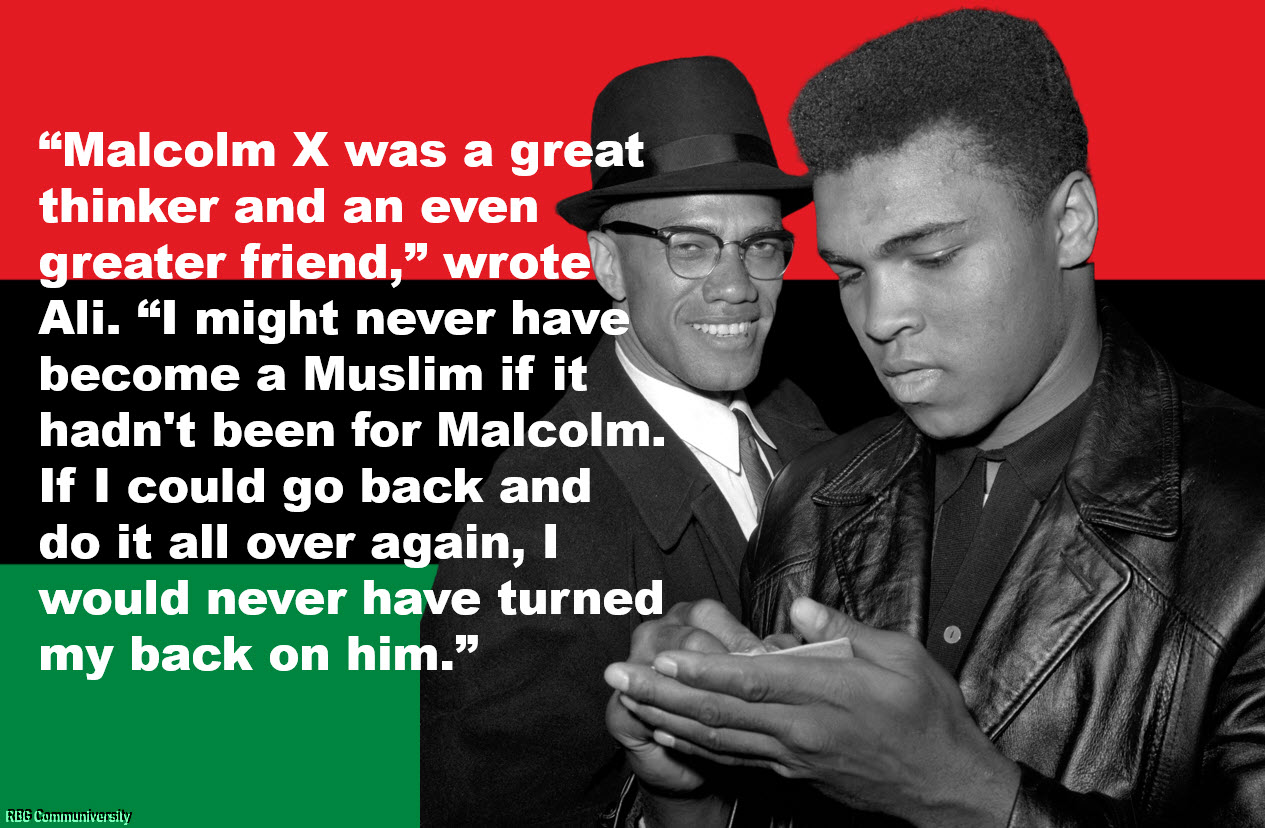
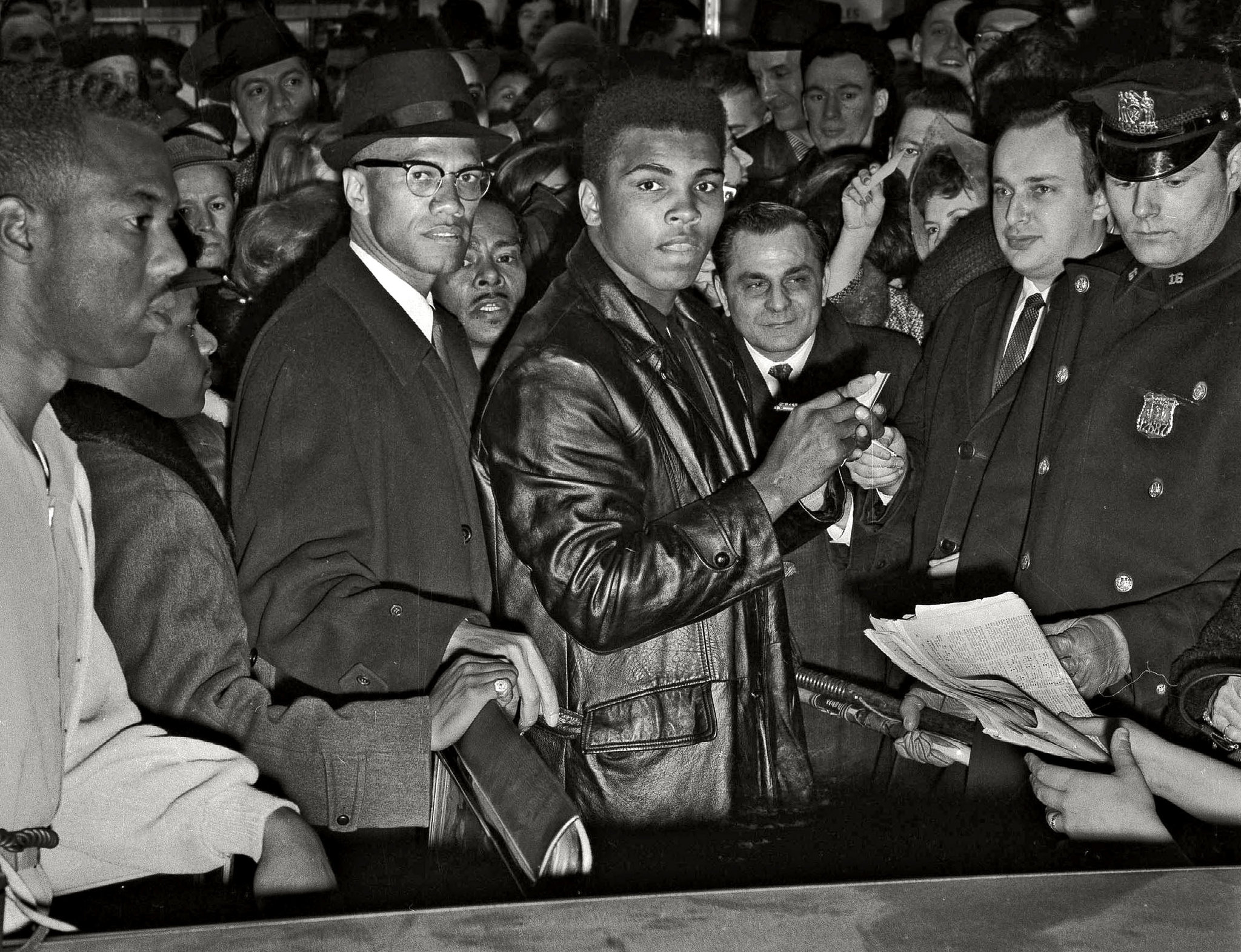
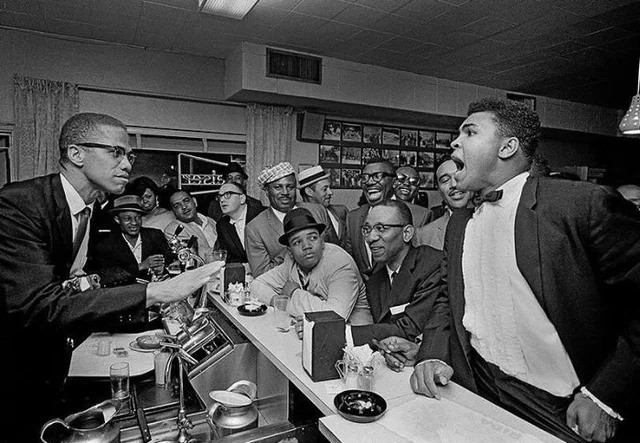
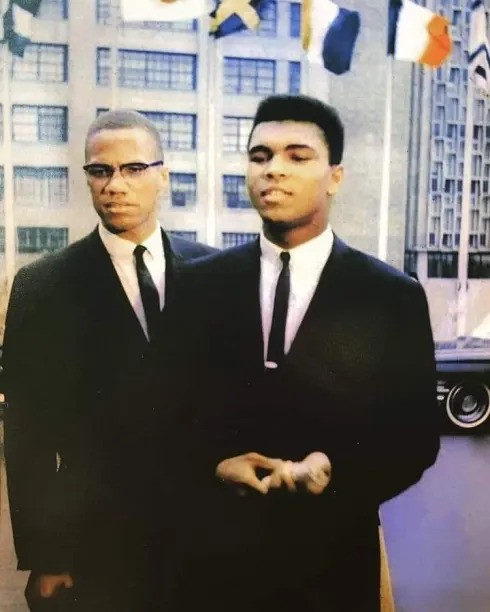
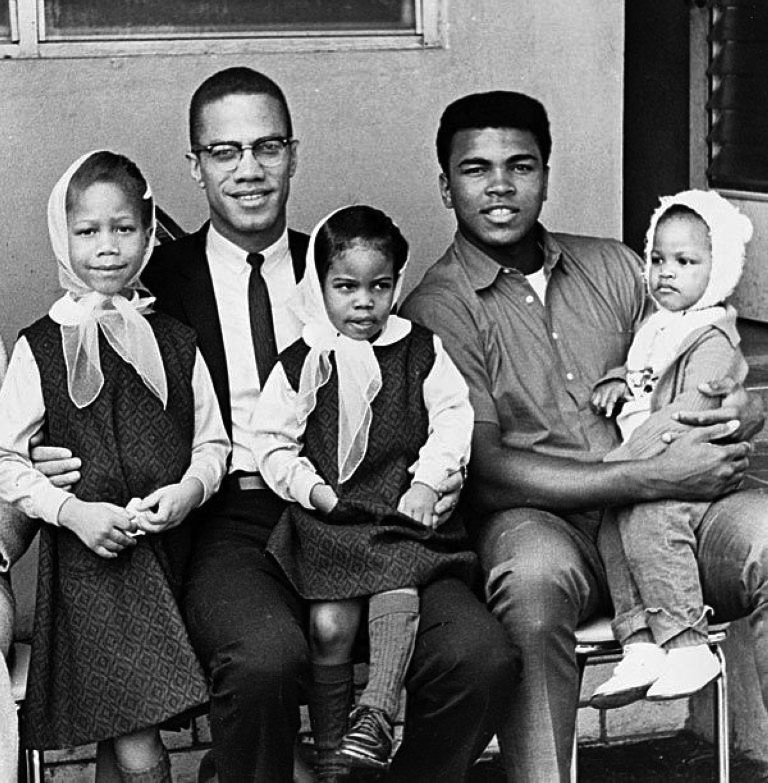
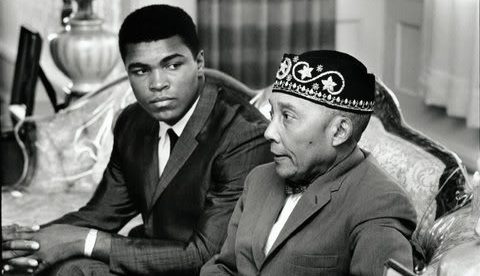
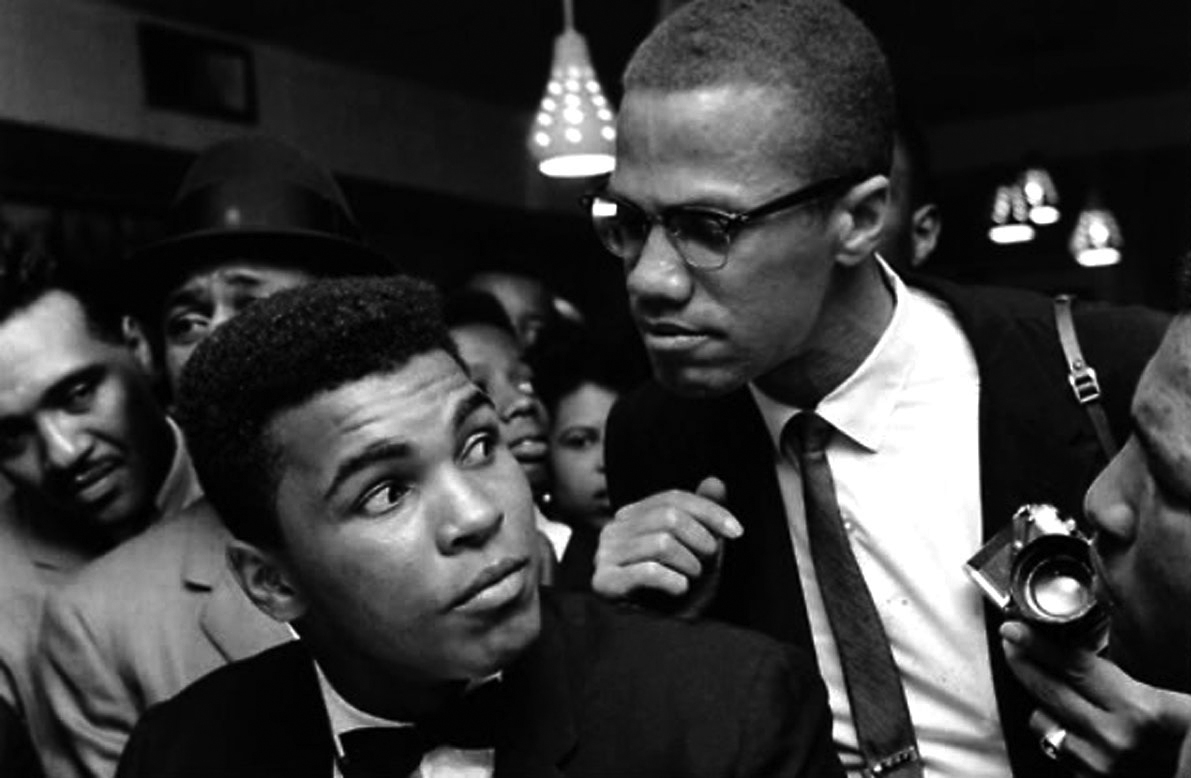
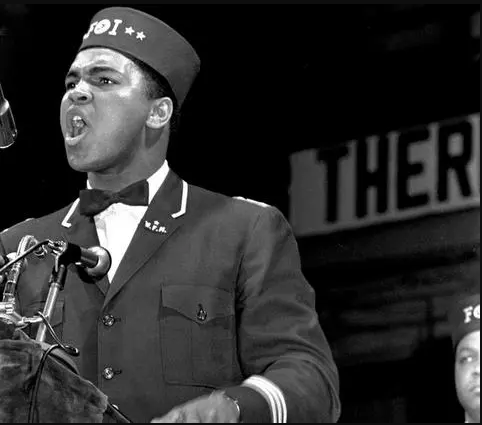
Ali first met Malcolm X, Elijah Muhammad’s chief disciple at the time in Nevada in 1962. Malcolm X is credited with playing a critical role in the evolution of Ali’s religious views by steering him towards the Nation of Islam.| IN RE OF THE CLIP: RBG Communiversity Knowledge Media eLibrary_Like It Is_w Gil Noble. Also check-out Muhammad Ali_PBS Series | Season 1
Pop the documents out from the upper right to read / expand / download.
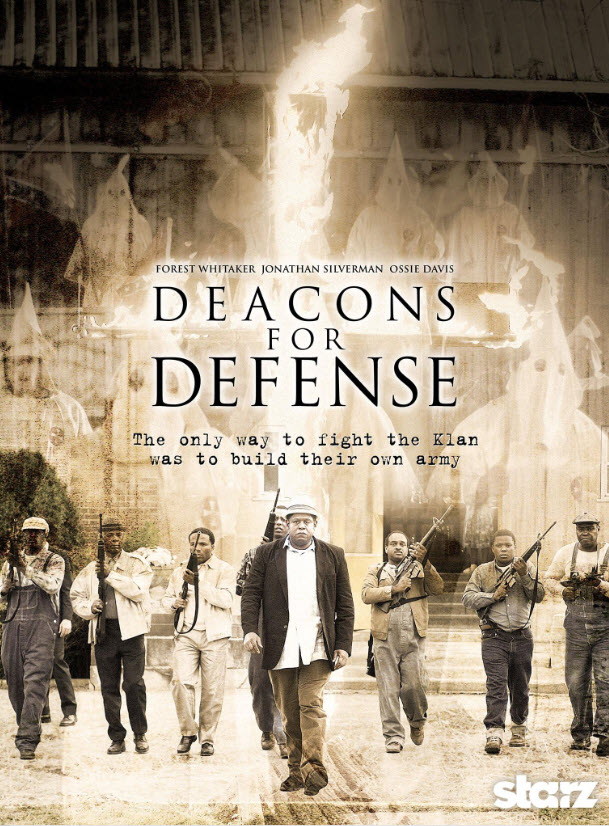
Deacons for Defense is a 2003 American television drama film directed by Bill Duke. The television film stars Forest Whitaker, Christopher Britton, Ossie Davis, Jonathan Silverman, Adam Weiner, and Marcus Johnson. Based on a story by Michael D’Antonio, the teleplay was written by Richard Wesley and Frank Military. “The film is loosely based on the activities of the Deacons for Defense and Justice in 1965 in Bogalusa, Louisiana. The African-American self-defense organization was founded in February 1965 as an affiliate of the founding chapter in Jonesboro, Louisiana, to protect activists working with the Congress for Racial Equality (CORE), others advancing the Civil Rights Movement, and their families. Bogalusa was a company town, developed in 1906–1907 around a sawmill and paper mill operations. In the 1960s, the area was dominated by the Ku Klux Klan. During the summer of 1965, there were frequent conflicts between the Deacons and the Klan. wiki/Deacons_for_Defense_(film)
The Deacons for Defense and Justice: Armed Self-Defense and the Civil Rights Movement. A PhD. Dissertation by Lance, E. Hill
Pop the documents out from the upper right to read / expand / download.
The Deacons for Defense: Armed Resistance and the Civil Rights Movement, by Lance Hill (2006)
In 1964 a small group of African American men in Jonesboro, Louisiana, defied the nonviolence policy of the mainstream civil rights movement and formed an armed self-defense organization–the Deacons for Defense and Justice–to protect movement workers from vigilante and police violence. With their largest and most famous chapter at the center of a bloody campaign in the Ku Klux Klan stronghold of Bogalusa, Louisiana, the Deacons became a popular symbol of the growing frustration with Martin Luther King Jr.’s nonviolent strategy and a rallying point for a militant working-class movement in the South.
Lance Hill offers the first detailed history of the Deacons for Defense and Justice, who grew to several hundred members and twenty-one chapters in the Deep South and led some of the most successful local campaigns in the civil rights movement. In his analysis of this important yet long-overlooked organization, Hill challenges what he calls “the myth of nonviolence–the idea that a united civil rights movement achieved its goals through nonviolent direct action led by middle-class and religious leaders. In contrast, Hill constructs a compelling historical narrative of a working-class armed self-defense movement that defied the entrenched nonviolent leadership and played a crucial role in compelling the federal government to neutralize the Klan and uphold civil rights and liberties.
SUPPLEMENTAL: Ku Klux Klan – An American Story Documentary Part 1 and Part 2
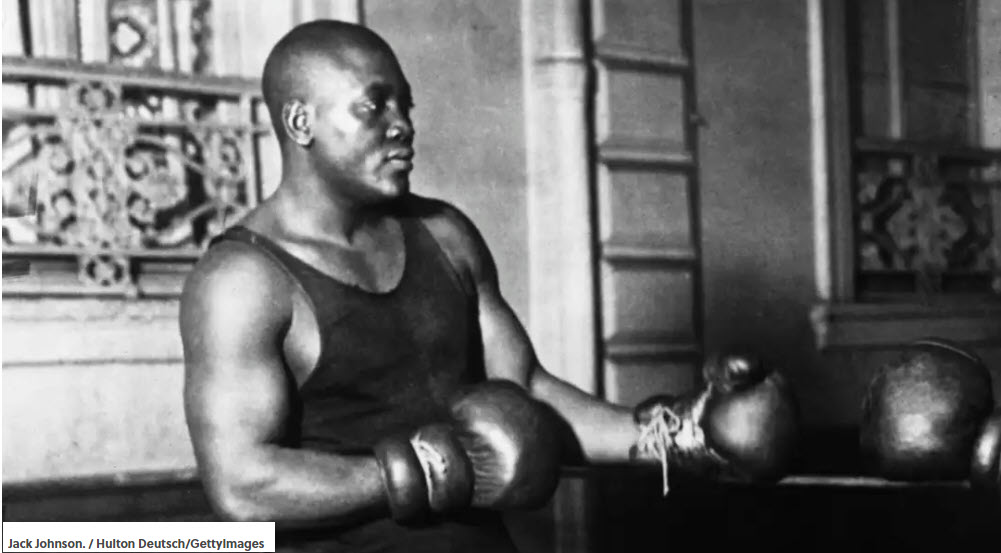
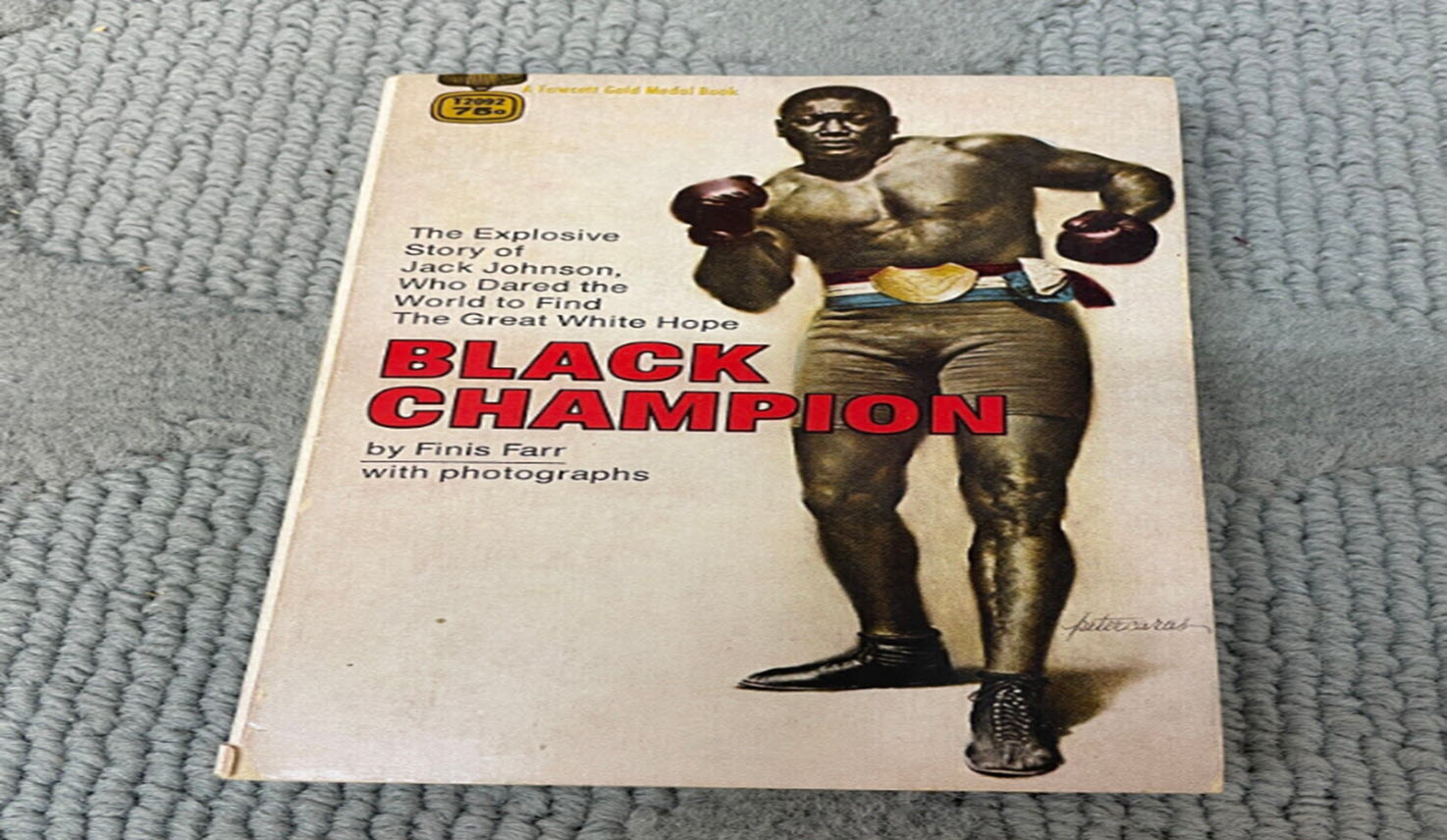
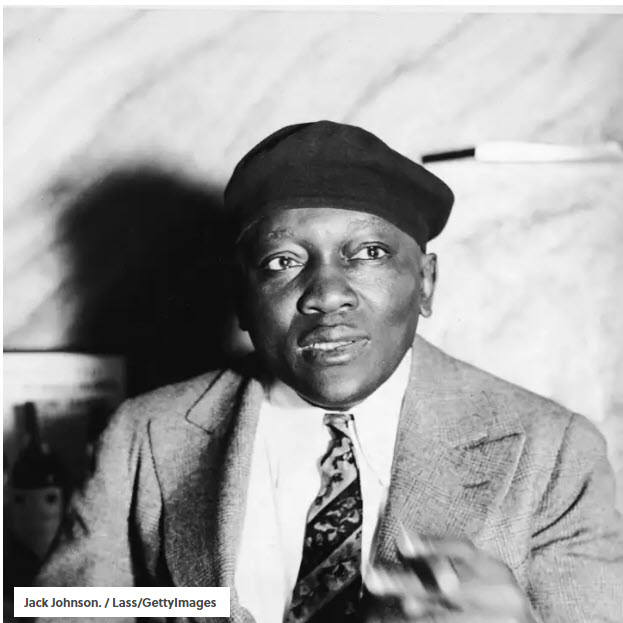
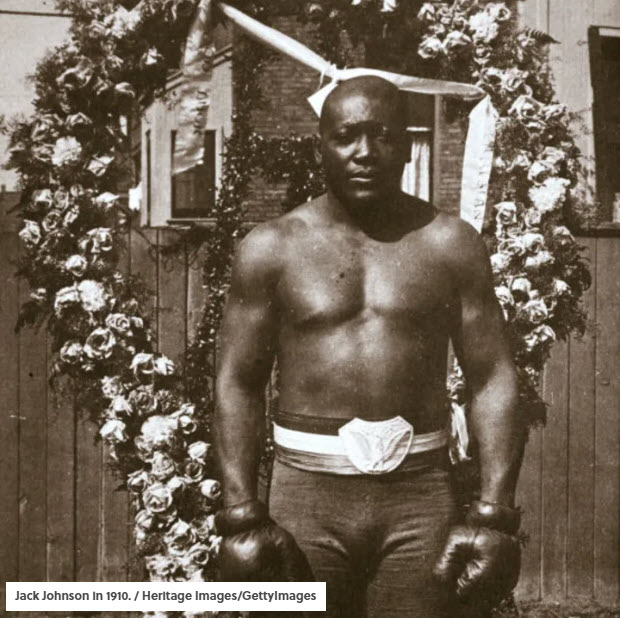
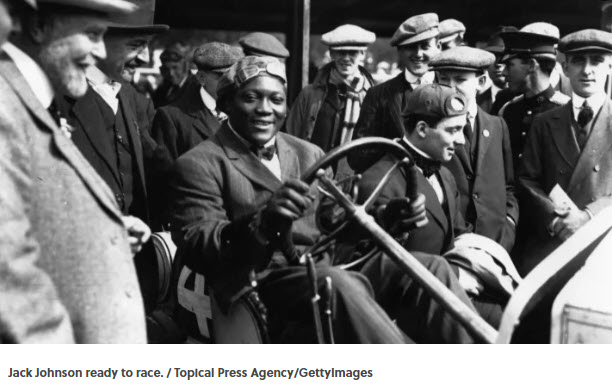
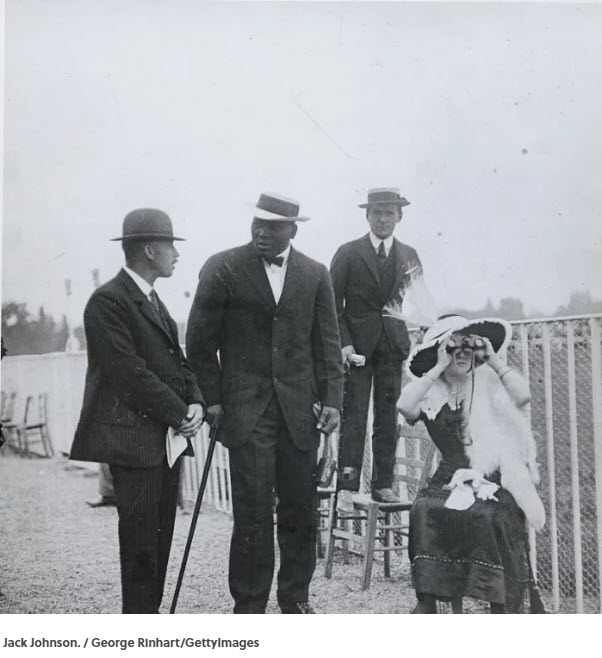
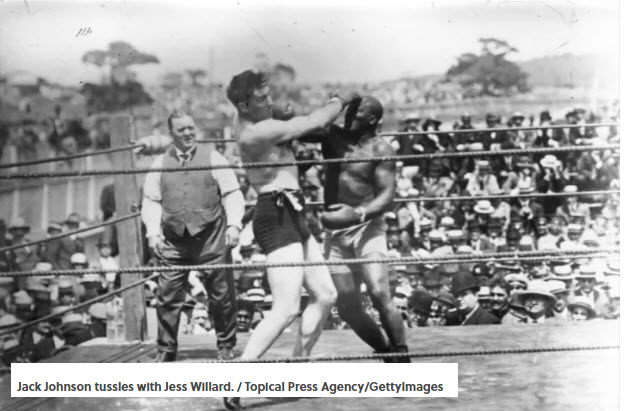
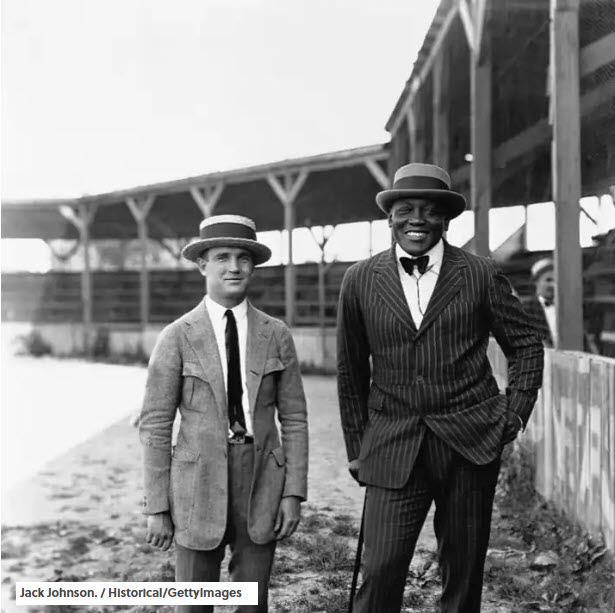
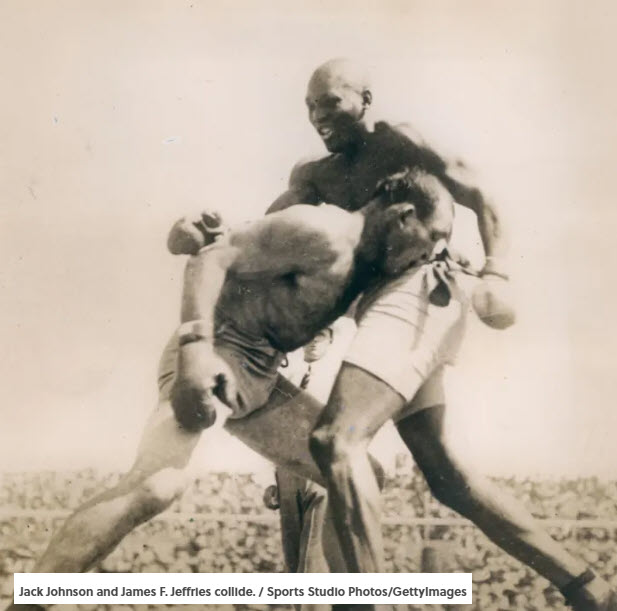
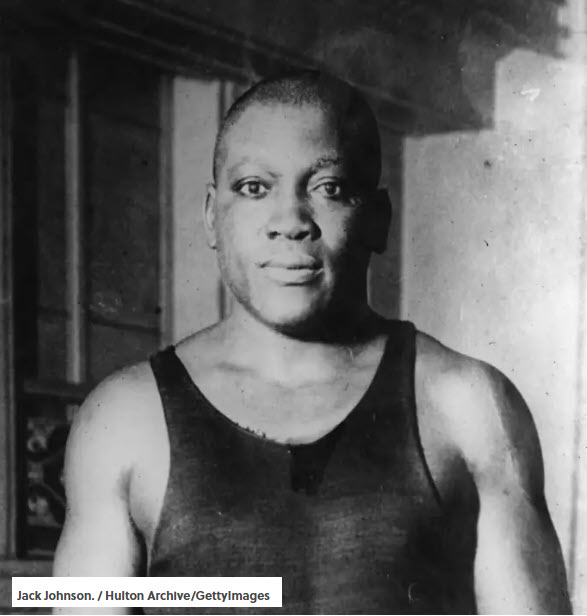
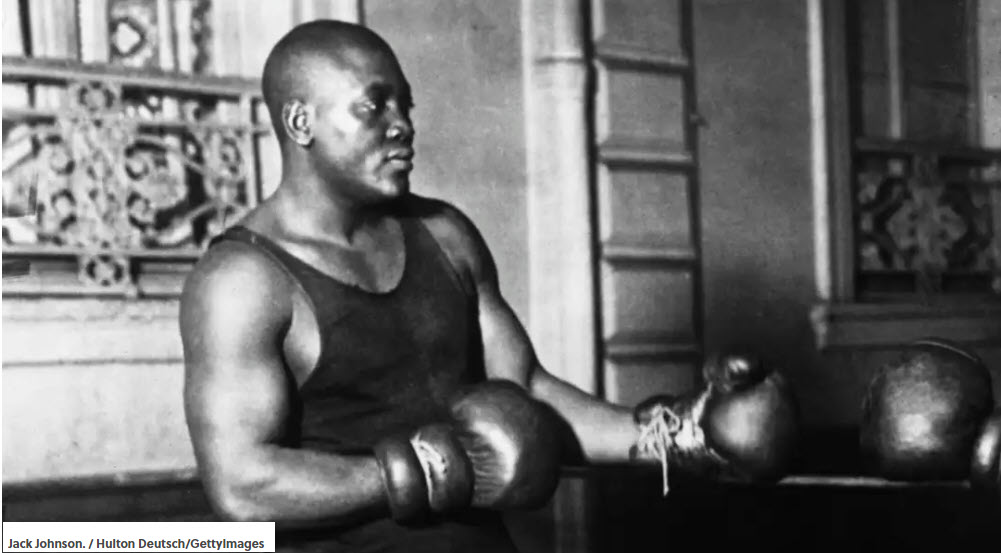
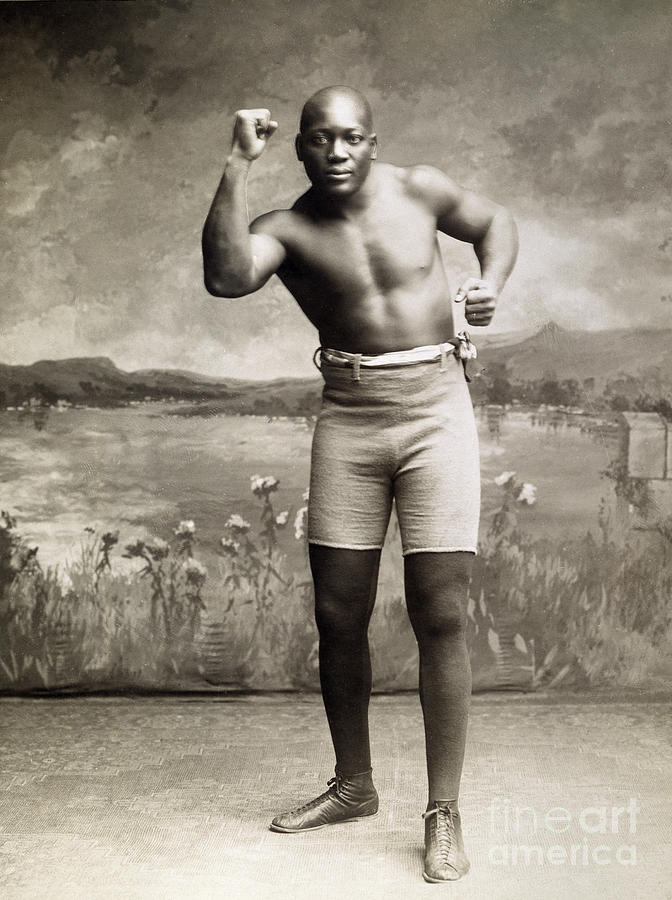
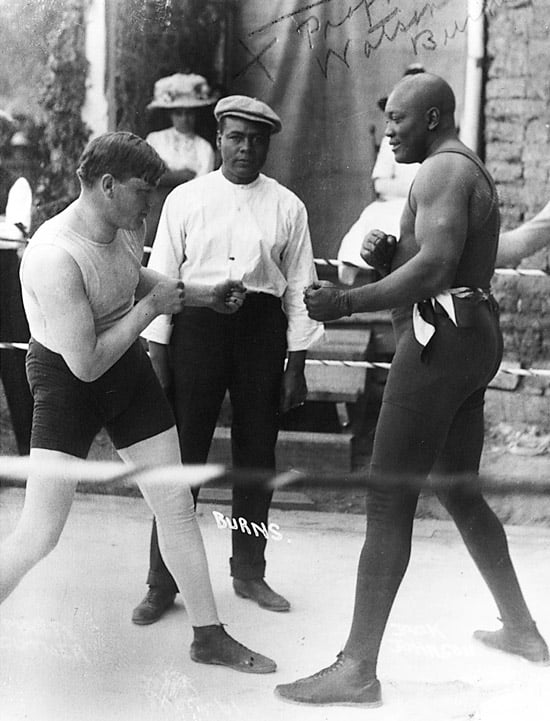
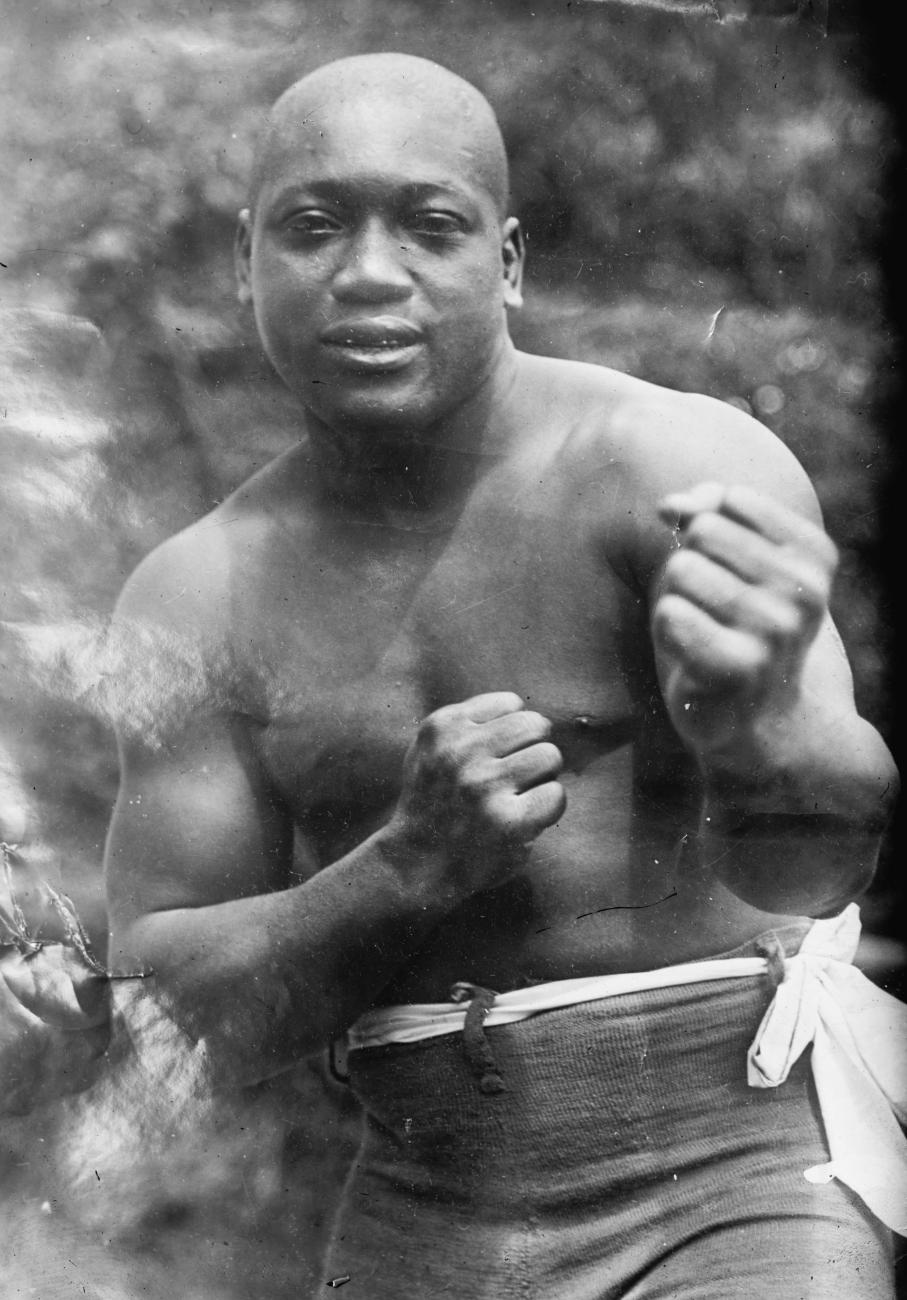
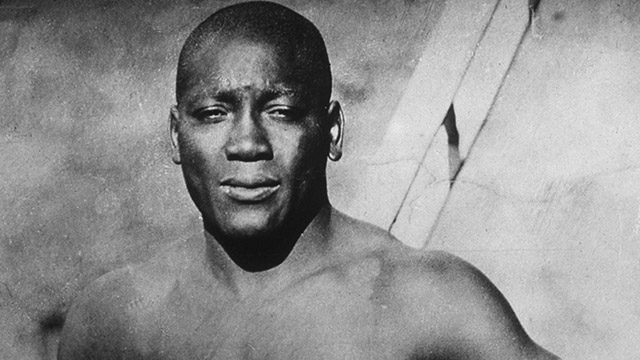
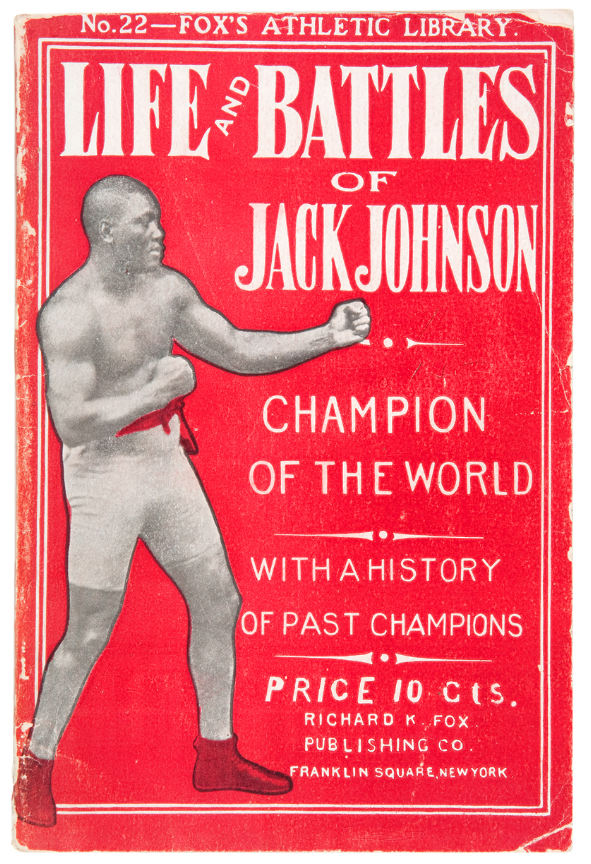
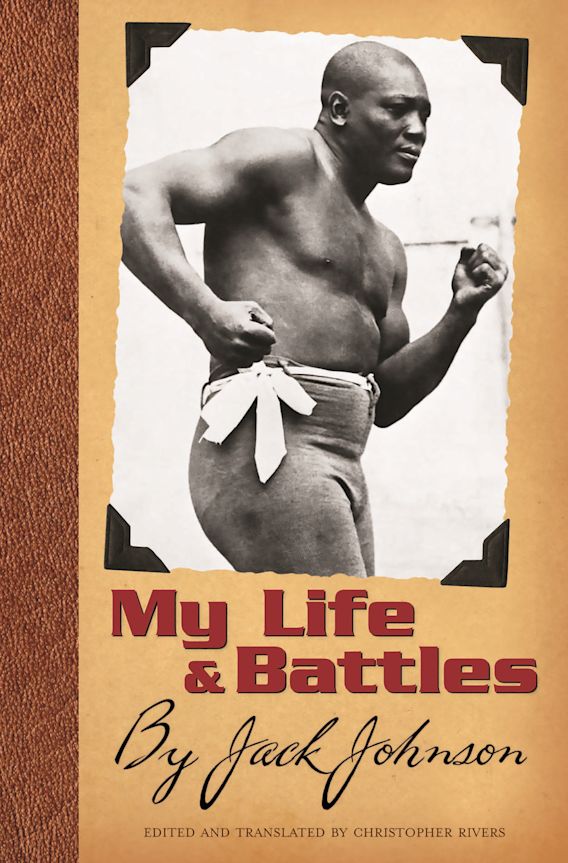
John Arthur Johnson (March 31, 1878 – June 10, 1946), nicknamed the “Galveston Giant”, was an American boxer who, at the height of the Jim Crow era, became the first black world heavyweight boxing champion (1908–1915). His 1910 fight against James J. Jeffries was dubbed the “fight of the century”. Johnson defeated Jeffries, who was white, triggering dozens of race riots across the U.S. According to filmmaker Ken Burns, “for more than thirteen years, Jack Johnson was the most famous and the most notorious African American on Earth”. He is widely regarded as one of the most influential boxers in history. Transcending boxing, he became part of the culture and history of racism in the United States…wiki/Jack_Johnson_(boxer)
7 Video Playlist
Pop the document out from the upper right to read / expand / download.
The current conflict in the Democratic Republic of the Congo (DRC) has deep historical roots, with European colonialism playing a significant role in shaping the country’s present-day condition and future trajectory. What follows is a comprehensive video education presentation and scholarly article (Understanding the Conflict in Congo) with a view towards elucidating the issues in their proper histropolitical and socioeconomic contexts.
Colonial Era (late 19th – mid-20th century): The Congo was colonized by Belgium under the rule of King Leopold II, who claimed the territory as his personal property. Under his brutal regime, millions of Congolese were subjected to forced labor, violence, and exploitation in the extraction of rubber and other natural resources. This period left a legacy of deep-seated resentment and social disruption that persists to this day.
15 Video Playlist
Independence and Post-Colonial Struggles (1960s-1990s): The Congo gained independence from Belgium in 1960, but its transition to self-governance was fraught with challenges. Political instability, corruption, and ethnic tensions plagued the newly formed nation. Patrice Lumumba, the Congo’s first democratically elected leader, was overthrown in a coup supported by Western powers due to his nationalist and anti-colonial stance. This ushered in decades of dictatorship under Mobutu Sese Seko, during which the country’s resources were plundered, infrastructure deteriorated, and authoritarianism reigned.
9 Video Playlist
First and Second Congo Wars (1996-2003): The fall of the Soviet Union and the end of the Cold War destabilized many African nations, including the Congo. Ethnic rivalries, economic collapse, and the spillover of conflicts from neighboring countries fueled two devastating wars in the late 20th and early 21st centuries. These wars involved multiple armed groups, neighboring countries, and international actors vying for control over the Congo’s vast mineral wealth, including gold, diamonds, coltan, and cobalt. The exploitation of these resources financed the conflict and exacerbated human rights abuses, including widespread rape, displacement, and recruitment of child soldiers.
12 Video Playlist
Current Conflict: Despite the official end of the Second Congo War in 2003 and subsequent attempts at peacebuilding and democratic transition, the DRC continues to grapple with insecurity, violence, and political instability. Numerous armed groups, both domestic and foreign, still operate in the eastern regions of the country, perpetuating cycles of violence and displacement. Issues such as weak governance, ethnic tensions, competition over land and resources, and the legacy of historical grievances contribute to the persistence of conflict.
10 Video Plylist
Colonialism in the Congo Basin, 1880-1940_eBook
Pop the document out from the upper right to read / expand / download.
Colonialism in the Congo Basin, 1880-1940_Audiobook
SUPPLEMENTAL: King Leopold’s Ghost: A Story of Greed, Terror, and Heroism in Colonial Africa by Adam Hochschild, Geoffrey Howard, et al. (1999)
To learn more visit RBG Communiversity Knowledge Media eLibrary
















 RBG Communiversity: Message 2 Da Grassroots
You must be logged in to post a comment.