Dr. Gerald Horne: The Counter-Revolution of 1776: Slave Resistance and the Origins of the United States of America_eBook and Audiobook, with Trump 2.0: Gerald Horne on the Future of White Supremacy, Imperialism & the Rise of Third-Worldism (Jedaal English)

Dr. Gerald Horne is an American historian who currently holds the John J. and Rebecca Moores Chair of History and African American Studies at the University of Houston. 

Book Summary

Dr. Gerald Horne’s “The Counter-Revolution of 1776” presents a provocative reinterpretation of the American Revolution, arguing that it was not merely a struggle for independence from British rule but also a response to the increasing resistance of enslaved people. Horne posits that the revolution was fundamentally counter-revolutionary, aimed at preserving the institution of slavery and maintaining white supremacy. The book examines the social, political, and economic tensions that fueled both the revolution and the resistance of enslaved individuals, ultimately framing the American founding in a broader context of global struggles against colonialism and oppression.

The following outline captures the key themes and structure of Horne’s argument, highlighting the interconnections between slave resistance and the events leading to the formation of the United States.

Introduction

  • Explanation of the book’s thesis
  • Contextualization of the American Revolution within the framework of slavery

The Background of Slavery in Colonial America

  • Overview of the institution of slavery in the colonies
  • Economic importance of slavery to colonial economies
  • Social hierarchies and racial ideologies

Rising Tensions

  • Factors leading to increased resistance among enslaved people
  • The role of the British in promoting freedom for enslaved individuals
  • Key instances of slave resistance prior to the revolution

The Revolutionary Context

  • The impact of the American Revolution on colonial society
  • The ideological conflict between liberty and slavery
  • Examination of revolutionary leaders’ views on slavery

The Counter-Revolutionary Nature of the American Revolution

  • Analysis of how the revolution sought to protect slavery
  • The role of Southern colonies in shaping revolutionary goals
  • The influence of slave uprisings on revolutionary rhetoric

Global Implications

  • Connections between the American Revolution and global slave resistance
  • The impact of the revolution on other colonies and enslaved populations
  • The emergence of new ideologies and movements in response to slavery

The Legacy of the Counter-Revolution

  • Long-term effects of the American Revolution on slavery and race relations
  • The establishment of a national identity rooted in white supremacy
  • Reflections on the implications for understanding American history today

Conclusion

  • Summation of key arguments
  • The importance of recognizing the role of slavery in shaping American history
  • Call for re-examination of the narratives surrounding the founding of the United States

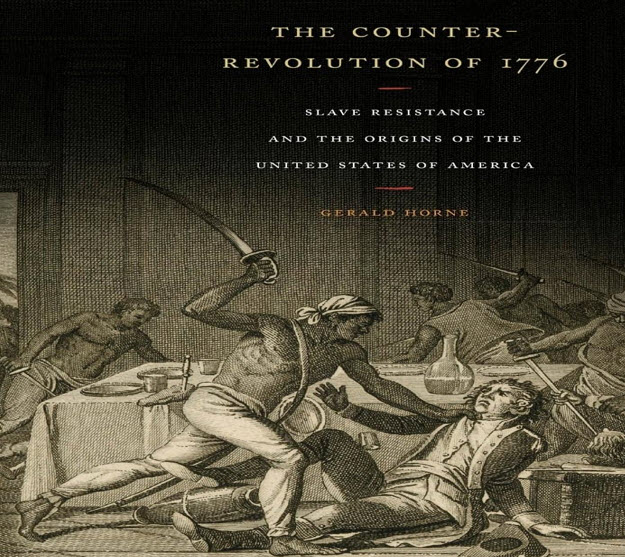
The Counter-Revolution of 1776_eBook

Illuminates how the preservation of slavery was a motivating factor for the Revolutionary War
The successful 1776 revolt against British rule in North America has been hailed almost universally as a great step forward for humanity. But the Africans then living in the colonies overwhelmingly sided with the British. In this trailblazing book, Gerald Horne shows that in the prelude to 1776, the abolition of slavery seemed all but inevitable in London, delighting Africans as much as it outraged slaveholders, and sparking the colonial revolt.
Prior to 1776, anti-slavery sentiments were deepening throughout Britain and in the Caribbean, rebellious Africans were in revolt. For European colonists in America, the major threat to their security was a foreign invasion combined with an insurrection of the enslaved. It was a real and threatening possibility that London would impose abolition throughout the colonies―a possibility the founding fathers feared would bring slave rebellions to their shores. To forestall it, they went to war.
The so-called Revolutionary War, Horne writes, was in part a counter-revolution, a conservative movement that the founding fathers fought in order to preserve their right to enslave others. The Counter-Revolution of 1776 brings us to a radical new understanding of the traditional heroic creation myth of the United States.

Pop the document out from the upper right to read / expand / download.

The Counter-Revolution of 1776_Audiobook

Trump 2.0: Gerald Horne on the Future of White Supremacy, Imperialism & the Rise of Third-Worldism (Jedaal English)

RBG Communiversity Dr. Gerald Horne Video Edu. Player (31)

Learn more in RBG Communiversity Knowledge Media eLibrary:

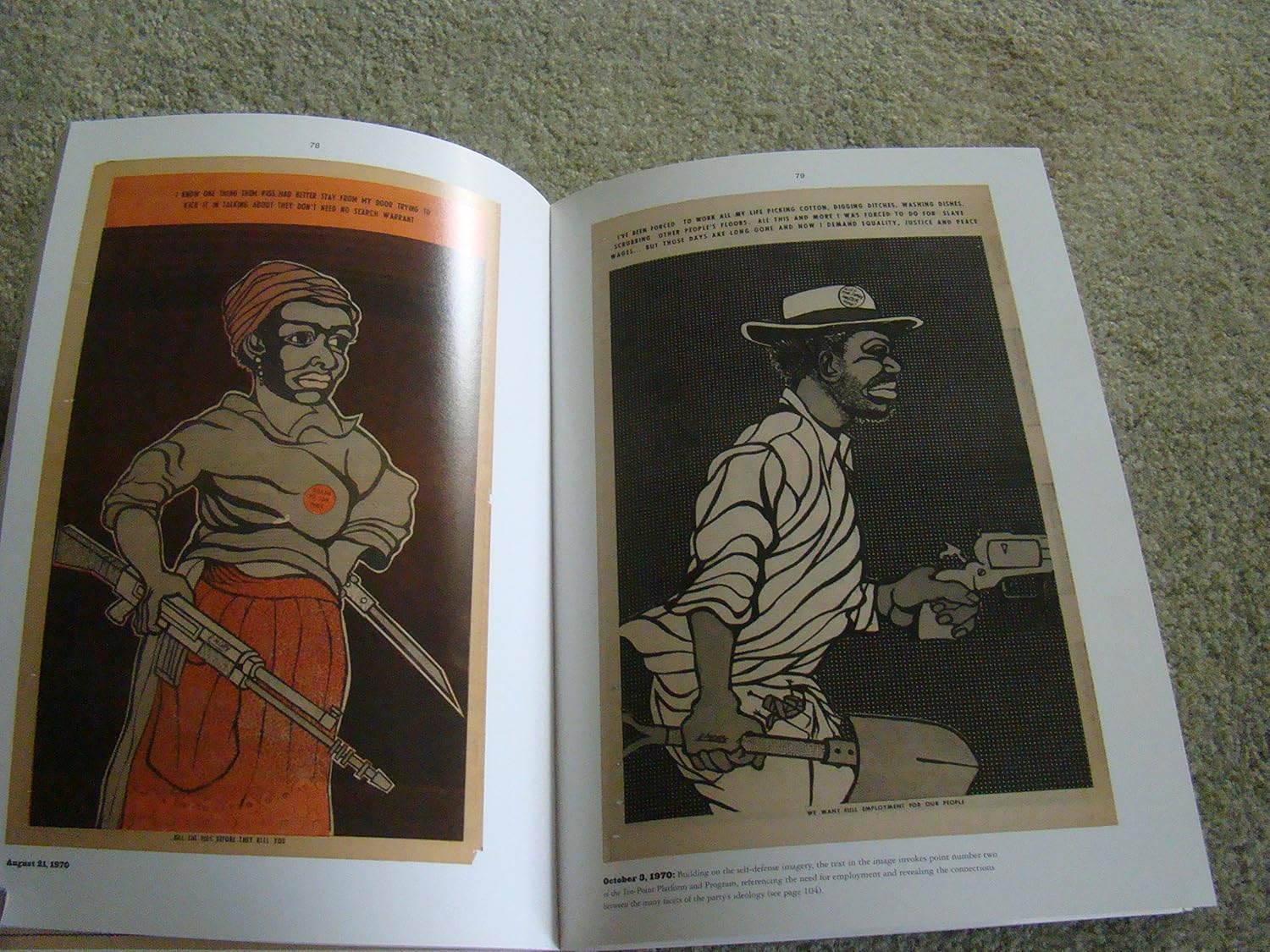
Black Panther_ The Revolutionary Art of Emory Douglas (Book Preview) and Emory Douglas_The Art of The Black Panthers (BPP |BAM Video Player), with BPP Newspapers_1969

Buy the Book here. https://www.rizzoliusa.com/book/9780847841899/ (228 Pages.)

4 Video Playlist

Black Panther_ The Revolutionary Art of Emory Douglas, Publish 2014. (Book Preview)

Description

A reformatted and reduced price edition—including a revised and updated introduction by Sam Durant and new text on the artist today by Colette Gaiterof the first book to show the provocative posters and groundbreaking graphics of the Black Panther Party. The Black Panther Party for Self Defense, formed in the aftermath of the assassination of Malcolm X in 1965, sounded a defiant cry for an end to the institutionalized subjugation of African Americans. The Black Panther newspaper was founded to articulate the party’s message, and artist Emory Douglas became the paper’s art director and later the party’s minister of culture. Douglas’s artistic talents and experience proved a powerful combination: his striking collages of photographs and his own drawings combined to create some of the era’s most iconic images. This landmark book brings together a remarkable lineup of party insiders who detail the crafting of the party’s visual identity.

About The Author

Emory Douglas was the Minister of Culture for the Black Panther Party from 1967 until its discontinuation in the early 1980s. Colette Gaiter is associate professor of visual communications in the art department at the University of Delaware.  Bobby Seale co-founded the Black Panther Party with Huey Newton. Sam Durant is a Los Angeles–based artist. Danny Glover is an actor, producer, and director. Kathleen Cleaver, attorney, author, and senior lecturer at Yale University and Emory Law School, joined the Black Panther Party in 1967. Amiri Baraka is a writer and political activist.

Pop the document out from the upper right to read / expand / download.

BPP Newspapers_1969

Click to Open

Learn more in RBG Communiversity Knowledge Media eLibrary:

Che Guevara: A Revolutionary Life by Jon Lee Anderson (eBook) and The CIA Against Che, by Adys Cupull et al. (Audiobook), with The Truth About Che Guevara_A Bio-Documentary Film

Click the graphic for full size standalone.

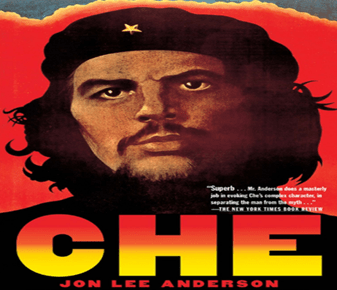
Che Guevara: A Revolutionary Life by Jon Lee Anderson

Acclaimed around the world and a national best-seller, this is the definitive work on Che Guevara, the dashing rebel whose epic dream was to end poverty and injustice in Latin America and the developing world through armed revolution.

Jon Lee Anderson’s biography traces Che’s extraordinary life, from his comfortable Argentine upbringing to the battlefields of the Cuban revolution, from the halls of power in Castro’s government to his failed campaign in the Congo and assassination in the Bolivian jungle.

Anderson has had unprecedented access to the personal archives maintained by Guevara’s widow and carefully guarded Cuban government documents. He has conducted extensive interviews with Che’s comrades some of whom speak here for the first time and with the CIA men and Bolivian officers who hunted him down. Anderson broke the story of where Guevara’s body was buried, which led to the exhumation and state burial of the bones. Many of the details of Che’s life have long been cloaked in secrecy and intrigue. Meticulously researched and full of exclusive information, Che Guevara illuminates as never before this mythic figure who embodied the high-water mark of revolutionary communism as a force in history.

Pop the document out from the upper right to read / expand / download.

The CIA Against Cheby Adys Cupull etal._Audiobook

Cotent in ernest starts at 10:00 mins.

The Truth About Che Guevara_A Bio-Documentary Film

Learn more in RBG Communiversity Knowledge Media eLibrary:

Black Power Afterlives| The Enduring Significance of the Black Panther Party_Audiobook and eBook, Edited by Diane Fujino and Matef Harmachis, with Haymarket Books Webinar: Black Power Afterlives: From The Black Panther Party to Black Lives Matter

Book Summary

Overview of “Black Power Afterlives: The Enduring Significance of the Black Panther Party”

“Black Power Afterlives” explores the legacy and continued relevance of the Black Panther Party (BPP) in contemporary society. Edited by Diane Fujino, the book gathers various essays and perspectives that examine the impact of the BPP on social movements, political thought, and cultural expressions. It addresses how the ideals of the Black Power movement resonate in current struggles for racial justice, equality, and community empowerment.

The outline that follows provides a cogent look at the themes and discussions presented in the book, highlighting the ongoing relevance of the Black Panther Party in today’s sociopolitical landscape.

Outline

  1. Introduction
    • Overview of the Black Panther Party’s foundational principles
    • Importance of examining the BPP’s legacy today
    • Purpose of the book and contributions of various authors
  2. Historical Context
    • Formation of the Black Panther Party in the 1960s
    • Key figures and events in the BPP’s history
    • The socio-political landscape of the era
  3. Core Ideologies of the Black Panthers
    • Ten-Point Program
    • Focus on self-defense and community empowerment
    • Intersectionality and the inclusion of diverse voices
  4. Cultural Impact
    • Representation in media and arts
    • Influence on music, literature, and visual arts
    • The role of propaganda and imagery in promoting BPP ideals
  5. Legacy and Influence on Modern Movements
    • Connections to contemporary civil rights movements (e.g., Black Lives Matter)
    • Examination of grassroots organizing and community programs inspired by the BPP
    • The relevance of BPP strategies in current social justice contexts
  6. Scholarly Perspectives
    • Contributions from various scholars and activists
    • Critical analyses of the BPP’s successes and challenges
    • The significance of oral histories and personal narratives
  7. Global Impact
    • Transnational solidarity and influence on international movements
    • The BPP’s role in global anti-colonial struggles
    • Comparisons with other revolutionary movements worldwide
  8. Conclusion
    • Reflections on the enduring significance of the BPP
    • Calls to action for future generations
    • The continuous evolution of Black Power ideologies

The first book to comprehensively examine how the Black Panther Party has directly shaped the practices and ideas that have animated grassroots activism in the decades since its decline, Black Power Afterlives represents a major scholarly achievement as well as an important resource for today’s activists. Through its focus on the enduring impact of the Black Panther Party, this volume expands the historiography of Black Power studies beyond the 1960s-70s and serves as a bridge between studies of the BPP during its organizational existence and studies of present-day Black activism, allowing today’s readers and organizers to situate themselves in a long lineage of liberation movements.

Black Power Afterlives_eBook

Pop the document out from the upper right to read / expand / download.

Black Power Afterlives_Audiobook

Part 1

Part 2

Haymarket Books Webinar: Black Power Afterlives: From The Black Panther Party to Black Lives Matter

https://www.youtube.com/@HaymarketBooks

Learn more in RBG Communiversity Knowledge Media eLibrary:

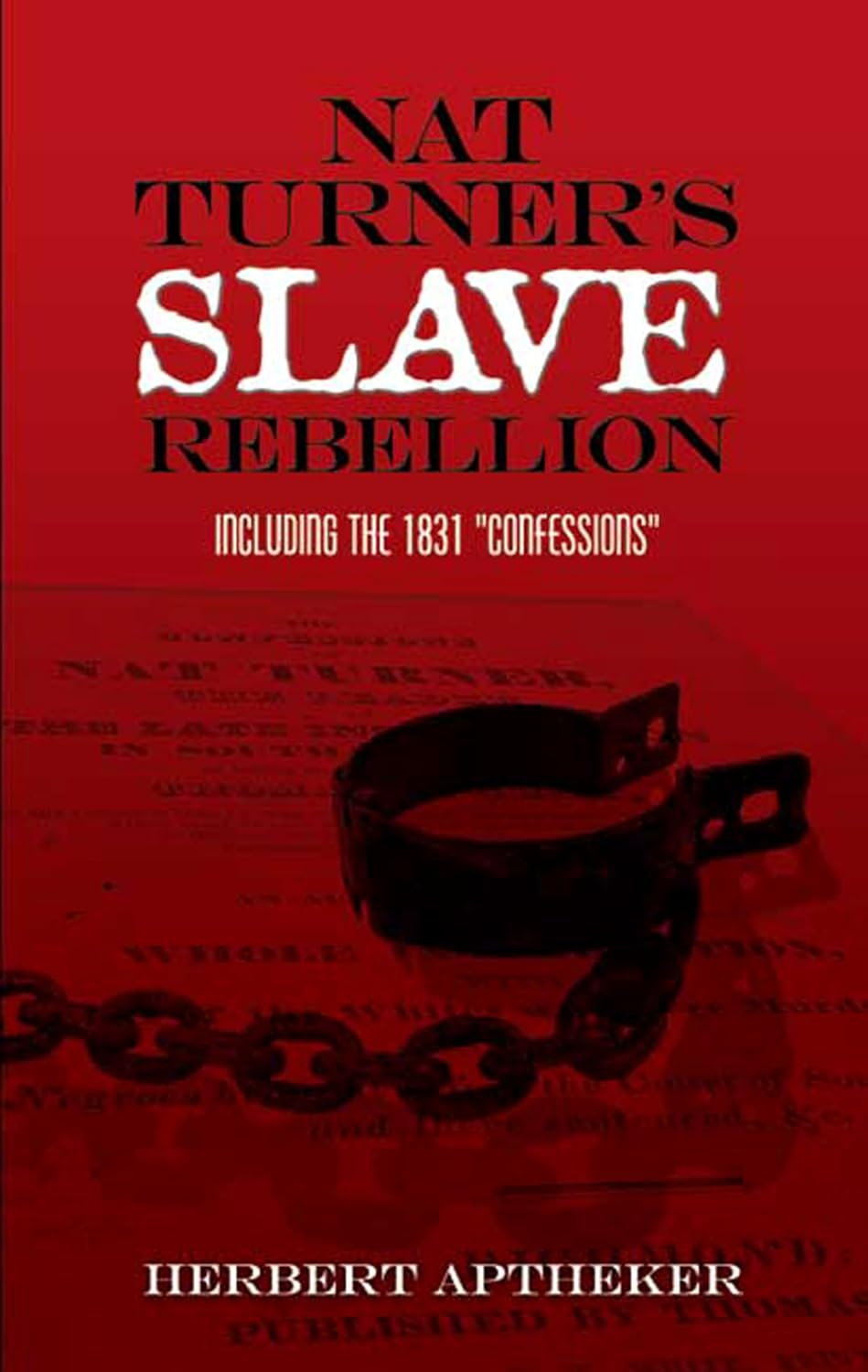
NAT TURNER’S SLAVE REBELLION_eBook and Audiobook, Including the 1831 “Confessions” by Herbert Aptheker (1966, 2006), Feat. RBG|Reef- Nat Turner

From the Preface: “Herbert Aptheker wrote Nat Turner’s Rebellion as his Master’s Thesis at Columbia University, and submitted it in February 1937. The only work on Turner prior to Aptheker’s study, titled The Southampton Insurrection, was written by William S. Drewry and published in 1900. It treated the insurrection with fear and contempt and sexualized Turner’s motives”…

Book Summary

“Nat Turner’s Slave Rebellion” by Herbert Aptheker provides a detailed analysis of the insurrection led by Nat Turner in 1831 in Virginia, which is one of the most significant slave revolts in American history. Aptheker explores the social, political, and economic conditions that led to the rebellion, as well as the aftermath and its implications for slavery and race relations in the United States. The book combines historical documentation with an examination of the broader context of slavery, resistance, and the struggles for freedom.

The following   outline encapsulates the essential themes and structure of “Nat Turner’s Slave Rebellion” by Herbert Aptheker. The book serves as an important historical document that not only recounts the events of the rebellion but also situates it within the broader narrative of American slavery, resistance, and the quest for freedom. Aptheker’s work emphasizes the significance of Nat Turner’s leadership and the enduring impact of the rebellion on American society and history.

I. Introduction

  • A. Background of Nat Turner and the rebellion
  • B. Importance of the rebellion in American history
  • C. Purpose of the book

II. The Context of Slavery in America

  • A. Overview of the institution of slavery
  • B. Conditions faced by enslaved individuals in the South
  • C. The role of religion and community among enslaved people

III. Nat Turner: Life and Leadership

  • A. Early life and experiences of Nat Turner
    • Background and upbringing
    • Religious influence and visions
  • B. Turner’s role as a leader and preacher
    • Charismatic leadership
  • Development of revolutionary ideas

IV. The Rebellion of 1831

  • A. Planning and preparation for the uprising
    • Recruitment of followers
    • Strategic considerations
  • B. Key events of the rebellion
    • Timeline of the uprising
  • Major actions and confrontations
  • C. The response of the local authorities and the white community
    • Immediate military response
  • Panic and retaliation against enslaved people

V. Aftermath of the Rebellion

  • A. Consequences for the Turner and his followers
    • Capture and execution of Nat Turner
    • Repression of enslaved communities
  • B. Impact on slavery and plantation life
    • Increased restrictions on enslaved individuals
  • Heightened fear among slaveholders
  • C. Changes in public perception and discourse regarding slavery

VI. Historical Significance of the Rebellion

  • A. Legacy of Nat Turner’s rebellion in American history
    • Influence on abolitionist movements
    • Role in shaping public policy and attitudes toward slavery
  • B. Examination of rebellion as a form of resistance
    • Broader context of slave resistance in the U.S.
  • Nat Turner’s place in the history of civil rights

VII. Conclusion

  • A. Summary of key themes and findings
  • B. Reflection on the ongoing relevance of Nat Turner’s story
  • C. Call for continued study of slavery and resistance

“Nat Turner’s Slave Rebellion” by Herbert Aptheker is a pivotal work that delves deeply into one of the most significant slave uprisings in American history. Here’s a more detailed examination of the book’s key themes, context, and implications:

Detailed Exploration of Key Themes

1. Historical Context of Slavery

  • Institution of Slavery: Aptheker provides an in-depth analysis of the institution of slavery in the United States, especially in the Southern states where enslaved people were subjected to brutal conditions. He discusses the economic motivations behind slavery and how it shaped societal structures.
  • Living Conditions: The book highlights the dehumanizing conditions faced by enslaved individuals, including physical and psychological abuse, lack of freedom, and the denial of basic human rights. These factors contributed to a pervasive sense of oppression that fueled resistance.

2. Nat Turner: The Man and the Leader

  • Biography: Aptheker examines Nat Turner’s early life, including his upbringing in a religious environment that greatly influenced his worldview. Turner was known for his intelligence and strong religious convictions, which played a crucial role in his leadership.
  • Visionary Experiences: The author discusses Turner’s reported visions, which he interpreted as divine messages urging him to lead a rebellion against the institution of slavery. These experiences framed his motivation and justification for the uprising.

3. The Rebellion of 1831

  • Planning the Uprising: Aptheker outlines how Turner organized the rebellion, gathering a group of enslaved individuals who shared his desire for freedom. The planning phase included strategic considerations on timing and execution.
  • Execution of the Rebellion: The rebellion began on August 21, 1831, and lasted for several days. Turner and his followers attacked plantation owners and their families, resulting in the deaths of approximately 60 white individuals. The uprising was marked by its brutality, reflecting the deep-seated anger and desperation of the enslaved population.
  • Response from Authorities: The violent response from local militias and white citizens was swift and severe. The rebellion instigated widespread fear among slaveholders, leading to increased militarization and repression.

4. Aftermath and Repercussions

  • Turner’s Fate: Following the suppression of the rebellion, Turner was captured, tried, and executed. His death became a symbol of both martyrdom and fear for many in the enslaved community and beyond.
  • Impact on Slavery: The rebellion led to harsher laws and restrictions on enslaved people. Southern states enacted more stringent slave codes, limiting movement, education, and assembly among enslaved populations.
  • Psychological Impact: The rebellion instilled fear in the white population, leading to a more oppressive environment for enslaved individuals. The fear of further uprisings prompted increased surveillance and control.

5. Legacy of Nat Turner

  • Abolitionist Movement: Aptheker discusses how Turner’s rebellion influenced the abolitionist movement, galvanizing activists and intellectuals who highlighted the need for immediate action against slavery.
  • Cultural Memory: Nat Turner became a significant figure in African American history and folklore. His story is often invoked in discussions of resistance, agency, and the fight for freedom.
  • Ongoing Relevance: The themes of resistance and the quest for justice resonate throughout American history, and Turner’s story is frequently referenced in contemporary discussions of civil rights and social justice.

Conclusion

Herbert Aptheker’s “Nat Turner’s Slave Rebellion” is an essential contribution to the understanding of slavery, resistance, and the historical significance of Nat Turner. By combining thorough historical research with a compelling narrative, Aptheker provides readers with insights into the motivations behind the rebellion and its lasting impact on American society. The book encourages reflection on the broader themes of oppression, resistance, and the struggle for human rights, making it relevant not only to historical scholarship but also to contemporary discussions about race and justice.

Through this examination, Aptheker reinforces the importance of recognizing the agency of enslaved individuals and their capacity for resistance, contributing to a more nuanced understanding of American history.

Nat Turner’s Slave Rebellion_eBook

Pop the document out from the upper right to read / expand / download.

Nat Turner’s Slave Rebellion_Audiobook

RBG| Reef , Nat Turner

Learn more in RBG Communiversity Knowledge Media eLibrary: