Conflict in the Democratic Republic of the Congo (DRC) in Historical Context and Colonialism in the Congo Basin, 1880-1940 (eBook and Audiobook) with Supplemental_King Leopold’s Ghost

Last Updated January 1 , 2025

Click for full size standalone poster.

The current conflict in the Democratic Republic of the Congo (DRC) has deep historical roots, with European colonialism playing a significant role in shaping the country’s present-day condition and future trajectory. What follows is a comprehensive video education presentation and scholarly article (Understanding the Conflict in Congo) with a view towards elucidating the issues in their proper histropolitical and socioeconomic contexts.

Colonial Era (late 19th – mid-20th century): The Congo was colonized by Belgium under the rule of King Leopold II, who claimed the territory as his personal property. Under his brutal regime, millions of Congolese were subjected to forced labor, violence, and exploitation in the extraction of rubber and other natural resources. This period left a legacy of deep-seated resentment and social disruption that persists to this day.

15 Video Playlist

Independence and Post-Colonial Struggles (1960s-1990s): The Congo gained independence from Belgium in 1960, but its transition to self-governance was fraught with challenges. Political instability, corruption, and ethnic tensions plagued the newly formed nation. Patrice Lumumba, the Congo’s first democratically elected leader, was overthrown in a coup supported by Western powers due to his nationalist and anti-colonial stance. This ushered in decades of dictatorship under Mobutu Sese Seko, during which the country’s resources were plundered, infrastructure deteriorated, and authoritarianism reigned.

9 Video Playlist

First and Second Congo Wars (1996-2003): The fall of the Soviet Union and the end of the Cold War destabilized many African nations, including the Congo. Ethnic rivalries, economic collapse, and the spillover of conflicts from neighboring countries fueled two devastating wars in the late 20th and early 21st centuries. These wars involved multiple armed groups, neighboring countries, and international actors vying for control over the Congo’s vast mineral wealth, including gold, diamonds, coltan, and cobalt. The exploitation of these resources financed the conflict and exacerbated human rights abuses, including widespread rape, displacement, and recruitment of child soldiers.

12 Video Playlist

Current Conflict: Despite the official end of the Second Congo War in 2003 and subsequent attempts at peacebuilding and democratic transition, the DRC continues to grapple with insecurity, violence, and political instability. Numerous armed groups, both domestic and foreign, still operate in the eastern regions of the country, perpetuating cycles of violence and displacement. Issues such as weak governance, ethnic tensions, competition over land and resources, and the legacy of historical grievances contribute to the persistence of conflict.

10 Video Plylist

Colonialism in the Congo Basin, 1880-1940_eBook

Pop the document out from the upper right to read / expand / download.

Colonialism in the Congo Basin, 1880-1940_Audiobook

SUPPLEMENTAL: King Leopold’s Ghost: A Story of Greed, Terror, and Heroism in Colonial Africa by Adam Hochschild, Geoffrey Howard, et al. (1999)

To learn more visit RBG Communiversity Knowledge Media eLibrary

Democratic Republic of the Congo (DRC)_Scholarly Articles and Reports Folder
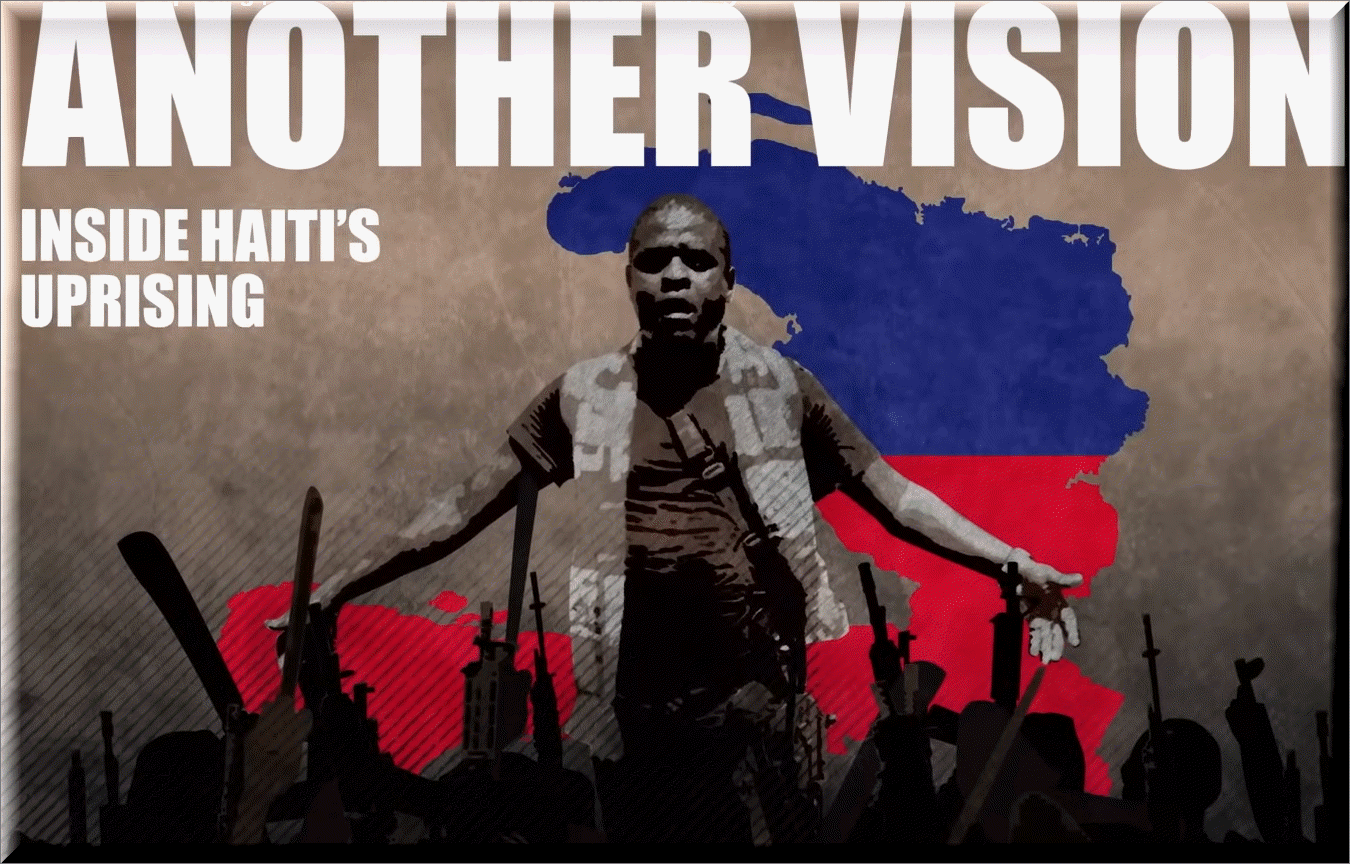
Another Vision: Inside Haiti’s Uprising Documentaty Series_ Mintpress, Haïti Liberté and Dan Cohen

6 Video Playlist, Including Haiti’s Jimmy “Barbecue” Chérizier: Gang leader or revolutionary? | The Chris Hedges Report, Haiti, facts and fiction w/ Dan Cohen and Kim Ives |The Duran (Live) and 2024 REVOLUTION In Haiti Against US Empire! The Full (Hi)Story Of The Uprising | Prof. Jemima Pierre| Neutrality Studies

For new comers, pop the document out from the upper right to read / expand / download.

Learn more: https://www.mintpressnews.com/=Haitian+Revolution

ADDITIONAL INFORMATION:

Full text of above X Post_From: Jason James

The Haitian cannibal story has been an eye opening moment for me in regards to the way propaganda travels and who is responsible for distributing it. The current narrative on X (and everywhere else) is that a man named Jimmy Cherizier aka Barbecue has taken over Haiti with his cannibal gang and the island nation has descended into chaos. Now Haitian cannibal gangs are making their way up to the US and are invading through the southern border.

The real story: Haitian Prime Minister Ariel Henry was unelected and installed by the US and UN in Haiti. Henry was an extension of US and globalist interests which meant more privation and suffering for Haitians. This triggered somewhat of a revolution in Haiti and armed groups banded together to remove Henry from power- including Cherizier and his group. Cherizier is a former police officer who started a group called the Revolutionary Forces of the G9 to protect Haitians from vicious gangs who rob, rape and murder, and are largely supported by elite members of Haitian society who are connected to the US and UN.

Cherizier’s group and the gangs agreed to a non-aggression pact and now most are working with Cherizier to remove Henry’s government from Haiti. The US and UN arranged for Henry to travel to Kenya and brokered a deal for Kenya to provide death squads that would put down the resistance. Cherizier and his groups have blocked off the airports to prevent Henry from returning, and I suspect prevent said death squads from entering the country. The US is now circulating propaganda via social media to create a pretext for military intervention. The cannibal gang story is their creation. Cherizier and his group are not cannibals. It’s unclear who is in the cannibal videos and where they’re from. The man you’ve seen eating a charred human leg is not Cherizier. The US and UN’s interest in Haiti is also unclear (strategic location? Sex trafficking?) but they are putting a lot of focus on Haiti and their propaganda effort to generate western support for intervention. From what I know, the people in Haiti are largely in support of this revolution and want Henry, along with his globalist puppet masters, removed from their government. Keep an eye on the big accounts you see sharing the Haitian gang propaganda.

These people are either wittingly or unwittingly circulating a narrative constructed by the Biden administration, UN and American Military Industrial-Complex, and working on their behalf. I learned a lot about sources I can and cannot trust through this story, and the list of sources sharing legitimate information grows smaller by the day. If they’ll lie about this, what else are they lying about? If they aren’t checking the validity of information they’re sharing, what else aren’t they looking into? Nothing is what it seems, and as much as I hate to say it, these big news sources and podcasts that many rely on for information are proving western governments right in their argument for censorship and what they classify as misinformation and disinformation.

CHM. Omali Yeshitela_ If Jesus Was A Revolutionary, How Can Your Preacher Be Such An Uncle Tom, with A Haitian Revolution Introduction and Reading…more

Click for standalone poster.
4 Video Playlist. For more like this please visit RBG Communiversity eLibrary | Chm. Omali and Uhuru Movement Folder

For new comers, pop the document out from the upper right to read / expand / download.

Learn more in RBG Communiversity eLibrary: HAITI In-depth Reports_Global Research Ca Folder

The Haitian Revolution

HAP 37 – Liberty, Equality, Humanity – The Haitian Revolution

Additional reading: “Revolution came to the French slaveholding colony of Saint Domingue in 1791. When the upheaval finally ran its course more than a decade later, in 1804, the landscape had been completely remade. In one fell swoop, the Haitian Revolution banished slavery, colonialism, and white supremacy, the three foundational institutions of the post-Columbian dispensation in the Americas.” From Haiti, I’m Sorry: The Haitian Revolution and the Forging of the Black International (Pg. 72), Michael O. West & William G. Martin, IN From Toussaint to Tupac_Black International since the Age of Revolution

Learn more in RBG Communiversity eLibrary| Haitian Revolution Folder

David Walker’s Appeal (1830) – Full Reading and eBook

Click for standalone poster.

David Walker’s Appeal, arguably the most radical of all anti-slavery documents, caused a great stir when it was published in September of 1829 with its call for slaves to revolt against their masters. David Walker, a free black originally from the South wrote, “. . .they want us for their slaves, and think nothing of murdering us. . . therefore, if there is an attempt made by us, kill or be killed. . . and believe this, that it is no more harm for you to kill a man who is trying to kill you, than it is for you to take a drink of water when thirsty.” Even the outspoken William Lloyd Garrison objected to Walker’s approach in an editorial about the Appeal.

The goal of the Appeal was to instill pride in its black readers and give hope that change would someday come. It spoke out against colonization, a popular movement that sought to move free blacks to a colony in Africa. America, Walker believed, belonged to all who helped build it. He went even further, stating, “America is more our country than it is the whites — we have enriched it with our blood and tears.” He then asked, “will they drive us from our property and homes, which we have earned with our blood.

Click for standalone poster.

For new comers, pop the document out from the upper right to read / expand / download.