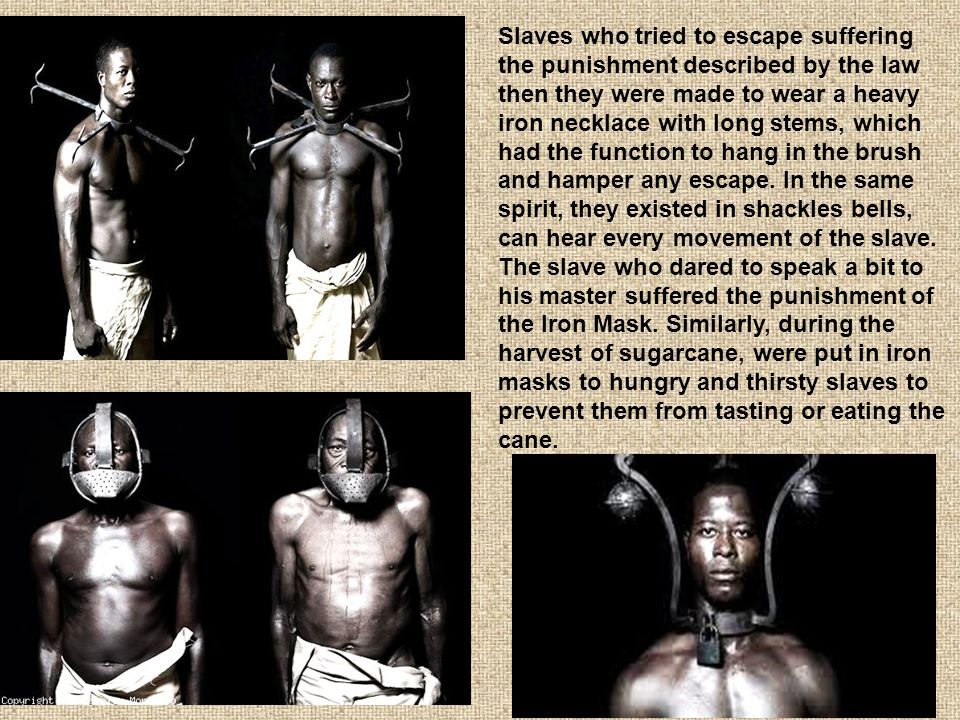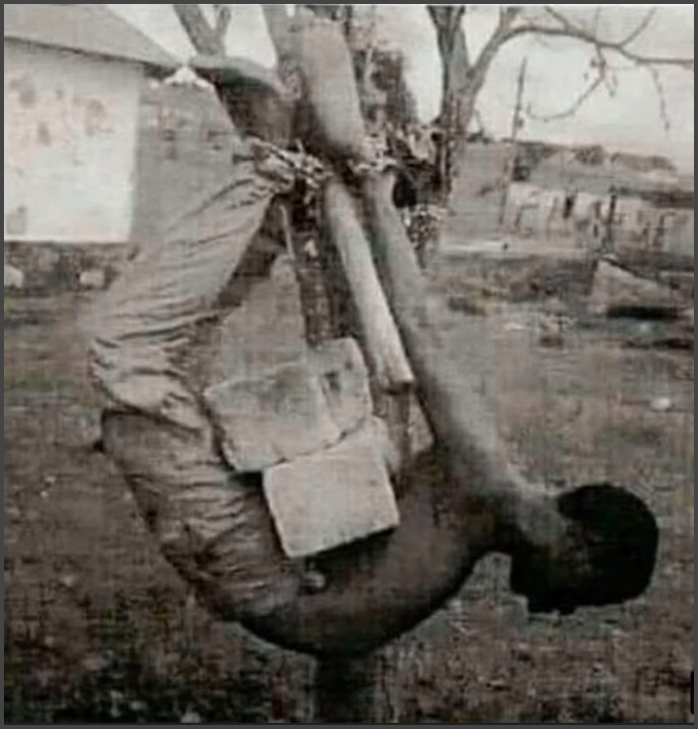
Fabrice Monteiro’s Amazing Images of Brown. Fugitive Slaves In Slave Torture Devices and Video Edu.

Click the graphic to enlarge and read

The Torture Devices Used During Slavery

Pop the document out from the upper right to read / expand / download
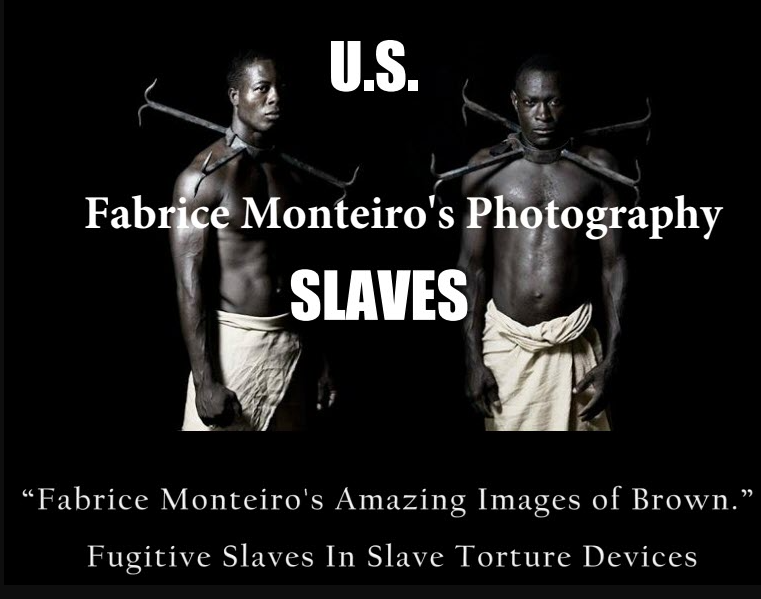
Pop the document out from the upper right to read / expand / download.

Learn more in RBG Communiversity eLibrary| Maafa_African Holocaust, Chattel Slavery, Jim Crow, Influencers and more_Books, Videos & Audio

African Stream On “One Year Since Queen Elizabeth II’s Death”

𝗦𝗢𝗨𝗧𝗛 𝗔𝗙𝗥𝗜𝗖𝗔 𝗪𝗔𝗡𝗧𝗦 𝗜𝗧𝗦 𝗗𝗜𝗔𝗠𝗢𝗡𝗗𝗦 𝗕𝗔𝗖𝗞 Today marks one year since Queen Elizabeth II’s death, but many Africans have not forgotten the crimes the late monarch presided over on our continent.
To add insult to injury, the plundering of Africa was rubbed in our faces every time she wore her ‘royal wardrobe.’ That crown, that sceptre – all studded with jewels taken without consent from the continent, including one of the most impressive diamonds ever found. This latter was mined in South Africa, and South Africans say it’s time to hand the stones back!

For new comers, pop the document out from the upper right to read / expand / download.

The Mass Criminalization of New Afrikans_A Historical Overview and SCARED 4 LIFE Documentary, with The New Jim Crow: Mass Incarceration in the Age of Colorblindness, by Michelle Alexander

“A FILM ABOUT HOW THE PIC (Prison-Industrial Complex) TURNS OUR PEOPLE INTO ANIMALS AGAINST THEMSELVES.”

Film is offered as 5 sequenced video clips.

Pop the document out from the upper right to read / expand / download.

For additional learning Read/Study “The New Jim Crow: Mass Incarceration in the Age of Colorblindness, Michelle Alexander (2011)”

Book Summary

“The New Jim Crow: Mass Incarceration in the Age of Colorblindness” by Michelle Alexander explores the systemic racial discrimination embedded in the U.S. criminal justice system. Alexander argues that mass incarceration functions as a contemporary system of racial control, reminiscent of the Jim Crow laws that enforced racial segregation. She highlights how policies and practices disproportionately target African Americans and other minorities, resulting in significant social, economic, and political consequences. Through a thorough analysis of the legal framework, societal attitudes, and the impact on communities, Alexander calls for a reevaluation of the criminal justice system and advocates for social justice and policy reform.

The outline that followers captures the key themes and concepts of “The New Jim Crow”.

  • Introduction
    • Context of racial discrimination in America
    • Overview of mass incarceration as a modern issue
  • Historical Background
    • Jim Crow laws and their impact on African Americans
    • Transition from overt racial segregation to more covert forms of discrimination
  • Mass Incarceration
    • Definition and statistics on incarceration rates
    • Racial disparities in arrest and sentencing
  • Colorblindness and Racial Control
    • Concept of colorblindness in contemporary society
    • How it perpetuates systemic racism
  • Impact on Communities
    • Social and economic consequences of mass incarceration
    • Effects on families and community structures
  • Legal and Political Framework
    • Role of legislation in perpetuating mass incarceration
    • Examination of the War on Drugs
  • Call to Action
    • Advocacy for policy reform and social justice
    • Importance of awareness and activism in addressing these issues
  • Conclusion
    • Reflection on the ongoing challenges of racial inequality
    • Vision for a more equitable future

“The New Jim Crow” delves deeper into the mechanisms and implications of mass incarceration in the United States. Here are some additional insights into key themes and concepts from the book:

Key Themes and Concepts:

  1. Racial Caste System:
    • Alexander posits that mass incarceration has created a racial caste system that marginalizes African Americans and other minorities. This system functions similarly to the Jim Crow laws by relegating these groups to a second-class status, stripping them of rights and opportunities.
  2. The War on Drugs:
    • A significant focus of the book is on the War on Drugs, which Alexander argues has disproportionately targeted black communities. Policies such as mandatory minimum sentences and “three strikes” laws have led to the over-policing of these communities, resulting in higher incarceration rates for drug-related offenses.
  3. Legal Discrimination:
    • Alexander highlights how the legal system perpetuates discrimination through practices such as racial profiling, biased sentencing, and the criminalization of minor offenses. She examines how the legal framework often fails to protect the rights of those who are disproportionately affected.
  4. Social Stigma and Barriers:
    • Once individuals are incarcerated, they face numerous barriers upon reentry into society, including difficulty finding employment, housing, and accessing education. This stigma further entrenches the cycle of poverty and disadvantage.
  5. Role of Media and Public Perception:
    • The book discusses how media portrayal of crime and criminals influences public perception, often reinforcing stereotypes about race and criminality. This contributes to a culture of fear and justification for harsh sentencing laws.
  6. Colorblindness as a Hindrance:
    • Alexander critiques the notion of colorblindness, arguing that it obscures the realities of racial injustice and allows systemic racism to persist unchecked. By denying the significance of race, society overlooks the need for targeted interventions and reforms.
  7. Calls for Reform:
    • Alexander emphasizes the importance of grassroots activism and collective action in addressing the issues of mass incarceration. She encourages readers to challenge the status quo, advocate for policy changes, and engage in conversations about race and justice.

Conclusion:

“The New Jim Crow” is a powerful examination of how mass incarceration serves as a modern mechanism of racial control, perpetuating inequality and injustice. Alexander’s work encourages a critical rethinking of the criminal justice system and highlights the urgent need for comprehensive reforms to dismantle the structures that uphold systemic racism. The book has sparked significant discussion and activism around issues of race, justice, and civil rights, making it a crucial read for anyone interested in understanding the intersections of race and criminal justice in America.

“The New Jim Crow: Mass Incarceration in the Age of Colorblindness”eBook

Pop the documents out from the upper right to read / expand / download.

Learn more in RBG Communiversity Knowledge Media eLibrary:

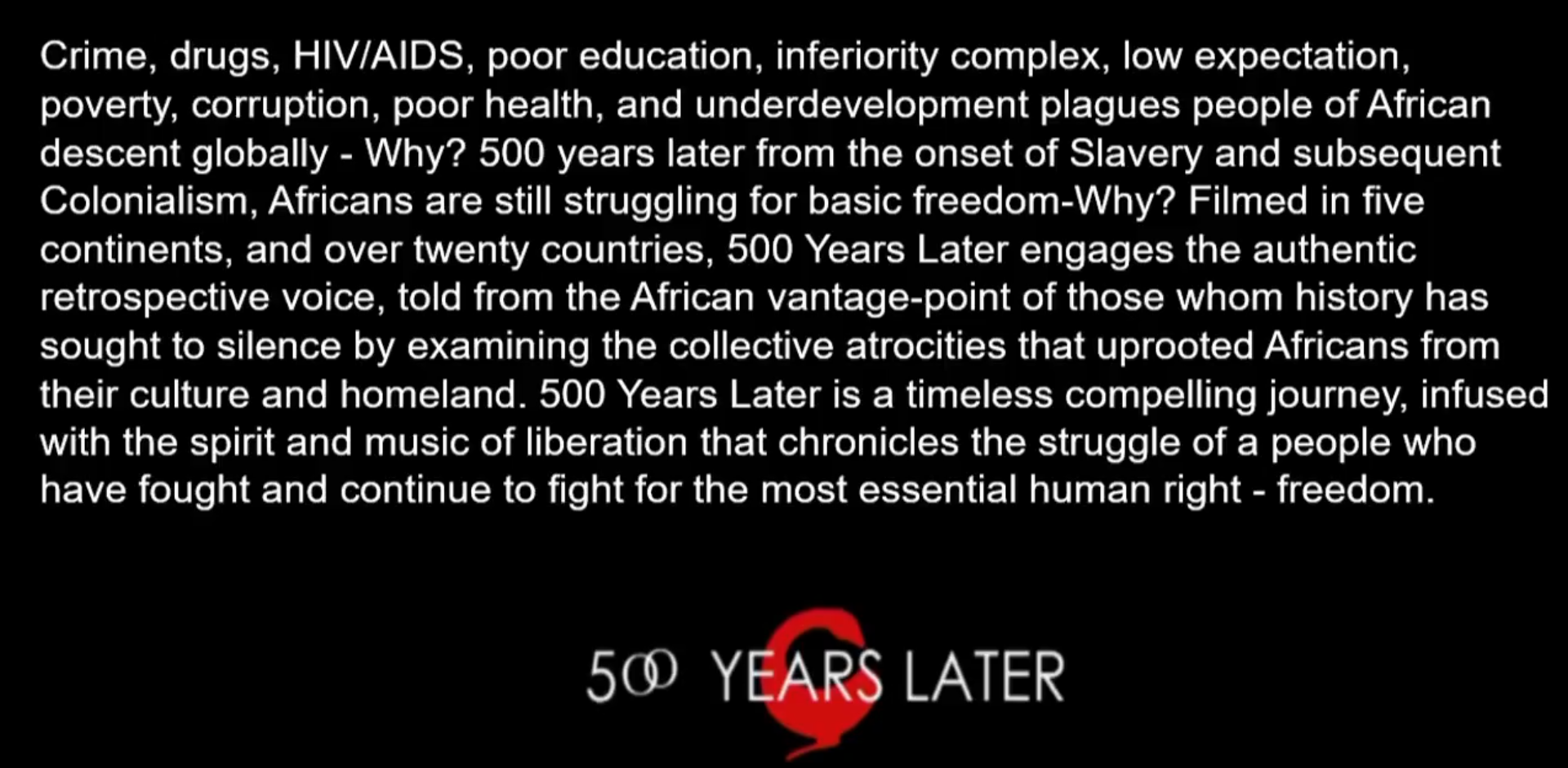
500 YEARS LATER, A documentary Film | Clips (20 mins.), with The Story of the Atlantic Slave Trade 1440-1870, By Hugh Thomas (6 Books in 1)

Click for enlarge read

500 Years Later, 2005 Documentary Film: Director, Owen Alik Shahadah Writers M.K. Asante & Owen Alik Shahadah https://www.imdb.com/title/tt0444593/


The textbook that follows is compromised of six separate books. Pop out the book from the upper right and open in a pdf reader to access TOC/ select a book to read. You can quickly browse the various book’s focus and content by scrolling below. (BTW if you are new to RBG please see our navigation training video here ).

Pop the document out from the upper right to read / expand / download.
Learn more in RBG Communiversity Knowledge Media eLibrary: Maafa_African Holocaust, Chattel Slavery, Jim Crow, Influencers and more_Books, Videos & Audio Folder