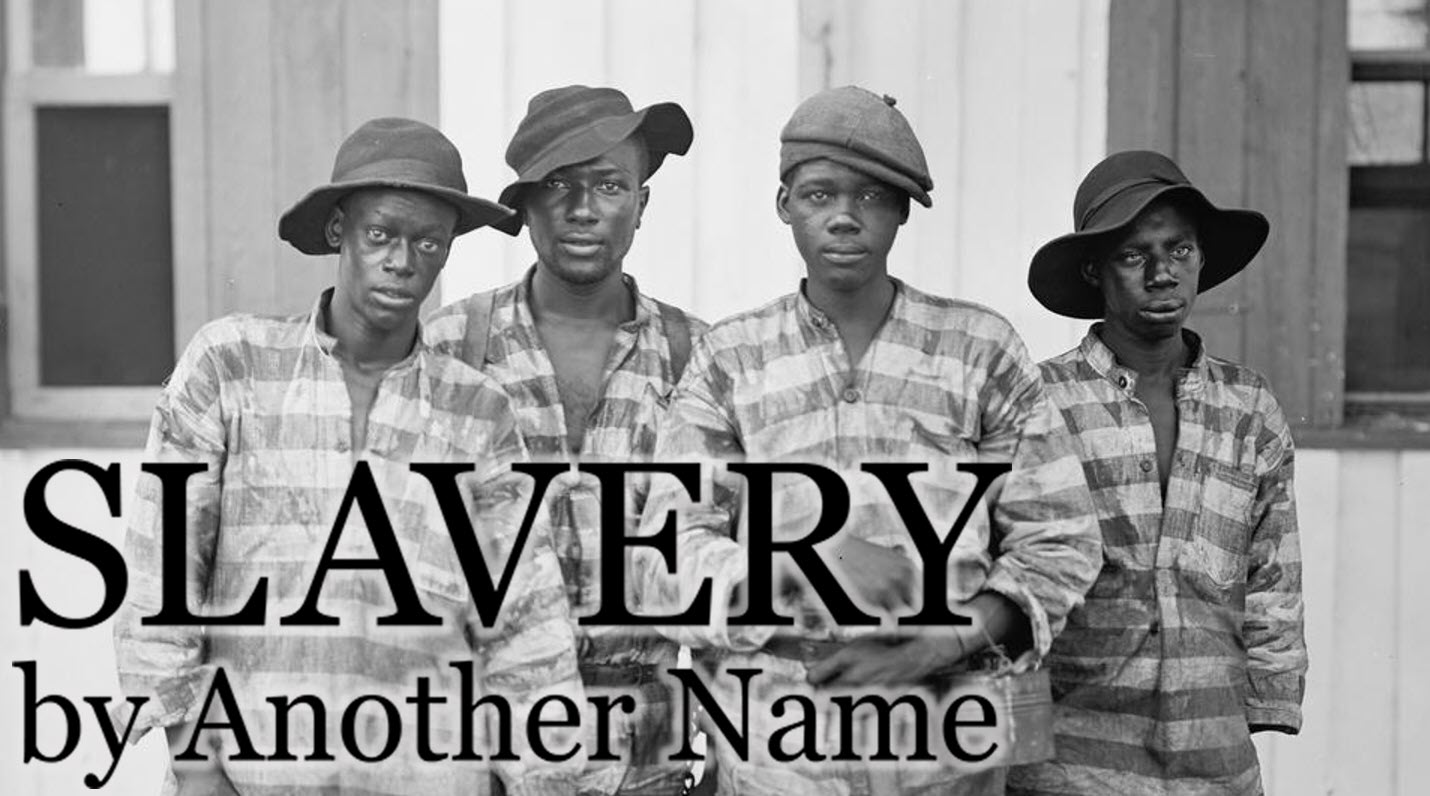
Slavery by Another Name: The Re-Enslavement of Black Americans from the Civil War to World War II by Douglas A. Blackmon_eBook and Audiobook, with Slavery by Another Name Documentary Film

The 13th Amendment to the United States Constitution provides that “Neither slavery nor involuntary servitude, except as a punishment for crime whereof the party shall have been duly convicted, shall exist within the United States, or any place subject to their jurisdiction.”
Book Summary

Douglas A. Blackmon’s “Slavery by Another Name: The Re-Enslavement of Black Americans from the Civil War to World War II” explores the continuation of forced labor and systemic oppression of Black Americans in the decades following the Civil War. The book argues that despite the abolition of slavery, many African Americans were subjected to new forms of servitude that mirrored the conditions of slavery.

The overview and outline that follows provides a structured look at the contents of Blackmon’s “Slavery by Another Name,” encapsulating the main themes and historical significance of the re-enslavement of Black Americans post-Civil War and its enduring legacy.

Overview:

  • Historical Context: The book examines the period from the end of the Civil War through World War II, highlighting how economic, social, and legal systems perpetuated the exploitation of Black Americans.
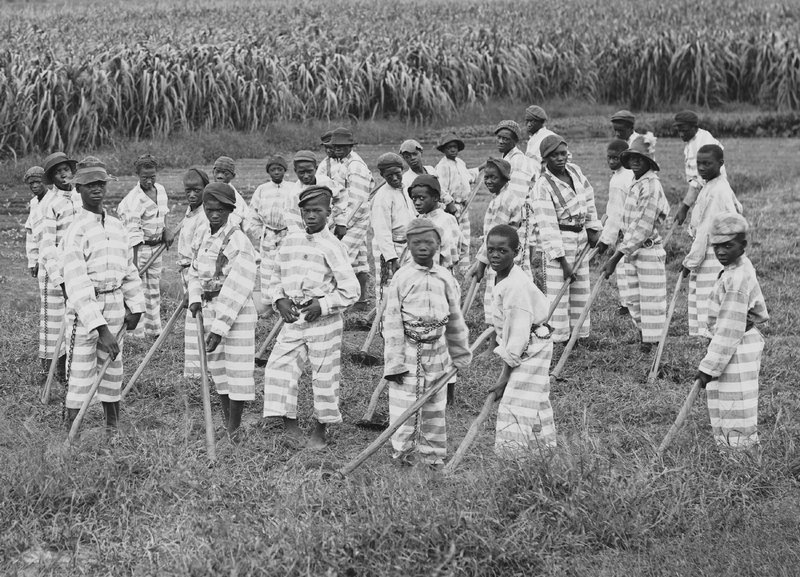
  • Convict Leasing System: Blackmon focuses on the convict leasing system, where African Americans were often arrested on dubious charges and forced into labor for private companies, effectively re-enslaving them.
  • Economic Exploitation: The narrative details how Southern states and businesses exploited Black labor to rebuild the economy after the Civil War, using tactics that included intimidation, violence, and legal manipulation.
  • Personal Stories: The book interweaves personal narratives and testimonies of individuals affected by these practices, providing a human face to the historical analysis.
  • Legacy and Impact: Blackmon discusses the long-term effects of these practices on African American communities and how they laid the groundwork for ongoing racial inequality and injustice.

Outline:

  • Introduction
    • Purpose of the book
    • Overview of the argument regarding the continuity of slavery-like conditions
  • Chapter 1: The End of the Civil War
    • The immediate aftermath of the Civil War and abolition of slavery
    • Initial hopes and challenges faced by newly freed Black Americans
  • Chapter 2: The Rise of Jim Crow
    • The establishment of Jim Crow laws and systemic racism
    • How these laws facilitated the re-enslavement of Black Americans
  • Chapter 3: The Convict Leasing System
    • Detailed description of convict leasing and how it operated
    • The role of law enforcement and the judicial system in perpetuating this system
  • Chapter 4: Economic Motivations
    • The economic interests of Southern states and businesses in maintaining forced labor
    • Analysis of how Black labor was exploited for profit
  • Chapter 5: Personal Narratives
    • Accounts of individuals who experienced re-enslavement
    • Impact of these experiences on families and communities
  • Chapter 6: Resistance and Resilience
    • Examples of resistance against re-enslavement practices
    • The role of Black communities in advocating for rights and reform
  • Chapter 7: National Attention and Reform Movements
    • The growing awareness of racial injustices and exploitation
    • Efforts by activists and organizations to combat systemic oppression
  • Chapter 8: The Legacy of Re-Enslavement
    • Examination of the long-term effects on Black Americans and society at large
    • Connections to contemporary issues of racial inequality and injustice
  • Conclusion
    • Summary of key themes and arguments
    • Reflection on the importance of understanding this history in the context of modern America

Douglas A. Blackmon’s “Slavery by Another Name: The Re-Enslavement of Black Americans from the Civil War to World War II” is a groundbreaking work that sheds light on the continuation of racial oppression and forced labor in the United States long after the formal abolition of slavery. Here are some deeper insights into the themes, events, and significance of the book:

Key Themes and Insights:

  1. Continuity of Oppression:
    • Blackmon argues that the end of slavery did not lead to true freedom for African Americans. Instead, a series of laws and practices emerged to maintain racial hierarchy and economic exploitation, creating a system that functioned similarly to slavery.
  2. Convict Leasing System:
    • One of the central focuses of the book is the convict leasing system, which allowed Southern states to lease convicts (often disproportionately Black men) to private companies for labor. This system became a profitable enterprise, with prisoners subjected to harsh conditions, violence, and little regard for their lives or well-being.
  3. Jim Crow Laws:
    • Following the Reconstruction era, Jim Crow laws institutionalized racial segregation and discrimination. Blackmon details how these laws facilitated the re-enslavement of Black Americans, enforcing a social order that kept them marginalized and economically disadvantaged.
  4. Economic Exploitation:
    • The book examines how economic interests in the South were heavily reliant on the exploitation of Black labor. Southern states and businesses sought to rebuild their economies after the Civil War by using forced labor, which was seen as a cost-effective means to achieve profitability, particularly in industries like agriculture and mining.
  5. Personal Narratives and Testimonies:
    • Blackmon incorporates personal stories of individuals who were subjected to these oppressive systems. These narratives bring a human element to the historical analysis, illustrating the trauma and resilience of those affected. Stories of families torn apart, individuals falsely accused and imprisoned, and the struggles for dignity and justice are poignantly detailed.
  6. Resistance Movements:
    • The author highlights the various forms of resistance against the re-enslavement practices, including protests, legal challenges, and the efforts of Black communities to advocate for their rights. This theme emphasizes the agency of Black Americans in fighting against systemic oppression.
  7. National Awareness and Reform:
    • As the 20th century progressed, growing awareness of racial injustices began to emerge. Blackmon discusses the role of activists and organizations that brought attention to the plight of Black Americans, pushing for reforms and challenging the status quo.
  8. Long-term Legacy:
    • The book concludes by examining the enduring legacy of these practices on contemporary American society. Blackmon argues that the historical exploitation of Black Americans laid the groundwork for ongoing issues of racial inequality, economic disparity, and social injustice that continue to affect African American communities today.

Conclusion:

“Slavery by Another Name” is a vital contribution to the understanding of American history, particularly regarding race relations and the systemic oppression of African Americans. Blackmon’s work challenges readers to recognize the complexities of freedom and the pervasive nature of racism that persisted after the Civil War. By illuminating the harsh realities of the convict leasing system and other forms of re-enslavement, the book serves as a powerful reminder of the struggles faced by Black Americans and the importance of acknowledging this history in the pursuit of justice and equality today.

The book received critical acclaim, including the Pulitzer Prize for History, and has significantly influenced scholarship on race, labor, and American history, encouraging a reevaluation of the narrative surrounding the post-Civil War era and its implications for modern society.

Slavery by Another Name_eBook

Pop the document out from the upper right to read / expand / download.

Slavery by Another Name_Audiobook

PART 1

PART 2

Slavery by Another Name Documentary Film

Learn more in RBG Communiversity Knowledge Media eLibrary:

Maafa_African Holocaust, Chattel Slavery, Jim Crow, Influencers and more_Books, Videos & Audio Folder

Prisons, Slavery, Policing and Imperialism (The Correctional-Industrial Complex [CIC]) Folder

The CIA in Guatemala: The Foreign Policy of Intervention by Richard H. Immerman_eBook and Audiobook, with The CIA in Guatemala Video Education Player

Using documents obtained through the Freedom of Information Act, recently opened archival collections, and interviews with the actual participants, Immerman provides us with a definitive, powerfully written, and tension-packed account of the United States’ clandestine operations in Guatemala and their consequences in Latin America today.

Book Summary

“The CIA in Guatemala: The Foreign Policy of Intervention” by Richard H. Immerman provides a comprehensive analysis of the United States’ covert operations in Guatemala during the early Cold War period, particularly the CIA’s involvement in the overthrow of the democratically elected President Jacobo Árbenz in 1954. Immerman explores the political, economic, and ideological motivations behind U.S. intervention, the impact of the coup on Guatemala’s political landscape, and the broader implications for U.S. foreign policy in Latin America. The book combines historical narrative with critical analysis, shedding light on the complexities of American interventionism.

The outline that follows captures the essential themes and structure of Richard H. Immerman’s “The CIA in Guatemala: The Foreign Policy of Intervention.” The book serves as an important historical document that not only recounts the events surrounding the 1954 coup but also critically examines the motivations and consequences of U.S. intervention in Guatemala, providing valuable insights into the complexities of Cold War foreign policy.

I. Introduction

  • A. Overview of U.S. involvement in Guatemala
  • B. Importance of the 1954 coup in the context of Cold War foreign policy
  • C. Objectives of the book

II. Historical Context

  • A. Political landscape of Guatemala before the coup
    • Overview of colonial history and socio-economic conditions
    • Rise of Jacobo Árbenz and his reform agenda
  • B. U.S. interests in Guatemala
    • Economic interests, particularly regarding the United Fruit Company
  • Strategic concerns during the Cold War

III. The Rise of Jacobo Árbenz

  • A. Political reforms and land redistribution policies
    • Agrarian reform and its implications
    • Opposition from conservative elites and foreign interests
  • B. The perception of Árbenz as a communist threat
    • Cold War ideology and fears of communism in Latin America
  • U.S. intelligence assessments and misinterpretations

IV. Planning the Coup

  • A. CIA’s role in orchestrating the coup
    • Formation of Operation PBSUCCESS
    • Key players involved in the planning and execution
  • B. Psychological warfare and propaganda
    • Use of media and misinformation to undermine Árbenz
  • Mobilizing support from local elites and military

V. The 1954 Coup

  • A. Execution of the coup on June 27, 1954
    • Overview of military actions and key events
    • Impact on Árbenz and his government
  • B. Immediate aftermath and reactions
    • Responses from the Guatemalan populace
  • International reaction and implications for U.S. foreign policy

VI. Consequences of the Intervention

  • A. Political instability in Guatemala
    • Rise of military regimes and authoritarianism
    • Long-term effects on democracy and governance
  • B. Human rights violations and civil conflict
    • Escalation of violence and repression against dissent
  • Legacy of the Guatemalan civil war
  • C. Broader implications for U.S. foreign policy in Latin America
    • Shifts in interventionist strategies
  • Influence on future U.S. actions in the region

VII. Conclusion

  • A. Summary of key findings and arguments
  • B. Reflection on the impact of U.S. intervention in Guatemala
  • C. Lessons learned for contemporary foreign policy

Richard H. Immerman’s “The CIA in Guatemala: The Foreign Policy of Intervention” is a critical examination of one of the most significant covert operations in U.S. history. Here’s a more detailed exploration of the book’s key themes, context, and implications:

Detailed Exploration of Key Themes

1. Historical Context

  • Colonial Legacy and Socio-Economic Conditions: Immerman sets the stage by detailing Guatemala’s colonial history, which laid the groundwork for deep social and economic inequalities. The country was dominated by a small elite, primarily landowners and foreign corporations, particularly the United Fruit Company (UFCO), which held significant economic power.
  • Jacobo Árbenz’s Rise: After World War II, Guatemala experienced a wave of reform movements. Jacobo Árbenz became president in 1951 and sought to implement progressive policies, including land reforms aimed at redistributing land from large estates to landless peasants. These reforms were seen as a direct threat to the interests of UFCO and traditional elites.

2. U.S. Interests and Cold War Context

  • Economic and Strategic Interests: The U.S. was deeply concerned about the influence of communism in Latin America during the Cold War. The nationalization of UFCO land by Árbenz was perceived as a communist threat, prompting U.S. intervention to protect American economic interests.
  • Cold War Ideology: The book discusses the broader ideological battle of the Cold War, where the U.S. sought to prevent the spread of communism. This led to a willingness to intervene in the affairs of sovereign nations, especially in regions perceived as vulnerable to Soviet influence.

3. The Coup Planning

  • Operation PBSUCCESS: Immerman details how the CIA devised Operation PBSUCCESS, a covert plan to overthrow Árbenz. The operation involved assembling a paramilitary force, psychological warfare, and propaganda campaigns to discredit the Árbenz government.
  • Use of Propaganda: The CIA employed tactics to create a climate of fear and uncertainty in Guatemala, portraying Árbenz as a communist puppet. This included the dissemination of false information and leveraging local elites to undermine his authority.

4. The 1954 Coup

  • Execution and Immediate Outcomes: The coup was executed on June 27, 1954, with a combination of military action and psychological operations. The CIA-backed forces, led by Carlos Castillo Armas, quickly gained ground, leading to Árbenz’s resignation.
  • Reactions and Aftermath: The coup resulted in immediate political upheaval. While some segments of the population initially welcomed the change, many others were left disillusioned and fearful of the ensuing military rule.

5. Consequences of the Intervention

  • Political Instability: The overthrow of Árbenz led to decades of political instability in Guatemala, marked by a series of military dictatorships. This instability created conditions for a protracted civil war that lasted from the 1960s to the 1990s.
  • Human Rights Violations: The military regimes that followed the coup engaged in widespread human rights abuses, including extrajudicial killings, forced disappearances, and repression of dissent. The civil war resulted in the deaths of over 200,000 people, with indigenous populations disproportionately affected.
  • Impact on U.S. Foreign Policy: Immerman argues that the events in Guatemala exemplified a shift in U.S. foreign policy toward more aggressive interventions in Latin America. The coup set a precedent for future U.S. actions, contributing to a legacy of distrust and resentment towards U.S. involvement in the region.

Conclusion

Immerman’s book is a significant scholarly work that provides a nuanced understanding of the U.S. intervention in Guatemala. By exploring the motivations, planning, and consequences of the coup, Immerman highlights the complex interplay between economic interests, Cold War ideology, and the principle of national sovereignty.

Broader Implications

  • Lessons on Intervention: The book serves as a cautionary tale about the consequences of foreign intervention, emphasizing the potential for long-term instability and human suffering that can result from such actions.
  • Understanding Modern Contexts: The themes explored in the book prompt reflection on contemporary issues related to U.S. foreign policy, especially in Latin America. The legacy of interventions like that in Guatemala continues to shape diplomatic relations and public perceptions of the U.S. in the region.

Immerman’s analysis is an important contribution to the historiography of U.S. foreign policy, shedding light on the complexities of intervention and the lasting impacts of Cold War dynamics on Latin America. The book encourages readers to critically assess the motivations behind foreign interventions and their far-reaching effects on the nations involved.

The CIA in Guatemala: The Foreign Policy of Intervention_eBook

Pop the documents out from the upper right to read / expand / download.

The CIA in Guatemala: The Foreign Policy of Intervention_Audiobook

The CIA in Guatemala Video Education Player

10 Video Playlist

Learn more in RBG Communiversity Knowledge Media eLibrary

We Want Freedom: A Life in the Black Panther Party, by Mumia Abu-Jamal, Kathleen Cleaver (Introduction)_eBook and Audiobooks

Mumia Abu-Jamal, America’s most famous political prisoner, is internationally known for his “live from death row” radio broadcasts and writings. In his youth, he helped found the Philadelphia branch of the Black Panther Party, wrote for the national newspaper, and began his lifelong work of exposing the violence of the state as it manifests in entrenched poverty, endemic racism, and unending police brutality.

Book Summary

“We Want Freedom: A Life in the Black Panther Party” is a memoir by Mumia Abu-Jamal that chronicles his experiences as a member of the Black Panther Party (BPP). The book provides an intimate look at Abu-Jamal’s journey within the party, detailing the struggles, victories, and challenges faced by its members during a tumultuous period in American history. With an introduction by Kathleen Cleaver, a prominent BPP leader, the memoir explores themes of resistance, social justice, and the fight against systemic racism. Through personal anecdotes and reflections, Abu-Jamal emphasizes the importance of community, solidarity, and the enduring legacy of the Black Panther Party in the struggle for civil rights.

The outline that follows captures the main themes and structure of “We Want Freedom,” highlighting Mumia Abu-Jamal’s personal journey in the Black Panther Party and the broader implications of the party’s legacy in the ongoing struggle for civil rights. The memoir serves as both a historical account and a source of inspiration for contemporary movements advocating for social justice and equality.

Outline

I. Introduction

  • Overview of Mumia Abu-Jamal’s background and significance
  • Role of Kathleen Cleaver in the Black Panther Party and her contributions to the introduction
  • The purpose of the memoir: to share personal experiences within the BPP

II. Early Life and Influences

  • Abu-Jamal’s upbringing in a racially charged environment
  • The impact of family, community, and early experiences on his political consciousness
  • Introduction to radical ideas and movements that shaped his worldview

III. Joining the Black Panther Party

  • The circumstances leading to Abu-Jamal’s involvement with the BPP
  • Overview of the party’s founding principles and goals
  • Initial experiences and impressions as a new member

IV. Activism and Community Engagement

  • Description of BPP community programs (e.g., free breakfast programs, health clinics)
  • The role of activism in addressing social issues and injustices
  • Personal anecdotes illustrating the impact of community work

V. The Struggle Against Oppression

  • Examination of the challenges faced by the BPP, including police brutality and state repression
  • Key events and confrontations involving BPP members and law enforcement
  • The significance of armed self-defense and the philosophy behind it

VI. Internal Dynamics and Challenges

  • Insights into the internal workings of the BPP, including leadership and organizational structure
  • Discussion of factionalism, ideological differences, and personal conflicts within the party
  • The impact of these dynamics on the effectiveness of the BPP

VII. Legacy and Reflections

  • Abu-Jamal’s reflections on the enduring legacy of the Black Panther Party
  • The relevance of the BPP’s principles and actions in contemporary social justice movements
  • Personal insights on the importance of resistance and community solidarity

VIII. Conclusion

  • Summary of key themes and insights from Abu-Jamal’s experiences
  • Call to action for continued activism and engagement in the fight for freedom and justice
  • The significance of remembering the history and contributions of the Black Panther Party

“We Want Freedom: A Life in the Black Panther Party” by Mumia Abu-Jamal, with an introduction by Kathleen Cleaver, is a powerful memoir that provides a firsthand account of Abu-Jamal’s life as a member of the Black Panther Party (BPP). The book offers a deeply personal perspective on the complexities of the party’s activities, the socio-political context of the era, and the enduring impact of the BPP on contemporary struggles for justice and equality. Here’s a deeper exploration of the key themes and insights from the memoir:

Key Themes and Insights

  1. Personal Journey and Political Awakening:
    • Abu-Jamal’s early life is marked by his experiences growing up in a racially charged environment, which shaped his understanding of systemic racism and social injustice. He reflects on how these formative experiences influenced his political consciousness and sparked his desire to engage in activism.
    • The memoir highlights the transformative effect of community and family, illustrating how support systems can inspire individuals to challenge oppressive structures.
  2. The Black Panther Party’s Ideology and Goals:
    • The book delves into the foundational principles of the BPP, focusing on its commitment to self-determination, social justice, and armed self-defense against police brutality. Abu-Jamal emphasizes the party’s dedication to empowering marginalized communities and addressing systemic inequalities.
    • The introduction by Kathleen Cleaver provides additional context about the BPP’s mission and the broader civil rights movement, framing the party as a crucial player in the struggle for racial equality.
  3. Community Programs and Activism:
    • Abu-Jamal vividly describes the various community service programs initiated by the BPP, such as free breakfast programs for children, health clinics, and educational initiatives. These programs were designed to address immediate needs within the Black community and foster a sense of solidarity and empowerment.
    • Through personal anecdotes, he illustrates the direct impact of these initiatives on individuals and families, showcasing the BPP’s commitment to serving the community beyond confrontations with law enforcement.
  4. Confrontations with Law Enforcement:
    • The memoir examines the violent confrontations that the BPP faced, including police brutality and state repression. Abu-Jamal recounts specific incidents that highlight the dangers faced by party members, emphasizing the need for armed self-defense in the face of systemic violence.
    • He reflects on the psychological toll of living under constant threat from law enforcement and the state, providing insight into the realities of activism during this tumultuous period.
  5. Internal Dynamics and Challenges:
    • Abu-Jamal provides a candid look at the internal dynamics within the BPP, discussing leadership struggles, ideological differences, and factionalism that arose over time. He explores how these internal conflicts sometimes undermined the party’s effectiveness and unity.
    • The memoir also touches on the role of women in the BPP, highlighting their contributions and the complexities of gender dynamics within the organization.
  6. Reflections on Legacy:
    • Throughout the memoir, Abu-Jamal reflects on the enduring legacy of the Black Panther Party and its relevance in contemporary social justice movements. He argues that the principles and actions of the BPP continue to resonate in today’s struggles against racial injustice and inequality.
    • The narrative serves as a reminder of the importance of remembering history and honoring the sacrifices made by those who fought for civil rights.
  7. Call to Action:
    • In the conclusion, Abu-Jamal emphasizes the need for continued activism and resistance in the quest for justice. He encourages readers to engage in the struggle for freedom and equality, drawing inspiration from the BPP’s legacy.
    • The memoir serves not only as a personal account but also as a rallying cry for future generations to uphold the values of community, solidarity, and social justice.

Conclusion

“We Want Freedom” is a significant contribution to the literature on the Black Panther Party and the broader civil rights movement. Mumia Abu-Jamal’s memoir offers an intimate and powerful perspective on the challenges and triumphs faced by BPP members, as well as the complexities of activism during a pivotal period in American history. The book highlights the importance of community engagement, the fight against systemic oppression, and the enduring relevance of the BPP’s ideals in contemporary struggles for justice. Through his personal narrative, Abu-Jamal not only honors the legacy of the Black Panther Party but also inspires readers to remain vigilant and active in the ongoing fight for freedom and equality.

We Want Freedom: A Life in the Black Panther Party, by Mumia Abu-Jamal, Kathleen Cleaver (Introduction)_eBook

Pop the documents out from the upper right to read / expand / download.

We Want Freedom: A Life in the Black Panther Party, by Mumia Abu-Jamal, Kathleen Cleaver (Introduction)_Audiobook

Learn more in RBG Communiversity Knowledge Media eLibrary:

Up Against the Wall: Violence in the Making and Unmaking of the Black Panther Party by Curtis J. Austin (Author), Elbert “Big Man” Howard (Foreword)_eBook and Audiobook

Book Summary

“Up Against the Wall: Violence in the Making and Unmaking of the Black Panther Party” by Curtis J. Austin, with contributions from Elbert “Big Man” Howard, offers a comprehensive analysis of the Black Panther Party (BPP) and the role of violence in its formation, evolution, and eventual decline. The book examines how the BPP’s revolutionary ideals were shaped by the context of systemic racism, social injustice, and police brutality in America during the 1960s and 1970s. Austin delves into the internal and external factors that influenced the party’s strategies, including its use of armed self-defense, community programs, and the violent responses from law enforcement and the state. The work provides a nuanced perspective on the complexities of the BPP’s legacy, emphasizing both its contributions to the civil rights movement and the challenges it faced due to violence and repression.

The following outline captures the main themes and structure of “Up Against the Wall,” highlighting Austin’s exploration of the complexities surrounding the Black Panther Party, its use of violence, and its significant role in the struggle for racial justice in America. The book provides a critical understanding of the BPP’s legacy and the factors that shaped its trajectory.

Outline

I. Introduction

  • Purpose of the book: to explore the role of violence in the Black Panther Party’s history
  • Overview of the BPP’s significance in the civil rights movement
  • Introduction to key themes: resistance, violence, and community activism

II. Historical Context

  • The socio-political landscape of the 1960s and 1970s
  • Systemic racism and police brutality faced by African Americans
  • The emergence of radical movements in response to oppression

III. Formation of the Black Panther Party

  • Founding principles and ideology of the BPP
  • Influences from earlier civil rights movements and revolutionary thought
  • The role of key figures, including Huey P. Newton and Bobby Seale

IV. Armed Self-Defense and Community Programs

  • Examination of the BPP’s stance on armed self-defense
  • Overview of community programs initiated by the BPP (e.g., free breakfast programs, health clinics)
  • The impact of these programs on local communities and the party’s popularity

V. Violence and State Repression

  • Analysis of violent confrontations between the BPP and law enforcement
  • The role of the FBI’s COINTELPRO in undermining the BPP
  • Consequences of state-sponsored violence on the party’s operations and membership

VI. Internal Conflicts and Challenges

  • Examination of factionalism and leadership struggles within the BPP
  • The impact of gender dynamics and the role of women in the party
  • Issues of ideology and strategy that contributed to internal tensions

VII. The Decline of the Black Panther Party

  • Factors leading to the decline and dissolution of the BPP
  • The effects of external repression and internal conflicts
  • Reflection on the legacy of the BPP in contemporary movements

VIII. Conclusion

  • Summary of key arguments and insights regarding violence and community activism
  • Reflection on the lasting impact of the Black Panther Party
  • Call for recognition of the BPP’s contributions to social justice and civil rights

“Up Against the Wall: Violence in the Making and Unmaking of the Black Panther Party provides a nuanced and in-depth exploration of the Black Panther Party (BPP), focusing particularly on the interplay between violence, resistance, and community activism. The authors examine how the BPP’s approach to violence shaped its identity and legacy while also reflecting on the broader social and political context in which the party operated. Here’s a more detailed look at the key themes and insights from the book:

Key Themes and Insights

  1. Historical Context of the Black Panther Party:
    • The authors place the BPP within the tumultuous backdrop of the 1960s and 1970s, a period marked by widespread civil rights activism and systemic oppression faced by African Americans. They highlight the profound effects of police brutality, economic inequality, and social injustice that drove many to seek radical solutions.
    • The book emphasizes how the BPP emerged as a response to these conditions, representing a shift towards more militant forms of activism in the fight against racial oppression.
  2. Founding Ideology and Principles:
    • The BPP was founded on a framework of revolutionary socialism, influenced by figures like Malcolm X, Frantz Fanon, and Karl Marx. Austin discusses how the party’s leaders, particularly Huey P. Newton and Bobby Seale, articulated a vision of self-determination and empowerment for Black communities.
    • The authors explore the dual focus of the BPP on armed self-defense against police violence and community service programs aimed at improving the quality of life for African Americans.
  3. Armed Self-Defense and Community Programs:
    • A significant portion of the book is dedicated to the BPP’s philosophy of armed self-defense and its implications. Austin details how the party’s members carried firearms to protect themselves and their communities from police brutality, a stance that garnered both support and backlash.
    • The BPP also initiated various community programs, such as free breakfast for children, health clinics, and educational initiatives. These programs were instrumental in building community support and enhancing the party’s image as a force for positive change.
  4. Violence and State Repression:
    • The authors analyze the violent confrontations that occurred between the BPP and law enforcement, highlighting key events that underscored the tensions between the party and the state. The book details how these confrontations often escalated into lethal encounters, such as the infamous shootout in 1969 that resulted in the deaths of BPP members.
    • A critical aspect of the narrative is the examination of the FBI’s Counterintelligence Program (COINTELPRO), which aimed to infiltrate, undermine, and discredit the BPP. Austin discusses how state-sponsored violence and surveillance contributed to the party’s fragmentation and decline.
  5. Internal Conflicts and Dynamics:
    • Austin delves into the internal struggles within the BPP, including factionalism and leadership disputes that arose as the party evolved. He addresses how ideological differences and personal rivalries created rifts that weakened the party’s cohesion.
    • The book also highlights the contributions of women in the BPP, discussing the complexities of gender dynamics within the organization and how women played pivotal roles in both leadership and grassroots activism.
  6. Legacy and Impact:
    • The decline of the BPP is examined in the context of both external repression and internal challenges. Austin reflects on how these factors ultimately led to the party’s disbandment by the mid-1970s. However, he emphasizes that the BPP’s legacy continues to resonate in contemporary movements for social justice and racial equality.
    • The authors argue that understanding the BPP’s history is crucial for recognizing the ongoing struggles against systemic oppression and the importance of grassroots activism.
  7. Call for Recognition:
    • In the conclusion, Austin urges readers to acknowledge the complexity of the BPP’s legacy, recognizing both its contributions to the civil rights movement and the challenges it faced due to violence and repression. He advocates for a more nuanced understanding of the BPP that appreciates its grassroots efforts and revolutionary ideals.

Conclusion

“Up Against the Wall” serves as a vital contribution to the scholarship on the Black Panther Party, offering a comprehensive analysis of the factors that influenced its rise and fall. Curtis J. Austin and Elbert “Big Man” Howard provide a detailed examination of how violence and community activism intersected within the BPP, shaping its identity and impact. The book not only highlights the historical significance of the BPP but also encourages contemporary readers to engage with the ongoing struggles for justice and equality in society. It serves as a reminder of the resilience of marginalized communities in the face of systemic oppression and the importance of collective action in the pursuit of social change.

Up Against the Wall: Violence in the Making and Unmaking of the Black Panther Party by Curtis J. Austin (Author), Elbert “Big Man” Howard (Foreword)_eBook

Pop the documents out from the upper right to read / expand / download.

Up Against the Wall: Violence in the Making and Unmaking of the Black Panther Party by Curtis J. Austin (Author), Elbert “Big Man” Howard (Foreword)_Audiobook

Part 1

Part 2

Learn more in RBG Communiversity Knowledge Media eLibrary:

Dixie Be Damned: 300 Years of Insurrection in the American South by Neal Shirley and Saralee Stafford_eBook and Audiobook, with Postscript Video

Book Summary

“Dixie Be Damned: 300 Years of Insurrection in the American South” by Neal Shirley and Saralee Stafford is a comprehensive examination of resistance and rebellion in the American South over a span of three centuries. The authors explore various forms of insurrection, from slave revolts to civil rights movements, highlighting the struggles against oppression, racism, and economic exploitation. By focusing on the history of resistance, Shirley and Stafford aim to challenge the dominant narratives that often romanticize the South’s past and overlook the active resistance by marginalized groups. The book serves as a testament to the resilience of those who fought against systemic injustices and seeks to inspire contemporary movements for social justice.

The outline that follows encapsulates the essential themes and structure of “Dixie Be Damned: 300 Years of Insurrection in the American South”, highlighting the authors’ critical perspective on various forms of insurrection and the struggles of those who fought against oppression and challenges the romanticized narratives of the South’s past.

I. Introduction

  • Purpose of the book: to highlight the history of insurrection in the South
  • Overview of the themes of resistance and rebellion
  • Importance of understanding Southern history through the lens of insurrection

II. Historical Context of Insurrection in the South

  • Overview of the socio-political landscape in the South
  • The role of slavery and its impact on resistance
  • Economic exploitation and class struggle

III. Early Forms of Insurrection

  • Slave revolts and rebellions
    • Notable uprisings, such as the Stono Rebellion and Nat Turner’s Rebellion
  • Early abolitionist movements and their significance
  • Resistance through cultural expressions, such as music and storytelling

IV. The Civil War and Reconstruction

  • Analysis of insurrection during the Civil War
    • The role of enslaved people in the war
    • Acts of rebellion and defiance
  • Post-war resistance during Reconstruction
    • The rise of Black Codes and Jim Crow laws
    • Organizing efforts by formerly enslaved individuals

V. Twentieth Century Insurrections

  • The Civil Rights Movement
    • Key events: Montgomery Bus Boycott, Freedom Rides, and the March on Washington
    • Notable figures and grassroots organizations
  • Labor movements and their intersections with civil rights
  • Resistance against systemic racism and economic inequality

VI. Contemporary Insurrections

  • Examination of modern movements for social justice in the South
    • Black Lives Matter and other grassroots organizations
  • The ongoing struggle against systemic oppression
  • Connections between historical and contemporary forms of resistance

VII. Conclusion

  • Summary of key themes and insights
  • Reflection on the legacy of insurrection in the American South
  • Call to action for ongoing resistance and solidarity in the fight for justice

“Dixie Be Damned: 300 Years of Insurrection in the American South” by Neal Shirley and Saralee Stafford provides a thorough and engaging exploration of the history of resistance within the Southern United States. The authors present a compelling narrative that emphasizes the long-standing struggles against oppression, racism, and economic exploitation, showcasing the myriad ways in which marginalized groups have resisted injustice throughout history. Here’s a deeper dive into the themes and insights presented in the book:

Key Themes and Insights

  1. Historical Continuity of Resistance:
    • The authors argue that resistance in the South is not a modern phenomenon but rather a continuous thread throughout history. From early slave revolts in the 18th century to contemporary social justice movements, the book illustrates how insurrection has been a defining characteristic of Southern history.
    • By tracing this continuity, Shirley and Stafford challenge the notion that the South is defined solely by its oppressive systems, highlighting the resilience and agency of those who fought against them.
  2. The Role of Slavery and Abolition:
    • The book discusses the impact of slavery on the development of resistance movements. Enslaved individuals often engaged in acts of rebellion, whether through organized uprisings or everyday forms of resistance, such as work slowdowns and escape attempts.
    • The authors also shine a light on early abolitionist efforts, which laid the groundwork for later movements. These efforts included both Black and white abolitionists who risked their lives to challenge the institution of slavery.
  3. Civil War and Reconstruction:
    • The Civil War is presented as a critical moment of insurrection, with enslaved people playing a pivotal role in their liberation. The authors highlight how acts of defiance during the war contributed to shifting perceptions about slavery and freedom.
    • During Reconstruction, newly freed individuals sought to assert their rights and challenge oppressive systems through political participation and community organizing. However, the rise of Jim Crow laws and violent repression marked a significant backlash against these efforts.
  4. Civil Rights Movement:
    • A significant portion of the book focuses on the Civil Rights Movement of the 20th century, detailing key events and figures that shaped this struggle. From the Montgomery Bus Boycott to the Freedom Rides and the March on Washington, Shirley and Stafford emphasize the grassroots nature of these movements and the importance of local organizing.
    • The authors also explore the intersections of civil rights and labor movements, illustrating how economic justice was intertwined with the fight against racial discrimination.
  5. Modern Insurrections:
    • The narrative transitions into contemporary movements for social justice, such as Black Lives Matter, illustrating how the legacy of resistance continues to inform current struggles against systemic oppression.
    • Shirley and Stafford examine the ongoing fight against racism, police violence, and economic inequality, highlighting how modern activists draw on historical lessons to inform their strategies and tactics.
  6. Cultural Resistance:
    • Throughout the book, the authors acknowledge the role of culture in resistance movements. Music, art, and storytelling have been vital forms of expression that not only preserve history but also mobilize communities and inspire action.
    • By incorporating cultural dimensions into their analysis, Shirley and Stafford provide a fuller understanding of how resistance has been articulated and sustained across generations.
  7. Call to Action:
    • In their conclusion, the authors issue a call to action for readers to engage in the ongoing struggle for justice. They emphasize the importance of solidarity and collective action in challenging systemic inequalities.
    • The book serves as both a historical account and a motivational text, encouraging individuals to recognize their role in the broader struggle for social change.

Conclusion

“Dixie Be Damned” serves as a vital contribution to the understanding of Southern history through the lens of resistance. By chronicling 300 years of insurrection, Neal Shirley and Saralee Stafford illuminate the struggles of those who have fought against oppression and challenge the romanticized narratives that often dominate discussions about the South. Their work emphasizes the resilience, agency, and ongoing struggle of marginalized communities, providing a rich historical context that inspires contemporary movements for social justice. This book is essential reading for anyone interested in understanding the complexities of resistance and the enduring legacy of insurrection in the American South.

“Dixie Be Damned: 300 Years of Insurrection in the American South”_eBook

Pop the documents out from the upper right to read / expand / download.

“Dixie Be Damned: 300 Years of Insurrection in the American South”_Audiobook

Postscript Video: Enslavement to Emancipation

Learn more in RBG Communiversity Knowledge Media eLibrary: