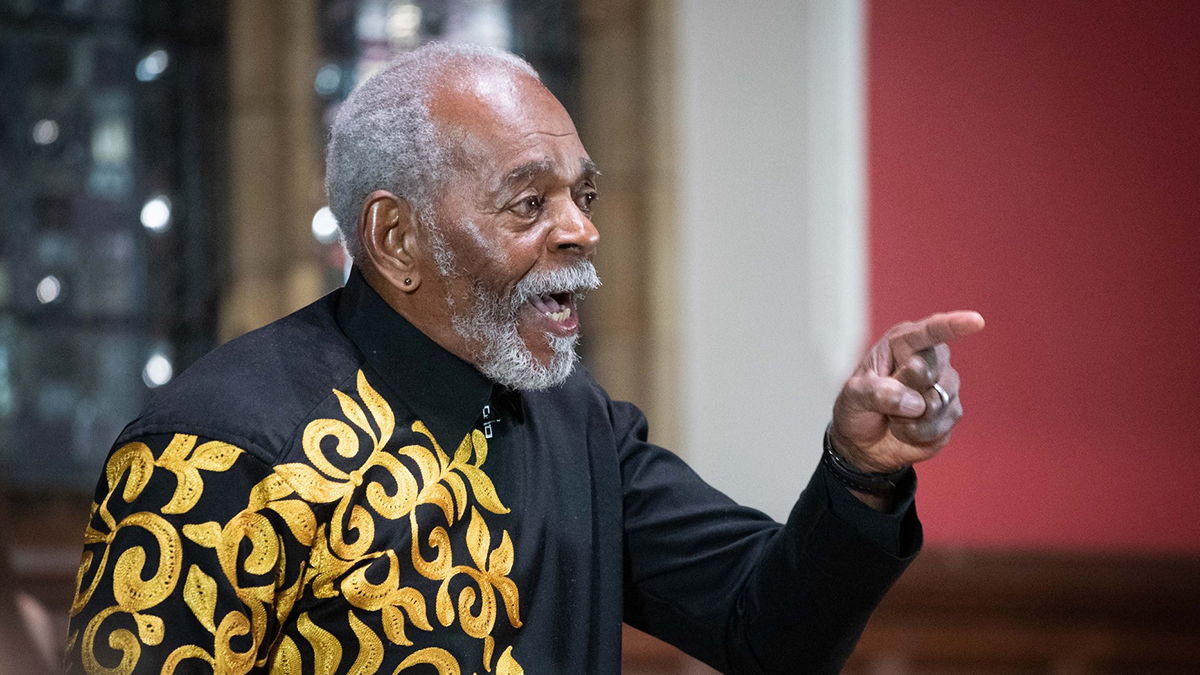
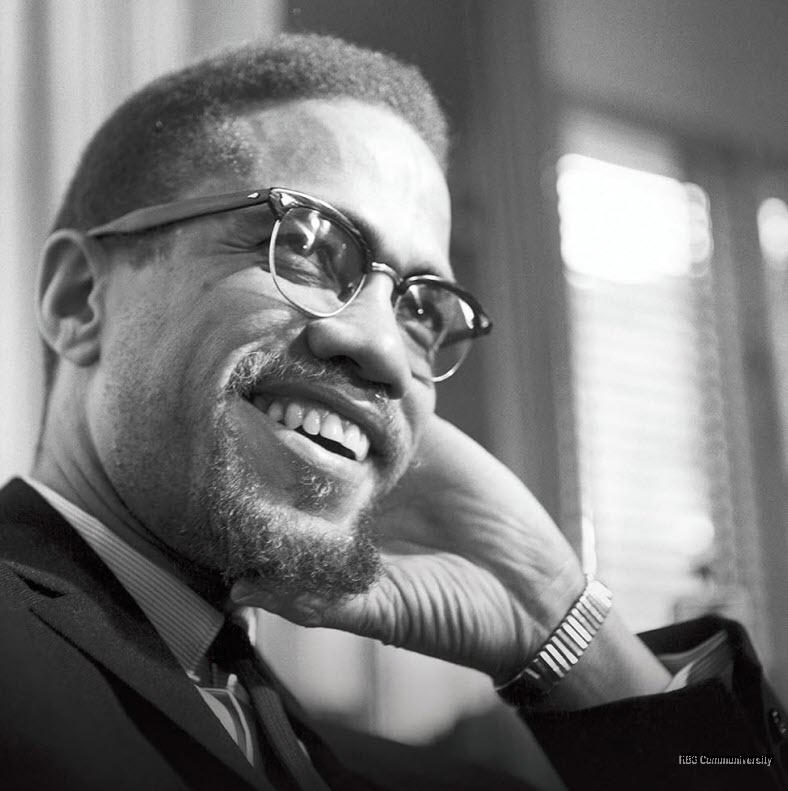
Dr. Gerald Horne_Armed Struggle: Panthers and Communists, Black Nationalists and Liberals in southern California, Through the Sixties and Seventies

Dr. Gerald Horne is an author and historian who currently holds the John J. and Rebecca Moores Chair of History and African American Studies at the University of Houston. He joins us from Houston to discuss his latest book, “Armed Struggle: Panthers and Communists, Black Nationalists and Liberals in southern California, Through the Sixties and Seventies” which is published by International Publishers.

International Publishers Book Description:

Southern California has been a leader nationally in fomenting radicalism. The Communist Party had one of its strongest units there, buoyed by influence in Hollywood. Yet, this region also has been a stalwart of the Black Liberation Movement, as suggested by the importance of the Watts Uprising of 1965 in Los Angeles and the concomitant ascendancy of the Black Panther Party, whose leaders—e.g., Eldridge Cleaver and George Jackson—had roots in Pasadena. Angela Davis, accused in the early 1970s of murder, kidnapping, and conspiracy, was not only a bridge between the CP and BPP, but studied in San Diego before teaching at UCLA.

Black Nationalism flourished in the Southland: “Kwanzaa,,” a popular holiday, was born there. Given the prominence of Black celebrities in the region, the NAACP chapter in the area was a cash cow for the entire organization and shaped policy accordingly, including their disastrous capitulation to the Red Scare.

In this exhaustively researched book, Gerald Horne sketches the apparent paradox of some African Americans turning to armed struggle at a time when it appeared that Jim Crow was retreating. He draws critical distinctions between armed propaganda, armed self-defense—and armed struggle— all of which he places in a global context of anti-war activism, the Cold War, and African liberation.

Activist News Network

Black Liberation Media

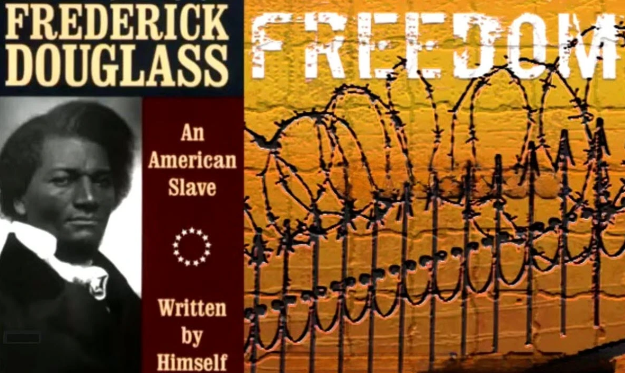
Frederick Douglass_What to the Slave Is The Fourth Of July, Read by Ossie Davis

5 Video Playlist

Pop the document out from the upper right to read / expand / download.

Related Post/Lessons:

Narrative of the Life of Frederick Douglass_eBook and Audiobook and Supplemental_Frederick Douglass Escapes Slavery | Full Documentary | Biography

Learn more in RBG Communiversity Knowledge Media eLibrary|

 Frederick Douglass_A Former Slave Folder

Dr. Julia Hare On Being Black First and Integration (Video Edu.) and The Black Woman’s Role In The Community Of Slaves, By Angela Davis (The Black Scholar December, 1971).pdf

Click for full size standalone poster.

Pop the document out from the upper right to read / expand / download.

Companion Post/Lesson:

Dr. Nathan Hare is often called “the Father of Black Studies.”

Click for full size standalone poster.

Dr. Nathan Hare and TBS Journal, Feat. Contemporary Black Thought_The Best from The Black Scholar (1973)

Trump Guilty Verdict: Chairman Omali Yeshitela Responds and The Deepening Crisis of Imperialism: The Tipping Point of the Uneasy Equilibrium

https://handsoffuhuru.org/

Click for full size standalone poster.

Pop the document out from the upper right to read / expand / download.

An Uneasy Equilibrium-Chairman Omali
An Uneasy Equilibrium – Commemorative Edition: The African Revolution Versus Parasitic Capitalism, Burning Spear Uhuru Publications, 2014.

Chairman Omali notes that African Internationalism recognizes that the process of slavery and brigandage that consolidated the political economy, national identity and general well-being of what came to be known as Europe is the same process that results in the wretched, divided, impoverished and exploited lot of Africans and much of the world. He further contends that the leading force of struggle is the African and oppressed working class throughout the world against “parasitic capitalism,” built on enslavement, genocide and colonialism. From: Chairman Omali Yeshitela , Ch. 3. The Theory of African Internationalism. In: An Uneasy Equilibrium – Commemorative Edition: The African Revolution Versus Parasitic Capitalism, Burning Spear Uhuru Publications, 2014.

About the author:

From the day he tore down the racist mural from the City Hall in St. Petersburg, FL in 1966, Chairman Omali Yeshitela (then known as Joseph Waller) has never stopped fighting for justice for African people everywhere. Politicized in his youth by the revolutionary movements around the world and the struggle for black liberation inside the U.S., Yeshitela dedicated his life to uniting and liberating Africa and African people everywhere. In the heat of revolutionary struggle and years in prison for his political work, Yeshitela was driven to discover the reasons why black people all over the world are impoverished and oppressed. Yeshitela developed the political theory of African Internationalism that understands the world through the eyes of the African working class. Through African Internationalism the Chairman exposes the significance of Marx’s concept of primitive accumulation of capital, which Marx called the starting point of capitalist accumulation, playing in political economy about the same part as original sin in theology. Breathing life into Marx’s analysis, Yeshitela noted that African Internationalism recognizes that the process of slavery and brigandage that consolidated the political economy, national identity and general well-being of what came to be known as Europe is the same process that results in the wretched, divided, impoverished and exploited lot of Africans and much of the world. Yeshitela contends that the leading force of struggle is the African and oppressed working class throughout the world against “parasitic capitalism,” built on enslavement, genocide and colonialism. In 1968 Chairman Yeshitela founded The Burning Spear newspaper which is still published today. Throughout the years Yeshitela has authored numerous articles, pamphlets and books, including Omali Yeshitela Speaks and Quotations From Chairman Omali Yeshitela. In 1972, Yeshitela formed the African People s Socialist Party which he chairs. He built the worldwide Uhuru Movement and the African Socialist International now active in the U.S., Europe, on the Continent of Africa and in the Caribbean. Some of the most critical and legendary campaigns of the African community over the past 40 years have been led by Chairman Omali and the Uhuru Movement.

Learn more in RBG Communiversity eLibrary | Chm. Omali and Uhuru Movement Folder