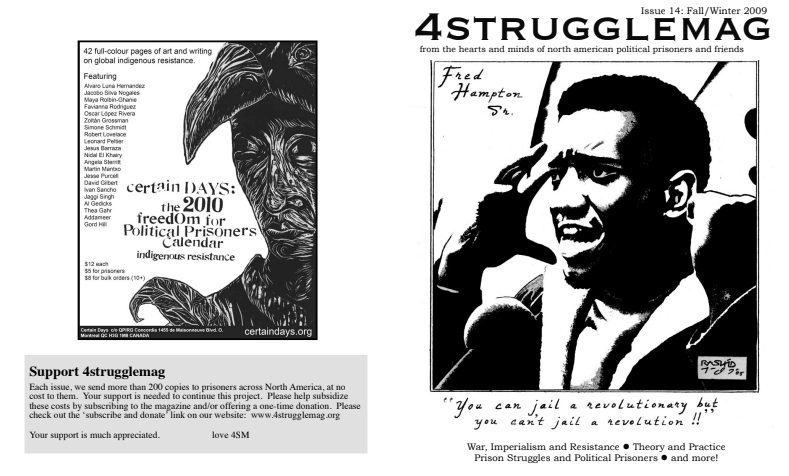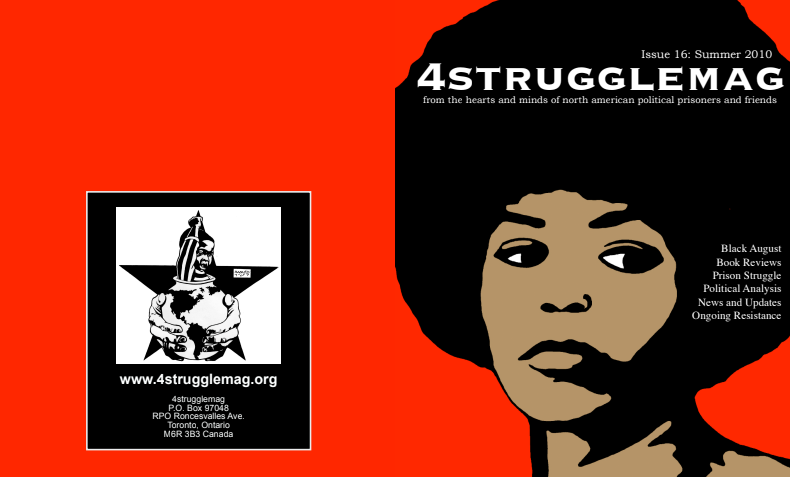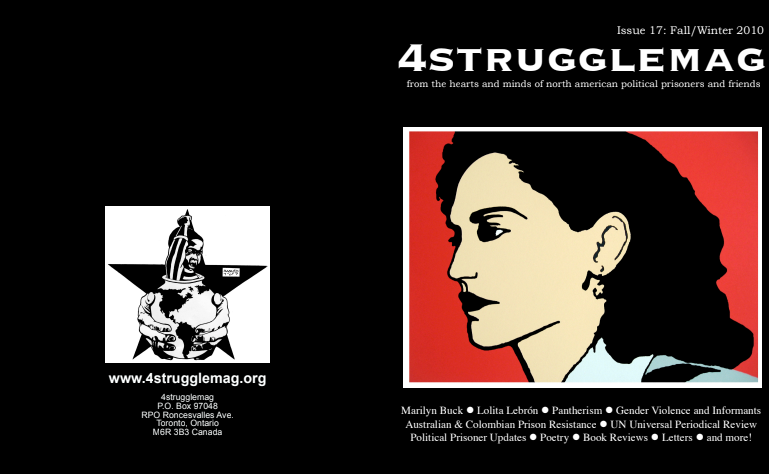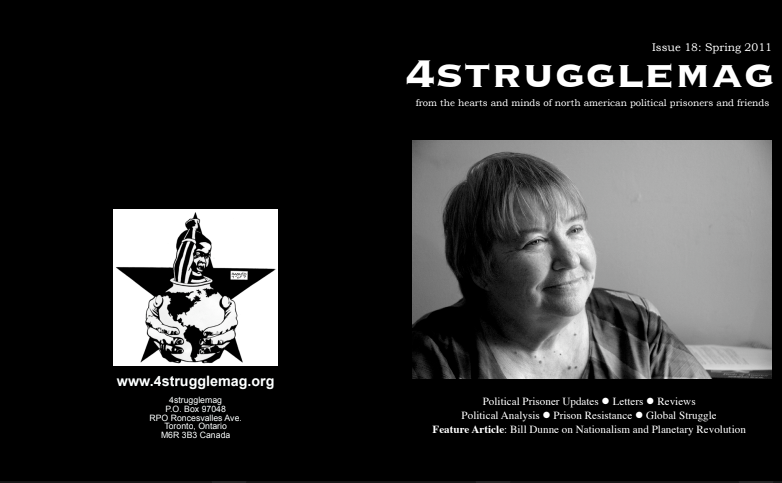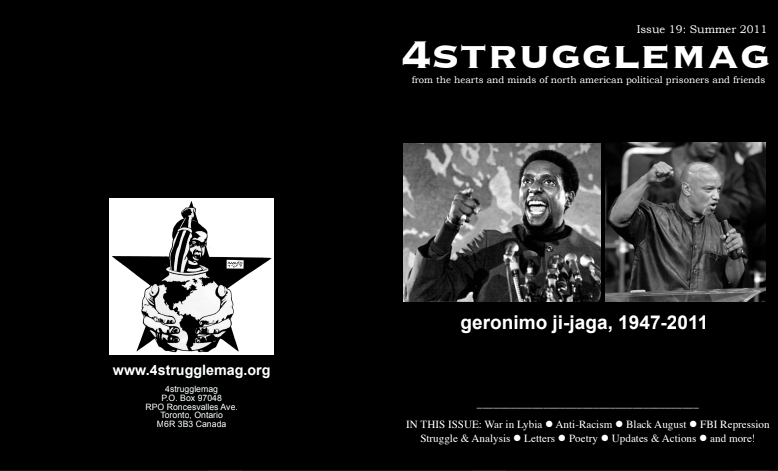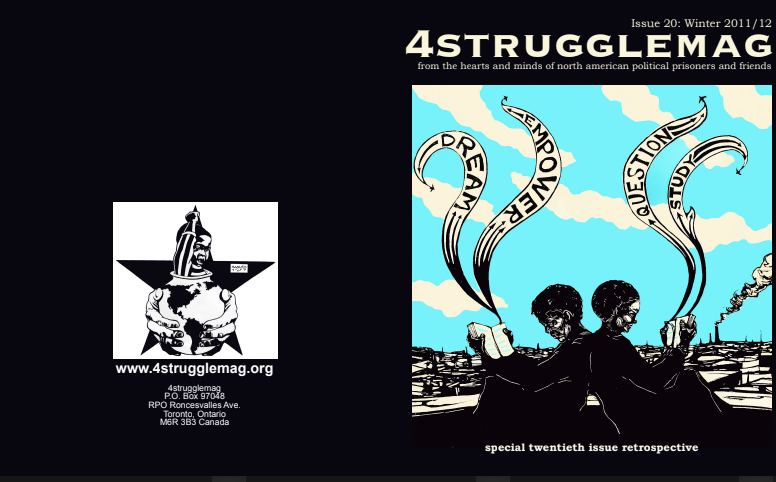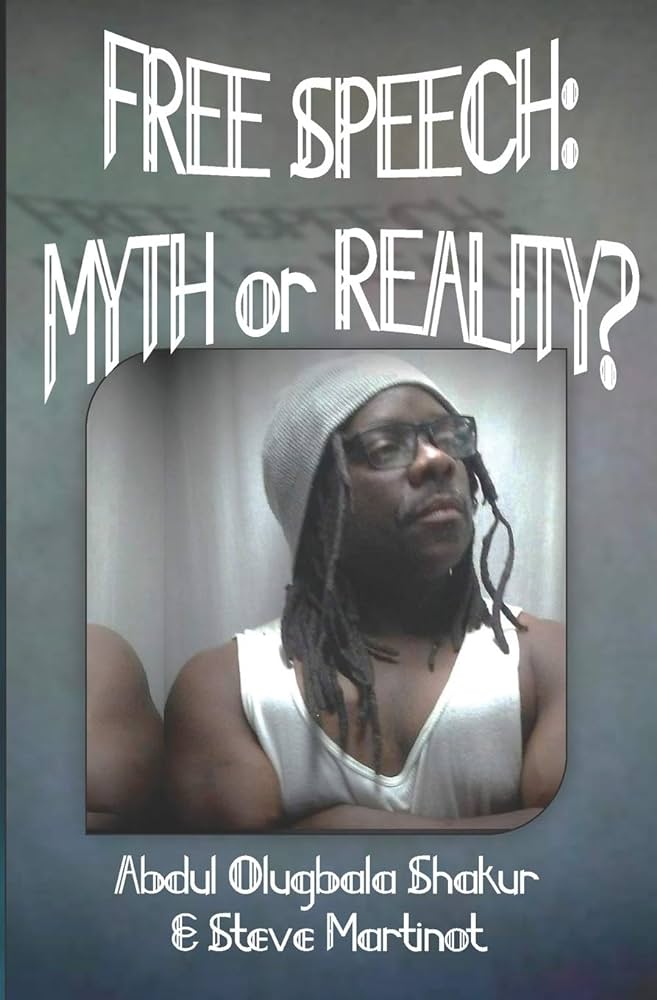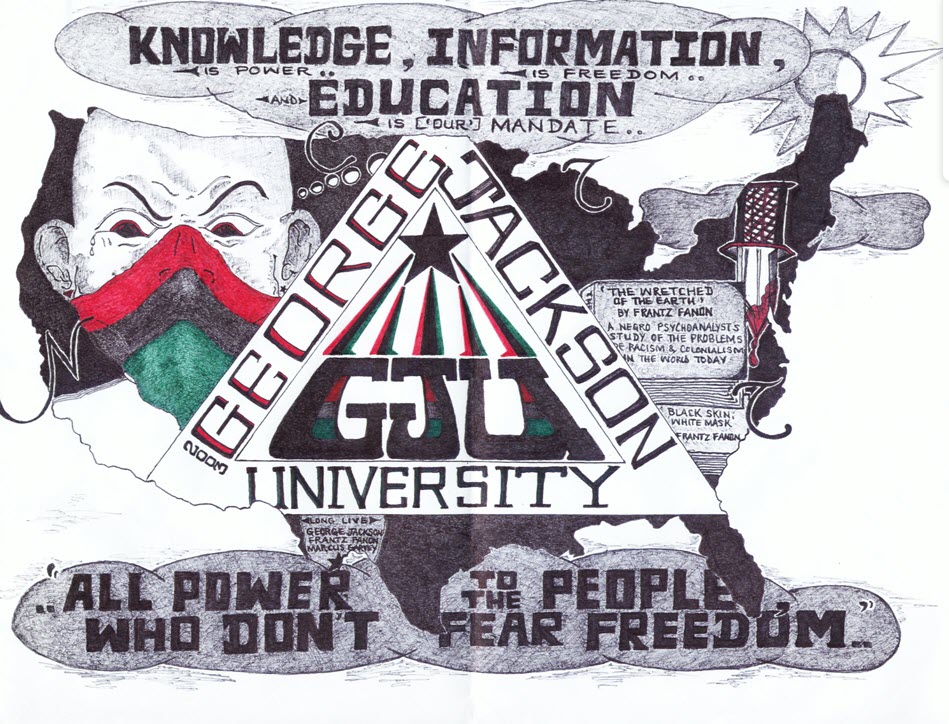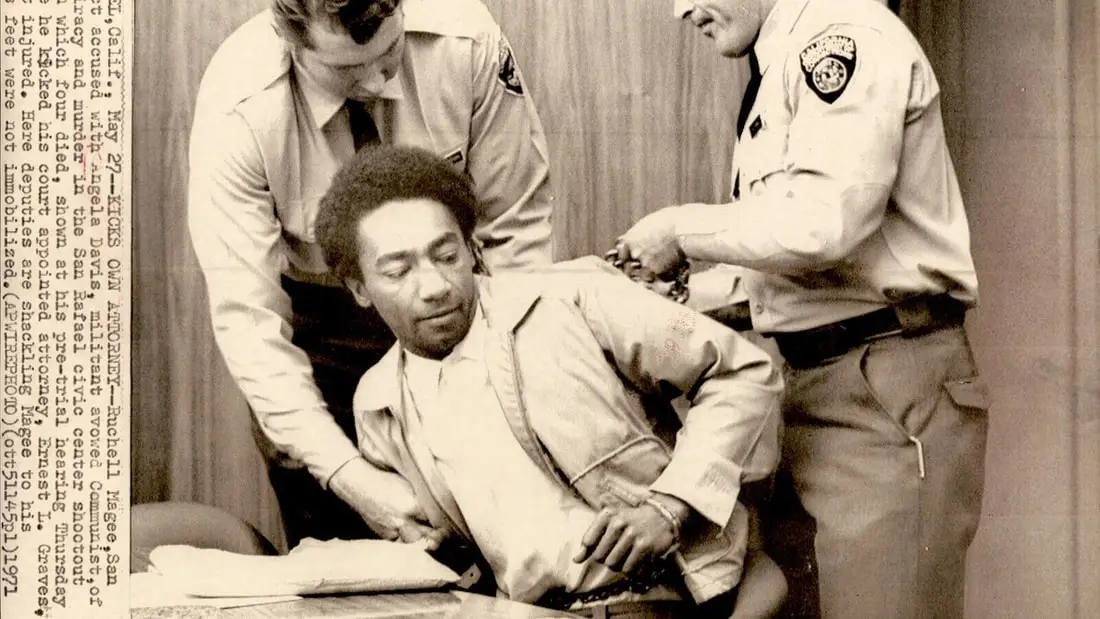
Slavery and the New Chain Gang: “A Tribute To Ruchell Magee” (RIU)_Video Edu. Playlist and The Labor of Doing Time, by Julie Browne (pdf. read) and 4STRUGGLEMAG Issues 11-21

Slavery is being practiced by the system under the color of law…. Slavery 400 years ago, slavery today; it’s the same thing, but with a new name. They’re making millions and millions of dollars enslaving blacks, poor whites, and others–people who don’t even know they’re being railroaded.–Political Prisoner Ruchell Magee

To the Man-Child, Tall, evil, graceful, bright eyed, black man-child- Jonathan Peter Jackson-who died on August 7, 1970, courage in one hand, assault rifle in the other; my brother, comrade, friend- the true revolutionary, the black communist guerrilla in the highest state of development, he died on the trigger, scourge of the unrighteous, soldier of the people; to this terrible man-child and his wonderful mother Georgia Bea, to Angela Y. Davis, my tender experience, I dedicate this collection of letters; to the destruction of their enemies I dedicate my life. George L. Jackson

August 7, 1970, just a few days after George Jackson was transferred to San Quentin, the case was catapulted to the forefront of national news when his brother, Jonathan, a seventeen-year-old high school student in Pasadena, staged a raid on the Marin County courthouse with a satchelful of handguns, an assault rifle, and a shotgun hidden under his coat. Educated into a political revolutionary by George, Jonathan invaded the court during a hearing for three black San Quentin inmates, not including his brother, and handed them weapons. As he left with the inmates and five hostages, including the judge, Jonathan demanded that the Soledad Brothers be released within thirty minutes. In the shootout that ensued, Jonathan was gunned down. Of Jonathan, George wrote, “He was free for a while. I guess that’s more than most of us can expect.”

Azadeh Zohrabi, Resistance and Repression: The Black Guerrilla Family in Context, 9 Hastings Race & Poverty L.J. 167 (2012).
Available at: https://repository.uchastings.edu/hastings_race_poverty_law_journal/vol9/iss1/7
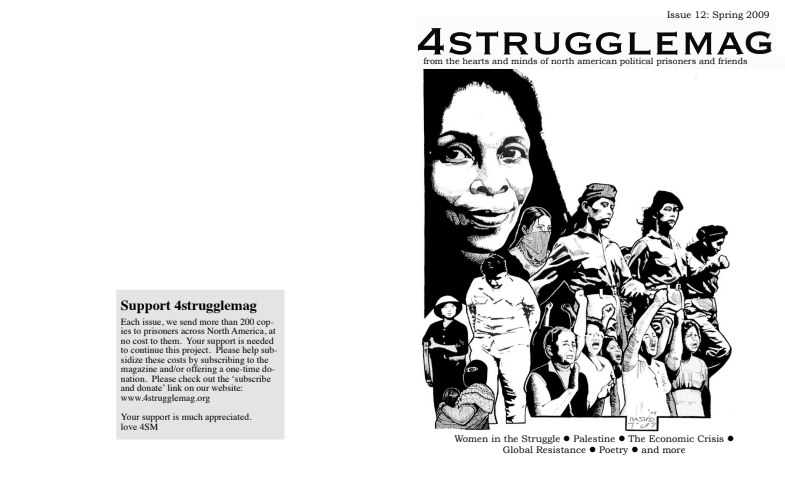
Graphics of slideshow: https://4strugglemag.org/
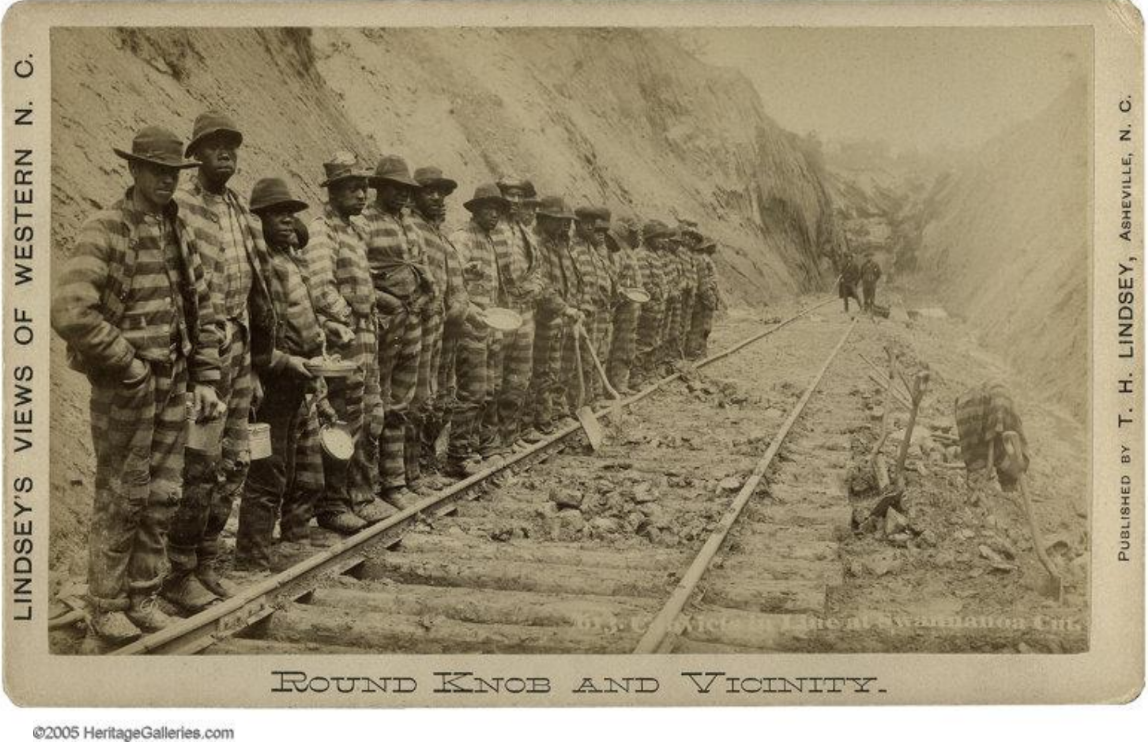
Despite a chilling official silence, 1995 was a bombshell in the “war on crime.” In this one year alone, 150 new prisons were built in the United States and 171 existing prisons were expanded. This was the year the crime bill was passed, mandating that 100,000 additional police officers be added to the already enormous law enforcement establishment. In California, this was the first year that the state budget allocated more money for prisons than higher education. Most astonishingly, with one short day of media attention, 1995 was the year that Alabama’s governor Fob James, and other state officials, made the callous and horrifying decision to reinstate the nationally abolished chain gang.

For new comers, pop the document out from the upper right to read / expand / download

RBG Communiversity eLibrary| 4STRUGGLEMAG_Issues 11-21 _Read/Study/Download

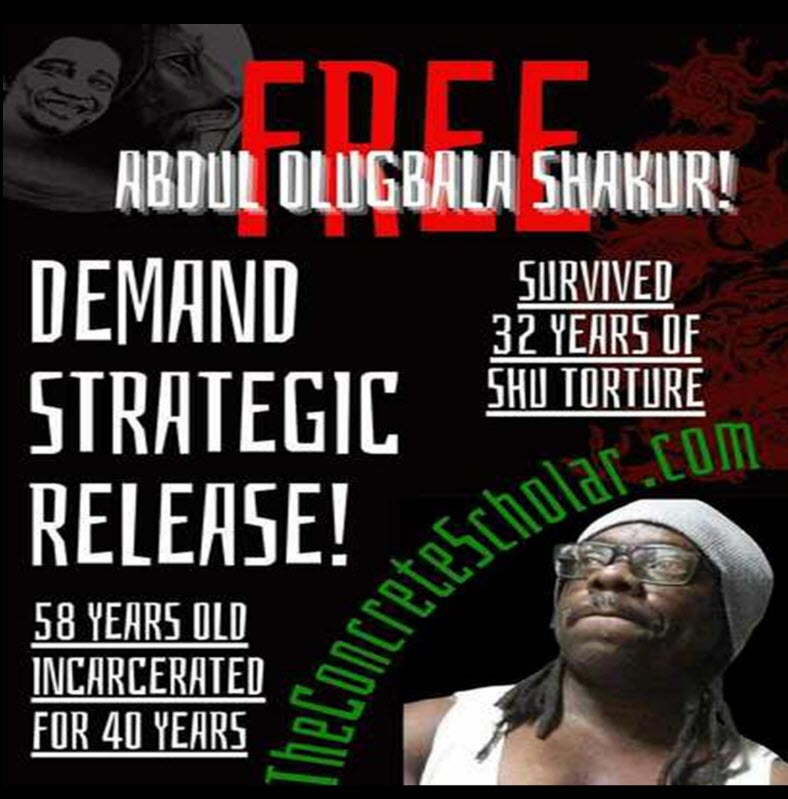
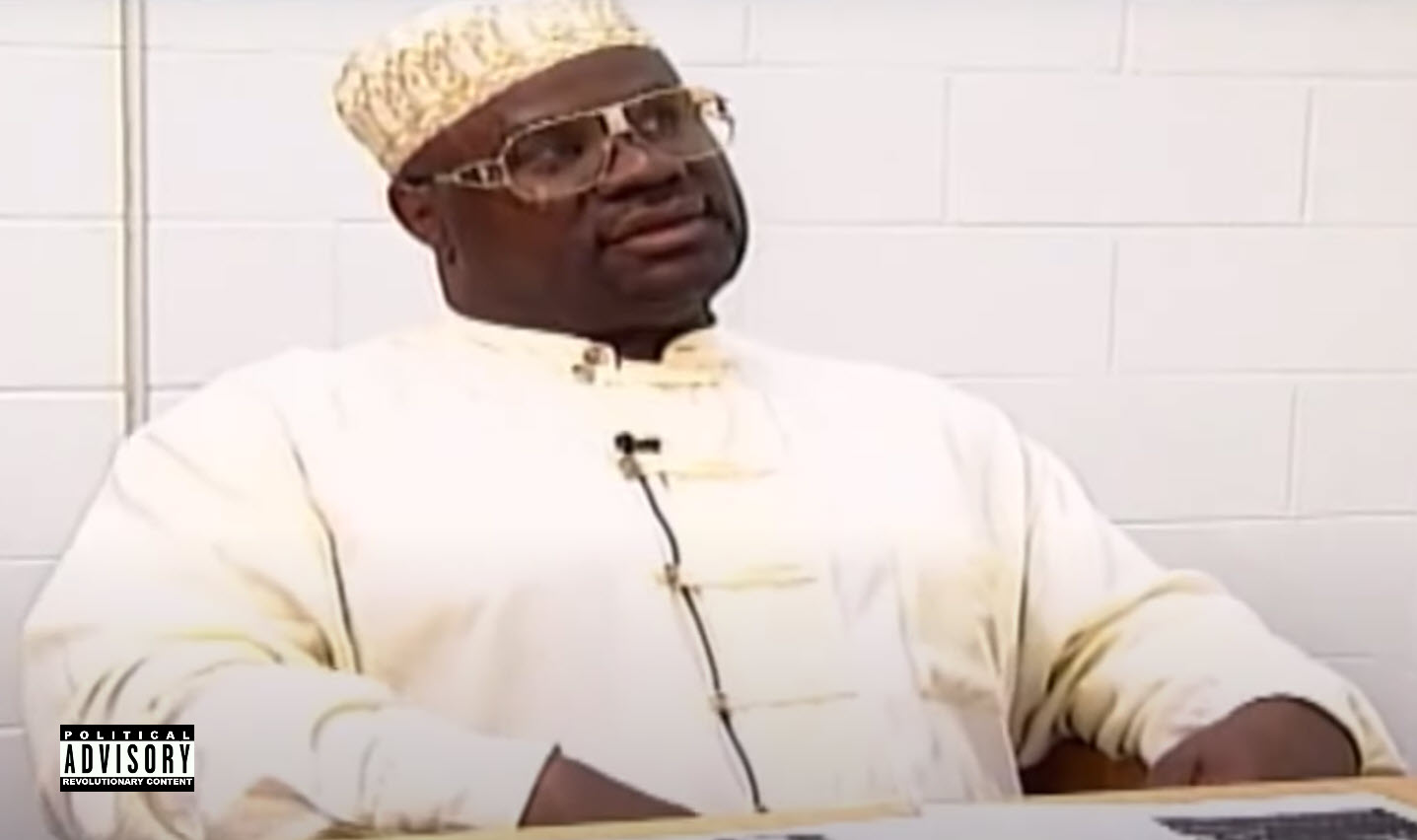
HISTORY OF THE BLACK PRISON MOVEMENT_Elder Abdul Olugbala Shakur (BTR/ GJU 02-16-2023) and A Brief History Of The New Afrikan Prison Struggle, Sundiata Acoli

George Jackson University Website

George Jackson University Radio

Pop the document out from the upper right to read / expand / download

SUPPLEMENTAL: The Color of Justice_ Racial and Ethnic Disparity in State Prisons. The Sentencing Projects, 2021 .pdf

Learn more in RBG Communiversity eLibrary:

Behind the Larry Davis Story_ Dirty NYPD Cops and The Justice System and The Mass Criminalization of Black Americans: A Historical Overview, with Supplemental_Game Over_True Story To Paid in Full (A Troy Reed Joint)

Director: Troy Reed, Writer: Troy Reed, Star: Larry Davis

Larry Davis (May 28, 1966 – February 20, 2008), later known as Adam Abdul-Hakeem, was a black man from New York City who gained notoriety in November 1986 for his shootout in the South Bronx with officers of the New York City Police Department, in which six officers were shot. Davis, asserting self-defense, was acquitted of all charges aside from illegal gun possession. Davis was later convicted in April 1991 of a Bronx drug dealer’s 1986 murder”…read more

“From the beginnings of this nation, we, African Americans, have lived (and do live) with the fear that if we do not end up in prison or in some other form of institution, someone in our families will. I claim that our incarcerations occur not because of criminality or accidents of injustices, but due to the structural design of this nation. Institutionalization became the ultimate solution in which whites address the problem of having free Blacks in the country.” Dr. Charshee McIntyre

On February 20, 2008, Adam Abdul Hakeem, aka Larry Davis, was stabbed to death in Shawangunk State Prison in New York by a fellow inmate after serving 23 years for an illegal weapons charge.

Supplemental_Game Over_True Story To Paid in Full (A Troy Reed Joint)

Pop the document out from the upper right to read / expand / download.

Learn more in RBG Communiversity eLibrary| Prisons, Slavery, and Imperialism (The Correctional-Industrial Complex [CIC])

The Mass Criminalization of New Afrikans_A Historical Overview and SCARED 4 LIFE Documentary, with The New Jim Crow: Mass Incarceration in the Age of Colorblindness, by Michelle Alexander

“A FILM ABOUT HOW THE PIC (Prison-Industrial Complex) TURNS OUR PEOPLE INTO ANIMALS AGAINST THEMSELVES.”

Film is offered as 5 sequenced video clips.

Pop the document out from the upper right to read / expand / download.

For additional learning Read/Study “The New Jim Crow: Mass Incarceration in the Age of Colorblindness, Michelle Alexander (2011)”

Book Summary

“The New Jim Crow: Mass Incarceration in the Age of Colorblindness” by Michelle Alexander explores the systemic racial discrimination embedded in the U.S. criminal justice system. Alexander argues that mass incarceration functions as a contemporary system of racial control, reminiscent of the Jim Crow laws that enforced racial segregation. She highlights how policies and practices disproportionately target African Americans and other minorities, resulting in significant social, economic, and political consequences. Through a thorough analysis of the legal framework, societal attitudes, and the impact on communities, Alexander calls for a reevaluation of the criminal justice system and advocates for social justice and policy reform.

The outline that followers captures the key themes and concepts of “The New Jim Crow”.

  • Introduction
    • Context of racial discrimination in America
    • Overview of mass incarceration as a modern issue
  • Historical Background
    • Jim Crow laws and their impact on African Americans
    • Transition from overt racial segregation to more covert forms of discrimination
  • Mass Incarceration
    • Definition and statistics on incarceration rates
    • Racial disparities in arrest and sentencing
  • Colorblindness and Racial Control
    • Concept of colorblindness in contemporary society
    • How it perpetuates systemic racism
  • Impact on Communities
    • Social and economic consequences of mass incarceration
    • Effects on families and community structures
  • Legal and Political Framework
    • Role of legislation in perpetuating mass incarceration
    • Examination of the War on Drugs
  • Call to Action
    • Advocacy for policy reform and social justice
    • Importance of awareness and activism in addressing these issues
  • Conclusion
    • Reflection on the ongoing challenges of racial inequality
    • Vision for a more equitable future

“The New Jim Crow” delves deeper into the mechanisms and implications of mass incarceration in the United States. Here are some additional insights into key themes and concepts from the book:

Key Themes and Concepts:

  1. Racial Caste System:
    • Alexander posits that mass incarceration has created a racial caste system that marginalizes African Americans and other minorities. This system functions similarly to the Jim Crow laws by relegating these groups to a second-class status, stripping them of rights and opportunities.
  2. The War on Drugs:
    • A significant focus of the book is on the War on Drugs, which Alexander argues has disproportionately targeted black communities. Policies such as mandatory minimum sentences and “three strikes” laws have led to the over-policing of these communities, resulting in higher incarceration rates for drug-related offenses.
  3. Legal Discrimination:
    • Alexander highlights how the legal system perpetuates discrimination through practices such as racial profiling, biased sentencing, and the criminalization of minor offenses. She examines how the legal framework often fails to protect the rights of those who are disproportionately affected.
  4. Social Stigma and Barriers:
    • Once individuals are incarcerated, they face numerous barriers upon reentry into society, including difficulty finding employment, housing, and accessing education. This stigma further entrenches the cycle of poverty and disadvantage.
  5. Role of Media and Public Perception:
    • The book discusses how media portrayal of crime and criminals influences public perception, often reinforcing stereotypes about race and criminality. This contributes to a culture of fear and justification for harsh sentencing laws.
  6. Colorblindness as a Hindrance:
    • Alexander critiques the notion of colorblindness, arguing that it obscures the realities of racial injustice and allows systemic racism to persist unchecked. By denying the significance of race, society overlooks the need for targeted interventions and reforms.
  7. Calls for Reform:
    • Alexander emphasizes the importance of grassroots activism and collective action in addressing the issues of mass incarceration. She encourages readers to challenge the status quo, advocate for policy changes, and engage in conversations about race and justice.

Conclusion:

“The New Jim Crow” is a powerful examination of how mass incarceration serves as a modern mechanism of racial control, perpetuating inequality and injustice. Alexander’s work encourages a critical rethinking of the criminal justice system and highlights the urgent need for comprehensive reforms to dismantle the structures that uphold systemic racism. The book has sparked significant discussion and activism around issues of race, justice, and civil rights, making it a crucial read for anyone interested in understanding the intersections of race and criminal justice in America.

“The New Jim Crow: Mass Incarceration in the Age of Colorblindness”eBook

Pop the documents out from the upper right to read / expand / download.

Learn more in RBG Communiversity Knowledge Media eLibrary: