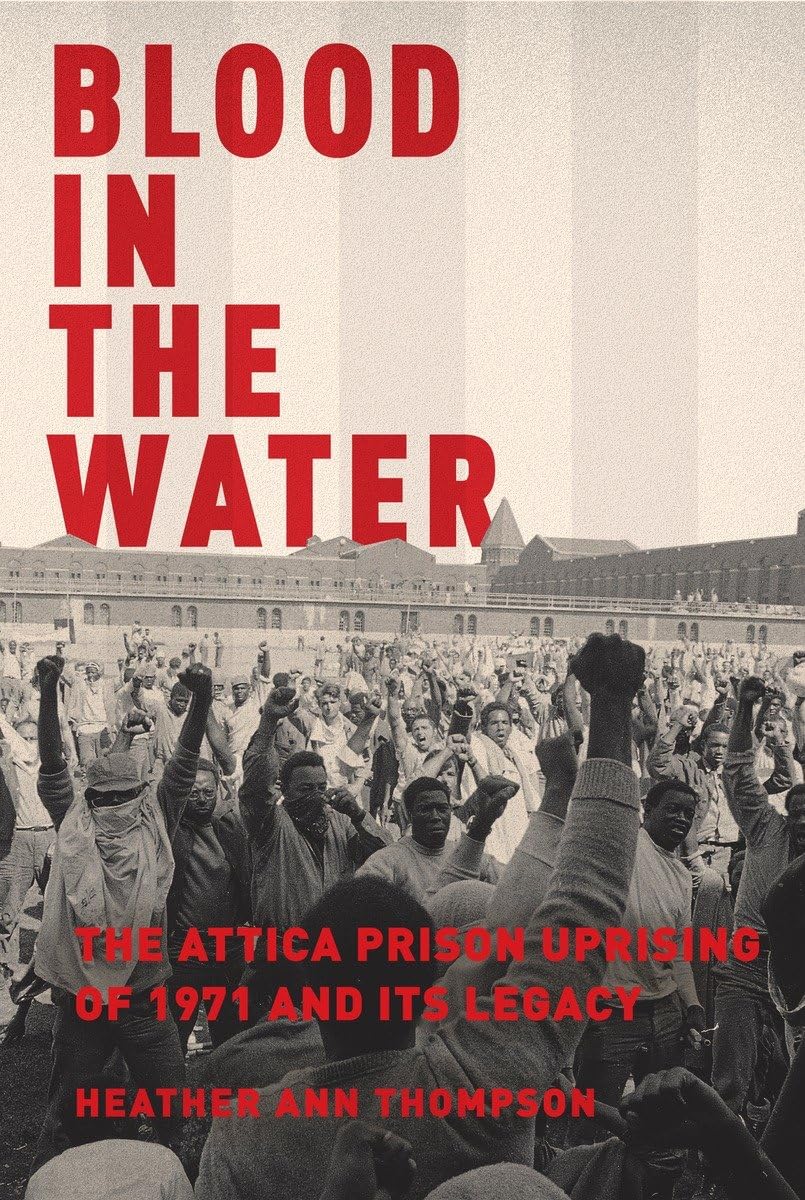
Blood in the Water: The Attica Prison Uprising of 1971 and Its Legacy, by  Heather Ann Thompson_eBook and Audiobook, with RBG Attica is All of Us Viedo Player

Book Summary

“Blood in the Water” offers a detailed account of the Attica prison uprising, which occurred in September 1971, and its aftermath. The book explores the conditions that led to the rebellion, the events during the uprising, the violent retaking of the prison, and the long-lasting implications for the American prison system and civil rights. Thompson combines extensive research, including firsthand accounts, legal documents, and archival materials, to present a comprehensive narrative that highlights the struggles for justice and the fight against systemic racism within the prison system.

This outline provides a structured view of the book’s contents, highlighting the key themes and events that Thompson addresses in her exploration of the Attica prison uprising and its lasting effects on amerikkkan society.

  1. Introduction
    • Historical context of Attica prison
    • Overview of the prison conditions in the 1970s
    • Significance of the uprising in American history
  2. Chapter 1: Background of the Prison System
    • Description of Attica’s conditions
    • Overview of inmates’ grievances
    • Racial dynamics within the prison
  3. Chapter 2: The Uprising Begins
    • Timeline of events leading to the rebellion
    • Key figures involved in the uprising
    • Initial demands of the inmates
  4. Chapter 3: The Hostage Crisis
    • Hostage situations and negotiations
    • Media coverage and public perception
    • The role of prison officials and state authorities
  5. Chapter 4: The Retaking of Attica
    • Government response and planning
    • The violent retaking of the prison
    • Casualties and injuries during the retaking
  6. Chapter 5: Aftermath of the Uprising
    • Legal repercussions for inmates and officials
    • Impact on the families of hostages and inmates
    • Public and political response to the violence
  7. Chapter 6: The Legacy of Attica
    • Changes in prison policies and practices
    • Ongoing issues of prison reform and justice
    • Influence on future movements for inmates’ rights
  8. Chapter 7: Reflections on Justice and Accountability
    • Analysis of systemic racism in the prison system
    • The importance of remembering Attica’s legacy
    • Calls for continued activism and reform
  9. Conclusion
    • Summary of key themes and insights
    • Relevance of the Attica uprising in contemporary society
    • Final thoughts on justice and human rights

Blood in the Water: The Attica Prison Uprising of 1971 and Its Legacy_eBook

On September 9, 1971, nearly 1,300 prisoners took over the Attica Correctional Facility in upstate New York to protest years of mistreatment. Holding guards and civilian employees hostage, the prisoners negotiated with officials for improved conditions during the four long days and nights that followed.
On September 13, the state abruptly sent hundreds of heavily armed troopers and correction officers to retake the prison by force. Their gunfire killed thirty-nine men—hostages as well as prisoners—and severely wounded more than one hundred others. In the ensuing hours, weeks, and months, troopers and officers brutally retaliated against the prisoners. And, ultimately, New York State authorities prosecuted only the prisoners, never once bringing charges against the officials involved in the retaking and its aftermath and neglecting to provide support to the survivors and the families of the men who had been killed.
Drawing from more than a decade of extensive research, historian Heather Ann Thompson sheds new light on every aspect of the uprising and its legacy, giving voice to all those who took part in this forty-five-year fight for justice: prisoners, former hostages, families of the victims, lawyers and judges, and state officials and members of law enforcement. Blood in the Water is the searing and indelible account of one of the most important civil rights stories of the last century.

Pop the documents out from the upper right to read / expand / download.

Blood in the Water: The Attica Prison Uprising of 1971 and Its Legacy_Audiobook

Part 1

Audio start in earnest (Introduction @ 5 mins. 20 sec.) and corresponds to page 11 of the above Reader.

Part 2

RBG Attica is All of Us Viedo Player

Learn more in RBG Communiversity Knowledge Media eLibrary:

Revolutionary Suicide, by Huey P. Newton, Introduction by Fredrika Newton _ eBook and Audiobook, with Huey P Newton: Rare Footage Clips and Interviews

Ho Che Anderson (Illustrator)

Book Summary

“Revolutionary Suicide” is an autobiographical work by Huey P. Newton, co-founder of the Black Panther Party, which details his life experiences, political philosophy, and the struggles of the Black community in America. The book combines personal narrative with a broader analysis of systemic racism, oppression, and the fight for social justice. Through his reflections, Newton articulates the concept of “revolutionary suicide” as a means of resisting oppression and asserting identity, emphasizing the need for revolutionary change to achieve true liberation. The introduction by Fredrika Newton provides context for Newton’s life and highlights his legacy as a revolutionary leader.

Essential Themes and Historical Context:

  1. Introduction by Fredrika Newton
    • Overview of Huey P. Newton’s life and significance
    • Contextualization of the Black Panther Party’s mission and impact
    • Introduction to the themes of the book
  2. Early Life and Influences
    • Newton’s childhood and upbringing in Oakland, California
    • Family background and early experiences with racism
    • Influences that shaped his political consciousness
  3. Formation of the Black Panther Party
    • The founding of the Black Panther Party in 1966
    • Key principles and goals of the organization
    • The role of community programs and initiatives
  4. Philosophy of Revolutionary Suicide
    • Explanation of the concept of “revolutionary suicide”
    • The significance of self-determination and resistance
    • Discussion of the philosophical underpinnings of Newton’s beliefs
  5. Struggle Against Oppression
    • Analysis of systemic racism and police brutality in America
    • Accounts of confrontations with law enforcement
    • The impact of the FBI’s COINTELPRO on the Black Panther Party
  6. Personal Experiences and Challenges
    • Newton’s arrest and legal battles
    • Reflections on leadership and the responsibilities of revolutionaries
    • The challenges faced by the Black Panther Party in the 1970s
  7. Legacy and Impact
    • Examination of Newton’s influence on future generations of activists
    • The continuing relevance of his ideas in contemporary struggles for justice
    • Reflection on the Black Panther Party’s legacy in the fight for civil rights
  8. Conclusion
    • Summary of key themes and messages from Newton’s narrative
    • Call for continued activism and dedication to social change

Revolutionary Suicide_eBook

The searing, visionary memoir of founding Black Panther Huey P. Newton, in a dazzling graphic package. Tracing the birth of a revolutionary, Huey P. Newton’s famous and oft-quoted autobiography is as much a manifesto as a portrait of the inner circle of America’s Black Panther Party. From Newton’s impoverished childhood on the streets of Oakland to his adolescence and struggles with the system, from his role in the Black Panthers to his solitary confinement in the Alameda County Jail, Revolutionary Suicide is unrepentant and thought-provoking in its portrayal of inspired radicalism.

Pop the documents out from the upper right to read / expand / download.

Revolutionary Suicide_Audiobook Part 1

Revolutionary Suicide_Audiobook Part 2

Huey P Newton: Rare Footage Clips and Interviews

Learn more in RBG Communiversity Knowledge Media eLibrary:

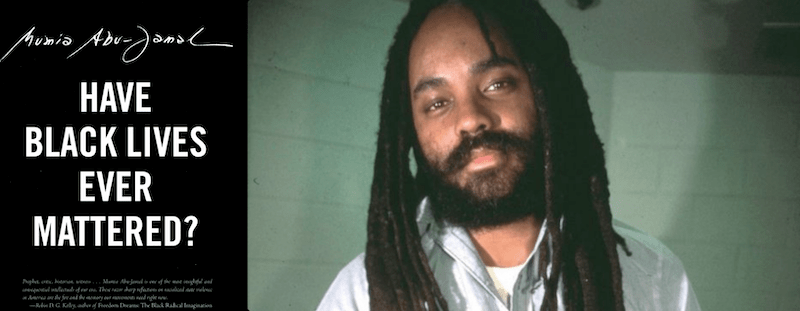
HAVE BLACK LIVES EVER MATTERED? Mumia Abu-Jamal_eBook and Audiobook, with MAJ Video Edu. Player

“Mumia Abu-Jamal’s book, Have Black Lives Ever Mattered? addresses the long history of racist police and state repression. It offers contemporary organizers crucial historical insights and lessons, as well as advice, on organizing to stop the war on Black America today.”

Book Summary

“HAVE BLACK LIVES EVER MATTERED?” by Mumia Abu-Jamal is a compelling collection of essays that critique the historical and contemporary treatment of Black lives within the United States. Abu-Jamal, a former Black Panther and political prisoner, draws on his extensive knowledge of history, sociology, and the criminal justice system to explore the systemic racism, violence, and oppression faced by Black individuals and communities. The book seeks to interrogate the notion of “Black Lives Matter,” questioning whether this assertion has ever been fully realized in a society marked by inequality and injustice. Through his powerful prose, Abu-Jamal emphasizes the need for radical change and a reimagining of social justice.

Essential Themes and Insights Presented:

  1. Introduction
    • Overview of the book’s purpose and themes
    • Contextualization of the “Black Lives Matter” movement
    • Abu-Jamal’s background and perspective as a political prisoner
  2. Historical Context of Black Oppression
    • Examination of the legacy of slavery and its enduring impact
    • Analysis of Jim Crow laws and systemic racism in American history
    • The role of colonialism and imperialism in shaping racial dynamics
  3. The Criminal Justice System
    • Critique of the systemic racism within law enforcement and the legal system
    • Discussion of mass incarceration and its effects on Black communities
    • Examination of police brutality and the culture of violence against Black individuals
  4. Media Representation and Narratives
    • Analysis of how Black lives are portrayed in mainstream media
    • The impact of media narratives on public perception and policy
    • Discussion of the role of social media in amplifying Black voices and experiences
  5. The Politics of Resistance
    • Overview of historical and contemporary Black resistance movements
    • Examination of the role of organizations like the Black Panther Party
    • Discussion of grassroots activism and community organizing
  6. Cultural Expressions and Identity
    • Exploration of the significance of art, music, and literature in Black culture
    • The role of cultural expression in the fight for social justice
    • Reflection on identity and the importance of self-determination
  7. The Future of the Movement
    • Insights into the ongoing struggles for racial justice and equality
    • Discussion of potential paths forward for the Black Lives Matter movement
    • Call for solidarity among oppressed groups in the fight against injustice
  8. Conclusion
    • Summary of key themes and arguments presented in the book
    • Final reflections on the significance of acknowledging the value of Black lives with emphasis on the necessity for continued activism and systemic change, and  highlighting the historical context, systemic issues, and the ongoing struggle for Black lives within amerikkkan society.

HAVE BLACK LIVES EVER MATTERED?_eBook

Pop the documents out from the upper right to read / expand / download.

HAVE BLACK LIVES EVER MATTERED?_Audiobook

MAJ_Knowledge, Wisdom and Overstanding Video Player

“Conventional wisdom would have one believe that it is insane to resist this, the mightiest of empires, but what history really shows is that today’s empire is tomorrow’s ashes; that nothing lasts forever, and that to not resist is to acquiesce in your own oppression. The greatest form of sanity that anyone can exercise is to resist that force that is trying to repress, oppress, and fight down the human spirit.” ― Mumia Abu-Jamal | Click Here for more Mumia Abu-Jamal on this EduBlog

Study more with Mumia in RBG Communiversity eLibrary:

Meditations on Frantz Fanon’s Wretched of the Earth, By James Yaki Sayles_eBook and Audiobook

Credits: From Book Cover.

Book Summary

Meditations on Frantz Fanon’s Wretched of the Earth” by James Yaki Sayles is a critical exploration of Frantz Fanon’s seminal work, “The Wretched of the Earth.” Sayles reflects on Fanon’s insights regarding colonialism, violence, and the struggle for liberation, placing them in contemporary contexts. The book serves as both a commentary and an invitation to engage with Fanon’s ideas about identity, resistance, and the dynamics of power.

Introduction

  • Brief introduction to Frantz Fanon and his importance in post-colonial studies.
  • Overview of “The Wretched of the Earth” and its key themes.
  • Purpose of Sayles’s meditations: to deepen understanding and provoke thought.

Chapter 1: The Context of Colonialism

  • Examination of colonialism’s psychological and social effects.
  • Discussion of the dehumanization of colonized peoples.
  • Fanon’s perspective on the role of culture and identity in resistance.

Chapter 2: Violence as a Catalyst for Change

  • Analysis of Fanon’s assertion that violence is a necessary response to colonial oppression.
  • Historical examples of violent resistance movements.
  • Ethical considerations surrounding the use of violence in liberation struggles.

Chapter 3: The Role of the Intellectual

  • Fanon’s views on the responsibility of intellectuals in revolutionary movements.
  • The relationship between theory and practice in the fight against colonialism.
  • Sayles’s reflections on contemporary intellectuals and their roles.

Chapter 4: National Consciousness and Identity

  • Exploration of Fanon’s concept of national consciousness.
  • The tension between national identity and the global struggle against imperialism.
  • The importance of culture and heritage in building a liberated identity.

Chapter 5: Decolonization and its Challenges

  • The process of decolonization as described by Fanon.
  • Challenges faced by newly independent nations.
  • Sayles’s insights on the ongoing effects of colonialism in the modern world.

Conclusion: Relevance of Fanon Today

  • Summary of key insights from Sayles’s meditations.
  • Reflection on the continued relevance of Fanon’s ideas in contemporary social justice movements.
  • Call to action for readers to engage with Fanon’s work and its implications for today’s struggles.

Final Thoughts

  • Encouragement to critically engage with colonial histories and their lasting impacts.
  • The importance of solidarity in the fight against oppression.
  • Invitation to continue exploring Fanon’s legacy in various contexts.

Meditations on Frantz Fanon’s Wretched of the Earth, By James Yaki Sayles_eBook

This exercise is about more than our desire to read and understand Wretched (as if it were about some abstract world, and not our own); it’s about more than our need to understand (the failures of) the anti-colonial struggles on the African continent. This exercise is also about us, and about some of the things that We need to understand and to change in ourselves and our world.’-James Yaki Sayles One of those who eagerly picked up Fanon in the 60s, who carried out armed expropriations and violence against white settlers, Sayles reveals how, behind the image of Fanon as race thinker, there is an underlying reality of antiracist communist thought.

Pop the documents out from the upper right to read / expand / download.

Back Cover

Meditations on Frantz Fanon’s Wretched of the Earth, By James Yaki Sayles_Audiobook

For the best experience, start audio, pop the book out and read alone. Audio reading starts with the Preface / page 5 of the reader above.

James Yaki Sayles Memorial Service.

Learn more in RBG Communiversity Knowledge Media eLibrary:

If They Come in the Morning: Voices of Resistance edited by Angela Y. Davis, with Ruchell Magee, the Soledad Brothers …(eBook and Audiobook) and Angela Davis and the Soledad Brothers (Video Education)

HAP 126. Fugitive for Justice: Angela Davis

From RBG Communiversity eLibrary History of African Philosophy (HAP Podcast) Folder

Angela Davis and the Soledad Brothers_Short Film (1971)

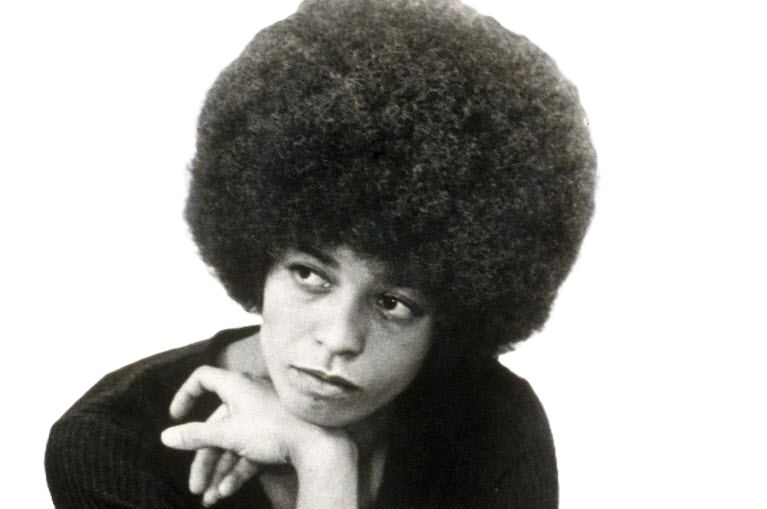
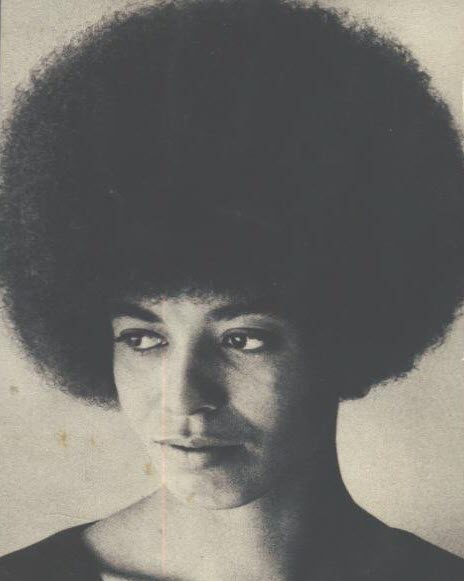
Angela Davis became involved with the Soledad Brothers in 1970, when she led the campaign to free them from prison. Davis was a prominent public figure at the time, having been fired from UCLA for her political activism and affiliation with the Communist Party. She developed close friendships with the families of the Soledad Brothers, and corresponded with the men themselves. 

Here are some ways Angela Davis and the Soledad Brothers are connected: 

  • The Soledad Brothers Defense Committee: Davis formed the Soledad Brothers Defense Committee, which included Jonathan Jackson, a close friend and bodyguard of one of the Soledad Brothers. 
  • The Black Scholar: Davis wrote an article titled “The Soledad Brothers” in The Black Scholar in April 1971. In it, she argued that the charges against the Soledad Brothers were actually about their revolutionary insubordination and inciting dissent. 
  • If They Come in the Morning (below): Davis edited a collection of writings about U.S. prisons and legal trials titled If They Come in the Morning: Voices of Resistance. The book included contributions from the Soledad Brothers and Black Panther Party members. 
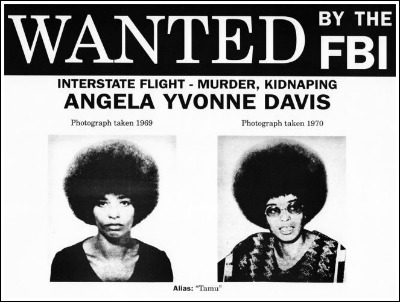
  • The Marin County Courthouse Incident: Davis was accused of supplying weapons to Jonathan Jackson in an alleged prisoner escape attempt. She was arrested and placed on the FBI’s Ten Most Wanted list. 
  • George Jackson: Davis befriended George Jackson, one of the Soledad Brothers, who was serving a sentence for armed robbery. Jackson wrote two books, Soledad Brother (1970) and Blood In My Eye (1972). He was killed in prison in 1971 while allegedly trying to escape. 

If They Come in the Morning: VOICES OF RESISTANCE, Edited by Angela Y. Davis, with Ruchell Magee, the Soledad Brothers and Other Political Prisoners and a Foreword by Julian Bond

[From the front and back flaps] The trial of Angela Yvonne Davis in connection with the prisoner revolt by three black prisoners on August 7, 1970 at the Marin County Courthouse will be remembered as one of America’s most historic political trials, and no one can tell the story better than Miss Davis herself. This book is also perhaps the most comprehensive and thorough analysis of that increasingly important symbol — the political prisoner. Of her trial, Miss Davis writes, “I am charged with three capital offenses — murder, kidnapping, and conspiracy. My life is at stake in this case — not simply the life of a lone individual, but a life which has been given over to the struggles of my people, a life which belongs to Black people who are tired of poverty, and racism, of the unjust imprisonment of tens of thousands of our brothers and sisters.” “I stand before this court,” she declares, “as a target of a political frame-up which, far from pointing to my culpability, implicates the State of California as an agent of political repression….I declare publicly before the court, before the people of this country, that I am innocent of all charges which have been leveled against me by the State of California. “On the central theme of this book Miss Davis contends that “the offense of the political prisoner in his political boldness, his consistent challenges — legally or extra-legally — of fundamental social wrongs fostered and reinforced by the state. He has opposed unjust laws and exploitative, racist social conditions in general, with the ultimate aim of transforming these laws and the society into an order harmonious with the material and spiritual need and interests of the vast majority of its members. “Regarding his own defense, Ruchell Magee, the only prisoner who survived the same revolt and one of the many impressive contributors in this invaluable volume which includes George Jackson, Fleeta Drumgo, John Clutchette, James Baldwin, Bobby Seale and Ericka Huggins, states, “For over seven years I have been forced to stay in slavery on fraudulent pleas of guilty, made by attorneys, court-appointed attorneys, over my objection, over my plea of not guilty, and over my testimony of not guilty.”

Pop the document out from the upper right to read / expand / download.

If They Come in the Morning: VOICES OF RESISTANCE Audiobook

Learn more in RBG Communiversity Knowledge Media eLibrary (aka RBG Dr. Carter G. Woodson e-Library)