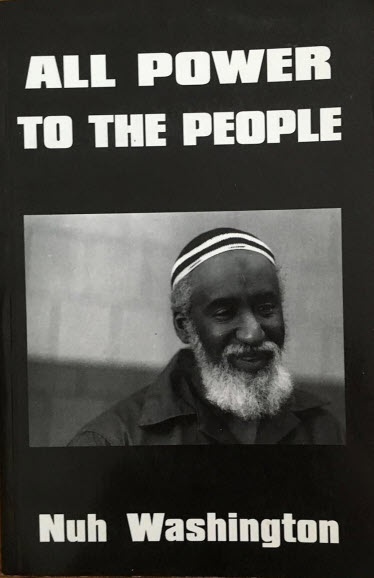
All Power to the People by Albert Nuh Washington, eBook and Audiobook, with Video Education Player

ICEBREAKER VIDEO

Pop the document out from the upper right to read / expand / download.

See NY3. The Case of the New York Three.pdf

Book Summary

Overview

“All Power to the People” by Albert Nuh Washington is a significant work that explores the history and impact of the Black Panther Party (BPP) and the broader Black radical movement in the United States. Published in 2002, the book provides an in-depth analysis of the social, political, and economic conditions that gave rise to the BPP, as well as the party’s contributions to the struggle for civil rights and social justice. Washington draws on personal experiences, interviews, and historical narratives to highlight the achievements and challenges faced by the Black Panther Party, offering a critical perspective on its legacy and the continuing relevance of its ideals in contemporary society. The outline and overview that follows provides a structured look at the contents of “All Power to the People” by Albert Nuh Washington.

Outline

I. Introduction

  • A. Overview of the Black Panther Party’s significance
  • B. Purpose of the book and its relevance to contemporary social justice movements
  • C. Author’s background and perspective

II. Historical Context

  • A. The civil rights movement and its limitations
    • Key figures and events leading to the rise of the BPP
    • Challenges faced by African Americans in the 1960s
  • B. The influence of Black nationalism and radical thought
    • Connection to earlier movements (e.g., Marcus Garvey, the Nation of Islam)
  • Emergence of the Black Power movement

III. Formation of the Black Panther Party

  • A. Founding members and their motivations
    • Huey P. Newton and Bobby Seale
    • Key ideological influences
  • B. Development of the party’s platform and goals
    • The Ten-Point Program
  • Focus on community empowerment and social justice

IV. Key Activities and Programs

  • A. Community initiatives
    • Free breakfast programs for children
    • Health clinics and education programs
  • B. Armed self-defense and its implications
    • The philosophy of self-defense against police brutality
  • Impact on public perception and law enforcement responses

V. Internal Challenges and Conflicts

  • A. Struggles within the organization
    • Leadership disputes and factionalism
    • The influence of COINTELPRO and government repression
  • B. The impact of external pressures
    • Surveillance and infiltration by law enforcement
  • Media portrayal and public perception of the BPP

VI. Legacy of the Black Panther Party

  • A. Contributions to civil rights and social justice
    • Influence on later movements (e.g., Black Lives Matter)
    • Cultural impact through art, music, and literature
  • B. Ongoing relevance of BPP ideals
    • Discussion of systemic racism and inequality today
  • Calls for community empowerment and social change

VII. Conclusion

  • A. Summary of key themes and insights from the book
  • B. Reflection on the importance of understanding the BPP’s history
  • C. Call to action for continued activism and social justice

“All Power to the People” serves as a vital resource for understanding the history and legacy of the Black Panther Party and the broader struggle for racial and social justice in America. By examining the party’s origins, key initiatives, and challenges, Washington provides valuable insights into the ongoing fight against systemic oppression and the importance of community empowerment. The book encourages readers to reflect on the lessons of the past while inspiring continued activism in the pursuit of equality and justice.

“All Power to the People” is an essential examination of the Black Panther Party (BPP) and its pivotal role in the fight for civil rights and social justice in the United States. Here’s a more detailed exploration of the book’s themes, key figures, historical context, and its significance:

Detailed Exploration of Key Themes

1. Historical Context

  • Civil Rights Movement Limitations: Washington discusses the civil rights movement’s achievements, such as the Civil Rights Act and the Voting Rights Act, while highlighting its limitations in addressing systemic issues like poverty, police brutality, and economic inequality. The urgency for a more radical approach was felt by many African Americans, leading to the rise of the Black Panther Party.
  • Influence of Black Nationalism: The book places the BPP within the wider context of Black Nationalism and the Black Power movement, which emerged in the 1960s as a response to the perceived inadequacies of mainstream civil rights strategies. Washington emphasizes the influence of figures like Marcus Garvey and Malcolm X, who advocated for self-determination and empowerment for Black communities.

2. Formation and Ideology of the Black Panther Party

  • Founding Members: The BPP was founded in 1966 by Huey P. Newton and Bobby Seale in Oakland, California. Washington explores how their backgrounds and experiences shaped their vision for the party, particularly their commitment to armed self-defense against police violence.
  • The Ten-Point Program: A central feature of the BPP’s ideology was its Ten-Point Program, which outlined the party’s demands for justice, equality, and economic empowerment. Washington details each point, which included calls for decent housing, education, and employment, as well as an end to police brutality.

3. Community Programs and Activism

  • Social Initiatives: Washington highlights the BPP’s commitment to community service through programs like free breakfast for children, health clinics, and educational programs. These initiatives were designed to address the immediate needs of African American communities and demonstrate that the BPP was more than just a militant organization.
  • Armed Self-Defense: The book discusses the philosophy of armed self-defense that the BPP adopted in response to police brutality. Washington analyzes how the party’s public displays of armed self-defense were both a statement of empowerment and a catalyst for increased tensions with law enforcement.

4. Internal Struggles and External Pressures

  • Factionalism and Leadership Conflicts: Washington examines internal conflicts within the BPP, particularly the power struggles between different factions. These conflicts were exacerbated by the pressure from law enforcement and the FBI’s Counterintelligence Program (COINTELPRO), which sought to undermine the party through infiltration, disinformation, and surveillance.
  • Government Repression: The book details the various tactics used by law enforcement to suppress the BPP, including arrests, harassment, and violent confrontations. Washington underscores the impact of COINTELPRO in destabilizing the organization and contributing to its decline in the early 1970s.

5. Legacy and Ongoing Relevance

  • Cultural Impact: Washington discusses how the BPP’s ideals and aesthetics influenced music, art, and literature, leaving a lasting mark on African American culture. The party’s imagery and messages of empowerment continue to resonate in contemporary artistic expressions.
  • Influence on Modern Movements: The book draws connections between the BPP and contemporary movements such as Black Lives Matter, highlighting how the party’s focus on systemic injustice and community empowerment laid the groundwork for ongoing activism. Washington calls attention to the continuing struggle against racism, police violence, and inequality.

Significance of the Work

  • Educational Resource: “All Power to the People” serves as an important educational tool for understanding the complexities of the Black Panther Party and the broader Black radical movement. It provides a nuanced perspective that challenges mainstream narratives about the BPP as solely a militant organization.
  • Inspiration for Activism: Washington’s work encourages readers to reflect on the lessons of the past and recognize the importance of grassroots activism in effecting social change. The book emphasizes the need for community engagement and the importance of addressing systemic issues through collective action.
  • Reexamination of History: By providing a detailed account of the BPP’s history and its various programs, Washington invites readers to reconsider the legacy of the Black Panther Party and its contributions to the struggle for civil rights and social justice in America. It challenges readers to acknowledge the complexities of the BPP’s mission and its relevance in contemporary discussions about race and inequality.

Conclusion

“All Power to the People” by Nuh Washington is a vital contribution to the understanding of the Black Panther Party and the Black radical movement in the United States. Through its exploration of historical context, ideology, activism, and legacy, the book highlights the significance of the BPP in shaping the discourse around civil rights and social justice. Washington’s work serves as both a historical account and a call to action, inspiring readers to engage with the ongoing fight for equality and justice in today’s society.

All Power to the People by Albert Nuh Washington, eBook

Pop the document out from the upper right to read / expand / download.

All Power to the People by Albert Nuh Washington, Audiobook

Video Education_All Power To The People The Black Panther Party & Beyond

Learn more in RBG Knowledge Media eLibrary

RBG4Lif Teaching /Learning Tools & Resources

BPM|BLM eBooks 

BPM|BLM Audiobooks

The Choice: The Issue of Black Survival in America by Samuel Yette (1971/82) Audiobook, presented by Real Talk With ZSJ

NB: The price of this book is prohibitive for most working class Black people, ie.“Colonization of Black Information”

The term “Colonization of Black Information” refers to the historical and ongoing processes through which knowledge, narratives, and cultural expressions of Black people and communities have been dominated, appropriated, blocked or marginalized by external forces, often rooted in colonialism and the systemic, business and culture of white supremacy (racism). Allow us to provide some details, as it goes to why this book is so expensive.

Four quick points:

  1. Historical Context: During colonial times, European powers often suppressed indigenous knowledge systems and cultural practices, replacing them with their own narratives. This led to a loss of agency among Black (New Afrikan) communities in telling their own stories and defining their own realities and identities.
  2. Cultural Appropriation: The appropriation of Black culture, music, art, and other expressions by non-Black (white) individuals and/or groups without proper acknowledgment or respect can be seen as a continuation of this colonization. Such actions often strip the original meanings and contexts from cultural elements.
  3. Media Representation: The portrayal of Black individuals and communities in media perpetuate stereotypes, often framing them through a lens that aligns with dominant societal (white) narratives and serving to distort public perceptions and limit the understanding of the Black experiences in Amerikkka under the bootheel of its oppression.
  4. Access to Information: Structural inequalities (eg. this book) often result in Black communities having less access to platforms and resources to share their information and narratives. This, more frequently than not, leads to a dearth of knowledge and a lack of representation in academic, historical, socio-political, economic and cultural discussions.

Book Summary

“The Choice: The Issue of Black Survival in America” by Samuel Yette is a profound exploration of the challenges faced by the African American community in the United States. Yette presents a critical analysis of the socio-political landscape affecting Black Americans, discussing themes of survival, identity, and agency. The book examines historical contexts, systemic racism, and the ongoing struggle for civil rights, ultimately advocating for a conscious choice in addressing these persistent issues.

The outline that follows captures the essence of Yette’s work, emphasizing both the historical context and the contemporary issues facing the Black community in America

  • Introduction
    • Purpose of the book
    • Overview of the Black experience in America
  • Historical Context
    • Legacy of slavery
    • Civil Rights Movement
    • Continued oppression and disenfranchisement
  • Systemic Racism
    • Definition and examples
    • Impact on African American communities
    • Institutional barriers in education, employment, and justice
  • Identity and Culture
    • The importance of cultural heritage
    • The role of community and family
    • Challenges in maintaining identity in a predominantly white society
  • Survival Strategies
    • Individual vs. collective approaches
    • Importance of education and empowerment
    • Role of activism and political engagement
  • The Power of Choice
    • Defining choices in the context of survival
    • Historical examples of impactful choices made by Black leaders
    • Encouraging personal responsibility and agency
  • Vision for the Future
    • Hope and resilience within the Black community
    • Potential pathways for change
    • Call to action for readers
  • Conclusion
    • Summary of key points
    • Reinforcement of the importance of choice in the struggle for survival
    • Final thoughts on unity and collective action

  Here is an outline comprising a deeper exploration of the themes and concepts presented in “The Choice”

  1. Introduction
    • Yette sets the stage by discussing the historical and ongoing struggles of African Americans in the U.S. He emphasizes the need for awareness and understanding of the systemic issues that have shaped the Black experience.
  2. Historical Context
    • The author delves into the history of slavery, detailing its brutal realities and the long-lasting effects on subsequent generations. He explores the Civil Rights Movement, highlighting key figures and events that sought to dismantle institutional racism. Yette also discusses how the remnants of these historical injustices continue to affect Black Americans today.
  3. Systemic Racism
    • Yette provides a thorough analysis of systemic racism, defining it as a deeply ingrained issue that permeates various institutions, including education, healthcare, and the justice system. He illustrates how these systems fail Black individuals, contributing to socio-economic disparities and perpetuating cycles of poverty and disenfranchisement.
  4. Identity and Culture
    • The book emphasizes the significance of cultural identity and heritage for African Americans. Yette discusses the importance of community bonds, family structures, and the role of cultural expressions in fostering resilience. He examines the struggles of maintaining cultural identity in a society that often marginalizes or misrepresents Black culture.
  5. Survival Strategies
    • Yette advocates for both individual and collective strategies for survival. He stresses the importance of education as a tool for empowerment and encourages active participation in political processes. The author highlights examples of grassroots movements and organizations that have successfully mobilized communities to fight for their rights.
  6. The Power of Choice
    • Central to Yette’s thesis is the concept of choice. He posits that individuals have the power to make choices that can lead to positive change, both personally and collectively. He uses historical examples of leaders who made significant choices that impacted the trajectory of the civil rights struggle, inspiring readers to take ownership of their decisions.
  7. Vision for the Future
    • Yette expresses a hopeful vision for the future, emphasizing the resilience and strength of the Black community. He discusses the potential for change through unity and collective action. The author calls on readers to engage in the ongoing struggle for justice and equality, fostering a sense of responsibility towards future generations.
  8. Conclusion
    • The book concludes with a powerful reminder of the importance of awareness and action. Yette urges readers to reflect on their roles in the fight against systemic racism and to recognize that meaningful change requires both individual and collective effort.

Key Themes:

  • Empowerment through Education: Yette highlights education as a vital means for empowerment and breaking the cycle of oppression.
  • Cultural Identity: The preservation of cultural heritage is crucial for community strength and individual identity.
  • Agency and Responsibility: Individuals must recognize their power to make choices that affect their lives and communities.
  • Collective Action: The importance of solidarity and collaboration among African Americans to effect social change.

Overall, “The Choice” serves as a thought-provoking work that challenges readers to think critically about the issues facing the Black community while inspiring them to take action towards a more equitable future.

Part I A Partial Reading of The Choice The Issue of Black Survival in America by Samuel Yette Audiobook (Real Talk With ZSJ)

Starts @1min. 09 sec.

The Choice: The Issue of Black Survival in America: View/Study/ Download ALL 7 Parts presented by Real Talk With ZSJ HERE

Learn more in RBG Communiversity Knowledge Media eLibrary:

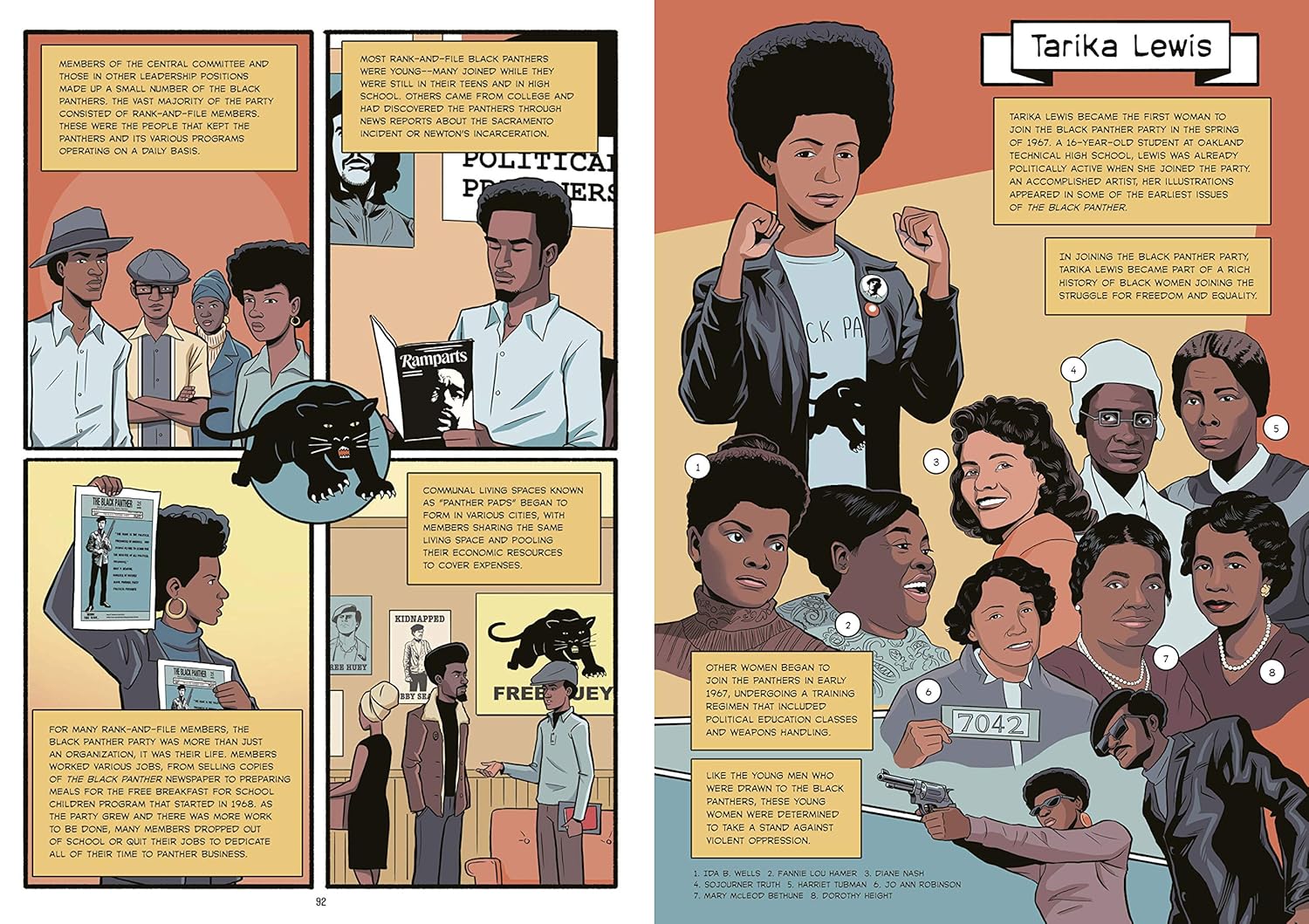
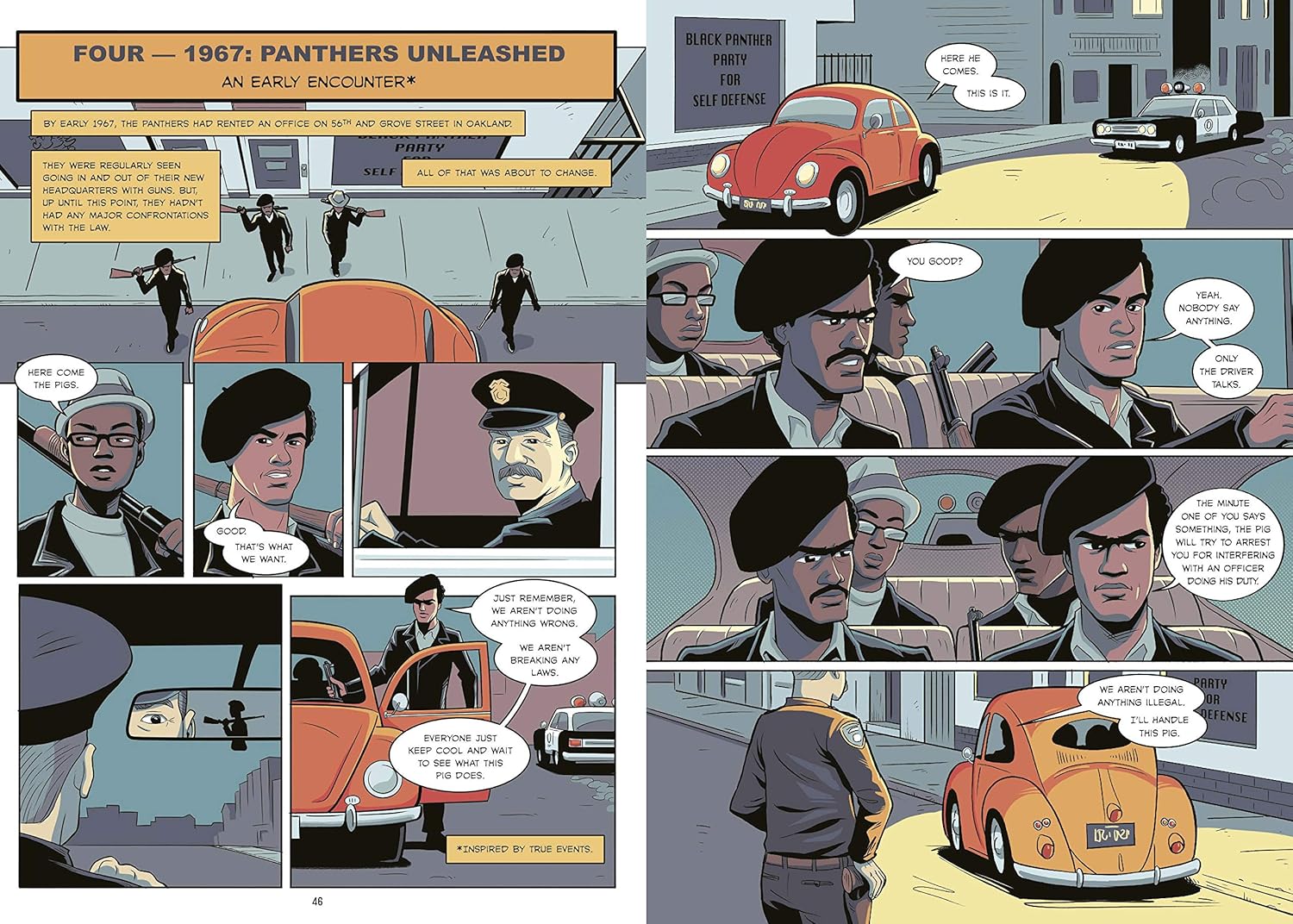
The Black Panther Party: A Graphic Novel History, by David F. Walker (Author), Marcus Kwame Anderson (Illustrator), with RBG| FBI_COINTELPRO Video Education Player

WINNER OF THE EISNER AWARD • “A bold and fascinating graphic novel history of the revolutionary Black Panther Party.”


Founded in Oakland, California, in 1966, the Black Panther Party for Self-Defense was a radical political organization that stood in defiant contrast to the mainstream civil rights movement. This gripping illustrated history explores the impact and significance of the Panthers, from their social, educational, and healthcare programs that were designed to uplift the Black community to their battle against police brutality through citizen patrols and frequent clashes with the FBI, which targeted the Party from its outset.

Using dramatic comic book-style retellings and illustrated profiles of key figures, The Black Panther Party captures the major events, people, and actions of the party, as well as their cultural and political influence and enduring legacy.

The Black Panther Party: A Graphic Novel History, by David F. Walker (Author), Marcus Kwame Anderson (Illustrator)

Pop the document out from the upper right to read / expand / download.

RBG| FBI_COINTELPRO Video Education Player

8 Video Playlist

Learn more in RBG Communiversity Knowledge Media eLibrary:

Comrades: A Local History of the Black Panther Party _eBook and Audiobook, Edited by Judson L. Jeffries, with Rebuild Collective Video Education Player 

The Black Panther Party for Self-Defense was founded in Oakland, California, in 1966 by Huey P. Newton and Bobby Seale. It was perhaps the most visible of the Black Power groups in the late 60s and early 70s, not least because of its confrontational politics, its rejection of nonviolence, and its headline-catching, gun-toting militancy. Important on the national scene and highly visible on college campuses, the Panthers also worked at building grassroots support for local black political and economic power. Although there have been many books about the Black Panthers, none has looked at the organization and its work at the local level. This book examines the work and actions of seven local initiatives in Baltimore, Winston-Salem, Cleveland, Indianapolis, Milwaukee, Philadelphia, and Los Angeles. These local organizations are revealed as committed to programs of community activism that focused on problems of social, political, and economic justice.

Comrades: A Local History of the BPP_eBook

Pop the document out from the upper right to read / expand / download.

Comrades: A Local History of the BPP_Audiobook

Part 1

Part 2

Rebuild Collective Video Education Player 

11 Video Playlist

Learn more in RBG Communiversity Knowledge Media eLibrary:

Nelson Mandela | Video Education Player, Long Walk to Freedom Audiobook and eBook, and Introduction to Spirit of Mandela

Credits: Long Walk to Freedom Cover (©1994, by Nelson Rolihlahla Mandela)

Nelson Mandela | Video Education Player

10 Video Playlist

Long Walk to Freedom Audiobook

11 Video Playlist (Audio reading corresponds to page 15 and foward for the Reader below.)

Long Walk to Freedom eBook

Nelson Mandela was one of the great moral and political leaders of his time: an international hero whose lifelong dedication to the fight against racial oppression in South Africa won him the Nobel Peace Prize and the presidency of his country. After his triumphant release in 1990 from more than a quarter-century of imprisonment, Mandela was at the center of the most compelling and inspiring political drama in the world. As president of the African National Congress and head of South Africa’s antiapartheid movement, he was instrumental in moving the nation toward multiracial government and majority rule. He is still revered everywhere as a vital force in the fight for human rights and racial equality.
Long Walk to Freedom is his moving and exhilarating autobiography, destined to take its place among the finest memoirs of history’s greatest figures. Here for the first time, Nelson Rolihlahla Mandela told the extraordinary story of his life — an epic of struggle, setback, renewed hope, and ultimate triumph.

Pop the documents out from the upper right to read / expand / download.

Nelson Mandela Foundation

Introduction to “Spirit of Mandela”

Spirit of Mandela is a campaign to bring international attention to U.S. human rights violations of Black, Brown, Indigenous People, and U.S. held political prisoners.

Clickable Photo
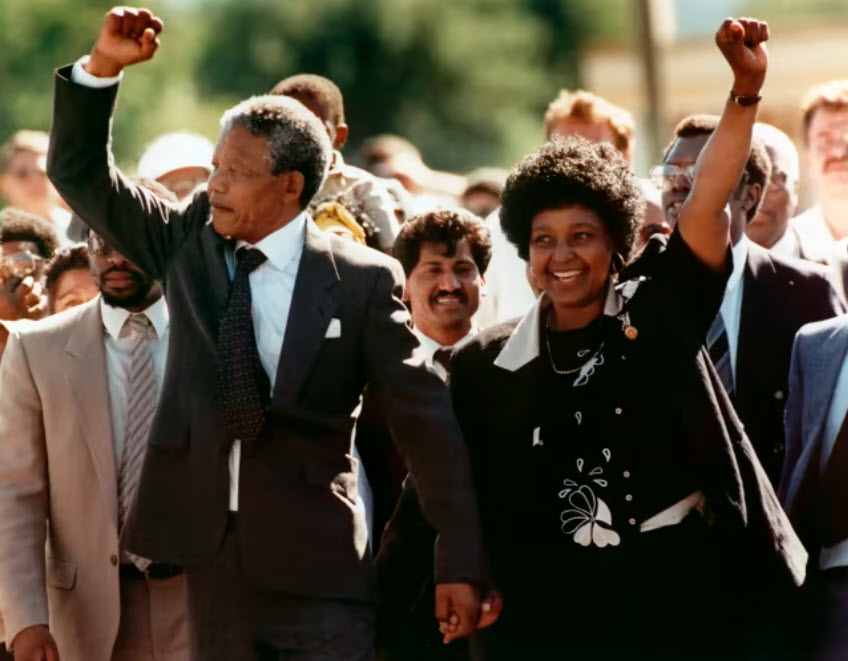
Credits: AP 2020. FILE – In this Feb. 13, 1990 file photo, Nelson Mandela and his wife, Winnie Madikizela-Mandela, gesture as they arrive at Soccer City Stadium in Soweto, South Africa two days after after being released after serving 27 years in prison. Mandela’s release set off joyous celebrations and violent clashes as supporters welcomed Mandela back from years in jail. (AP Photo/Udo Weitz, File)
The Peoples’ Senate is a national cohesive network of people reflective of poor and working-class communities across the United States; joined together to protect, champion, and uphold the human rights of Black, Brown, and Indigenous people, and by doing so, ensure the human rights of all people.https://spiritofmandela.org/intro-peoples-senate

Companion Post/Lessons

WE STILL CHARGE GENOCIDE: Spirit of Mandela International Tribunal (October 22-25, 2021)

Learn more in RBG Communiversity Knowledge Media eLibrary| Nelson Mandela Folder