
Dr. Nathan Hare and TBS Journal, Feat. Contemporary Black Thought_The Best from The Black Scholar (1973)

Nathan Hare, 91, Forceful Founder of First Black Studies Program, Dies.

Dr. Nathan Hare is often called “the Father of Black Studies.”

Click for full size standalone poster.

Nathan Hare (born April 9, 1933) is an American sociologist, activist, academic, and psychologist. In 1968 he was the first person hired to coordinate a Black studies program in the United States. He established the program at San Francisco State. A graduate of Langston University and the University of Chicago, he had become involved in the Black Power movement while teaching at Howard University…From Biography.

See: A CONCEPTUAL PROPOSAL FOR A DEPARTMENT OF BLACK STUDIES, Nathan Hare. April 29, 1968

3 Video Playlist

Pop the documents out from the upper right to read / expand / download.

Companion Post/Lesson:

Click for full size standalone poster.

Dr. Julia Hare On Being Black First & Integration (Video Edu.) and The Black Woman’s Role In The Community Of Slaves, By Angela Davis (The Black Scholar December, 1971).pdf

SUPPLEMENTAL STUDY: TBS, November 1969

Learn more in RBG Communiversity eLibrary| Dr. Nathan Hare and The Black Scholar Journal Folder
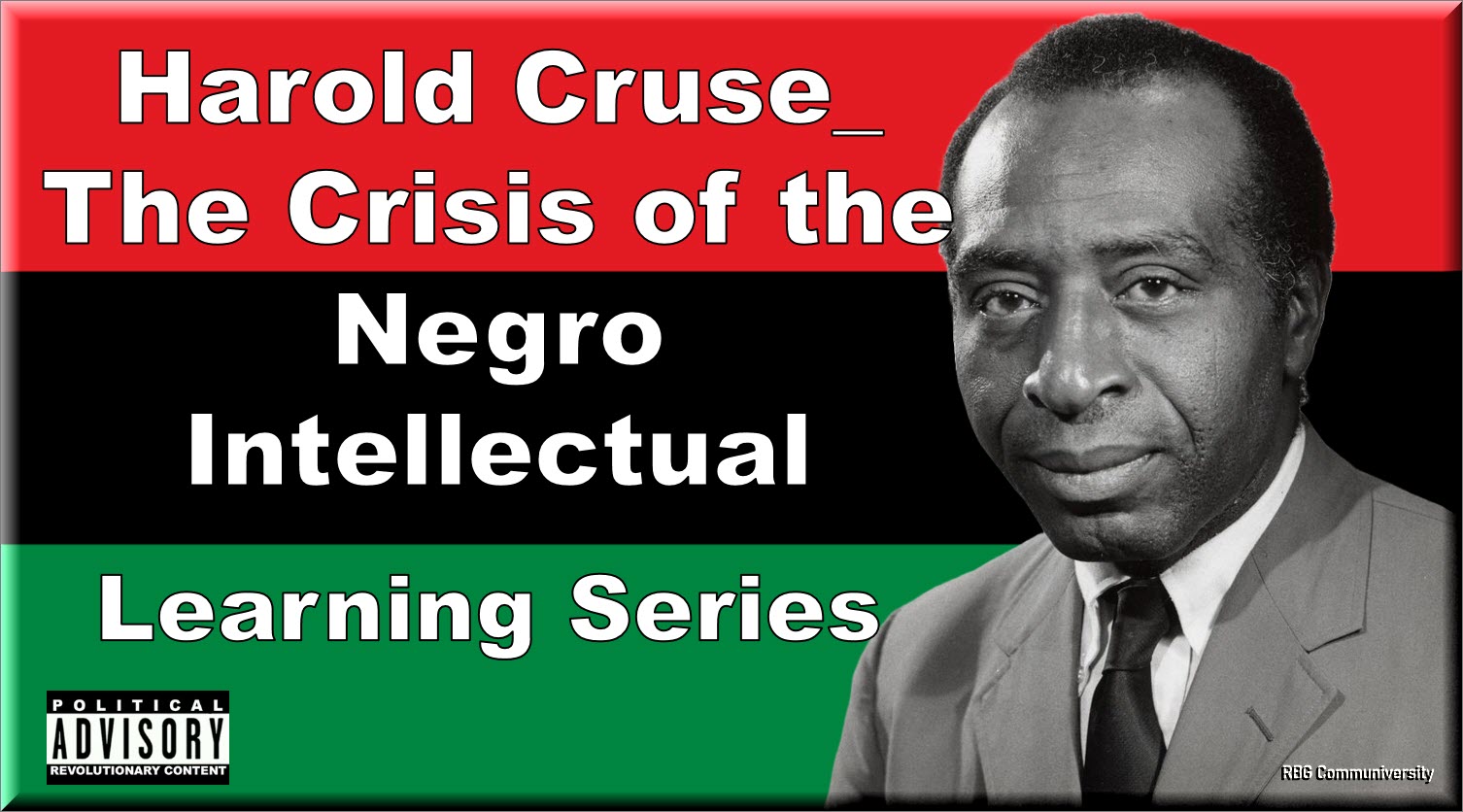
Harold Cruse_The Crisis of the Negro Intellectual Learning Series

Click for full size poster.

6 Video Playlist

SIDEBAR:

Why did Dr. Nathan Hare and Robert Chrisman break up the (Original) Black Scholar Journal?

Nathan Hare and Robert Chrisman had a significant falling out that led to the breakup of the Black Scholar journal due to a combination of personal, ideological, and professional differences.

  1. Ideological Differences: Hare and Chrisman had differing views on the direction and purpose of the journal. Their disagreements included issues related to race, identity, and the focus of the publication, which ultimately influenced their editorial decisions.
  2. Leadership Conflicts: Both individuals had strong personalities and visions for the journal, which led to conflicts over leadership and editorial control. As they struggled for influence, their relationship became strained.
  3. Personal Relationships: The breakdown of their professional partnership was also affected by personal tensions. Disagreements escalated into personal conflicts, which made collaboration increasingly difficult.
  4. Cultural Context: The broader cultural and political environment of the time, particularly during the civil rights movement, played a role in their differing perspectives. Each was influenced by the evolving discourse around race and politics, leading to diverging editorial priorities.
  5. Editorial Vision: Their differing visions for the journal’s content and readership contributed to the eventual split. Each wanted to take the journal in a different direction, which made it challenging to maintain a cohesive publication.
  6. Capsule: It was about Marxism vs Black Nationalism, I think, and thus, Chrisman’s obvious vitriol towards Harold Cruse’s ideological analysis. interesting enough , I’ve heard Chairman Omali teach in multiple lectures that marxism was nothing more than another form of white nationalism. Again, “the more things change the more they stay the same.” (See: RBG Tools of Analysis Page)

Pop the documents out from the upper right to read / expand / download.

Additional Reading:

RBG| Inner City Blues_Gil Scott Heron w Downloadable Lyrics and Mark Essex (1973) 

Click for standalone poster.

Pop the document out from the upper right to read / expand / download.

Much more GSH Poetic and Lyrical Teachings in RBG Communiversity Knowledge Media eLibrary

Supplemental: Check out RBG SS| Art of Knowledge Collection (interactive articles and presentations over the years.) A current student work / learning project.

Click for standalone poster.

STILL BLACK, STILL STRONG_Survivors of the U.S. War Against Black Revolutionaries: By Dhoruba Bin Wahad , Mumia Abu-Jamal Assata Shakur_ eBook, Audiobook and Video Edu.

Click for full size poster.

3 Video Playlist

Pop the document out from the upper right to read / expand / download.

STILL BLACK, STILL STRONG_ Audiobook

Learn more in RBG Communiversity’s Knowledge Media eLibrary | PG-RNA, NAIM, BLA, FROLINAN, GJU, Rebuild Collective Folder

Can’t Jail Nor Kill the Spirit: Black History Speaks_A RBG Multimedia TRIBUTE to Sekou Odinga June 7, 1944 –Jan. 12, 2024 (age 79)

Click for full size poster

Sekou Odinga was inspired by the revolutionary principles of Malcolm X when he joined Malcolm’s Organization of Afro-American Unity, followed by the Black Panther Party, and the Black Liberation Army. He is a Muslim, a citizen of the Republic of New Afrika, and for 33 years was incarcerated as a political prisoner of war for his role in the liberation of Assata Shakur. He was released on parole in November 2014 from the New York State penitentiary. Since gaining his freedom he has worked for the liberation of all political prisoners and oppressed people…From below

Click for full size poster.

10 Video Playlist

For new comers, pop the document out from the upper right to read / expand / download.

Sekou Odinga does the Black Diaspora and African American Studies Program (BDAAS-UC San Diego)

Learn more in RBG Communiversity’s eLibrary | PG-RNA, NAIM, BLA, FROLINAN, GJU, Rebuild Collective Folder