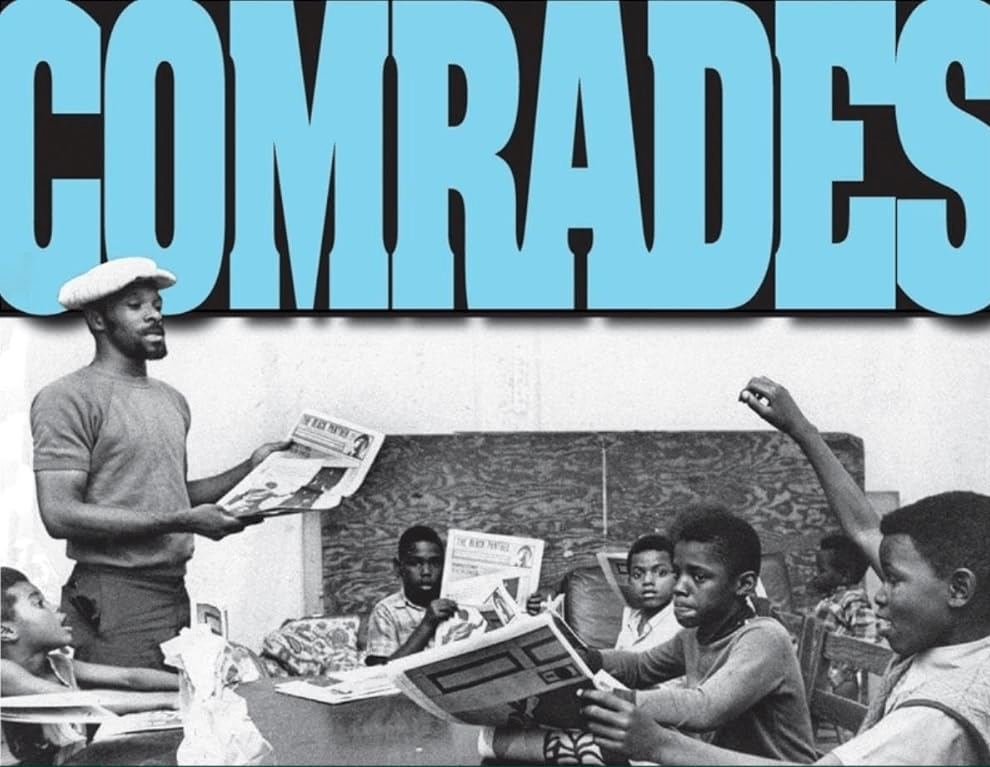
The Black Panther Party for Self-Defense was founded in Oakland, California, in 1966 by Huey P. Newton and Bobby Seale. It was perhaps the most visible of the Black Power groups in the late 60s and early 70s, not least because of its confrontational politics, its rejection of nonviolence, and its headline-catching, gun-toting militancy. Important on the national scene and highly visible on college campuses, the Panthers also worked at building grassroots support for local black political and economic power. Although there have been many books about the Black Panthers, none has looked at the organization and its work at the local level. This book examines the work and actions of seven local initiatives in Baltimore, Winston-Salem, Cleveland, Indianapolis, Milwaukee, Philadelphia, and Los Angeles. These local organizations are revealed as committed to programs of community activism that focused on problems of social, political, and economic justice.
Comrades: A Local History of the BPP_eBook
Pop the document out from the upper right to read / expand / download.
Comrades: A Local History of the BPP_Audiobook
Part 1
Part 2
Rebuild Collective Video Education Player
11 Video Playlist
Learn more in RBG Communiversity Knowledge Media eLibrary:
Pop the documents out from the upper right to read / expand / download.
Supplemental Studies:
I: Robert L Allen, “The Social Context of Black Power” (Text and Audio)
Please feel free to start the audio and pop the document out/expand and read along with the audio for a nice learning experience.
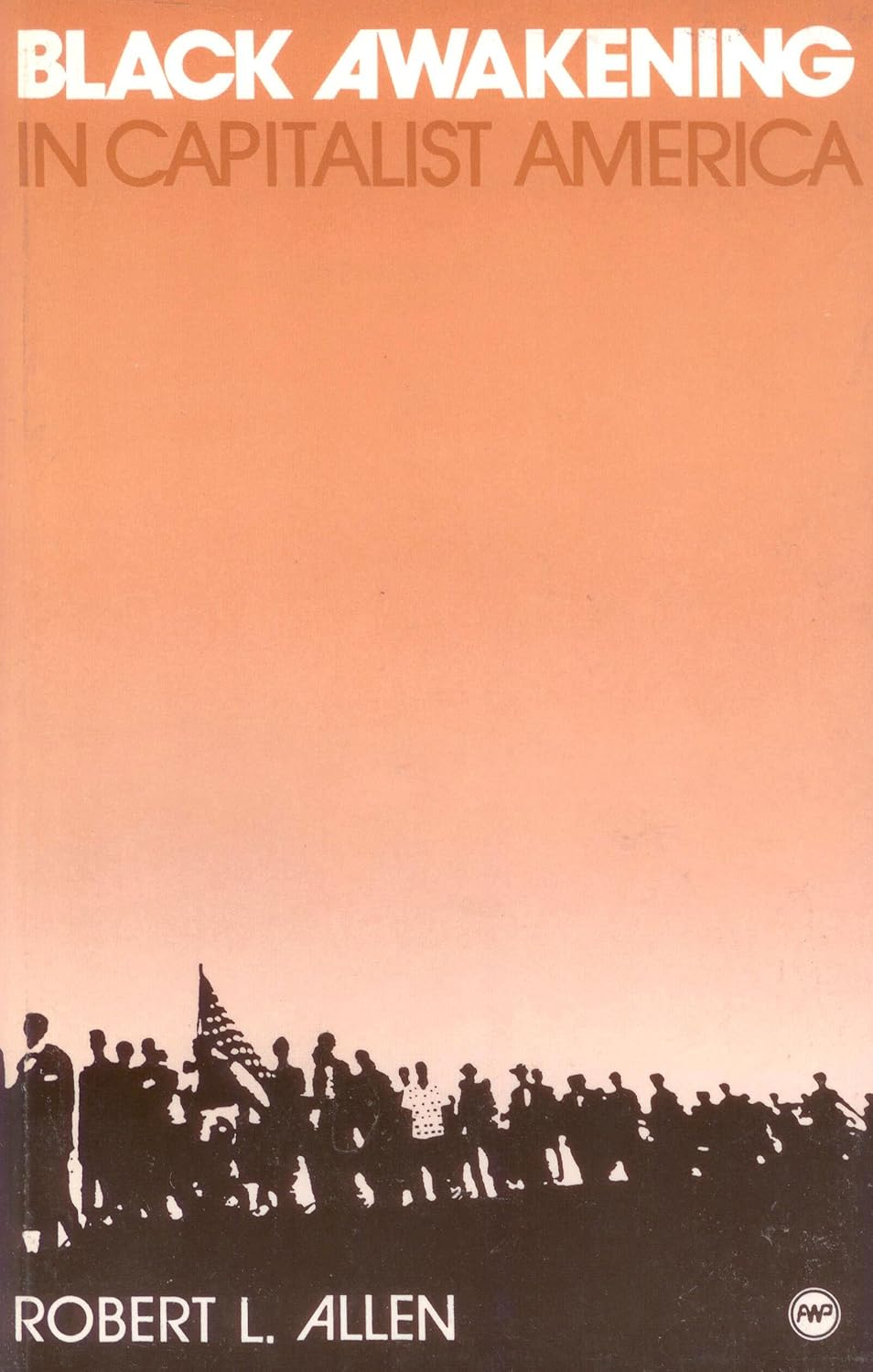
II: Black Awakening in Capitalist America: An Analytic History First Edition by Robert L. Allen
Book Summary
The book explores the intersections of race, class, and capitalism in America, particularly how these elements have shaped the experiences and struggles of Black people. Allen argues that the systemic inequalities rooted in capitalism have led to a profound awakening among Black communities, manifesting in various forms of resistance and activism. Through historical analysis, the author delves into the impacts of capitalism on Black life and the collective awakening that has occurred as a response to oppression.
The outline that follows captures the main themes and structure of Allen’s work, emphasizing the critical relationship between capitalism and the Black experience in America.
Introduction
Context of Black awakening in America
Overview of capitalism’s role in racial oppression
Historical Context
The legacy of slavery and its aftermath
Reconstruction and its failures
Rise of Jim Crow laws
Capitalism and Racial Oppression
Economic exploitation of Black labor
The role of capitalism in sustaining racial hierarchies
Case studies of Black economic struggles
The Civil Rights Movement
Key figures and events
The impact of capitalism on the movement
Shifts in strategy and ideology
Black Power and Resistance
Emergence of the Black Power movement
Analysis of militant and non-militant approaches
The significance of cultural identity
Contemporary Issues
The intersection of race and class in modern America
Impact of globalization on Black communities
Analysis of systemic racism in various sectors (education, employment, etc.)
The Future of Black Resistance
Potential paths for Black empowerment
Importance of solidarity across movements
Vision for a more equitable society
Conclusion
Reflection on the ongoing struggle against capitalism and racism
Call to action for renewed activism and awareness
Learn more in RBG Communivesity Knowledge Media eLibrary:
Overview: “Imprisoned Intellectuals: America’s Political Prisoners Write on Life, Liberation, Rebellion,” edited by Joy James, is a compelling anthology that brings together the voices of political prisoners in the United States. The book sheds light on the experiences, thoughts, and struggles of individuals who have been incarcerated for their political beliefs and activism. Through essays, letters, and reflections, the contributors explore themes of resistance, identity, and the impact of systemic oppression.
The outline that follows provides a structured overview of the themes and discussions presented in the book, showcasing the voices and experiences of those who have faced political imprisonment in America.
Outline:
Introduction
Overview of the book’s purpose and significance
Importance of political prisoners in contemporary society
Brief introduction to the editor, Joy James, and her vision for the anthology
Chapter 1: The Context of Political Imprisonment
Historical background of political imprisonment in the U.S.
Discussion on the targeted oppression of marginalized groups
Overview of the legal and social frameworks supporting political incarceration
Chapter 2: Voices from the Inside
Personal narratives from various political prisoners
Reflections on life in prison and the psychological effects of incarceration
Insights into maintaining identity and purpose while imprisoned
Chapter 3: Rebellion and Resistance
Analysis of acts of resistance and rebellion within prison walls
The role of solidarity among prisoners
Examination of hunger strikes, protests, and other forms of activism
Chapter 4: The Role of Education and Intellectualism
The importance of education and intellectual engagement for prisoners
Contributions of imprisoned intellectuals to social and political thought
Discussion on how education serves as a form of resistance
Chapter 5: Liberation Movements and Solidarity
Connections between imprisoned intellectuals and broader liberation movements
The role of community support and activism outside prison
Strategies for building solidarity and alliances for change
Chapter 6: The Future of Political Prisoners
Reflections on the potential for reform and change in the penal system
Hope and resilience among political prisoners
Calls to action for readers and activists
Conclusion
Summary of key themes and insights from the anthology
The ongoing struggle for justice and liberation
Invitation for readers to engage with the issues presented in the book
Appendices
Additional resources for understanding political imprisonment
Information on organizations supporting political prisoners
Suggested readings and further research topics
“My Idea of an ICEBREAKER Video for this remarkable book.”
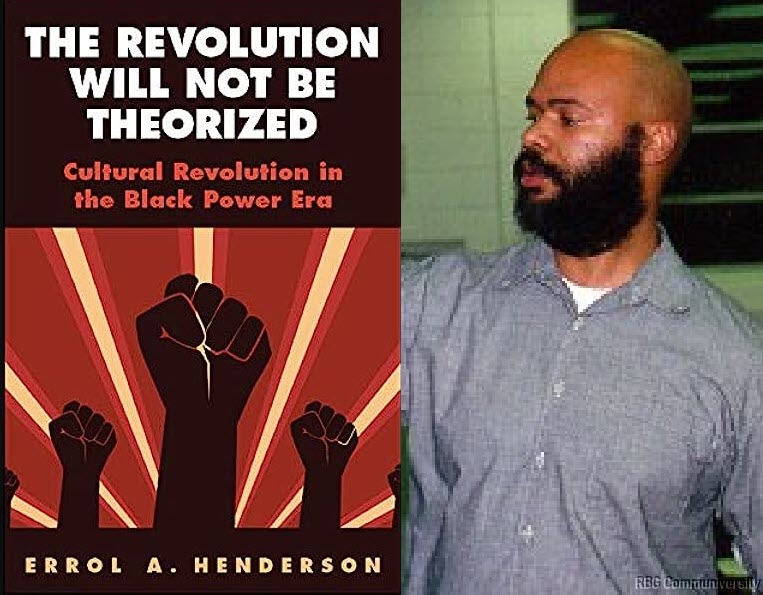
THE REVOLUTION WILL NOT BE THEORIZED: Cultural Revolution in the Black Power Era, by Dr. Errol A. Henderson_eBook
Pop the documents out from the upper right to read / expand / download.
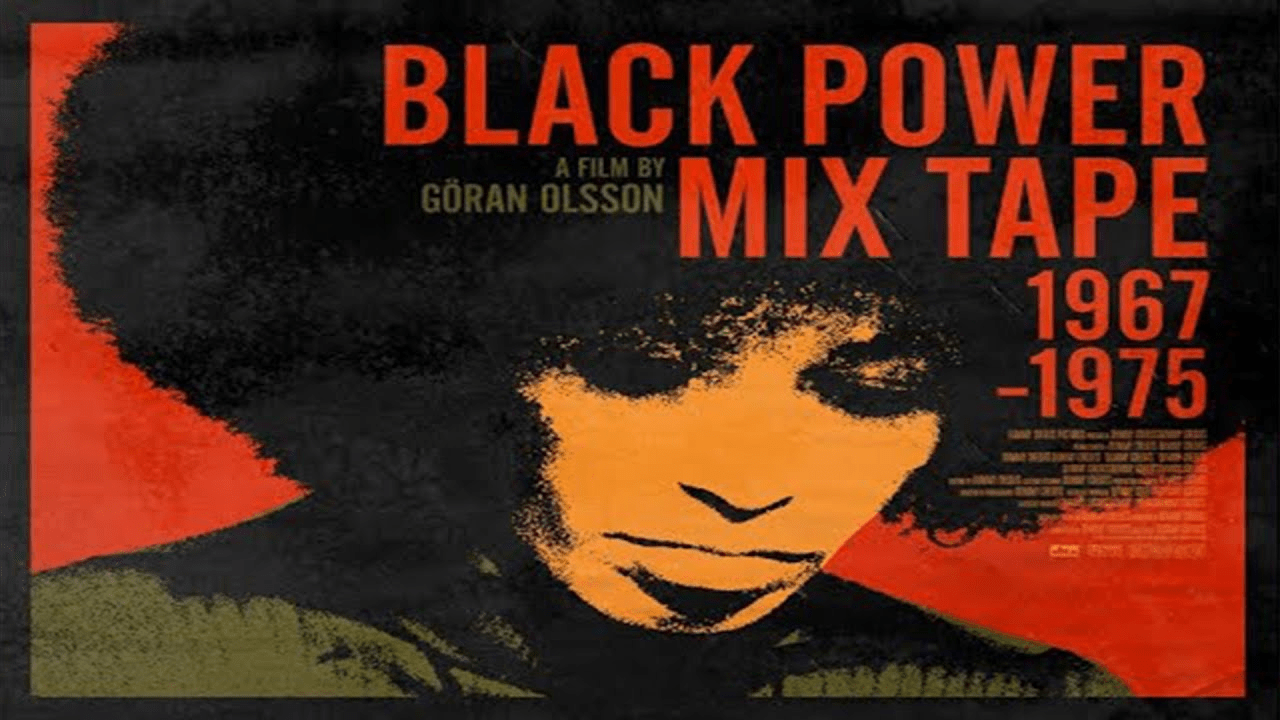
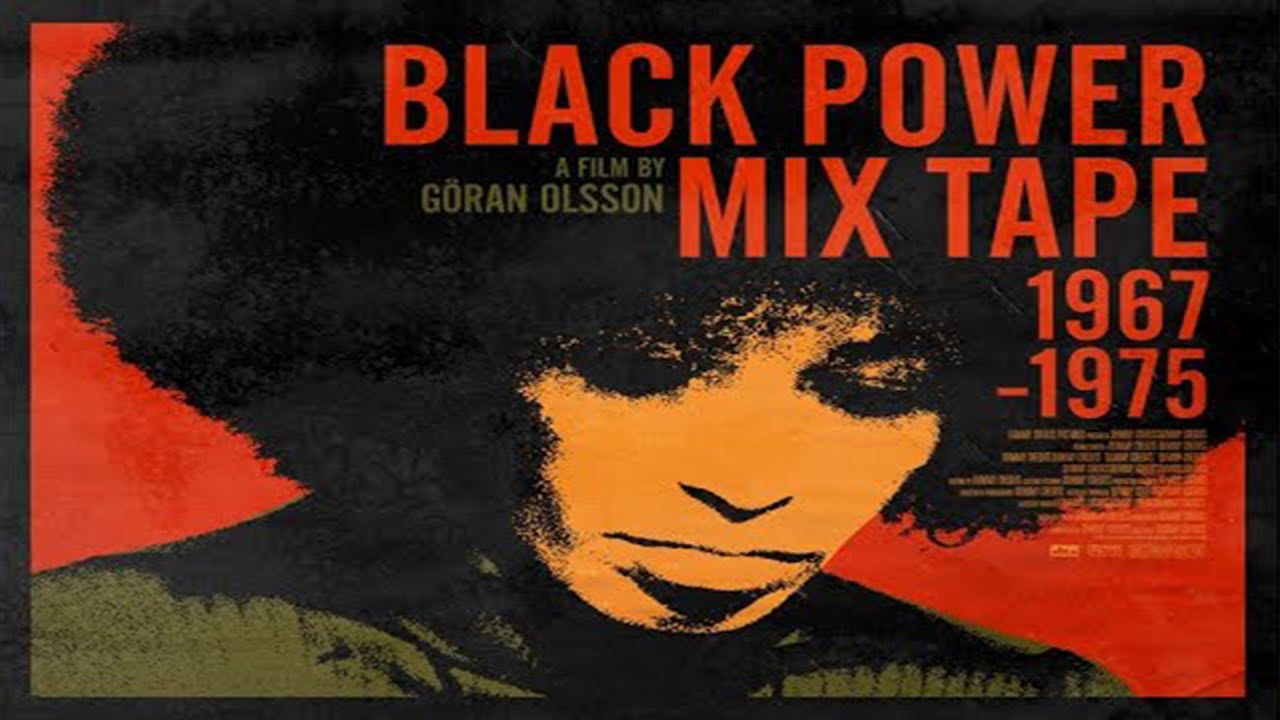
The Black Power Mixtape 1967-1975_ Docmentary Film by Göran Hugo Olsson
For three decades, the film canisters sat undisturbed in a cellar beneath the Swedish National Broadcasting Company. Inside was roll after roll of startlingly fresh and candid 16mm footage shot in the 1960s and 1970s in the United States, all of it focused on the anti-war and Black Power movements. When filmmaker Goran Hugo Olsson discovered the footage, he decided he had a responsibility to shepherd this glimpse of history into the world. With contemporary audio interviews from leading African American artists, activists, musicians and scholars, The Black Power Mixtape 1967-1975 looks at the people, society, culture, and style that fuelled an era of convulsive change. Utilizing an innovative format that riffs on the popular 1970s mixtape format, Mixtape is a cinematic and musical journey into the black communities of America. At the end of the ’60s and into the early ’70s, Swedish interest in the U.S. civil rights movement and the U.S. anti-war movement peaked. With a combination of commitment and naiveté, Swedish filmmakers traveled across the Atlantic to explore the Black Power movement, which was being alternately ignored or portrayed in the U.S. media as a violent, nascent terrorist movement. Despite the obstacles they encountered, both from the conservative white American power establishment and from radicalized movement members themselves, the Swedish filmmakers stayed committed to their investigation, and ultimately formed bonds with key figures in the movement. This newly discovered footage offers a penetrating examination — through the lens of Swedish filmmakers — of the Black Power movement from 1967 to 1975, and its worldwide resonance. The result is like an anthropological treatise on an exotic civilization from the point of view of outsiders who approached their subject with no assumptions or biases.
The FilmmakerGöran Hugo Olsson Documentary filmmaker and cinematographer Göran Hugo Olsson is the co-founder of Story AB. He was the commission consultant at the Swedish Film Institute during 2000-02, and is a member of the editorial board of Ikon South Africa — a platform for the creative documentary in South Africa. His documentary film work includes F**k You, F**k You Very Much (nominated as the second best rock-documentary of all time by legendary Bon Magazine), and the film about soul artist Billy Paul, Am I Black Enough for You.
Supplemental: Maqflah – Souljahs f/ General Steele
Pop the documents out from the upper right to read / expand / download.
For more like this visit RBG Communiversity’s eLibrary |
11 Video Playlist (Audio reading corresponds to page 15 and foward for the Reader below.)
Long Walk to Freedom eBook
Nelson Mandela was one of the great moral and political leaders of his time: an international hero whose lifelong dedication to the fight against racial oppression in South Africa won him the Nobel Peace Prize and the presidency of his country. After his triumphant release in 1990 from more than a quarter-century of imprisonment, Mandela was at the center of the most compelling and inspiring political drama in the world. As president of the African National Congress and head of South Africa’s antiapartheid movement, he was instrumental in moving the nation toward multiracial government and majority rule. He is still revered everywhere as a vital force in the fight for human rights and racial equality. Long Walk to Freedom is his moving and exhilarating autobiography, destined to take its place among the finest memoirs of history’s greatest figures. Here for the first time, Nelson Rolihlahla Mandela told the extraordinary story of his life — an epic of struggle, setback, renewed hope, and ultimate triumph.
Pop the documents out from the upper right to read / expand / download.
Spirit of Mandela is a campaign to bring international attention to U.S. human rights violations of Black, Brown, Indigenous People, and U.S. held political prisoners.
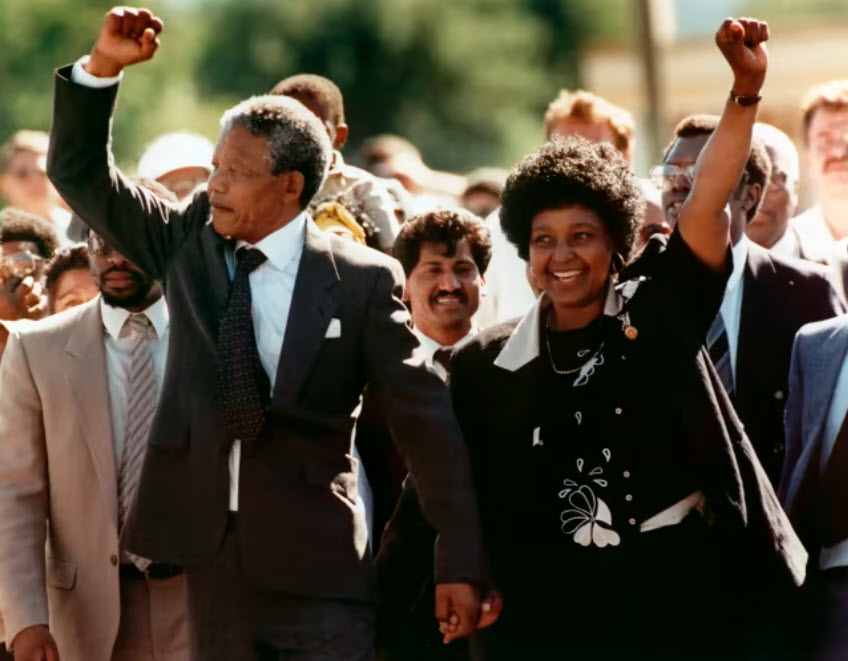
Clickable Photo Credits: AP 2020. FILE – In this Feb. 13, 1990 file photo, Nelson Mandela and his wife, Winnie Madikizela-Mandela, gesture as they arrive at Soccer City Stadium in Soweto, South Africa two days after after being released after serving 27 years in prison. Mandela’s release set off joyous celebrations and violent clashes as supporters welcomed Mandela back from years in jail. (AP Photo/Udo Weitz, File)The Peoples’ Senate is a national cohesive network of people reflective of poor and working-class communities across the United States; joined together to protect, champion, and uphold the human rights of Black, Brown, and Indigenous people, and by doing so, ensure the human rights of all people.https://spiritofmandela.org/intro-peoples-senate
Blueprint for Black Power details a master plan for the power revolution necessary for Black survival in the 21st century. Blueprint posit that an African American/Caribbean/ Pan-African bloc would be most potent for the generation and delivery of Black power in the United States and the World to counter White and Asian power networks. Wilson frames this imperative by deconstructing the U.S. elite power structure of government, political parties, think tanks, corporations, foundations, media, interest groups, banking and foreign investment particulars. Potentially strong Black institutions such as the church, media and think tanks; industry; collectives such as investment clubs and credit unions; rotating credit associations such as Afrikan- originated esusu, tontine and partner are analyzed. Pan-Afrikanism, Black Nationalism, ethnocentrism and reparation are assessed, often misused and underused financial institutions such as securities, mutual funds, stocks, bonds, underwriting, and incubators are advocated, thus elucidating oft-negated opportunities for economic empowerment.
3 Video Playlist
Pop the document out from the upper right to read / expand / download.












 RBG Communiversity: Message 2 Da Grassroots
You must be logged in to post a comment.