Up Against the Wall: Violence in the Making and Unmaking of the Black Panther Party by Curtis J. Austin (Author), Elbert “Big Man” Howard (Foreword)_eBook and Audiobook

Book Summary

“Up Against the Wall: Violence in the Making and Unmaking of the Black Panther Party” by Curtis J. Austin, with contributions from Elbert “Big Man” Howard, offers a comprehensive analysis of the Black Panther Party (BPP) and the role of violence in its formation, evolution, and eventual decline. The book examines how the BPP’s revolutionary ideals were shaped by the context of systemic racism, social injustice, and police brutality in America during the 1960s and 1970s. Austin delves into the internal and external factors that influenced the party’s strategies, including its use of armed self-defense, community programs, and the violent responses from law enforcement and the state. The work provides a nuanced perspective on the complexities of the BPP’s legacy, emphasizing both its contributions to the civil rights movement and the challenges it faced due to violence and repression.

The following outline captures the main themes and structure of “Up Against the Wall,” highlighting Austin’s exploration of the complexities surrounding the Black Panther Party, its use of violence, and its significant role in the struggle for racial justice in America. The book provides a critical understanding of the BPP’s legacy and the factors that shaped its trajectory.

Outline

I. Introduction

  • Purpose of the book: to explore the role of violence in the Black Panther Party’s history
  • Overview of the BPP’s significance in the civil rights movement
  • Introduction to key themes: resistance, violence, and community activism

II. Historical Context

  • The socio-political landscape of the 1960s and 1970s
  • Systemic racism and police brutality faced by African Americans
  • The emergence of radical movements in response to oppression

III. Formation of the Black Panther Party

  • Founding principles and ideology of the BPP
  • Influences from earlier civil rights movements and revolutionary thought
  • The role of key figures, including Huey P. Newton and Bobby Seale

IV. Armed Self-Defense and Community Programs

  • Examination of the BPP’s stance on armed self-defense
  • Overview of community programs initiated by the BPP (e.g., free breakfast programs, health clinics)
  • The impact of these programs on local communities and the party’s popularity

V. Violence and State Repression

  • Analysis of violent confrontations between the BPP and law enforcement
  • The role of the FBI’s COINTELPRO in undermining the BPP
  • Consequences of state-sponsored violence on the party’s operations and membership

VI. Internal Conflicts and Challenges

  • Examination of factionalism and leadership struggles within the BPP
  • The impact of gender dynamics and the role of women in the party
  • Issues of ideology and strategy that contributed to internal tensions

VII. The Decline of the Black Panther Party

  • Factors leading to the decline and dissolution of the BPP
  • The effects of external repression and internal conflicts
  • Reflection on the legacy of the BPP in contemporary movements

VIII. Conclusion

  • Summary of key arguments and insights regarding violence and community activism
  • Reflection on the lasting impact of the Black Panther Party
  • Call for recognition of the BPP’s contributions to social justice and civil rights

“Up Against the Wall: Violence in the Making and Unmaking of the Black Panther Party provides a nuanced and in-depth exploration of the Black Panther Party (BPP), focusing particularly on the interplay between violence, resistance, and community activism. The authors examine how the BPP’s approach to violence shaped its identity and legacy while also reflecting on the broader social and political context in which the party operated. Here’s a more detailed look at the key themes and insights from the book:

Key Themes and Insights

  1. Historical Context of the Black Panther Party:
    • The authors place the BPP within the tumultuous backdrop of the 1960s and 1970s, a period marked by widespread civil rights activism and systemic oppression faced by African Americans. They highlight the profound effects of police brutality, economic inequality, and social injustice that drove many to seek radical solutions.
    • The book emphasizes how the BPP emerged as a response to these conditions, representing a shift towards more militant forms of activism in the fight against racial oppression.
  2. Founding Ideology and Principles:
    • The BPP was founded on a framework of revolutionary socialism, influenced by figures like Malcolm X, Frantz Fanon, and Karl Marx. Austin discusses how the party’s leaders, particularly Huey P. Newton and Bobby Seale, articulated a vision of self-determination and empowerment for Black communities.
    • The authors explore the dual focus of the BPP on armed self-defense against police violence and community service programs aimed at improving the quality of life for African Americans.
  3. Armed Self-Defense and Community Programs:
    • A significant portion of the book is dedicated to the BPP’s philosophy of armed self-defense and its implications. Austin details how the party’s members carried firearms to protect themselves and their communities from police brutality, a stance that garnered both support and backlash.
    • The BPP also initiated various community programs, such as free breakfast for children, health clinics, and educational initiatives. These programs were instrumental in building community support and enhancing the party’s image as a force for positive change.
  4. Violence and State Repression:
    • The authors analyze the violent confrontations that occurred between the BPP and law enforcement, highlighting key events that underscored the tensions between the party and the state. The book details how these confrontations often escalated into lethal encounters, such as the infamous shootout in 1969 that resulted in the deaths of BPP members.
    • A critical aspect of the narrative is the examination of the FBI’s Counterintelligence Program (COINTELPRO), which aimed to infiltrate, undermine, and discredit the BPP. Austin discusses how state-sponsored violence and surveillance contributed to the party’s fragmentation and decline.
  5. Internal Conflicts and Dynamics:
    • Austin delves into the internal struggles within the BPP, including factionalism and leadership disputes that arose as the party evolved. He addresses how ideological differences and personal rivalries created rifts that weakened the party’s cohesion.
    • The book also highlights the contributions of women in the BPP, discussing the complexities of gender dynamics within the organization and how women played pivotal roles in both leadership and grassroots activism.
  6. Legacy and Impact:
    • The decline of the BPP is examined in the context of both external repression and internal challenges. Austin reflects on how these factors ultimately led to the party’s disbandment by the mid-1970s. However, he emphasizes that the BPP’s legacy continues to resonate in contemporary movements for social justice and racial equality.
    • The authors argue that understanding the BPP’s history is crucial for recognizing the ongoing struggles against systemic oppression and the importance of grassroots activism.
  7. Call for Recognition:
    • In the conclusion, Austin urges readers to acknowledge the complexity of the BPP’s legacy, recognizing both its contributions to the civil rights movement and the challenges it faced due to violence and repression. He advocates for a more nuanced understanding of the BPP that appreciates its grassroots efforts and revolutionary ideals.

Conclusion

“Up Against the Wall” serves as a vital contribution to the scholarship on the Black Panther Party, offering a comprehensive analysis of the factors that influenced its rise and fall. Curtis J. Austin and Elbert “Big Man” Howard provide a detailed examination of how violence and community activism intersected within the BPP, shaping its identity and impact. The book not only highlights the historical significance of the BPP but also encourages contemporary readers to engage with the ongoing struggles for justice and equality in society. It serves as a reminder of the resilience of marginalized communities in the face of systemic oppression and the importance of collective action in the pursuit of social change.

Up Against the Wall: Violence in the Making and Unmaking of the Black Panther Party by Curtis J. Austin (Author), Elbert “Big Man” Howard (Foreword)_eBook

Pop the documents out from the upper right to read / expand / download.

Up Against the Wall: Violence in the Making and Unmaking of the Black Panther Party by Curtis J. Austin (Author), Elbert “Big Man” Howard (Foreword)_Audiobook

Part 1

Part 2

Learn more in RBG Communiversity Knowledge Media eLibrary:

American Exceptionalism and American Innocence: A People’s History of Fake News―From the Revolutionary War to the War on Terror by Roberto Sirvent and Danny Haiphong_eBook and Audiobook

Book Summary

“American Exceptionalism and American Innocence: A People’s History of Fake News―From the Revolutionary War to the War on Terror” by Roberto Sirvent and Danny Haiphong critically examines the concept of American exceptionalism and how it has shaped the narratives surrounding U.S. history. The authors argue that the belief in America’s unique virtue has been used to justify various forms of injustice, including imperialism, racism, and war. By exploring the historical roots of “fake news”—defined as the manipulation of information to promote specific agendas—they illustrate how narratives have been constructed to maintain power and control. The book aims to uncover the often-overlooked realities of marginalized communities and to challenge dominant historical narratives, promoting a more inclusive understanding of American history.

The outline that follows encapsulates the essential themes and structure of “American Exceptionalism and American Innocence,” highlighting the authors’ critical perspective on American history and the implications of fake news in shaping public understanding.

I. Introduction

  • Definition of American exceptionalism
  • Overview of the concept of fake news
  • Purpose of the book: to challenge dominant narratives and reveal hidden histories

II. Historical Context of American Exceptionalism

  • Origins during the Revolutionary War
    • The concept of a “city upon a hill”
  • Development through historical events
    • Manifest Destiny and westward expansion
    • The Civil War and Reconstruction

III. The Role of Fake News in American History

  • Definition and examples of fake news throughout U.S. history
  • Use of propaganda and misinformation to justify wars
    • Spanish-American War
    • Vietnam War

IV. American Innocence and Its Consequences

  • The myth of American innocence in relation to imperialism
  • Impact of this myth on marginalized communities
    • Effects on Native Americans, African Americans, and other groups
  • Case studies illustrating the disconnect between American ideals and reality

V. The Modern Era: Fake News and the War on Terror

  • Emergence of fake news in the contemporary political landscape
  • Analysis of the framing of the War on Terror through American exceptionalism
  • Role of media in shaping public perception and justifying military interventions

VI. Challenging the Narrative: A People’s History Perspective

  • Importance of alternative narratives in understanding U.S. history
  • Voices of resistance and dissent throughout American history
    • Civil rights movements
    • Anti-war activism
  • Role of grassroots movements in challenging dominant narratives

VII. Conclusion

  • Summary of key arguments and insights
  • Call to action for critical engagement with history and media
  • Vision for a more inclusive understanding of American history that recognizes diverse experiences

“American Exceptionalism and American Innocence: A People’s History of Fake News―From the Revolutionary War to the War on Terror” by Roberto Sirvent and Danny Haiphong presents a compelling critique of the widespread belief in American exceptionalism and the narrative of American innocence. The authors argue that these concepts have been utilized to justify various injustices and have fostered a distorted understanding of U.S. history. Here’s a deeper exploration of the book’s themes and insights:

Deeper Insights

  1. American Exceptionalism:
    • Sirvent and Haiphong define American exceptionalism as the belief that the United States is fundamentally different from other nations, often perceived as a force for good in the world. This belief has its roots in the Revolutionary War, where early American leaders framed the nation’s mission as one of liberty and democracy.
    • The authors argue that this concept has been manipulated to justify expansionist policies, imperialism, and military interventions under the guise of promoting freedom and democracy.
  2. Historical Narratives and Fake News:
    • The book delves into the historical use of propaganda and misinformation throughout American history. Sirvent and Haiphong highlight how fake news has been a persistent tool in shaping public perception and justifying government actions.
    • Examples include the exaggerated narratives used to garner support for the Spanish-American War, where the media played a crucial role in rallying public sentiment through sensationalized stories about Spanish atrocities.
  3. American Innocence:
    • The authors critique the myth of American innocence, which suggests that the U.S. has acted altruistically on the world stage, often overlooking its role in perpetuating violence and injustice.
    • They examine the impacts of this myth on marginalized communities, particularly Native Americans, African Americans, and others who have suffered under U.S. policies. The narrative of innocence obscures the historical realities of oppression and exploitation.
  4. Case Studies:
    • Sirvent and Haiphong provide case studies that illustrate the disconnect between the ideals of American exceptionalism and the lived experiences of marginalized groups. For example, they discuss the impact of U.S. foreign policy on countries in Latin America and the Middle East, where interventions have led to destabilization and suffering.
    • The authors also explore domestic policies that have disproportionately affected communities of color, revealing how the narrative of innocence has been used to justify systemic racism and inequality.
  5. The War on Terror:
    • In the contemporary context, the authors analyze the War on Terror as a modern manifestation of American exceptionalism. After the events of September 11, 2001, the U.S. government framed its military actions as necessary for global security and the promotion of democracy.
    • Sirvent and Haiphong argue that this framing has been reinforced by media narratives that often depict the U.S. as a benevolent force, ignoring the consequences of its military interventions.
  6. Challenging Dominant Narratives:
    • One of the key messages of the book is the importance of alternative narratives that highlight the voices of dissent and resistance throughout American history. The authors emphasize that understanding history from a people’s perspective is essential for recognizing the complexities of social justice movements.
    • They discuss the contributions of civil rights activists, anti-war movements, and grassroots organizations that have challenged the dominant narratives and fought for justice and equality.
  7. Call to Action:
    • In their conclusion, Sirvent and Haiphong urge readers to critically engage with history and media. They advocate for a more inclusive understanding of American history that acknowledges the experiences of marginalized communities and the realities of oppression.
    • The authors call for a reevaluation of the myths that have shaped public perception and encourage active participation in movements that seek to dismantle systemic injustices.

Conclusion

“American Exceptionalism and American Innocence” serves as a powerful critique of the narratives that underpin American identity and policy. Through a careful examination of history, the authors reveal how the belief in American exceptionalism has been wielded as a tool for justifying imperialism and systemic injustices. By challenging dominant narratives and advocating for a people’s history perspective, Sirvent and Haiphong provide readers with the tools to critically analyze the complexities of American history and engage in meaningful conversations about justice, equality, and truth. Their work is a vital contribution to the ongoing discourse on race, power, and the role of media in shaping public understanding.

“American Exceptionalism and American Innocence: A People’s History of Fake News―From the Revolutionary War to the War on Terror”_eBook

Pop the documents out from the upper right to read / expand / download.

“American Exceptionalism and American Innocence: A People’s History of Fake News―From the Revolutionary War to the War on Terror”_Audiobook

Learm more in RBG Communiversity Knowledge Media eLibrary:

A Scientific Approach to Black Liberation by Dr. Abdul Alkalimat and The History and Future of Black Studies_Pluto Press, with Supplemental: Selected Work on Malcolm X by Abdul Alkalimat_Hypertext

Booklet Summary

“A Scientific Approach to Black Liberation: Which Road Against Racism and Imperialism for the Black Liberation Movement?” by Abdul Alkalimat presents a thorough examination of the Black Liberation Movement, advocating for a scientific and systematic approach to understanding and combating racism and imperialism. Alkalimat critiques historical and contemporary strategies, emphasizing the need for empirical analysis, unity, and a coherent framework to effectively address the complexities of oppression faced by Black communities. The book serves as both a historical account and a guide for future activism, aiming to inspire a new generation of leaders in the movement for Black liberation.

Outline

I. Introduction

  • Purpose of the book
  • Importance of a scientific methodology in the Black Liberation Movement
  • Overview of key themes: racism, imperialism, and strategies for liberation

II. Historical Context

  • Evolution of the Black Liberation Movement
    • Slavery and its legacy
    • The Civil Rights Movement
    • The Black Power Movement
  • Key figures in Black liberation history
    • W.E.B. Du Bois
    • Malcolm X
    • Martin Luther King Jr.

III. Understanding Racism and Imperialism

  • Definitions and distinctions
    • Institutional vs. individual racism
    • Historical roots of imperialism
  • Analysis of how racism and imperialism intersect
  • Impact of colonialism on Black communities globally

IV. Theoretical Frameworks

  • Examination of various theories relevant to Black liberation
    • Marxism and its implications for race and class struggle
    • Anti-colonialism as a framework for understanding oppression
    • Intersectionality and its relevance to the Black experience

V. Strategies for Liberation

  • Review of past and present strategies in the Black Liberation Movement
    • Nonviolent resistance
    • Armed struggle
    • Grassroots organizing and community mobilization
  • The case for a scientific approach to strategy development
    • Importance of research and data in formulating effective strategies

VI. Building Unity in the Movement

  • Addressing divisions within the Black liberation struggle
    • Class, gender, and ideological differences
  • Importance of coalition-building with other marginalized groups
  • Strategies for fostering collaboration and solidarity

VII. The Role of Education and Consciousness

  • Significance of education in the liberation struggle
    • Fostering critical consciousness
    • Cultural education and identity formation
  • The role of art, literature, and culture in promoting awareness and resistance

VIII. Conclusion

  • Summary of key arguments and insights
  • Call to action for a renewed commitment to a scientific approach to Black liberation
  • Vision for the future of the Black Liberation Movement in the context of global struggles against racism and imperialism


Booklet Significance

Abdul Alkalimat’s “A Scientific Approach to Black Liberation” offers a compelling framework for understanding the complexities of the Black liberation struggle. By advocating for a scientific and systematic approach, Alkalimat emphasizes the need for critical analysis, unity, and effective strategies to address the systemic issues of racism and imperialism. This outline highlights the book’s key themes and provides a roadmap for understanding its contributions to the discourse on Black liberation and social justice.

Pop the documents out from the upper right to read / expand / download.

e-Black Studies_Abdul Alkalimat The History and Future of Black Studies | Pluto Live

Supplemental: Selected Work on Malcolm X by Abdul Alkalimat_Hypertext

Again, pop the document out from the upper right to read / expand / download.

Learm more in RBG Communiversity Knowledge Media eLibrary:

“I Write What I Like” by Steve Biko_eBook and Audiobook, with African Biographics_Steve Biko: The African Revolutionary, Why was he Killed?

Steve Biko was a South African anti-apartheid activist and leader of the Black Consciousness Movement. He was killed in 1977 for his activism. Known as the “Father of Black Consciousness”.

Book Summary

“I Write What I Like” by Steve Biko is a collection of writings that reflect Biko’s thoughts on race, identity, and the struggle against apartheid in South Africa. Here’s a bullet point narrative summarizing its key themes and ideas:

  • Background and Context: The book is set against the backdrop of apartheid in South Africa, highlighting the systemic oppression faced by black South Africans.
  • Black Consciousness: Biko emphasizes the importance of self-awareness and pride among black people, advocating for a movement that fosters dignity and identity.
  • Critique of Racism: Biko critiques both the institutionalized racism of the apartheid regime and the passive acceptance of oppression by the black community.
  • Empowerment through Education: He argues that education should be a tool for empowerment, encouraging black people to understand their history and culture.
  • Rejection of Passive Resistance: Biko promotes active resistance against oppression rather than passive acceptance, urging black individuals to fight for their rights.
  • Unity and Solidarity: The writings stress the need for unity among black South Africans to combat the divisive tactics of the apartheid government.
  • Personal Narrative: Biko shares his own experiences and reflections, providing insight into his motivations and the struggles he faced.
  • Legacy of Resistance: The book serves as a call to action, inspiring future generations to continue the fight for equality and justice.
  • Impact of Biko’s Philosophy: His ideas laid the groundwork for the Black Consciousness Movement, influencing both local and international perspectives on racial equality.

Here’s a deeper exploration of the themes and significance of “I Write What I Like”:

In-Depth Themes and Concepts

  • Black Consciousness Movement:
    • Biko was a key figure in the Black Consciousness Movement, which sought to instill a sense of pride and identity among black South Africans. He believed that psychological liberation was essential for political freedom. The movement encouraged black individuals to reject the inferiority imposed by the apartheid system and to embrace their heritage.
  • Critique of Apartheid:
    • The writings expose the inhumane conditions and injustices inflicted by apartheid. Biko critiques not only the policies of the apartheid government but also the complicity of white South Africans who benefited from the system. He argues that true change requires acknowledging and addressing these injustices.
  • Philosophy of Self-Identification:
    • Biko emphasizes the importance of self-definition and self-identity. He argues that black people must define themselves and their aspirations, rather than allowing others to dictate their identities. This concept is vital for personal and collective empowerment.
  • Role of Education:
    • Education is portrayed as a double-edged sword. While it can be a means of liberation, Biko also critiques the education system for perpetuating colonial values and failing to address the realities faced by black individuals. He advocates for an education that is relevant and empowering, rooted in African history and culture.
  • Active Resistance:
    • Biko calls for a more proactive approach to resistance, pushing against the notion of passive acceptance. He believes that change will only come through active engagement and confrontation of oppressive forces, inspiring a generation to stand up for their rights.

Historical Significance

  • Influence on Future Movements:
    • Biko’s ideas and writings have had a lasting impact, influencing not only the anti-apartheid struggle but also civil rights movements globally. His emphasis on self-identity and empowerment resonates with various movements advocating for racial justice and equality.
  • Martyrdom and Legacy:
    • Biko’s tragic death in police custody in 1977 turned him into a martyr for the anti-apartheid cause. His writings gained renewed attention posthumously, further solidifying his legacy as a symbol of resistance and the fight for justice.

Personal Reflections

  • Narrative Style:
    • The book combines essays, letters, and speeches, offering a personal glimpse into Biko’s thoughts and experiences. This narrative style makes the work both accessible and compelling, allowing readers to connect with his ideas on a deeper level.
  • Call to Action:
    • Ultimately, “I Write What I Like” serves as a powerful call to action for individuals to take ownership of their identities and work collectively towards a more just and equitable society.

Biko’s writings continue to inspire discussions around race, identity, and social justice, making “I Write What I Like” a vital work in understanding the complexities of the struggle against apartheid and the broader fight for human rights.

“I Write What I Like” by Steve Biko_eBook

Pop the documents out from the upper right to read / expand / download.
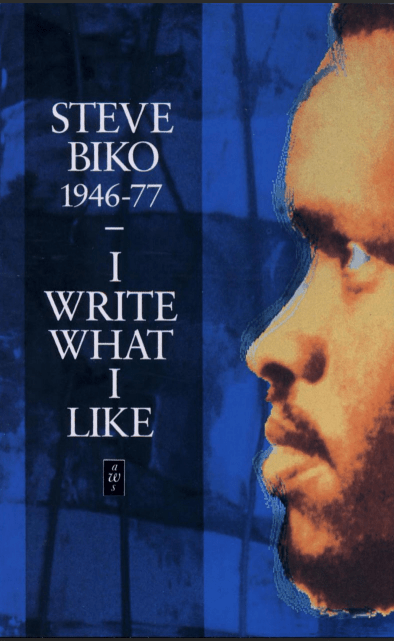
“I Write What I Like” by Steve Biko_Audiobook

Steve Biko: The African Revolutionary, Why was he Killed? From: African Biographics

Learm more in RBG Communiversity Knowledge Media eLibrary:

The Apocalypse of Settler Colonialism: The Roots of Slavery, White Supremacy, and Capitalism in 17th Century North America and the Caribbean, by Gerald Horne_eBook and Audiobook

Book Summary (abridged)

“The Apocalypse of Settler Colonialism: The Roots of Slavery, White Supremacy, and Capitalism in 17th Century North America and the Caribbean” by Gerald Horne provides a comprehensive analysis of how the foundations of modern systemic racism, colonial exploitation, and capitalist structures were established in the 17th century. Horne examines the intersections of slavery, white supremacy, and colonialism, arguing that these elements were not only products of their time but also integral to the development of societal norms and economic systems that persist today. Through a detailed historical account, Horne reveals the consequences of these dynamics for Africans and Indigenous peoples, emphasizing the significance of resistance and the ongoing legacy of colonialism.

  • Introduction
    • Overview of the book’s goals and thematic focus
    • Discussion of the historical context surrounding the emergence of settler colonialism
    • Introduction to key concepts: slavery, white supremacy, and capitalism
  • Chapter 1: Beginning
    • Examination of the initial stages of European colonization in North America and the Caribbean
    • Analysis of the motivations behind European imperial expansion
    • Discussion of early interactions between colonizers and Indigenous populations
  • Chapter 2: No Providence for Africans and the Indigenous
    • Exploration of the systemic exclusion of Africans and Indigenous peoples from rights and protections
    • Analysis of the ideological frameworks that justified their marginalization
    • Discussion of the economic interests that underpinned these exclusionary practices
  • Chapter 3: The Rise of the Merchants and the Beheading of a King
    • Examination of the emerging merchant class and its role in colonial economies
    • Analysis of the political upheaval, including the beheading of King Charles I, and its implications for colonial governance
    • Discussion of how these events influenced colonial attitudes toward slavery and Indigenous peoples
  • Chapter 4: Jamaica Seized from Spain: Slavery and the Slave Trade Expand
    • Exploration of the British takeover of Jamaica and its transformation into a plantation economy
    • Analysis of how the expansion of slavery and the slave trade fueled economic growth in the Caribbean
    • Discussion of the social and cultural impacts of this transformation on enslaved Africans
  • Chapter 5: The Dutch Ousted from the Mainland: Slavery and the Slave Trade Expand
    • Examination of the ousting of the Dutch from North America and the subsequent expansion of slavery
    • Analysis of the economic motivations behind this transition and its impact on colonial society
    • Discussion of the implications for Indigenous peoples and enslaved Africans
  • Chapter 6: More Enslaved Africans Arrive in the Caribbean—Along with More Revolts
    • Exploration of the increasing influx of enslaved Africans into the Caribbean and the resulting demographic changes
    • Analysis of the revolts and resistance movements that emerged in response to oppressive conditions
    • Discussion of the significance of these revolts in shaping colonial policies and perceptions
  • Chapter 7: The Spirit of 1676: The Identity Politics of “Whiteness” and Prelude to Colonial Secession
    • Examination of the events surrounding Bacon’s Rebellion and the rise of “whiteness” as a unifying identity among European settlers
    • Analysis of how identity politics influenced colonial governance and social structures
    • Discussion of the implications for Indigenous peoples and enslaved Africans in the context of colonial secession
  • Chapter 8: The “Glorious Revolution” of 1688: Not so Glorious for Africans and the Indigenous
    • Exploration of the Glorious Revolution and its impact on colonial policies regarding slavery and Indigenous relations
    • Analysis of the ways in which the revolution reinforced existing power structures and racial hierarchies
    • Discussion of the consequences for African and Indigenous populations in the aftermath of these events
  • Chapter 9: Apocalypse Now
    • Examination of the cumulative effects of settler colonialism on African and Indigenous peoples
    • Analysis of the contemporary repercussions of historical injustices rooted in the colonial period
    • Discussion of the ongoing struggles for justice and the need for a reckoning with the past

Significance of the Book

Gerald Horne’s “The Apocalypse of Settler Colonialism” is a critical text that sheds light on the deep historical roots of systemic racism, economic exploitation, and social hierarchies in North America and the Caribbean. By tracing these issues back to the 17th century, Horne provides a nuanced understanding of how colonial practices have shaped modern society. The book serves as an essential resource for scholars, activists, and anyone interested in unpacking the historical complexities of race, class, and colonialism, emphasizing the importance of recognizing and addressing the legacies of these systems in contemporary struggles for equity and justice.

Gerald Horne’s “The Apocalypse of Settler Colonialism”_eBook

Pop the documents out from the upper right to read / expand / download.

Gerald Horne’s “The Apocalypse of Settler Colonialism”_Audiobook

Learn more in RBG Communiversity Knowledge Media eLibrary: