WINNER OF THE EISNER AWARD • “A bold and fascinating graphic novel history of the revolutionary Black Panther Party.”
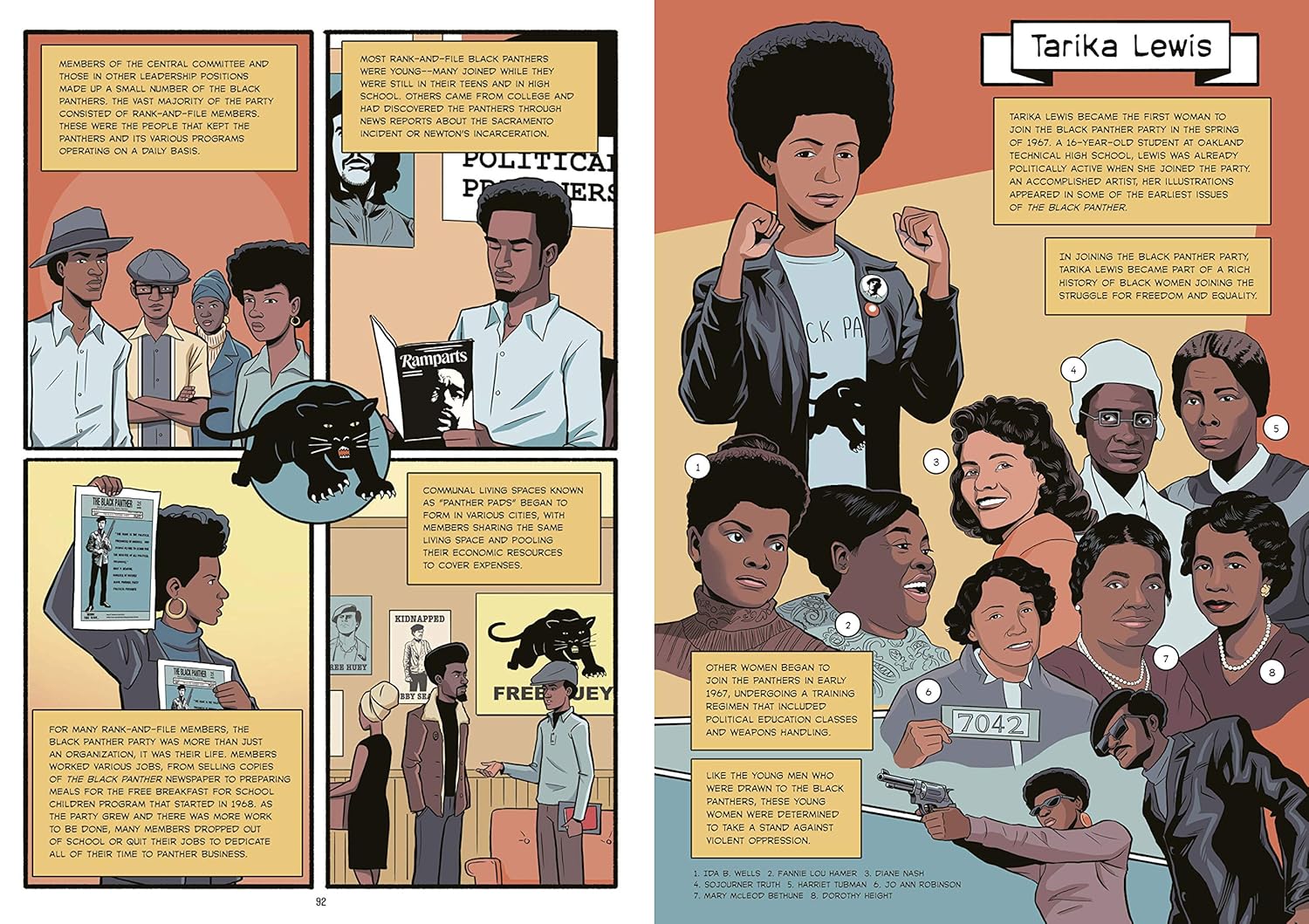
Founded in Oakland, California, in 1966, the Black Panther Party for Self-Defense was a radical political organization that stood in defiant contrast to the mainstream civil rights movement. This gripping illustrated history explores the impact and significance of the Panthers, from their social, educational, and healthcare programs that were designed to uplift the Black community to their battle against police brutality through citizen patrols and frequent clashes with the FBI, which targeted the Party from its outset.
Using dramatic comic book-style retellings and illustrated profiles of key figures, The Black Panther Party captures the major events, people, and actions of the party, as well as their cultural and political influence and enduring legacy.
The Black Panther Party: A Graphic Novel History, by David F. Walker (Author), Marcus Kwame Anderson (Illustrator)
Pop the document out from the upper right to read / expand / download.
RBG| FBI_COINTELPRO Video Education Player
8 Video Playlist
Learn more in RBG Communiversity Knowledge Media eLibrary:
The Black Panther Party for Self-Defense was founded in Oakland, California, in 1966 by Huey P. Newton and Bobby Seale. It was perhaps the most visible of the Black Power groups in the late 60s and early 70s, not least because of its confrontational politics, its rejection of nonviolence, and its headline-catching, gun-toting militancy. Important on the national scene and highly visible on college campuses, the Panthers also worked at building grassroots support for local black political and economic power. Although there have been many books about the Black Panthers, none has looked at the organization and its work at the local level. This book examines the work and actions of seven local initiatives in Baltimore, Winston-Salem, Cleveland, Indianapolis, Milwaukee, Philadelphia, and Los Angeles. These local organizations are revealed as committed to programs of community activism that focused on problems of social, political, and economic justice.
Comrades: A Local History of the BPP_eBook
Pop the document out from the upper right to read / expand / download.
Comrades: A Local History of the BPP_Audiobook
Part 1
Part 2
Rebuild Collective Video Education Player
11 Video Playlist
Learn more in RBG Communiversity Knowledge Media eLibrary:
“Revolutionary Path” by Kwame Nkrumah is a significant work detailing the author’s political philosophy, his vision for Africa, and the strategies he believed necessary for achieving liberation and development. Below is an outline and summary of the key themes and concepts of the book.
Introduction
Nkrumah’s motivations for writing the book
The context of African liberation movements
Historical Context
The colonial legacy in Africa
The role of imperialism in shaping African politics
Nkrumah’s experiences and observations
Philosophy of Revolution
Definition of revolution in the African context
The importance of self-determination
Nkrumah’s concept of “Consciencism”
Melding of African traditions with socialist principles
The Path to Independence
Strategies for achieving political liberation
The role of mass movements and grassroots organization
Importance of Pan-Africanism
Building a New Society
Economic strategies for post-colonial Africa
Emphasis on education and industrialization
The need for unity among African nations
Challenges and Obstacles
Internal and external threats to revolutionary movements
The role of neocolonialism
Conclusion
Nkrumah’s vision for the future of Africa
Call to action for African leaders and citizens
Summary in Bullet Points
Motivation: Nkrumah expresses the necessity of a revolutionary path for African nations emerging from colonialism.
Colonial Legacy: Discusses how colonial history has shaped current political landscapes and the need for a radical change.
Revolution Defined: Emphasizes that a true revolution must involve complete self-determination and liberation from imperialist control.
Consciencism: Introduces his philosophy that combines African cultural heritage with socialist ideals to forge a unique path for development.
Strategies for Independence: Advocates for mass mobilization, political organization, and coalition-building among various factions.
Pan-Africanism: Stresses the importance of unity among African nations to combat neocolonialism and promote collective progress.
Economic Development: Proposes that post-independence Africa must focus on education, industry, and self-sufficiency to thrive.
Neocolonialism: Warns against the subtler forms of colonialism, which threaten the sovereignty of African states even after formal independence.
Vision for the Future: Calls for a collective effort to build a prosperous and united Africa, free from external domination.
“Revolutionary Path” serves as both a historical account and a blueprint for future generations seeking to navigate the complexities of post-colonial Africa. Nkrumah’s insights continue to resonate in discussions of nationalism, unity, and development on the continent.
“Revolutionary Path” is a profound exploration of the political, social, and economic challenges facing Africa in the wake of colonial rule. Here are some deeper insights into the key themes and ideas presented in the book:
Key Themes and Ideas
Colonial Legacy:
Nkrumah discusses how the colonial experience has left deep scars on African societies, creating divisions and dependencies that hinder progress. He emphasizes that true independence cannot be achieved merely through political freedom but requires a complete restructuring of societal norms and economic systems.
Philosophy of Consciencism:
This concept is central to Nkrumah’s ideology. Consciencism combines African cultural values with socialist principles, advocating for a new identity rooted in both tradition and modernity. Nkrumah argues that this philosophy is essential for creating a cohesive national consciousness that can drive the revolutionary movement.
Mass Mobilization:
Nkrumah stresses the importance of involving the masses in the revolutionary struggle. He believes that true change comes from the grassroots level, and political movements must be inclusive and representative of the people’s aspirations. He highlights successful examples of mass movements in Africa and their role in achieving independence.
Pan-African Unity:
The author passionately argues for the unity of African nations as a strategy for combating imperialism and neocolonialism. He envisions a united Africa where countries collaborate economically and politically, sharing resources and knowledge to enhance collective development.
Economic Independence:
Nkrumah outlines a vision for economic self-sufficiency, emphasizing the need for African nations to develop their own industries and agricultural systems. He argues that reliance on foreign powers for economic support perpetuates dependency and undermines sovereignty.
Challenges of Neocolonialism:
He warns that the struggle for independence is not over with the end of colonial rule. Neocolonialism, characterized by foreign economic and political influence, continues to threaten African nations. Nkrumah calls for vigilance and proactive measures to resist these new forms of domination.
Education and Enlightenment:
Education is portrayed as a crucial tool for empowerment and development. Nkrumah believes that educating the populace will foster critical thinking, political awareness, and a sense of responsibility among citizens, enabling them to participate actively in nation-building.
Call to Action:
Throughout the book, Nkrumah urges African leaders and citizens to embrace the revolutionary path. He calls for action, solidarity, and commitment to the ideals of freedom, justice, and equality, stressing that the future of Africa depends on collective efforts.
Impact and Legacy
“Revolutionary Path” is more than just a political manifesto; it serves as a historical document reflecting Nkrumah’s vision for a liberated Africa. His ideas have influenced numerous movements and leaders across the continent, inspiring a generation to fight for self-determination and social justice.
Overall, Nkrumah’s work is a vital reminder of the complexities involved in achieving true independence and the ongoing struggles that many African nations face. His call for unity, self-reliance, and a commitment to revolutionary ideals continues to resonate today as Africa navigates its path in a globalized world.
Revolutionary Path_eBook
Pop the document out from the upper right to read / expand / download.
Revolutionary Path_Audiobook
Part 1
Part 2
Africa Must Unite Video Player
14 Video Playlist
Learn more in RBG Communiversity Knowledge Media eLibrary:
“Claim No Easy Victories: The Legacy of Amilcar Cabral,” edited by Firoze Manji and Bill Fletcher Jr., is a comprehensive exploration of the life, ideas, and enduring impact of Amilcar Cabral, a prominent leader in the struggle for independence in Guinea-Bissau and Cape Verde. The book brings together essays and reflections from various scholars, activists, and thinkers who examine Cabral’s contributions to anti-colonial struggles, revolutionary theory, and the broader fight for social justice. Through this anthology, the editors aim to highlight Cabral’s legacy as a source of inspiration for contemporary movements and to explore the relevance of his ideas in addressing current global issues of oppression and inequality.
The outline that follows captures the main themes and structure of “Claim No Easy Victories,” highlighting the critical discussions within the anthology regarding Amilcar Cabral’s legacy and its significance for contemporary social justice movements. The book serves as an important resource for understanding the complexities of anti-colonial struggles and the ongoing fight for liberation and equality.
I. Introduction
Overview of the book’s purpose: to explore Amilcar Cabral’s legacy and contributions
Introduction to Firoze Manji and Bill Fletcher Jr. as editors and their significance in the discourse of social justice
The importance of Cabral’s philosophy in contemporary movements
II. Historical Context of Cabral’s Work
Examination of the colonial context in Guinea-Bissau and Cape Verde
Overview of Cabral’s role in the anti-colonial struggle and the founding of the African Party for the Independence of Guinea and Cape Verde (PAIGC)
Discussion of the political landscape of Africa during Cabral’s time
III. Cabral’s Revolutionary Theory
Analysis of Cabral’s ideas on revolutionary struggle, national liberation, and socialism
Exploration of his concept of “cultural identity” and its importance in the liberation process
Discussion of the relationship between theory and practice in Cabral’s philosophy
IV. The Role of Culture in Liberation
Examination of Cabral’s views on culture as a tool for resistance and empowerment
Analysis of the role of education and consciousness-raising in the liberation movement
Discussion of how Cabral integrated cultural elements into the political struggle
V. Lessons from Cabral’s Leadership
Insights into Cabral’s leadership style and his approach to organizing and mobilizing people
Exploration of his emphasis on unity, collective action, and grassroots involvement
Analysis of the challenges faced by Cabral and the PAIGC and the lessons learned from their experiences
VI. Cabral’s Legacy in Contemporary Movements
Examination of how Cabral’s ideas resonate with current social justice movements globally
Discussion of his influence on contemporary thinkers and activists in Africa and beyond
Exploration of the relevance of Cabral’s philosophy in addressing modern issues such as globalization, imperialism, and inequality
VII. Reflections on Anti-Colonial Struggles
Critical analysis of the successes and failures of anti-colonial movements in Africa post-Cabral
Discussion of the ongoing struggles against neocolonialism and exploitation
Insights into the importance of maintaining a revolutionary spirit in contemporary activism
VIII. Conclusion
Summary of key themes and insights from the anthology
Reflection on the enduring relevance of Amilcar Cabral’s legacy in today’s world
A call to action for current and future generations to draw inspiration from Cabral’s teachings in their struggles for justice and liberation
“Claim No Easy Victories: The Legacy of Amilcar Cabral,” edited by Firoze Manji and Bill Fletcher Jr., is a significant anthology that pays homage to Amilcar Cabral’s contributions to anti-colonial movements and revolutionary thought. Cabral, a key figure in the struggle for independence in Guinea-Bissau and Cape Verde, is celebrated for his profound insights into the nature of colonialism, culture, and liberation. The book brings together a diverse range of essays that explore various aspects of Cabral’s legacy, shedding light on the relevance of his ideas in contemporary struggles for justice and equality.
Key Themes and Insights
Historical Context of Colonial Struggles:
The anthology begins by situating Cabral within the historical context of colonialism in Africa. It discusses the oppressive systems that existed in Guinea-Bissau and Cape Verde, where Cabral emerged as a revolutionary leader advocating for independence.
The contributions outline the conditions that led to the formation of the African Party for the Independence of Guinea and Cape Verde (PAIGC) and the significance of Cabral’s leadership in galvanizing support for the liberation movement.
Cabral’s Revolutionary Theory:
One of the central themes of the book is Cabral’s theoretical contributions to revolutionary practice. His ideas on national liberation, socialism, and the importance of integrating culture into the struggle for independence are thoroughly analyzed.
Cabral emphasized that liberation is not merely a political or military endeavor but also a cultural and psychological process. This holistic approach is a key aspect of his legacy.
The Role of Culture in Liberation:
A significant focus of Cabral’s work was the interplay between culture and liberation. He believed that understanding and embracing cultural identity were essential for building a cohesive movement against colonial oppression.
The essays explore how Cabral advocated for education, art, and cultural expression as means of fostering unity and resistance, illustrating how culture can empower communities to articulate their struggles and aspirations.
Leadership and Mobilization:
The anthology reflects on Cabral’s leadership style, characterized by his emphasis on collective action, grassroots involvement, and the necessity of engaging the masses in the liberation struggle.
Contributors discuss the challenges Cabral faced in mobilizing diverse communities and the strategies he employed to overcome divisions, highlighting the importance of solidarity in revolutionary movements.
Legacy in Contemporary Movements:
The relevance of Cabral’s ideas to contemporary social justice movements is a recurring theme throughout the book. Contributors draw connections between Cabral’s philosophies and current struggles against globalization, imperialism, and systemic inequality.
The anthology illustrates how Cabral’s emphasis on cultural identity and grassroots organizing continues to inspire activists and movements around the world, reinforcing the idea that liberation struggles are interconnected.
Reflections on Anti-Colonial Successes and Failures:
The essays critically assess the successes and challenges faced by anti-colonial movements in the aftermath of independence. They analyze how the ideals of liberation have sometimes been undermined by neocolonial practices and internal conflicts.
Contributors call for a renewed commitment to the principles of solidarity, unity, and revolutionary spirit that Cabral championed, emphasizing the importance of learning from both successes and setbacks in the quest for justice.
A Call to Action:
The anthology concludes with a powerful call to action, urging current and future generations to draw inspiration from Cabral’s teachings as they navigate the complexities of contemporary struggles for social justice.
It emphasizes the need for continued engagement, activism, and the pursuit of a more equitable world, reminding readers that the fight for liberation is ongoing and requires collective effort.
Conclusion
“Claim No Easy Victories” serves as an important tribute to Amilcar Cabral, encapsulating his profound influence on revolutionary thought and practice. The anthology highlights the enduring relevance of his ideas for contemporary movements seeking to address issues of oppression, inequality, and social justice.
Through its diverse contributions, the book not only honors Cabral’s legacy but also encourages critical reflection on the nature of liberation and the ongoing struggles faced by marginalized communities worldwide. It stands as a vital resource for scholars, activists, and anyone interested in understanding the complexities of anti-colonial movements and the potential for transformative change inspired by Cabral’s vision.
Claim No Easy Victories: The Legacy of Amilcar Cabral, Edited by Firoze Manji and Bill Fletcher Jr._eBook
Pop the documents out from the upper right to read / expand / download.
Claim No Easy Victories_Audiobook
Audio start with Preface and corresponds with page 20 of the above eBook Reader








 RBG Communiversity: Message 2 Da Grassroots
You must be logged in to post a comment.