A Revolutionary for Our Time: The Walter Rodney Story by Leo Zeilig_eBook and Audiobook, with HAP 123-History Teaches Us- Walter Rodney

Book Summary

A Revolutionary for Our Time: The Walter Rodney Story by Leo Zeilig is a biography that delves into the life and legacy of Walter Rodney, a prominent Guyanese historian, political activist, and revolutionary. The book highlights Rodney’s contributions to Caribbean intellectual thought, his critiques of colonialism and imperialism, and his dedication to social justice and the empowerment of the oppressed. Through Rodney’s story, Zeilig explores broader themes of race, class, and resistance in the Caribbean, as well as the impact of Rodney’s work on contemporary movements for social change.

Key Themes and Historical Context:

  1. Introduction to Walter Rodney
    • Overview of Rodney’s significance in Caribbean history
    • Brief introduction to his early life and background
  2. Early Life and Education
    • Rodney’s upbringing in British Guiana
    • Educational experiences and early influences
    • Development of his political consciousness
  3. Academic Career and Historical Contributions
    • Rodney’s work as a historian and scholar
    • Key publications and their impact (e.g., “How Europe Underdeveloped Africa”)
    • Methodological approaches and critiques of traditional historiography
  4. Political Activism and Leader of the People’s Movement
    • Involvement in political movements in Guyana
    • Formation of the Working People’s Alliance (WPA)
    • Advocacy for the rights of marginalized communities
  5. Colonialism and Imperialism
    • Rodney’s critique of colonial structures
    • Analysis of the effects of colonialism on Caribbean societies
    • Advocacy for decolonization and self-determination
  6. Exile and International Influence
    • Rodney’s experiences of exile and its impact on his work
    • Connections with other revolutionary movements in the Caribbean and globally
    • Participation in international forums and discussions
  7. Legacy and Impact
    • Rodney’s influence on subsequent generations of activists and scholars
    • The continuing relevance of his ideas in contemporary struggles
    • Commemoration of Rodney’s life and work in cultural memory
  8. Conclusion
    • Reflection on Walter Rodney’s contributions as a revolutionary thinker
    • The importance of his legacy in the fight for social justice and equality

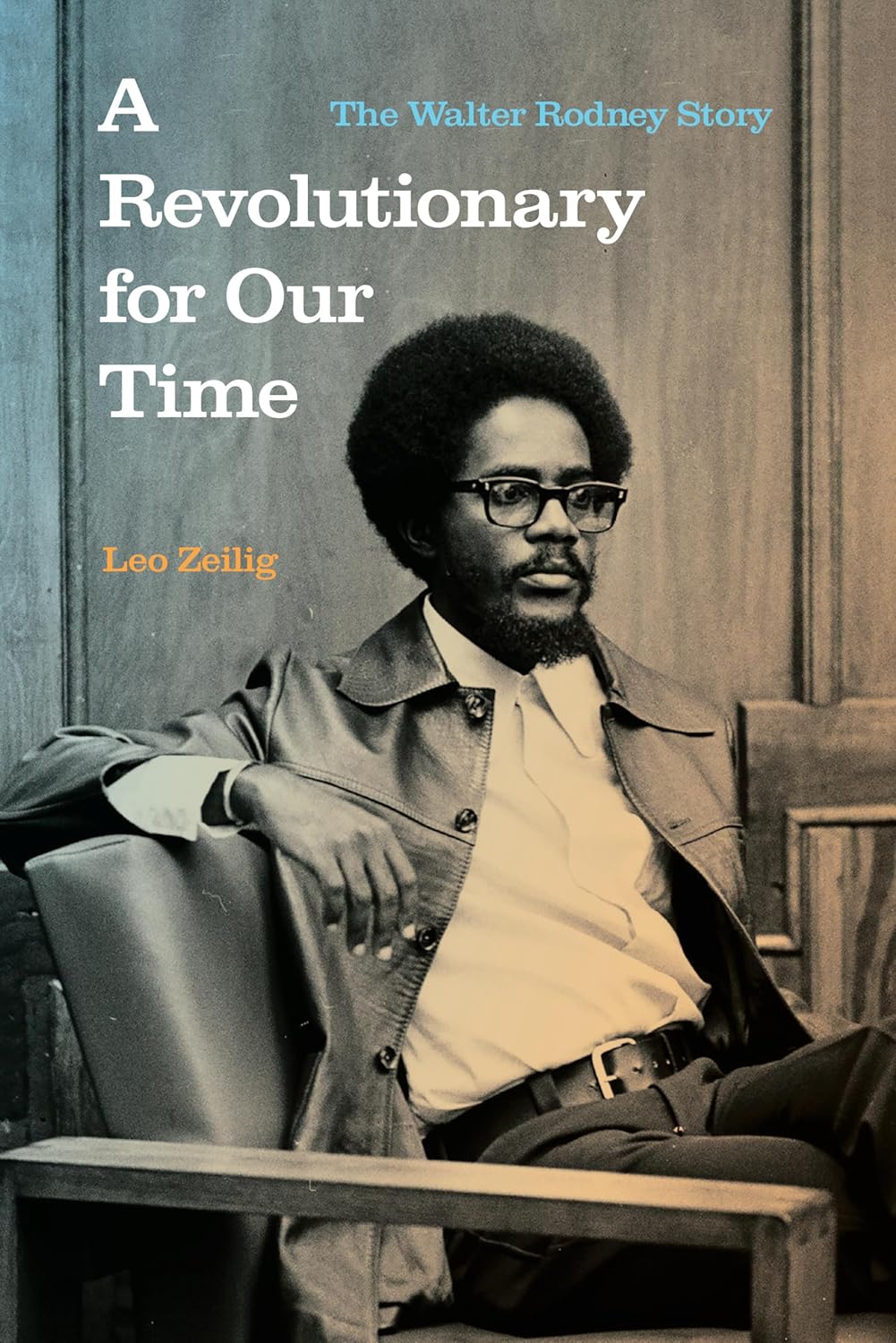
A Revolutionary for Our Time: The Walter Rodney Story_eBook

Walter Rodney was a scholar, working class militant, and revolutionary from Guyana. Strongly influenced by Marxist ideas, he remains central to radical Pan-Africanist thought for large numbers of activists’ today. Rodney lived through the failed –though immensely hopeful -socialist experiments in the 1960s and 1970s, in Tanzania and elsewhere. The book critically considers Rodney’s contribution to Marxist theory and history, his relationship to dependency theory and the contemporary significance of his work in the context of movements and politics today. The first full-length study of Rodney’s life, this book is an essential introduction to Rodney’s work.

Pop the document out from the upper right to read / expand / download.

A Revolutionary for Our Time: The Walter Rodney Story_Audiobook

Part 1

Part 2

HAP 123-History Teaches Us- Walter Rodney

Learn more in RBG Communiversity Knowledge Media eLibrary:

War Against the Weak_Eugenics and America’s Campaign to Create a Master Race (Expanded Edition) eBook and Audiobook, by Edwin Black

Book Summary

“War Against the Weak: Eugenics and America’s Campaign to Create a Master Race” by Edwin Black explores the history of the eugenics movement in the United States, its philosophical underpinnings, and its impact on society. The book details how eugenics influenced policies aimed at controlling human reproduction, promoting racial purity, and ultimately, how these ideas contributed to the horrors of the Holocaust. Black argues that the eugenics movement was not only a European phenomenon but had deep roots and significant implementation in America.

Topics the Book Covers:

  1. Introduction to Eugenics
    • Definition and origins of eugenics
    • Overview of key figures in the movement
  2. The Philosophical Foundations
    • Social Darwinism and its influence
    • The role of science and pseudoscience in promoting eugenics
  3. Eugenics in America
    • Early eugenics movements in the U.S.
    • Key organizations and individuals involved (e.g., American Eugenics Society)
    • Public support and government endorsement
  4. Legislation and Policies
    • Overview of significant laws (e.g., sterilization laws)
    • Case studies of states implementing eugenics policies
    • Impact on marginalized groups (disabled, minorities)
  5. Eugenics and Immigration
    • How eugenics influenced immigration policies
    • Racial and ethnic discrimination in immigration laws
  6. The Role of Institutions
    • Eugenics in education and public health
    • The involvement of universities and medical institutions
  7. International Influence
    • American eugenics’ impact on Nazi Germany
    • The transfer of ideas and practices across borders
  8. Public Backlash and Decline
    • Critiques and challenges to eugenics
    • The eventual decline of the movement post-World War II
  9. Legacy of Eugenics
    • Lasting effects on American society and policies
    • Modern implications and ethical discussions
  10. Conclusion: Reflections on the moral lessons of the eugenics movement and call for awareness and vigilance against similar ideologies today.

War Against the Weak_eBook

War Against the Weak is the gripping chronicle documenting how American corporate philanthropies launched a national campaign of ethnic cleansing in the United States, helped found and fund the Nazi eugenics of Hitler and Mengele — and then created the modern movement of “human genetics.” Some 60,000 Americans were sterilized under laws in 27 states. This expanded edition includes two new essays on state genocide.

Pop the document out from the upper right to read / expand / download.

War Against the Weak_Audiobook

Part 1

Audio start in earnest (Introduction @ 15 mins. 38 sec.) and corresponds to page 20 of the above Reader.

Part 2

Learn more in RBG Communiversity Knowledge Media eLibrary:

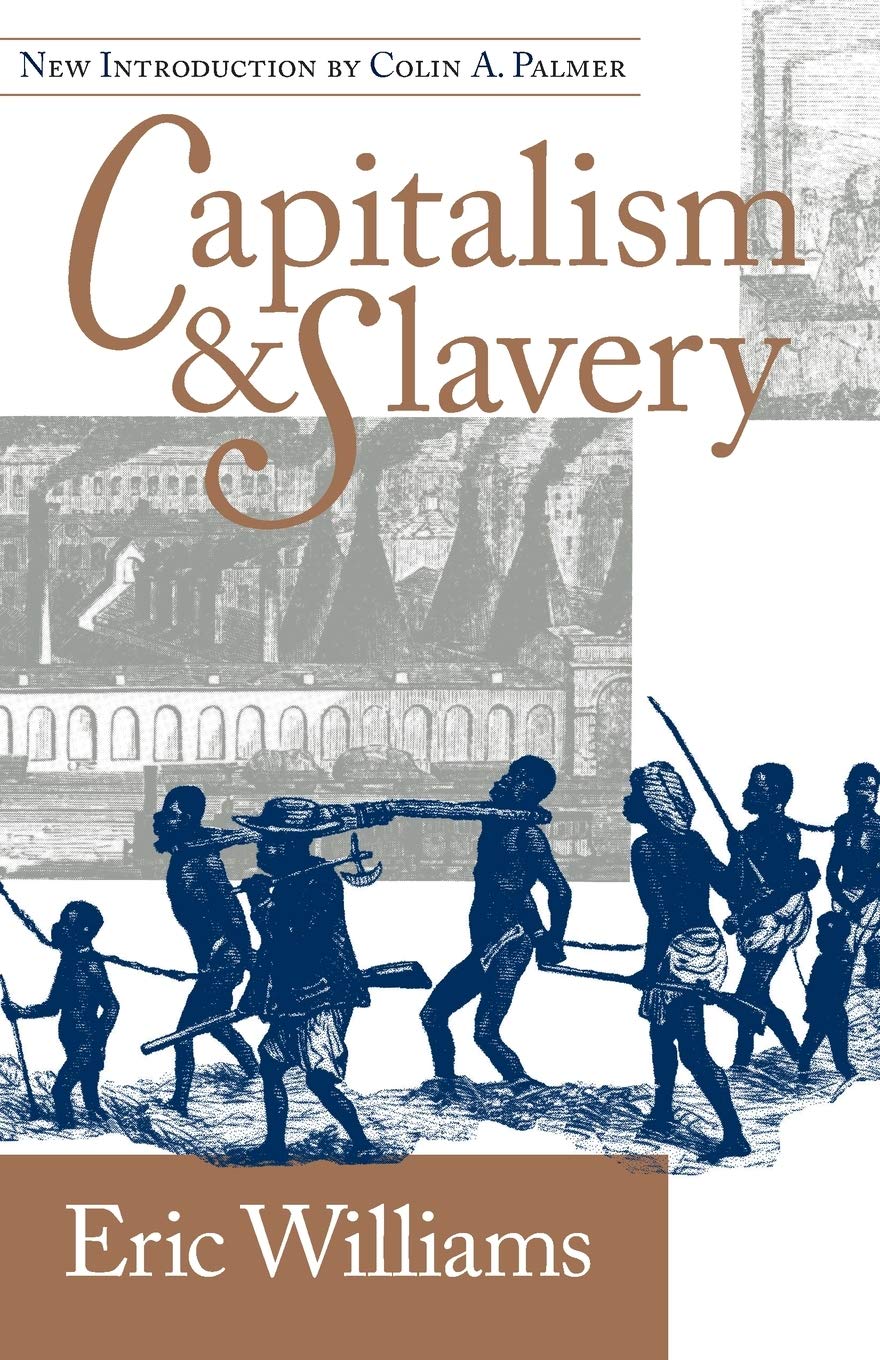
Capitalism and Slavery by Eric Williams_eBook and Audiobook, with Capitalism and Slavery – Eric William – 75 Years Later- 2 Day Symposium

Book Summary

“Capitalism and Slavery” by Eric Williams is a seminal work that investigates the relationship between the rise of capitalism in Europe and the system of slavery in the Americas. Williams argues that the profits derived from the slave trade and plantation economies were instrumental in fueling the growth of European capitalism, particularly in Britain. The book challenges conventional historical narratives that separate economic development from the exploitation of enslaved people, highlighting how slavery was not only a moral issue but also a critical economic factor in the development of modern capitalism. Williams’ analysis underscores the interconnectedness of race, economics, and history, making a significant contribution to the study of both slavery and economic history.

Essential Themes and Arguments:

  1. Introduction
    • Overview of the book’s objectives and significance
    • Introduction to the central thesis linking capitalism and slavery
    • Contextualization of the historical period under discussion
  2. The Economic Foundations of Slavery
    • Analysis of the economic motivations behind the transatlantic slave trade
    • The role of sugar and other cash crops in the Caribbean economy
    • Examination of the financial networks that supported the slave trade
  3. The Impact of Slavery on British Capitalism
    • Discussion of how profits from slavery contributed to British industrialization
    • Examination of the relationship between slave-derived wealth and British economic growth
    • Analysis of the investment in infrastructure and industry enabled by slave profits
  4. Political and Social Implications
    • Exploration of the political considerations surrounding slavery and abolition
    • Discussion of the social tensions and class struggles linked to the slave economy
    • Examination of the role of enslaved people in resisting their oppression
  5. Abolition and Its Consequences
    • Analysis of the abolition movement and its economic implications
    • Discussion of the motivations behind abolition, including economic shifts
    • Examination of the effects of abolition on both the colonies and Britain
  6. Racial Ideologies and Economic Interests
    • Exploration of how racial theories justified slavery and exploitation
    • Discussion of the intersection of race and economics in shaping societal views
    • Examination of the legacy of these ideologies in contemporary society
  7. Legacy of Slavery in Modern Capitalism
    • Reflection on the long-term economic effects of slavery on global capitalism
    • Discussion of the continued inequalities stemming from historical exploitation
    • Analysis of how understanding this legacy informs current socio-economic debates
  8. Conclusion
    • Summary of key themes and arguments presented throughout the book
    • Final reflections on the importance of recognizing the ties between capitalism and slavery
    • Call for a reevaluation of historical narratives regarding slavery and economic development

Capitalism and Slavery by Eric Williams_eBook

Slavery helped finance the Industrial Revolution in England. Plantation owners, shipbuilders, and merchants connected with the slave trade accumulated vast fortunes that established banks and heavy industry in Europe and expanded the reach of capitalism worldwide. Eric Williams advanced these powerful ideas in Capitalism and Slavery, published in 1944. Years ahead of its time, his profound critique became the foundation for studies of imperialism and economic development. Binding an economic view of history with strong moral argument, Williams’s study of the role of slavery in financing the Industrial Revolution refuted traditional ideas of economic and moral progress and firmly established the centrality of the African slave trade in European economic development. He also showed that mature industrial capitalism in turn helped destroy the slave system. Establishing the exploitation of commercial capitalism and its link to racial attitudes, Williams employed a historicist vision that set the tone for future studies. In a new introduction, Colin Palmer assesses the lasting impact of Williams’s groundbreaking work and analyzes the heated scholarly debates it generated when it first appeared.

Pop the document out from the upper right to read / expand / download.

Capitalism and Slavery by Eric Williams_Audiobook

Capitalism and Slavery – Eric William – 75 Years Later- 2 Day Symposium

The CARICOM Reparations Commission in collaboration with the UWI Centre for Reparation Research and the Faculty of Humanities and Education at the UWI St. Augustine Campus is hosting an academic symposium to commemorate the 75th year of the publication of Eric Williams’ Capitalism and Slavery on the 13th November 2019. The themes to be discussed include: • Williams’ Caribbean Vision • The Profits from Enslavement (16th – 19th Century) • Impact of Capitalism and Slavery on the world today (21st Century) • Capitalism and Slavery and Reparations • Capitalism and Slavery – Global Connections • Decolonising Caribbean History At this symposium, we seek to gather scholars, intellectuals, corporate interest groups, artists, and activists to join us to examine the impact of Eric Williams and his work on the contemporary Caribbean and wider world. This symposium will also provide an opportunity to discuss his legacy with the next generation of leaders and intellectuals. Such commemorative activities are taking place all over the world. Symposiums will be held in Britain and the United States. We are adding the Caribbean’s voice through this symposium at the UWI.

14 Video Playlist

Learn more in RBG Communiversity Knowledge Media eLibrary:

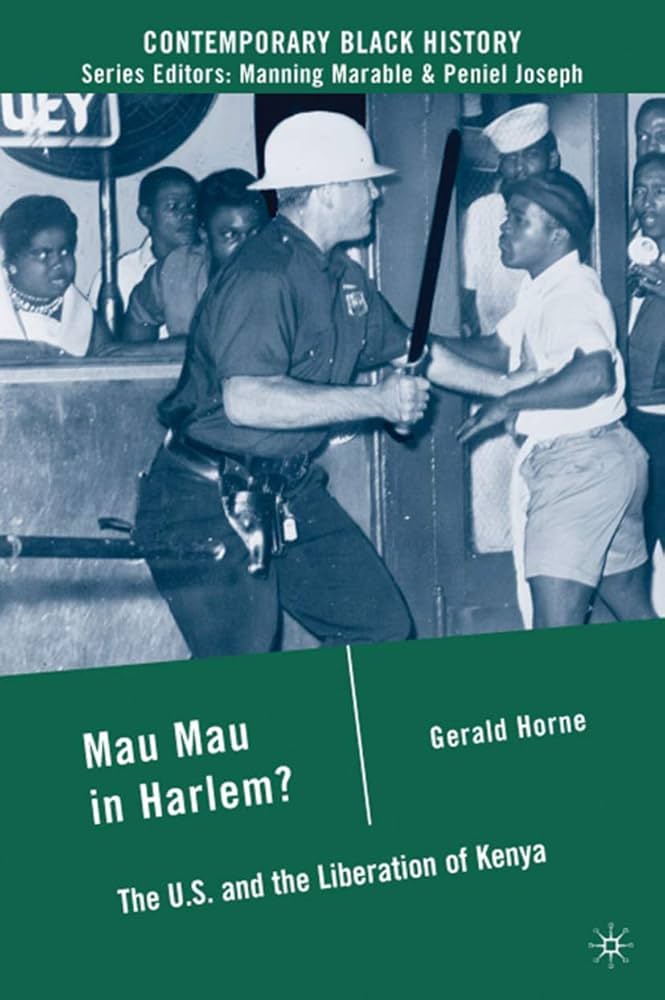
Mau Mau in Harlem?_The U.S. and the Liberation of Kenya, Gerald Horne|eBook and Audiobook| (Contemporary Black History), with Mau Mau Warrior Illustrated eBook, by Abiodun Alao (Author), Christa Hook (Illustrator).

Book Summary:

“Mau Mau in Harlem?: The U.S. and the Liberation of Kenya” is a book by historian Gerald Horne which explores the connections between the African-American Civil Rights movement in the United States and the Mau Mau uprising in Kenya, specifically how the struggle for Kenyan independence resonated with African Americans, leading to a sense of solidarity and even the idea of a “Mau Mau” movement within Harlem and other Black communities in the U.S. 

Key points about the book:

  • Focus on the Mau Mau: The book delves into the Mau Mau Uprising, a violent guerrilla campaign by Kenyan Kikuyu people against British colonial rule in the 1950s, primarily focused on land rights and self-determination. 
  • Harlem connection: It analyzes how the struggles of the Mau Mau movement were closely followed and supported by African Americans in Harlem, New York, who saw parallels with their own fight for civil rights in the United States. 
  • Scholarly research: Horne draws on extensive archival research conducted in the US, UK, and Kenya to provide a nuanced understanding of the interconnectedness between the two movements. 
  • Impact on Black consciousness: The book argues that the Mau Mau rebellion contributed to a growing sense of Black consciousness and solidarity among African Americans, further fueling the civil rights movement. 
  • The Mau Mau Uprising: This was a violent resistance movement against British colonial rule in Kenya, primarily led by the Kikuyu tribe, during the 1950s. 
  • African (American) Solidarity: The book argues that African Americans saw parallels between the Kenyan struggle against British colonialism and their own fight for civil rights in the U.S., leading to significant support for the Mau Mau movement within the Black community. 
  • Malcolm X’s “Mau Mau in Harlem” reference: A prominent example of this connection is Malcolm X’s statement about the potential need for a “Mau Mau” style uprising in Harlem, signifying a willingness to use more militant tactics to achieve racial equality. 
  • Historical Context: The book examines the broader historical context of the Cold War, where the U.S. was keen to demonstrate its anti-colonial stance, leading to some level of support for Kenyan independence. 

Mau Mau in Harlem, Gerald Horne?_eBook

Pop the documents out from the upper right to read / expand / download.

Mau Mau in Harlem, Gerald Horne?_Audiobook

Audio start in earnest (Introduction @ 4 mins. 45 sec.) and corresponds to page 12 of the above Reader.

Part 1

Part 2

Mau Mau Warrior Illustrated eBook, by Abiodun Alao (Author), Christa Hook (Illustrator).

Amazon Books: “Osprey’s study of the Mau Mau Rebellion (1952-1960) in Kenya and its fighters. The Mau Mau Freedom Fighters waged a guerrilla war for eight years against their British colonial rulers, which became known as the Mau Mau Uprising. The Mau Mau sought to win back their land and independence. This underground militia was an extremely powerful force employing tactics, which included the assassination of British settlers and the Africans who collaborated with the British, as well as raiding colonial prisons for weapons and staging daring ambushes in the Kenyan forests and mountains. The conflict saw these untrained warriors, deemed by many to be terrorists employ an innovative mix of traditional African warfare tactics, counterinsurgency methods and European firepower. The uprising ended in failure but set the stage for Kenyan independence in 1963. This title will explore their unique motivations, training and tactics, as well as their battle experience.”

Learn more in RBG Communiversity Knowledge Media eLibrary:

In the Spirit of Crazy Horse: The Story of Leonard Peltier and the FBI’s War on the American Indian Movement, by Peter Matthiessen| eBook and Audiobook, with FREE Leonard Peltier Video Player

In the Spirit of Crazy Horse is a chronicle of a fatal gun-battle between FBI agents and American Indian Movement activists by renowned writer Peter Matthiessen (1927-2014).

Book Summary

“In the Spirit of Crazy Horse: The Story of Leonard Peltier and the FBI’s War on the American Indian Movement” by Peter Matthiessen is a profound examination of the life of Leonard Peltier, a Native American activist and a key figure in the American Indian Movement (AIM). The book details the events surrounding the 1975 shootout at Wounded Knee, the subsequent FBI investigation, and the controversial trial of Peltier, who was convicted of murder in the deaths of two FBI agents. Matthiessen’s narrative provides insights into the systemic oppression faced by Native Americans, the FBI’s aggressive tactics against AIM, and the broader struggles for Indigenous rights in the United States.

Essential Themes and Historical Context:

  1. Introduction to Leonard Peltier
    • Overview of Peltier’s significance within the American Indian Movement
    • Introduction to the themes of oppression and resistance in Native American history
  2. Historical Context of the American Indian Movement
    • The formation of AIM and its goals
    • Key events leading to the rise of Native activism in the 1960s and 1970s
    • The impact of historical injustices on Indigenous communities
  3. The Wounded Knee Incident
    • Description of the 1973 occupation of Wounded Knee
    • Tensions between AIM activists and federal authorities
    • Major events and confrontations during the occupation
  4. The Shootout and Its Aftermath
    • Detailed account of the 1975 shootout that led to the deaths of FBI agents
    • The immediate aftermath and the FBI’s response to the incident
    • The portrayal of Peltier in the media and by the authorities
  5. The FBI’s Campaign Against AIM
    • Examination of the FBI’s surveillance and counterintelligence operations targeting AIM
    • Analysis of tactics used by the FBI to infiltrate and undermine the movement
    • The broader implications of the FBI’s actions on Native American activism
  6. Trial and Conviction of Leonard Peltier
    • Overview of Peltier’s arrest and the legal proceedings that followed
    • Discussion of the evidence presented during the trial and its controversies
    • Examination of claims regarding the fairness of the trial and the judicial system
  7. Public Support and Advocacy
    • Overview of the grassroots movements and public campaigns advocating for Peltier
    • The role of various organizations in raising awareness of his case
    • The significance of international attention and support for Indigenous rights
  8. Legacy and Ongoing Struggles
    • Reflection on Peltier’s impact on the fight for Indigenous rights and justice
    • Discussion of the continuing issues faced by Native Americans today
    • The importance of remembering and honoring the struggles of Indigenous peoples
  9. Conclusion
    • Summary of key themes and insights from Matthiessen’s narrative
    • Final reflections on the significance of Leonard Peltier’s story in the context of American history

In the Spirit of Crazy_eBook

“On a hot June morning in 1975, a desperate shoot-out between FBI agents and Native Americans near Wounded Knee, South Dakota, left an Indian and two federal agents dead. Four members of the American Indian Movement were indicted on murder charges, and one, Leonard Peltier, was convicted and is now serving consecutive life sentences in a federal penitentiary. Behind this violent chain of events lie issues of great complexity and profound historical resonance, brilliantly explicated by Peter Matthiessen in this controversial book. Kept off the shelves for eight years because of one of the most protracted and bitterly fought legal cases in publishing history, In the Spirit of Crazy Horse reveals the Lakota tribe’s long struggle with the U.S. government, and makes clear why the traditional Indian concept of the earth is so important at a time when increasing populations are destroying the precious resources of our world.”

Pop the document out from the upper right to read / expand / download.

In the Spirit of Crazy_Audiobook

Audio start corresponds to page 8 of the above Reader.

Part 1

Part 2

Part 3

FREE Leonard Peltier Video Player

12 Video Playlist

Learn more in RBG Communiversity Knowledge Media eLibrary: