South Africa Files Case Against Israel at International Court of Justice_ A Multimedia Report

South Africa has launched a case at the International Court of Justice accusing Israel of genocide against Palestinians in Gaza. The application calls for the ICJ to grant an urgent order declaring Israel was in breach of its obligations under the Genocide Convention and to order Israel to immediately suspend military operations in Gaza. It is the latest move from the African nation attempting to increase international pressure on Israel. South Africa also closed its Israeli embassy in Pretoria and suspended all diplomatic relations with Israel last month. Israel, however, has rejected the African nation’s accusation of genocide in Gaza. Credit: SKY NEWS.COM.AU

Pop the document out from the upper right to read / expand / download.

COMPANION POST/LESSONS: I.C.J. Ruling in South Africa vs Israel and Dr. Gerald Horne on the Historic Importance of the ICJ Decision on Israeli Genocide on Palestine

Examining Tuskegee: The Infamous Syphilis Study and Its Legacy by Susan M. Reverby eBook, with Tuskegee Syphilis Experiment Ppt. Presentation by Drimhotep, and Brandt, Allan M. 1978. “Racism and research: The case of the Tuskegee Syphilis study.” The Hastings Center Report 8(6): 21-29.

Last Pudated 01-05-2025

Syphilis – Topic Overview | What is syphilis?

Book Summary

“Examining Tuskegee: The Infamous Syphilis Study and Its Legacy” by Susan M. Reverby delves into the historical context, ethical implications, and lasting impacts of the Tuskegee Syphilis Study, which took place from 1932 to 1972. Reverby provides a comprehensive analysis of the study, highlighting the injustices faced by African American men who were misled and denied treatment for syphilis. The book also explores the broader implications of the study on medical ethics, race relations, and public trust in medical institutions.

The following outline captures the main themes and structure of Reverby’s work, providing insight into the Tuskegee Syphilis Study and its profound legacy.

Introduction

  • Overview of the Tuskegee Syphilis Study
  • Importance of examining its legacy

Chapter 1: Historical Context

  • Background of syphilis in the early 20th century
  • Racial attitudes and medical practices in the U.S.
  • Development and objectives of the Tuskegee Study

Chapter 2: The Study’s Methodology

  • Recruitment of participants
  • Ethical considerations (or lack thereof)
  • The role of the Public Health Service

Chapter 3: The Experience of Participants

  • Personal testimonies and experiences of study subjects
  • Impact of deception and lack of treatment
  • Community reactions to the study

Chapter 4: The Exposure of the Study

  • How the study was revealed to the public
  • Media coverage and public outcry
  • Legal and social ramifications

Chapter 5: Ethical Implications

  • Analysis of medical ethics in research
  • The concept of informed consent
  • Changes in regulations and ethical standards post-Tuskegee

Chapter 6: The Legacy of Tuskegee

  • Impact on African American trust in medical institutions
  • Influence on public health policies and research ethics
  • Ongoing discussions about race, health, and justice

Conclusion

  • Summary of key findings
  • Reflection on the lessons learned and future implications for research ethics

Appendices

  • Additional resources and documents related to the study
  • Further reading on medical ethics and historical injustices in medicine

Here is a deeper exploration of the key themes and insights from “Examining Tuskegee: The Infamous Syphilis Study and Its Legacy” by Susan M. Reverby.

Key Themes

1. Historical Context

  • The book sets the stage by discussing the social and medical climate of the early 20th century, particularly regarding race and health.
  • It examines the prevalence of syphilis and the misconceptions surrounding it, especially in African American communities.
  • Reverby highlights the systemic racism within medical research and public health policies that allowed the Tuskegee Study to occur.

2. Ethical Violations

  • Reverby critically analyzes the ethical breaches committed during the study, notably the lack of informed consent.
  • Participants were misled about their diagnosis and treatment options; many were told they were receiving treatment for “bad blood.”
  • The study continued for decades despite the availability of effective treatments, showcasing a profound disregard for human rights and dignity.

3. Personal Narratives

  • The book includes personal accounts from study participants and their families, providing a human face to the statistics and ethical discussions.
  • Reverby emphasizes the emotional and psychological toll the study took on individuals and their communities.

4. Public Reaction and Accountability

  • The exposure of the Tuskegee Study in the 1970s sparked outrage and led to significant media coverage.
  • Reverby discusses the legal actions taken against the government and the eventual establishment of policies aimed at preventing similar abuses in the future.

5. Legacy and Impact

  • The study’s legacy is far-reaching, affecting African American trust in medical institutions and contributing to ongoing health disparities.
  • Reverby examines how the Tuskegee Study has influenced modern ethical standards in research, including the establishment of Institutional Review Boards (IRBs) and the importance of informed consent.

6. Contemporary Relevance

  • The book draws parallels between the historical injustices of the Tuskegee Study and current issues in public health, especially regarding race and healthcare access.
  • Reverby encourages readers to reflect on the lessons learned and to remain vigilant against ethical violations in contemporary medical research.

Conclusion

In “Examining Tuskegee,” Susan M. Reverby not only provides a thorough investigation of the infamous study but also calls for a critical examination of the ongoing implications of historical injustices. The book serves as a crucial reminder of the importance of ethical standards in research and the need for a just healthcare system that respects the rights and dignity of all individuals, particularly marginalized communities. Through her work, Reverby contributes to the dialogue on race, ethics, and trust in medicine, urging both reflection and action to ensure history does not repeat itself.

Examining Tuskegee: The Infamous Syphilis Study and Its Legacy by Susan M. Reverby -_eBook

Pop the document out from the upper right to read / expand / download.

Reading herein: Brandt, Allan M. 1978. “Racism and research: The case of the Tuskegee Syphilis study.” The Hastings Center Report 8(6): 21-29.

Further Study: “BAD BLOOD”: THE TUSKEGEE SYPHILIS STUDY (Website)

RBG Communiversity eLibrary: The Tuskegee Syphilis Study Folder

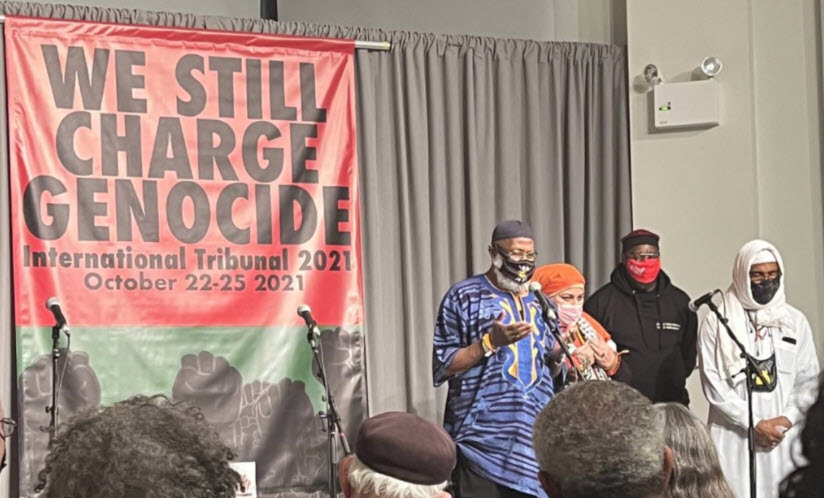
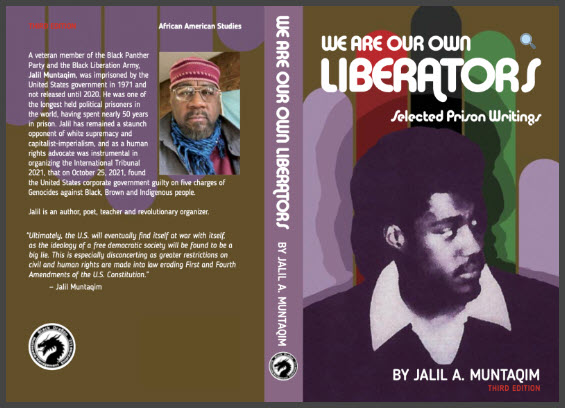
“We Still Charge Genocide” Jalil Muntaqim Speaks to National Black Caucus of the Teamsters Union

Companion Post/ Lessons:

WE STILL CHARGE GENOCIDE:
Spirit of Mandela International Tribunal (October 22-25, 2021)

SUPPLEMENTAL: We Charge Genocide: The Crime of Government Against the Negro People by William L Patterson, 1970 (Courtesy International Publishers)

Pop the document out from the upper right to read / expand / download.

Learn more in RBG Communiversity eLibrary| We Charge Genocide: The Crime of Government Against the Negro People, 1951 (Complete)

The Difference Between French and British Colonialism in Africa| Berlin Conference/ Mad Scramble for Africa Explained,with Supplemental_How Europe Underdeveloped Africa_eBook and Audiobook by Walter Rodney

The article on the topic below includes an appended doc., namely A Brief History of the Berlin Conference.

Pop the documents out from the upper right to read / expand / download.

Click to read poster as expanded standalone.

Pop the document out from the upper right to read/download.

Book Summary

“How Europe Underdeveloped Africa” by Walter Rodney is a landmark work that critically examines the historical and ongoing effects of European colonialism on the African continent. First published in 1972, Rodney argues that colonial powers systematically exploited Africa’s resources, labor, and people, leading to significant underdevelopment and social inequities. The book provides a comprehensive analysis of the economic, political, and social consequences of colonialism, while also emphasizing the resilience and agency of African people in the face of oppression. Rodney’s work remains a foundational text in post-colonial studies, African studies, and development theory.

The outline that follows captures the essence of “How Europe Underdeveloped Africa,” highlighting Walter Rodney’s exploration of the historical, economic, and social dimensions of colonialism and its lasting effects on the African continent. Rodney’s work remains a critical contribution to understanding the complexities of development, the legacies of colonialism, and the importance of African agency in shaping the future.

  • Introduction
  • Overview of the book’s objectives and significance
  • Definition of “underdevelopment” in the context of Africa
  • Statement on the need to understand Africa’s history in relation to European colonialism
  • Historical Context of European Colonialism
  • Examination of the origins of European expansion and colonialism
    • The role of mercantilism and capitalism in driving European interests in Africa
    • Early contact and trade between Europe and Africa
  • Overview of the scramble for Africa and the Berlin Conference of 1884-1885
  • Economic Exploitation of Africa
  • Analysis of the extraction of resources and wealth from Africa to Europe
    • The impact of resource extraction on African economies
    • Case studies of specific resources (e.g., gold, diamonds, rubber)
  • Discussion of forced labor systems, including slavery and indentured servitude
  • Examination of the creation of cash crops and monoculture economies that undermined local food production
  • Social and Cultural Consequences
  • Exploration of the disruption of traditional social structures and cultures due to colonialism
  • The imposition of European education, religion, and cultural values
  • Analysis of the psychological impact of colonialism on African identity and self-perception
  • Political Impact of Colonial Rule
  • Examination of the political structures established by colonial powers
    • The role of indirect rule and the manipulation of local leaders
    • The lack of political representation and autonomy for African peoples
  • Discussion of resistance movements and the fight for independence
  • The Legacy of Colonialism and Underdevelopment
  • Analysis of the persistent effects of colonialism on post-colonial African states
    • Economic dependency and the continuation of exploitative practices
    • Political instability and conflict arising from colonial borders and governance structures
  • Discussion of the role of neocolonialism in perpetuating underdevelopment
  • African Agency and Resistance
  • Recognition of the resilience, resistance, and agency of African people throughout history
  • Case studies of notable resistance movements and leaders
  • Emphasis on the importance of African self-determination and empowerment
  • Towards a New Development Paradigm
  • Rodney’s vision for a path forward for African development
  • Advocacy for grassroots movements and local solutions to address underdevelopment
  • Critique of existing development models imposed by Western nations and institutions
  • Conclusion
  • Summary of key arguments and themes presented in the book
  • Reflection on the continuing relevance of Rodney’s analysis in contemporary discussions about Africa’s development
  • Call to action for a deeper understanding of Africa’s history and its implications for the future

“How Europe Underdeveloped Africa” is a seminal text that provides a profound critique of colonialism and its enduring impacts on Africa. Rodney, a Guyanese historian and political activist, presents a thorough analysis of the historical processes that have led to the systemic underdevelopment of the African continent. His work is not only an indictment of European colonial powers but also a celebration of African resilience and agency. Here’s a closer look at the key themes, arguments, and implications of Rodney’s analysis:

Key Themes Explored

  • Understanding Underdevelopment
  • Rodney defines “underdevelopment” as a consequence of historical exploitation and systemic inequalities fostered by colonialism. He emphasizes that underdevelopment is not merely a lack of development but is actively created through processes that strip away resources and autonomy from African nations.
  • The book argues that the consequences of colonialism have been far-reaching, affecting economic structures, social systems, and cultural identities within Africa.
  • Historical Context of Colonialism
  • Rodney delves into the roots of European colonial expansion, highlighting the economic motivations behind it, including the pursuit of new markets, resources, and profits.
  • He discusses the Berlin Conference, which formalized the scramble for Africa, leading to the arbitrary division of the continent among European powers without regard for existing ethnic or cultural boundaries.
  • Economic Exploitation
  • The book meticulously details how colonial powers extracted wealth from Africa, focusing on key resources like gold, diamonds, and rubber. Rodney illustrates how this extraction was facilitated through exploitative labor systems, including slavery and forced labor.
  • He analyzes the transition from traditional economies to cash crop economies imposed by colonial powers, which disrupted local agricultural practices and led to food insecurity.
  • Social and Cultural Disruption
  • Rodney examines the social upheaval caused by colonialism, including the breakdown of traditional social structures and the imposition of foreign cultural values. He highlights how European education and religion were used as tools of cultural imperialism to undermine African identities.
  • The psychological impact of colonial rule is also discussed, as it fostered feelings of inferiority among colonized peoples and disrupted their sense of self.
  • Political Consequences
  • The book outlines the political structures established by colonial powers, including indirect rule and the manipulation of local leaders. Rodney emphasizes the lack of genuine representation and self-governance for African peoples under colonial rule.
  • He discusses the various forms of resistance against colonialism, highlighting the role of African leaders and movements in fighting for independence.
  • Neocolonialism and Ongoing Challenges
  • Rodney introduces the concept of neocolonialism, arguing that even after formal independence, many African nations remained economically and politically dependent on former colonial powers.
  • He critiques the development models imposed by Western nations and institutions, which often perpetuate the same exploitative dynamics that characterized colonialism.
  • African Agency and Resistance
  • A significant aspect of Rodney’s work is his focus on the agency of African peoples. He emphasizes that Africans have historically resisted colonialism and have the capacity to shape their own futures.
  • The book includes case studies of notable resistance movements and leaders, reinforcing the idea that African self-determination is essential for true development.
  • Vision for Development
  • Rodney advocates for a new development paradigm that prioritizes grassroots movements and local solutions to address the specific needs of African communities.
  • He calls for a rejection of neocolonial practices and an embrace of self-sufficient, sustainable development strategies that empower African nations and peoples.

Implications and Contemporary Relevance

  • Critical Examination of Development
  • Rodney’s analysis challenges conventional narratives about development that often overlook the historical context of exploitation and systemic inequalities. His work encourages a more nuanced understanding of development, emphasizing that it must be rooted in the realities of African history and culture.
  • Legacy of Colonialism
  • The themes presented in “How Europe Underdeveloped Africa” resonate with contemporary discussions about global inequality, economic dependency, and the ongoing impacts of colonialism. Rodney’s insights into the legacies of colonialism remain relevant as African nations navigate challenges related to governance, economic development, and social justice.
  • Inspiration for Activism
  • Rodney’s work has inspired generations of activists, scholars, and policymakers to advocate for social justice, equity, and self-determination in Africa. His analysis serves as a call to action for those seeking to address the root causes of underdevelopment and to empower African communities.

Conclusion

“How Europe Underdeveloped Africa” is a powerful and thought-provoking work that critiques the historical and systemic forces that have shaped the African continent’s development. Walter Rodney’s examination of colonialism, economic exploitation, and the resilience of African peoples provides essential insights into the complexities of development and the need for a critical understanding of Africa’s past. The book remains a foundational text in post-colonial studies and continues to inspire discussions about justice, equity, and the path forward for African nations in a global context. Rodney’s emphasis on African agency and self-determination underscores the importance of empowering local voices and solutions in the quest for genuine development.

How Europe Underdeveloped Africa, by Walter Rodney_eBook

Pop the documents out from the upper right to read / expand / download.

How Europe Underdeveloped Africa, by Walter Rodney_Audiobook

To learn more visit RBG Communiversity Knowledge Media eLibrary:

African Holocaust, Chattel Slavery, Jim Crow, Influencers and more_Books, Videos & Audio Folder