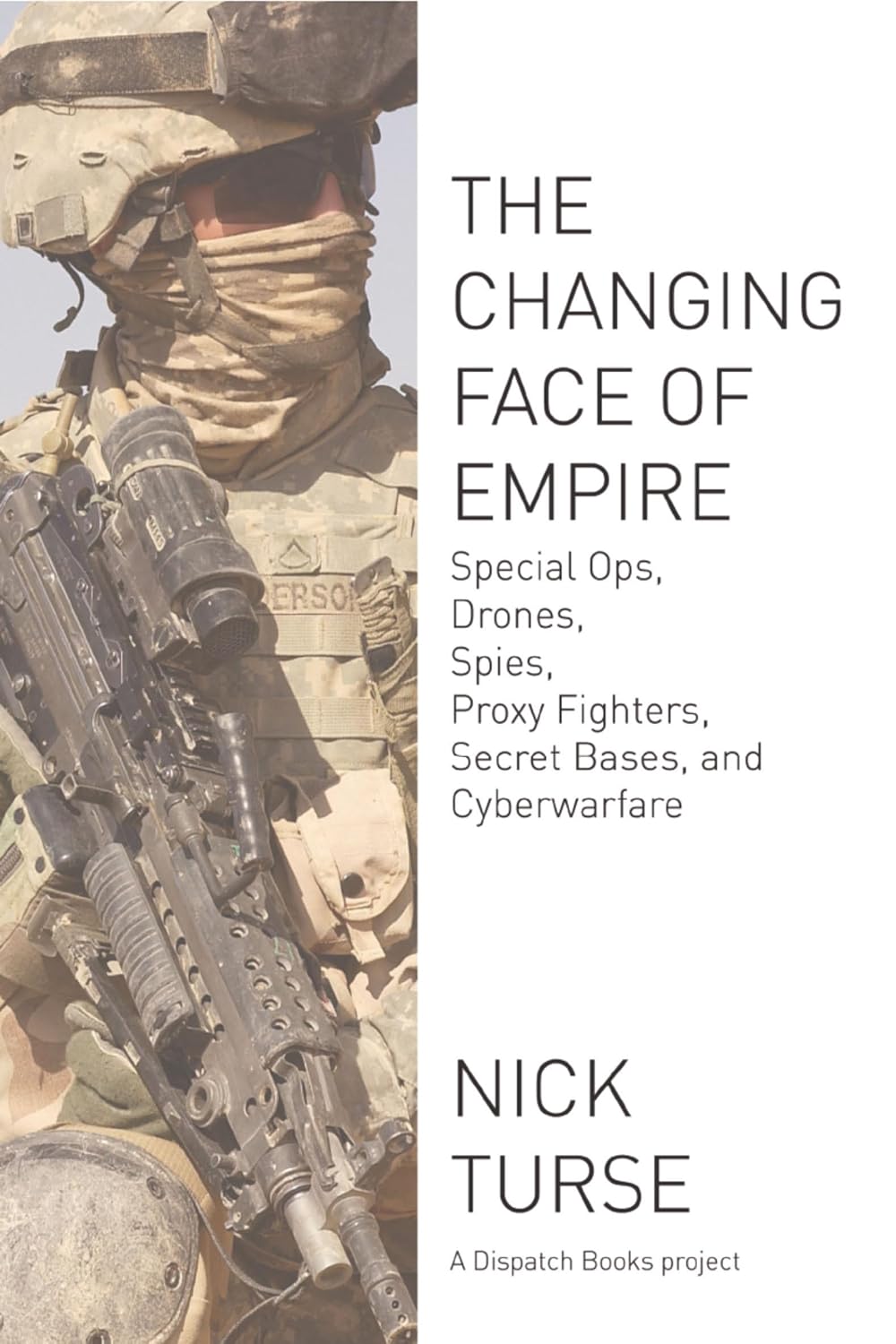
The Changing Face of Empire: Special Ops, Drones, Spies, Proxy Fighters, Secret Bases, and Cyberwarfare (Nick Turse)_eBook and Audiobook, with Supplemental: Oreshnik Hypersonic Missile

Book Summary

“The Changing Face of Empire: Special Ops, Drones, Spies, Proxy Fighters, Secret Bases, and Cyberwarfare” by Nick Turse examines the evolution of U.S. military strategy and imperialism in the 21st century. Turse argues that traditional warfare has been largely replaced by covert operations, advanced technology, and new forms of engagement that blur the lines between war and peace. The book explores the roles of special operations forces, drones, intelligence agencies, and cyber warfare, analyzing how these elements reshaped American military interventions and global power dynamics. Turse critically assesses the implications of these changes for international relations, national security, and the future of warfare.

  • Introduction
    • Overview of the book’s main themes and objectives
    • Discussion of the historical context of American military interventions
    • Introduction to the concept of “empire” in the contemporary landscape
  • Chapter 1: The New Face of Warfare
    • Examination of the shift from conventional warfare to unconventional tactics
    • Discussion of the implications of this shift for military strategy and national security
    • Introduction of key concepts such as asymmetrical warfare and hybrid threats
  • Chapter 2: Special Operations Forces
    • Analysis of the increasing reliance on special operations forces in U.S. military strategy
    • Overview of the roles and missions of these forces, including counterterrorism and direct action
    • Examination of the impact of special ops on traditional military engagements and international law
  • Chapter 3: Drones and Remote Warfare
    • Exploration of the use of drones in modern military operations
    • Discussion of the ethical and legal implications of drone strikes
    • Case studies of notable drone operations and their impact on local populations
  • Chapter 4: Intelligence and Espionage
    • Examination of the role of intelligence agencies in shaping U.S. military strategy
    • Discussion of modern espionage techniques and their significance for national security
    • Analysis of the balance between intelligence gathering and civil liberties
  • Chapter 5: Proxy Wars and Non-State Actors
    • Exploration of the use of proxy fighters in contemporary conflicts
    • Analysis of how states leverage non-state actors to achieve strategic objectives
    • Case studies of proxy warfare in regions such as the Middle East and Eastern Europe
  • Chapter 6: Secret Bases and Global Reach
    • Discussion of the establishment and significance of secret military bases around the world
    • Examination of the strategic advantages these bases provide for U.S. military operations
    • Analysis of the political and social implications of maintaining these bases
  • Chapter 7: Cyberwarfare and the Digital Battlefield
    • Overview of the rise of cyber capabilities as a tool of modern warfare
    • Discussion of the implications of cyber-attacks on national security and infrastructure
    • Analysis of information warfare and its role in shaping public perception and political outcomes
  • Chapter 8: The Future of American Empire
    • Reflection on the trends shaping the future of U.S. military strategy and imperialism
    • Discussion of the potential consequences for global power dynamics and international relations
    • Exploration of the ethical dilemmas posed by emerging technologies in warfare
  • Conclusion
    • Summary of key findings and insights from the book
    • Reflection on the challenges of understanding and addressing the changing nature of warfare
    • Call to action for policymakers, scholars, and the public to engage with the implications of modern military strategies

Significance of the Book

“The Changing Face of Empire” provides a critical analysis of how U.S. military strategies have evolved in response to new geopolitical challenges and technological advancements. Turse’s exploration of special operations, drones, and cyber warfare offers valuable insights into the complexities of contemporary conflicts and their implications for global security and international relations. The book urges readers to critically assess the ethical and political dimensions of modern military engagements, advocating for a deeper understanding of the changing nature of warfare and its impact on the world stage.

“The Changing Face of Empire” delves deeply into the transformation of U.S. military operations and imperial strategies, reflecting on how the nature of warfare has shifted in the 21st century. Here’s a more detailed exploration of the book’s key themes, arguments, and implications:

Key Themes and Arguments

  1. Shift from Conventional Warfare to Covert Operations
    • Turse argues that the traditional model of warfare, characterized by large-scale troop deployments and conventional battles, has largely been supplanted by covert and technologically advanced operations. This shift reflects the changing nature of global conflicts, where direct military engagement is often seen as less favorable or politically viable.
    • The book posits that these covert operations allow for a more flexible, deniable, and less accountable approach to military intervention.
  2. Role of Special Operations Forces
    • Special operations forces (SOF) have become integral to U.S. military strategy. Turse highlights their diverse roles in counterterrorism, intelligence gathering, and direct action missions, showcasing their ability to operate in complex and high-stakes environments.
    • The author critiques the growing reliance on SOF, suggesting that their involvement often leads to a lack of oversight and accountability, raising concerns about the legality and ethics of their operations.
  3. Drone Warfare and Its Implications
    • The use of drones for targeted strikes has transformed military engagement. Turse examines the operational advantages of drones, such as precision and reduced risk to U.S. personnel, but also addresses the ethical and legal dilemmas they present.
    • The book discusses the psychological impact of drone warfare on both operators and targeted communities, as well as the potential for increased civilian casualties and the consequences of remote warfare on local populations.
  4. Intelligence and Espionage
    • Turse explores the expanding role of intelligence agencies in modern military operations. The book details how intelligence gathering informs military strategy and operations, often operating in secrecy and without public knowledge.
    • The balance between national security and civil liberties is a central concern, as the author highlights the potential for overreach and abuse in intelligence practices.
  5. Proxy Warfare and Non-State Actors
    • The book delves into the use of proxy fighters, where states support non-state actors to achieve their geopolitical objectives. Turse analyzes how this strategy allows for less direct engagement and minimizes political costs while still pursuing strategic aims.
    • Case studies illustrate the complexity of proxy warfare, with examples from regions like the Middle East, where the dynamics of such conflicts can lead to unintended consequences.
  6. Secret Military Bases
    • Turse examines the establishment and significance of secret military bases worldwide, which serve as strategic assets for U.S. operations. These bases facilitate rapid deployment and logistical support, but they also raise questions about sovereignty, local opposition, and the implications for host nations.
    • The author discusses the often-hidden nature of these bases and their impact on international relations, including the tensions they can create with local populations and governments.
  7. Cyberwarfare and Information Warfare
    • The rise of cyber capabilities marks a new frontier in warfare. Turse explores how states engage in cyber operations to disrupt adversaries, gather intelligence, and influence political outcomes.
    • Information warfare, including disinformation campaigns, is also addressed, highlighting how digital strategies can shape public perception, manipulate narratives, and impact democratic processes.

Implications and Challenges

  • Changing Global Power Dynamics
    • Turse’s analysis raises important questions about the implications of these evolving military strategies for global power dynamics. The shift towards covert operations and reliance on technology may alter the landscape of international relations, with new actors and methodologies emerging.
    • The book calls attention to how these changes can lead to escalating conflicts and the potential for unintended consequences as states navigate complex geopolitical environments.
  • Ethics and Accountability
    • The ethical implications of modern military practices are a recurring theme in the book. Turse emphasizes the need for greater transparency, oversight, and accountability in military operations, especially concerning drone strikes and special operations.
    • He advocates for a critical examination of the moral dimensions of warfare, urging policymakers and the public to consider the long-term consequences of military interventions on affected communities and global stability.
  • Future of Warfare
    • The concluding sections of the book reflect on the future of American military strategy and imperialism. Turse discusses the potential for continued reliance on technology and covert operations, raising concerns about the sustainability of such approaches in addressing complex global challenges.
    • The book encourages readers to engage with the implications of these changes for future conflicts and the ethical responsibilities of states in an increasingly interconnected world.

Conclusion

“The Changing Face of Empire” serves as a vital examination of the evolving strategies of warfare and imperialism in the contemporary era. Nick Turse’s analysis of special operations, drones, cyber capabilities, and proxy warfare provides a comprehensive understanding of the complexities of modern military engagements. The book challenges readers to critically assess the implications of these strategies for global security, ethical governance, and the future of international relations. By highlighting the need for accountability and a nuanced understanding of the changing nature of warfare, Turse’s work contributes to important discussions about how societies can navigate the challenges posed by modern military practices while prioritizing peace and human rights.

The Changing Face of Empire_eBook

Pop the documents out from the upper right to read / expand / download.

The Changing Face of Empire_Audiobook

Oreshnik Hypersonic Missile | How Russian Intercontinental Ballistic Nuclear Missile Works?

Learn more in RBG Communiversity Knowledge Media eLibrary:

The Untold History of the United States, by Oliver Stone and Peter Kuznick_eBook and Video Education

Last Updated 05-02-2025

The companion to the Showtime documentary series, director Oliver Stone and historian Peter Kuznick challenge the prevailing orthodoxies of traditional history books in this thoroughly researched and rigorously analyzed look at the dark side of American history.

Book Summary

“The Untold History of the United States” by Oliver Stone and Peter Kuznick is a sweeping historical narrative that reexamines key events and themes in American history from a critical perspective. The book challenges conventional narratives surrounding U.S. history, particularly regarding war, imperialism, and the role of government. Stone and Kuznick argue that the United States has often acted contrary to its professed ideals of democracy and freedom, engaging in acts that undermine these principles both domestically and abroad. Through a combination of historical analysis, personal anecdotes, and a critical lens, the authors seek to illuminate the hidden aspects of American history that have shaped the country’s trajectory and its impact on the world.

The outline that follows captures the key themes and structure of “The Untold History of the United States” by Oliver Stone and Peter Kuznick. The book serves as a thought-provoking exploration of American history, urging readers to question established narratives and consider the broader implications of the United States’ actions both domestically and internationally. Through their critical approach, Stone and Kuznick aim to foster a deeper understanding of the complexities of U.S. history and its impact on the world.

I. Introduction

  • A. Purpose of the book
  • B. Overview of Oliver Stone and Peter Kuznick’s backgrounds
  • C. Importance of reevaluating U.S. history

II. Historical Context

  • A. The founding ideals of the United States
    • Declaration of Independence and Constitution
    • Contradictions in the founding principles
  • B. The role of imperialism in shaping U.S. policy
    • Early expansionism and Manifest Destiny
  • Impact on indigenous populations and neighboring countries

III. The American Century and World Wars

  • A. World War I and its aftermath
    • U.S. involvement and consequences
    • The Treaty of Versailles and its implications
  • B. World War II: A critical examination
    • The bombing of Hiroshima and Nagasaki
  • The rise of the military-industrial complex

IV. The Cold War Era

  • A. Origins of the Cold War
    • U.S.-Soviet relations post-World War II
    • The ideological battle between capitalism and communism
  • B. Key events and policies
    • The Korean War and Vietnam War
  • CIA interventions and covert operations
  • C. Dissent and resistance in the U.S.
    • The civil rights movement
  • Anti-war protests and counterculture

V. Contemporary Issues and U.S. Foreign Policy

  • A. Post-Cold War America
    • The implications of U.S. intervention in the Balkans
    • The War on Terror and its consequences
  • B. Critique of neoliberalism and globalization
    • Economic policies and their impact on inequality
  • The influence of corporations on government policy
  • C. Environmental challenges and imperialism
    • Climate change and its geopolitical implications
  • Resource wars and environmental degradation

VI. Reevaluating American Exceptionalism

  • A. The concept of American exceptionalism
    • Historical roots and implications
    • The reality of U.S. actions versus its ideals
  • B. Calls for a more honest historical narrative
    • Importance of recognizing past mistakes
  • Vision for a more equitable and just future

VII. Conclusion

  • A. Summary of key arguments and insights
  • B. The importance of learning from history
  • C. A call to action for informed citizenship and engagement

“The Untold History of the United States” by Oliver Stone and Peter Kuznick offers a provocative reexamination of key events and trends in American history, challenging conventional narratives and encouraging readers to consider the broader implications of the United States’ actions both domestically and internationally. Here’s a more detailed exploration of the book’s key themes, arguments, and insights:

Detailed Exploration of Key Themes

1. Historical Context and Founding Ideals

  • Contradictions of Founding Principles: Stone and Kuznick begin by discussing the founding ideals of the United States, such as liberty, equality, and democracy. However, they also highlight the contradictions inherent in these principles, particularly in relation to slavery, the treatment of indigenous peoples, and the exclusion of women and minorities from political rights.
  • Manifest Destiny and Imperialism: The authors examine early American expansionism, emphasizing how the ideology of Manifest Destiny justified the conquest of territories and the displacement of Native Americans. This sets the stage for a broader discussion of U.S. imperialism and its consequences.

2. The American Century and World Wars

  • World War I: The book analyzes the United States’ involvement in World War I, presenting it as a pivotal moment that shifted the country’s role on the global stage. The authors discuss the consequences of the war and how the Treaty of Versailles laid the groundwork for future conflicts.
  • World War II: Stone and Kuznick critically examine the U.S. actions during World War II, particularly the decision to drop atomic bombs on Hiroshima and Nagasaki. They argue that this act not only caused immense human suffering but also marked the beginning of a dangerous arms race and the establishment of the military-industrial complex.

3. The Cold War Era

  • Origins and Dynamics: The authors explore the origins of the Cold War, detailing the ideological battle between capitalism and communism that defined the post-World War II era. They analyze key events, such as the Berlin Blockade and the Cuban Missile Crisis, highlighting how U.S. foreign policy was often driven by a desire to contain communism at all costs.
  • Military Interventions: Stone and Kuznick provide an in-depth look at U.S. military interventions during the Cold War, including the Korean War and the Vietnam War. They argue that these conflicts were not only disastrous for the countries involved but also for American society, leading to widespread dissent and divisions at home.
  • Civil Rights and Anti-War Movements: The book emphasizes the role of dissenting voices during the Cold War, particularly the civil rights movement and anti-war protests. The authors highlight how these movements challenged the status quo and sought to hold the government accountable for its actions.

4. Contemporary Issues and Foreign Policy

  • Post-Cold War America: The authors discuss the implications of U.S. foreign policy in the post-Cold War era, including interventions in the Balkans and the Middle East. They argue that these actions often reflect a continuation of imperialist tendencies rather than a commitment to democracy and human rights.
  • War on Terror: The book critically examines the War on Terror following the September 11 attacks, arguing that it has led to significant civil liberties violations and has fueled further instability in the Middle East. Stone and Kuznick point to the long-term consequences of these policies, including the rise of extremist groups.
  • Neoliberalism and Globalization: The authors critique neoliberal economic policies and their impact on inequality in the United States and around the world. They explore how corporate interests have influenced government policy, often at the expense of ordinary citizens.
  • Environmental Concerns: The book addresses contemporary environmental challenges, emphasizing the interconnections between imperialism, resource exploitation, and climate change. Stone and Kuznick argue that U.S. foreign policy must be reevaluated in light of these urgent issues.

5. Reevaluating American Exceptionalism

  • Critique of Exceptionalism: Stone and Kuznick challenge the notion of American exceptionalism, arguing that the U.S. has often acted contrary to its stated ideals. They contend that recognizing these contradictions is essential for understanding the true nature of American history.
  • Importance of Historical Awareness: The authors stress the need for a more honest and nuanced understanding of U.S. history. They advocate for a critical reevaluation of the past to inform present and future actions, emphasizing the importance of learning from mistakes.

6. Conclusion and Call to Action

  • Summary of Insights: The book concludes by summarizing the key arguments presented throughout. Stone and Kuznick call for readers to engage with history critically, recognizing the complexities and contradictions that have shaped the United States.
  • Encouragement for Active Citizenship: The authors emphasize the importance of informed citizenship and active engagement in democratic processes. They argue that understanding history is crucial for advocating for social justice and holding those in power accountable.

Implications and Legacy

  • Revisiting Historical Narratives: “The Untold History of the United States” contributes to ongoing discussions about historical narratives and the importance of critically examining the past. It encourages readers to question established beliefs and consider alternative perspectives.
  • Influence on Public Discourse: The book has sparked conversations about American foreign policy, imperialism, and the need for social change, making it a significant resource for activists, educators, and students of history.
  • Vision for a Just Future: Through their critical analysis, Stone and Kuznick inspire readers to envision a more equitable and just society, one that learns from history to create a better future.

Conclusion

In summary, “The Untold History of the United States” by Oliver Stone and Peter Kuznick offers a thought-provoking and critical examination of American history. By challenging conventional narratives and highlighting the complexities of U.S. actions at home and abroad, the authors encourage readers to engage with history in a meaningful way. The book serves as a call to action for informed citizenship and the pursuit of social justice, emphasizing the importance of understanding the past to shape a better future.

The Untold History of the United States_eBook

Pop the documents out from the upper right to read / expand / download.

The Untold History of the United States_Video Education

27 Video Playlist

Learn more in RBG Communiversity Knowledge Media eLibrary
