



RBG Communiversity: Message 2 Da Grassroots

For new comers, pop the document out from the upper right to read / expand / download.
Last Updated 01-05-25
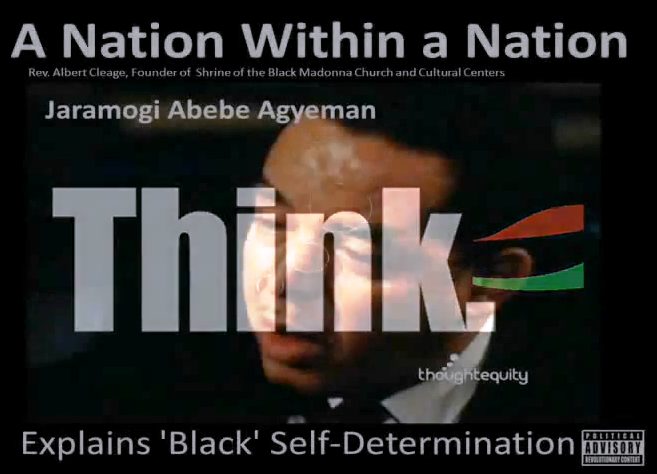
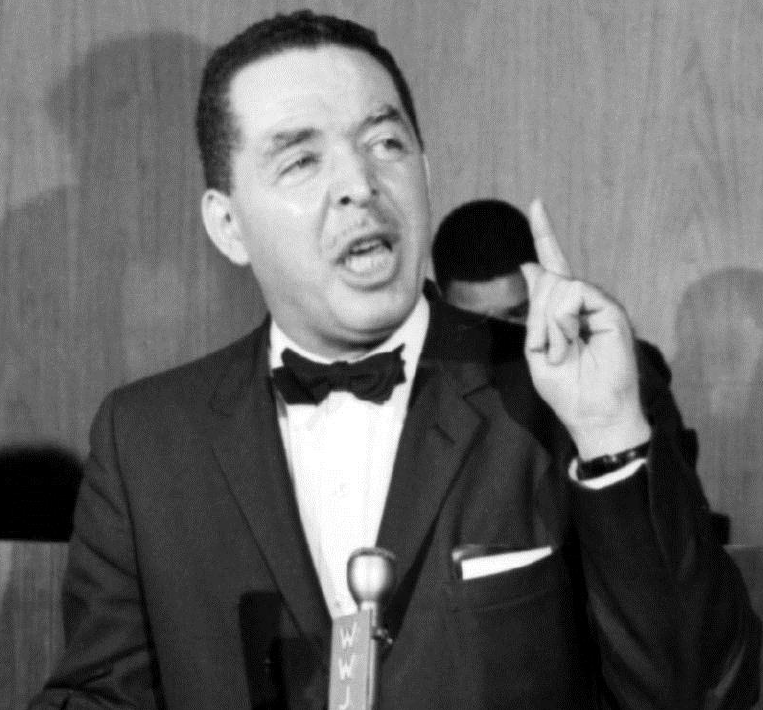


“Black Christian Nationalism” by Reverend Albert Cleage, also known as Jaramogi Abebe Agyeman, presents a compelling argument for the integration of Black nationalism and Christianity.
Overview
In “Black Christian Nationalism,” Cleage argues that Christianity can and should be reinterpreted to serve the needs of the Black community. He critiques traditional Christian doctrines that have often marginalized Black experiences and emphasizes the importance of a Black identity within the Christian faith. Cleage advocates for a theology that empowers Black people and addresses social justice, cultural pride, and economic independence.
Introduction
Chapter 1: Historical Context
Chapter 2: Critique of Mainstream Christianity
Chapter 3: Theological Foundations
Chapter 4: Political Implications
Chapter 5: Economic Empowerment
Chapter 6: Cultural Identity
Chapter 7: Vision for the Future
Conclusion
Detailed Themes
1. Historical Context
2. Critique of Mainstream Christianity
3. Theological Foundations
4. Political Implications
5. Economic Empowerment
6. Cultural Identity
7. Vision for the Future
Conclusion
“Black Christian Nationalism” is not just a theological treatise; it is also a rallying cry for social justice, cultural pride, and economic independence. Cleage’s work challenges the status quo of both religious and societal norms, advocating for a faith that is deeply rooted in the experiences and struggles of Black people. His vision is one of empowerment, community, and a reimagined relationship with spirituality that honors both identity and faith.

Pop the documents out from the upper right to read / expand / download.
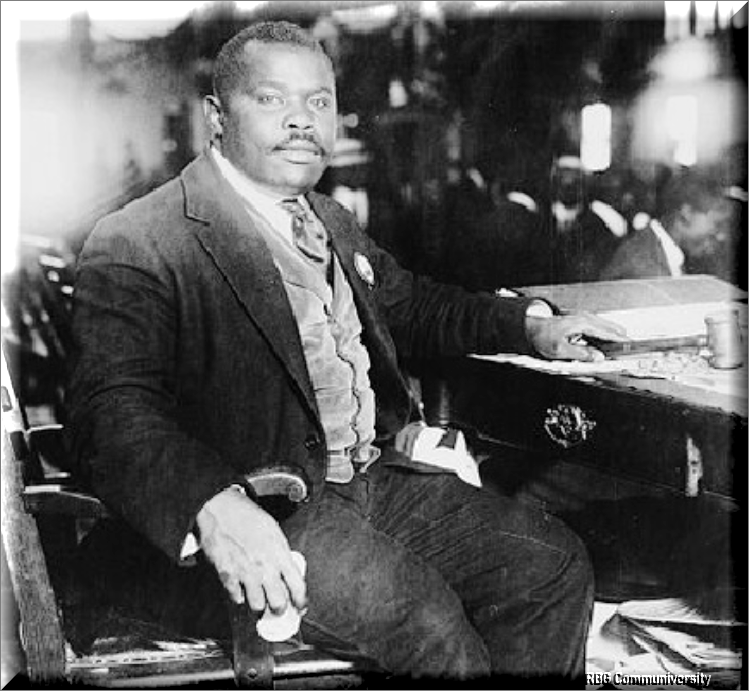
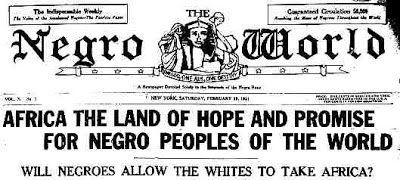
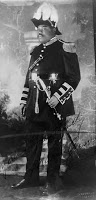
Black Nationalism originated in the 1850’s. While the origins of the movement are most commonly associated with Marcus Garvey’s Universal Negro Improvement Association (UNIA) of the 1920s, Garvey was preceded and influenced by Martin Delany, Henry Sylvestre-Williams, Dr. Robert Love and Edward Wilmot Blyden. Even though the future of Africa is seen as being central to Black Nationalist ambitions, some adherents to Black Nationalism are intent on the eventual creation of a separate black nation by Africans in American.
Born in St. Ann’s Bay, Jamaica, on August 17, 1887, Marcus Garvey was the youngest of 11 children. Garvey moved to Kingston at the age of 14, found work in a printshop, and became acquainted with the abysmal living conditions of the laboring class. He quickly involved himself in social reform, participating in the first Printers’ Union strike in Jamaica in 1907 and in setting up the newspaper The Watchman. Leaving the island to earn money to finance his projects, he visited Central and South America, amassing evidence that black people everywhere were victims of discrimination. He visited the Panama Canal Zone and saw the conditions under which the West Indians lived and worked. He went to Ecuador, Nicaragua, Honduras, Colombia and Venezuala. Everywhere, blacks were experiencing great hardships.

Garvey returned to Jamaica distressed at the situation in Central America, and appealed to Jamaica’s colonial government to help improve the plight of West Indian workers in Central America. His appeal fell on deaf ears. Garvey also began to lay the groundwork of the Universal Negro Improvement Association, to which he was to devote his life. Undaunted by lack of enthusiasm for his plans, Garvey left for England in 1912 in search of additional financial backing. While there, he met a Sudanese-Egyptian journalist, Duse Mohammed Ali. While working for Ali’s publication African Times and Oriental Review, Garvey began to study the history of Africa, particularly, the exploitation of black peoples by colonial powers. He read Booker T. Washington’s Up From Slavery, which advocated black self-help.

In 1914 Garvey organized the Universal Negro Improvement Association and its coordinating body, the African Communities League. In 1920 the organization held its first convention in New York. The convention opened with a parade down Harlem’s Lenox Avenue. That evening, before a crowd of 25,000, Garvey outlined his plan to build an African nation-state. In New York City his ideas attracted popular support, and thousands enrolled in the UNIA. He began publishing the newspaper The Negro World and toured the United States preaching Black Nationalism to popular audiences. His efforts were successful, and soon, the association boasted over 1,100 branches in more than 40 countries. Most of these branches were located in the United States, which had become the UNIA’s base of operations. There were, however, offices in several Caribbean countries, Cuba having the most. Branches also existed in places such as Panama, Costa Rica, Ecuador, Venezuela, Ghana, Sierra Leone, Liberia, Namibia and South Africa. He also launched some ambitious business ventures, notably the Black Star Shipping Line.


Financial betrayal by trusted aides and a host of legal entanglements (based on charges that he had used the U.S. mail to defraud prospective investors) eventually led to Garvey’s imprisonment in Atlanta Federal Penitentiary for a five-year term. In 1927 his half-served sentence was commuted, and he was deported to Jamaica by order of President Calvin Coolidge.Garvey then turned his energies to Jamaican politics, campaigning on a platform of self-government, minimum wage laws, and land and judicial reform. He was soundly defeated at the polls, however, because most of his followers did not have the necessary voting qualifications.In 1935 Garvey left for England where, in near obscurity, he died on June 10, 1940, in a cottage in West Kensington.
In the years following the organization’s first convention, the UNIA began to decline in popularity. With the Black Star Line in serious financial difficulties, Garvey promoted two new business organizations – the African Communities League and the Negro Factories Corporation. He also tried to salvage his colonization scheme by sending a delegation to appeal to the League of Nations for transfer to the UNIA of the African colonies taken from Germany during World War I.


Black Nationalism originated in the 1850’s. While the origins of the movement are most commonly associated with Marcus Garvey’s Universal Negro Improvement Association (UNIA) of the 1920s, Garvey was preceded and influenced by Martin Delany, Henry Sylvestre-Williams, Dr. Robert Love and Edward Wilmot Blyden. Even though the future of Africa is seen as being central to Black Nationalist ambitions, some adherents to Black Nationalism are intent on the eventual creation of a separate black nation by Africans in American…Learn more
For new comers, pop the document out from the upper right to read / expand / download.
 RBG Communiversity: Message 2 Da Grassroots
You must be logged in to post a comment.