Selected Writings and Speeches of Marcus Garvey_eBook and Audiobook, with RBG|The Story of Marcus Garvey (A Documentary Film) 

“Selected Writings and Speeches of Marcus Garvey” is a collection that showcases the influential thoughts, philosophies, and advocacy of Marcus Garvey, a prominent leader in the early 20th-century Black Nationalist and pan-African movements. His works focus on themes of racial pride, self-reliance, and the importance of African redemption. Garvey’s ideas laid the groundwork for future human rights and civil rights movements and continues to resonate with discussions surrounding race, identity, and empowerment

Book Summary

“Selected Writings and Speeches of Marcus Garvey” is a compilation of key writings and speeches by Marcus Garvey, a prominent Jamaican political leader, publisher, and activist in the early 20th century. Garvey is best known for his advocacy of Black Nationalism and the Pan-African movement, emphasizing the importance of self-determination and empowerment for people of African descent. The book captures his vision for the upliftment of Black people globally, his criticism of colonialism and racism, and his call for unity among people of African descent. Through his eloquent and passionate writings, Garvey articulates a philosophy that encourages pride in African heritage and a commitment to creating a better future for Black communities.

The following outline captures the essential themes and structure of “Selected Writings and Speeches of Marcus Garvey.” The book serves as an important resource for understanding Garvey’s contributions to Black Nationalism, the Pan-African movement, and the ongoing struggles for racial equality and empowerment. Through his powerful words, Garvey inspires future generations to embrace their heritage and pursue justice and self-determination.

I. Introduction

  • Overview of Marcus Garvey’s significance in the Black nationalist movement
  • Introduction to the themes of the book: self-determination, empowerment, and Pan-Africanism

II. Early Life and Influences

  • A. Background and Childhood
    • Garvey’s upbringing in Jamaica
    • Influences from family and local culture
  • B. Education and Political Awakening
    • Early experiences with racism and colonialism
  • Impact of travels to the United States and Europe

III. Founding the Universal Negro Improvement Association (UNIA)

  • A. Establishment of the UNIA
    • Goals and objectives of the organization
    • Importance of the UNIA in promoting Black nationalism
  • B. The “Back to Africa” Movement
    • Garvey’s vision for repatriation and self-governance
    • The significance of the Black Star Line and economic empowerment

IV. Key Writings and Speeches

  • A. “Declaration of the Rights of the Negro Peoples of the World”
    • Overview of the document’s significance
    • Key principles articulated in the declaration

B. “The Future as I See It”

  • Garvey’s vision for the future of Black people
    • Emphasis on self-reliance and community building
  • C. “The Negro’s Greatest Enemy”
    • Analysis of internal and external challenges facing Black people
    • Call for unity and collective action

V. Philosophy of Black Nationalism

  • A. Importance of Racial Pride and Identity
    • Garvey’s emphasis on embracing African heritage
    • The role of education in fostering pride and awareness
  • B. Economic Self-Sufficiency
    • Advocacy for Black-owned businesses and economic independence
    • Critique of dependency on white-dominated systems

VI. Challenges and Controversies

  • A. Criticism of Garvey’s Ideas
    • Opposition from other Black leaders and organizations
    • Debates over the feasibility of the “Back to Africa” movement
  • B. Legal Troubles and Imprisonment
    • Overview of Garvey’s legal challenges and their impact on his activism
    • The legacy of his struggles for the movement

VII. Legacy and Impact

  • A. Influence on Future Movements
    • Garvey’s impact on the Civil Rights Movement and Pan-Africanism
    • Continued relevance of Garvey’s ideas in contemporary discussions of race and identity
  • B. Commemoration and Recognition
    • Garvey’s enduring legacy in African and African diaspora communities
    • Recognition of his contributions through monuments and celebrations

VIII. Conclusion

  • Summary of key themes and messages from Garvey’s writings and speeches
  • Reflection on the significance of Garvey’s vision for contemporary struggles against racism and oppression
  • Call to action for continued commitment to self-determination and empowerment

“Selected Writings and Speeches of Marcus Garvey” offers an insightful glimpse into the life and philosophy of one of the most influential figures in the early 20th-century Black Nationalist movement. Here’s a deeper exploration of the key themes, historical context, and significance of Garvey’s work:

Detailed Exploration of Key Aspects

I. Early Life and Influences

  1. Background and Childhood:
    • Marcus Garvey was born on August 17, 1887, in St. Ann’s Bay, Jamaica. His upbringing in a relatively well-off family provided him with access to education and exposure to the complexities of colonial society.
    • His early experiences with racial discrimination shaped his worldview and ignited his passion for advocating for the rights of Black people.
  2. Education and Political Awakening:
    • Garvey’s travels to the United States in 1916 exposed him to the struggles of African Americans and the broader issues of racism and colonialism. He was influenced by various movements and leaders advocating for social justice.
    • His exposure to socialist ideas and the Pan-African movement further solidified his commitment to fighting for the rights and dignity of people of African descent.

II. Founding the Universal Negro Improvement Association (UNIA)

  1. Establishment of the UNIA:
    • In 1914, Garvey founded the UNIA in Jamaica, aiming to organize and uplift people of African descent globally. The organization quickly gained popularity and expanded to the United States and other regions.
    • The UNIA’s mission encompassed promoting racial pride, economic self-sufficiency, and political empowerment for Black people.
  2. The “Back to Africa” Movement:
    • Garvey promoted the idea of repatriation to Africa as a means for people of African descent to escape oppression and establish their own nation. He believed that returning to Africa was essential for reclaiming identity and sovereignty.
    • The establishment of the Black Star Line, a shipping line intended to facilitate this repatriation, represented Garvey’s vision for economic empowerment and self-determination.

III. Key Writings and Speeches

  1. “Declaration of the Rights of the Negro Peoples of the World”:
    • This groundbreaking document was presented at the first UNIA convention in 1920. It outlined the rights of Black people, calling for equality, justice, and respect.
    • The declaration emphasized the need for unity among people of African descent and articulated a vision for a world free from colonial oppression and racism.
  2. “The Future as I See It”:
    • In this essay, Garvey articulated his vision for a future where Black people could thrive independently, free from the constraints of colonialism and racism.
    • He stressed the importance of self-reliance and the development of a strong economic and political base to support the aspirations of the Black community.
  3. “The Negro’s Greatest Enemy”:
    • In this speech, Garvey analyzed the internal and external challenges that Black people faced, including self-hatred, divisive attitudes, and colonial oppression.
    • He called for unity and collective action to overcome these challenges and emphasized the need to uplift one another in the struggle for liberation.

IV. Philosophy of Black Nationalism

  1. Importance of Racial Pride and Identity:
    • Garvey championed the idea that embracing one’s African heritage was crucial for overcoming the psychological effects of colonialism. He encouraged pride in African identity as a source of strength.
    • His writings often highlighted the rich history and cultural achievements of African civilizations, countering narratives that depicted Africa negatively.
  2. Economic Self-Sufficiency:
    • Garvey placed a strong emphasis on economic independence as a foundation for true freedom. He advocated for the establishment of Black-owned businesses and cooperatives to empower the community economically.
    • His vision included creating a self-sustaining economy that could support the needs of the Black community and reduce dependency on white-dominated systems.

V. Challenges and Controversies

  1. Criticism of Garvey’s Ideas:
    • While Garvey garnered significant support, he also faced criticism from other Black leaders and organizations, including W.E.B. Du Bois and the NAACP. Some viewed his “Back to Africa” movement as impractical.
    • The debates around his ideas highlighted the diversity of thought within the Black community regarding strategies for achieving racial equality.
  2. Legal Troubles and Imprisonment:
    • Garvey faced legal challenges, including charges of mail fraud related to the Black Star Line. His imprisonment in 1925 had a profound impact on the UNIA and the movement at large.
    • After his release, he continued to advocate for Black Nationalism but faced increasing marginalization from mainstream civil rights movements.

VI. Legacy and Impact

  1. Influence on Future Movements:
    • Garvey’s ideas laid the groundwork for later movements, including the Civil Rights Movement and the Black Power Movement. His emphasis on racial pride and self-determination resonated with activists throughout the 20th century.
    • Leaders like Malcolm X and the Black Panther Party drew inspiration from Garvey’s philosophy, emphasizing the importance of empowerment and community organizing.
  2. Commemoration and Recognition:
    • Garvey’s contributions have been recognized through various monuments, celebrations, and educational initiatives. His legacy continues to be celebrated in Black communities around the world.
    • The establishment of Garvey Day and other commemorative events highlights the enduring relevance of his message.

VII. Continued Relevance

  • Garvey’s emphasis on self-determination, racial pride, and economic empowerment remains relevant today, particularly in discussions surrounding systemic racism, social justice, and the ongoing struggle for equality.
  • His writings continue to inspire activists and scholars, serving as a reminder of the importance of unity and collective action in the face of oppression.

Conclusion

“Selected Writings and Speeches of Marcus Garvey” is a powerful testament to the vision and influence of Marcus Garvey in the fight for racial equality and self-determination. Through his passionate advocacy for Black Nationalism and empowerment, Garvey articulated a message that resonates with contemporary struggles against racism and injustice. His legacy serves as a source of inspiration for future generations committed to the pursuit of equality, dignity, and pride in their heritage. The book provides valuable insights into the historical context of the early 20th-century Black liberation movement and the enduring relevance of Garvey’s ideas in today’s socio-political landscape.

Selected Writings and Speeches of Marcus Garvey_eBook

Pop the document out from the upper right to read / expand / download.

Selected Writings and Speeches of Marcus Garvey_Audiobook

RBG| The Story of Marcus Garvey (A Documentary Film) 

Learn more in RBG Communiversity Knowledge Media eLibrary:

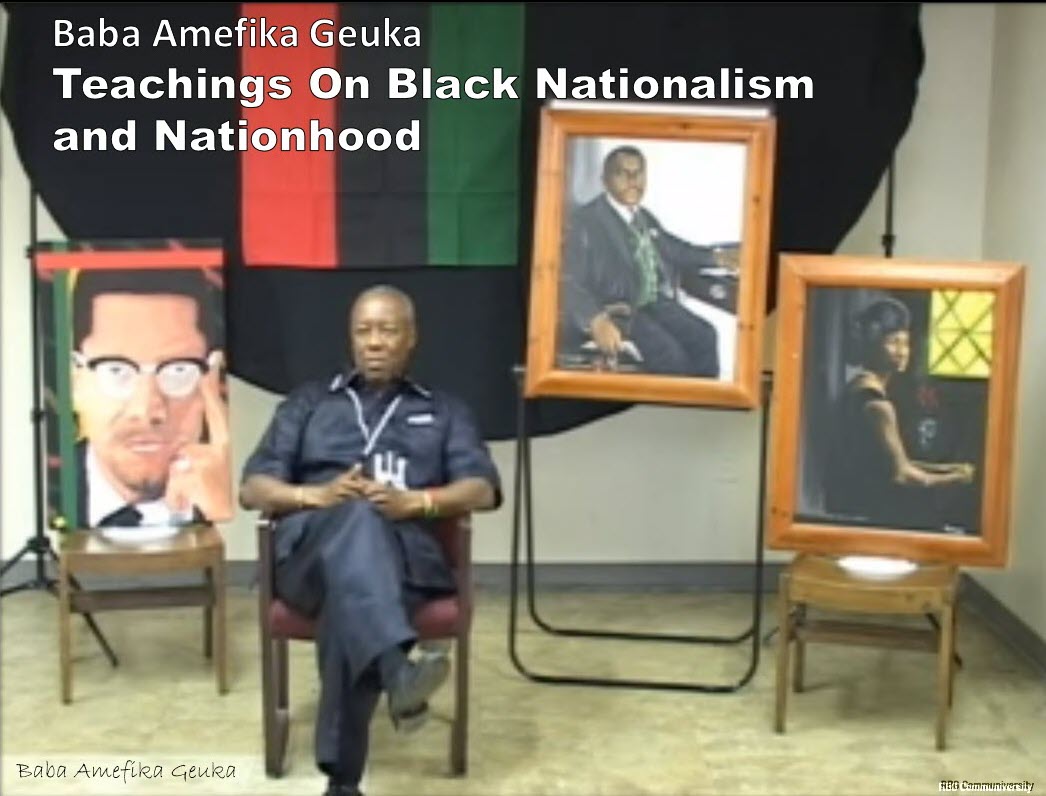
Baba Amefika Geuka Teaches On Black Nationalism and Nationhood (Video Edu.) and The Third Reconstruction: Black Nationalism and Race in a Revolutionary America, Manning Marable, with Red Black and Green: Black Nationalism in the United States by Alphonso Pinkney

Last Updated 01-24-2025

https://amefikageuka.com/
9 Video Playlist

Pop the document out from the upper right to read / expand / download.
Red Black and Green: Black Nationalism in the United States by Alphonso Pinkney

Book Summary

“Red, Black and Green: Black Nationalism in the United States” by Alphonso Pinkney is a comprehensive examination of the history, ideology, and impact of Black Nationalism in the U.S. The book delves into the various movements and figures that have shaped Black Nationalist thought from the early days of American slavery to the late 20th century. Pinkney analyzes the cultural, political, and economic dimensions of Black Nationalism, exploring its significance in the broader context of the African American (New Afrikan) struggle for freedom and self-determination. Through this lens, the book examines how Black Nationalism has evolved and influenced contemporary discussions on race and identity.

The outline that follows captures the essence of “Red, Black and Green,” highlighting Alphonso Pinkney’s exploration of Black Nationalism’s historical roots, ideological development, and contemporary expressions. The book provides a thorough analysis of the cultural, political, and economic dimensions of Black Nationalism, emphasizing its significance in the broader narrative of African American (New Afrikan) history and identity.

  • Introduction
  • Overview of Black nationalism and its significance in American history
  • Explanation of the book’s objectives and scope
  • Introduction to the concepts of “Red, Black, and Green” as symbolic colors of Black Nationalism
  • Historical Roots of Black Nationalism
  • Examination of the origins of Black nationalism during slavery
    • Early expressions of resistance and self-identification
    • Key figures such as Frederick Douglass and Sojourner Truth
  • The impact of the Haitian Revolution on Black national consciousness
  • The influence of Pan-Africanism and global movements for independence
  • Development of Black Nationalist Ideologies
  • Exploration of different strands of Black nationalism
    • Cultural nationalism: Emphasis on Black identity and heritage
    • Political nationalism: Focus on self-governance and autonomy
    • Economic nationalism: Advocacy for Black-owned businesses and economic independence
  • Analysis of the writings and speeches of influential Black nationalists, including Marcus Garvey, W.E.B. Du Bois, and Malcolm X
  • The Role of Organizations in Black Nationalism
  • Overview of key organizations that have promoted Black nationalist ideals
    • The Universal Negro Improvement Association (UNIA) and Marcus Garvey’s influence
    • The Nation of Islam and its impact on Black identity and spirituality
    • The Black Panther Party and its revolutionary agenda
  • Examination of the strategies and goals of these organizations in the pursuit of Black empowerment
  • Black Nationalism and the Civil Rights Movement
  • Analysis of the relationship between Black Nationalism and the Civil Rights Movement
    • Tensions between integrationist and nationalist approaches
    • The role of Black nationalism in shaping the rhetoric and strategies of civil rights activists
  • Case studies of key events where Black Nationalism played a prominent role, such as the Watts Riots and the Black Power Movement
  • Contemporary Expressions of Black Nationalism
  • Exploration of how Black nationalism has persisted and adapted in the late 20th century
  • The influence of hip-hop culture and contemporary artists on Black nationalist thought
  • Discussion of current movements and ideologies that reflect Black nationalist principles, including reparations and Black Lives Matter
  • Critiques and Challenges to Black Nationalism
  • Examination of criticisms directed at Black nationalism from within and outside the African American community
    • Concerns about separatism and exclusionary practices
    • Debates on the effectiveness of nationalism in achieving liberation
  • Analysis of the intersectionality of race, class, and gender within Black nationalist discourse
  • Conclusion
  • Summary of key insights regarding the evolution and impact of Black nationalism in the United States
  • Reflection on the ongoing relevance of Black nationalism in contemporary society
  • Final thoughts on the future of Black nationalist movements and their potential for social change

“Red, Black and Green” is a pivotal work that offers a detailed examination of the evolution of Black Nationalism as a significant ideological and social movement in American history. The book not only traces the historical roots of Black Nationalism but also analyzes its various manifestations and implications for African American identity and social justice. Here’s a deeper look into the key themes, contributions, and implications of Pinkney’s work:

Key Themes Explored

  • Historical Foundations of Black Nationalism
  • Pinkney emphasizes that Black Nationalism has deep historical roots, dating back to the era of slavery. Enslaved Africans developed a sense of identity and community through resistance and cultural retention.
  • The book discusses the impact of early Black leaders and activists who laid the groundwork for nationalist thought, including Frederick Douglass, who advocated for freedom and equality, and Sojourner Truth, who highlighted the intersection of race and gender in her activism.
  • The Influence of Global Movements
  • Pinkney situates Black Nationalism within a global context, highlighting the influence of Pan-Africanism and the Haitian Revolution on Black Nationalist sentiment in the U.S.
  • He discusses how the successes of other independence movements inspired African Americans to seek self-determination and empowerment, fostering a sense of global solidarity among people of African descent.
  • Diverse Ideologies within Black Nationalism
  • The book explores various strands of Black nationalism, including:
    • Cultural Nationalism: Advocating for the celebration and affirmation of Black culture, arts, and identity.
    • Political Nationalism: Emphasizing the need for self-governance, political representation, and autonomy within the broader American political landscape.
    • Economic Nationalism: Promoting the establishment of Black-owned businesses and economic independence as a means of empowerment.
  • Pinkney highlights key figures such as Marcus Garvey, who promoted African heritage and economic empowerment, and Malcolm X, who emphasized self-defense and national identity.
  • Organizations and Movements
  • The book provides an overview of significant organizations that propagated Black nationalist ideologies, including:
    • The Universal Negro Improvement Association (UNIA): Founded by Marcus Garvey, this organization aimed to unite people of African descent and promote economic self-sufficiency.
    • The Nation of Islam: Led by figures like Elijah Muhammad and later Louis Farrakhan, this movement emphasized spiritual and cultural empowerment, alongside a critique of systemic racism.
    • The Black Panther Party: Known for its revolutionary agenda and community programs, the Panthers combined elements of Black Nationalism with a broader social justice framework.
  • Pinkney discusses how these organizations mobilized communities and influenced political discourse.
  • Interaction with the Civil Rights Movement
  • Pinkney analyzes the complex relationship between Black Nationalism and the Civil Rights Movement. He highlights the tensions between integrationist approaches, represented by leaders like Martin Luther King Jr., and nationalist perspectives that sought more radical changes.
  • The book examines how events like the Watts Riots and the rise of the Black Power Movement brought Black Nationalism to the forefront of national consciousness, emphasizing the need for autonomy and self-definition.
  • Contemporary Relevance
  • The later chapters of the book explore how Black Nationalism has persisted and transformed into contemporary expressions. Pinkney discusses the role of hip-hop culture, which often incorporates themes of resistance and empowerment, as a modern manifestation of nationalist thought.
  • He also addresses current movements like the Black Lives Matter movement, which reflect many of the principles of Black Nationalism, such as the fight against systemic racism and the demand for social justice and reparations.
  • Critiques of Black Nationalism
  • Pinkney does not shy away from presenting critiques of Black Nationalism, including concerns about its potential for exclusion and separatism. He explores the debates within the Black community regarding the effectiveness of nationalist strategies in achieving liberation and justice.
  • The book highlights the importance of intersectionality, acknowledging how race, class, and gender dynamics influence the discourse around Black Nationalism.

Conclusion and Broader Implications

  • Significance of Black Nationalism
  • In conclusion, Pinkney emphasizes that Black Nationalism is a vital part of the African American narrative and continues to play a crucial role in discussions about race, identity, and empowerment.
  • He reflects on the ongoing relevance of Black Nationalist thought in addressing systemic inequalities and fostering a sense of community and solidarity among Black Americans.
  • Future Directions
  • The book serves as both a historical account and a framework for understanding the future of Black Nationalist movements. Pinkney encourages continued engagement with the principles of Black Nationalism as a means to advocate for social change and justice.

Overall, “Red, Black and Green” is a critical contribution to the study of Black Nationalism and its impact on American history. Alphonso Pinkney’s analysis provides a rich and nuanced understanding of the complexities of Black Nationalism, its ideological diversity, and its enduring significance in the ongoing struggle for racial equality and justice. The book invites readers to consider how the legacy of Black Nationalism continues to shape contemporary discourse on race and identity in the United States.

Red Black and Green: Black Nationalism in the United States by Alphonso Pinkney_eBook

Pop the document out from the upper right to read / expand / download.

Learn more in RBG Communiversity Knowledge Media eLibrary:

The Condition, Elevation, Emigration, And Destiny Of The Colored People of the United States (1852), by Martin Robison Delany and  History of African Philosophy (HAP) Podcast

“We are a nation within a nation, as the Poles in Russia, the Hungarians in Austria, the Welsh, Irish and Scotch in the British dominions.” (From the text below)

Click for full size standalone poster.

14 Video Playlist

From History of African Philosophy (HAP Podcast) Downloads Folder

Douglass was known as an assimilationist – a champion of blacks being freed from slavery and then being given full rights and opportunities in America.

Delany, for much of his life, championed emigration of blacks as a way of achieving equality, first to Central or South America, and later to Africa…”

For new comers, pop the document out from the upper right to read / expand / download.

Learn more in RBG Communiversity Knowledge Media eLibrary| Martin R. Delany Folder